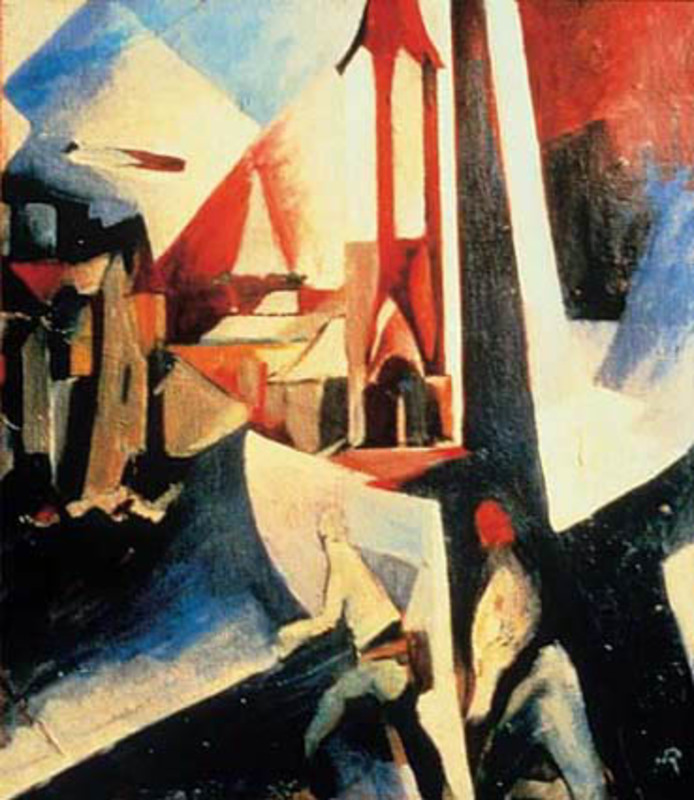
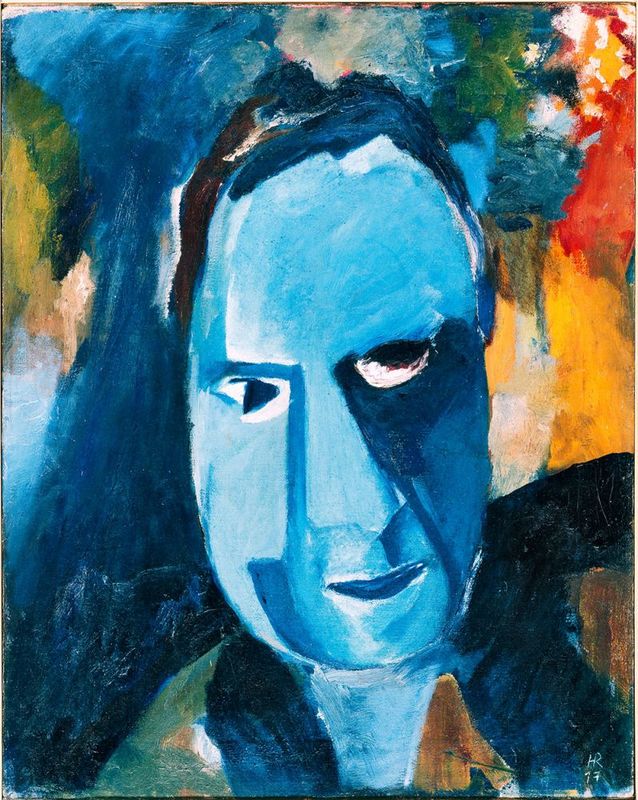
Viking Eggeling (1880-1925) had the shortest career and smallest output of any notable filmmaker. He produced only two short films only one of which survives and yet he was a founder of a new abstract way of looking at film as a work of pure art.
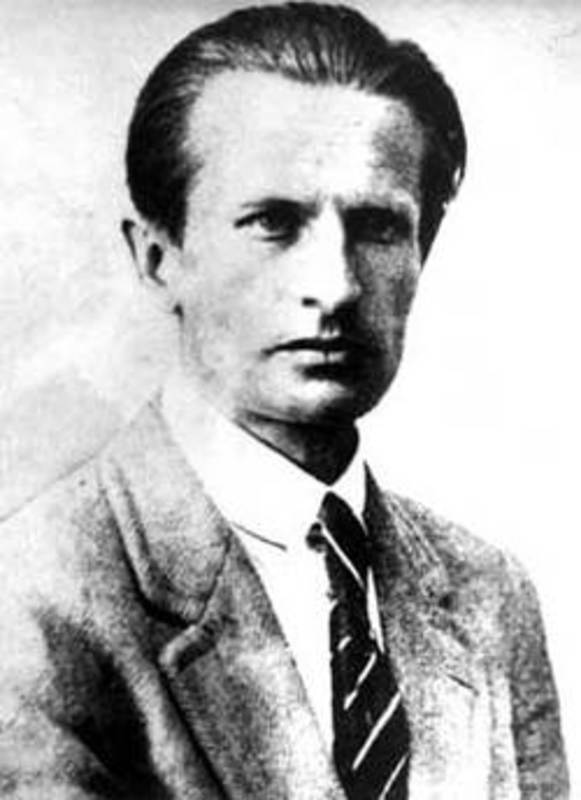
Born in Sweden in 1880, Viking (also known as Victor) became orphaned at age sixteen and decided study art, moving first to Milan then to Paris before moving to Germany. He became acquainted with Amedeo Modigliani, Hans Arp and Leopold Sauvage and aligned himself with Cubism and Futurism before turning to more abstract forms like Malevich and Mondrian. Instead of painting he takes to using line drawings which can be converted to lithographs and reproduced. He began collecting his drawings of interconnected shapes and spirals onto long scrolls which could be unfurled calling them "picture rolls". Originally he was merely trying to find an efficient way to store and transport his work but gradually he started to see how these rolls could be used to study how these different shapes could relate to each other as in movement. In retrospect his "picture rolls" were similar to early crude experiments in the new medium of animation, although he may not have been aware of this at that time. Like other abstract artists such as Malevich, Mondrian and Kandinsky, his drawings had no apparent structure or perspective and were instead interconnected designs, shapes and spirals which related only to each other in a clean design resembling an mechanized version of Art Nouveau design.
During and after World War One Eggeling, like many other left-wing and avant garde artists living in Germany, went to Switzerland and became part of the new Dada movement in which his friend Hans Arp was a leading figure. He joined groups like "The Cabaret Voltaire" and "Das Leben" which advocated for Dadaist and abstract art along with socialist and pacifist ideals. In 1919 he co-founded the group "Artistes Radicaux" with Dada theorist Tristan Tzara and Hans Richter, a German artist with similar ideas to his own. Eggeling and Richter would become close friends and collaborators for the rest of Eggeling's short life. That year the two left Switzerland and returned to Germany where they joined "The November Group", another important radical arts and politics group with many connections to Dada, Futurism, Expressionism, Abstract Art and the Bauhaus design school.
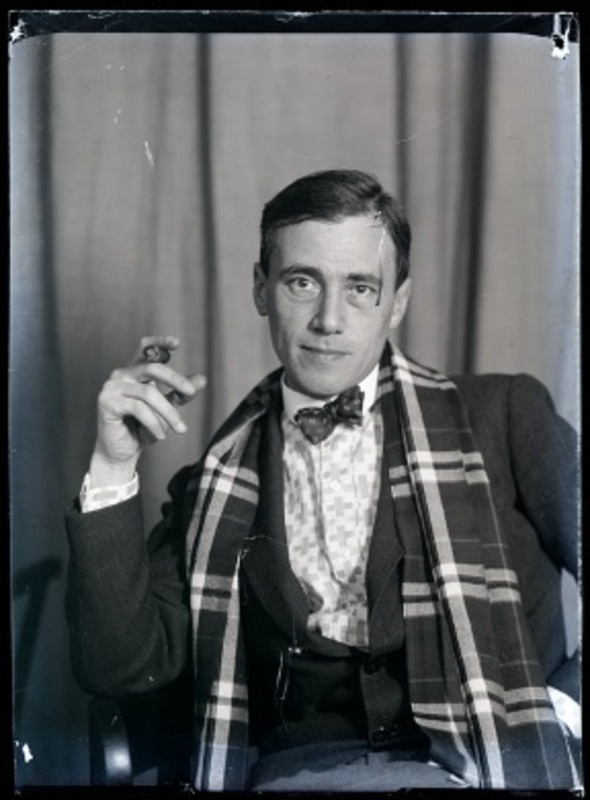
EGGELING BY MODIGLIANI;
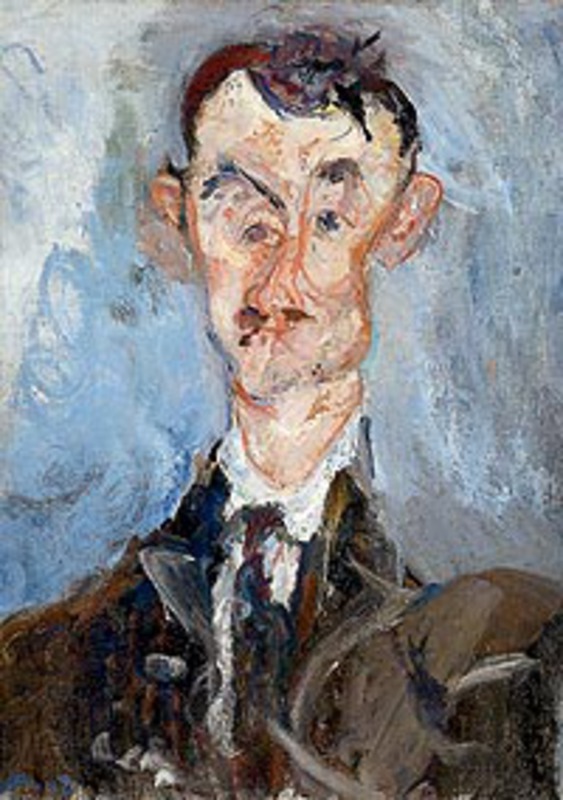
Studying his picture rolls he began to hit upon the idea of transferring them to film stock, partly to make them easier to store and unroll. Inevitably he discovered, as early animators had, that when unrolled quickly they would cause the abstract shapes to relate and contrast to previous frames to create the illusion of movement. If more carefully arranged in a systematic way he would achieve full fledged animation as shapes could appear to move in space relative to each other in a fluid way.
In 1920, working with Richter, he started work on his first film by laboriously copying shapes onto approximately 5000 separate frames of film, he titled the piece "Horizontal-Vertikal-Masse". By 1921 Richter had moved onto his own similar experiments and his first film "Rhythmus 21" and Eggeling postponed work on the piece. It is unclear if Eggeling ever actually finished the film but it was never officially shown and has since been lost. Although the film was never formally shown enough members of The November Group saw the work in progress to comment on and be influenced by it. In 1923 Eggeling decided on a more practical way of animating by using geometric shapes cut out of sheets of black paper that can be moved for each frame. Richter has already been using this method on his film however while Richter is using simple geometric shapes Eggeling designs more complex and intricate designs similar to those of his previous lithographic work. I've written an extensive article on Hans Richter here.
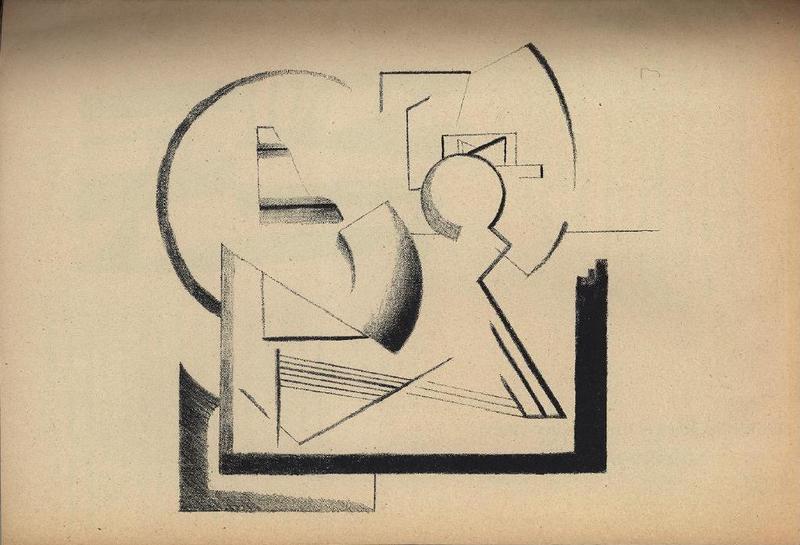
Besides being easier to animate the use of cutout paper shapes coincidentally mirrors similar experiments being used by Henri Matise who has had to abandon painting due to his worsening eyesight and advanced age and is using paper shapes glued to canvas backings although not in any sort of systematic way. Whether or not Eggeling and Richter were even aware of Matise's work (and vice versa) is unknown and may be purely unrelated.
He finished the film in 1924 and entitled it "Symphonie-Diagonal" and it was formally released in May 1925 at an exhibition by Dadist art collective The November Group to great acclaim and is considered to be the first piece of abstract film art. Due to the laborious shot-by-shot nature of the film method, while it took a year to finish the short film is a mere seven minutes long. Note that given the structureless nature of the film there is no way of knowing if the ending (such as it is) may have been truncated in the surviving print. The title explains his theory that moving forms can create a kind of "visual music" without reference to any sort of narrative or specific concrete image expected of film. Eggeling's film is more delicate and lyrical than Richter's somewhat more jarring films, although they basically agreed as to methods and intents. In this Eggeling differs somewhat from his Dadaist and Futurist friends who sought to shock and outrage or the Expressionists who looked to invoke deep repressed emotions.
"SYMPHONIE-DIAGONAL"(1925);
His work had already become influential to fellow minded filmmakers, and friends, like Hans Richter and Walter Ruttman as well as later work by Frenchmen Marcell Ducamp and Man Ray. Eggeling's concept of "visual music" will briefly pass on to other German filmmakers who will entitle their films similarly including Richter's "Rhythmus 21", "Rhythmus 23" and "Rhythmus 25", Walter Rutmann's equally abstract "Lichtspiel; Opus 1" (1926) and later films "World Melody" (1930) and "Wochenende". Ruttman would later take this concept away from the purely abstract with his brilliant 1927 "absolute" film documentary "Berlin; Symphony Of A Great City". FW Murnau had also acknowledged this theme with the full title of his iconic 1922 horror classic "Nosferatu; A Symphony Of Terror".
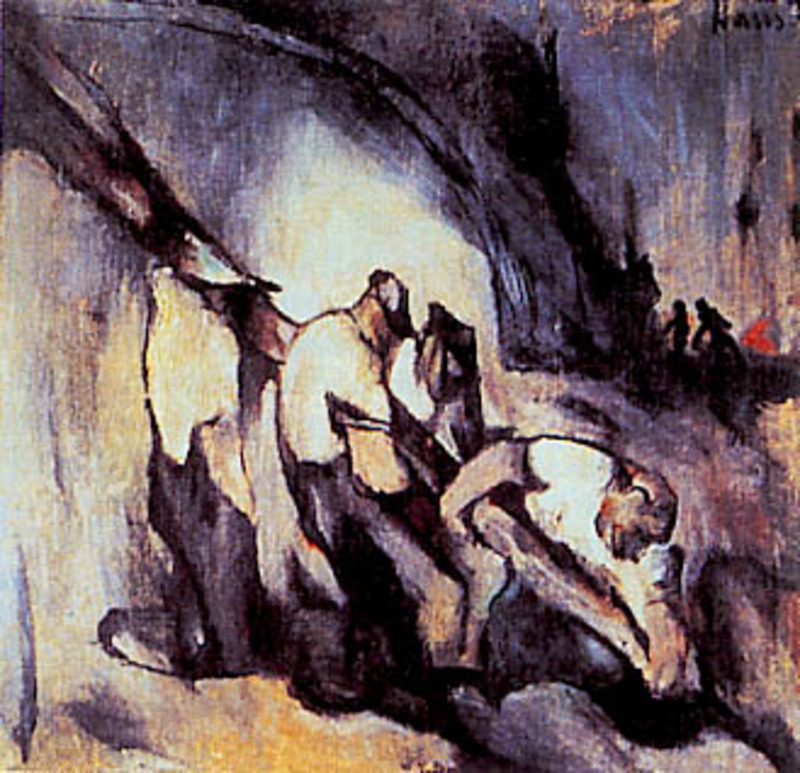
EGGELING BY JUNCO RUMANSK;
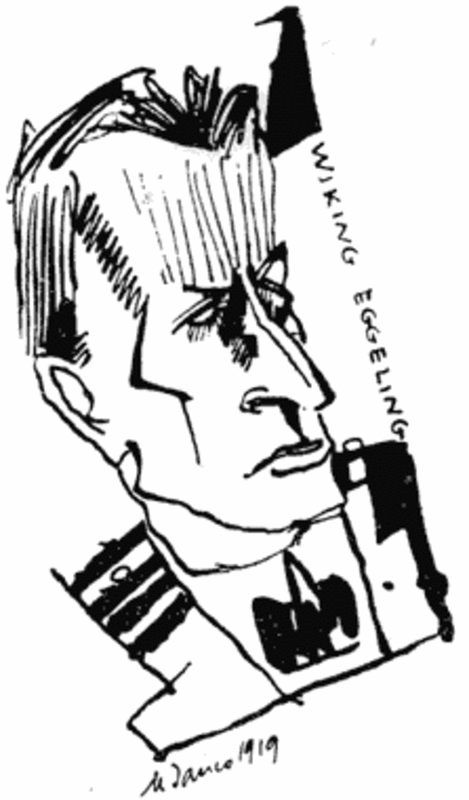
Viking Eggeling however, while supportive of such ventures, will not get to see them develop nor will he get to finish his previous film because a mere sixteen days later he died suddenly aged only 44.
~~~~~~~~~~~~~~~~~~~~~~~~~~~~~~~~~~~~~~~~~~~~~~
Walter Ruttman;
Like Viking Eggeling and Hans Richter, Walter Ruttman (1887-1941) started out as an artist before moving to film. His background was more practical than the theoretical training of Eggeling and Richter with Ruttmann studying architecture as well as painting and working as a commercial artist and illustrator. In spite of this his early abstract films would be less structured than those of either of his compatriots.

Again unlike Eggeling and Richter, Ruttman was not one early Dadaists or Cubists in Zurich, by the end of World War One however he had discovered abstract art and joined The November Group and inspired by the work of Eggeling and Richter he had had also discovered film as a medium. He accepted Eggeling's theories both about using film as a medium for abstract movable art as well as his idea of "visual music". He showed his first film, entitled "Lichtspiel; Opus 1" ("Light Speech; Opus 1") soon after Richter's debut in 1921.
"LICHTSPIEL: OPUS 1" (1921);
In spite of his technical training Ruttman chose slightly different methods than Eggeling and Richter. Instead of drawing or using solid shapes Ruttmann experimented with using flashes of light and shadows to play across the screen. He also played with colour instead of pure black and white. These methods meant that Ruttmann could not have the control over his moving images that Eggeling and Richter had so instead his films had a more improvised and fluid feel. This also means that his light forms would interact differently than solid shapes and lines. Not having definite borders the different flashes of colour and light would overlap and at times envelop each other.
"LICHTSPIEL: OPUS 2" (1923);
Ruttmann's method did have the benefit of being quicker and easier to use than the laborious frame by frame animation methods used by others and he was able to make several similar followups in the same vein.
"LICHTSPIEL: OPUS 3" (1924);
Having exhausted the possibilities of using flashes of light and shadow Ruttman began making less abstract films. In 1927 he collaborated with script writer Carl Mayer, who had written the scenarios for classic Expressionist films "The Cabinet Of Dr Caligari", "Genuine" and "The Last Laugh" and cameraman Karl Freund to make the classic full-length documentary "Berlin; Symphony Of A Great City". As this was not an abstract film I will not deal with it here but will save it for another article.
"LICHTSPIEL: OPUS 4" (1925);
While other Dadaists were anti-capitalists Ruttmann saw the possibilities in using film in advertisements and made a few early commercials using his flash colour animation methods to tell a more lineal story including "Das Wunder" an ad for a brand of liquor in which two arguing men drink a bottle then kiss and make up. Note; alcohol does NOT work this way in real life.
Another ad "Das Sieger" (1922) is for Excelsior-Reifen tires and features more recognizable animation. By this time he was working with Lotte Reineger, who's work this somewhat resembles.
"DAS WUNDER" & "DAS SIEGER" (1922);
"Spiel Der Wellen" is another short add, this time for a radio company, using Lotte Reineger's cut paper method. Note the culturally advanced notion that radio brings music from Africa to the happy listener in spite of the efforts of the conservative authorities (symbolized by a policeman), showing the Wiemar German artistic community's attitudes towards Jazz.
"SPIEL DER WELLEN" (1926);
"Rediscovered Paradise" uses a variety of his previous techniques of animation, shapes and colour swatches and stop action paper figures and what appears to be claymation to tell a biblical parable of Adam and Eve being cast out of the Garden of Eden before reuniting them using a dove, the Bird Of Peace.
"THE REDISCOVERED PARADISE" (1925);
Ruttmann had not abandoned his belief in "visual music" and the advent of sound films led to experimental films like "Melodie der Welt" ("Melody Of The World") in 1929, in a similar Cinema Verite genre as his earlier "Berlin, Symphony Of A Great City" he used a collage of images and sounds from various countries but no vocals to compare and contrast everyday life in various lands. The film was billed as Germany's first sound feature film.
"MELODIE DER WELT" (1929);
In 1930 he moved full circle from "visual music" with "Wochenende" ("Weekend"), a film composed of solely sound effect against a blank screen and no images at all and is considered one of the first extended sound colleges. This sound collage method would later be used by Avant Garde composers like Karlheinze Stockhausen and Steve Reich and 1980's Industrial groups like Cabaret Voltaire, The Residents, Nocturnal Emissions, Nurse With Wound and Zoviet France. Note for this film as it has literally no visuals and would otherwise be a blank black or white screen I added some using static from a destroyed VHS tape which should provide some visuals while being in keeping in with the basic concept of relying on the sound F/X to tell the narrative such as it is.
"WOCHENENDE" (1930);
In 1933 he tried his hand at a proper feature film with "Acciaio" (AKA "Steel") a gritty melodrama shot in Italy with an Italian cast, about a lover's triangle among the working class set in a steel mill. After the coming to power of the Nazis in 1933 virtually every other figure associated with Dada, Surrealism and Cubism had their works banned and/or destroyed and fled Germany. Ruttmann however chose to stay. He had the patronage of Leni Reifenstall and worked as an assistant on her infamous Nazi propaganda films "Triumph Of The Will" and "Olympia" as well as working on newsreels for Joseph Goebbels Ministry and making a number of propaganda films most of which are not currently available with two exceptions. "Deutsche Panzer" (1940) is a short film about the making of the Tiger Tank and as such it is somewhat predictably focused on the mechanics of the process with plenty of gleaming metal and could just as easily be a film about the building of a British or American tank. There is nothing particularly fascist about this film. In fact the Allies did produce very similar (if less stylish) films about their own war machines and would continue to do so in the Cold War and into the Space Race. The one difference between this film and comparative films made by the Allied Powers is in an early scene which shows school kids learning engineering so they can become tank builders for the future. The incorporation of children as cogs in the unified Nazi state is a common theme in authoritarian states and would not have turned up in a similar films about building the Spifire or B52.
"DEUTSCHE PANZER"(1940);
Ruttmann's political views are contradictory, he was a pacifist who had spent time in the USSR advising Soviet filmmakers but unlike many other filmmakers he did not flee Germany when the Nazis took power. His decision to stay in Germany while many of his colleagues fled could be explained by any number of reasons; he had a successful career and did not want to start over again, perhaps like the actor Emil Jannings he spoke no other languages fluently. Like Hans Richter (who did flee) he had roots in the Dada art scene the Nazis would ban but unlike other Dadists he had already moved beyond that world into the mainstream where he had made films for advertisements and could continue to find work. Unlike Peter Lorre, Conrad Veidt and Brigitte Helm he did not have a Jewish roots or a Jewish spouse nor had he been involved with leftist politics so he was in no particular danger himself as long as he toed the line. What few hints there are in "Berlin" and his previous Dada Op Art shorts as well as the Dada milieu show him as having vaguely liberal beliefs; He does show poverty (but does not draw any larger conclusions), he is comfortable with the sort of people the Nazis would vilify such as blacks and Jews, avante garde artists and writers who he does not vilify or mock. His entire filmography shows him as a master craftsman meticulously exploring the latest in film (and later sound) techniques and like Charles Sheeler a fascination with the form and function of structures and machines with comparatively little interest in people who are mere supporting players. It can be been pointed out however that an obsession with form and function to the exclusion of humanity is a common theme in Fascist art, allowing the artist to both glorify the power of the regime's power at the expense of the people who are mere cogs, easily replaceable, and distance himself and his audience to those who are not useful to such a system. In such a system a talented craftsman with no strong views or personal stake can make a comfortable living as long as he keeps his head down and does his job. That is in fact the basic defense offered by Leni Reifenstall herself to defend her work for the Nazis. In her case these excuses are now seen as being at least somewhat disingenuous and her links to the Nazis were more explicit than she let on. Ruttmann's case is less known as he did not survive the war and apparently left no record on his thoughts so we have to judge him on his work. As stated, almost all of his work that survives is not inherently objectable with the notable exception of one film.
"BLUT UND BODEN" (1933)
This film is the worst sort of Fascist propaganda, not only for it's message, which is vile and dishonest, but even setting that aside, to the extent that's possible, it's also bad filmmaking. This is strident, hectoring, lacking in any subtly and deprives the audience of the power to think or feel for themselves. In the film a German farm family have their farm foreclosed on, are forced to move to the city which is shown as crowded and alien and eventually return to farming in the German East. These parts of the film are done as melodrama with actors. The rest of the short film uses both animation and montage to present the case that the German farmer is suffering because alleged financial interests and banks flood the market with foreign produce, refuse to lend money for the manufacture of farming equipment and foreclose on people's farms. This film also advances another Fascist trope which advocated depopulating the cities, which they considered decadent and full of undesirable Jews, gays, intellectuals and leftists in favour of "returning to the land" and homesteading to revive the Ayran Herrenvolk's mystical relationship with "Blood And Soil" and colonizing the lebensraum the Nazis were expecting to open up in the east. This film is completely at odds with everything else Ruttmann ever did and it is certain that he did not write it. Instead it resembles the propaganda put out by Joseph Goebles both in message (of course) but also in it's style which is both strident and pedantic. The final scenes of happy Hitler Youth and Labour Front marching through the countryside with Nazi flags waving and dramatic music in the background could have been lifted from any propaganda film from Germany, Italy or the USSR. It leaves no room for subtlety although unlike other films from Goebbles propaganda mill it does not explicitly attack the Jews. Ruttmann's films have been criticized for being cold and remote but he had a lyrical sense and whatever message he had was implied through visual cues, not lectured through a droning narrator or rote acting. It would seem that Ruttmann's role here was to deliver some competent visuals for the city sequences for which he recycles some footage from "Berlin" which is probably why he was hired in the first place. This is ironic since Ruttmann's very existence is the opposite of the message of this film. "Blut und Boden" glorifies farm life and demonizes the city. Ruttmann was a product of the city and Avant Garde art scene and yet he is willing to trash it for the new masters. That this was a project done under orders and over which he had little or no input can be seen in how little this looks and feels from his other films which were innovative and imaginative, this one is dull and perfunctory, clearly he was not inspired by the assignment. Unlike Leni Riefenstall who did take obvious inspiration and energy from the Nazis for her films, Ruttmann seems bored, at least with this film, in "Deutsch Panzer" he is back in his element, with loving shots of gleaming machines. Whether Ruttmann was an actual Nazi or simply a craftsman who had made his peace with a totalitarian regime and was simply doing an asignment he didn't care enough to put much thought into this vile film is a blot on Ruttmann's legacy and makes more complicated the debate over Ruttmann's vs Vertovs's films.
He was working on another newsreel film at the front when he was seriously injured in 1941. He died later of his wounds at age 53.
~~~~~~~~~~~~~~~~~~~~~~~~~~~~~~~~~~~~~~~~~~~
"OPUS I - IV" COMBINED INTO ONE FILM";