Expressionism is the defining film genre of Weimar Germany and indeed one of the most important of the entire interwar film era. It's themes of exploring loneliness, alienation, madness, dehumanization, nightmares, hallucinations and untamed emotions and it's esthetic world of shadows, fog, pools of light and artificiality would influence future genres of horror, film noir and science fiction from Hitchcock and James Whale down to Tim Burton and Ridley Scott. Not to mention any number of rock videos. However, it's time in German film barely survived the decade and would be stamped out, as would so much art, by the coming to power of the Nazis in 1933. In fact Expressionism as a genre was already in decline by then, made passe partly by the inevitable change in tastes encouraged by the coming of sound and it's change of focus away from the purely visual and partly by the coming of the Great Depression when the public's desire was to escape from the gloom of their lives than to watch it on screen.
Nevertheless there's no doubt the nail in the coffin was the Nazis. Adolf Hitler (a failed artist) and Propaganda Minister Josef Goebbels (a failed novelist) were convinced they were experts in art and music and like all Fascists the Nazis taste in art was reactionary in the extreme and like everything else was to be at the service of the state in fostering "patriotism". Fascist art celebrates hyper traditionalism with plenty of bombastic pseudo Greco-Roman and Nordic art, equally hyper masculinity (which often crosses over into unintional homoerotic self-parody which is even more hilarious since Fascists seem to be the only ones who can't spot it), militarism and absolute conformity and obedience to strongman leaders and strict social hierarchies. There is no room for or tolerance Modern Art (basically from the Impressionist Era onward) with it's themes of abstraction, self-reflection, decadence, loneliness and the inner world of dreams and the psyche. Fascism allows for no inner world at all demanding instead constant outward displays of mindless fealty. The Nazis classed virtually all Modern Art as officially "Degenerate" including the distinctly German creations of Expressionism, Dada, Cabaret and the Die Bruke movement and Bauhaus Design school as well as Surrealism, Cubism, Futurism, Fauvism and Art Nouveau which they publicised with the infamous display of "Degenerate Art" in 1937 which became something of an embarrassment as some of the art turned out to be more popular with curious audiences than the officially sanctioned art exhibit that happened at the same time.
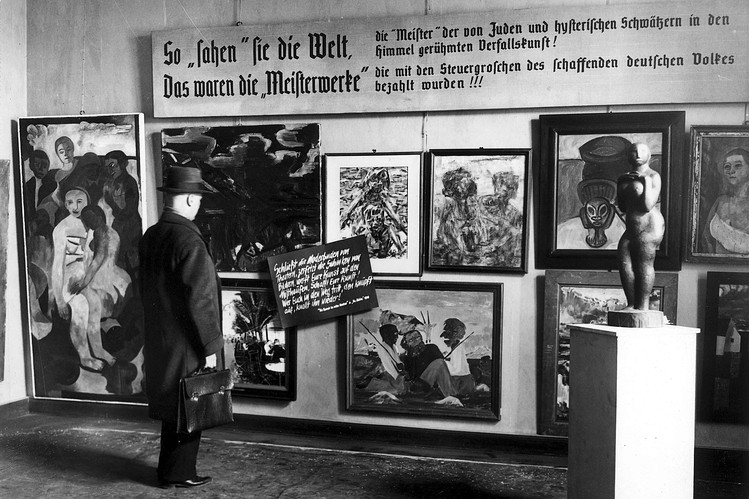
"DEGENERATE ART" EXHIBITION
Hitler and Goebbels paid special attention to the film for it's propaganda potential. They had no doubt noticed how the Soviets had used film as a propaganda tool coining the name "Agitprop" including the films of iconic director Sergi Eisenstein such as "The Battleship Potemkin". They were also notably fans of Sherlock Holmes films, westerns, Disney cartoons and even Charlie Chaplin's "The Great Dictator" which Hitler screened several times in spite of the movie being banned. A particular favorite of both was "Gone With The Wind" as a pro-Confederate epic and were envious of Germany not really having an equivalent, which would eventually lead to an attempt to make their own historical epic in "Kolberg" (1945) considered to be possibly the biggest money losing bomb of all time.
The Nazi attitude towards German film and Expressionism was contradictory. Upon taking power in 1933 they imposed an immediate stop to most productions while they were evaluated for their value to the state and the Party with many films being banned including "All Quiet On The Western Front" (antiwar), "Tarzan & His Mate" (too erotic), "The Prize Fighter & The Lady" (starring Jewish boxer Max Baer), and even Chaplin's "The Kid" for some reason along with of course any films with obvious gay content (as I already wrote about here). Directives were swifty issued banning Jews from the industry entirely and when to their credit Dacho, the film actors and directors organization, bravely protested it was immediately disbanded. Many actors and directors spotting the writing on the wall took the chance to flee the country leading to an exodus in talent that included actors Marlane Dietrich, Peter Lorre, Conrad Veidt, Elizabeth Berenger, Oskar Homolka, John Gottwott, directors Billy Wilder, Hans Richter, Otto Preminger, Douglas Sirk, Robert Wiene and composer Kurt Weill. At first Geobeels was happy to see them go but then rather belatedly he realized the brain and talent drain would hurt the German film industry and made attempts to woo the film community. Many top Nazis including Hitler, Goebbels and Goering were shameless starfuckers both figuratively and in the case of Geobbels and Goering literally with both carrying on affairs with actresses, leading to personal appeals to certain actors and directors. Danish actress Asta Neilsen had been a major star in German film since the Great War when photos of her had been posted in the trenches by soldiers and while by 1933 she was in her fifties she was still popular enough for Goebbels and Hitler to invite her to dinner and offer her her own studio. She instead announced her retirement and returned to Denmark where she would quietly oppose the Nazis.
ASTA NIELSEN
If Asta was no longer thought of as a sex symbol that was certainly not true of Brigitte Helm of "Metropolis" fame. Helm was the very epitome of an Aryan sex symbol, tall, slim, statuesque, blonde, blue eyed and stunningly beautiful. Helm was no Nazi though, even having a Jewish banker as a boyfriend. Goebbels did have additional leverage on Helm as she also had a taste for speed known for her reckless driving which ended in a serious car crash that resulted in a death and Helm being charged with manslaughter. Hitler was a fanboy and intervened to make the charges go away and she was invited to yet another dinner with offers of film roles but she instead wasted no time in skipping to Switzerland with her Jewish boyfriend who she married and retired from film.

BRIGITTE HELM
The Polish born Pola Negri was a special case. She had been a huge star in the early twenties Germany before moving to Hollywood to further success however with the coming of sound she returned to Europe living in France and working in Germany as well. As she was Polish Goebbels hated Negri as not being insufficiently Aryan as well as difficult and refused to give her the official certificate to allow her to work in Germany but ever the Diva she simply went over his head to Hitler himself where the Fuhrer, ever the fanboy, was instantly charmed and gave her the prized certificate granting her carte blanche to continue working much to Geobbels' fury. She was not even required to make propaganda and instead focused on her beloved costume dramas until the Nazis invaded France when she quickly packed up and returned to Hollywood. Famously Fritz Lang claimed that Goebbels personally offered him the chance to be the head of the German film industry but Lang instead took the chance to flee to Hollywood. Lang was probably exaggerating his importance. As we've seen it's likely that he was offered a prominent role in German film but it's impossible to picture a micromanaging control freak like Goebbles handing control of the entire German film industry to a figure like Lang with an established reputation and obvious talent and who was not even a member of the Nazi Party. By contrast Lang's wife screenwriter Thea Harbau stayed in Germany and became a Nazi as did actors Werner Krause ("The Cabinet Of Dr Caligari"), Emil Jannings ("The Last Laugh" & "Faust"), Heinrich George, director Carl Froelich and of course Leni Riefenstal. Most seem to have kept out of politics, kept their heads down and kept their jobs such as directors GW Pabst, Herbert Selpin and Walter Ruttmann and actors Lil Dagover ("Caligari"), Erna Morena (the original "Pandora's Box" & "Diary Of A Lost Girl"), Paul Wegener ("Der Golem") and Hans Albers ("The Man Who Was Sherlock Holmes"). With Wegener and Albers (and Asta Neilsen) making occasional covert gestures against the Nazis.
Quickly Goebbels would impose strict quotas on foreign films, nationalized the entire German film industry (in fact being practically the only industry the Nazis actually nationalized) and appointed a Reichsdramaturg to oversee all productions. There would end up being a series of these officials and it's telling that none of them had any legitimate film experience and were instead obscure film critics for Nazi papers and loyal party members none of whom lasted more than a few years while Goebbels himself appointed the army of censors who would rule what would be allowed. Goebbels would also famously screen at least one film a night even at the height of the war often sending notes and "suggestions" for changes to be made for his approval.
Besides being a genuine film fan Goebbels was no fool and he quickly learned much to his annoyance that overt propaganda films were simply not popular with the general public who performed the light comedies, musicals and lush costume dramas fashionable at the time so he eventually decided that such escapism had some value in distracting the public from their problems and the bulk of the films of the Nazi era would thus fall into these genres and it is estimated that less than a quarter of films produced under the Nazis were actually propaganda films. The sort of films inspired by Expressionism such as horror, film noir crime films, supernatural mysteries, sexually provocative dramas or challenging art films were another matter however. Such films might provoke people to look inward, think negative thoughts, question official conformity and think creatively, always a danger to authoritarians. Besides the Expressionist methods and tropes of elliptical and non-linear storytelling, obscure symbolism, the sympathetic portrayal of the ugly, explorations of sexuality, the mocking of authority and the rejection of logic in favour of the celebration of the world of dreams and nightmares, simply make authoritarians uncomfortable and angry for reasons they can't quite nail down.
Accordingly in German films there would be no more horror like "Nosferatu". No more master criminals like Dr Mabuse or Dr Caligari. No more dark psychological or sexually charged dramas like "Die Strasse" or the films of Asta Neilsen and Lousie Brooks. No more weird fantasies with foreign 9or worse Jewish) themes like "Der Golem". Instead film, like all art must be positive, uplifting and patriotic or at least frothy escapism. However no system is perfect even in a dictatorship and a few odd exceptions did sneak though. The classic books on German film of the Weimar years; Sigfried Kracauer's "From Caligari To Hitler" (1947) and Lotte Eisner's "The Haunted Screen" (1952) do not deal with this era at all unfortunately as is the case with most books on German film but "Film In The Third Reich" by David Stewart Hull (1969) does a thorough job although he does miss a few films. Hull does list three or four films which would fall into the category of if not strictly Expressionist than certainly Expressionist themed films that somehow managed to make it through the layer of Nazi censors. Hull's book does have some glaring omissions, possibly due to the difficulty at the time of finding copies of some films, a problem he mentions, and he largely seems to have limited himself to films he could actually view which leaves out such notable films a version of "The Hound Of The Baskervilles" (1939), "Der Schimmelreiter", an adaptation of a novel with a supernatural theme and Film Noirs "Ich War Jack Mortimer" (1935) and "The Unknown" some of which can now be seen publicly.
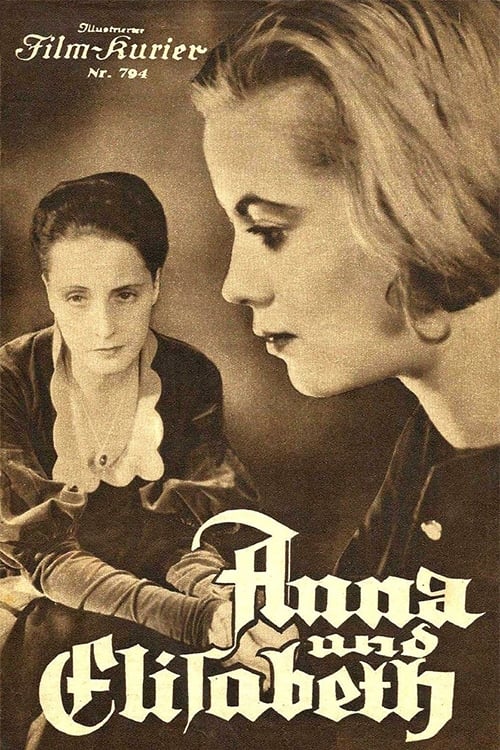
The first of these was "Anna Und Elisabeth" which was released in April 1933 only four months after the Hitler was appointed Chancellor and only a month after the Enabling Act was passed giving him dictatorial powers and the same month Goebbels started to take control of the film industry. Thus it was one of the last films made under the old Weimar system although released under the Nazis before the imposition of a full censorship pre-clearance system who probably would not have otherwise allowed it through with it's theme of dark and mysterious supernatural powers and a vaguely lesbian subtext with the two stars of the acclaimed overtly lesbian themed "Madchen In Uniform'' (1932).
"ANNA UND ELISABETH" (1933);
Directed by Frank Wisbar
CAST;
Hertha Thiele ~ Anna
Dorothea Wieck ~ Elisabeth Testa
Carl Bathaus ~ Martin, Anna's Brother
Mathias Wieman ~ Mathias Testa
Maria Wanck ~ Margarete, Elisabeth's Sister
Willy Kaiser-Heyl ~ The Priest
Karl Platen ~ The Doctor
Roma Bahn ~ Mary Lane
Dorothea Thiess ~ Anna's Mother
Plot Synopsis (spoiler alert); Anna is a young woman in her late teens living with her parents and brother in a small town who seems to have a faith based power to cure illness and even death by her touch as she is able to raise her brother from the dead after an unexplained illness. The town Doctor declares it a miracle but the town Priest is skeptical. Local villagers hear about the miracle and begin to gather outside the house wanting to be cured, including an old woman with a spinal neck injury. Anna is hesitant to accept her new powers but the woman takes her hand and claims that she has been cured. The Priest tells the townspeople to go home but the old woman tells them of her cure and they stay.
Elisabeth is a wealthy woman who lives with her husband Mathias and younger sister on an island outside town and who has suffered and unexplained illness or injury which has confined her to a wheelchair. She is desperate for a cure and hearing about Anna sends her husband to summon her. He is reluctant and does not believe in faith healing but he does meet with Anna. She tells him she is scared and tired and he is sympathetic but he does convince her to visit the island and meet with Elisabeth. The next moring she heads out alone in a rowboat to the island and meets with Elisabeth who begs for a cure. Anna again denies she has any powers and turns to leave. As she does, Elisabeth rises from her wheelchair and suddenly has the power to walk. The two women return to town where word has already spread and the old and sick of the town are waiting for them. Elisabeth insists that Anna come and live with her so her healing powers can be properly managed and she will be safe from the crowd and she agrees. Elisabeth keeps Anna isolated from the town and her family. Mathias and her sister try to talk Elisabeth out of the arrangement as does the Priest. Anna's brother Martin sneaks into Elisabeth's manor to talk Anna into leaving but while Anna says she is unhappy she also now believes in her powers. Elisabeth's husband visits the Priest and expresses his continued doubts. Elisabeth is visited by Mary Lane, a promoter who proposes a partnership to send them on tour to publicize Anna's gift but Elisabeth sends her away. Elizabeth meets with the Priest who tells her that the Church has heard about Anna and is sending an investigator to evaluate her. Elisabeth suggests a public demonstration at the Church. Elisabeth's husband has been ill and has been getting worse and now Elisabeth is informed that he appears to be dying. She sends for Anna to cure him. Anna comes to his bedside and prays but it is no use and he dies anyway. Both women are upset and run away separately. Back at the Church the villagers are gathering bringing their sick relatives to be cured. Elisabeth finds Anna to convince her to come to the Church but Anna refuses saying she failed to cure Mathias. Elisabeth says he died because he had no faith and Anna says she has lost her faith as well and again refuses. Despondent Elisabeth wanders off alone. Anna tells Martin she is now concerned about her. Elisabeth wanders to the edge of a cliff and Anna has a vision of her jumping off. She and Martin run to the Church for help and we are next shown Elisabeth in bed dying with Anna, Martin and the Priest present. She says that she will soon be free as will Anna as the scene fades out. Finis.
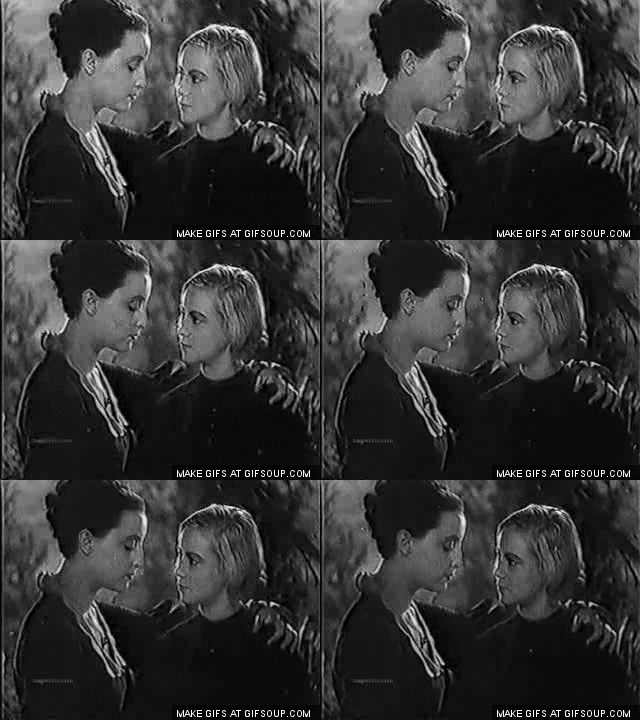
In "Madchen In Uniform" Hertha Thiele had played a teen sent to a girl's boarding school where she falls in love with one of the headmistresses played by Dorothea Wieck in a film that is widely seen as one of the finest of the Weimar's brief sound film era and is now considered a minor classic especially for it's largely sympathetic portrayal of a same sex relationship and the performances of it's two stars. The film was not only acclaimed by German critics but also in foreign countries where it was exported to rave reviews. Accordingly the reunion of the two stars was anticipated and modern film historians have noted a gay subtext in the relationship between the two women here they may be reading too much between the lines. Elisabeth's obsession and possessiveness of Anna is certainly unhealthy it appears genuine and aside from a few lingering close up shots of the two gazing inscrutably at each other it's hard to see any real sexual subtext here especially as Elisabeth is clearly in love with her devoted husband. The film's religious theme is clearly more central as Anna is seen as a sincere if conflicted believer whose power comes from prayer and is accepted as such by everybody else. When she is successful in curing people it is seen as her being a vehicle while her failure to save Mathias is blamed on his lack of faith. Interestingly the only other figure besides Mathias who doubts her powers is the town Priest with even the Doctor calling her cures miracles. The ending is ambivalent; Anna says she too has lost her faith and thus her powers yet she does have a vision of Elisabeth jumping to her death and while at the end Elisabeth is show apparently on her death bed and it's implied she is about to die she doesn't actually do so as we fade out and the fact that she has survived such a fall at all is something of a miracle. Does Anna still have her powers after all? It is unclear.
With it's religious and supernatural themes this is an oddity in German film and while not exactly Expressionist, with its themes of fantasy, the supernatural, isolation and self doubt it does show some Expressionist imagery that would become rare in the Nazi era. The town is typically Expressionist with it's crumbling houses and winding claustrophobic lanes looking like those of "Der Golem" and the various Street Films such as "Die Strasse" and "The Joyless Street" and the island that Elisabeth and Mathias live on seems like a fantasy with their grim manor surrounded by jagged trees although the manor's interiors are simple and unadorned. The film makes little use of Expressionist tropes of shadowplay with most of the action taking place during the day aside from a scene where Elisabeth, still in her wheelchair, is presented with the shadows of window blinds appearing to show her behind bars and when Elisabeth is upset or Anna has her vision of Elisabeth at the cliff's edge we get some soft focus blurriness.
The films setting of an ancient looking village and Elisabeth's mysterious island further the film's odd dreamlike atmosphere as does it's sense of being slightly out of time where most of the characters dress in contemporary clothes but there seem to be no modern devices such as phones or even electricity until the publicist Mary Lane drives up in her car and her very modern clothes and being very pushy and arrogant. It's worth noting that aside from the cynical Mary Lane the other character who has a distinctively modern look is Mathias who does not believe in miracles. In a scene where he is at the manor waiting for Anna he is shown sitting at the piano bathed in light although looking forlorn. In the end he dies but we never really learn whether Anna's powers are real or not or what will become of her or what the nature of her symbiotic relationship with Elisabeth was. Like most early sound films, director Wisbar seems unsure of what to do with music in the film and it's used sparingly aside from the typically overly melodramatic opening.
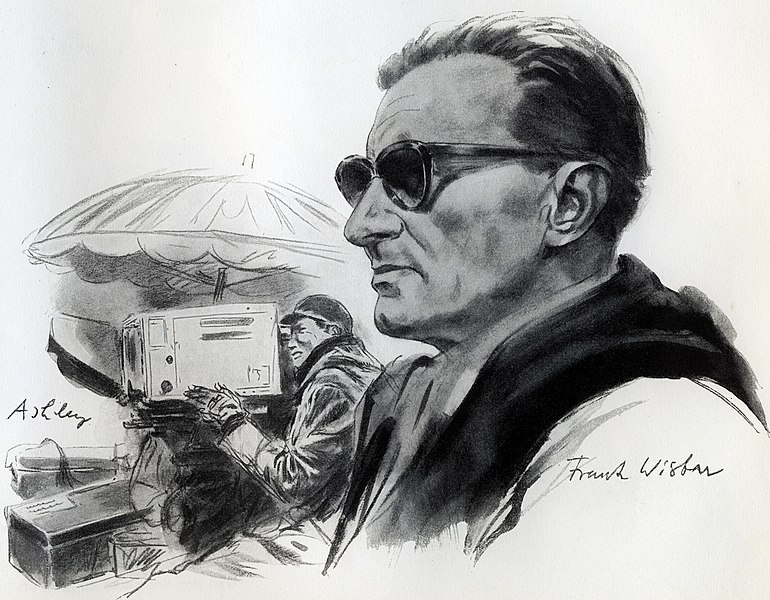
FRANK WISBAR
As this film was actually made before the Nazis took over the film industry, Goebbels imposed his film vision so it had little interference of the sort he would become notorious for. In fact it's an open question as to whether he would have even allowed the film to be made at all. The Nazis were hostile to most portrayals of the supernatural, magic and mysticism aside from their own official glorification of their supposed sacred Aryan mythological past (which Goebbels and even Hitler privately ridiculed to some degree) and the very Catholic mysticism of this film would have made them uneasy. There were other Fascist regimes (especially Franco's or Vichy France) that would have accepted the films's mystical premise but this was a poor fit for the Nazis. Despite the fame of its two leads the film was not a success with critics puzzled by it's ambivalent theme, muted tone and downbeat ending. It got an even more lackluster reception abroad. This was was actually one of the last German films to be exported as soon Geobbels would impose restrictive quotas on foreign imports aside from a few friendly countries like Italy. Predictably those countries, including America and most of Europe quickly responded with quotas of their own and along with boycotts of Nazi goods essentially collapsed the German export market for the rest of the Nazi era. Previously "Machden In Uniform" had gotten rave reviews but American critics found this film slow and muddled. Eventually Goebbels did get around to banning the film after it had already been shown and unlike "Madchen" it has been largely forgotten today although Hertha Thiele always listed it as one of her favorite roles. In their books Kracauer mentions the film only in a footnote while Eisner dimisses in in passing as "not a success".
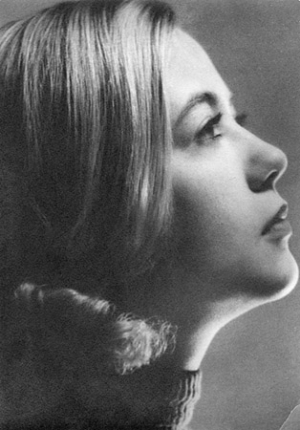
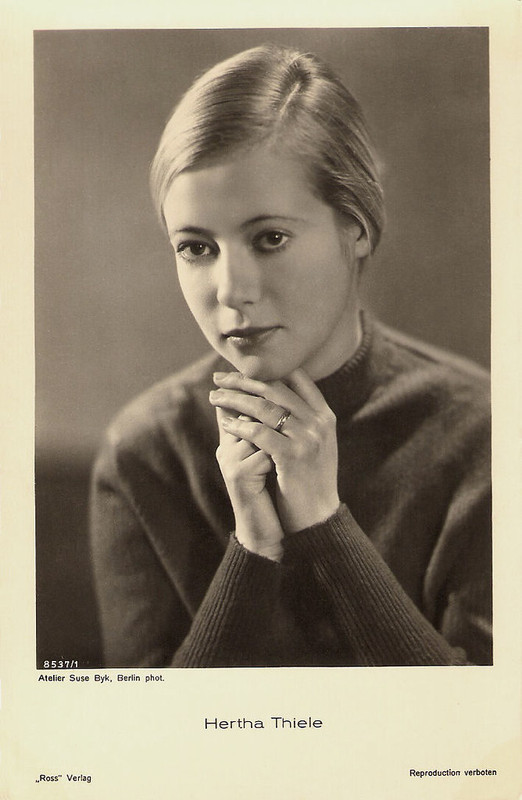
HERTHA THIELE
The two leads would have different careers under Nazi rule and afterwards. Hertha Thiele (born 1908), being another young pretty blonde, was naturally popular with Nazi feminine ideals and like Brigitte Helm was offered big roles if she would agree to play ball with the Nazi propaganda machine but as a supporter of leftist causes she breezily refused and soon found herself sidelined and in 1937 also like Helm she moved to Switzerland. After the war she moved back and forth between Switzerland and East Germany where she found some work in theatre and TV. Late in life she was able to see her work be reconsidered by German film historians, especially for "Madchen". She died in 1984 aged 76.
Dorthea Wieck (born 1908, note that while in their films together Wieck always played the older woman they were actually the same age) was originally Swiss but moved to Germany as a child and started acting onstage and silent films in her teens. She was noted for her soulful but dignified dark eyed beauty and racked up a long list of film roles even occasionally appearing in American films. Like Asta Neilsen, Brigitte Helm and Theile she was popular with the Goebbels and Hitler but unlike them she was willing to be wooed by the new regime with her husband, a wealthy Baron, being a Nazi supporter and she continued to work easily throughout the era even being given special praise by Goebbels. After the war such an association would be enough to effectively end the careers of the likes of Leni Reifenstal, Emil Jannings and Werner Krause but Wieck seems to have convinced the West German authorities that she hadn't played any significant propaganda role for the regime and she was allowed to continue her career albeit in supporting roles into the sixties when she effectively retired. She died in 1986 aged 78.
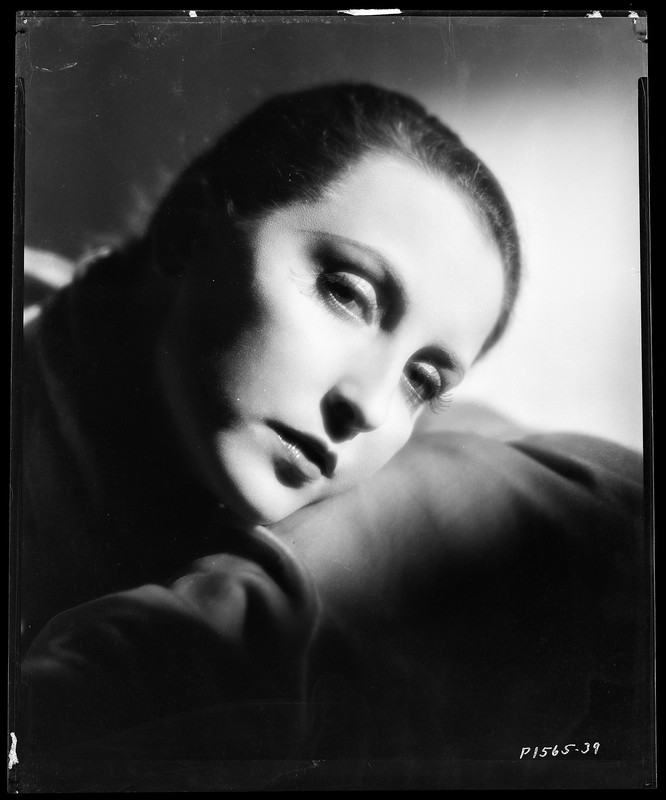
DOROTHEA WIECK
Director Frank Wisbar would have a unique career under the Nazis. Born in 1899 but not starting his film career until 1932 meant that unlike most directors of his time he did not make any silent films although he reportedly did work as an assistant director on the aforementioned "Madchen In Uniform" and Carl Dreyer's near silent "Vampyr", His own tastes seemed to run from odd supernatural themed melodramas to frothy comedies. It was the latter films that were popular with Nazi authorities including winning an award in 1935 and although he made no overt propaganda films it was probably these films that allowed him enough freedom to make the few supernatural films released in that era including the strangely Gothic Expressionist "Farmann Maria" in 1936.
"FAHRMANN MARIA" (1936);
Directed by Frank Wisbar
CAST;
Sybille Schmitz ~ Maria
Albert Moog ~ The Refugee
Peter Voss ~ Death
Karl Platen ~ The Ferryman
Carl De Vogt ~ The Fiddler
Gerhard Bienert ~ The Wealthy Farmer
Plot synopsis (spoiler alert); Set in the late nineteenth century in a rural village which is in a moor on a river which must be crossed via a small wooden ferry run by an old ferryman, one day a mysterious man appears waiting for a ride across the river. The stranger is tall, silent and dressed all in black. He does not speak but as the he is crossing the river the Ferryman suddenly dies and the stranger returns to the other side of the river leaving the village without a ferryman. Maria, a young woman passing through in need of money agrees to take the job which requires living in a small cottage on the river bank. One night a man arrives on the opposite bank exhausted and begging to be ferried over the river saying he is being pursued. Maria ferries him across just as six men ride up dressed in black and riding white horses. Seeing the man has crossed the river they turn and ride off without a word and the man collapses and Maria hides him in her cottage. The next morning the Refugee tells her he comes from a rich farm country which is under attack from an unknown enemy he has being on the run from which she had rescued him from and now he intends to return when but he promises to return. Other men appear from the village to crudely try and seduce Maria including a wandering fiddler and a wealthy farmer but she rebufs them as she has become infatuated with the Refugee. He becomes sick and feverish and has visions of the Black Riders returning. As he sleeps and the village prepares for it's harvest festival the tall silent stranger in black returns to the far bank and waits to be ferried across. As Maria pulls him across the river he asks her if she has carried across an injured man and at first she denies it but when the Stranger turns to look in her cottage she tells him the Refugee has gone to the village. She takes the stranger to the village where the festival is in swing. All the villagers regard the Man in Black with fear. The wealthy farmer who had accosted Maria earlier assumes she and the Man In Black are on date and challenges him to shoot dice for the honour of a dance with Maria which the stranger wins. As the Man In Black searches for the refugee Maria tries to distract him by dancing with him during which she feels faint. The farmer, now jealous interrupts the dance and accuses Maria in front of the villagers of having harbouring the stranger in her cottage and she runs away. Fleeing to a church she prays for help saying he would give her life to protect the refugee but the stranger Man In Black and says her prayers are useless. Maria tries to ring the church bell to summon help but no sound comes out. She breaks down and agrees to guide him through the moor to her cottage but she leads him astray and he stumbles into the marsh and is dragged down to drown. Maria returns to the cottage where the Refugee has awakened and she agrees to go off with him. They cross the river which is revealed to be rich farmland and they walk off together. Finis.
~~~~~~~~~~~~~~~~~~~~~~~~~~~~~~~~~~~~~~~~~~~~~~~~~
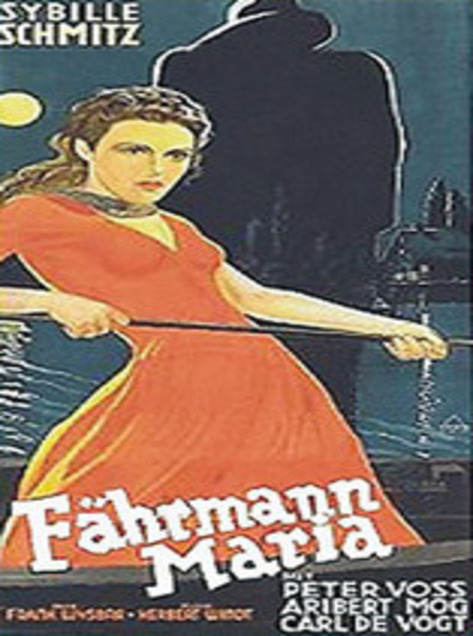
This is a more explicitly Expressionist film than "Anna & Elizabeth" both in its subject matter dealing with death, nightmares and the supernatural and in it's visual themes. Much of the film is shot at night and the swamp looks appropriately eerie and dreamlike. In fact the swamp looks remarkably similar to that in FW Murnau's "Sunrise; A Song Of Two Humans" which is probably not a coincidence. The Black Riders are especially arresting visually and in turn bear a striking resemblance for modern viewers to the Black Riders of Tolkien's "The Fellowship Of The Ring" although that probably is a coincidence. The figure of Death (assuming that's who he is) resembles classic Expressionist villains such as Dr Caligari, Count Orlack and Scampinelli from "The Student Of Prague" and his death as he is wordlessly sucked into the dark mire is a striking image that resembles the death of the villian Stapleton in the classic Sherlock Holmes "Hound Of The Baskervilles" and Dreyer's "Vampyr" suffocated in white powder. The character of the old Ferryman in turn exactly resembles the Renfield character from "Nosferatu" although they are not the same actor. As Maria, Sybille Schmitz is not the typical blonde Aryan leading lady but instead with her dark hair, sharp features and brooding stare she reminds one of classic Expressionist heroines Lil Dagover ("Caligari"), Lyda Salmonava ("Der Golem" and "The Student Of Prague") and Greta Schroeder ("Nosferatu") like Schroeder's Ellen, Maria is prepared to sacrifice herself for her love and again like Ellen she defeats Death by tempting him and then leading him to his doom. Unlike Nosferatu however who lusts creepily after Ellen here Death is impassive and seems to have little actual interest in her and she succeeds not by tempting him but through trickery. In another similar trope from Expressionist films Maria is in fact the only character to have a name as the others are essentially two dimensional symbols or archetypes with only Maria having any real character development.
This is a better film than "Anna & Elisabeth" with a more coherent story and a stronger lead character. The visual themes are also better done and more consistent. Like "Vampyr" this could just as easily have been a silent film although it does make better use of music especially the menacing fanfare when Herr Death appears to Maria the first time although like other films of the era it does pad things out through musical interludes using the Fiddler character that could have been left out.
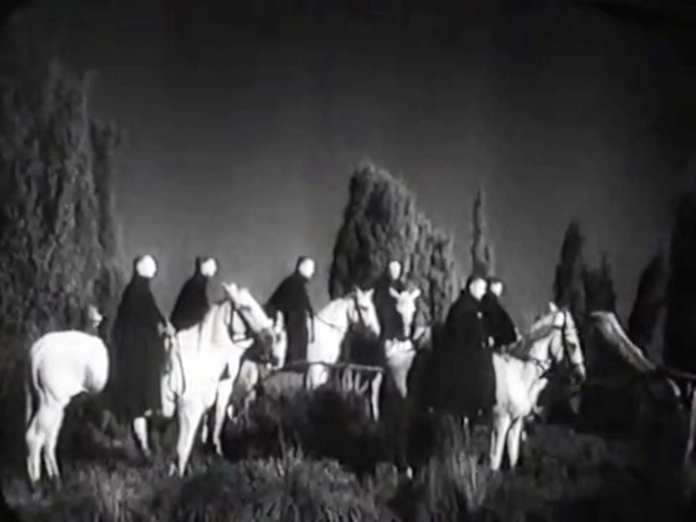
THE BLACK RIDERS
Besides the mystical themes some observers even at the time noted some veiled analogies to the Nazis in the form of Death and his Black Riders dressed in impecable black like Hitler's SS and the film is unique in the Nazi era. In fact Geobbels for his part disliked the film and considered it a failed experiment yet he still allowed it to be released partly because he was still trying to reassure the film community he would not micromanage them and possibly because he thought it might find a potential export market. In the event it found no audience either in German or abroad and was largely ignored by critics and has been all but forgotten today. Although it is sometimes referred to as the last example of pure German Expressionism it does not even rate a mention in Siegfried Kracauer or Lotte Eisner's books.
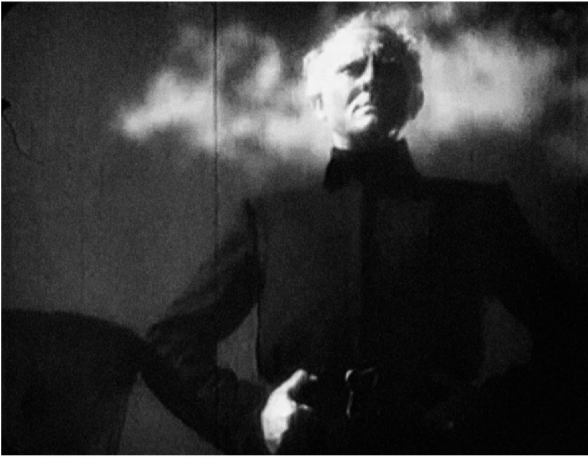
PETER VOSS AS DEATH
The same year Wisbar teamed up with Sybille Schmitz for another odd mystery film. "Die Unbekannte" (AKA "The Unknown") was based on a German novel "The Unknown Woman Of The Seine", which was in turn based on the true story of a woman whose body was fished out of the French River Seine in the 1880's. She was never identified even after her body was put on display and hundreds filed passed and her death mask was published in the papers. The mystery of her identity and the apparently serene look on her face fascinated artists in Europe in the 1890's inspiring books, paintings and sculptures. In this telling of her story the woman is named Madeline (played by Schmitz) and she is a high priced courtesan who tires of her life of parties and affairs and decides to leave Paris and falls in love with a wealthy German adventurer Thomas Bentick (played by French actor Jean Galland in a likely play for the export market) who invites her to stay at his house and and her to join him on a planned trip to Africa. However she is recognized by one of her past clients who threatens her with blackmail. Bentick is also a diplomatic agent for the German government and he is charged with a last minute secret mission forcing him to cancel his trip with Madeleine. Hearing about the cancelled trip and fearing her past will be used against her and will ruin his reputation the distraught Madeline drowns herself in the River Seine where she is found by the police who can not identify her.
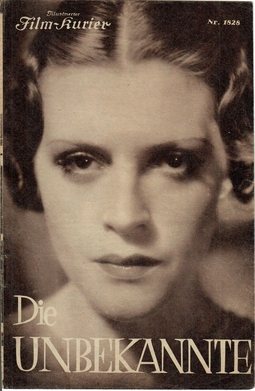
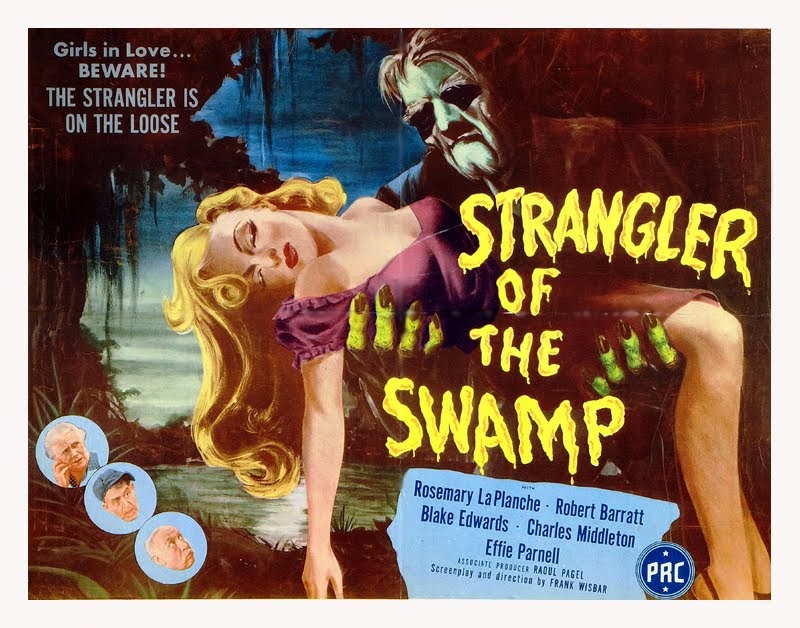
This film has similar themes to the 1927 film "A Tragedy Of The Streets" starring Asta Neilsen (which I wrote about here) and could have certainly been shot in an Expressionist style however this time Wysbar chose to film the story as a straightforward romance which is rather bland as well as being overly talky and having little chemistry between the two leads. This is not an Expressionist film and has no such imagery so we need not spend more time on it. As a trivia note one of the supporting roles was played by the young Curt Jurgens who would later play the one of the most iconic Bond villains in "Goldfinger". Once again this film was not a success and hereafter Wisbar would return to the kind of frothy escapist romances that were favoured by Goebbels and the public at large for the next few years. Before the war he gave up and moved to Hollywood where he would have a long career mostly making low budget thrillers and later into television. In 1946 he made "The Strangler In The Swamp", inspired by and using some of the same imagery as "Fahrmann Maria".
"THE STRANGLER IN THE SWAMP" (1946);
The comparisons with "Fahrmann Maria" are obvious with its swamp, ferry, beautiful ferryman and mysterious stranger. But while this film is often billed as a remake of the earlier German film it is substantially different in it's story and themes entirely lacking the mysticism and mystery of the earlier film and is really a melodramatic ghost story. Instead of the enigmatic figure of Death the stranger is a vengeful ghost knocking off those who unjustly hanged him years before after framing him for murder. Since the stranger is a ghost there is no need for the Black Riders and they are completely absent, robbing the film of one of the earlier film's most memorable images. The Refugee on the run from an unknown foe is now a son returning home from the big city and there is still a Maria but while in the earlier film she was another wandering stranger her she is also a daughter returning from the city leaving a fairly conventional romance. This time she does not stand alone as there is the young man's father who sides with her and while as in the earlier film she does offer to sacrifice herself once she does so the ghost vanishes willingly rather than being lured into the swamp and drowned thus removing the earlier film's second most memorable image. This film does keep some of the visuals of the earlier film and even improves on the atmosphere of the swamp which is even more dark, foggy and eerie but the overall mood of this film is different and this is basically a romantic ghost story. Note the young man here is played by a young Blake Edwards who would later go on to become a writer and director responsible for the classic Pink Panther movies.
Sybille Schmitz would also star in another crime film which would make effective use of some themes from Expressionism and the related genre of Street Films from the Weimar era, this time directed by Carl Froelich who had produced "Madchen In Uniform".
"I WAS JACK MORTIMER" (1935);
Directed by Carl Froelich
Cast;
Anton Wohlbruck ~ Fred Spooner
Eugen Klopfer ~ Pedro Montemayor
Sybille Schmitz ~ Winifred Montemayor
Marieluise Claudius ~ Marie Polikow
Hilde Hildebrand ~ Daisy
Plot Synopsis (spoiler alert);
Fred Spooner (Wohlbruck), a struggling Budapest taxi driver, is frustrated because he wants to marry his girlfriend Marie (Polikow) who works in a restaurant with her Russian emigre family. His big break seems to come one day when he assists a beautiful and wealthy Daisy (Hildebrand) with the engine of her car and is hired by her to act as her chauffeur on a trip down to Monte Carlo on very good wages. Fred tells Marie about his new job but tries to conceal that his new boss is a beautiful woman. On the same day celebrated conductor Pedro Montemayor (Klopfer) arrives in the city for a concert, accompanied by his younger wife Winifred (Schmitz). He is jealous, possessive and arrogant and his bullying has led her into a romance with American Jack Mortimer, who is also scheduled to arrive in the city that day and stay at the same hotel. Pedro has been spying on Winifred and has become aware of the affair.
Shortly after Fred picks up Mortimer in his taxi from the station, Montemayor shoots him dead from another car, then he dashes off to appear at a concert he will be conducting that night. At first Fred does not notice his passenger is dead when he does he at first tries to go to the police, but they are preoccupied and he becomes suddenly alarmed that he will be blamed for the murder he goes to his new boss Daisy and explains what happened, she advises him to go to the police and she dismisses him. Distraught, he drives through the city before dumping the body in a pond several miles away; however he forgets the suitcase left in the cab. He returns home and tells Marie of his plight, she too advises turning himself in and telling his story to the police but he refuses and she agrees not to tell the police.
Increasingly desperate, he remembers that he still has the dead man's bags in his cab. Realizing he bears a strong resemblance to the dead man and reasoning that if the American was known to have turned up at the hotel he won't be linked with his death he changes into Mortimer's elegant clothes and goes to impersonate him at the hotel for a brief time to establish his own alibi.
Winifred has become worried about Pedro's suspicions and tries to warn Mortimer by sending him a note and trying to call him but gets no answer. As she sits in the audience at the start of Pedro's concert Daisy arrives and tells her male companion about Fred's plight and Madeline partially overhears enough to be afraid that Mortimer may be the victim and she quickly leaves to try and phone Mortimer at the hotel. Unable to raise him on the phone she rushes off to his hotel and arrives to find Fred instead of Mortimer. In the midst of his concert Pedro notices Madeline has left but must wait until after the concert before he can leave and he too rushes off to the hotel to find Madeline and Fred. In the confrontation Fred blurts out that Mortimer is dead and Pedro accuses him of the murder. Madeline faints and Fred runs away, locking Winifred and Pedro locked up together in the hotel room.
A worried Marie sets out to look for Fred who has gone to the restaurant where she works but they miss each other and he sits down to wait for her. Her father who also works at the restaurant asks where Marie is but Fred brushes him off. A fellow cabbie shows up and tells him that blood has been found in the cab and the police are looking for him. Marie's Father overhears and demands to know what fred has done to Marie and fred runs off again. Marie has returned home but seeing police arriving dashes off to warn Fred. She hides in a party where a dance is going on and Fred finds her and she convinces him to turn himself in and they return to the hotel. Meanwhile Winifred and Pedro locked up together have been talking and he confesses to her. She tells him his jealousy has destroyed their marriage and he decides to call the police and turn himself in. Fred and Marie arrive at the hotel as Pedro is confessing and fred confesses to dumping Mortimer's body and impersonating him saying "I was Jack Mortimer". Pedro is led away accompanied by Madeline and the final shot is of a poster of Pedro being papered over. Finis.
=================================================================
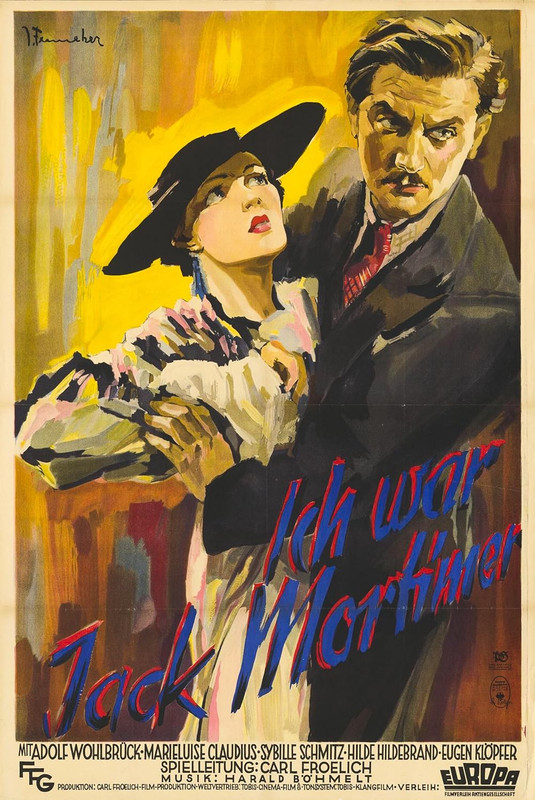
The film starts slowly and conventionally, shot in realistic style but once Mortimer is shot director Froelich makes use of the full arsenal of techniques from Expressionist and Street films as the cab races through darkened streets through pools of light reflecting off damp pavement. As Fred becomes more distraught his state of mind is shown through a rapid montage of blaring trumpets, close-ups of accusing faces, honking car horns and a dramatic shot of the empty cab with it's lights shining menacingly. Once Pedro notices Madeline is missing we get another montage of blaring musical instruments and a shot of Madeline's empty chair bathed in light glaring down at him. Significantly while the early part of the film was shot in daylight with regular edits and shots after the shooting most of the action is at night and sometimes obscured by shadow with faster edits and closeups to reflect the emotional states of Fred and Pedro. As Pedro, the possessive overbearing husband, Eugen Klopfer bears a strong and probably not coincidental resemblance to classic Expressionist villains played by Werner Krause, Emil Jannings and especially Paul Wegener. Unlike Frank Wisbar's films Froelich has plenty of music and makes good use of it during the scenes of Fred's cab racing through the streets and the montage of his thoughts with a tense blaring fanfare. Another clever use of sound that would not have been available in a silent film is the scene where Madeline strains to overhear as Daisy tells her date about Fred's story but is drowned out by the applause of the audience. Unlike classic Expressionist films which made use of artificial stage sets for a sense of unreality, something the two Frank Wysbar films did, this film uses realistic looking sets and street scenes which are clearly shot on location which is something it does have in common with the later Street Films like "Asphalt" (which it most closely resembles) and the sound crime film "M". Like many of the male characters in the Street Films the lead character Fred is a naive sap who is largely responsible for his own troubles through his own lying, panic and childlike short sighted stupidity (he is wrong every step of the way) and Pedro is an arrogant, jealous bully while the women; Marie, Madeline and Daisy being the only sensible ones who the men of course largely ignore.
While this film is not strictly Expressionist it makes excellent use of Expressionist techniques and is probably the best German Film Noir of the era. Goebbels disapproved of crime films in general feeling they encouraged moral relativism and such films were uncommon but once again he allowed this film through perhaps recognizing its obvious quality and once again hoping it might find an international audience in the export market he had not yet quite given up on. Another possibility in getting the film the green light might lie in director Carl Froelich. While some directors who chose to stay in Germany such as Frank Wysbar and GW Pabst who basically stayed away from controversy to keep their jobs but avoided making overt propaganda Froelich became a Nazi and willingly made propaganda films for the regime. Froelich had a respected career going back to the Great War specializing in lush historical dramas including a biopic of Wagner, Hitler's beloved opera composer. He didn't actually join the Nazi Party until 1933 suggesting he was at least motivated more by opportunism but quickly became a favoured director being given the honorific "Filmprofessor" and being appointed director of the Reichskulturkammer, a trade organization which regulated all artistic activities in the Third Reich in 1933, a title he held until the fall of the regime. After the war his activities earned him an arrest and trial at one of the Denazification tribunals although he managed to evade a jail sentence his career was essentially over and he would make only two films before his death in 1953. In his book about cinema under the Nazis David Hull notes Froelich's genuine talent but laments his willingness to serve the Nazis which has likely led to this otherwise fine Noir genre film being forgotten.
Eugen Klopfer, who plays the bullying Pedro, also became a Nazi appearing in the notorious hate film "Jud Sus" (1940) and being awarded various titles and official positions in film and theatre. The fall of the regime also earned him an arrest along with a two month prison term in 1948. He would be banned from film work although after his release he was able to return to stage productions before his death in 1950. Leading man Anton Wohlbruck was no Nazi and being both half Jewish and gay he fled to Britain in 1936 where he continued acting in film including twice playing Prince Albert in biopics of Queen Victoria and the original version of "Gaslight". He retired from film in 1958 and returned to Germany where he worked occasionally on stage and TV until his death in 1967.
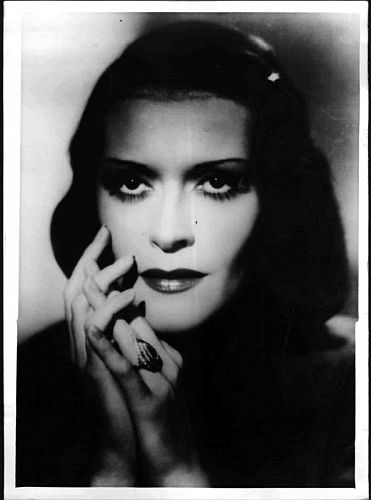
SYBILLE SCHMITZ
Sybille Schmitz would become a tragic figure. Born in 1909, had began in small roles in the low budget 1928 street film "Polizei Uberfall" (which I wrote about here) and the big budget GW Pabst/Louise Brooks film "Diary Of A Lost Girl" and Dreyer's "Vampyr" (which is presumably where she met Wysbar). Besides the Wysbar films she would also appear in the usual popular big budget romances where with her non Aryan looks and moody persona she was never popular with Goebbels who was probably also wary of her scandalous personal life which included alcohol and drug abuse and numerous affairs with both sexes. While she was not considered a leading lady she still continued to find decent roles playing exotic or vaguely dangerous fallen women in unusual (in the Nazi era) films like the crime film "I Was Jack Mortimer" (1935) and the sci-fi film "Master Of The World" (1934) and the big budget "Titanic" (1943). Although she played no significant propaganda role her continued success in the Nazi era and particularly the notorious "Titanic" dogged her in the post war era and she found herself shunned and harder to find work. By now in her forties and increasingly mentally fragile she died of a drug overdose in 1955 with the suspicion that her then live-in female lover, who was also her doctor, had been draining her funds and keeping her dependent may have been responsible for her overdose. She was 45.
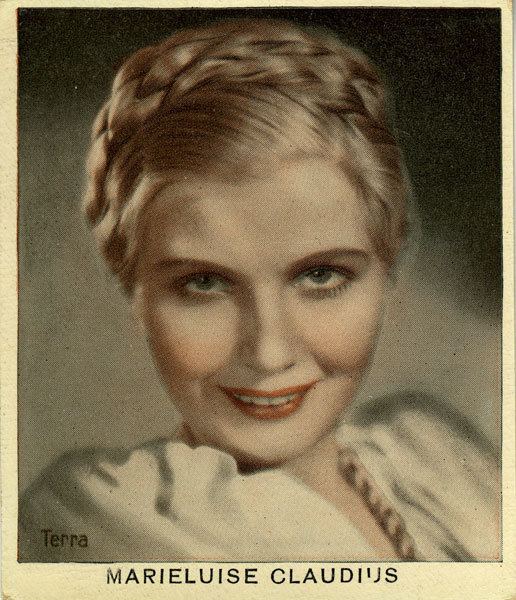
Marie Louise Claudius was only aged twenty two at the time she played Marie here but she had been acting since she was a teen. She would also appear in the odd and popular Sherlock Holmes reworking "The Man Who Was Sherlock Holmes" (1937) but her career would be short however as she died of a sudden heart attack in 1941 aged only twenty nine and her grave would be lost in the chaos of the war and bombing. Hilde Hiledbrand at Fred's employer Daisy had appeared in the original version of "Victor/Victoria" (1933) and continued on with her career into the TV age, dying in 1976 aged 78.
Speaking of Sherlock Holmes as I mentioned in a previous article the character was always popular in Germany (Hitler himself was reportedly a fan) with adaptations going back before the Great War.The aforementioned "The Man Who Was Sherlock Holmes" was more of an odd light comedy filmed in a straightforward style and mostly in daylight but the "The Hound Of The Baskervilles" with its setting of foggy moors at moonlight was a natural fit for Expressionist techniques with two silent versions directed by Richard Oswald in 1914 and 1929 with a sound version being made in 1937.
~~~~~~~~~~~~~~~~~~~~~~~~~~~~~~~~~~~~~~~~~~~~~~
"THE HOUND OF THE BASKERVILLES" (1937);
Directed by Carl Lamac
Cast;
Bruno Guttner ~ Sherlock Holmes
Fritz Odemar ~ Dr Watson
Peter Voss ~ Henry Baskerville
Fritz Rasp ~ Barrymore
Erich Ponto ~ Stapleton
Alice Brandt ~ Beryl
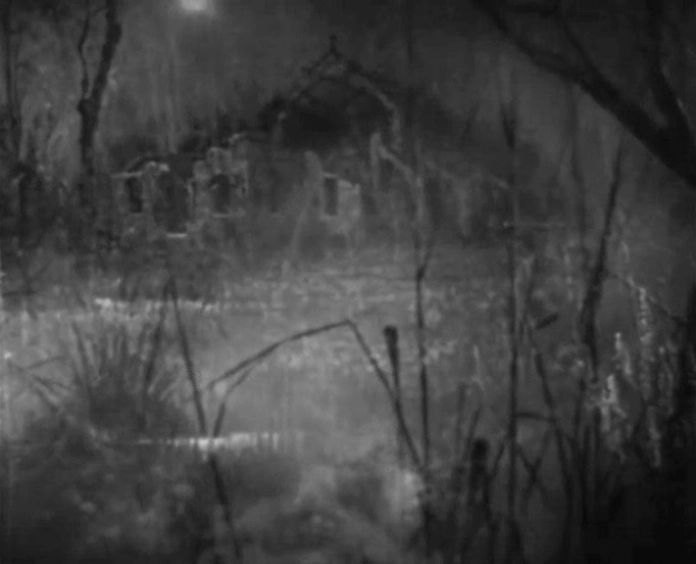
Unlike Holmes films of the era this film actually does keep reasonably close to the original Conan Doyle story and the acting from the mostly b-level cast while non-descript is competent enough with Bruno Guttner as Holmes oddly resembling Raymond Massey who had already played Holmes. The two previous silent German Holmes films directed by Richard Oswald made some use of Expressionist techniques with some fine camera work of dark and foreboding sets at night and some fairly kinetic camera work, this film is far more conventional until the characters get to Baskerville Hall and the windswept Grimpen Mire when director Carl Lamac gets to make use of by now standard Expressionist techniques and we get some appropriately foggy and gloomy moors these scenes are perhaps inevitable given the novel's plot and setting but Lamac also does some good interior scenes at Baskerville Manor which has the appropriate shadowy rooms, stairways to nowhere and a scene where Watson questions the suspicious looking maid and she is entirely in shadow silhouette. This is otherwise a conventional Holmes film largely forgotten by most Holmesians but it is arguably the best of the early sound era pre-Basil Rathbone classic Holmes films of which there had already been several starring the likes of Clive Owen, Reginald Owen, Raymond Massey and Arthur Wotner. These films were most pretty perfunctory while this film's use of Expressionist tropes does at least have a definite sense of visual style. Director Lamac was actually a Czech who had started his career around 1918 when Czechoslovakia was still part of the Austrian Hapsburg Empire continuing after the Great War in Czechoslovakia, Austria and Germany. After Czechoslovakia was annexed by the Nazis in 1938 he fled to Britain where he served the Airforce and made war documentaries. After the war he worked in Hollywood as a cameraman and technician before returning to West Germany where he made a few more films before dying in 1952 of kidney disease.
=========================================
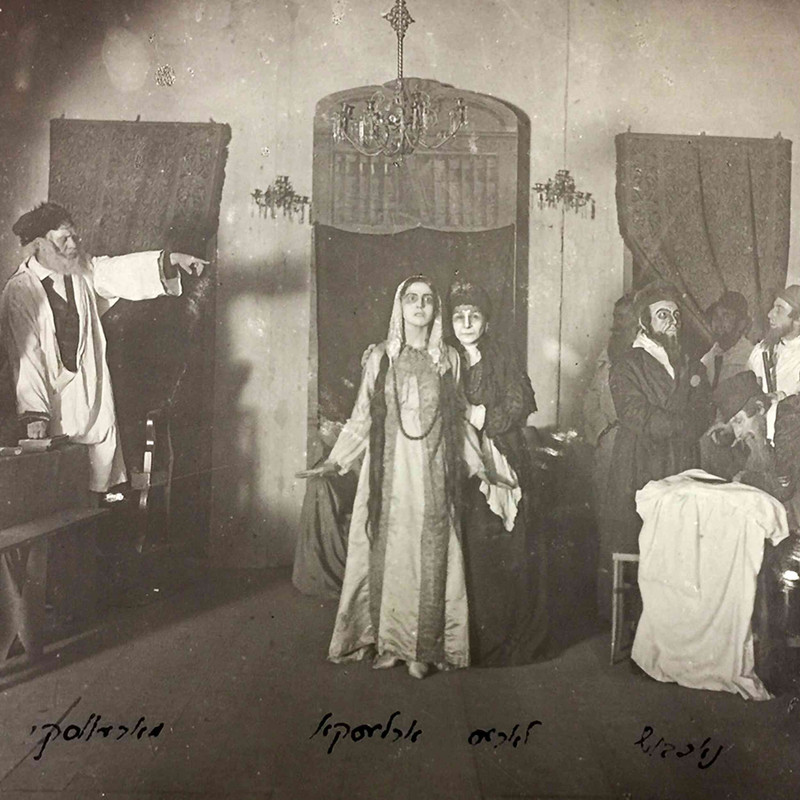
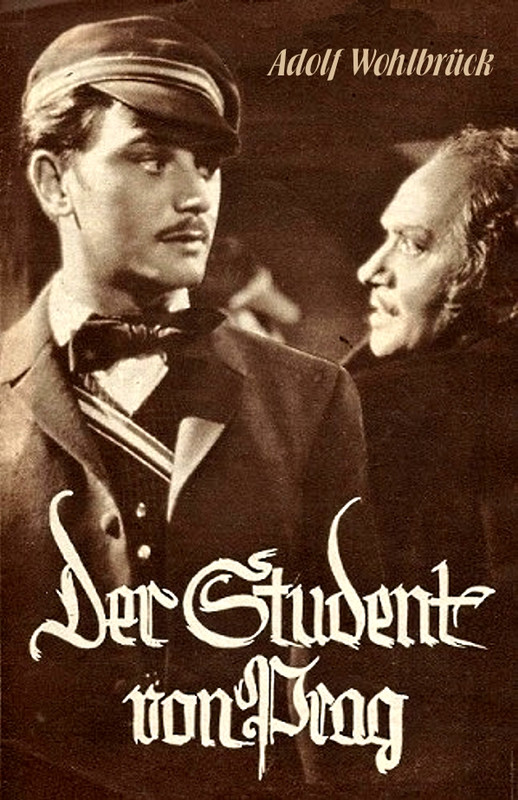
One of the classic Expressionist Horror films and also one of the first was "The Student Of Prague" (1913) starring Paul Wegener, best known for the even more iconic "Der Golem". These films established the basic Expressionist themes of dehumanization, isolation, madness and a nightmare world of shadows and fog and would later be remade in an even better and more artistic version in 1926 that reunited masters of Expressionist Horror acting Conrad Veidt and Werner Krause from "Caligari" (I already wrote about both films here). Perhaps inevitably there would be a sound remake in 1935. There had been a remake of the lesser known but still excellent "Alraune" (1928) with Brigette Helm of "Metropolis" fame in 1930 (both which I wrote about here) but otherwise few Expressionist Horror films would get the sound remake treatment. There would be no remake of "The Cabinet Of Dr Caligari" as it was probably considered too weird as well as being vaguely anti-authoritarian and "Nosferatu" had already been made as the American "Dracula" in 1931 while "Der Golem" was out of the question due to it's Jewish themes and setting. "The Student Of Prague" would then be the only such film to be remade in the Nazi era (aside from the partial exception of the version of "The Hound Of The Baskervilles" if that counts) and thus providing a unique chance to compare a classic Weimar silent with a Nazi era remake. This version would have some recognizable names in Anton Walbrook from "I Was Jack Mortimer" and Dorthea Wieck of "Anna Und Elisabeth" and "Madchen In Uniform" directed by Arthur Robison who had directed the 1923 Expressionist psychological film "Warning Shadows".
Rather than recapping the entire plot here I recommend reading the prior article I wrote about the earlier silent versions (which also has the actual full film of course, found here) but to cover the basics the plot revolves around Balduin, the titular student in late 19th century Prague, then part of the Austrian Hapsburg Empire. Balduin is handsome, popular and a champion fencer who has designs on Julia, an attractive & wealthy woman of higher social status played here by Dorthea Wieck. His rival for her affections is Krebs, a friend and fellow student and fencer. At the same time Lydia, a pretty serving maid (Edna Greyff) has a crush on Balduin who likes her but she is of clearly lower social status. Frustrated by his lack of money and status Baldwin is seduced by the promises of Scampinelli, a Svengali type figure who promises he can improve Balduin's prospects through shadowy magical means and Baldin accepts.Balduin than watches horrified but mesmerized as his reflection steps out of a full length mirror and comes to life. The Doppelganger seems to be a version Balduin without a soul or conscience and thus free to pursue Balduin's goals without being restrained by guilt and thus goes on spree of drunken debauchery, cheating at gambling, discarding Lydia to openly pursue Julia and ultimately killing his friend Krebs in a duel even though both had promised the duel would not be fatal. When the real Balduin discovers this he is appalled and confronted by the Doppelganger at first tries to flee but everywhere he turns the Doppelganger is there. Ultimately the Doppelganger returns to the mirror and dares Balduin to shoot him which he does shattering the mirror and his reflection but then he has a heart attack and dies. The story has obvious influences from the classic German fable of "Faust" (which would be made into a film version in 1926 directed by FW Murnau and starring Emil Jannings) along with "Dr Jekyll & Mr Hyde" (also made into a now lost 1920 version again by Murnau and starring Veidt) and Oscar Wilde's "The Picture Of Dorian Grey" so it's resonance in Germany was not a surprise and may be why Goebbels gave this film the green light along the the possibility that this story was universal enough to be a potential export product, a goal he never fully gave up on until the start of WW2.
The sound version has some notable differences from the two silent versions (both of which are almost identical in their plots and characters if not film techniques) some of which are more obvious than others.
"THE STUDENT OF PRAGUE" (1935);
Directed by Arthur Robison
CAST;
Anton Wohlbruck ~ Balduin
Theodor Loos ~ Dr Carpis
Dorothea Wieck ~ Julia
Edna Greyff ~ Lydia
Karl Hellmer ~ Krebs
One clear difference was that in the original films at least some of the characters appear to be Jewish including a scene where they talk in a Jewish cemetery. This is not a major theme in the film unlike in "Der Golem" which takes place entirely in a Jewish ghetto and the villains are the Austrian Hapsburgs but clearly any Jewish characters at all would be impossible unless they were some sort of lecherous, conniving moneylender, so it's no surprise to find all such traces removed here. Since this was only incidental to the original films this has no effect on the actual story here. More noticable is the change in the character and behavior of Balduin and his Doppelganger. In the silent films the Doppelganger appears as in effect Balduin's Id (to use a Freudian term the filmmakers may or may not have been aware of), capable of carrying out his not-so-secret desires without conscience or restraint. It is the Doppelganger that cruelly discards the devoted but lowly Lydia to pursue the wealthy upper class Julia, it is he that cheats at cards and ultimately kills his friend and rival until the real Balduin, plagued by guilt, rids himself of the interloper and thus destroys himself. This time Balduin himself carries out these acts (sometimes egged on by Scampinelli, especially during the duel) while the Doppelganger seems to be his conscience appearing to haunt him and remind him of his sins until Balduin destroys both. In the silent versions Balduin is horrified by the actions of in what is effect his own dark side which has committed crimes in his name and finally confronts him while in the sound version Balduin is instead appalled by what is in effect his own conscience reminding him of his own sins and it is that he destroys.
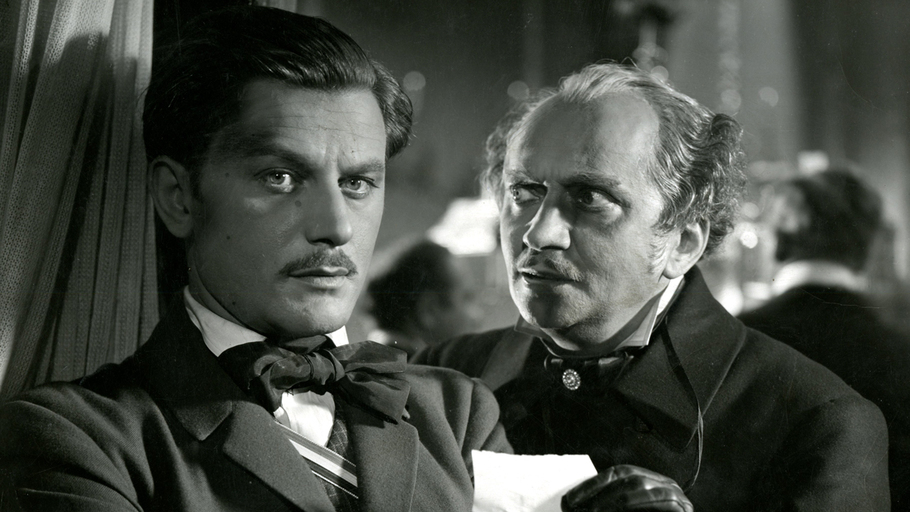
BALDUIN & CARPIS
I don't know if this subtle but real change in focus was intentional or what exactly it says about attitudes in Nazi mythology. In the silent versions Balduin is essentially a passive figure after making the deal with Scampinelli and it is the Doppelganger that commits the crimes which he only later becomes aware of and is horrified by. Unlike Faust who is fully aware of who the Devil is, Balduin does not even fully realize the deal he has made and is thus even less responsible for its ramifications. In the sound remake Balduin himself takes all actions and the Doppelganger appears as his conscience to plague him who he then confronts. Notably in while in silent versions the Doppelganger can and does interact with the real world characters, including killing Balduin's former friend in a duel, here the Doppelganger does not and does not appear to even be visible to anyone other than Balduin and Carpis. Both the silent and sound Balduins end up destroying himself but in doing so the silent versions at least perhaps regain their soul while if the sound version had been prepared to shake of his conscience (which never does more than basically nag him) as so many other Germans did under the Nazis, he would could have simply walked away without real consequences. In death the silent Balduins are also somewhat relieved to have vanquished their dark sides, sound Balduin gets no such release, he dies lamenting his lost innocence but having accomplished nothing.
The character of Scampinelli is also subtly different. In the silent versions he is a clear Mephisto character as in Faust with obvious powers both supernatural (including at one point controlling the weather) and Satanic while the sound version's powers are less overt. Here (remaned Dr Carpis) he is more of a scheming Svengali with some more subtle magical powers who manipulates through lies and temptation. Although the Nazis encouraged a lot of traditional turgid German pseudo-mystical blood & soil Aryan mythological claptrap at the same time Goebbels, and to a certain extent Hitler, were suspicious of and uncomfortable with overt supernatural themes in general and Christian themed ones in particular as distracting from the Nazi personality cult which had to be to a certain extent secular if it were to claim to speak for all Germans while excluding non Germans even if they be Christian. Which led to some cognitive dissonance in Nazi propaganda with the likes of SS leader Himmler spending millions of marks digging up ancient artifacts and party ideologue Alfred Rosenberg writing ponderous books to prove the Aryan's supposed timeless and mystical roots while behind closed doors Goebbels, Goering and sometimes even Hitler sneeringly dismissing Himmler's finds as "dirty shards of pottery" and Rosenberg's books as unreadable drivel. Downgrading Carpis from the divine Mephisto is well within the German Expressionist tradition anyway. Such spider-like manipulative villains were not uncommon in Expressionist films starting with Dr Caligari and continuing to the mad scientists in "Metropolis" and "Alraune" and the master gangster Dr Mabuse and having that character appearing to be a scheming foreigner was certainly acceptable to Nazi sentiment without even needing any supernatural powers. Note that in what was almost certainly a "suggestion" from Goebbels the character's name was changed from Scampinelli, an Italian name since Italy was now Germany's most important ally, to Carpis, often a Jewish name although the character is not explicitly so.
Setting aside the film's themes the addition of sound allowed for and indeed encouraged departures from Expressionist techniques as this film is of course much more talky and thus slower moving than the silent versions. The addition of sound allows the film to do something common in early talkies, add in plenty of music. Here the character of Julia is not a wealthy upper-class heiress but a successful opera singer this allows for her to sing two songs along with a few other numbers which also slow the film down and detract from the claustrophobic atmosphere so essential to Expressionism. Changing Julia from a noblewoman to a singer also changes what she represents from the old aristocracy always viewed by the Nazis with jealousy and suspicion to the kind of celebrities created by the star system they actively encouraged. In fact unlike most of the earlier films we have surveyed here which used music sparingly this film uses lush melodramatic and romantic background music through out with the same soaring strings and blaring horns as in any similar conventional Hollywood which further distances the viewer from the sort of immersive dream world of Expressionism. Whereas the silent versions are horror films this film is more firmly in the already popular and mainstream of historical romances already popular in Germany and prefered by Geobbels and Hitler albeit one apparently set in the Twilight Zone.
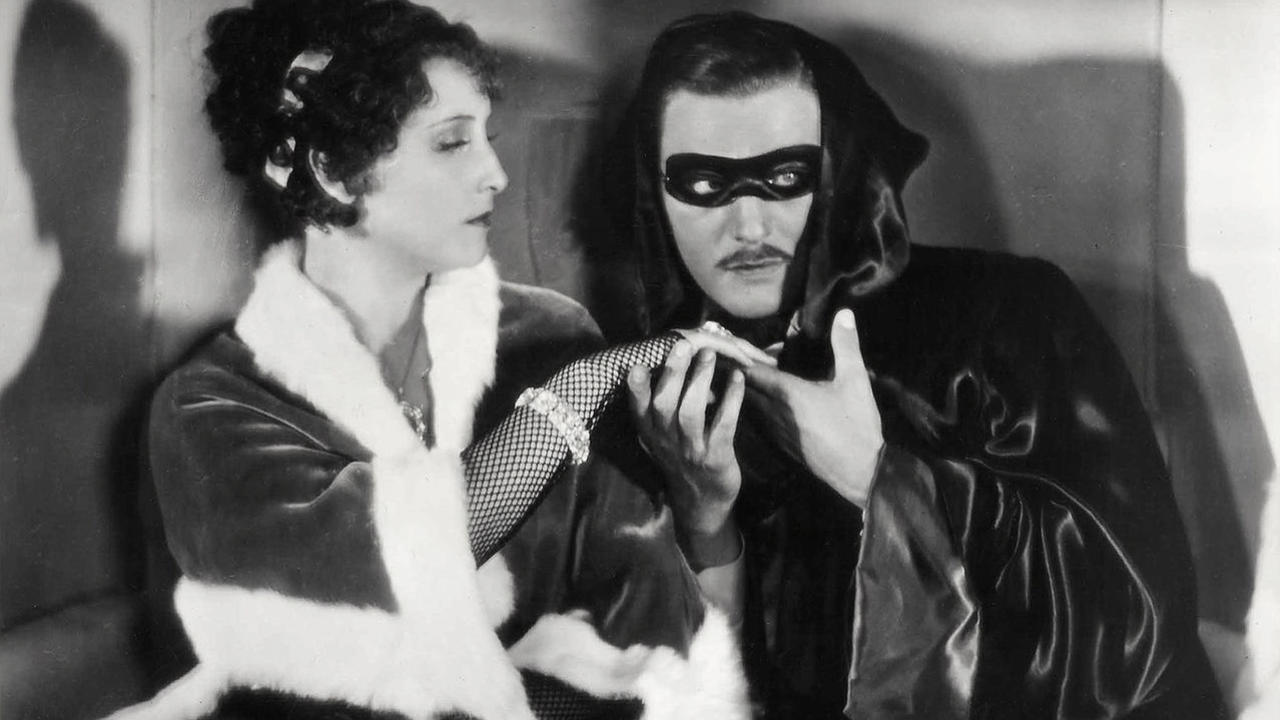
BALDWIN & JULIA
Another difference is in the sets which, while up to the high standards of UFA, are realistic and lack the claustrophobic artificiality of the 1926 version. This difference is particularly noticeable in the scenes at the end as Balduin attempts to flee through the city streets at night. The darkened streets here are shadowy enough but lack the menace of the 1926 Expressionist streets and are as pretty as the rest of the film. (Note that these are still clearly artificial sets as at one point Balduin leans against a wall and it can be seen to buckle being likely a painted canvas). The acting is similarly conventional with Anton Walbrook doing a perfectly solid job as Balduin (he is in practically every scene) but he clearly does not compare to the deep emotional turmoil of Conrad Veidt or even Paul Wegener in the silent versions. Similarly the Carpis character here as played by Theodor Loos is different from the character as played by Werner Krause and John Gottowt in being merely maliciously cold and arrogant but lacking their supernatural creepiness. Dorothea Wieck is typically fine in a more conventional role than in "Anna & Elisabeth" or "Madchen In Uniform" but there is another difference in the character of Lydia played here by Edna Greyff. In the silent versions the character once dumped by Balduin takes revenge and it is in fact she who sets up the duel by setting Krebs against Balduin but here she does no such thing and is a completely passive figure mooning loyally but ineffectually over Balduin until the end as befits a proper maiden in Nazi mythology. It's fitting that while in the silent versions she was played by dark haired and exotic actresses this time she is played by the properly blonde and open faced Greyff.
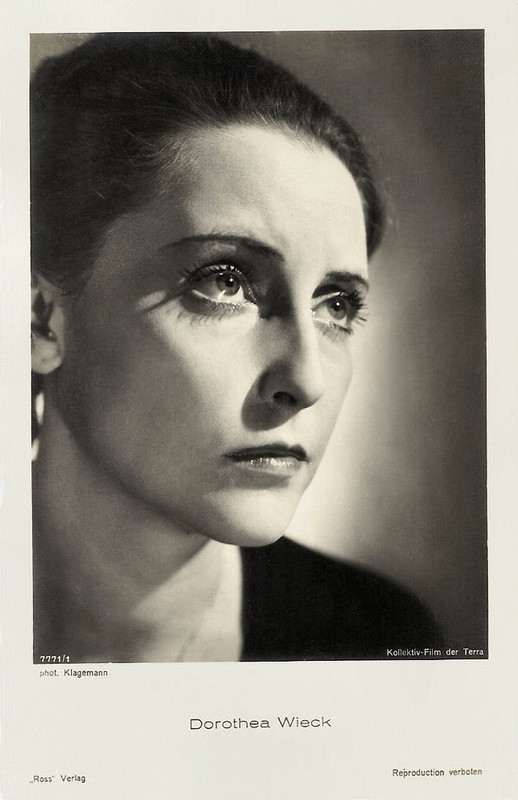
DOROTHEA WIECK
What Goebbels' attitude towards the film was is unknown, but it got poor reviews and was not a success. In his book David Stewart Hull mentions it only in passing but it's worth noting that there would be no further Expressionist remakes under the Nazis. This would also be Arthur Robison's last film as he died suddenly that year. Comparing the silent and sound versions of "The Student Of Prague" show how Expressionism was probably never going to survive the sound era even without the ideological interference of the Nazi censors. Audiences would certainly be happy to accept some Expressionist techniques in an appropriate story as was shown in the most successful films seen here; "Hound Of The Baskervilles", "I Was Jack Mortimer" and "The Student Of Prague" but they also wanted the sort of frothy escapist tropes that would undermine the essential Expressionist nightmare world namely in using a lot of music, lush and essentially realistic sets and costumes and a fair amount of expositional dialogue that removes the mysteries of the earlier era. It is generally acknowledged that Expressionism would leave a heavy influence in Hollywood in the genres of Film Noir and later Sci-Fi and there's no reason to doubt that such an evolution would have happened in German films as well if left to their own devices, in fact the three films just mentioned are perfectly solid genre films with "I Was Jack Mortimer" even being a fine Film Noir and "The Student Of Prague" having the makings of a decent psychological thriller if it had leaned more into it's supernatural themes while "Farman Maria" is clearly superior to the American remake even while having the same director although one suspects non-German audiences would have found it's very European mysticism even more baffling than Germans did and would have prefered the cheesiness of the American version.
Ultimately the very qualities that defined Expressionism as a theory; it's explorations of loneliness and alienation, sexual frustration, temptation and unconvention, the world of nightmares and dreams, and the examination of the darkness of the soul, which many film and cultural historians such as Sigfried Kracauer, Lotte Eisner and Peter Gay have cited as precursors to and warnings of Fascism, were also incompatible with the esthetics of Fascism with it's celebration of conformity and complete surrender of free will to a strongman. Expressionism even with all its darkness which some see as self defeating passivity still allowed for some qualities Fascism will alway see as a threat to its core; unconventionality, guilt and self-reflection. Expressionism was not seen as deeply threatening as Dada, Germany's other great Weimar art and film movement which the Nazis truly hated and did not even try to appropriate, but it turned out to require the messiness of democracy to flourish and eventually it would do so when it made its way to the very non-German and non-European world of Hollywood.
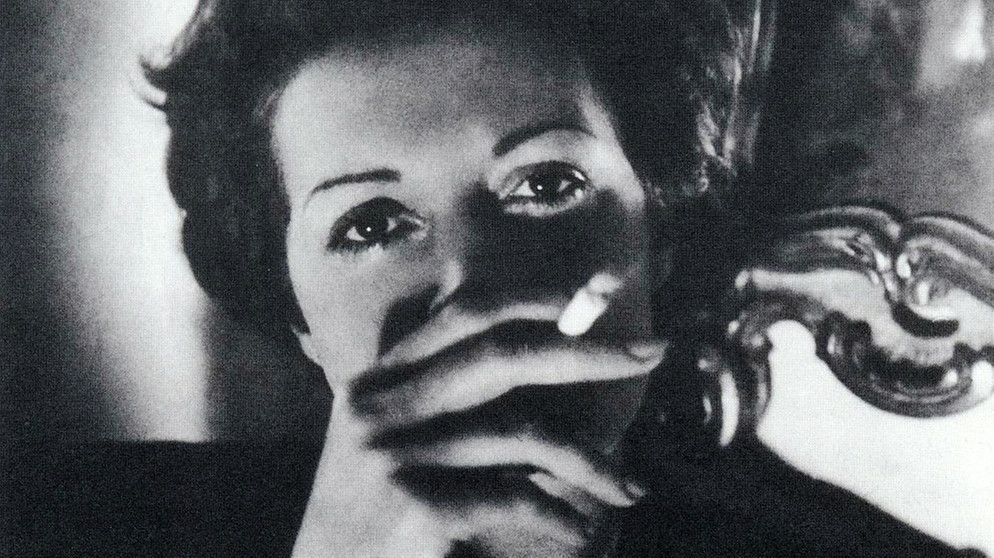
SYBILLE SCHMITZ