Showing posts with label USSR. Show all posts

Tuesday, 22 November 2022

Kino-Pravda; The 1920's Soviet Newsreels Of Dziga Vertov


giphy

Last year I wrote an article (which can be found here) about the series of silent "City Symphonies", cinema verite documentaries made in various cities in the twenties that used the urban setting as a canvas to portray the city in all it's bustling glory as a complex human story. The acknowledged masters of the genre were the German Walter Ruttman with his classic "Berlin; Symphony Of A Great City" (1927) and the Soviet Dziga Vertov with his "Man With A Movie Camera" (1929). Critics have hotly debated which film is better but often left unsaid is that whatever the similarities and differences between the two films, the massive differences between the two filmmakers were even greater and they coloured the different ways they approached the subject. Ruttman (who I also wrote about here) was a craftsman who had made his start as a maker of Dadaist Op Art art shorts and early animation while Vertov started out as a film writer and maker of Soviet propaganda newsreels. 
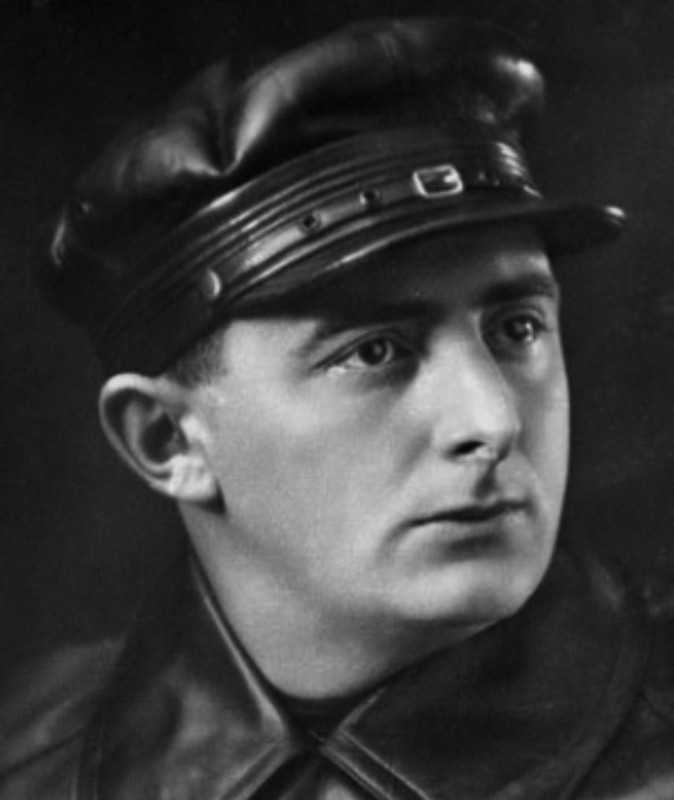
image-w856
DZIGA VERTOV

Vertov (1896-1954, real name David Kaufman) worked with his cameraman brother Mikhail Kaufman (1897-1980), and edited by his wife Yelizaveta Svilova (1900-75). Vertov and his brother were part of a group of young Marxist documentary filmmakers who used documentary films to inspire the masses towards Revolution and rejected the very idea of non-fiction films as appropriate to tell such rousing real life stories. Like Derain and Mayer, Vertov started out in the 1910's as a writer of both fiction and non-fiction, including film and photography. After the Russian Revolution he was the editor of a film magazine who became fascinated about the possibilities of documentaries as a medium for spreading revolutionary consciousness. In this he was thinking along the same lines as Lenin and Trotsky who had long seen film as a propaganda tool. Although it is often not not fully recognized in Europe and America who when looking at the first generation (pre WW1) of film tend to focus almost exclusively on America, France and Italy, Tsarist Russia was an important centre of film production with a rich and popular catalogue of films covering a number of genres. Lenin (who in his pre-revolutionary career had been an aspiring pianist and writer) and Trotsky (another aspiring writer) quickly spotted the role film could take in reaching the masses with a dramatically presented message that would have more emotional impact than written the traditional pamphlets, newspapers and speeches, especially given that many of those masses were functionally illiterate and the sheer number of languages spoken in Russia. The resulting films were called "Agit-Prop" for "Agitate-Propagandize", itself a take on the Polish/German revolutionary Rosa Luxembourg's "Agitate, Educate, Organize" slogan. Film must not provide propaganda, it must also inspire and rouse the masses to action by portrayal of the regular man playing a role in creating the new workers state. As a film critic Vertog was disdainful of fictional films including those of Sergei Eisenstien whose "The Battleship Potemkin" he dismissed as phony and manipulative insisting only documentaries could present the truth. Starting in 1922 Vertov started a series called "Kino-Pravda" ("Film-Truth") which made a series of two dozen newsreel type shorts that showed aspects of Russian post-revolutionary society as one on the move, building a new world. He focused for the most part on workers and farmers rather than promoting a leadership cult to the extent that unlike later Soviet and Nazi films, although there would inevtably some focus on from Lenin paticularly after his death. Also unlike later Soviet and Fascist propaganda he even occasionally showed problems yet to be overcome including the poverty of the rural and urban poor albeit with the implication that such problems could and would be solved by hard work and the new leaders. A notable difference with the films of Ruttman, Charles Sheeler and Joris Ivens was that while they were focused on the form and function of machines, buildings, trains, boats etc, Vertov was more interested in the people or at least the society they represented. Vertov was also more willing to take the sort of flashy camera tricks used on occasion by Ruttman, Ivens and Derain and give them full rein for a more kinetic experience.

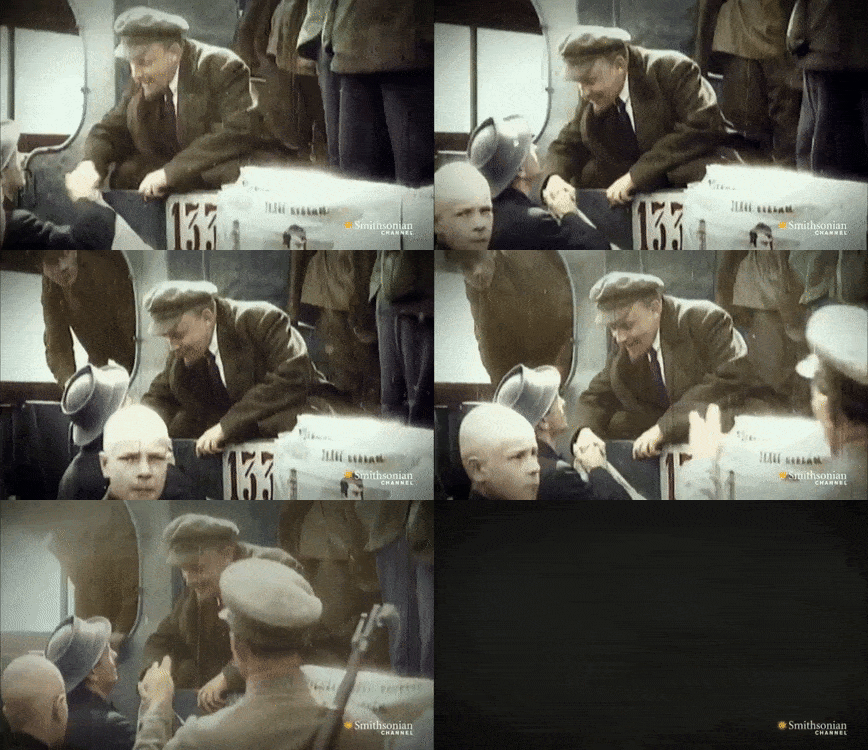
Ruttman was making a work of art while Vertrov on the other hand was making newsreels designed to promote the Revolution and specifically the Bolshevik faction of Lenin. His "Kino-Pravda" series of 23 shorts starting in 1922 were named after the Russian words for "Film-Truth" as well as not coincidentally using the name of the Bolshevik's official paper "Pravda" which had been published since 1911. These shorts used mostly authentic footage along with some staged scenes to tell the story of the successful revolution, a hopeful new society rebuilding, threats from within being crushed (in the form of the rival Socialist Revolutionary Party who are shown on trial), Lenin as a dynamic leader and later after his death as a beloved father figure.
Beneficial-Vengeful-Boar-max-1mb

These newsreels viewed in total show how Vertov devloped the kinetic and essentially humanist style that would animate his full length "Man With A Movie Camera". In this they are notably different from the rather bland newsreels made in America, France or the UK by the likes of Pathe at the same time with their stodgy posed shots of various political, military, sports or entertainment figures and flat location shots shot in predictable angles and edited in conventional ways. Unlike the mostly annonymous makers of western newsreels and educational films who were assembly line professionals and who worked to a standard template as quickly and efficiently as possible Vertov was a theorist with a willingness to experiment with his ideas for a more kinetic and involving style. Ironically for a time Vertov who worked under an authoritarian system had, at least for a time, more freedom to experiment than newsreel makers in the West who worked under the assembly line studio system.
299-e645f

The Kino-Pravda series of 24 newsreels ran from 1922 to 1925 at irregular intervals showing a mixture of political events along with a few more human interest stories. The time period began with the ending of the Russian Civil War, the war with Poland and the post war famine, continued through infighting with the Communist rivals the Socialist Revolutionary Party, their attempt to stage a coup and assassinate Lenin leading to the first Soviet Show trials which the series covers frequently. The series continues along to the death of Lenin and it's aftermath. The newsreels range in length from several minutes to a full reel although it's possible some episodes may be missing a few minutes. Episode 12 is missing completely. Due to the highly topical nature of some of the subjects the films are full of obscure political figures that nobody who hasn't made a detailed study of Revolutionary Soviet history could possibly expect to know.

============================================

Episode 1. June 1922; The opening episode was shot when the USSR was still suffering under a devastating famine which Vertov shows with harshly realistic shots of starving children with the haunted, hopeless look we have become used to but which was still shocking in 1922. Not because major famines hadn't happened before because of course they had, but because there wasn't normally a film crew around. Vertov and his camera does not flinch but he does not dwell overly long either before moving to the next sequence where the riches of the Orthodox Church are shown being handed over, broken up and sold off to feed the hungry children who are then shown well fed and happy. Even religious Christians would find it hard to dismiss the imagery. There is also a Church official present to hand over the treasures. Next we have a flight of a transport plane which brings in some food then takes some officials on a flight over Moscow which gives Vertov and excuse for some fine arial shots of the city which indidentally looks pretty quiet. Note that the plane is clearly a German Junkers transport plane. The USSR actually had a civil relationship with their recent Great War foes Weimar Germany and post Ottoman Turkey who were among the first to recognize the USSR and maintain diplomatic and economic relations while their former Western allies refused to do either. This extended to cultural activities including film with films beiong exported back and forth and director Robert Weine ("The Cabinet Of Dr Caligari") directing his version of "Crime & Punishment" there. Finally we see a parade of pro-government workers.

2. 1922


Starts with a Party rally. A parade of officials, speeches being given to an open air meeting afterwards, food is served, a band plays and people dance, kids in costume dance, there are carnival rides. These happy scenes contrast vividly with the scenes of starvation and poverty in the first episode. The major political event of the year was the attempt by rivals the Socialist Revolutionary Party (AKA the SR's) to stage a coup against the Bolsheviks and assassinate Lenin which failed resulting in a series of trials. Here we see various SR members arrive in court surrounded by armed militia along with various officials, charges are read out.

3. June 1922

The trial of the SR's begins with more reading of charges, various officials mill about, a rally is held outside with more speeches and marches.

4. July 1 1922

The trials continue with more speeches. We shift gears, literally with a new fast car in Moscow that uses an aeroplane engine with a giant propeller that looks distinctly unsafe. Reportedly there were two of them and this was the start of a race to Sevastapol. After this bit of futuristic technology we see grain being delivered by run-down trucks and horse drawn wagons to be loaded on to barges. The grain is stored in locked warehouses protected by armed guards so while the famine is being dealt with it is evidently not over, at least outside the cities. Finally we journey to the Caucasus and Georgia to visit the vacation resorts with their crumbling castles and sub-tropical trees and sidewalk cafes.

5. July 7 1922

Vertov starts to become more inventive and playful with the title cards as this one opens with the title being shown on a newspaper being read by a man on a balcony. In another advance in editing this motif will also be used during the short to introduce different subjects. We start with showing Vasilij Jakovenko, the Commissar for Agriculture then we see plowing being done first with old horse drawn plows then heavy mechanical equipment. Progress! Next we are back in the Georgian resorts which include sanitoriums including for children which again contrasts with the images of child poverty and famine from episode one. More progress! Finally we are back in Moscow for a well attended harness horse race known as the first Red Derby. Still more progress! Peace & Prosperity awaits! Note that Jakovenko seems to have been a victim of the Stalin Purges of a decade later when scapegoats were needed to explain the later famines Stalin caused.  

6. July 18 1922

The opening goes further in breaking the fourth wall as a box containing a film reel labeled as being "Kino-Pravda 6" is opened and the reel is spooled into a projector and shown. Note that Vertov would make aggressive use of this framing device in his later full length "Man With A Movie Camera". We see a street scene with traffic and the aftermath of an accident with an overturned streetcar, factory workers at work, a bicycle race that turns into a motorcycle race and back again and finally units of the Red Army on maneuvers with new tanks all of which BTW are clearly direct copies of the hulking British Mark V and smaller French Renault tanks from the Great War. Note that while previously the Tsarist and Red Armies had armoured cars these were their first tanks. We also get a fly-over from a fairly ricketty biplane which already looks several years obsolete by Western standards. We also see an armoured train of the sort that saw action during the Russian Civil Wars.

7. July 25 1922

Back to the pro-forma title cards and more trial footage. Then we head out to the provinces with stops at a farm village in Siberia with a large house under construction, a train ride to scrounge in a mica pit mine, then down to Sochi in Crimea and another health spa with people enjoying the rocky beaches. Then we leave the USSR for the first time for a trip to Kabul with silk traders and a parade of elephants. After that rather medieval spectacle we move forward to contrast with a Mark V tank being used to assist in farming, then back to the mountains of the Caucasus with a rugged mountain road and tunnel and a small chapel. The timeline on this one is a little scattered.

8. August 15 1922;

To start we get a cold open with two men in a cafe placing a wager on the SR's trial. Then after the usual titlecard more trial footage including the verdict. Vertov shows the passage of time by using a montage with a manually sped up clock and pages torn from a calendar while people read the newspapers and doze off. The verdict is guilty BTW in case you were placing bets. In a nicely done transition we see men reading about the verdict while in a car and on a streetcar which allows for a change of topic to the more prosaic working on the streetcar tracks. We also see the remains of a crashed plane which seems more advanced than the one we saw flying overhead in episode 6. We close off with another tank being used in farming. Likewise this tank is a more modern model than the clunky monsters we saw in episode 6.

9. August 25 1922;

We return to the opening motif of showing a film projector. We see a conference of Orthodox Church Priests and Bishops. This is actually the first time we have seen any religious leaders since they handed over their valuables in episode one. More street scenes showing the interiors and engines of a streetcar along with various cars and trucks. We attend a horse race that includes betting including some obvious losers. A new movie camera is displayed. Machine shop workers are seen at work. An especially bulky projector with a generator is set up outside in the street as another party parade marches by.

10. September 3 1922;

A gathering for International Youth Day with parades, speeches and street theatre. Delegates gather for a group photo. A plane lands. We see some athletic events; A tennis match, various track & field events featuring men and women. These were the Soviet response to the Olympic Games as the USSR was barred from competing in those games until 1952. More street scenes and another streetcar accident. Mechanics work on a large engine for a new truck. We see a cross country motorcycle race.

11. October 5 1922;


The All Russian Congress Of Trade Unions meets. Various officials and delegates arrive. Cossacks do a ride-by and a military band marches. Actually a little surprising that this is the first time we've seen Cossacks. A confectionary factory is shown at work. A building catches fire and a fire brigade arrives. More factory scenes from a heavy machine shop. Komosol Day, a Party rally for kids happens with the usual marches and speeches. Troops are shown on maneuvers including infantry, cavalry, armoured cars and planes.          

13. October 1922 (Episode 12 is missing);


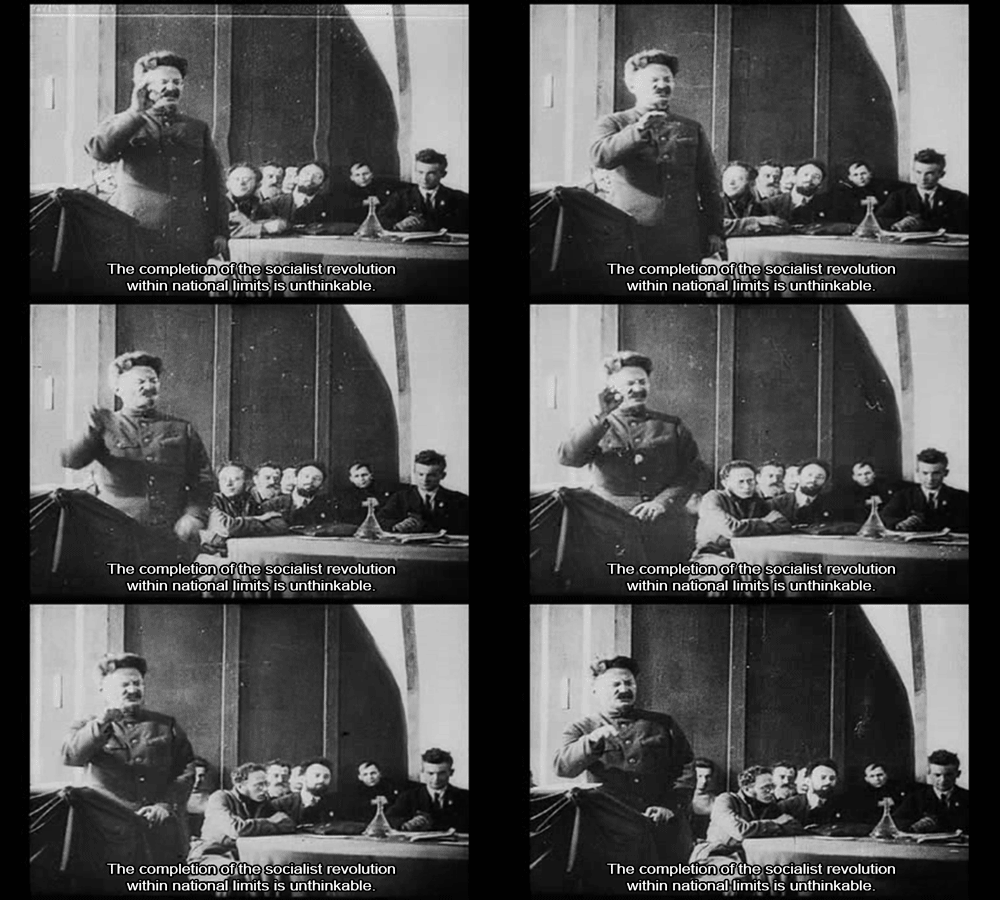
This episode is more than twice as long as usual as it's the fifth anniversary of the October Revolution celebrations with plenty of the usual marches and speeches, including one Trotsky but not from Lenin who by this point was incapacitated by a stroke. In fact we see Trotsky a few times here giving speeches, shaking hands and handing out medals apparently acting as Lenin's surrogate. Lenin is seen in some older footage. There are also the usual military parades, maneuvers, ride-bys and fly-bys which leads to more aerial shots of Moscow. There seems to be an exercise involving the use of gas. Much of the footage for this episode was clearly recycled from earlier episodes.      

14. 1923;


After some creative title cards that use Alexander Calder or Marcel Duchamp style mobiles we see a ship being launched and Kino-Pravda goes to America. We have the streets of New York, crowded restaurants, some dancers in a club, a spinning globe then back to the USSR and Petrograd where yet another Party Congress as the Comintern meets. You know what that means; more speeches by Trotsky, Radek, etc. More spinning garphics, another Party Congress, more speeches, more graphics one of which uses a swastika although to be fair in 1922 even though the Nazi Party existed in Germany it's unlikely Vertov knew who they were and it's almost certainly just a coincidental use of a graphic he liked the look of. We also get some footage of Lenin speaking although it's probably old footage as he had been incapacitated by a stroke by this point. More troops being reviewed, farmers at work, trains, factories, belching smokestacks and steel plants with happy workers and happy children. More Lenin, this is actually the first time we have really seen much of him but as we know he was seriously ill by this point the film is really covering for him. We also see Vertov using as a framing device the image of a cameraman busily cranking away. This is a device he would make use of in the later "Man With A Movie Camera".

15. 1923;


Delegates meet to discuss world peace. One of them appears to be Stalin and if so this is the first time we've seen him. Religious figures are mocked and icons are removed, see episode one again. More parades and speeches along with statues. Propaganda papers are fired out of a cannon. Winter sports with ice hockey and cross country ski racing. Sailors perform maneuvers on the ice. Troops parade on skis. Cavalry on maneuvers.  

16. 1923;


This one has an opening title card that was clearly added many years later. After some street scenes we have a scale model of the Red Square Palace and an arts & crafts exhibition. Next we have some sort of lottery and some artsy camera angles. The famine still hasn't been eliminated in the provinces as we see more suffering children although this time in a hospital getting care unlike in the first episode. Later we see them happily at play looking fit. More progress! More marching Red Army soldiers. Out of the blue we get footage from a film being shot by Sergei Eisenstein, "Dnevnik Glumova" with a nattily dressed cat burglar scales the walls of a castle, then jumps off and harlequin figures mug for the camera, scamper over a tank and engage in some dissolving camera tricks. We also see another large swastika for some reason. Vertova and Eisenstein would later came to dislike and criticize each other with Vertov dismissing the feature filmmaker's work as "artificial" and this George Melies style sequence is indeed rather jarring compared to the gritty realistic content of the rest of Vertov's work. We see a meeting of the Young Pioneers youth group well fed and busy at work and on parade. It's May Day so we get a flyover from a twin engine bi-plane and some more aerial footage and more parade footage including some elaborate floats. Somewhat more surprisingly we also get a fashion show, albeit a rather staid one.

17. Feb. 1924;


Opening of women working in the fields and waves of grain, no crop shortages here. Lev Kamanvev visits and is once again greeted by happy children and gives a speech. Working on a busy open pit mine. Trains and wagons full of produce. Men work on a lumber yard, more miners and farmers. Lenin dies.

18. 1924;


After a title card that uses a little Ruttman style animation we are in France where ascend the Eiffel Tower and see some birds eye views of Paris before our bird races back to Russia as the farmland of Ukraine rush by. Looking a little parched actually but that may be due to being in black & white. Next we get another auto roadrace and street scenes with people at a street market, riding a streetcar and reading the papers which are sold by cigarette smoking newsboys. More factory workers, miners and construction workers and more aerial shots. Reaction to Lenin's death with some speeches. A young couple with a newborn get some free clothes and food. More progress benefitting the workers in the new state! Finally some increasingly artsy shots of those happy workers among grinding factory wheels.

19. 1924;


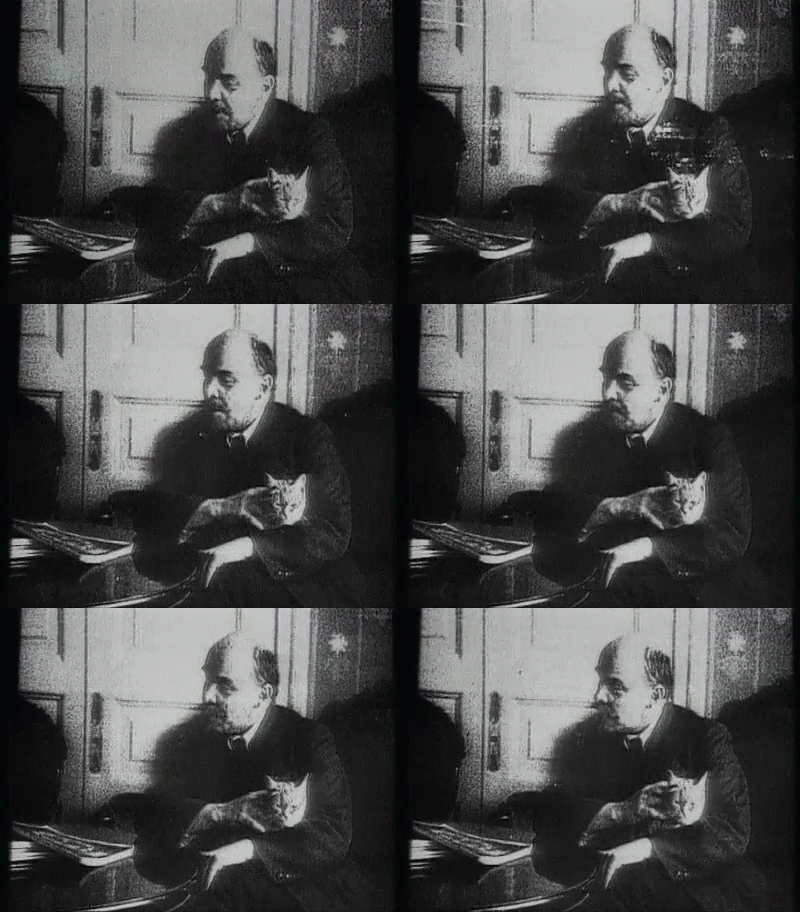
We are on a train ride through the countryside which starts in the apparent summer then suddenly turns to winter as we cross a trestle bridge. We are in a resort probably in Northern Karelia (near Finland) where people are taking dips in the icy water, speed skating, cross country skiing, running dog and reindeer sleds and seal and bear hunting. We meet some traditional Inuit people. Back to a city where some sort of election is going on. Some winter street scenes. Since this is Russia it's actually a little surprising this is really the first time Vertov has actually shown us any winter scenes. Another cross country train ride and scenes of women at work at various jobs; farming, factory and office jobs. They work hard but they also get a say as they are shown having political meetings. More progress! Lenin is still dead and shown in his coffin followed by older footage of him speaking and greeting workers. We also see his widow Vera. Another woman is shown editing film. This is probably Vertov's wife Yelizaveta Svilova who would later be shown in much the same way in "Man With A Movie Camera".

20. 1924;


A Young Pioneers parade. A young mother shows off her baby and children all wearing Pioneers uniforms. More shots of the countryside and women working the farm. These farms are relatively prosperous, the people healthy and a far cry from the struggling desperate ones from earlier episodes. A celebration with folk dancing and more Pioneers parades. Another train ride showing the cultivated fields. People are hard at work sawing wood rails and plowing the fields when the Young pioneers march up and pitch in to help. Then a collective dinner is served and magazines are read. The Pioneers visit a zoo where they see a parade of various animals; elephants, bears, kangaroos, monkeys, seals, wolves, etc.

21. Feb. 1925;


On the first anniversary of his death this is the Lenin memorial episode with plenty of shots of Lenin giving speeches and meeting people and red Army troops on maneuvers to portray the Russian Civil War. We see happy people across the USSR, not only Russians but people from the Caucuses and Central Asian Muslim areas including a girl who happily throws off her headscarf. Mass rallies and parades along with modern farming and industry and trains recycling some footage we have already seen including as contrast the early scenes of famine and starvation. In the new Russia we have farms getting electricity for the first time. Moving on we are at Lenin's funeral as crowds pass by his coffin along with various officials including his widow Nadezhda Krupskaya, Trotsky, Kamenev and Stalin who we clearly see for the first time and who is also mentioned by name for the first time. Once again we see people from across the regions and ethnic groups of the USSR as we are told that hundreds of thousands of people attended the funeral. In an animated sequence we see a plutocrat laugh over Lenin's death only to be horrified as he is told the USSR is recognized by various nations, and the masses join the Communist Party. For some reason the animated plutocrat looks oddly like Lenin himself which is a little confusing and poor planning on Vertov's part. We get more parades and emotional crowds as a motange of Lenin speaking is superimposed over his tomb in Red Square. Finally we get more speeches from young and old and a train rides into the future.

22. 1925;


Another tribute to Lenin. More people file past his coffin. More parades and speeches including from his widow. A group of peasants come to Moscow for the first time by train for the funeral. They are fed in a soup kitchen and see red Square with Lenin's Tomb. They tour a display of agricultural improvements under Lenin. Trotsky speaking about world revolution and we see activists in India, China and Africa. Activists sing the "Internationale".

23. 1925;


Special episode about the new technology. A villager buys a new radio receiver and a tree is cut down to erect an antenna. After a charming little animated scene showing a cut-away building to show a radio transmitter set we get a longer series of schematics then scenes of technicians assembling and operating the radios sets some of which are quite large. As a program is broadcast we see various singers and musicians perform while people listen intently on earphones. Later we see a store selling radios and radios being mass produced.

24. 1926;


One of the later episodes of the series, assembled after Lenin's death serves as a compilation of "Kino-Pravda" episodes.The Soviet government was not slow to see the value of films as agit-propaganda and not only for domestic but also foreign audiences and that would certainly include the films of Vertov. Accordingly excerpts of the "Kino-Pravda" series would be edited together with added subtitles in different languages for export. This last one was made for English speakers and includes excerpts about; Repairing the Moscow Trolley line, using tanks for construction and farm work, the trials of the Socialist Revolutionaries, more street scenes, peasants joining communes, a children's hospital, combatting famine in the rural areas, setting up portable movie projectors.

++++++++++++++++++++++++++++++++++++++


Although the Kino-Pravda series is better known as it can be used to show Vertov trying out some visual themes he would later use in "Man With A Movie Camera" this was actually his second newsreel series with his first starting in 1918 just after the Bolsheviks seized power. This series was called "Kino Week" thus also debuting Vertov's use of the name "Kino". Of the original twenty four shorts in the series only eight remain.

Week 1 - Mar 20 1918;


Marching wokers, Lenin, Trotsky reviews Red Army troops, cavalry and sailors. Soviet and German troops and officals are shown on the border as peace negotions are carried out to end Russia's involvement in WW1. More speeches from now forgotten figures. A street scene showing market day with various vendors.

Week 3 - June 3 1918 (week two is missing);


A collection of unrelated scenes with various officials, women working on a farm, a soup kitchen distibutes food, a naval officer, wounded soldiers return from the front, a train station, a tug of war contest.

Week 4 - June 25 1918;


More obscure officials, construction workers restoring an old building, new recruits get physicals, St Petersburg city scenes, people, apparently once respectable are now selling possesions on the street.

Week 5 - July 2 1918;


Still more officials, street scenes with beggars and lineups, ships at the docks, more dispossed people milling about.

Week 21 - October 22 1918 (weeks 6 - 20 are missing);


A Moscow street scene with people milling about a government building, officials outside a train try out a new automobile which is designed to run along the train tracks although it drives pretty slowly, a river bank in a rural area with an old rope & pully ferry, a larger river paddlewheeler, some cavalry ride in review, army officers arrive by train.

Week 22 - October 29 1918;


Moscow, footage of revolutionaires Lenin and Balbanov, street scenes, with people lining up for food and a busy market, at the train station with troops gathering to be reviewed and hear a speech from Trotsky. At a different city (probably in Ukraine) German troops are shown marching in the street as they leave occupied territory.

Week 23 - November 5 1918;


Street scene; Officials and troops mill about smoking, another speech from an unknown official, troops march by along with a funeral cortage, newspapers are handed out to men lined up outside a train, we see the outside of some sort of cabaret theatre advertising a show but we do not go inside, nurses gather outside a rural hospital.

Week 24 - November 19 1918;


Moscow, troops and civilians mill about in the street, the troops gaather for review and speeches by various officials including Yakov Sverdlov (one of Lenin's most trusted lieutenants and possible sucessor if he hadn't died in the 1919 Pandemic) and Lev Kamenev (another top leader and possible successor, later killed by Stalin), statues are unveiled, we see Russian and German troops fraternizing at what appears to be a POW camp.

Week 25 - November 26 1918;


Moscow; More statues are unveiled, another speech from Kamenev, more troops marching, more speeches.

++++++++++++++++++++++++++++++++++++++++++

These newsreels show that for his first efforts Vertov is a competent but conventional newsreel filmmaker but lacks any of the flair, playfulness and willingness to experiment that begins to emerge in the "Kino-Pravda" series. He had not yet found his own style. They also may show the limitations of propaganda filmmaking as there are really only a few themes and visuals shown over the course of the series that are simply repeated but which are not inherently very interesting visually; there are plenty of parades, troops on review, statues and speeches given mostly by now forgotten officials along with some street scenes. Unlike the later work of Vertov (and Ruttmann) the subjects are fully aware of the camera and often stand around awkwardly staring at the camera. This entire series could probably have been edited down to two reels, at least what we have left, although the missing episodes are probably little different. It's possible that Vertov's choices in subject matter were dictated by the regime who also wanted the repetition to drive home it's message. It's also evident that if you live in an authoritarian system you had better enjoy parades, rallies, flags and speeches because you are going to be seeing a lot of them.

Finally we have another short possibly filmed by Vertov several years later.

"MAXIM GORKY";


We know they were filmed later as this one features the writer and poet Maxim Gorky who spent the twenties in exile in Europe after siding with the Socialist Revolutionaries, opposing their trials and criticizing Lenin and Trotsky. Highly popular he would be invited back the USSR by Stalin in 1931 after he reconciled and he would become a public supporter of the regime until he died in 1936 so this footage must have been shot within that fairly narrow window. Additionally for a few reasons the USSR was slow in making the changeover to talkies and were still making silent films by the mid thirties.

++++++++++++++++++++++++++++++++++++

Speaking of playfulness and experimentation, Vertov also used animation for a couple of propaganda shorts. Unlike Walter Ruttman's animation experiments which came out of the Dada art scene and were abstract, dreamlike and surreal, Vertov's were conventional and realistic animation of the time done with some skill albeit not quite up to the level of American animators like Winsor MCay (already well known as the first to make full use of animation), and the just starting out Walt Disney and the Fleischer Brothers, lacking their fluidity of motion and expressive faces. It is unknown who did the actual animation for these as Vertov himself simply did the production and possibly some editing.  


Parts of this one had appeared in Kino-Pravda episode 21 and are about the international success and growth of Communist Party even in the aftermath of Lenin's death while the second longer part is specifically about early farm collective and worker collective programs.

"SOVIET TOYS";


Vertov considered himself a good Socialist Realist and rejected any of the abstract art schools such as Expressionism, Dada or Surrealism but there is no other way to describe this weird cartoon than Surreal. It starts out conventionally enough with a group of children's toys under the Christmas tree acting out political stereotypes. A greedy Capitalist stuffing his face at dinner, his shifty eyes making him look even more creepy. The Capitalist becomes so bloated that he throws up then falls over and can't get up. Still he calls for women to amuse him and one duly arrives and dances for him but then things become more hallucianatory as the prostitute also gets consumed by his ever growing stomach. Then a Worker arrives and laughs as the Capitalist briefly turns into a pig. Two church bishops arrive but instead of chiding the Capitalist for his decadence they bow to him and bicker with each other. The Worker, finding no support from the Church attempts to get the Capitalist to give up some of the money fail as he literally tries to carve it out of him with giant scissors but he is not strong enough. Then a Farmer arrives and after suggesting they work together against the Capitalist the two join together (literally) to break the Capitalist open like a pinata and money leaks out and into the people's bank. Eventually the Red Army arrives (along with a cameraman from Vertov's studio) and several soldiers join together (again literally) to form and tree upon witch the Capitalist, Bishops and Prostitute are strung up, although she is merely punished while the men are lynched. The tree then turns into a Christmas tree (it's Christmas remember) and the strip ends with and ad for Vertov's studio. If this was made with kids in mind they must have been very confused. These were the only experiments of this type attempted by Vertov and he thereafter stuck with his Realist documentary style that would lead to "Man With A Movie Camera" by the end of the decade.

+++++++++++++++++++++++++++++++++++

If we are going to take into account Ruttmann's later work for the Nazis in judging his work then we must also do the same with Vertov. Just as hindsight places Ruttmann's "Berlin" in the context of a society on the brink of collapse, praise for the vibrant and energetic society and happy workers Vertov's films show can not be seen without the hindsight that we are seeing a society heading into a complete totalitarian police state, something Vertov is an active cheerleader for. To be fair to Vertov these films were made from 1922 to 1925 or 26 with "Man With A Movie Camera" being made in 1929 and at that time the full repression of Stalin had not yet happened. In the 1920's one could still believe that the worst excesses of the Revolution were over. 1922 had seen eight years of war, revolution, civil war, terror and famine but by 1929 it was just possible to believe that the future was indeed bright; there was peace, the economy had picked up and Soviet society was visibly on the move. That was indeed the sincere position most (but certainly not all) Marxists took at the time both in the Soviet Union and abroad. Lenin had died in 1924 and Stalin had taken over but he had done so peacefully and his power was not yet absolute. The horrors of Stalinism, the purges and show trials, more famines, the Holodomor in Ukraine, ethnic cleansing of Tartars and other groups, mass arrests and terror, were still in a future few could yet see. Vertov's films do actually show a few muted criticisms of the Soviet government with scenes of extreme poverty and famine in some of the "Kino-Pravda" shorts and a few fleeting views of what seem to be homeless men in "Man With A Movie" camera albeit this is done within that larger context of the theme that the dynamic new Soviet government and it's bold leader Lenin are fixing the problems. Lenin was actually not opposed to all criticism and debate as long as it was deemed "constructive" and "positive" and would probably not have minded this, but under Stalin any such critiques, however veiled, would not be allowed. Vertov can be somewhat excused from predicting, much less showing any of the horrors of the regime but only somewhat, he was still an enthusiastic propagandist for a regime that even under Lenin was hardly free and had committed many crimes and atrocities which Vertov ignores and there is nothing to indicate that even privately he expressed any doubts. Under Stalin he would later make films like "Enthusiasm" that showed he is still a cheerleader for the by now clearly Stalinist regime. Like Rutmann under the Nazis he would have had little choice in the matter whatever their private thoughts but if the dark shadow of the Nazi regime is in hindsight seen to hang over "Berlin" and if Ruttmann's later propaganda work is to be counted against him than Vertov must be held to the same standard. After this film Vertov and his brother had a falling out and did not work together again although Vertov would continue to make films for a while until his flashy style fell afoul to the increasingly stodgy censors of the Stalinist era and he ended up back where he started as a low profile editor of newsreels dying in 1954 aged only 58, outliving Stalin by a year. His brother Mikhail dropped out of film and became a photographer, dying in 1980. Vertov's wife and editor Yelizaveta Svilova continued to work with Vertov but retired from film after his death to concentrate on assembling his various writings. She died in 1975.
vladimir-lenin-lenin

Thursday, 8 September 2022

Silent Films Of Finland & The Baltics


20160612-Estonia2012cinema
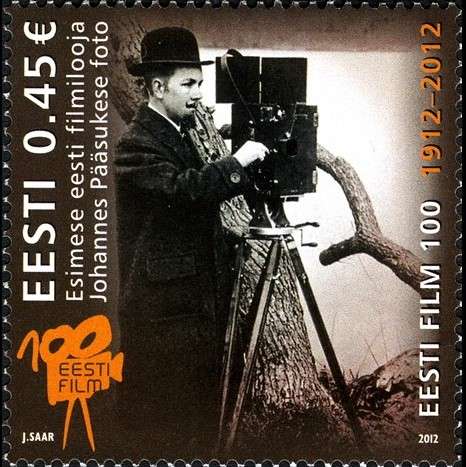
ESTONIAN FILMMAKER JOHANNES PAASUKE


~~~~~~~~~~~~~~~~~~~~~~~~~~~~~~~~~~~~~~~~~~~~~
"THE ESTONIAN NATIONAL THEATRE & CONCERT HALL" (1914);


In the past traditional film history textbooks focused on the silent films of America, France, Germany, Italy and Russia almost exclusively but over the last thirty or so years it's become widely accepted that from the 1910's to the mid twenties the film industries of Denmark and Sweden were among the most prolific and accomplished in the world. Scandinavian films tended to focus on introspective character studies, portrayals of rural and small town life and moody examinations of middle and working class people coping with life in the sinful cities. Influenced by the plays of Ibsen and art of Edvard Munch, they could be seen as influencing filmmakers in Germany where film was actually a little slow to find it's own footing. Denmark in fact produced the first big budget disaster epics with "End Of The World" (which I wrote about here) and "Atlantis" as well as several Sherlock Holmes films and the notorious supernatural documentary "Haxan", and famously having one of the classic early film vamps in Asta Neilsen who became a huge star in Germany as would the Swede Greta Garbo who would of course go on to even bigger fame in Hollywood. Directors Victor Sjorstrom, Urban Gad and Carl Dreyer would make influential films with "The Outlaw And His Wife", "The Phantom Carriage" (Sjorstrom), "The Abyss" (Gad), and from Dreyer "Joan Of Arc" and the later sound film "Vampyr".

The Scandinavian film industry (like the Italian film industry, for different reasons) went into a decline after the Great War as other countries, specifically in America, France and Germany, began to invest larger sums of money that the Scandinavians with their smaller audiences were not able to compete with. Their relatively small size meant that once actors and directors began to be lured away to the brighter lights of Hollywood and Weimar they were hard to replace. The themes of Scandinavian films, with their focus on moody, rural dramas also probably had less relevance in the Jazz Age. The coming of sound films essentially consigned them to the second ranks of film powers where they remain. The films of Sweden would maintain some attention in art houses through the works of Victor Seastrom and later Ingemar Bergman while more recently the Danish Film Institute has done excellent work in restoring and making available some of their impressive library of Danish silents. Being smaller, more rural and geographically distant, Norway's film output was smaller and less influencial but in recent years has seen the restoration of "Laila" (1929) an epic rural romance set in Lapland which is now seen as a classic portrayal of the rugged Arctic.  

Much less known is the film history of their neighbours Finland and the Baltic States of Estonia, Lithuania and Latvia. Their collected body of works is much smaller and much less influential but still worth a look. One major difference between Sweden and Denmark and their neighbours is that while the latter two countries had been independent for centuries the others were not. The Baltic States were part of the Russian Empire since the time of Peter The Great while Finland had been a Russian province since 1809 which meant at best that they did not have full control over their affairs and their culture and art had to take a backseat or at worst they were subjected to forced assimilation policies and repression. In either case they could not even begin to make their own cinematic voices heard until after they gained independence which did not happen for the Russian controlled nations until after the Great War and even then they had to learn to do so within the constraints of small audiences and limited budgets in the mere decade or so before the coming of talking films would restrict these obscure foreign language films forever to the hinterlands from whence they came.

========================================
MV5-BZGUy-OGVk-ODgt-Mz-Qy-ZC00-Y2-U2-LTg3-Njgt-Zm-Jl-Nm-I3-NGEw-MWU3-Xk-Ey-Xk-Fqc-Gde-QXVy-Nz-Ay-NTY2-Mj-Y-V1-FMjpg-UX1000

FINLAND;

In 1920's Finland, while in most ways culturally and religiously similar to the rest of Scandinavia, was different in substantial ways. Linguistically the Finnish language is completely unrelated to the other Germanic languages of Scandinavia or for that matter any other major language aside from Estonian (and very distantly Hungarian) and is notoriously difficult for outsiders to learn. More importantly politically Finland was a colony of imperial Russia since it was seized from Sweden. Tsarist Russia was a feudal autocracy which spoke a completely different language, used a different alphabet, different calendar and different religion. Originally Finland was called a Grand Dutchy and was supposed to retain certain cultural privileges but in the mid nineteenth century Russia enforced a policy known as Russification across it's sprawling, multi-language empire which expressly aimed at forced cultural assimilation. Languages such as Finnish, Estonian and the other Baltic, Polish, Ukrainian, Yiddish and other tongues, while not actually outlawed, were banned in schools, newspapers and publishing houses were closed, printing presses seized and plays banned as were films. It was possible to have literature printed in Sweden and smuggled into the country and passed around but film by its nature required a major effort and expense to make and show so there was no possibility of an underground film scene in an autocracy. There had been a few films made in the 1900's until the Tsarist authorities shut them down. Notoriously reactionary Tsarist Russia had actually been enthusiastic in recognizing the potential of film as medium early on and a large number of excellent films were made in pre-revolutionary Russia which developed a domestic film industry that was easily the equal to those of pre WW1 Germany or Italy in terms of quality and quantity and being next door to Sweden (Finland also has a sizable Swedish minority) meant they had access to those films as well. However any budding filmmakers (or for that matter playwrites) in Finland and the Baltics would have had little scope to learn the new medium and any Finnish film industry would have to wait until Finland and the Baltics gained their independence after the end of the Great War and the Russian Revolution.

After independence there was a brief period of civil war and political instability but as the twenties started the Finns were able to focus on films. With its small size Finland took a different path from America or France with their various competing studios and instead took a similar tack as Weimar Germany had in founding a single large studio in UFA by starting their own central studio in Suomi-Filmi in 1919. Obviously Suomi-Filmi (Suomi means Finland in the Finnish language) was much smaller than the giant UFA and only about four or five films were made a year of various genres until the end of the decade of which only a few are known to survive. Having a centralized film industry meant that an overall philosophical and artistic ethos could be set and not surprisingly Finland took it's early film influences from it's Scandinavian neighbors which whom they shared similar cultural attitudes and a similar heavily agrarian society, geography, Lutheran religion and (after gaining independence) democratic societies. Thus Suomi-Filmi had an explicit mandate to make films that promoted a nationalist artistic vision that would reflect the historically unique culture of Finland that had aspects that were separate even apart from its neighbours. Unlike the other Scandinavian nations (and for that matter most other countries in Europe) Finland had no history of independence, no historical figures such as monarchs or warriors to glorify as national heroes. Finns saw some films from Hollywood, France, Germany and Italy but while Finnish audiences enjoyed the glamour and excitement they offered, Finnish filmmakers did not think that these films reflected Finnish culture. Finland did not even share it's neighbours Viking heritage so Finnish literature, art, drama and film instead focused on idealizing the rugged, rural life of Finland with it's farmers, herders, lumberjacks and fishermen making their way in the harshly beautiful forests and tundras of Finland, something Swedish films of the 1910's in particular such as Sjorstrom's "The Outlaw And His Wife" (1918) were much admired for and it was these films that would directly inspire Finnish filmmakers. The first films made in Finland were the usual short docs of rural life or showing scenic vistas but by 1922 several films had been made, all now lost, most of which seem to have been rustic dramas, romances or comedies as was the first important Finnish film and one which fortunately still survives.

128513-anna-liisa-0-230-0-345-crop

"Anna-Liisa" (1922) would actually take over a decade and two tries to make. Based on the successful play of the same name written by Minna Canth in 1895 and considered a classic of both Finnish and feminist drama. In the story Anna-Liisa is a farm girl with a tragic secret who is an unwilling pawn in a lover's triangle. An attempt to film this play was made as far back as 1911 with several cans of film being shot but as Finland had no developing facilities and there could be obstruction from Russian authorities the film was sent to Sweden for developing whereupon the film was somehow destroyed through improper storage and transport (unclear whether the Finns or Swedes were at fault) ending the project for over a decade and for that matter Finnish filmmaking as a whole as Tsarist secret police essentially banned further dramatic filmmaking. Accordingly the next attempt would have to wait until after Finnish independence to start over again with a different cast and director.      

"ANNA LIISA" (1922);


Directed by Teuvo Puro
Cast;
Helmi Lindelöf ~ Anna-Liisa Kortesuo
Emil Autere ~ Johannes Kivimaan,
Einar Rinne ~ Mikko
Mimmi Lähteenoja ~ Husso, Mikko's mother
Hemmo Kallio ~ Taio Hortesuo, Anna-Liisa's father
Meri Roini ~ Mrs Hortesuo, Anna-Liisa's mother
Greta Waahtera ~ Pirkko, Anna-Liisa's sister

~~~~~~~~~~~~~~~~~~~~~~~~~~~~~~~~~~~~~~~~~~~~~
PLOT SYNOPSIS (spoiler alert);
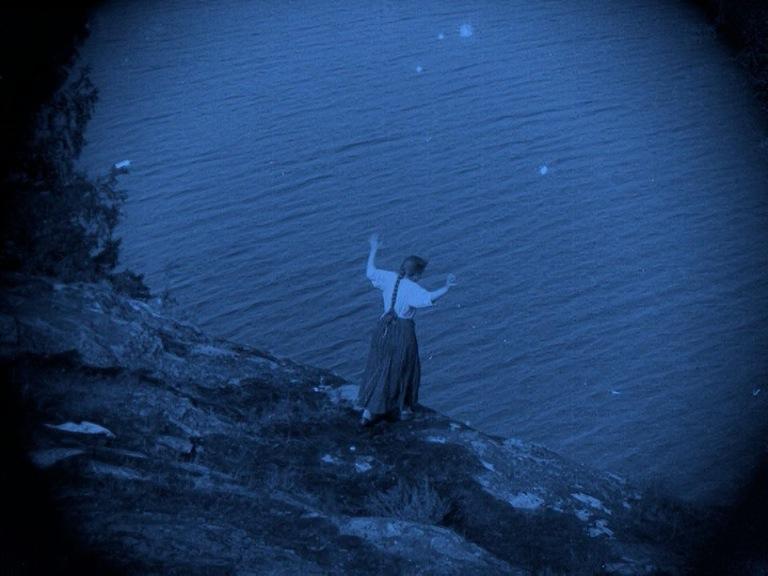
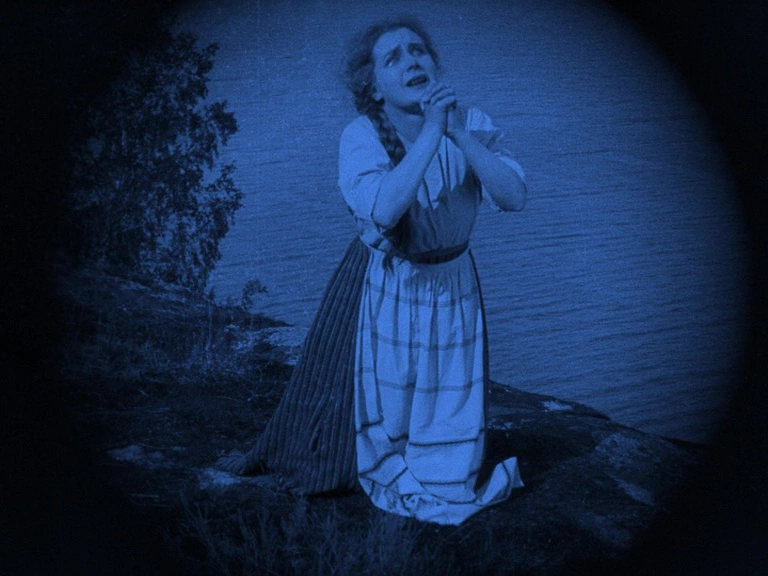
Set in late 19th century southern rural Finland, Anna-Liisa, a 19 year old daughter of farmer Kortesuo, is preparing her wedding to Johannes, a handsome local. She is apprehensive and as she is spinning the weave for her wedding dress she is interrupted by Johannes. She asks him if he is sure he won't regret marrying her and he reassures her. However she is still troubled and tells him she is "not better than the other girls, to the contrary". There is a flashback to a time when Anna considered throwing herself in the lake to drown but after praying did not. Johannes continues to reassure her but asks if she ever loved another. She does not answer.
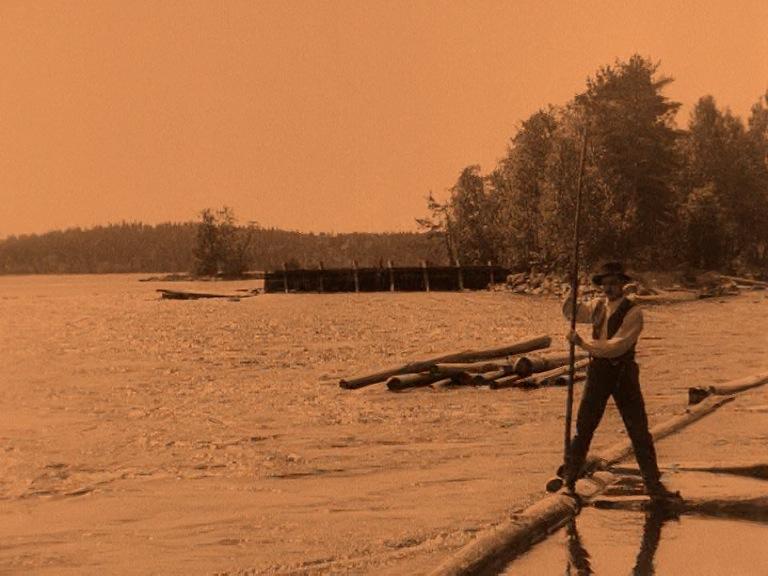
Husso is the mother of Mikko, both used to work on the Kortesuo farm, receives a letter from Mikko who now owns a successful logging company, that he wishes to return home and marry Anna. We meet Mikko at work on the river as he takes a break and in a flashback remembers his past relationship with Anna when she was younger. Husso visits Anna, interrupting her talking with Johannes who leaves to visit Anna's parents who approve of the marriage. Husso tells Anna that Mikko is returning and expects to marry her as was promised years before but Anna refuses to cancel her upcoming wedding to Johannes saying she never loved Mikko. Husso reminds her how four years earlier she had a baby born out of wedlock from her relationship with Mikko, whom she had accidentally drowned and Husso helped cover up the infant's death. We see this in another flashback.
While Mikko is shown making his return, Johannes is having breakfast with Anna's parents who tell him Anna will be an excellent wife. He is also greeted by Anna's younger sister Pirrko and they engage in some light horseplay. Meanwhile, Husso is still talking to Anna and threatens that if she does not cancel her upcoming wedding and marry her son she will reveal the secret about her dead baby. They are interrupted by Pirrko who happily bursts in to remind Anna about wedding preparations and Husso leaves. Mikko returns to Husso's farm where he greets her when she gets home. She tells him about Anna and Johannes' upcoming wedding next week. Mikko vows to stop the wedding.
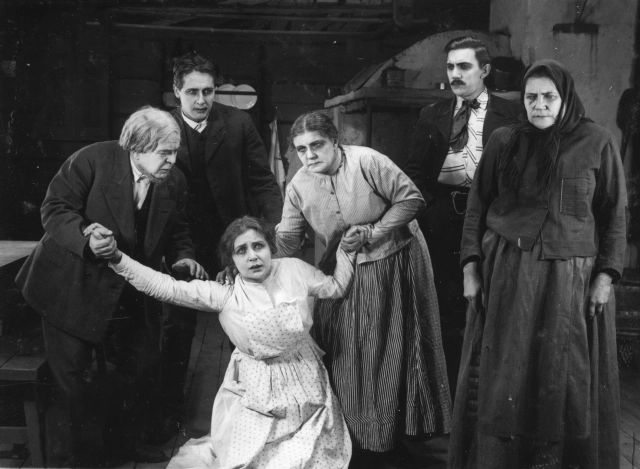
Mr Kortesou and Prikka go shopping to buy items for the wedding and meet with the priest who will conduct the marriage. As they leave Mikko and Husso arrive and confront Anna demanding she cancel the wedding and marry him but she tells him she is engaged to another. They talk and she tells him that she has been depressed and desperate since he abandoned her with child and lives in fear of being arrested for their baby's death. He reassures her that his mother has covered up all traces of the baby and that he still loves her and intends to marry her. Anna reacts angrily and says she hates him and she runs away. Johannes arrives and greets Mikko who snubs him while Husso laughs. Johannes shrugs and walks away. He finds Anna at home upset. She tells him to leave her alone as Mikko bursts in and orders him to get out saying Anna is to be his wife. Meanwhile Anna's parents and sister have arrived back from the market to be confronted by an angry Mikko who has grabbed a knife while Johannes has grabbed an axe. Mr Kortesou separates them telling Mikko that he should back off and respect her wishes. Mikko calls in his mother Husso who tells Mr Kortesou about Anna's secret past, the baby who died and how she helped cover it up. Johannes and Anna's parents denounce Husso as a liar and a fight begins to break out but Anna breaks down and confesses to having been pregnant and to the baby's death. The father flies into a rage denouncing his daughter for shaming the family and saying he should kill her. He grabs the axe but is disarmed by Mikko as Johannes and the mother rushes to shield Anna. The father sinks into a defeated chair and Mikko stalks out as Anna collapses, comforted by her mother Johannes and Husso who appears to regret her words.      
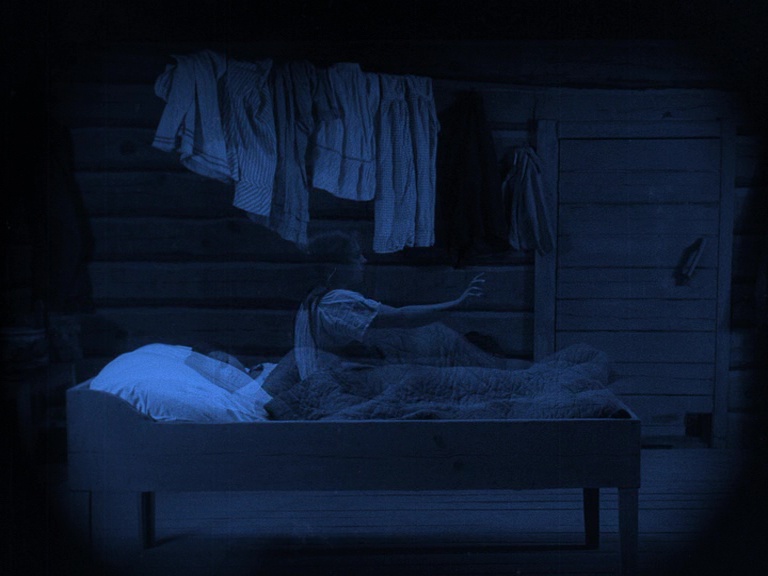
That night Prikka has a dream in which she leaves her body and walks down to the river where her sister Anna lies in the water, apparently dead. Prikka leaves her a garland of flowers and returns home to bed. The following day Anna is found by her mother sitting by the river depressed and alone. She tries to speak to her but she does not respond. Johannes is shown walking through the woods alone and despondent. Mr Kortesou has calmed down and tells the mother that he has sent for Johannes and Mikko to figure out a solution. Sitting on the lakeshore Anna imagines her dead baby is calling to her and she walks into the lake to drown. Her parents see this but before they can intervene Johannes comes upon the scene and runs into the lake and pulls her to safety. Anna begs to be allowed to die but her parents take her back inside. Mikko arrives and tells her to pray for forgiveness. Now calm Anna announces she must make amends for her sins and will marry Mikko.
On the wedding day, Mikko is jubilant but she appears dressed entirely in black. She confesses to the whole assembly what she has done and declares she is ready to face justice. She embraces her family and Johannes (but not Mikko who tries to interrupt her) as she is escorted away to be arrested. The priest declares she will be forgiven her sins. Finis.

~~~~~~~~~~~~~~~~~~~~~~~~~~~~~~~~~~~~~~~~~
This dark rural tragedy has obvious similarities to the better known 1918 Swedish Victor Sjorstrom film "The Outlaw & His Wife" which was in turn based on a 1911 play. However as we have seen the first lost version of this film was attempted in 1911 and was based on a play written in 1895 so while there was undoubtedly a heavy Swedish influence on the film the source material was entirely Finnish.

Anna-Liisa-269-Figure-2-1

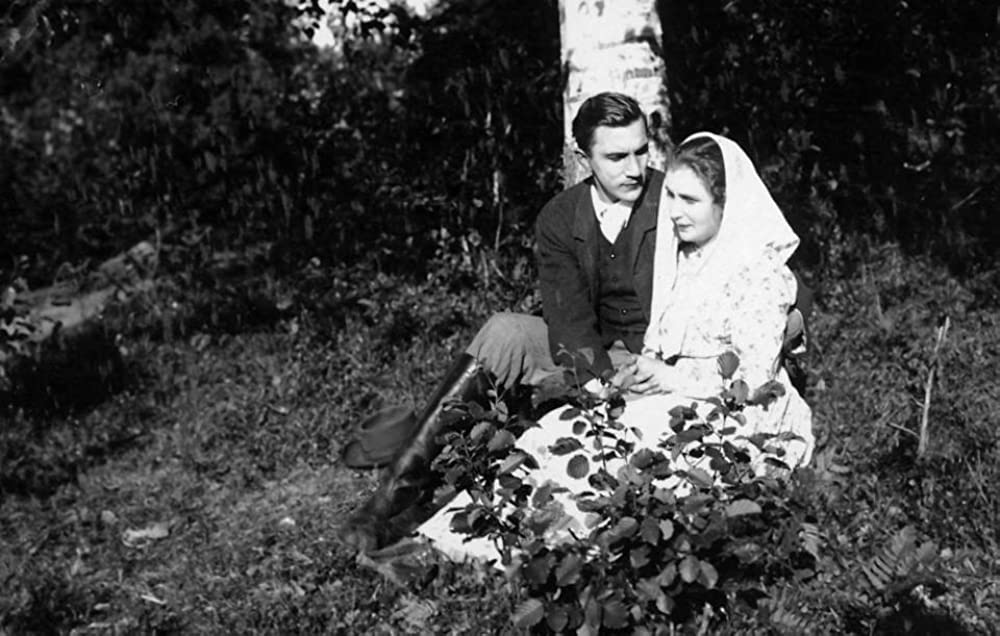
The original play is considered feminist in showing the harsh realities for women regarding sexuality and marriage although the hapless Anna herself can hardly be called a heroine. She is almost entirely a passive subject to the whims, lusts and desires of others; As a young girl she is seduced and abandoned by Mikko, suffers alone through an unwanted pregnancy which she somehow conceals from her family and results in her infant's death, she is clearly suffering with shame and clinical depression and her marriage prospects are mostly dictated by others. Anna's value as a wife is partly as a product of her family's class and status. While Mikko seems to have some genuine affection for her it is also unstated but clear that as a former employee of the Hortesou family he will gain status and eventually property by such a marriage. The Hortesou family, while not exactly wealthy, have a large and prosperous farm with a spacious house while Husso's farm house is notably smaller and more rustic. While Mikko has moved away to make his fortune and he is described as having become a successful logging business it is actually quite modest as he seems to have have no employees and is shown doing manual labour himself as a logrunner, which is a potentially dangerous job the owner of even a mid-sized business would not be doing. His clothes are respectable but more plain than Johannes and notably when he writes a letter to his mother she hands it to the young boy who delivered it to read to her so she appears to be illiterate although he is not. As for her parents when they are praising her as a potential wife to Johannes their biggest selling point is to say that she will be an obedient wife who will "do her chores" and when the father calls a meeting at the end to discuss the marriage with Johannes and Mikko he pointedly does not invite Anna, or for that matter her mother.

Anna is not completely without choices, however her choices are very limited. While various people, Mikko, Husso and her parents try to bully her she can and does say no to marriage with Mikko repeatedly and while Mikko does not accept her choice he doesn't actually deny she has some right to say no otherwise he would not need to resort to blackmail. When she eventually announces she will marry Mikko, Johannes is unhappy but does accept her right to choose and even attends the wedding. Her final decision to confess to her crime and go to jail is the only time she actually makes a decision about her life herself that everybody must respect but that is only because they have to, it is the law and she made her confession in public and with no warning. However the result of her choice will send her to prison. Her final declaration of independence will in fact make her a prisoner.

Anna-Liisa-269-Figure-4-1

This issue of what exactly happened to Anna's daughter is unclear, probably drowning judging by Anna's fatal attraction to water but was it an accident or infanticide? Certainly today Anna would be diagnosed with clinical depression as well as post partum depression and by the end she seems to be having a suicidal psychotic break. Given the politics of today's America depending on which state she was in she would likely still be charged with murder but as a white woman from a respectable background she could also afford a good lawyer who would argue some sort of diminished capacity.                  

The motivations of some of Mikko and his mother are more complex than at first glance. Mikko is a jealous bully and is probably motivated party by a desire to marry into a more respectable class and show up the seemingly more respectable Johannes who he clearly envys, but he does seem to have some care for Anna and occasionally shows some tenderness during their conversation where she confesses her constant state of sadness and shame for which she partly blames him for as he abandoned her. We don't actually know if he knew she was pregnant at the time. Similarly his mother Husso is vindictive and resentful but she did take care of Anna when she was pregnant and was apparently the only one to do so since she kept the secret from her family. And after seeing the consequences of her words after Anna's secret is revealed to Johannes and her family she is seen to comfort Anna and must have some remorse. There are no absolute villains here, just some careless and selfish people and a system in which women are implicitly second class citizens whose desires are subordinate to men, either as fathers or husbands.

vlcsnap-2020-05-02-09h48m25s411

Thematically the film is more complex and thoughtful than Sjorstrom's "The Outlaw & His Wife" in it's concern for women and considerably more so than contemporary American rural melodramas such as "To'lable David" (1921) or Griffith's "Way Down East" (1920) and shows a willingness to tackle a few subjects that probably no American film of the era would have. However stylistically it is rather conservative. It's been noted that while Finland did get contemporary films from Hollywood and Europe they tended to arrive a few years after their initial release and so Finnish filmmakers were perhaps a little behind the newest techniques in storytelling. This film came out in 1922, the same year as such groundbreaking films as Murnau's "Nosferatu" and Von Stroheim's "Foolish Wives" but the style here is much closer to DW Griffith, already seen as rather stuffy. There is none of the dynamic camera work or editing and the acting is merely serviceable. As a former play much of the film is indeed stagey and slow moving with a heavy reliance on inter-titles which slows down the action, such as it is. Modern viewers who will have to pause to translate the inter-titles will slow things down even more. As they are in both Finnish and Swedish for English speakers I recommend using the Swedish ones. While the direction and camerawork is merely adequate, the film does have some excellent shots of the starkly beautiful Finnish landscape with shots of rivers and lakes that also capture the harsh loneliness of the lives of the characters. This very literate film also make good use of symbolism.The film starts with Anna using a spinning loom, a symbol of fate, to weave the threat for her wedding dress. However she is clearly unhappy and apprehensive from the start and she is repeatedly interrupted by Johannes, Husso and her sister Prikka and Johannes playfully breaks the thread which is a bad omen. In the flashback where she meets Mikko she is carrying a baby lamb, a symbol of purity and virginity which she gives to him. When he carries her off from a rowboat we see the untethered boat drifting out of screen and then is shown alone and adrift on the lake against the setting sun. Anna's fatal attraction to water is a symbol of washing away her sins and the dream sequence with her sister shows her lying in state in the water. Younger sister Prikka is usually barefoot and dressed in white as an innocent who is shown preferring Johannes and in the dream sequence she puts a garland of flowers on Anna's watery grave.    

scan-15-liisa

This movie was a success in Finland where it is considered the first important Finnish film and the start of Finnish filmmaking. Since it was based on a play that was already successful this is not surprising but besides it's local success it was also the first Finnish film to be exported, mostly to Sweden. The surviving copy has inter-titles in both Finnish and Swedish both as Finland has a large and literate Swedish minority but also making it easy to export to a country Finnish filmmakers had great respect for and that it got generally positive reviews there was a matter of pride for them. Copies also made their way to neighbouring Scandinavian countries. The film even made its way in a limited way to North America. Both America and Canada had significant Finnish communities in parts of Northern and Western Ontario, Manitoba, Northern Michigan, Minnesota, Wisconsin and the Dakotas. Well into the 1940's these communities maintained Finnish language newspapers, clubs and churches plus unions and political parties had separate Finnish speaking chapters so there would have been an audience and an infrastructure to show such a film. "Anna-Liisa" would be remade as a sound film in 1945.

vlcsnap-2020-05-02-12h13m33s233

~~~~~~~~~~~~~~~~~~~~~~~~~~~~~~~~~~~
The success of "Anna-Lissa" encouraged Soumi-Filmi to continue on making films with decent budgets most of which had a similar focus on rural subjects although not all were tragedies with comedies also being popular and even Finland's first horror movie "Curses Of The Witch" by the same director as "Anna-Liisa" which sounds intriguing but is unfortunately lost. The only other silent currently available is a comedy.

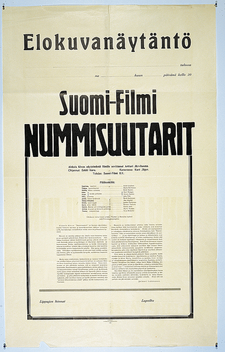
"THE VILLAGE SHOEMAKER" (Finnish: "Nummisuutarit", Swedish: "Sockenskomakarne") 1923;


Directed by Erkki Karu
Axel Slangus ~ Esko
Heidi Korhonen ~ Jaana
Kristi Suonio ~ Martta
Alarik Korhonen ~ Tobias
Aku Kayhko ~ Mikko
Antero Suonio ~ Livari
Juho Puls - Niko

PLOT;
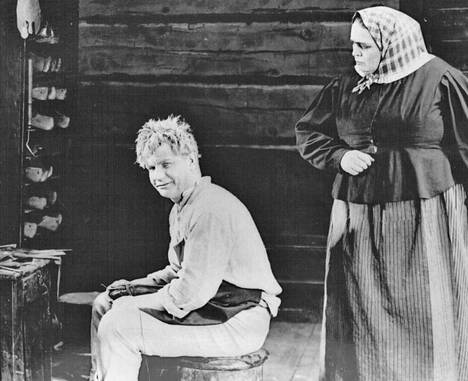
Esko and Jana are two children who are friends with an elderly bachelor and former soldier who lives in their small rural village. The old corporal becomes very fond of both children and writes in his will that whoever marries first will inherit 500 riks from him. Years pass and Esko grows up to become a shoemaker like his father, Topias. Esko is strong and carefree if not handsome or terribly bright, he also has a younger brother Livari who is even more irresponsible. Jana after the death of her mother and her father going off to sea, has been adopted by the meek Topias and Martta, his domineering wife. Martta, her eyes on the 500 rik inheritance, decides to push Esko in to finding a wife. Esko has a crush on a neighbour girl Greta encouraged by, his friend Mikko, a local playboy. Meanwhile Jaana is engaged to Kristo, a blacksmith but Martta tries to discourage the marriage, meanwhile sending Esko off to find a marry Greta and his friend Mikko goes with him.
Meanwhile Esko's brother Livari is sent into town to purchase supplies where he meets their Uncle Sakeri a disgraced former policeman. Sakeri invites him to a local bar where they proceed to get drunk. Esko arrvies to find Greta is getting married to another and he stays for the wedding reception where he gets drunk and starts a fight and has to flee town. Ivari has gotten hoplessly drunk and lost all the money he was carrying, Uncle Sekeri claims they were robbed but Ivari doubts his story. He is hunover and has hallucinations of his mother berating him for losing the money.
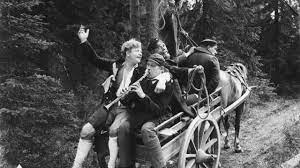
At the same time Jana's sailor father Niko returns from his sea voyages. He heads to a tavern where Ivari and Sekeri are drinking. Niko is a large man with a beard which resembles the description of the thieves Sekeri claims robbed them and Ivari attack him, tying him up and carting him off to the authorities where they hope to collect a reward. Esko and Mikko decide to return home worse for wear but they stop to drink, have a falling out, get into a fight and separate. Esko staggers off and runs into Antes, a musician who is on his way to the wedding and he geys in another fight, knocking Antes unconcious. Esko is afraid he has killed him but Antes wakes up and they reconcile as Livari and Sakeri arrive in a cart with Niko in tow and they all leave together. Eskco's parents Martta and Topias are waiting at home with the preacher when the group arrives. Niko is revealed to be not the wanted theif but the father of Jana and they are reunited. Niko gives his blessning for Jana to marry Kristo, meaning she will inherit the 500 riks instead of Esko. much to Martta's dismay. However Jana decides to devide the inheritance equally with Esko and Marta appologizes for treating her badly. Esko announces he will never marry and will settle down to tale over his father's cobbler's shop. Finis.

4202790daeeb59372d5df8c827da9ac5

=======================================

67086-1-front

Once again this film was based on a successful play written in 1864 but instead of a dark social tragedy this one is a rambling rural comedy and has none of the emotional punch of "Anna-Liisa". The stakes are obviously considerably less; where "Anna-Liisa" involves adultery, abandonment, possible infantacide and the second class status of women the conflict here is completely arbitrary. Esko and Jana are set up to compete in who can get married first due to an inheritance that makes little sense. Why does their old benefactor set up the inheritance this way? If he cared about the children why not just divide it between them? If the apparent bachelor was trying to make some sort of point about marriage it's unknown or if he wants to set them up against each other or reveal the greed of Esko's mother Martta that's also unknown as we don't actually learn enough about him to know his motives, if any. Without knowing the point of this contest the viewer has no stakes either and there certainly aren't any larger social issues here. Esko as the main character is considered a Puckish figure who is supposed to reveal the prudish hypocrisy of the community elders and he is presented as a fairly dense, untamed adolescent with wild hair (which the inter-titles take pains to point out), unkempt clothes and impulsive childish behavior, but he is just not a compelling or likable character, in fact most of them aren't. In the end Jana does the sensible and generous thing but since we barely meet her even that has little point. Esko's vow to be happily ever after single is supposed to reveal his untamed nature but it doesn't really do that either as he is still happy to stay in his small town as a lowly cobbler. There are actually too many characters here most of whom are thinly sketched and hard to keep track of and the film itself has too many meandering plot twists. In fact the original play was even longer and had more characters and subplots that were edited out of the film. As in "Anna-Lissa", which was also adapted from a play (albeit a simpler one) this film relies excessively on inter-titles, some fairly wordy, to move the plot which slows down things even more, especially if you have to stop and translate to English. As a comedy it lacks much humour, at least to a modern, and perhaps non-Finnish, viewer.

The direction does have two scenes that show that the filmmakers were aware of some of the latest trends in Sweden and Germany. Towards the end as Livari gets drunk and hallucinates his his nagging mother a brief but effective double exposure is used and when Esko gets drunk we see a few swirling camera angles. However the rest of the film is strictly rote and doesn't have any of the gorgeous vistas of "Anna-Liisa" as even though it has a similar rural setting it actually spends much its time indoors. The film was successful enough at home and was also exported to a few neighbouring countries as well as North America and would be remade as a sound film in 1938 and 1957.

download

Soumi-Filmi would continue to make similar films at a similar rate of about a half dozen a year until 1931 when the coming of sound era slowed production for the few years and for rest of the decade the Great Depression, World War Two, small budgets and the inherent limitations of an insular language limited the ability to grow the industry or export to foriegn markets.      

====================================
ESTONIA;

"HISTORICAL MEMORIRS OF ESTONIA'S PAST" (1913);


Estonia's history is similar to Finland's in being historically a province of various larger empires; the Teutonic Knights, the Polish/Lithuanian Kingdom and the Swedish Empire until conquered by Peter The Great. The Estonian language is also related to Finnish, uses the Latin alphabet as opposed to the Russian Cyrillic and they share the Lutheran religion as opposed to Orthodox Russia. The Baltic States were subject to the same policies of forced assimilation repressing their ability to publish literature, plays and film. However Estonia was different in being smaller and less geographically isolated and it was harder to maintain a functioning independence movement. Unlike the Finns, Estonia was allowed some ability to have some sort of film industry albeit a minor one which controversial subjects would be avoided lest they provoke the ire of the Tsar's ever-present Okhrana secret police.

"A JOURNEY THROUGH SETUMAA" (1913);


In such a small country it's probably not a surprise that almost the entire output of the first generation of Estonian films were the work of one person. Johannes Paasuke was a photographer who was commissioned to make about forty short documentaries about the sights and people of Estonia between 1912 and 1914 some of which survive. These were typical of similar films made in the early years of film in other nations; subjects included local rural and urban scenes done in a straight-forward style. Several of these shorts survive and while they are no different than similar actualities made elsewhere they do provide a valuable look at the Baltics in the 1910's.

"THE TOWN OF TARTU" (1914);


After learning the basics of filmmaking Paasuke turned his attention to narrative film with an odd comedy short "Bear Hunt In Paranumaal".(1914)

"BEAR HUNT IN PARANUMAAL" (1914);


Directed by Johannes Paasuke, cast unknown

The plot features a government official who gets a report about a bear terrifying the locals outside town and so leads a bumbling attempt to hunt down and capture the bear. After much ineffective stumbling around the forest the managed to trip over the bear's lair which leads to some haphazard gunplay and the hunting party troops home. At the end two officials, appearing to be German and Russian, bump into each other on the street and get into a fight as the film ends abruptly. This is apparently some sort of strained attempt at political satire. The inept government officials appear to be German (according to the hard to translate inter-titles and the spiked helmets the police wear) while the bear (long a symbol of Russia) is pretty decrepit and ratty looking as is the Russian official at the end. Like much political satire in the Tsarist era, whatever point Paasuke is trying to make here is too vague and elliptical for modern non-Estonian or Russians to parse out but it was apparently enough to get the film censored. To be fair the abrupt ending suggests that there may be lost footage although it's doubtful it would make the story more clear. That the film survives at all is surprising as it's hard to see where it could have been exported to, perhaps a copy escaped the Okrana's notice until after the Russian Revolution and Estonian independence.

As for the film itself, while Paasuke had done a competent enough job with his short docs showing the sights of Estonian towns and countryside he shows no skills in narative filmmaking. The inside scenes are simple static camera shots that seem rushed while even the outdoor shots do not give much of a view of the scenery that Paasuke had already shown he was capable of, leaving the forest looking like the muddy field outside town that it probably was. The actors are faceless, the action is muddled and any attempts at slapstick don't land. The entire film looks rushed and perhaps it was if they were worried about the Tsar's lurking censors. Paasuke never made another narrative film as the Great war broke out and he served in the Tsarist army partly as a photographer. He would barely miss seeing Estonian independence dying in a train accident in 1918 aged only 25.  

While Paasuke seems to have been the only filmmaker working in Estonia under Tsarist rule there is at least one odd exception in this 1912 romantic farce made the year before Paasuke's only narrative film which has somehow survived.  

"BORROWED WIFE" (1912);


Director; Unknown (Paul Pinna?)
Cast;
August Kuuksmaan ~ The Son
Betty Joggis-Kuuksann ~ The Wife
Paul Pinna ~ The Father

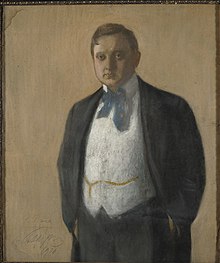
This is a romantic farce in which a young man fakes a wife and child to get an allowance from his father who then comes to visit, forcing him to quickly find a fake wife who the father then quickly falls for. Unlike the Finns who were heavily influenced by filmmakers in Sweden and Denmark this is a silly romantic farce similar to French farces of the same era not only in it's subject matter but also it's hammy performance where actors don't just break the fourth wall but ignore its very existence mugging for the cameras, pulling faces and even speaking to an audience who can not hear them or respond. The stagebound nature of the film is likely also a product of the filmmakers. The director for this film is unknown but actor Paul Pinna (who plays the father) was one of the best known actors in Estonia as well as being a director at the National Theatre so it's quite possible he doubled as director on this film unless Paasuke did the job. It's also likely that this film is a shortened version of a stage romp where the over-acting and mugging for the audience would have been normal. The direction is competent enough but the hammy over-acting would have been considered rather old hat elsewhere in Europe or America by this time. There's only one indoor set but there are several nice shots of the Estonian capital Tallin in winter. In fact this film does a better job of showing the charms of old Tallin than Paasuke's comedy short. This film was apparently a one-off and the cast returned to their stage careers although Pinna would return to make a few film appearances a decade later. He died in 1949.

Paul-Pinna-portree-Ants-Laikmaa-EKM-j-6780-M-3163
PAUL PINNA

By the late twenties Estonia was capable of making proper full length features and unlike Finland's Scandinavian moody rural subjects they were bound to focus on the central political fact of their time, the wars of independence. Finland had achieved independence fairly easily and while there had been some internal turmoil it had not lasted too long or left behind too much bitterness as they founded a democracy. By contrast the Baltic States had been caught in the middle of rival armies; Germans, Poles, Russian Red Army and White Russians and were forced to fight several battles over a few years before finally ejecting the foreigners, at least until the Second World War. All this fighting and upheaval was still fresh when a movie attempting to chronicle the war years was made in the post war years.

~~~~~~~~~~~~~~~~~~~~~~~~~~~~~~~~~~~~~~~~~~~~~~~~~~~
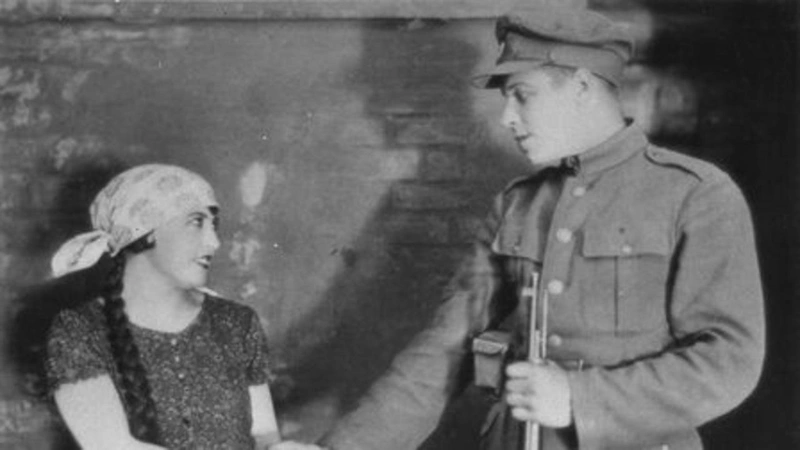
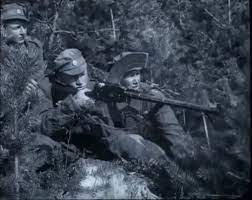
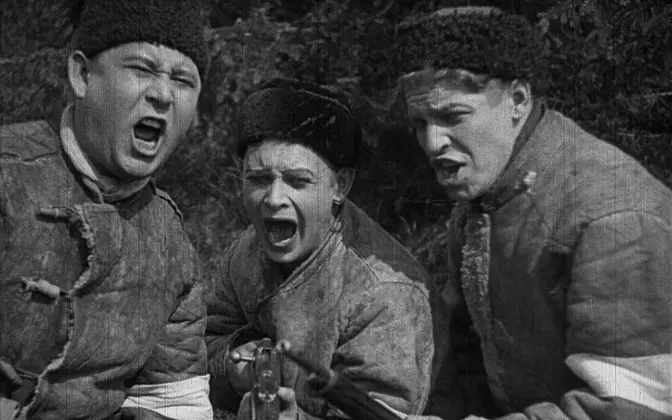
"NOORED KOTKAD" (AKA "The Young Eagles" 1927);


Directed by Theodor Luts
CAST;
Arnold Vaino ~ Tammekänd
Juhan Nõmmik ~ Laansoo
Ruut Tarmo ~ Lepik
Elli Põder-Roht ~ Hilja
Amalie Konsa ~ Laansoo's Mother
Aksella Luts ~ Laansoo's Girl
Rudolf Ratassepp ~ Red Army Commissar
Olev Reintalu ~ Red Army Commissar

Plot Synopsis; In post World War 1 Estonia we meet various people; Tammekand is a former university student, Laansoo is a blacksmith who lives with his mother and cousin Hilja, there is also a (nameless) local girl who is sweet on him and Lepik is a worker another farm. Estonia has declared independence from Russia but Russia invades and the three enlist in the army. Soviet troops raid a farm and the trio are sent to investigate. They successfully ambush the Russians by fooling them into thinking they are outnumbered, killing some and causing the rest to flee. As they move out the three are in turn ambushed by a Russian cavalry unit and Lepik  is briefly taken prisoner although when the Russians get on in their maneuvers they leave him tied to a tree and his friends rescue him then return to base. Laansoo is sent out to deliver an important message and scout out a Russian position and comes across three Russian solders who have taken over Laanoo's farm one of whom is attempting to rape Hilja. He kills the Russians, frees the girl and they flee as other Russians arrive. Before he dies one of the Russians identifies Laansoo to the others. By intertitle we are told that in a missing film segment Laansoo is captured by the Russians and threatened with death. There is a battle where the Estonians capture some Russian artillery along with a field telephone so when the Russian commander tries to call the unit he is intercepted by Lepik and the guns are used on the Russian position. As the Russians come under attack those holding Laansoo are killed and he is rescued by Lepik and Tammekand. Hilja becomes a nurse caring for wounded soldiers on the battlefield. Laansso and Hilja are reunited and return where his mother greets them and the unit celebrates their victory. We are informed that another segment of the film has been lost in which more Russian troops arrive and the Estonians are vastly outnumbered but an armoured troop train is bringing reinforcements as well as planes. However the Russians have learned of this and launch a surprise attack. As the forces gather for the climactic battle Laanssoo is reunited with the local girl from the beginning of the story who had thought he was dead then he returns to his unit. In the resulting battle the Russians are defeated but Lepik is killed and Tammekand is wounded and taken to the hospital by Laansoo where he is treated by Hilja. Eventually Tammekand recovers and leaves the hospital with Hilja and they will settle down in the city and marry while Laansoo will return to his farm where he will marry his girl, who still hasn't been given a name. Finis.  

=====================================================

image-w1280

Like Finland the Baltic States did get some films from Hollywood and other parts of Europe. However, like Finland they usually got them a few years later and so Estonian filmmakers were perhaps a little behind the times concerning the newest film techniques. At the same time their small size, limited budgets and tiny domestic audiences meant that only a few films were made each year. They didn't even have the already limited opportunities for export markets that the Finns had. Meaning they did not get the same amount of practical experience as in other countries. Accordingly, while this film is competent enough it basically resembles one of the war pictures from a decade earlier made by the likes of DW Griffith albeit with less scale, not to mention story and character development. The plot, such as it is, is basically an excuse to string together a collection of battle scenes involving groups of soldiers marching back and forth, cavalry riding to and fro, men charge or take cover, shooting guns or firing artillery which takes up the bulk of the film's run time. We also get some scenes of thuggish Russians to make clear who the villains are. At their best the battle scenes look fairly realistic with obviously real artillery blowing stuff up and the armoured train looks undeniably cool. However all this action, while containing some individual fine shots, is confusing and it is often hard to figure out who is winning these battles. Also some of the extras when called upon to die in battle manage to overact while doing so in sometimes awkward ways. It's clear the filmmakers here saw DW Griffith's "Birth Of A Nation" and sought to emulate that film's battle scenes with some success but forgetting that Griffith spent time developing the characters while here we learn little about them or for that matter about the war. In this film the battle scenes make up the bulk of the movie and they are not enough to carry a film by themselves. Actually the first fifteen minutes or so as we meet the three men and they go off to war is straight-forward enough but as the fighting goes on it becomes confusing. We can tell the Russians (who are shown as various degrees of brutal, stupid and cowardly) by their bearskin hats while the Estonians wear caps and white armbands. Except when they don't, so this system is not always clear.

images-1

This film uses fewer intertites than the two rather wordy Finnish flms relying more on the action which would normally be an bonus but this time a at least few more inter-titles might have been helpful to explain who's who. It's likely the audience of Estonians would not need much background to know the story which was still contemporary and held deep meaning for them and the long drawn-out battle scenes would appeal to their pride but most non-Estonians will likely be confused by the random looking action. Estonians indeed were impressed by all the strum und drang and this film is considered an important film in Estonian history. Accordingly a restored version was rereleased in 2008 with a new patriotic soundtrack.

"NOORED KOTKAD" (2008 Trailer);


smartcrop

Another important film from the time was a political thriller set in the 19th century in which an Estonian noble named Jri Krum is forced to become an outlaw and take up arms against the Russian regime in a story obviously influenced by "Robin Hood", "The Scarlet Pimpernel" and "The Count Of Monte Cristo". Unfortunately this film is not currently available aside from a fragment that shows some promise.

"JRI KRUM" (1929);


=======================================
LITHUANIA:

"THE TOWN OF SALIUALU";


Of the Baltic States Lithuania is the largest and most urbanized. It's different from the others in also being only one with a near modern history of independence albeit as part of an alliance with Poland. From the late medieval period the Polish-Lithuanian Kingdom was the most important power in central Europe stretching at times from the Baltic to the Balkans with their armies first defeating the Teutonic Knights then holding off the Mongols, Russians and Turks. It was also the most democratic and multicultural with a parliament that elected their kings who could at times be Polish, Lithuanian, Hungarian, German, Swedish and French. This all came to an end by the start of the 18th century when both Poland and Lithuania were finally overwhelmed and carved up by larger neighbours Austria, Prussia and Russia with most of Lithuania being gobbled up by Russia. Thereupon they were subject to the same Russification policies as Finland and Estonia. Once again the Lithuanian language is separate from it's neighbours (although related to Latvian) and uses a Latin alphabet rather than the Russian Cyrillic and most Lithuanians are Catholic rather than Lutheran (like their Baltic neighbours) or Orthodox (like the Russians).

"THE TOWN OF KRAZIU";


In spite of having an ancient and distinctive culture with a long history of literature and music Lithuania was slow to adapt to film, partially no doubt because of Russian censors but also the small size of the country. Director Vladislav Starevich did some early films while living in Lithuania in the 1910's including an interesting short version of Gogol's novella "The Portrait" (1915) which foreshadows some Post Great War German Expressionist films, especially "The Student Of Prague". However Starevich was ethnically not Lithuanian, he was Polish and with his pioneering work in stop motion animation in the future, he is not really a part of this survey. Like Estonia's Paasuke most of the early filmwork came from a single person, Antanas Raciunas who made a number of typical documentary shorts of local sights. Proper filmmaking would have to wait until after the turmoil of the Great War, the Russian Revolution, Lithuania's declaration of independence, the Russian Civil War, invasions of Russian, German and even Polish troops and civil conflict and unrest.

A handful of feature films were made from 1926 and 1931 none of which survive or are available with the one feature film being a documentary on some of the strife of the independence struggle made in 1923 along with some more shorter related subjects.

"REVOLT IN KLAIPEDA" pt1 (1923);


This film covers a specific incident occurring around the port city of Memel which was disputed between Lithuania and Germany which held the territory since Prussia seized it three centuries earlier and Poland who wanted port access. Under the Versailles Treaty the territory was placed under the control of the League Of Nations enforced by troops sent by the Allied powers of France and Britain while the dispute was ongoing. In January of 1923 Lithuanian militias seized control from the Allied troops which offered little resistance after some skirmishing around their Commision and port area. A British warship was sent but did not engage the rebels as the Allies backed down and Lithuania annexed the territory in 1924. This was recognized by the Allied powers and the League Of Nations but not Germany until the Weimar government did so in a 1928 treaty. This was of course not recognized by the Nazis who would sieze it back in 1940. After World War 2 it would be taken by the Soviets and after the second Lithuanian independence in 1990 it would revert to Lithuanian control. Note; Klaipeda is the Lithuanian name for both the city and the entire area while Memel was the German name for the port city, since the end of World War Two the Lithuanian name has been used.

Part one uses actual footage and shows various Lithuanian political leaders, Lithuanian militias standing around, displaying their weapons and marching into the area. It is implied there was fighting but in fact initially there was no meaningful resistance. Militias are shown in control of parts of the city.

"REVOLT IN KLAIPEDA" pt2 (1923);


Part two shows French and British troops on patrol in the League's Commision area in Memel and a British warship sent as reinforcement. There was some sporadic fighting here which is not shown and a few casualties are shown. Lithuanian troops are shown escorting a funeral procession. More Allied troops are shown on patrol.

"REVOLT IN KLAIPEDA" pt.3 (1923);


Part three shows more Lithuanian political leaders, trains arrive in the city with more officials who give speeches, abandoned trenches are shown, we are given a panning shot of the city and a closing shot of a statue overlooking the harbour.

This film is quite similar to the documentary/propaganda films made by Soviet filmmaker Dizga Vertov a few years earlier which is probably not a coincidence as these films were almost certainly seen in Lithuania which actually had fairly civil relations with the USSR in the twenties and who quietly backed them in their border disputes with Germany, Poland and the Allied Powers all of whom had backed the White Russians in their own Revolution. The footage is basically a string of footage of political leaders who nobody who hasn't made a detailed study of Baltic history would recognize, troops marching or riding to and fro, crowds milling about or listening to speeches, parades and a warship steaming by. This footage has notably less energy than Vertov's films and has less interest in the common people who are mostly extras in this story. There is one scene of Lithuanian troops in action which is almost certainly staged for the camera but that's acceptable enough. The actual filmmaker here is unknown but is presumably the afore mentioned Antanas Raciunas. At the end of the decade there were a few more documentary shorts to close out the story about the revolt.
One showing a dedication to one of the casualties;

"DEDICATION OF THE MEMORIAL TO POVILAS LUKSIS" (1929);


Another has the Lithuanian Army showing off their newest armoured cars and winning a friendly game of soccer with Soviet soldiers. In a decade the Soviets would be invading the Baltics and would occupy them for the next fifty years.

"THE BARRACKS AT KLAIPEDA" (1929);


At the time the release of the full length doc in 1926 Lithuania's brief attempt at democracy failed with a dictatorship which would hold power until the Soviets invaded in 1940. The new government apparently had little further interest in films and Raciunas would later transfer his talents to music and became a respected composer, which he is far better known as today.

=====================================
LATVIA;
The story of film in Latvia follows a similar path; a small country dominated by a larger neighbour with a very different culture, speaking an insular language related only to one of its neighbours (Lithuania in this case), with little opportunity to develop a domestic film industry. The early years follow the familiar pattern of a handful of short docs showing the local sights.

"RIGA" (1929);


Later there would be a few feature films most of which seem to be focused on the overriding issue of their independence struggles, with at least one of these films surviving. This film, made in 1930, long after the Silent Era had ended in North America and Western Europe, would be an ambitious attempt to tell the region's independence battles on an epic, even mythological scale.

f3c41d1bb144e11c92f5b81a57c89595

"LACPLESIS" (AKA "THE BEAR SLAYER") 1930;


Directed by Aleksandrs Rusteikis
Cast;
Voldemars Dimze ~ Lacplesis/Janis Vanags
Lilita Berzina ~ Laimdota/Mirzda Saulite
Osvalds Mednis ~ Melnais/The Black Knight
Jekabs Upenieks ~ Kangars
Kristaps Kreicbergs ~ Mr Saulite, Mirzda's Father

Plot (spoiler alert); Opening in Dark Ages Latvia, Laimdota is a pagan Princess being held captive in a castle by the invading Christian Germans led by the Black Knight. He enters her cell and demands she marry him, she refuses and they struggle. As they do her royal brooch falls off and rolls away and he leaves. Kangars is a traitor and thief working for the Black Knight even though he is Latvian and he steals the brooch and gives it to him saying he can have a spell cast over it to make Laimdota love him and a coven of witches gather to cast the spell over it. Lacplesis is a Latvian warrior who breaks into the castle, stops the spell ceremony and fights his way to Laimdota's cell where he confronts the Black Knight. In the resulting battle Kangars is killed but as Laimdota and the Black Knight close for the final battle the scene ends and we are shown that the entire story is being imagined by a young man who is reading about it in a book of ancient legends. The young man is Janis Vanags who is a farmer living in 1905 Latvia who has somehow inherited Laimdota's brooch and dreams of being a great warrior, he looks just like Lacplesis. As he is reading in the field a troop of Russian soldiers ride up with a Latvian who they have made a prisoner in the crackdown after the failed 1905 Russian Uprising in a wagon. They are commanded by Melanis (who looks exactly like the Knight) who is a captain in the Russian army and he demands directions to the farm of Mr Saulite (Janis' employer) and while giving misleading directions Janis manages to loosen the bolt on one of the wagon wheels which later falls off tumbling the Russians into a ditch and allowing the prisoner to escape. Janis runs to the Saulite farm and warns Mr Saulite who is an anti-Russian rebel giving him time to escape into the woods leaving Janis to take care of the farm and his young daughter Mirzda. When the Russians arrive at the farm they discover Mr Saulite gone and they find the bolt Janis removed from the wagon so he is viciously beaten. Janis is inspired by the example of the mythical Lacplesis and does not cry out but is left with a scar on his cheek. We fast forward ahead to 1914. World War One has broken out and Janis has joined the Latvian Rifle Brigade which fights for Russia against Germany. He still carries Laimdota's royal brooch for luck. He is given an assignment to deliver a message to find and deliver a message to Colonel Francis. The Saulites father and daughter have had to flee the war along with other refugees. While on the road they are bombed by German planes and are forced to take cover in the forrest and Mirzda (who is grown up and now looks like Laimdota) is hurt. Janis is riding by with his cavalry unit and finds her. She recognizes him from ten years earlier and happily greets him and they kiss. Janis and his unit resume their mission to find Colonel Francis who is on the other side of a river which they cross under German fire taking casualties but Janis survives and finds Colonel Francis. The Germans launch a gas attack on the Russian trenches and Janis is saved when he is shot but the bullet is deflected by the brooch he is still carrying. Janis sends the brooch to mirzda for safekeeping. Meanwhile on the home front war profiteers are making money, among them is Melanis and the Russian army is faltering forcing the Latvians to retreat and Latvia is occupied by German troops as the Kaiser visits. Fast forward again to the end of the war and Latvia proclaims its independence as a democracy. In the crowd are Janis and Mirzda who have survived the war and are together. Latvians are however poor and hungry in the winter and Mirzda must take to the streets to sell fabrics she has woven. Melanis sees her and offers to buy some of her fabric asking if she has more so she takes him back to her apartment where he makes advances on her. Just then Mr Saulite arrives and recognizes Melanis as the Russian officer from 1905 and orders him to leave which he does. Mirzda is horrified when she realizes who Melanis is. Later he returns tries to assault her but she eludes him and he again leaves. In escaping Mirzda drops her brooch which is stolen by Kangars, a thief. Melanis returns to the capital Riga where he is a wealthy businessman, Kangars shows up with the brooch. With Janis still away in the army Mirzda is also in Riga looking for work and Kangars lures her to Melanis' office. He reveals he has her brooch and will return it if she gives herself to him. She decides to leave the city and return to her village. She writes a letter to her father who is in jail (we don't know why, presumably on Melanis' orders) telling him what has happened and telling him to inform Janis about Melanis' behavior. While she is trudging home in the cold the War of Independence continues with Janis being an officer at the front where Latvian and Estonian armies have joined forces ejecting the Germans. Latvian & Estonian armies enter Riga as Melanis and Kangars decide to flee the city. Janis goes to Mirzda's apartment to find it empty. Mr Saulite arrives and gives Janis the letter from Mirzda so Janis goes off in pursuit. Going to Melanis' office he finds the brooch he has left behind. Meanwhile Melanis is meeting with a Cossack General Bermondt-Avalov who he urges to attack and retake Riga with his army made up of ex Tsarist Ruusians and Germans. As this army advances on Riga it passes through Mirzda's village where she has returned home and she is caught and brought to Melanis who tells him he will have her when he returns from the front. Bermondt's army captures towns on its way and the allied nations of Britain and France send warships to back up the Baltic armies defending Riga which include Janis and Saulite. The combined allied armies attack and defeat Bermondt's forces and they are defeated in Riga however they have retreated to another city where they have riotous parties. Bermondt and Melanis decide to flee but on the way Melanis insists on stopping at Mirzda's farm and Bermondt leaves him there with Kangars. They break into her home and she hides but she finds her and begins to assault her. Janis arrives and confronts Melanis, they fight and Melanis is killed, Kangars is killed by Baltic troops who arrive and Janis and Mirzda are reunited. Finis.
========================================

If the previous attempt at making an epic of the Independence Wars, "The Wild Eagles", fails due to a lack of writing both in plot and characters, this film has no such problems, if anything it is over-plotted. Much time here is spent on exposition concerning various military and political events to move the plot forward and fulfill the film's essential role not just as entertainment but also as patriotic propaganda. The funding for this film, the first big budget film in Latvia, came from the Latvian government with the clear intent to film a national epic which was also true of some of its source material. "Lacplesis" was originally an epic poem about the pagan roots of Latvia's past (as well as their Baltic neighbours) and their struggles to hold off the Crusading Germans and Russians. Note; While the Crusades are seen in Western Europe and America as a glorious war against Islam, the German Teutonic Knights spent most of their Crusades sacking and burning their way through the Baltics until they were smashed by the Poles & Balts in 1410.    

6a00d8341c464853ef022ad36dca4b200c-800wi

"Lacplesis" began its life as an epic poem published in 1887 as a conscious attempt to write a version of a mythological epic that could be seen as establishing an ancient sense of national pride and identity similar to the Norse Sagas, the English "Beowulf", the Finnish "Kaavella" and the German "Neibulungen" and "Faust", the latter two which were made into sprawling epic films by Fritz Lang (1922) and FW Murnau (1926) respectively. The film plot takes some of the plot from the poem (which is actually quite long and has many characters spanning several years) as an opening device for the film and to establish the main characters of Lacplesis, Laimdota and Melanis (as well as Kangars who plays a bigger role in the poem) from the ancient tale and then uses them as archetypes for the characters of Janis, Mirzda, Melanis and Kangars in the modern era. To drive the point home all four characters are notably played by the same actors to make the link for the audience that the recent independence struggle flows directly from ancient historical battles for national identity. The need to illustrate this point forces the film to take time out for scenes and intertitles which explain various historical events and persons. Note that while the main characters are fictional the Cossack General Bermondt-Avalov was in fact a real person, the battles are based on real events and the footage of German troops, including the Kaiser, are actual newsreel footage. All this exposition slows the film down somewhat at times and it's possible that a good fifteen minutes or more could have been easily edited out which would pick up the pace. In spite of this there are many well done scenes showing the filmmakers were fully aware of both German Expressionism and Russian Realism. The opening scenes set in the Dark Ages show obvious influences of German mythological epics "Neibulungen", "Faust" and "Der Golem" with their dark, claustrophobic castles and dungeons while the grotesque witches coven could have crawled over from the infamous Danish classic occult film "Haxan". Later in the modern sections a few scenes make some use of Expressionist shadowplay, the street scenes of Mirzda selling her wares and the predatory Melanis reflect similar scenes in the German "Street Films" like "Die Strasse" and "The Joyless Street" and Melanis' office with its giant clock-like window seems lifted straight from "Metropolis". The kinetic battle scenes also echo Great War movies like the German "Westfront" and DW Griffith's "Hearts Of The World". Meanwhile the scenes of brutal Tsarist officers done in cruel extreme closeups clearly reference the Tsarist officers in Eisenstein's Russian Revolution films "The Battleship Potemkin". And of course the very idea of film as agit-prop was a Russian concept filmmakers (and the government) of Baltic States were fully aware of. These scenes, while somewhat derivative, are well done and make the film fairly effective in spite of some slow patches. Unlike "The Wild Eagles", which covers a similar subject, "Lacplesis" does a better job of telling it's story and is more watchable and coherent and one need not have a deep knowledge of Baltic history to get the point although it would certainly help. The film never quite shakes off its dual role as agit-prop but it does manage to tell an complex story in a watchable way.

51144043155-3b07f36634-b

By the time this film was made in 1930 Hollywood and Western Europe had given up on silent films and fully embraced talkies but it's often forgotten that a few countries continued to make silents for several more years with countries in the Baltics, Balkans ad Latin America doing so into the early thirties, the Soviets into the mid thirties and China and Japan into the late thirties. They did so for a variety of reasons, largely political (the USSR), cultural (Asia) and in the case of small countries in Eastern Europe and Latin America their small size and film output along with limited export markets made it harder to raise the capital to buy the new equipment not only to film but also to show the films. Many of these countries also had restrictions and tariffs limiting foreign imports as well making adopting new technology less of a priority. Thus this late entry as a silent for a movie the filmmakers otherwise spent a decent budget on is understandable but it also explains how it could pass without notice in the outside world who probably never saw it. If it had been made a few years earlier it might have found an audience in Europe although the obvious potential market of Germany, where it's stylistic choices and mythological themes might have been appreciated although they might not have enjoyed being among the villains here. Note that director Aleksandrs Rusteikis, while showing some technical skill here, apparently did not make any other films.                             

MV5-BYj-Mx-OTBh-Zj-Yt-ZWZi-ZS00-Yjc0-LWI4-NTgt-Mz-A5-MWE3-ZDFm-MTE2-Xk-Ey-Xk-Fqc-Gde-QXVy-NDc2-MDEx-Mj-A-V1

===========================================
In spite of having some cultural, historical and political similarities the early films in Finland and the Baltics turned out very differently. While having a hostile USSR on its border Finland also had good relations with friendly Scandinavian neighbours with whom they shared similar cultural attitudes as well as a North American Finnish diaspora to interact with and export films to and having domestic political stability and confidence. Accordingly, Suomi-Filmi had the space to develop a film esthetic that could present a national identity that could also have at least some ability to be exported. "Anna-Liisa" is in the Scandinavian tradition of rural melodramas and while it may not be on quite the level of the films of Victor Seastrom it is certainly conquerable with some striking scenic vistas, a consistent mood, an emotional punch, coherent story telling and solid acting. This film should also easily compare to the American rural drama "Tol'able David" and the less pretentious rural films of DW Griffith such as "Way Down East". One does not have to be Finnish to appreciate the film. "The Village Shoemaker" is mediocre with less coherent storytelling and an uncompelling theme but it is at least competent and up to then current film standards.

The Baltic States had a more precarious existence; they were smaller, surrounded by hostile neighbours in the USSR, Germany and even Poland, had more unstable, and ultimately undemocratic politics as their attempts at democratic government collapsed under pressure and were replaced by authoritarian governments. They also had smaller and less organized diasporic communities in North America meaning they had less opportunities for, and probably less interest in exporting their films. These films, at least those that survive, were made as essentially propaganda films made for domestic audiences to promote a nationalistic narrative about their independence battles and legitimize their "patriotic" governments. As such they are of less interest to outsiders even if they had been better made films, which they mostly were not. Setting aside the early Estonian films made in the 1910's as they were made a full decade earlier when film techniques were cruder, "The Wild Eagles" is an attempt at a DW Griffith type national war epic which in spite of a few decently shot battle scenes fails due to unfocused writing and muddled direction and would be confusing and dull to non-Baltic viewers. However "Lacplesis" does a skillful job of integrating film techniques inspired by the best in German and Russian filmmakers and in spite of being somewhat held back at times by it's Agitprop purpose is worth seeing for fans of European silent epics.

"TOWNS OF ZEMATIJOS, MEISTU, VIAZDAI, & CHURCH OF KRETINGOS"