MANCE LIPSCOMB ~ "GOD MOVES ON THE WATER (THE TITANIC SINKING)";
April is Titanic month with April 15 being the anniversary of the sinking itself and what would as well become the first multi-media disaster with tributes being made within weeks of the sinking in every available form of media from paintings and prints to books and poems to the newest forms of media, records and films. The first such film would come only a month after the actual sinking and would star an actual survivor.
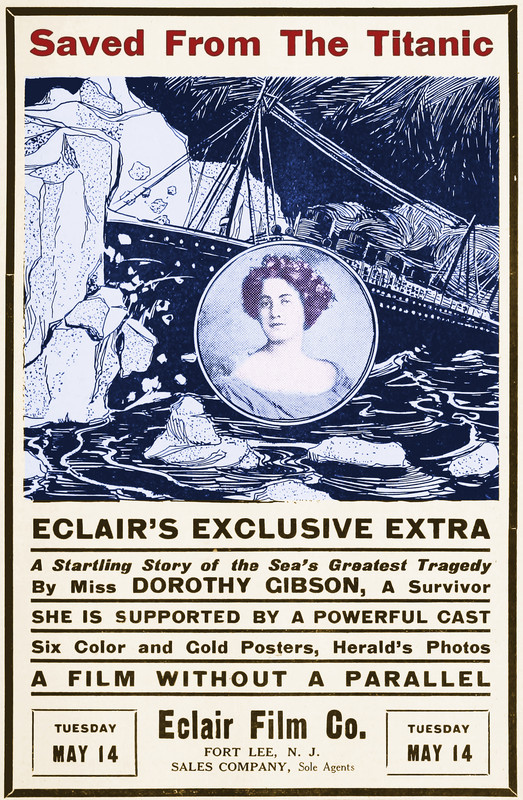
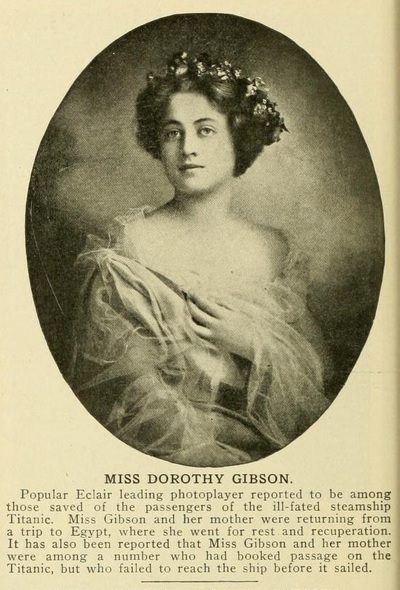
"Saved From Titanic" starred Dorothy Gibson an American frim actress who had been on the ship along with her mother and both had been lucky to have been on one of the first lifeboats to make it away from the sinking ship. Gibson was fairly well known as the featured leading lady for Eclaire Studios, a French owned studio whose main US producer was Jules Brulatour, who happened to be having an affair with Gibson in spite of both being married with her being separated but not officially divorced. The ambitious and hard-driving Brulatour had wasted no time in exploiting the sinking, rushing out a newsreel which contained some actual footage of the Titanic leaving the docks edited with more detailed footage of the sister ship "Olympic". some shots of Captain Smith and some generic icebergs. Being as how he was one of the first to provide any such footage it was a big success on both sides of the Atlantic and it was almost certainly his idea to make a film about the disaster starring Gibson, an actual survivor, and to do so while the story was still as fresh as possible. Accordingly he convinced Gibson to come up with a script and pushed her in front of the cameras within weeks of her arriving in New York in spite of her clearly suffering from what would now be considered PTSD with having nightmares and depression. In fact she had been taking a six week vacation in Europe in the first place to recover from the exhaustion of her heavy work schedule and stress of their illicit affair. Nonetheless she threw herself into the film co-writing a script scenario based around the plot of Gibson (obviously playing herself) returning home to her (fictional) fiancee and telling the story of the sinking and her rescue in flashbacks. Given that the film was only about ten minutes long it's hard to see how much ground it could have covered. The story of her rescue would also have to skirt around the somewhat embarrassing issue that the first few lifeboats off the Titanic left at considerably less than full capacity and while this was not exactly the fault of most of the passengers it was becoming a somewhat touchy subject once the facts came out. While much of the film would be shot quickly on a stage set the filmmakers were able to shoot some footage on a derelict ship in New York harbour. The rest of the film would be fleshed out with newsreel footage Brulator had already used. The film's most notorious bid for authenticity (aside from Gibson herself) was to have her wear the actual dress, coat and sweater she wore on the night of the sinking, a note that was publicized by Brulatour.
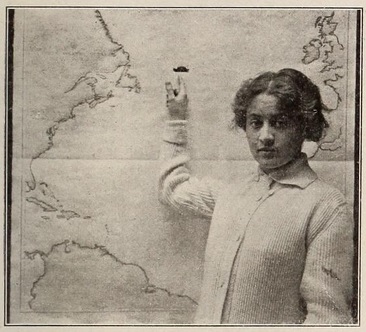
DOROTHY GIBSON
The film was given mostly positive reviews although some questioned if the rush to exploit the tragedy wasn't in bad taste. Given the film's brevity and how quickly and cheaply it was made it's hard to see how much of the actual sinking it could have shown aside from perhaps a couple shots of Gibson running about on deck or being lowered over the side while stagehands tossed a few buckets or water at her feet. Probably there would have been no time to make use of miniatures or rudimentary F/X. Gibson herself was praised for the realism of her performance while a few critics wondered if she didn't look a little frail and distracted. This turned out to be perceptive as she seems to have had some sort of nervous breakdown both during filming and after wrap-up and while she did do some publicity interviews she later announced she was taking a break from acting. It turned out she never made another film. A year later Gibson, who had switched her focus to opera and taken to drinking, was driving Brulatour's car when she struck and killed a pedestrian. The resulting trial and press attention led to the first scandal of the film world when the details of the affair of Gibson and Brulatour, both legally still married to their respective spouses albeit separated, and her career was officially over. The two would finally be married in 1917 however the marriage would end two years later and she would move to Europe where she would flit from Paris to Italy and Spain and have an affair with a Spanish Fascist official. In Italy during World War Two after the overthrow of Mussolini for who she had rather belatedly renounced her sympathy, she found herself arrested by the Nazis and interned in a prison in Milan. However the prisoners do not seem to have been terribly well guarded and she along with a couple other high-profile prisoners were able to or allowed to) escape with the help of the local Archbishop. She made her way to France, now having run through most of her fortune, only to die alone in a hotel room of a stroke in 1946 aged 56. In spite of her dramatic and scandalous life she was almost completely forgotten by the film world and in fact by that time all of her films, including her most famous or infamous Titanic film, were long lost having been destroyed in a studio fire in 1914 although one of her lesser films would surface in 2001. Made in 1912 just before the sinking "A Lucky Holdup" was a muddled crime story and romance short involving a couple eloping and then being kidnapped by a Western badman. The film is of no particular merit and would otherwise have been completely forgotten if were not for it being the only surviving film of Gibson although she is given little to do. The surviving footage is also heavily distressed in places.
"A LUCKY HOLD-UP" (1912);
Dorothy Gibson had been one of the highest paid female stars of the 1910's along with Mary Pickford, Florence Lawrence, Florence La Badie, Theda Bara and Olive Thomas but aside from the trivia of starring in the first Titanic film she has been almost entirely forgotten by even the most devoted film historians. Partly this is due to her premature retirement and literally none of her films surviving until that one obscure film surfaced in 2001, but even if she had tried to continue her career after the Great War could she have done so? Of her pre-war sisters only Pickford and Alla Namizova were able to continue on into the Jazz Age. Theda and Florence Lawrence essentially retired and La Badie and Thomas died in 1917 and 1920 respectively. If the latter two had survived it's possible to see how they could have continued on as they had developed clearly defined persona with La Badie making action cliffhangers and romantic epics and Olive making romantic comedies, both could have continued on these paths into the Flapper Era while Dorothy (like Florence Lawrence) had no particular persona. Furthermore while Dorothy was considered conventionally attractive enough (like Lawrence) she was not a true screen beauty like Olive and La Badie (who I wrote about here) with all the mystique that entails. In the end the Titanic would be not only the central event in her life but also her only screen legacy.
~~~~~~~~~~~~~~~~~~~~~~~~~~~~~~~~~~~~~~~~~~~~~~~~~~~~~
In the Fall of 1912 French director Louis Feuillade made use of the Titanic sinking as the backdrop for his film "The Obsession" (AKA "La Hantise"). This film isn't really about the sinking itself but instead becomes the object of obsession for a wife whose husband is on board as she has premonitions of doom.
"THE OBSESSION" (AKA "LA HANTISE") - 1912
Directed by Louis Feulliade
Cast; Renee Carl, Rene Navarre
The plot centers around Madame Trevoux who is a well-off French house wife with a husband and young son. The husband is scheduled to take a business trip to America on board a ship which turns out to be the Titanic (the film adds to the suspense as it doesn't reveal this right away) and she visits a palm-reader who informs her that one of her loved ones will soon die. Trevoux is terrified but does not tell her husband who leaves on his trip. Still frightened she tells her father who laughs off her concerns until reading the news reports of the sinking which is shown using miniatures. Convinced of her husband's death she becomes distraught and her son also falls ill. However eventually a telegram arrives from her husband in New York announcing he has survived and is returning home. While Trevoux is relieved to hear that he has survived she is still worried about the palmist's prediction of a loved one's death given that their son remains seriously ill until he later recovers. Meanwhile her Father has been looking into the palmist and reveals she is in fact a fraud who tells clients dramatic and false premonitions to string them along and keep them paying. Once this is revealed and the husband returns home all live happily ever after.
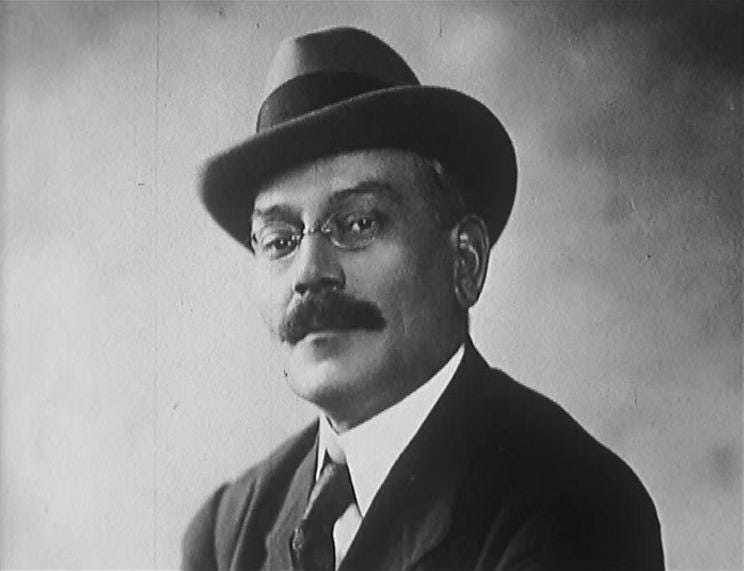
LOUIS FEUILLADE
At over twenty minutes (a scene revealing the palmist has been lost) this is twice the length of "Saved From The Titanic" but actually shows far less screen time to the ship itself. The Titanic sinking is almost incidental to the plot and almost all of the action, such as it is, takes place in the Trevoux drawing room with the only shots of the ship being done with and early use of minatures. This was not actually the first film to use miniatures as in 1905 the French Pathe Studios had used miniature ships to portray the Battleship Potemkin's actions in the abortive Russian Revolution the same year although less convincingly. Here they look much prettier although certainly not realistic. The plot actually more resembles an episode of later TV suspense shows like "The Twilight Zone", or "One Step Beyond" than a disaster flick. As it turned out Louis Feuillade would go on to make his name making the classic crime serials "Les Vampires", "Fantomas" and "Judex" becoming an influence on Fritz Lang, Alfred Hitchcock and Tod Browning. Feuillade himself would however not get to see most of this as he would die suddenly in 1925 aged only 52.
~~~~~~~~~~~~~~~~~~~~~~~~~~~~~~~~~~~~~~~~~~~~~~~
One of the ironies of the Titanic sinking is that the first proper film treatment would not come from Britain or America but from Germany (where "Saved From The Titanic" had been released) later that year with "In Night & Ice". Germany was not yet a first tier film producer at the international level ranking behind America, France, Italy and even Sweden and Denmark with the classic German Expressionist era not coming until after the Great War. In fact this would be possibly the first German film to gain international attention.
"EIN NACHT & EISEN" (1912);
Directed by Mime Misu
Cast; Waldemar Hecker, Otto Rippert, Anton Ruckert
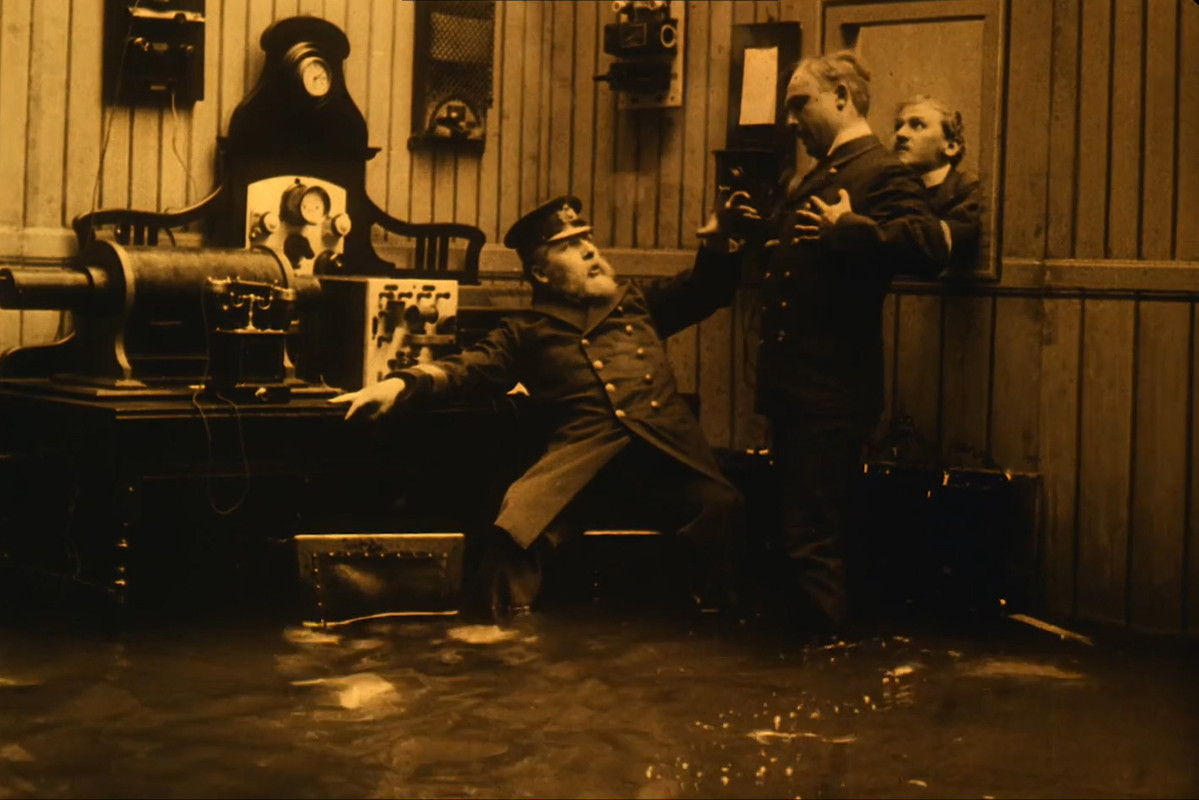
Unlike the previous film treatments this one is a reasonably accurate attempt to tell the story in almost documentary form. We are shown in chronological order as passengers board the ship, engage in some shipboard hijinks (this section goes on a bit too long), have dinner and settle into their cabins. We also meet Captain Smith, the First Officer and some of the crew including the ship's band and see the boiler stokers at work. Once the ship hits the iceberg, we see the crew do their best to save the situation while the radio men and stokers stay at their posts as the water rises and the lifeboats leave the sinking ship. The radio and boiler rooms are shown filling with water before the boiler explodes. The heroism of Captain Smith and the radio and boiler crew are emphasized as they stay at their posts and in the end the Captain is shown rescuing a passenger and dragging him to a lifeboat before choosing to return and go down with the ship.
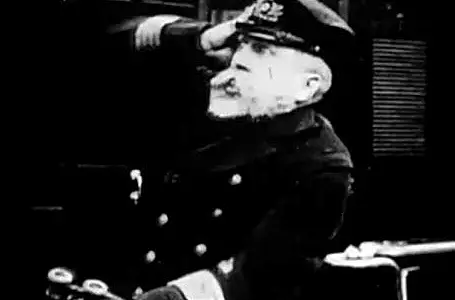
At over forty minutes this was a major production for it's time unlike the previous quickie shorts and even though this film was released a mere eight months after the actual sinking it's clear some real effort was put into making it as realistic as possible using a combination of stage sets and an actual ship, some of the footage using the real ship is realistic that it looks like newsreel footage. The scenes in the cabins, dining room and radio room are clearly stage sets (we can't see the ceilings) which have been put on rollers to effectively simulate sea travel. The boiler scenes are suitably stygian and evocative. Different tinted filters are used for various scenes for added effect including using blue to simulate the cold night and orange for the steaming boilers.
One notable effect is the early use of miniatures to show the ship striking the iceberg. This is done more effectively than in the French film. There are some odd points including while several actual persons were shown fairly accurately none are actually named including Captain Smith, Chief Officer Lightholler, Radiomen Boxhall and Phillips and first class passengers John Jacob Astor and Isador Strauss and their wives. Perhaps this was done to avoid possible legal problems although it's hard to see how anybody would have been offended by the sympathetic portrayals here.
Inevitably there are some errors including having the ship hit the iceberg on the wrong side, the ship's famous fourth funnell is shown belching smoke although on the real Titanic it was actually a giant air vent and not hooked up to the boilers at all and the band is shown playing brass instruments whereas the real band was a string quintet. Captain Smith's death, which has him swimming to drag a passenger to a lifeboat then returning to go down with the ship almost certainly never happened however such stories were popular with the press at the time. On balance these are fairly minor quibbles overall especially given the lack of factual information at the time of filming and this film shows some of the stylishness, ambition and attention to detail German films would be known for a decade later.
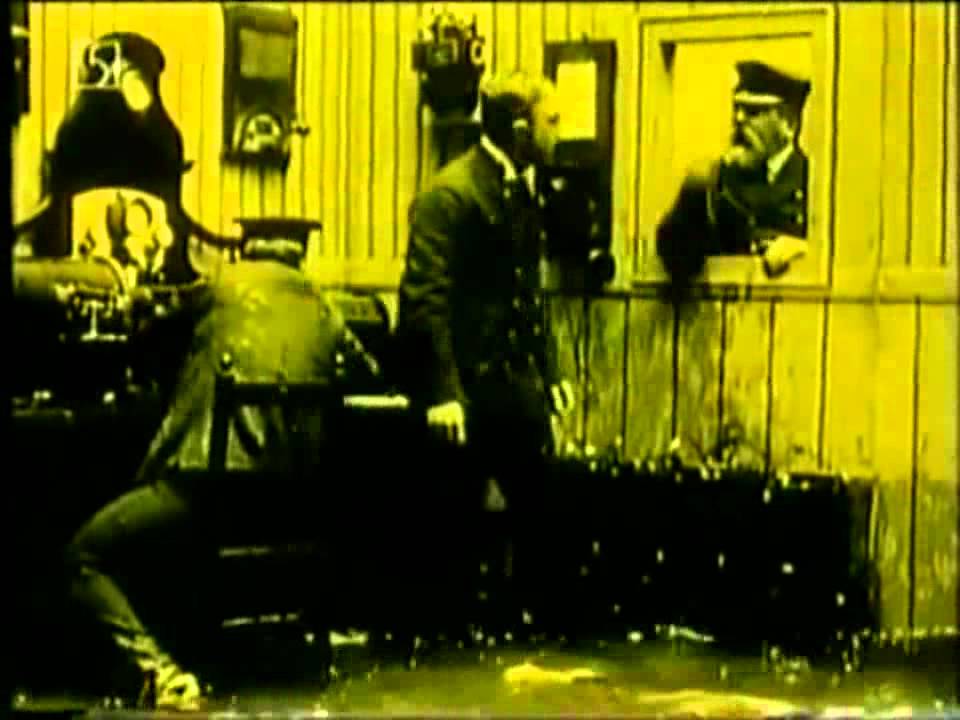
The film's director was Mime Misu who was actually a Romanian who had also worked in France. He was noted for his skill in using special effects and technical skills but would make only three films in Germany before the Great War broke out and he made his way to Holland where he made another film before drifting to Hollywood where he got into various disputes and has no other film credits although he may have worked on the technical side of things before disappearing from the historical record in the twenties. While this film did get some international attention and was probably the first German film to do so it was considered lost and forgotten for decades, The two standard text book on Weimar films; Friedrich Kracauer's "From Caligari To Hitler" (1947) and Lotte Eisner's "The Haunted Screen" (1952) do not mention it or Misu at all. Anton Ruckert (who plays the First Officer) would go on to a film career in the Weimar era including in Fritz Lang's "Destiny". He killed himself at the end of World War Two as Soviet troops advanced. Long forgotten about it was rediscovered by accident in 1998 by a collector who had not realized he had had it in his collection for years improperly labeled. It was then restored and added to some DVD releases of the James Cameron "Titanic" epic leaving open the evergreen hope that someday the Dorothy Gibson film might also turn up.
~~~~~~~~~~~~~~~~~~~~~~~~~~~~~~~~~~~~~~~~~~~~~~~
As "In Night & Ice" had been the first feature length Titanic film the first film epic based on the sinking would also come from Europe with the Danish film "Atlantis" in 1913. Unlike the previous films "Atlantis" was not explicitly about the Titanic but instead took it as an inspiration. "In Night & Ice" tried to tell a reasonably accurate depiction of the true story and while what we know of "Saved From The Titanic" suggests more liberties were taken it was still a Titanic film and "The Obsession" used the story of the sinking as a plot point. "Atlantis" is a precursor to the later Titanic movies (except the classic "A Night To Remember" docudrama) and still later 1970's disaster movies like "The Towering Inferno", "Earthquake", "The Poseidon Adventure" and the various "Airport" movies in taking several characters, introducing us to their problems (usually romantic) then sticking them into some sort of disaster to see how they react and survive, or not.
"ATLANTIS" (1913);
Directed by August Blom
Cast; Olaf Fonss, Ida Orloff, Ebba Thomssn, Carl Thomsen, Charles Unthan, Michael Curtiz
PLOT SYNOPSIS (Spoiler Alert); Dr Fred V Kammacher, a young German physician living a short distance from Berlin, has been having professional and personal setbacks as his latest research paper has been rejected and his wife, Angele, develops symptoms of mental breadown. The couple have three children and when Dr. Rasmussen, the family physician and friend advises that Angele be taken to a sanatorium, Kammacher reluctantly agrees but is thrown into depression and at the suggestion of his Mother and Dr Rasmussen takes a vacation to Berlin. While there he accepts an invitation from an old friend to attend a matinee performance, at which Miss Ingegerd Halstrom, a famous modern dancer performs. Kammacher is smitten and is introduced by her father after the performance. But he is offended when he finds her bestowing her attention indiscriminately upon other suitors and leaves. Receiving more bad news from home instead of returning seeks to flee from his troubles by going to America booking passage on the ocean liner "Roland" which is leaving from Southampton, England. He meets some of the ship's officers and we are shown parts of the ship including the dining room and its massive boilers. We also meet other passengers who include a group of Russian Jewish immigrants including an attractive young woman who briefly flirts with him and the armless Arthur Stoss, a popular vaudeville performer. While aboard Kammacher discovers that Ingegerd and her father also have taken passage on the same steamship and Kammacher once again finds himself competing for her attention and uncomfortable with the social life on board. Kammacher receives a telegram informing him that his wife Angelle's condition has worsened and Dr Rasmussen has died. That evening while a dinner party is held in the grand dining room Kammacher pays a visit to the ship's doctor just as the Russian immigrant woman is taken after being affected by sea-sickness and the two are again briefly attracted but he backs away. The Captain gets a fog warning and announces extra lookouts but the ship strikes another partially sunken ship and begins to take on water. That night Kammacher dreams that he has landed on the island of Atlantis where he meets up with another doctor friend and tours the island before he is suddenly awakened by the alarm to abandon ship. Ingegerd is also jolted awake. There is panic among the passengers but the Captain and crew work to rescue the passengers and the stokers stay at their posts. Kammacher finds Ingegerd and takes her to a lifeboat but is unable to find her father before he joins her on the boat. As the ship sinks the Captain, who had refused a lifejacket is the last to jump off and is lost. The passengers on board the lifeboats are rescued by a passing freighter called the "Hjortholm". Most of the passengers are rescued but Ingegerd's father has been lost but she and Kammacher are reunited as he offers comfort.
The "Hjortholm" reaches New York City where they are greeted by reporters. Ingegerd and Arthur Stoss are met by their agents who want them to perform that night. Stoss agrees but she refuses and along with Kammacher takes shelter at the house of some artist friends to recover. While staying there Kammacher meets Mr Ritter, a sculptor who is working on a bust of Inegerd and his student Miss Burns. Dr Schmidt, a friend of Kamamcher, also pays a visit and offers him the use of his cabin in the mountains to recuperate. Once again Kammacher finds Ingegerd flirting with other men and when Miss Burns invites him to lunch he agrees. Some of the upper class survivors of the "Roland" have a dinner party at which Kammacher and Ingegerd are invited. Annoyed with her flighty behavior he walks out and wires Schmidt he is leaving New York and accepts his offer of his mountain cabin. The two journey to the cabin where Schmidt leaves him alone. Kammacher is plagued by nightmares in which he is visited by visions of those lost on the "Roland" and he is given a telegram informing him his wife has died and suffering from depression his health deteriorates. Concerned about him, Schmidt visits the cabin joined by Miss Burns who agrees to look after Kammacher. The two fall in love and decide to marry and return home where his family awaits. Finis.
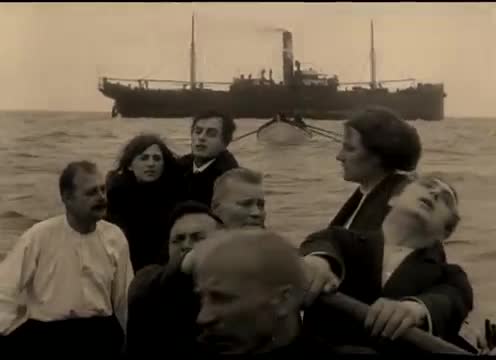
Directed by August Blom, the head of Nordisk Studios, this was a major production intended for international markets and had a big budget. Denmark was a major film producer at the time, more so than Germany in fact, and Blom was already a veteran filmmaker since 1910 with a crew that included a young Michael Curtiz as a second unit director (he also appears in a supporting role) and was able to make use of elaborate sets that included the use of a passenger liner for external and deck shots and a full scale model of the sinking ship instead of the not entirely satisfactory miniatures of the previous films. Like many Scandinavian films of the era there are some gorgeous outdoor cinematography both at sea and in the snowy mountains in the film's final act.
While the film's dramatic use of the sinking of the "Roland" brought obvious comparisons to the "Titanic" sinking the year before Blom always insisted the film had nothing to do with the sinking and was in fact based on a 1912 novel of the same name by German author Gerhart Hauptmann. This novel had obvious similarities with the "Titanic" sinking with both having a large British passenger liner with similar names and too few lifeboats striking an object and sinking. It was originally published a mere couple months before the actual sinking and has thus been a subject of fascination ever since by conspiracy theorists and believers in the paranormal much to the annoyance of Hauptmann who was a respected writer who even won the Nobel Prize the same year for his collective works. Hauptmann's stature allowed for him to insist on involvement in the film that was greater than usual for writers and he effectively had creative control which led to some of the film's shortcomings. At almost two hours long, exceptional for its era, it was felt by many critics to be excessive but was insisted upon by Hauptmann who allowed few edits from the story. He also interfered with the casting, demanding that the role of femme fatale Inegered be played by his mistress Ida Orloff, an opera singer he had based the character on. This casting led to much criticism for her being too old and plain for the role which was originally written as a flighty teen even though Orloff herself was actually only in her mid-twenties. The role of August Stoss who was largely considered to be superfluous to the story and a distraction was played by Charles Untham a friend of Hauptmann's who he had based the character on and who he insisted be included. Simply by eliminating Stoss entirely along with some other repetitive scenes it would have been possible to edit this film down to a more manageable ninety minutes. The main characters are not very likable with Inegerd being selfish and shallow but Kammacher is also not a terribly sympathetic character as a stuffy prude who has nonetheless abandoned his wife and family to meander pointlessly through Europe and America.
The scenes of the sinking are well done and an improvement on those in "In Night & Ice" with more dramatic scenes of rising water in the staterooms and boiler rooms. The boilers themselves are also larger and more impressive than in "In Night & Ice". The use of a full scale model to show the final sinking are particularly well done and compare well with the miniatures used in the previous film. There are also more scenes of panic on board the ship, a theme that would continue in subsequent films. There are a couple notable inconsistencies. Since the ship in this film struck not an iceberg but a partially submerged wreck this scene is not especially dramatic or even realistic as it seems unlikely that a large iron-hulled steamer could be sunk that easily by striking a wooden sailing schooner instead of simply plowing through it. Also the scene with the breach impat is shown happening at the bottom of the hull instead of at the bow. The film is oddly vague about how many passengers actually died (aside from the Captain and Inegerd's father) which is actually less detailed than the novel which had blamed a lack of lifeboats. Since this was also a controversial factor in the actual "Titanic" sinking it's possible the filmmakers (and Hauptmann) decided to avoid such the topic entirely.
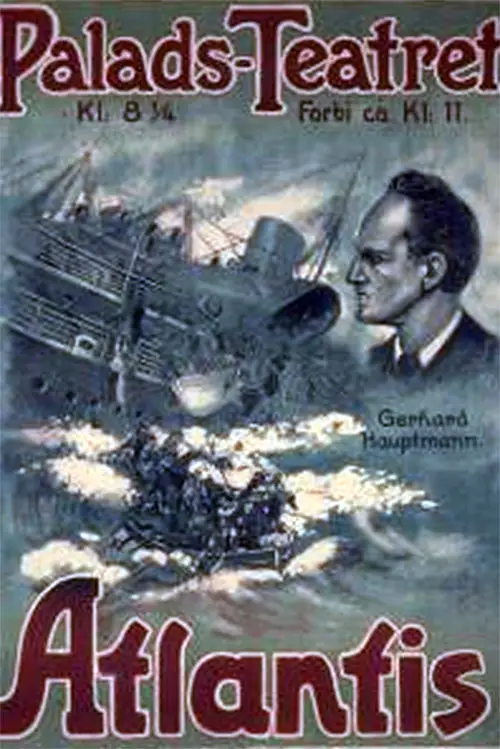
If Blom and Nordisk were hoping to exploit the demand for "Titanic" media while avoiding controversy they miscalculated with many critics denouncing the film for exploiting the still fresh tragedy and the film ended up losing money on it's already large budget although it is now seen as being important in Danish film history for it's scale and technical skills as an early film epic. One of the oddities of this film was a separate ending filmed for the Russian market. At the time Nordisk had some success exporting films including to Russia however Russian audiences had a fondness for tragic endings so a separate ending was filmed in which after Kammacher is reunited with Miss Burns he immediately has a heart attack and dies. This ending was kept secret from Hauptmann and only shown in far flung parts of Russia but has managed to survive and is included in restored prints. Blom would continue to make films throughout the silent era although his output would decline as did Denmark's importance as a film producer and he retired from filmmaking in 1925 managing a theatre until his death in 1947. Gerhart Hauptmann would continue to be one of Germany's leading writers as a novelist and playwright. His involvement in the politics of post WW1 Germany was complicated and contradictory. Originally a Socialist and supporter of the Weimar Republic he wrote for the newspaper Berliner Tageblatt, a liberal paper which opposed the Nazis and Nationalists. With the Nazis coming to power many of his works were banned however his fame protected him from serious consequences and he was wooed by Goebbels to appear at state occasions and awarded with status as a state artist. He applied for membership in the party but was rejected and he did no actual propaganda work for them. During the war he had moved to occupied Poland and after the war the new Polish govt ordered his expulsion along with all other Germans although the Soviets interceded on his behalf paying tribute to his work. Before he could be deported he died in 1946 aged 83. By this time his affair with his longtime mistress Ida Orloff had long ended. The Russian born actress and singer made only two films and concentrated on the stage in Vienna where she committed suicide at the end of the war aged only 56.
~~~~~~~~~~~~~~~~~~~~~~~~~~~~~~~~~~~~~~
There would be a pause in "Titanic" adaptations for the rest of the silent era partly due to the commercial failure of "Atlantis" as well as legal threats from the White Star Line, the owners of "Titanic", and the next adaptation would have to wait for the sound era. This would also be the first British adaptation.
"ATLANTIC" (1929);
Directed by Ewald Andre Dupont
Cast; Franklyn Dyall, Madeline Carroll, Ellaline Terriss, Donald Calthrop, John Longden, Joan Barry, Sydney Lynn
The plot here is simple enough. When the film begins we are already at sea and we spend most of our time with a few passengers in the dining room where John Rool (Franklyn Dye), an older writer confined to a wheelchair, is holding court. Various other passengers drop by including his wife (Elleline Terris), the young and beautiful Monica (Madeline Carroll) and Betty (Joan Barry) and the ship's first officer (John Longden). Once the ship hits the iceberg the crew scrambles to rescue as many passengers as possible amidst scenes of panic. Once the lifeboats are away the remaining male passengers, which include the Rools, proceed to get drunk, say prayers and await the end. The film ends with the passengers gathered singing "Nearer My God To Thee".
This film was one of the first major sound films made in Britain and suffers from the same issues that most of the early talkies; muffled sound, stilted line readings, static camera work and slow moving action, The first microphones were poor quality as well as being large with boom mics and contact mics not yet being invented so this meant that mics had to be kept near the actors and hidden in objects like lamps, vases or shrubbery while the actors hovered nearby unable to move too far lest they become out of range. This often led to scenes where characters simply sit or stand around talking. They also tended to carefully over-enunciate causing them to sound stilted and awkward which is particularly noticeable here. There are many scenes with extended but pointless dialogue, although there is a detailed explanation about icebergs and why they were difficult to spot on that night. This is is one of the few nods to authenticity in the film as unlike the previous two full length films there are few shots of an actual ship with most of the action, of which there is oddly little considering the plot, involves passengers milling about in the dining room or staterooms engaged in stiff-upper-lip conversations. The filmmakers reportedly did have access to a real liner for some of the scenes but little use is made of this and most of the interiors are likely studio built sets. The interior sets make little effort in accuracy either with their high ceilings and spacious floor space of the dining room and staircase looking more like a luxury hotel. The engine room and boilers and the scene of the impact and immediate aftermath do look real enough and improve on the previous efforts. One of the few attempts at taking a story from the actual "Titanic" sinking is an unfortunate one as during the scenes of panicking passengers storming the lifeboats we see two black stokers violently trying to push his way onto a lifeboat only to be shot. This was based on a story about a stoker trying to steal the radioman's lifejacket (a scene shown in some later "Titanic" films) who was initially reported as being black. This story was widely accepted in the press for years since surely no white man would behave in such an ungentlemanly manner. However the story was proven to be completely made up and there in fact were no black crew members anyway, something the filmmakers should have known by 1929.Unlike the previous films the film ends showing the passengers still aboard stoically accepting their fate and there are no shots of the actual sinking.
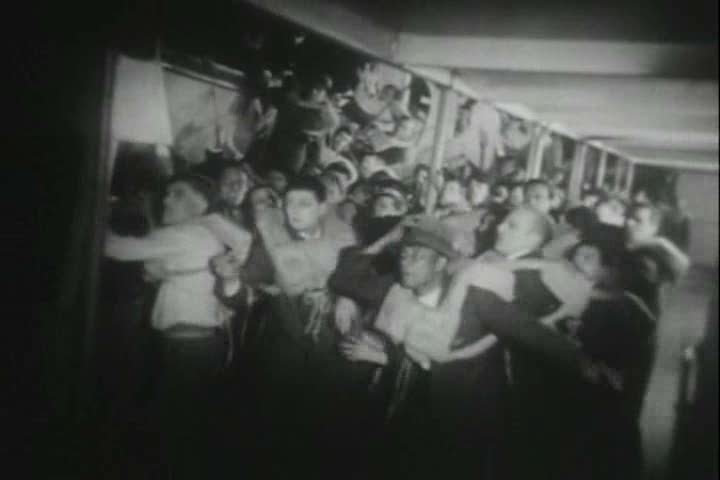
Like many films of the era the lack of attention to historical accuracy leads to anomalies such as the women's fashions belonging firmly to the Jazz Age rather than the Edwardian Era and extend to having the ship's band being a Jazz dance orchestra with the bandleader bearing a probably not entirely coincidental resemblance to Paul Whiteman, AKA The King Of Jazz. The dining room also has a bar which is actually one of the few things the real ship didn't have but which does allow for more scenes of characters standing around talking. Besides dialogue the film does make heavy use of sound effects in the blowing of alarms which sometimes overpower the characters. Once again the ship's band are shown as having brass instead of string instruments which is likely as they could be more easily recorded by the microphones of the day.
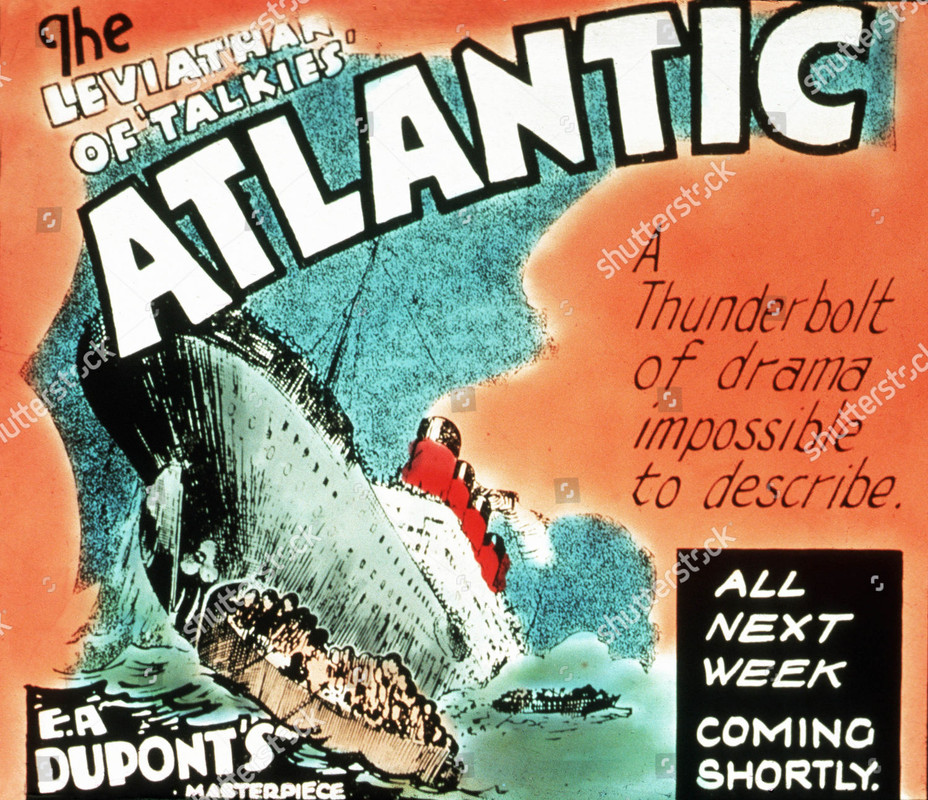
One of the reasons for the film's stagey nature may be that it was partly based on a stage play "The Berg" which had taken many liberties with the real story including changing the names of all the characters and in this case having the Captain look nothing like the real Captain Smith. There would also be a dispute over the film's title being changed from "Titanic" after legal action from the White Star line then still in business. After the initial release the title was changed to "Atlantic" which was ironically the name of another ship from White Star which sank in 1873. Another more significant change was the ending which originally showed the ship sinking but was taken out (and now lost) after complaints from White Star and "Titanic" survivors resulting in the less satisfying ending here. This was a major production and one of the most expensive films made in Britain at the time and was done with an eye to foreign markets. To boost export chances and to cover the film's exorbitant budget the film was made as a Anglo-German co-production with each scene being filmed by it's English cast and then reshot using the German cast in a manner similar to how "Dracula" would be shot in both English and Spanish versions in 1931 although here the the different versions used the same camera work and script and so are mostly identical.
"ATLANTIK" (GERMAN VERSION 1929);
Cast; Felix Kortner, Francis Lederer, Georg John, Elsa Wagner
Even so the British version is superior to the German version mostly due to having better acting and better dialogue. The German version also reuses some footage from the British version, mostly involving exteriors, the boiler rooms and scenes of panic on deck which is acceptable but for some reason also includes scenes with Madeline Carroll as a character from the British film of a philandering socialite who does not otherwise appear in the German version. Confusingly none of her scenes were dubbed into German being either in English (the only scenes that are) or as silent no dialogue at all in spite of the fact that the characters are obviously speaking. The final scene of male passengers gathering in the ballroom to sing "Nearer My God To Thee" also switches from German to English without reason. On the other hand it does have the final sinking scene cut out of the British version. By this point in film history the German industry had long since overtaken the British especially in making historical epics since the silent era but German filmmakers in the early sound era were still struggling to adapt to the new medium although they would soon find their feet with "M" and "The Blue Angel". The French and silent versions appear to be lost. The English and German versions were among the first major sound productions in those counties and proved popular. Given the overly talky and stagebound nature of this film it's hard to see how a silent version would be a success however.
While forgotten now the cast had several names that were well known to British audiences of the time with Franklyn Dyall and Ellaline Terriss being veteran stage actors. Terriss was also married to the even more famous actor Sir Seymore Hicks who had played Ebaneezer Scrooge for years on stage and film both in a silent version and the first sound version in 1933 (which I've written about here). Terriss herself had appeared in the silent version as Mrs Cratchit and ironically Donald Calthrop, who plays the Rool's loyal valet, would later appear in the 1933 version as Bob Cratchit although oddly Terriss did not. At least three cast members would appear in early Hitchcock films including Madeline Carroll who starred in "The 39 Steps" (1935), Joan Berry, who dubbed the lead voice in Hichcock's first talkie "Blackmail" (1929) after the Czech star Anny Oonda was unable to master the English language and would later star in "Rich & Strange" (1931) and John Longden who appeared in six Hitchcock films and later as Sherlock Holmes in one of the first TV productions. Among the more notable cast members in the German version were Felix Kortner, Francis Lederer (both of whom had appeared in "Pandora's Box), Elsa Wagner ("The Cabinet Of Dr Caligari") and Georg John who had appeared in supporting roles in a number of Fritz Lang films including "The Spiders" (1919), "Harakiri" (1919), "Destiny" (1921), Dr Mabuse, The Gambler" (1922), "Die Nibelungen" (1924), "Metropolis" (1927), "Spione" (1928), Munau's "The Last Laugh" (1922) and Hanrik Galeen's "Alraune" (1928). Being Jewish when the Nazi seized power he fled to Poland but after the fall of that country he was rounded up and sent to the Lodz Ghetto where he died in 1942 aged 62.
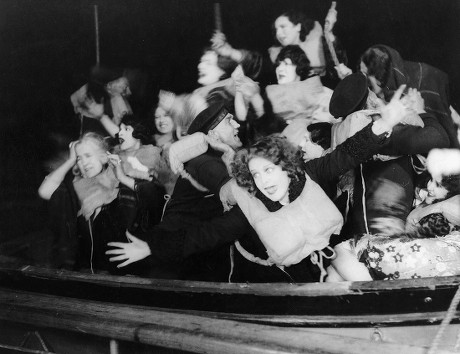
MADELINE CARROLL
~~~~~~~~~~~~~~~~~~~~~~~~~~~~~~~~~~~~~~~~~~~~~~~~~~~
"Atlantic" was not an entirely satisfactory version of the story with critics mocking the staginess and stiff line readings and it certainly did not date well once sound film techniques improved just a few years later but once again the first proper treatment would come from Germany however in the strangest way possible.
"TITANIC" (1943);
Directed by Herbert Selpin
Cast; Hans Nielsen (First Officer Peterson), Sybille Schmitz, Kristen Heilberg, E.F Furbringer (Bruce Ismay), Charlotte Thiele & Otto Wiernicke (Captain Smith)
This film was a pet project of Propaganda Minister Josef Goebbels who had taken personal control of the Nazi film industry quickly after the seizure of power, a subject I've previously covered here. Hitler (previously a failed artist) and Goebbels (previously a failed author) were avid film fans and Goebbels in particular had paid attention to the successful use of film as a propaganda tool and aimed to make use of the new medium. In addition both Nazi leaders were also envious fans of American film epics like "Gone With The Wind" and never gave up a desire to create their own film epic. It was apparently Goebbels' idea to male use of the "Titanic" sinking as a vehicle of anti-British sentiment. This lead to the writing of an odd script in which the sinking would be the backdrop for a story about how the sinking was the result of greed, incompetence, arrogance and perfidy of the British and Americans in the person of English White Star manager J Bruce Ismay and American multi-millionaire (and passenger) John Jacob Astor while also serving as a romantic epic.
In the story Ismay is a greedy arrogant martinet who is faced with mounting losses due to cost overruns and the machinations of rival Astor who has been dumping White Star stock in an attempt to drive down the price further as part of a complicated takeover scheme. The desperate Ismay then plots to prop up White Star's falling stock price by ordering having the "Titanic" break the world speed record for an Atlantic crossing. Accordingly he orders Captain Smith to run at top speed and disregards ice warnings. To cut costs there are also not enough binoculars or searchlight bulbs. Watching all this is the ship's First Officer who happens to be a German named Peterson who strongly objects to Ismay's behaviour and urges the Captain to slow down but is brushed off by Smith. Peterson is of course brave, upright, hard working, incorruptible and proven right in every way.
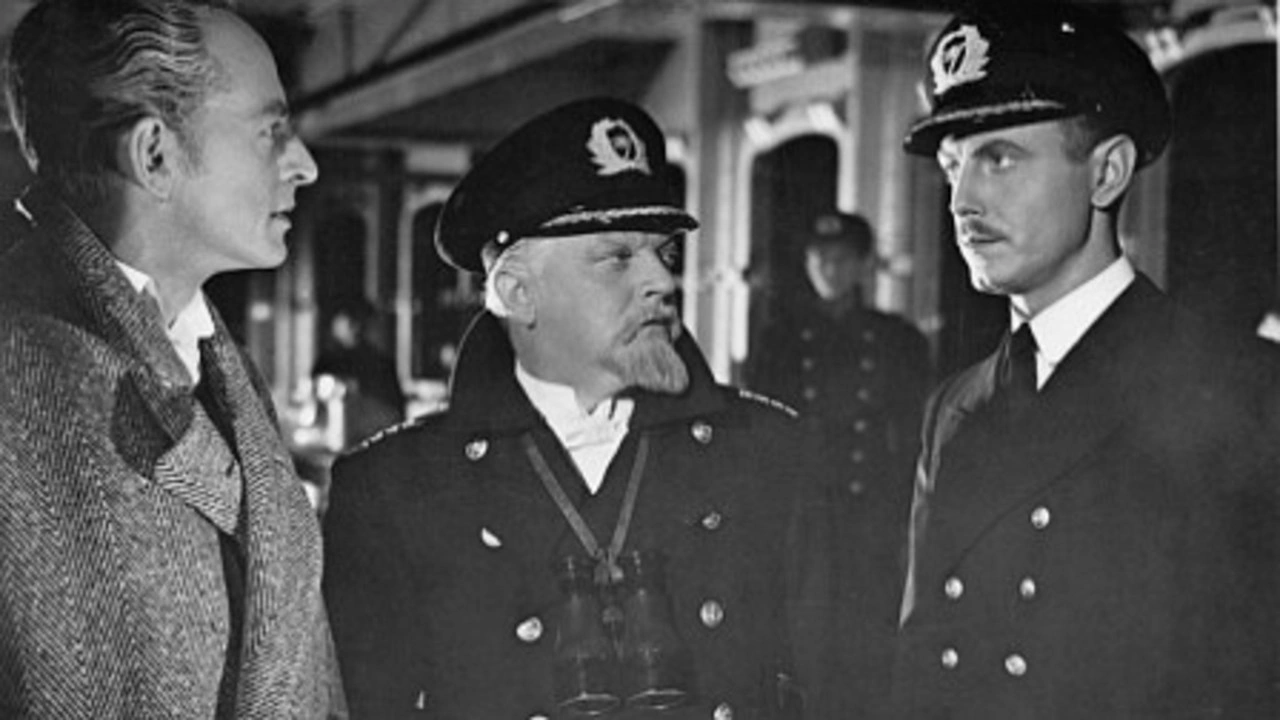
HANS NEILSEN, OTTO WIERNICKE & E.F FURBINGER AS PETERSON, CAPT SMITH & ISMAY
Needless to say, all of this is nonsense. There is no truth to the idea that White Star was facing bankruptcy or that Astor was plotting to buy it. While it is probably true that the ship was going too fast there was no foundation for the myth that Smith or Ismay were trying to break any records and indeed the ship was not fast enough to do so or that they would have even considered doing so. Unlike their rival Cunard line the White Star line had never prized speed as it's selling point and instead focused on size and opulence. Its ships were the biggest and most luxurious, they had the largest staterooms and ballrooms, the most lush furnishings, the best food and wine and the best service. These were luxury liners in every sense of the term but they were not built for speed. The Titanic could not have broken any speed records even if Smith and Ismay had attempted to do which there is no evidence they did. Nevertheless even though it has been repeatedly debunked, the myth of the world speed record is still commonly held today and it is largely due to this Nazi propaganda film.
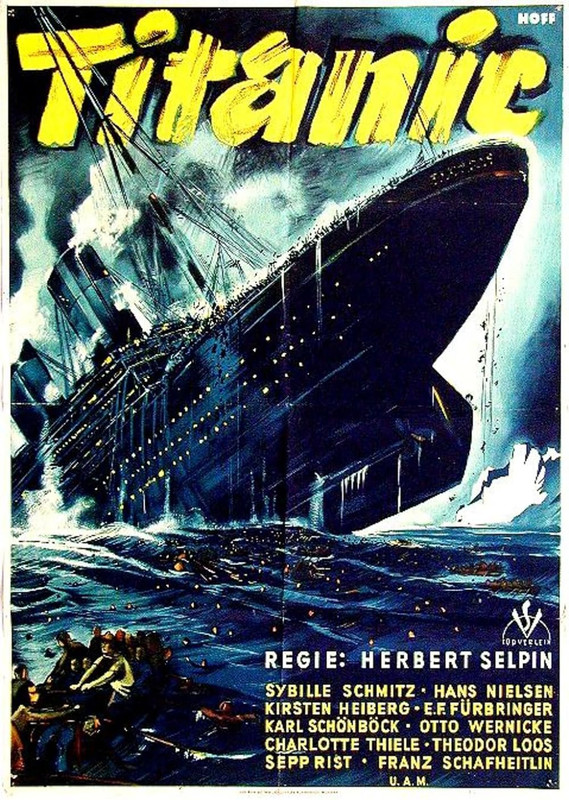
Besides Peterson there are also a few families of German immigrants in steerage class who are naturally noble, plucky and loyal. Also aboard was Sybille Schmitz as a Countess from an unnamed Baltic country then under Russian Tsarist rule who is an old flame of Peterson's and is making her escape from Russia. The rest of the upper class Anglo-Americans are shallow and cynical, playing the stock market and carrying on affairs. Inevitably Peterson's repeated warnings are suppressed by Ismay and disregarded by Smith leading to the ship striking the iceberg. As in other films the crew sets to work trying to save passengers, there is some panic and scheming by the upper-class men like Ismay and Astor to find a place on a lifeboat. Meanwhile the plucky Germans keep their heads and survive. Astor fails to find a boat and Smith elects to go down with the ship but Peterson makes sure Ismay survives so he can face charges; however the resulting hearings are a whitewash that blame Smith and exonerate Ismay. The film ends with Peterson, the Countess and the other Germans attending the hearing to denounce English justice and in closing a screen end title adds a further condemnation of British greed and negligence. As a piece of Nazi propaganda the film is typically ham-handed, strident and dour but it's also oddly ineffective. Ismay and Astor are supposed to stand in for the Anglo-Americans and are thoroughly villainous (besides being a smug, greedy, bully Ismay is also a coward and both are cheating on their wives) but the rest of the British crew, including Smith, are perfectly professional. They all stay at their posts, do not panic and work to save passengers. The radio crew are given plenty of screen time as they refuse to abandon ship until the end. Odd to say about a Nazi film but it's actually not particularly hateful and the end lectures feel strident and overplayed. It also doesn't help tha the noble hero Peterson is also unlikable as a dour, stuffy, prig.
Even more odd for a film that was specifically designed (at least in part) as Nazi propaganda it is not Anti-Semetic in any way. There are no Jewish characters even though the actual "Titanic" had two high profile Jewish-American millionaires aboard in Benjamin Guggenheim and Isador Strauss. Given that the plotline of millionaires plotting to undermine the ship and White Star line due to their cynical greed, the choice not to rope in two actual Jewish millionaires and instead blame all the plotting and counter-plotting on Ismay and John Jacob Astor is puzzling. Of course such a conspiracy would have been nonsense but so was the entire subplot and it's not like details like factual accuracy ever mattered to conspiracy theorists before or since. It's even more ironic when one remembers that the Astors were originally German immigrants to America in the first place. It's likely the decision to simply ignore Guggenheim and Strauss instead of making them cartoon villains like Ismay may have been a result of Geobbles finally realizing that previous anti-Semetic films had simply not proven popular, even in Germany let alone in export markets and even at this late date he still dreamt of showing this film outside Germany even if only in Occupied Europe, allies like Italy and perhaps a few neutral countries.
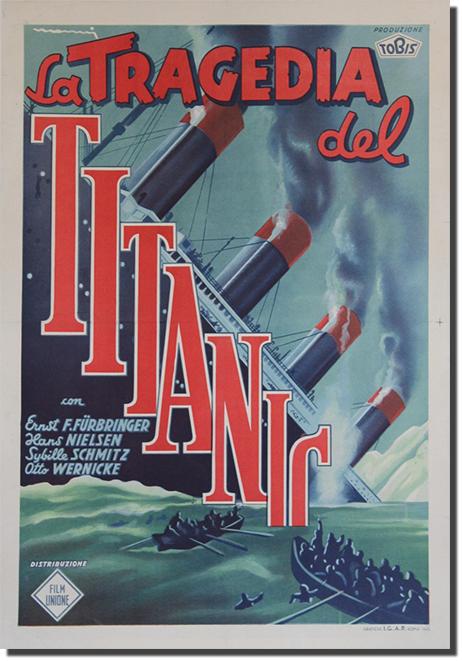
ITALIAN POSTER
Setting aside the propaganda, the film itself is actually quite well made. As a pet project of Goebbels meant the film had a generous budget and had the usual lush production standards of the excellent Tobis studios and director Herbert Selpin was a solid professional who handled a complex shoot deftly. The film has typical excellent opulent sets interior and the engine room looks suitably huge and state-of-the-art. The film even takes time out to show it off by taking some first class passengers on a sight-seeing trip through the ship's innards.
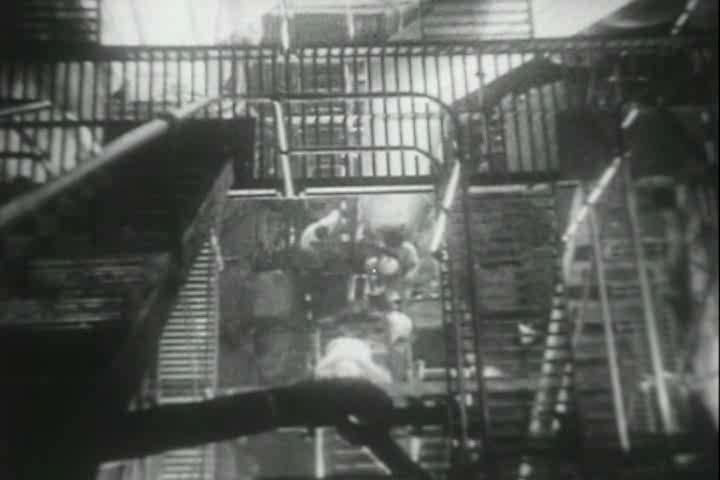
The scene of impact is the most realistic yet and is reasonably accurate. There is one evocative scene not shown in any other film version in which one of the radiomen releases his pet canary to fly free. The acting is fairly understated aside from the villainous Ismay who is cartoonishly evil and cowardly.
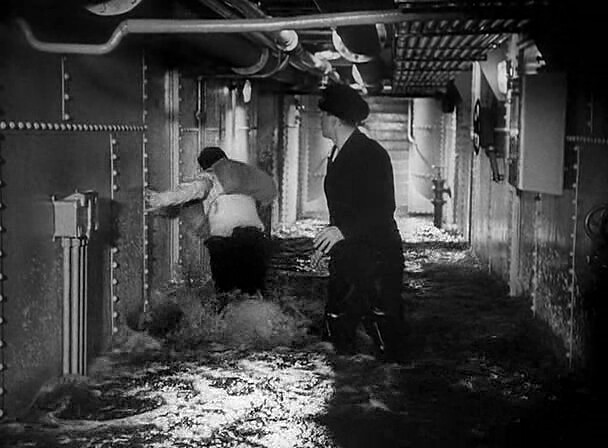
The story behind the film had even more drama than the film. As a pet project of Goebbels no expense was spared with director Selpin having access to the liner "Cap Arcana" and extras and technical advisors provided from the German Navy. This last turned out to be Selpin's ruin as some of the sailors and what was worse officers from the Kriegsmarine, not satisfied with being excused from far more dangerous duty, took the opportunity to get roaring drunk and harrass some of the more attractive women. Selpin made the mistake of angrily complaining about this using especially insulting language and a the film's co-writer Walter Zerlett-Olfenius informed on him to Goebbels who had him Selpin arrested for slandering the name of the Kriegsmarine, a crime in wartime Nazi Germany. Selpin would later be murdered in his jail cell and the film was completed by another director Walter Klingler. The murder of Selpin would destroy Geobbels already tense relationship with the German film colony. When Geobbels took over personal control of the German film industry he quickly banned a Jewish actors, writers and filmmakers as well as leftists and various other foreigners other assorted enemies, imposed quotas restricting films from non-Axis countries (which also killed off access to export markets as countries naturally imposed quotas in response) and annoyed everybody by his micromanagement. However both Goebbels and Hitler were also often starstruck celebrity chasers who assiduously courted film stars and Goebbels was eager to bestow favours that allowed favoured stars from the petty tyrannies of life under the regime. However the murder of Selpin destroyed whatever credibilty Geobbels had with the film colony and attempts to cover it up as a suicide were fruitless. Zerlett-Olfenius would also find himself shunned to the extent that Goebbles himself would threaten to punish anybody who snubbed him which of course had the opposite effect. All of this would not do Zerlett-Olfenius any favours after the war either when he found himself sentenced to prison as a Nazi collaborator. While this was later reduced he never worked in film again and died in 1975.

HERBERT SELPIN
After all this when Goebbels saw the finished film he had second thoughts. What seemed like clever anti-Anglo-American propaganda now seemed like an indictment of clueless and selfish leaders at a time when Germany was clearly losing the war. Worse, the scenes of panicking people fleeing for their lives while their leaders (in the person of Ismay) scurry away and get off scot free was also a little too on-the-nose for Germans huddling in bombshelters. The scenes of panicking passengers also troubled Geobbels at a time when Germans were fleeing Allied bomber raids. Even at the best of times the film's propaganda message was too gratuitous and felt tacked-on to be very effective anyway and clearly these were not the best of times. So regretfully Geobbels shelved the film as unsuitable in Germany. However Goebbels who had dreamed of producing a Hollywood epic apparently couldn't bare the thought of banning the film entirely and instead allowed screenings in parts of occupied Europe, notably in Frace and allied Italy and it got a positive reaction from audiences.
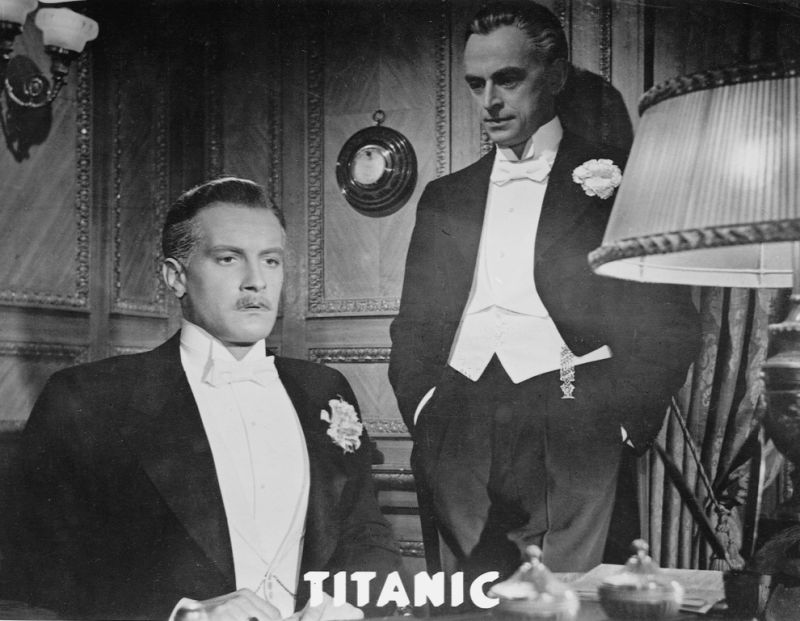
ASTOR & ISMAY
Of the cast Sybille Schmitz was one of the odder stars in the Nazi era. She was a successful leading lady in spite of not looking at all like the Aryan ideal of blonde, blue eyed beauty instead looking distinctly Slavic or Latin with her severe black hairdos, high cheekbones, penetrating dark eyes and brooding, sensitive air. Geobbels personally disapproved of her yet she was popular with those of a more Bohemian bent and specialized in playing exotic, troubled or fallen women in romances (as she does here) as well as appearing in some of the few artistic and Expressionistic films allowed in the Nazi years (which I've written about here) including the weird Expressionist "Fahrman Maria", and the film noirs "The Unknown Woman" and the excellent "I Was Jack Mortimer". Although she was not involved with Nazi propaganda aside from this film, to the extent that counts, and was not charged with any crimes her post-war career stalled partly due to her own problems with mental instability and substance abuse and she died penniless in 1955. She has since become something of a cult figure of German film as a tragically doomed Bohemian figure somewhat like Edie Sedgwick or Jean Seberg. Otto Wernicke as Captain Smith was already well known as the police inspector from the "Dr Mabuse" films as well as the classic serial killer film "M". He was popular with Goebbels and also appeared in "Kolberg", his notorious attempt at a big budget propaganda historical war epic. In spite of this Wernicke managed to continue his career in post-war Germany dying in 1965.
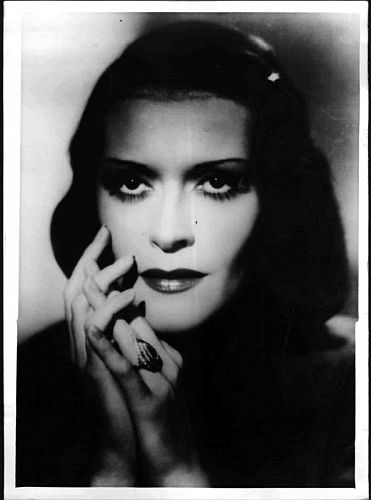
SYBILLE SCHMITZ
~~~~~~~~~~~~~~~~~~~~~~~~~~~~~~~~~~~~~~~~~~~~~~~~~~~
The German film went largely unseen and the "Titanic" seemed forgotten as a subject until Hollywood finally got around to giving it the Hollywood treatment after the war.
"THE TITANIC" (1953);
Directed by Jean Negulesco
Cast; Barbara Stanwyck, Clifton Webb, Robert Wagner, Richard Baseheart, Brian Aherne (Captain Smith), Thelma Ritter (Molly Brown), Audrey Dalton, Edmund Purdom (Lightoller), Mae Marsh.
For this film the "Titanic" was the backdrop for a Hollywood melodrama as Barbara Stanwyck, jaded anti-heroine of many pre-code potboilers, as wealthy Mrs Sturgis who is using the ship to skip out on her domineering husband, Clifton Webb as a smug, sneering, snob, taking with her their two children, a teenage daughter (Audrey Dalton) and pre-teen son. Also onboard are Robert Wagner as a young frat boy with a crush on Dalton and Richard Basehart as a Priest defrocked due to alcoholism. All these characters are completely fictitious but there are a few real life characters as well in Captain Smith, First Officer Lightoller, Radio Man Phillips and millionaires the Astors, Guggenheim, Strauss and Molly Brown (albeit with a different name). However most of the focus is on the battling Sturgis family and the film takes its time getting to the iceberg.
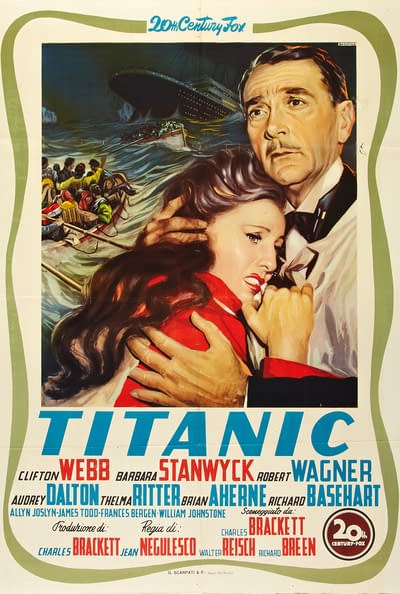
The fashions are distinctly non Edwardian, looking every inch from the pre-Rock and Roll fifties which is even more true of the musical numbers which feature Wagner and his frat boy glee club singers. While this is a Hollywood production it does not appear to have had an especially big budget. The film does a decent job of showing the ship with some fine miniatures but oddly unlike previous films they barely show the engine and boiler rooms. Once the iceberg is hit things are rushed and the subsequent action of passengers scrambling for the lifeboats seem oddly perfunctory. The ending is similar to the 1929 film in having the remaining passengers and crew gathered on deck singing "Nearer My God To Thee" as the ship goes down. The actual sinking which uses miniatures is the most dramatic looking yet. The film takes an odd liberty in having First Officer Lightoller and Radio Man Phillips among those who go down with the ship although in real life they actually survived.
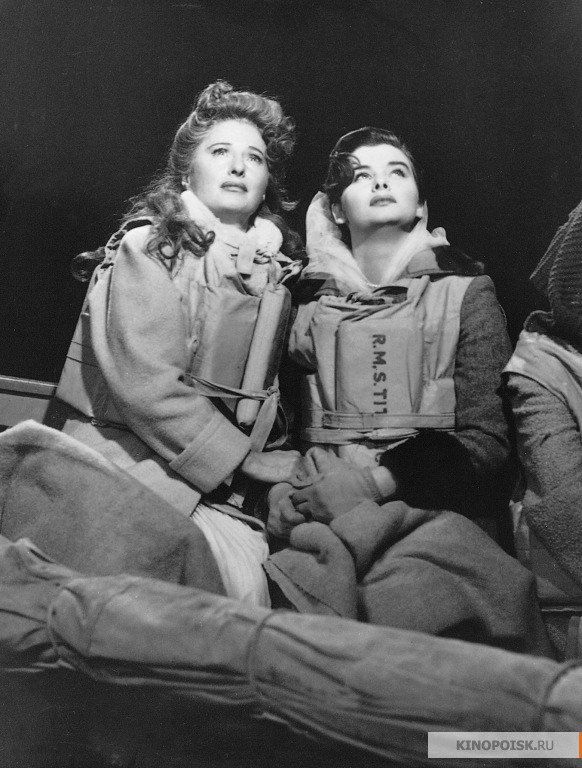
BARBARA STAWYCK & AUDREY DALTON
Stanwyck and Webb play to type while Brian Aherne is the best Captain Smith yet, being helped by having more screen time and dialogue than previous Captains. Ironically Aherne had starred in a 1942 romantic comedy with Lorretta Young called "A Night To Remember" which should not be confused with the soon be classic Walter Lord book and film. Richard Basehart, best known for Film Noirs, has a fine scene in which his defrocked priest fatalistically charges down into the already in flames engine room to deliver last rites. As a trivia note the cameo role of an elderly woman who gets a space on a lifeboat is played by former silent film star Mae Marsh.
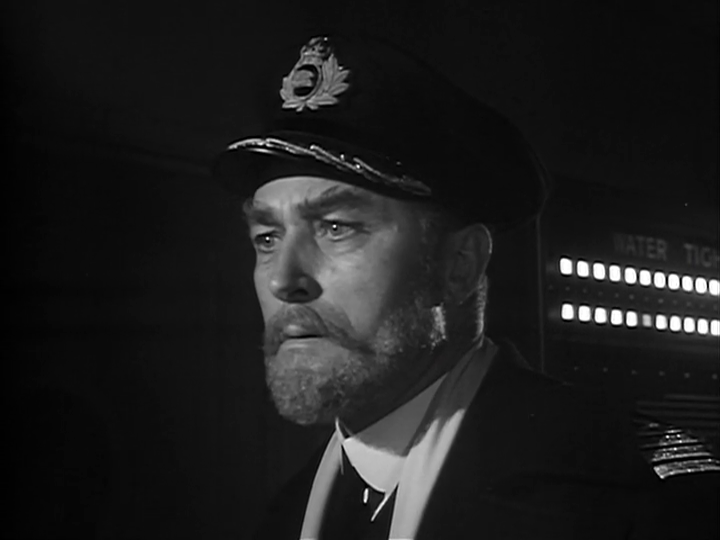
BRIAN AHERNE AS CAPT SMITH
The film was judged a success winning one Oscar for its screenplay and nominated for another by the Directors Guild although some criticized for its historical liberties. Among those who saw the potential for a more accurate treatment was a British producer who also happened to have been a witness to the first and last voyage of the "Titanic".
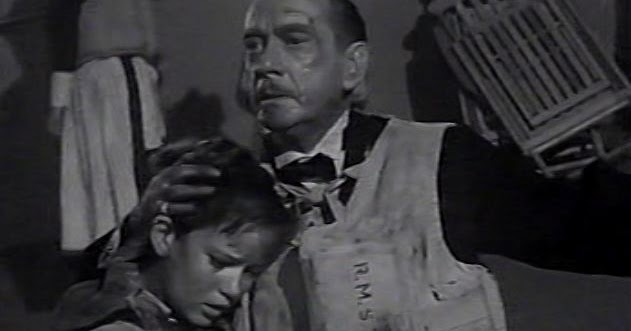
CLIFTON WEBB
~~~~~~~~~~~~~~~~~~~~~~~~~~~~~~~~~~~~~~~~~~~~~~~~
"A NIGHT TO REMEMBER" (1958);
Directed by Roy Ward Baker
Cast; Kenneth Moore (First Officer Lightoller), David McCallum (Radio Man Harold Bride), Michael Goodlife (Thomas Andrews), Laurence Naismith (Captain Smith), Kenneth Griffith (Radio Man Phillips), Frank Lawton (Bruce Ismay), George Rose (Head Baker Jougan), Honor Blackman, Bernard Fox
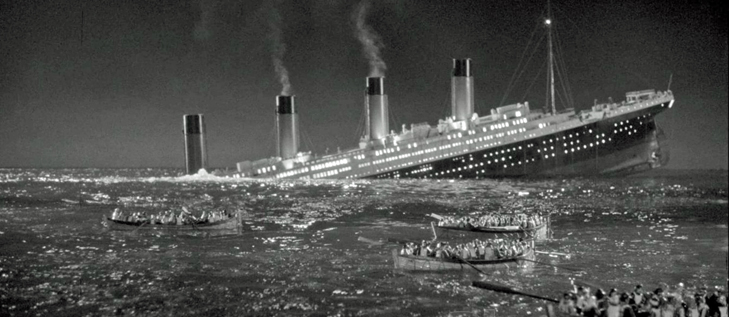
British producer William MacQuitty (1905-2004) had actually been present at the launching of the "Titanic" as a child and had wanted to make a film version for years having been unsatisfied with the previous efforts feeling them inauthentic. By 1955 he had a book adaptation in Walter Lord's classic "A Night To Remember" for which he had interviewed dozens of survivors to compile the most accurate account of the sinking possible with the bonus of Lord being a fine writer capable of assembling the mass of information into a compelling story which became an immediate hit. MacQuitty hired writer Eric Ambler to work out a script which pared down the focus to a manageable number of characters while staying close to the narrative. The major change was to make first officer Charles Lightoller the focus of the story rather than any particular passenger as in the Hollywood version. This gave the film more focus while still allowing for enough passenger action. Another difference was mention of the actions of the two other nearby ships, the "Carpathia" and "Californian" and the actions of their captains and crews. This film is still considered one of the most accurate historical dramas of all time and is still compellingly watchable today and is really too well known to require much description. The film had a big budget by the standards of British films and after a lot of haggling MacQuitty managed to get access to a soon-to-be scrapped ocean liner to film on and this is easily the most realistic looking film yet. Although the scenes of passengers in the water were done in a large swimming pool which was reportedly truly freezing. Director Roy Ward Baker also made use of some footage recycled from the 1943 German version, a film that few people had by that point seen. Besides having realistic sets this is also the first version (of the sound era) which actually has proper costumes for a change and this time the women do not look like flappers or 1940's femme fatales. The band is also finally shown as a string quartet rather than a brass band although there is a lone clarinet player which the actual band did not have.
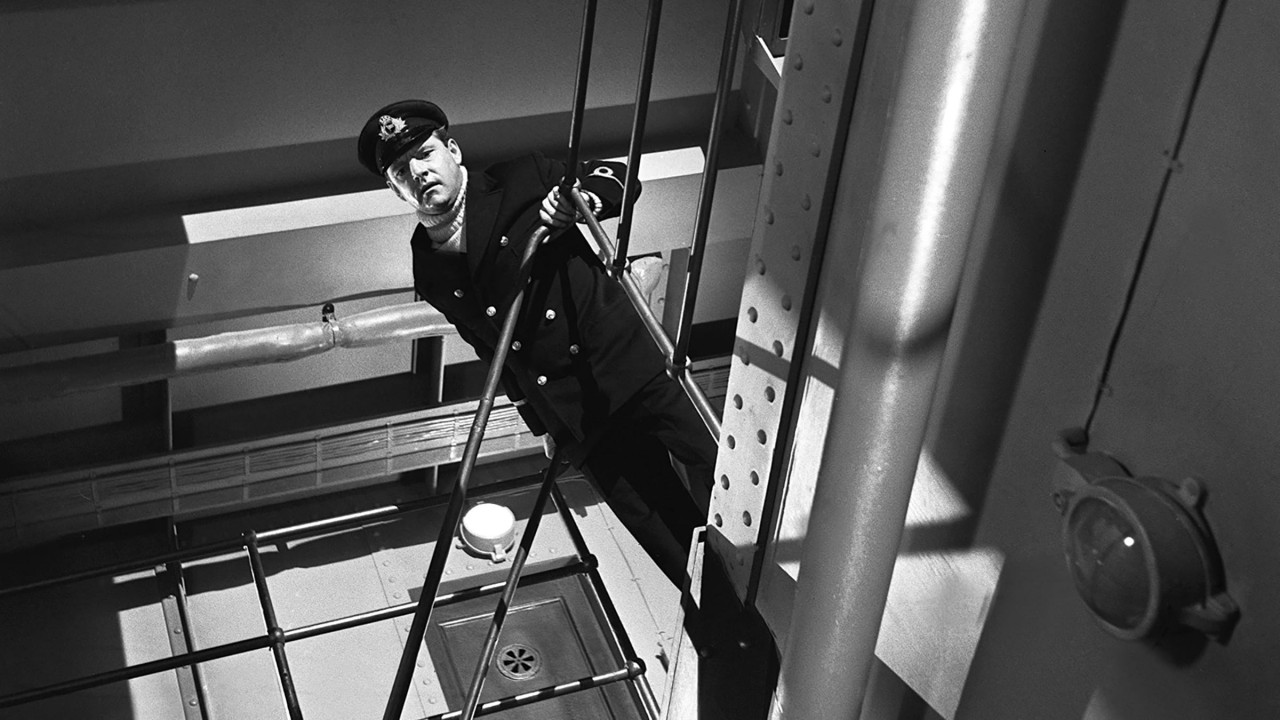
KENNETH MOORE AS LIGHTOLLER
The film had a huge cast of characters who are nonetheless distinctive and easy to keep track of. While some characters are composites of real people but unlike the Hollywood version none are invented out of whole cloth or given any soap opera plotlines. The acting is understated and matter of fact without any of the melodrama of the Hollywood version (let alone the Nazi one) and if there is one any criticism it is that the character of shipbuilder Thomas Andrews is too understated. Previous film versions had oddly omitted Andrews from the story although all subsequent film treatments would make him an important player. Unlike the 1953 Hollywood version this one avoided casting any recognizable stars with Kenneth More (1914-1982) being established in Britain but not in America. More was best known for playing an affable leading man in light comedies and his no nonsense, take charge portrayal would lead to his being cast as commander in another naval classic in "Sink The Bismarck" (1960) along with other cast members, Michael Goodlife (1914-1976) and Laurence Naismith (1908-1992). The filmmakers had access to the real and still surviving Lightoller who consulted on all aspects of the film. His presence may be another reason why the choice was made to make him the focus of the story. Another figure from the original "Titanic" was the daughter of Captain Smith who also visited the set to advise actor Naismith who played her father and was reportedly moved to tears by the accuracy of his performance. Two cast members who would go on to later stardom were David McCallum (as junior wireless operator Harold Bride (1933-2023) and Honor Blackman (1925-2020) as a passenger) who would later star as spies in respectively "The Man From Uncle" TV series for McCallum and "The Avengers" and "Goldfinger" for Blackman. In a smaller role as one of the lookouts was Bernard Fox (1927-2016) who would go on to a long career as a character actor including in "The Mummy" (1999). When James Cameron made his 1997 version of "Titanic" he would cast Fox in the role of Colonel Gracie as a nod to continuity. By that time both McCallum and Blackman were still active and Cammeron missed an opportunity to cast them as well. It would have been easy to see McCallum as millionaire Benjamin Guggenheim and Blackman as a snooty upper class passenger. As with the 1953 film there would be an uncredited role as an elderly passenger with Alma Taylor (1895-1974) who had been a major star in Britain of the silent and early sound era along with appearing in a couple of Sherlock Holmes films who had been in retirement and it would be her last role.
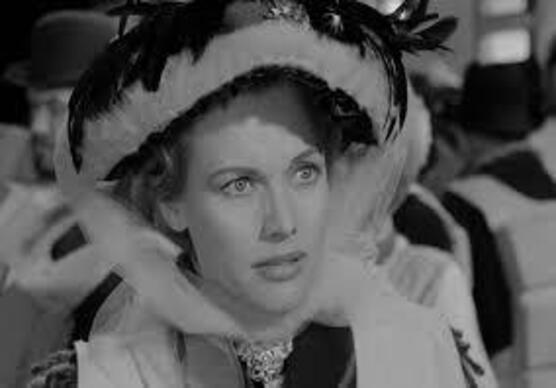
HONOR BLACKMAN
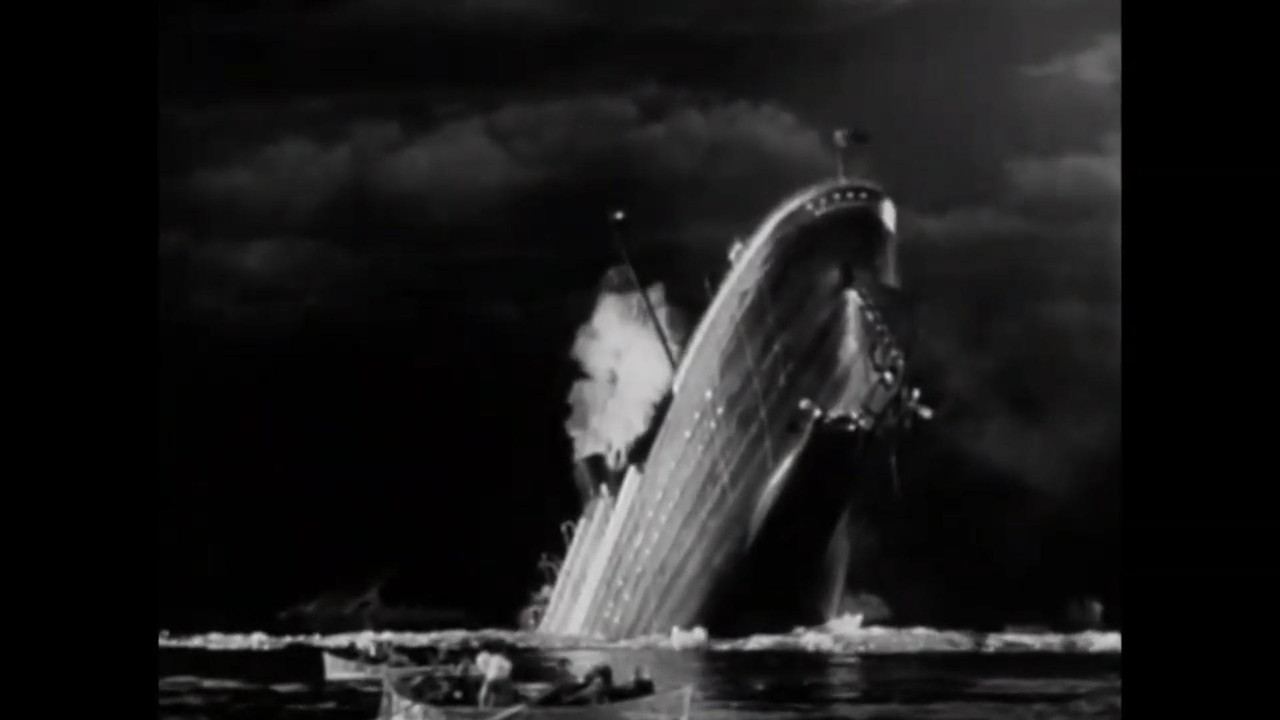
The film was an immediate success and remains one of the most watched British films of all time along with the classic 1953 version of "A Christmas Carol" although it failed to make a profit due to its huge budget. Besides being hailed for it's accuracy and attention to detail being praised by James Cammeron, director of the 1997 film, the film was also considered an inspiration for the spate of big budget disaster epics made by Hollywood in the 1970's including "The Towering Inferno", "The Poseidon Adventure" and various "Airport" movies not to mention Cameron's massive 1997 hit. Even today it stands as superior to any of them.
~~~~~~~~~~~~~~~~~~~~~~~~~~~~~~~~~~~~~~~~~~~~~~~~~~
Although the 1958 British version is justly considered the classic treatment it is often forgotten that it was actually not the first version of Lord's book with an American TV version being filmed soon after the book's release.
"A NIGHT TO REMEMBER" (1955);
Directed by George Roy Hill
Cast; Patrick Mcnee (Thomas Andrews), Clarence Derwent (Capt Smith), Neil North (Lightoller), Larry Gates (Gracie), Bradford Dillman
This was an early television production as part of a dramatic anthology series "Kraft Theatre" and has some of the limitations of the era; low budgets, static camera work, limited sets, few exterior shots, poor lighting and a general staginess. On the other hand it was also a major production for its time and has more sets than normal, makes decent use of the stock exterior shots and a large cast. It was also long enough to tell an effective story being originally aired in two parts, later combined into one. The story differs from the later film version in some significant ways; the story was focussed on the crew with the passengers getting less screen time. The character of Officer Lightoller is present but is not given the prominence he would in the film and this was the first treatment to feature shipbuilder Andrews who gets many of the same lines as he would in subsequent films. This was also the first version to feature the actions of nearby ships "Carpathia" and "Californian". The ship's band is finally shown as a string quintet rather than a brass band. Other passenger characters who turned up in later films make their appearance here including Benjamin Guggenheim, Mr and Mrs Strauss and Colonel Gracie but there is no Molly Brown to be seen. One notable and gratuitous addition was mention of the wireless operator David Sarnoff in New York who first picked up the ships SOS. This was undoubtedly added as by that time Sarnoff became the powerful head of the network and was quite fond of flattery. He would not be mentioned in the later non-TV version.
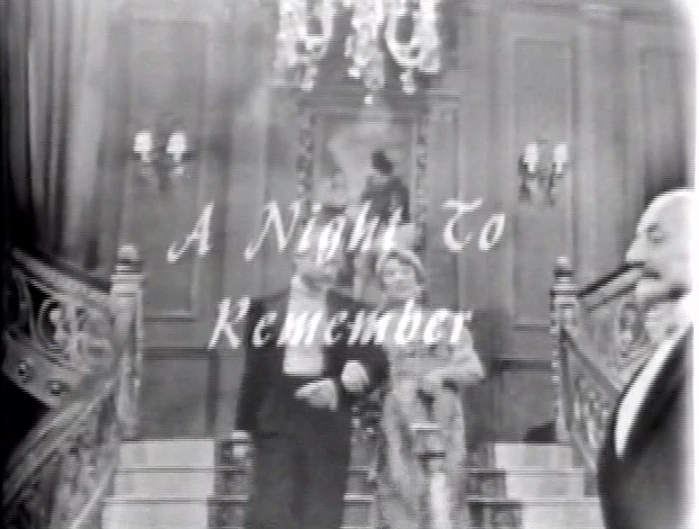
Director George Roy Hill (who would later direct "Butch Cassidy & The Sundance Kid" and "The Sting") makes the most out of the comparatively limited sets and restricted camera angles but aside from a couple of stock exteriors there are few shots of the ship itself and none of the sinking which is shown by showing flooding the dining room. There are no scenes of the lifeboats afloat, all of which leaves the ending rather anti-climatic. To keep the story clear and moving Hill in a move typical of early TV dramas, makes use of a narrator (Claude Rains) to explain the story. The acting is somewhat more melodramatic than in the film at times as actors have to project to have their voices picked up by the primitive TV mics of the day. Among the cast the most recognizable is Patrick McNee who would later become famous in the sixties as John Steed in the British TV spy series "The Avengers". Ironically his first partner as Steed would be Honor Blackman who would appear in the 1958 film version. As an additional piece of trivia both Mcnee and Bernard Fox (who would appear in the both the 1958 and 1997 versions) would also both appear in an episode of "Columbo" set on a sea liner where they would play the ship's Captain and First Officer respectively and the villain would be Robert Vaughan who had been one of the stars of the 1960's TV spy series "The Men From Uncle" which co-starred David McCallum who would also appear in the 1958 film.
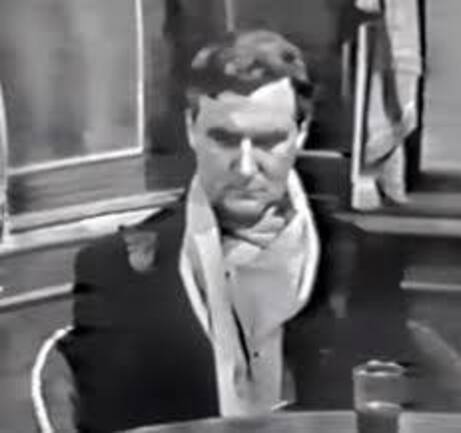
PATRICK MCNEE AS THOMAS ANDREWS
~~~~~~~~~~~~~~~~~~~~~~~~~~~~~~~~~~~~~~~~~~~~~~~
For his part Mcnee would return to the "Titanic" canon with an appearance in a 1959 episode of "One Step Beyond", a TV supernatural anthology which claimed to be presenting "Real Life" cases of the supernatural. In the episode which essentially uses the plot of the 1912 French film, a woman (Barbara Lord) about to be married has nightmares about drowning prior to heading out on a honeymoon trip aboard an ocean liner which of course turns out to be the "Titanic" with her husband as played by Mcnee. Meanwhile a couple other people have premonitions including a minister and an artist who is compelled to do a painting of the disaster.
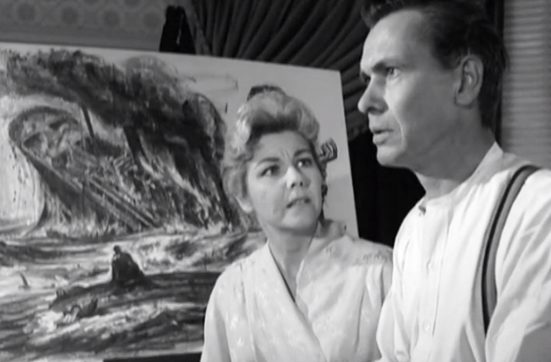
"One Step Beyond" was only a half hour and not known for having impressive budgets but they do make an attempt to show the sinking reusing some footage and do a credible job by the standards of the era however the women's costumes are even less accurate than previous versions. As a trivia note the Assistant Director was Erich Von Strohiem jr, son of the great director. Mcnee would end up in yet another sinking ocean liner playing in the most iconic TV supernatural anthology of them all in an episode of "Twilight Zone" where he played First Officer on a ship stalked by a submarine.
"ONE STEP BEYOND" (1959);
One more supernatural TV anthology with a "Titanic" theme was an episode of "Way Out" in 1961. This episode featured a woman (Constance Ford) about to skip town with her lover who is a philandering husband. While lounging in her hotel room she finds herself being stalked by phone calls from a mysterious woman, the "Titanic" twist comes at the end. Although made in 1961 "Way Out" was a throwback to early TV dramas of a decade earlier in having low budgets and few sets, in fact the entire action takes place in the hotel room and lobby, it is more geniuinely creepy than "One Step Beyond" and Constance Ford is a better actor than Barbara Lord. The show was written and hosted by Roald Dahl, later the famous writer of the children's classics "Where The Wild Things Are" and "Charlie & The Chocolate Factory" and "James & The Giant Peach".
"WAY OUT" (1961);
~~~~~~~~~~~~~~~~~~~~~~~~~~~~~~~~~~~~~~~~~~`
"THE UNSINKABLE MAGGIE BROWN" (1957);
Another early TV adaptation for an anthology series, this time called "Telephone Time" after it's sponsor Bell Telephone. This is a short playlet written by John Nesbit as part of a series of shorts called "Passing Parade" which ran first on radio then as movie shorts starting in 1937. "Passing Parade" were short stories and biographies based on real people and events usually to delier an inspiring message. Nesbit would also be the host. At only just under twelve minutes this is obviously a perfunctory effort focussing mostly but equally on the characters of Maggie Brown (who doesn't actually get much to do) and Isadore and Ida Straus. Maggie Brown is played by Cloris Leachman, future Emmy winner or her role as Phyllis on the Mary Tyler Moore show two decades later and already a TV veteran for another decade. She would later play the same role in another TV production in 1979. Note that as is common in "Titanic" portrayals Ida is incorrectly named in this case as Rebecca. As a low budget quickie short this is doesn't offer much of a story but it does get better value than one might have expected by cleverly recycling footage from the 1943 German version which few if any American viewers would have seen although the sharp eyed among them might have wondered why the bridge insturments were in German. This treatment has nothong to do with the later musical play and film "The Unsinkabe Molly Brown" which was not written until 1960 although it's fairly obviously where the inspiration for that musical came from albeit with a name change.
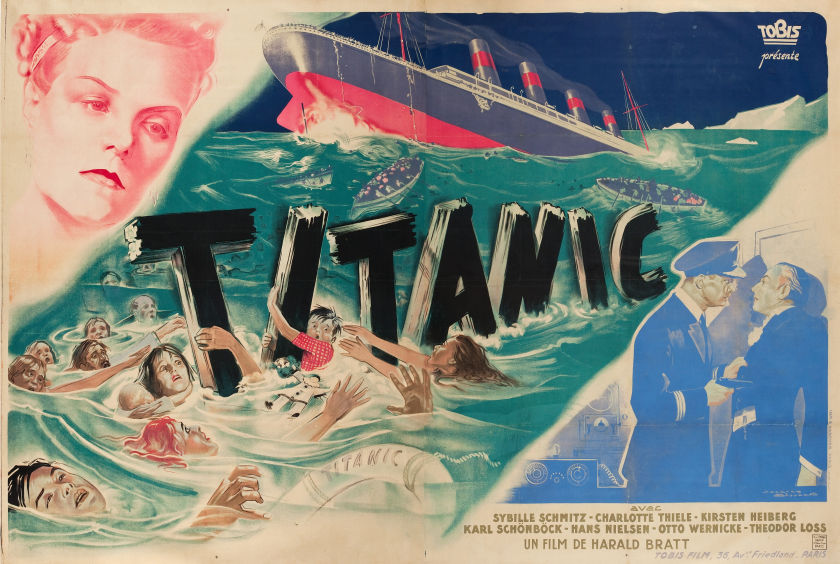
ERNEST STONEMAN ~ "THE TITANIC";