Showing posts with label Musicals. Show all posts

Wednesday, 1 February 2023

Black History Month Special; The Musicals Of Louis Jordan


"LET THE GOOD TIMES ROLL" (Louis Jordan, 1939) s-l1600
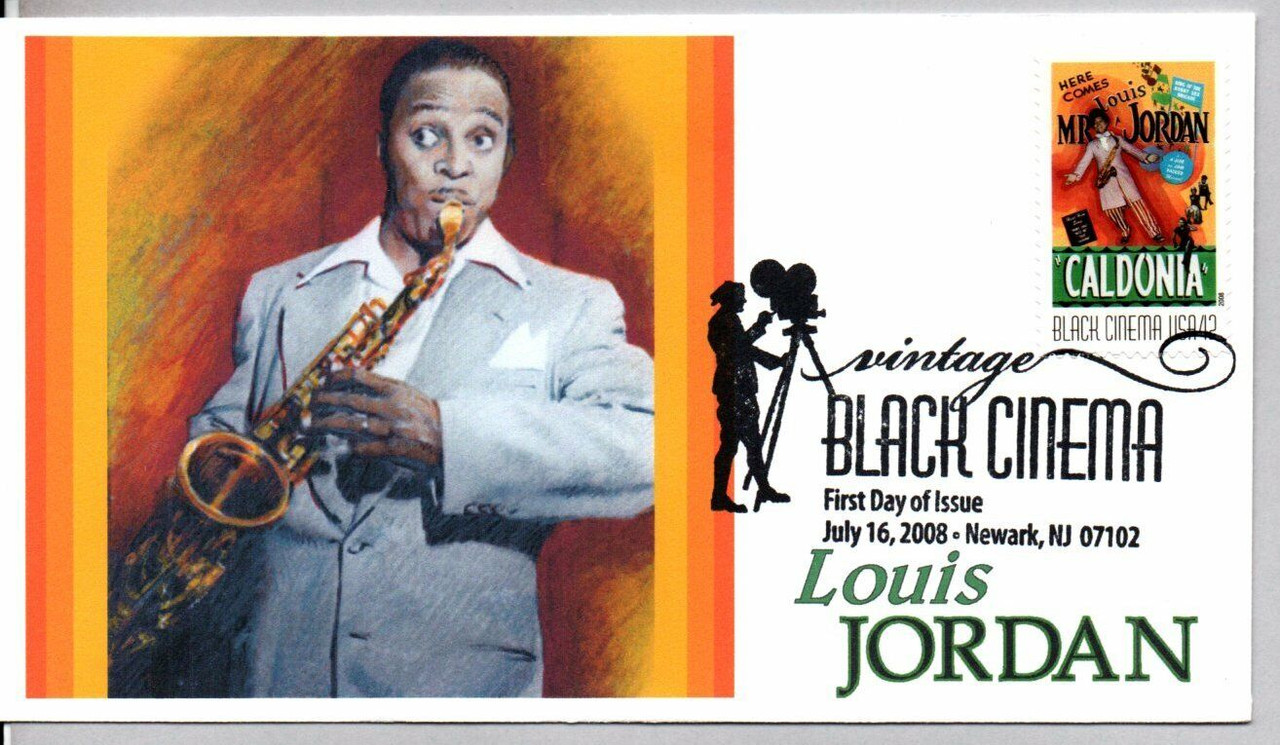
Louis Jordan (1908-75) is one of the most important figures in Black music in the Post WW2 era with his stripped down and jumped up version of Swing being cited as one of the central building blocks of Rhythm & Blues, Rock & Roll and Jamaican Ska but what is less well known is that he was also briefly the biggest, if most unlikely stars of 1940's Black Cinema.

THE KING OF THE JUKEBOX;

Born in Arkansas, Jordan's father James was a sax and clarinet player with the Rabbit Foot Minstrels, a popular travelling revue that toured through the South in the 1900's. Minstrelsy was a genre of musical comedy that had its roots in the Antebellum South originally starting with black performers doing musical and comedy skits gently mocking the high class dances and exaggerated and dress manners of the fancy dress cotillions of the white plantation class. Soon white audiences, most not entirely in on the jokes, found these shows entertaining and travelling shows soon toured the entire country and would lead to white minstrel groups imitating the black groups and performing in blackface. These blackface troops were so wildly popular that in the weird inverted logic of a deeply racist society many black performers themselves had to "cork up" and perform in blackface (or sometimes whiteface) including stars like Bert Williams and Wilbur Sweatmen and young not-yet stars like Scott Joplin, WC Handy and Gus Cannon who all later reported that they had started out performing in blackface. Minstrelsy was by far the most popular form of entertainment for more than a generation from the Antebellum Era until the 1880's when it was finally replaced by Vaudeville although obvious traces of it would continue into the post WW2 era in figures like Amos & Andy and even in the white Hayseed comedy of the Grand Ole Opry and later carried on into the 1970's with the TV show "Hee Haw".

By the time Louis was in his late teens and old enough to leave home and join the Rabbit Foot Minstrels in the 1920's the audience for such revues was mostly in black communities in the South where a troupe would set up outside town in a large tent and stay for several days giving multiple performances, thus coining the term "tent-shows". Given the audiences were now entirely black the more degrading blackface elements were omitted in favour of risque comedy and dance numbers and the bands included the new sounds of Ragtime and Jazz. The Rabbit Foot Minstrels were one of the most popular of these troops and at various times included such stars as Bessie Smith, Ma Rainey, Ida Cox, Half Pint Jaxon, Big Joe Williams and a young Rufus Thomas. While playing with the Minstrels Louis would learn the basics of what would be his later crowd pleasing style. Instead of the clarinet, and instrument associated with the now old timey New Orleans jazz bands, he would focus on the sax, a louder, sexier and more danceable instrumental. But it was enough not to be a good sax player, if one wanted to stand out he also had to be an all-around entertainer singing, telling jokes, clowning around, telling stories, pulling faces, doing a few dance steps, anything to win the audience over, Louis would do it. He would carry this crowd pleasing attitude on through his career even after he left the largely rural audiences of the tentshows in favour of the bright neon lights of the big city Jazz clubs.

LOUIS JORDAN ~ "YOU GOTTA HAVE A BEAT";


By the 1930's Louis Jordan himself had left the troupe and made his way to New York where he was a good enough sax player to find work with the Jazz pianist Clarence Williams (who had also recorded Bessie Smith), eccentric Jazz violinist Stuff Smith and in the Big Band of Chick Webb (which included Ella Fitzgerald). With Stuff Smith and Chick Webb Jordan would show he could not only play but sing up-tempo numbers and provide comic relief and by the late thirties he was a big enough name to start his own band and get a residency at a club in Harlem before heading to Los Angeles. He would puckishly name his band Louis Jordan and His Tympany Five (or Six) in spite of the fact that his bands could have anywhere from five to nine members none of whom actually played the tympany drum. Heavily influenced by the Zoot Suited scat singing shows of Cab Calloway (then the house band at the legendary Cotton Club) Louis would work out his own stripped down version featuring his blaring sax playing fast paced big beat dance numbers that he would punctuate with his jive talking lyrics and good time endless party persona. Once he started recording with Decca he was an immediate success and would rack up a stunning fifty four hits on the "Race Music" (ie Black) top ten charts with eighteen number ones making him one of the biggest sellers of all time and earning him the title of "Jukebox King".  Besides recording for Decca Records during WW2 he would record for the V-Disc label run by the US Armed Forces Network thus getting around wartime shortages of shellac as well as reaching a potential audiences.

  Jordan's hits included such classics as "Caldonia", "Choo-Choo-Cha-Boogie", "Saturday Night Fishfry", "Five Guys Named Moe", "Ain't Nobody Here But Us Chickens", "Is You Is Or Is You Ain't My Baby", "Reet Petite & Gone", "I'm Gonna Move On Out To The Outskirts Of Town" and "Let The Good Times Roll" and would almost single handedly kick-off the switch from the Big Bands of the War years to the Post War Rhythm & Blues scene that would lead directly to the early Rock & Roll bands and gained him the title of Father Of Rhythm & Blues. His many records struck a constant theme in his insistence that life was an endless party and were the opposite of the smooth ballads of the other major hitmaker of the forties Nat King Cole (who would still cover one of Jordan's songs) as was his persona of a happy-go-lucky Zoot Suited scamp. He would be cited as a major influence on the first wave of Rock & Roll and R&B stars Bill Haley, Lloyd Price, Smiley Lewis, Freddie Bell & the Bellboys, Rufus Thomas, Roy Brown, Wynonie Harris, Screamin Jay Hawkins, Chuck Willis, Chuck Berry (who later said that if he had to play in anybody else's band it would be for Jordan) and Jackie Wilson who would take Jordan's "Reet Petite & Gone" into his own classic "Reet Petite''. The term "Rhythm & Blues" became commonly used to describe his records as being clearly more song oriented and energetic than the Big Bands but also more Jazzy and danceable than the guitar based Blues records or the piano based Boogie Woogie records. Besides his influence on the next generation of R&B and Rock & Roll singers his influence would make its way (partly through the V-Discs carried by black sailors) to the Caribbean where it would show up in the bouncy, sax driven Jamaican Ska.
5909a961d0dde706a24514d33d41ea02

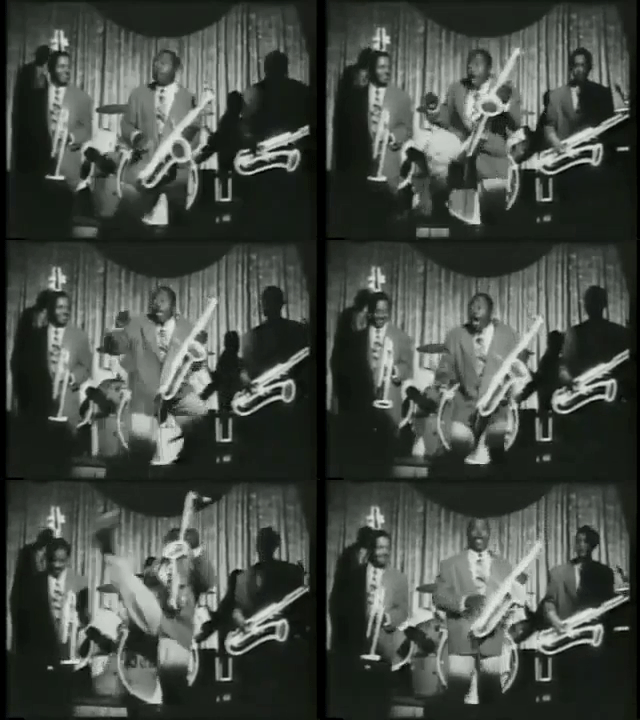
Given the success of Jordan's records it was probably inevitable that he would be tapped to appear in films. Several white singers had already been made into screen stars including Bing Crosby and Gene Autry and there was also a mini genre of short musical "Soundies" which could be played as opening teasers on bills with other films as well as in Soundie Machines which were video versions of jukeboxes that were installed in Juke Joints and other Bars just as jukeboxes were. Soundies had already been made almost as soon as talkies came in by black artists like Bessie Smith (providing the only actual footage of her), Duke Ellington, Louis Armstrong, Count Basie and Cab Calloway. These shorts usually featured a short intro to set up a musical number and Jordan's Soundie would feature one of his biggest hits "Caldonia".

"CALDONIA" (1945);


This short film had just the basics with Jordan and his band playing a song in a hotel room and that's it (Duke Ellington and Cab Calloway had done similar shorts) but showed Jordan's basic happy-go-lucky persona as he flashes his smile and mugs for the camera but while he may have been clowning he was no mere clown as he was also wearing an expensive suit while surrounded by a gaggle of admiring girls and the blaring power of his alto sax along with a nice muted horn solo is undeniable. As this was a short that could be easily added to any bill it would have also been seen by both black and white audiences aside from the black audiences who would normally see the series of all-black films made for the black theatres in the 1930's and forties.

From the 1920's to the 1950's era of Jim Crow era segregation there existed a network of movie theatres in black communities just as there was an older network of black vaudeville and music halls known as the Chitlin Circuit that featured black music, dance and comedy acts. These theatres meant that there was an audience for all-black movies as well so by the 1930's there were made a series of films with all-black casts, usually made by black directors to fill this niche. These films were rarely seen by white audiences, did not make it to TV and have been largely forgotten.

LOUIS JORDAN ~ "JACK YOU DEAD";


During the Vaudeville Era a network of black owned theatres sprang up across the both the Northern and Eastern cities as well as the segregated South to cater specifically to black audiences which was referred to as the Chitlin Circuit which helped to further nourish a star system of black music, dance and comedy acts and eventually this would lead to a similar network of black owned movie houses. Besides the black owned theatres many white owned theatres in black neighbourhoods would sometimes run these films at special times especially at midnight showings that were known as "Midnight Rambles". These theatres meant that there was an audience for all-black movies as well so by the 1930's there were made a series of films with all-black casts, usually made by black directors to fill this niche. These films were rarely seen by white audiences, did not make it to TV and have been largely forgotten until relatively recently when they've been picked up by the BET network and released on limited home video.

In the silent era director Oscar Michaud (who I already wrote about here) started things off with his response to DW Griffith's "Birth Of A Nation" and continued to make films into the sound era. His films were serious minded and intended to offer messages of moral and racial uplift, sometimes with a religious subtext although he did make a few genre pictures. Others would make films of a decidedly less serious nature, especially actor/writer/producer Spencer Williams who made a number of low budget comedies as well as the "Son Of Ingagi" horror film (which I wrote about here). Equally low-budget musicals (including some starring Cab Calloway), musical revues and Film Noir crime films were also made but the most popular, and oddest films, were a series of westerns made in the late thirties and early forties starring singer Herb Jeffries (who I wrote about here). Setting aside Michaux's more ambitious films most of these films were low budget B-movies of mediocre quality but they do have some cultural value.  

The number of films made by black filmmakers would increase along with movies made by white owned Poverty Row studios once they realized there was a sizable audience for films that could be made cheaply. These Poverty Row films often had white directors and producers but maintained all black casts. Collectively these films were given the name "Race Films" regardless of genre just as the recording industry had been referring to the profitable series of Jazz, Blues and Spiritual records as "Race Records".

LOUIS JORDAN ~ "LONG LEGGED LIZZIE";


These films exist in an alternative universe in which there are no white characters at all with every character being black regardless of their social status. Not only the usual servants, musicians, laborers, farmers, hustlers, gamblers, pool sharks, dancing girls, bellhops, and other lower class characters who might show up in a regular Hollywood production but establishment figures like doctors, lawyers, professors, bankers, businessmen, cops and judges were all black as well. White society was seldom even mentioned at all. This means that the villians in such movies including greedy bankers and landlords, corrupt cops and snooty wealthy toffs were all black as well. No doubt the black audiences for these films would have been perfectly happy to have the villians in these films be white but such a film would never have been shown in the South where a good portion of the theatres were.

The most popular Race Films were probably the Musicals and Musical Revues (the latter being straight forward music and comedy concerts) which could use already established musical stars with proven box office appeal. chief among them being Cab Calloway and Louis Jordan. Plot-wise these films were simple in the extreme consisting of the slightest storylines as an excuse to string together a bunch of musical numbers. The first of Jordan's musicals typifies this genre.
Beware-Film-Poster

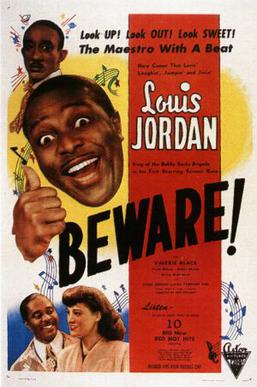
"BEWARE" (1946);


Directed by Bud Pollard
Cast;
LOUIS JORDAN  ~  Lucious Jordan
FRANK WILSON ~ Prof Dury
EMORY RICHARDSON ~ Dean Hargreaves
VALERIE BLACK ~ Annabelle Brown
MILTON WOODS ~ Benjamin Ware
DIMPLES DANIELS ~ Long Legged Lizzie
WILD BILL DAVIS ~ Pianist
EDDIE BYRD ~ Drummer

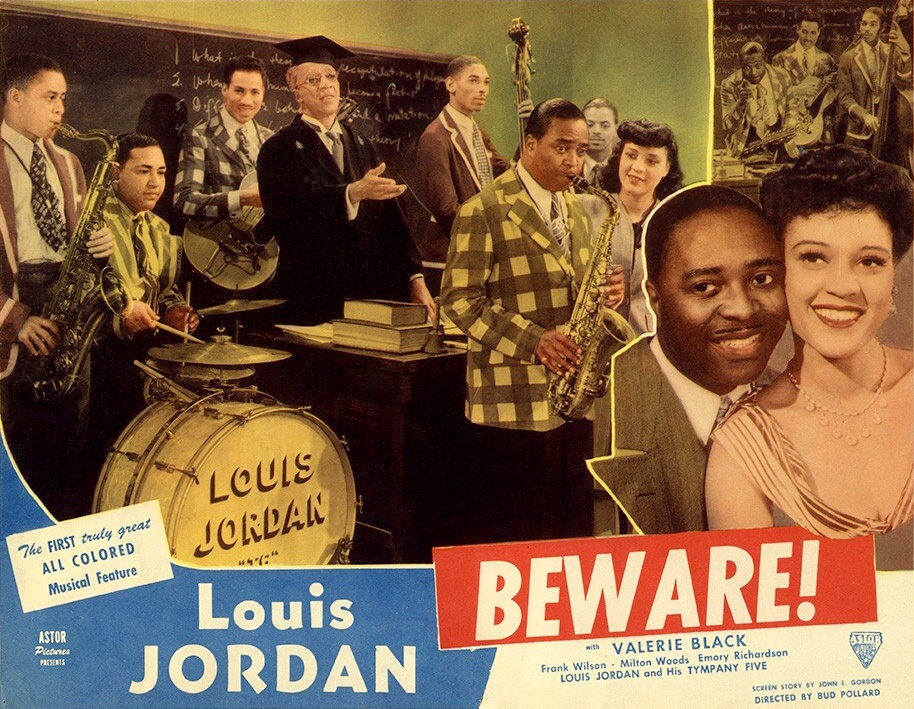
PLOT (spoiler alert); Jordan plays a sax playing bandleader who just happens to be named Louis Jordan (formerly Lucious) who is a former student of a Ware College, a fictional privately owned black college in small town Ohio. Ware College is apparently small and resembles more like a highschool and it's also strapped for cash as its owner has died and his grandson, Benjamin Ware III (Milton Woods) who has inherited it is threatening to sell. The Dean (Emory Richardson) and Professor (Frank Wilson) plan to deal with this by inviting the school's various illumni to return to help raise funds, including Jarvis, who happens to be on tour, drops by anyway and is told of the school's problems. It turns out that Jarvis originally left the school and town under an unexplained cloud and was once in love with Annabelle (Valerie Black) another former student and current teacher who Benjamin Ware has designs on so he agrees to stay and help the school by playing a gig. His band agrees to stay as well. While he's waiting Jordan also puts in a call to his accountant to go through the school's books. At the big dance Ware shows up and offers to relent on foreclosing on the school if Annabelle agrees to marry him but she refuses. Jordan then arrives and Ware threatens to have Jordan arrested and run out of town again but Jordan reveals that his accountant has discovered that Ware has been cooking the books and the school doesn't need to be closed. Jordan punches out Ware and threatens to have Ware arrested instead. Ware backs down and announces the school will be staying open. Jordan and the students celebrate by playing the show while Ware slinks out. Jordan and Annabelle will live happily ever after. Finis.
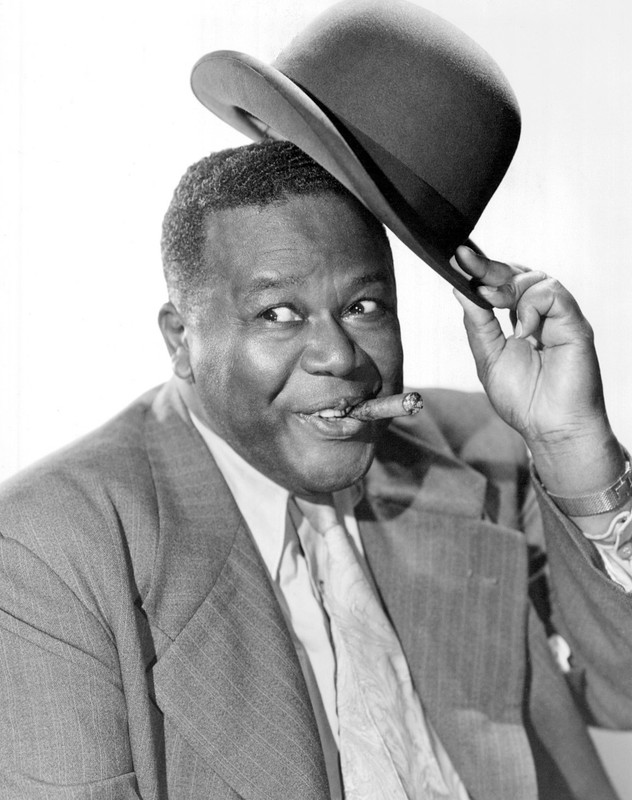
Louis-Jordan43

There's not much to be said about this movie as a film. The plot is perfunctory even by the standards of B-movie musicals of the era. The acting (setting aside Jordan for the moment) is blandly competent as is the direction. There are only five different sets in total, all of them simple indoor sets, and the camera work is similarly by-the-numbers. But of course what sells the movie is the presence of Louis Jordan and his music and there is plenty of both. Jordan's music is full of innocent joy and charm and sometimes silliness (as with "Don't Worry Bout That Mule" which comes out of nowhere) with equal parts catchiness and danceability. Jordan's infectious sense of fun is nicely shown in the outro of one number as Jordan leads the students out of the classroom doing the stroll. Accordingly the ratio of music-to-plot is accordingly higher than in most musicals. Note that while Jordan's trademark was bouncy Jump Blues and rambling comedy numbers he did do the occasional smooth ballad and he gets a couple here.

LOUIS JORDAN ~ "GOOD MORNING HEARTACHE";


Jordan is of course no actor but he does have a natural charm while playing the same persona that he had already developed on stage for over a decade and is perfectly at home on screen. The movie all but acknowledges this by not even giving his character a name and instead just calling him Louis Jordan and getting on with the story. Gene Autry films often did the same thing. As for the rest of the cast, many were veterans of the legitimate black stage and screen. Emory Richardson (1894-1965) had a few screen credits while Frank Wilson (1885-1956) had an even longer career in both the Black cinema and in Hollywood including in "The Emperor Jones" (1933) with Paul Robeson. Milton Woods (1917-1966), who plays the slimey Benjamin Ware III, was known as "The Black Basil Rathbone" although he spent much of his career outside of the Black Theatre and Cinema was spent in minor and sometimes demeaning roles in jungle B-Movies and TV shows like "Tarzan', "Ramar Of The Jungle", "Sheena; Queen Of The Jungle", "Superman" and "Amos & Andy". As for Jordan's band, two members went on to notable careers on their own. Drummer Eddie Byrd would lead his own band while pianist Wild Bill Davis (1918-1995) would become an influential figure on the Jazz organ playing with the likes of Count Basie, Duke Ellington, Eddie Cleanhead Vinson, Ella Fitzgerald, Arnett Cobb, Johnny Hodges, Illinois Jaquet, Eddie Lockjaw Davis, Ray Brown, Sonny Stitt and Slam Stewart as well as solo.  
reet

"REET PETITE & GONE" (1947);


Directed by
LOUIS JORDAN ~ Louis Jarvis/Schyler Jarvis (as a young man)
BEA GRIFFITH ~ Honey Carter/Lovey Linn
MILTON WOODS ~ Sam Adams (Louis' Manager/Friend)
JUNE RICHMOND ~ June
LORENZO TUCKER ~ Henry Talbot (Schyler's Lawyer)
VANITA SMYTHE ~ Rusty
DAVID BETHEA ~ Dolph the Butler
PAT RAINEY ~ Pat Rains (Louis' Singer)
J LOUIS JOHNSON ~ Schyler (older man)

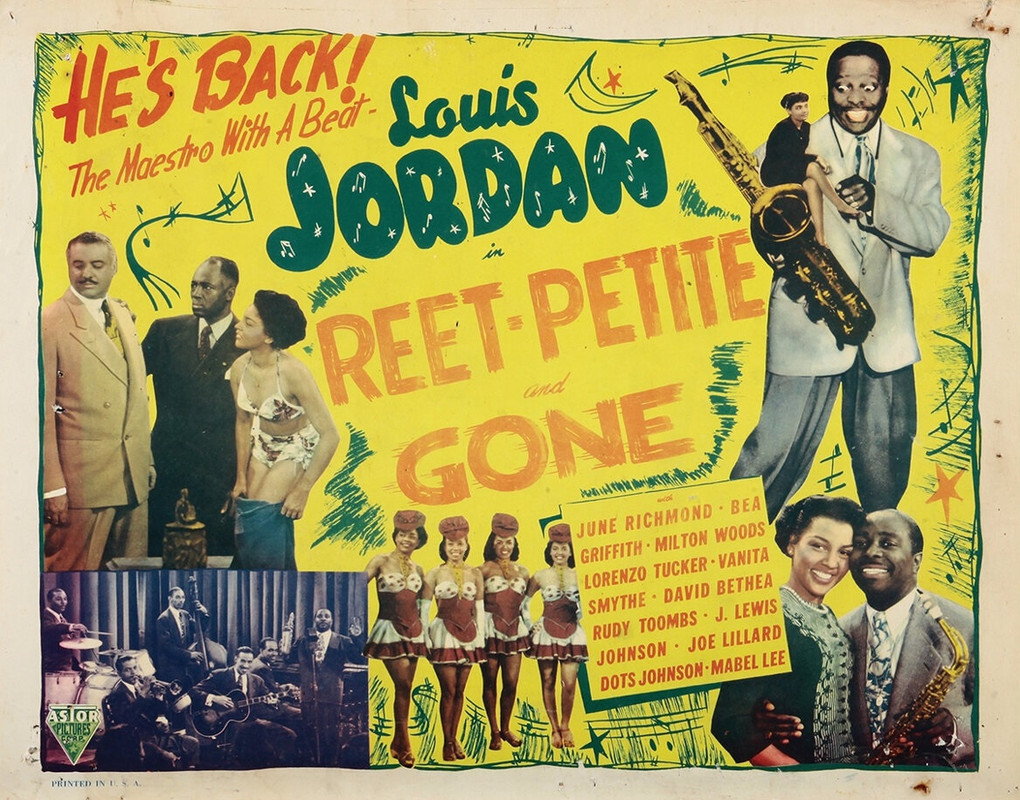
Plot Synopsis (spoiler alert); The second Jordan vehicle is even slimmer and more nonsensical as Jordan plays another sax playing bandleader, albeit this time named Louis Jarvis instead of Louis Jordan. Jarvis is playing a radio session when he is called away to New York where his father Schuyler (also played by Jordan) is dying. At the same time Honey Carter (Bea Griffith) has also been summoned by Schuyler along with her friend June (June Richmond). In a flashback Schyler (also played by Jordan) was also a bandleader and Honey's mother Lovey Linn (also played by Griffith) was a singer in his band and they were romantically involved. Louis and Honey knew each other as kids but haven't seen each other or Schuyler since. Schuyler dies before they arrive but he leaves a will which leaves his fortune to Louis on the condition that he marry a girl who is described as having a specific height and hair colour. Meanwhile Schuyler's lawyer Henry Talbot (Lorenzo Tucker) and his secretary Rusty are scheming to also get his fortune and they alter the will to add specific measurements that match Rusty (Vanita Smythe) and the lawyer then tries to convince Louis to marry her but Louis refuses. Instead Louis and his manager/friend Sam (Milton Woods) come up with their own plan to find the right girl by holding auditions for an upcoming Broadway revue that will include dancing girls using a new stage show during which measurements will be taken. Meanwhile Honey and June have arrived in town to be met by Talbot who tells them Schyler has died and tries to convince them to leave but they decide to stay and then come to the audition. At the audition Jordan plays several songs but none of the girls match the measurements. Honey and June arrive and June is hired as a singer and Honey is reunited with Louis who he signs as a dancer for the revue. Schuyler's butler Dolph (David Bethea) suspects that the will has been altered and before the show it is revealed that Talbot and Rusty had altered the will to trick Louis into marrying Rusty and they are arrested and Louis and Honey will be married. The film ends with some musical numbers at the revue.
MV5-BMm-Jl-MWE2-ODYt-MWQ0-ZS00-Nj-Bj-LTgw-NTEt-ZDY2-Nz-Ex-OTU1-MDdh-Xk-Ey-Xk-Fqc-Gde-QXVy-MTY5-Nzc4-MDY-V1

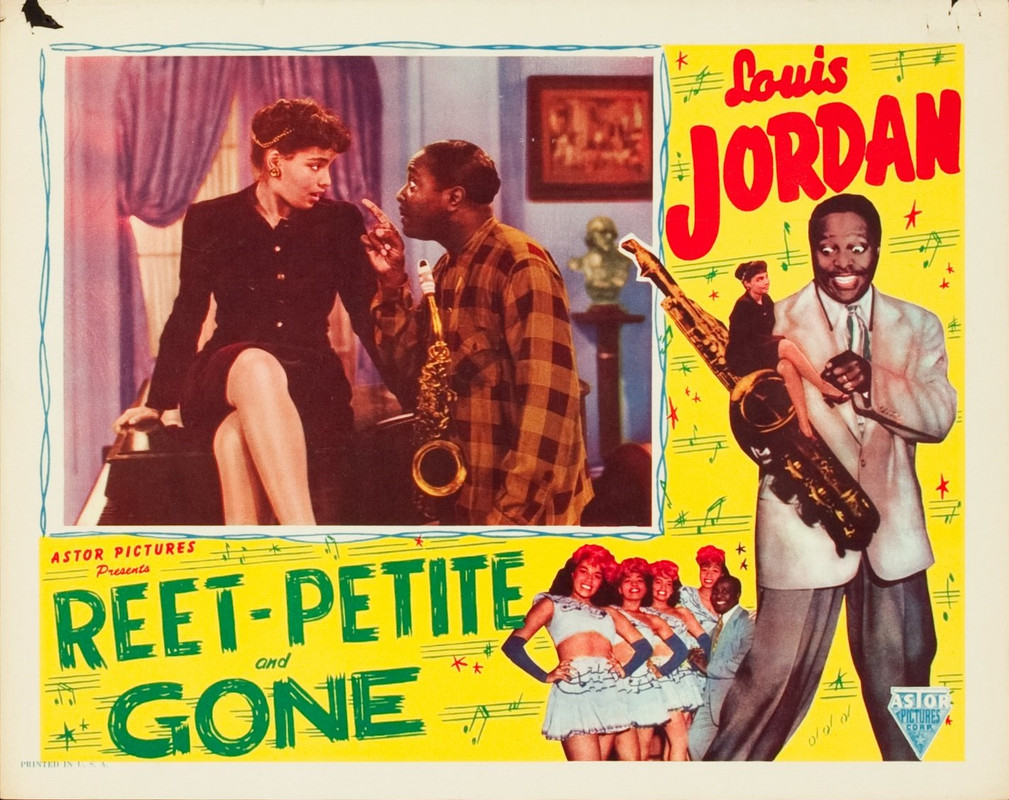
In spite of having a plot that is even more threadbare and frankly dumb but it's probably the best of the Jordan films simply because it has more music and the music has more variety along with some duets and revue numbers including dancing girls. Guest stars include the return of Milton Woods, the slimey villain of "Beware" although here he plays Louis' friend and manager which is inherently less interesting and he would have been put to better use as the greedy, arrogant lawyer. June Richmond as Honey's friend is ebullient and a strong singer. However there are a couple weaker members; David Bethea, as Dolph the Butler, is an older actor whose few other film credits include the Cab Calloway musical "Hi-De-Ho", has a disconcerting habit of looking directly into the camera while talking. Bea Griffith as the love interest sports some scantily clad outfits but she's wooden and it's notable that while she is added to Louis' Revue at no point does she display any actual musical talent, she doesn't sing and doesn't really dance either. Griffith does blandly sing a number with Louis while playing the mother but even his manager says she's not very good. It turned out to be Griffith's only film credit. Far better to cast in the romantic lead would have been the nameless model who wordlessly flirts with Louis at the audition. I don't know who she is (she isn't named and has no lines) but she is awfully cute and steals the scene. She is also the girl on one of the posters.

LOUIS JORDAN ~ "WHAM BAM" & "WHAT YOU PUTTING DOWN";


Jordan's band is not billed this time but clearly has several different members with the two most prominent members Wild Bill Davis and Eddie Byrd are absent. Singers June Richmond and Pat Rainey had musical careers of their own. Richmond was an established figure having sung with Cab Calloway and Andy Kirk. She was the first major Black singer to sing with a White band with Jimmy Dorsey and had appeared in another film. After which she would have other film roles and would appear on Broadway but her career would be cut short with her sudden death of a heart attack in 1962 at the age of 47. Pat Rainey would have a considerably more checkered career. After this film she would record a few moderately successful singles and appeared regularly in small Jazz clubs in New York. However she seems to have developed a heroin habit and was arrested in 1952 on charges of prostitution and drug possession and found guilty but, somewhat unusual for the era the judge showed leniency and gave her a suspended sentence on the condition that she return home to Boston with her parents and get treatment. Whether she did or not months later she was billed as performing at a Jazz club in Boston. Getting a second chance after such serious charges was even more unusual in that era but while she seems to not have recorded again she did tour Europe where she was reported to have had an affair with the notorious playboy King Farouk of Egypt in 1952. After these headlines however her career slowed down and she retired from music by 1961 returned to Boston married and dropped out of sight living quietly until her death in 1998 aged 72. One of the dancing girls in Jordan's Revue was appropriately named Roxy Joynes who had previously appeared in Jordan's short film Soundie "Caledonia". A model and showgirl, she had no other film credits but became tabloid fodder when she married baseball player Roy Campanella in 1964. She retired from showbiz and devoted herself to charity and they would stay married until his death in 1988. She died in 2004.

There would be one last quickie Jordan musical that year and it would be even sillier than the previous two.
lf

"LOOK OUT SISTER" (1947);


Directed by Bud Pollard
CAST;
LOUIS JORDAN  ~  Himself
SUZETTE HARBIN  ~  Betty Scott/Nurse
MONTE HAWLEY  ~  Mack Gordon
BILL DOGGETT  ~  Piano Player
PAUL QUINICHETTE  ~  Tenor Sax Player

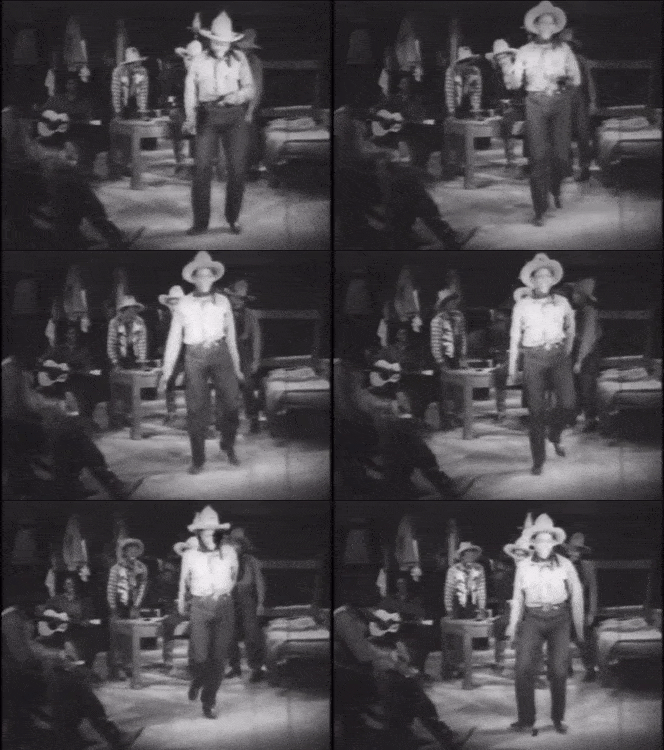
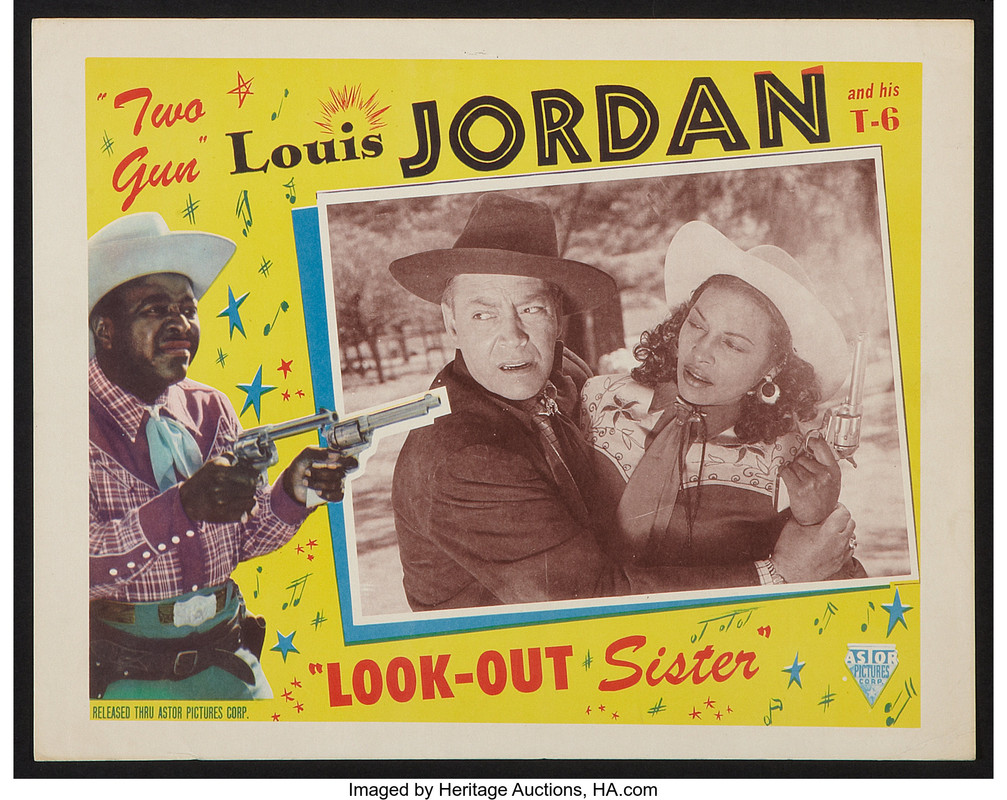
Plot summary (Spoiler alert); Once again Jordan is paying himself as a bandleader who has worked himself to exhaustion and after a photo montage of the band on tour (lifted from "Beware") gets sent to a sanatorium to relax. He befriends a nurse (Suzette Harbin) and a young boy who is also recovering at the sanitorium who is a fan of Westerns. While Louis sleeps he dreams he is at a Dude Ranch in Arizona as Two Gun Jordan, leader of a Western Swing band. The "H & H" Ranch (stands for "Health & Happiness") is an old fashioned western ranch with horses and a stagecoach and everybody wearing cowboy outfits and guns. The ranch is owned by Betty (also played by Suzette Harbin), a young woman and her brother Bob who are in debt to banker Mack Gordon (Monte Hawley) who holds the mortgage and is threatening to foreclose unless he is paid or she agrees to marry him. Betty is counting on Jordan to help by entertaining guests until Van Damme, a wealthy benefactor arrives. Unbeknownst to Betty Mack has discovered oil on the property and he sends Van Damme a letter telling him an infection has hit the ranch and he cancels his trip. Betty tells Louis they can't afford to pay him but he offers to help by staying with his band and playing for free as well as calling his friends in Hollywood for help raising the cash they need. Louis discovers Mack has discovered oil on the property so Mack frames him as a horse thief. A young boy who has befriended Louis overhears Mack plot to frame Louis. When Mack brings the sheriff to arrest Louis a fight breaks out and Louis and Bob saddle up and makes a run for it with Mack and a posse in pursuit. Louis shoots Mack but as the rest of the posse closes in he wakes up and announces he is going to send the children at the sanitorium to visit the the H&H Ranch and Nurse Betty falls in love with him as the film fades out.

LOUIS JORDAN;


Unlike the Herb Jeffries westerns which were copies of the Autry westerns and were intended to be such, Jordan's film is basically a parody of a Gene Autry western even though it's not really all that different from the actual Autry films. The difference can be seen in Jeffries performance which is relatively straight considering the inherent silliness of the genre. Jeffires doesn't wink at the camera or break character, while Jordan does. Jeffries plays the typical white hat wearing, two fisted, gun toting hero while Louis plays for comic effect. Jeffries could plausibly play a western hero because he looked like a matinee idol; tall and handsome while Jordan is short and slightly pudgy. Jeffries could ride a horse and looked believable in a fist fight while Jordan clearly can do neither. Not only does Louis play "himself" he makes a point of joking that he can't shoot a gun or ride a horse although he does at the end, albeit very awkwardly. The fight scene at the climax is filmed as sped up to look more slapstick and it also has the effect of reminding the viewer that this is supposed to be a dream which Louis is in fact about to wake from. The Autry films existed in a strange alternate universe where staples of the Old West existed alongside the modern world so Cowboys, Indian and outlaws ride horses and stages and shoot six guns while other characters (often greedy bankers) wear modern suits and fedoras, drive cars and use telephones and Autry uses a microphone and broadcasts on the radio. Jordan's film shares the same tropes but unlike the Autry films as a dream Jordan's film is aware of its silliness. Making the film a dream sequence, which is something none of the Jeffries or Autry films ever did no matter how outlandish their stories, makes clear that this is meant to be a parody aimed at adults rather than children. 

The audience for the original Autry films as well as their various imitators like Roy Rogers and Hopalong Cassidy were children who became devoted fans, excitedly attended the Saturday afternoon matinees and bought the wildly successful lines of merchandise. This included black kids even though they were not represented in these films and Herb Jeffries always said it was his explicit intention to do a Black version of Autry's film specifically saying that he wanted "little black children to have their own hero" and he was also hoping to market his own merchandise, although that didn't turn out to happen. Jordan on the other hand already had a large audience as a genuine musical star (Jeffries had also been a Big Band singer but was not exactly famous) that his previous film clearly played to and they were not children. Jordan's music was full of sly double entendres which were common in Blues but which would have gone over the heads of kids while still being subtle and gentle enough to avoid censors and the same is true in his movies. They were made for his existing fans as this film is aimed at adult audiences who would understand that it's a parody in a way that Jeffires superficially similar westerns were not. Having the by then rather pudgy and noticeably not a screen idol Jordan stumbling around, falling off his horse, clumsily twirling his gun and getting into an awkward slap fight while mugging for the camera is meant to entertain an adult audience who would understand he was parodying the tall, broad-shouldered two fisted heroes of white westerns, not imitate them. Note that the name of the ranch as the "Health & Happiness Ranch" is probably a reference to the "Health & Happiness" radio show hosted by Hank Williams which would have been familiar to the Southern members of his audience but not something kids would have picked up on. Thus this film, while hardly any sort of classic, is objectively a better film than the Jeffries films. Besides the fact that it has much better music of course.

LOUIS JORDAN ~ "LOOK OUT SISTER";


The cast doesn't have any real notable figures. Monte Hawley was a veteran of the Black Stage as well as several of Oscar Michaux's films and one of Duke Ellington's. He died in 1950. Pianist Bill Doggett would have a successful solo career including a hit single in "Honky Tonk" (1951) and worked with Ella Fitzgerald, Count Basie, Louis Armstrong, Lucky Millinder, Wynonie Harris, Johnny Otis and the Ink Spots. He died in 1996 aged 80. Sax player Paul Quinichette would have a successful Jazz career playing with Count Basie, Jay McShann, John Coltrane, Dinah Washington, Billie Holiday and Benny Goodman earning the nickname Vice Pres by way of tribute, with Lester Young being the Prez. Young himself called him "Lady Q" which was still considered a compliment. He died in 1983.

This would be Jordan's last feature film although there would be a few guest spots but like Herb Jeffries his brief career as a film star was over. The entire genre of Race Films essentially came to an end in the fifties for some of the same reasons that Poverty Row B-Movies did as television changed movie going habits forever and many smaller theatres closed down and the Poverty Row studios went out of business. Others switched to making the sort of Teen Exploitation movies that could play in the new network of drive-ins. For Jordan movies were never more than a sideline anyway but tastes in music were changing as well the Rock & Roll era began.

Although Jordan is now widely acknowledged as one of the founders of Rock & Roll and would be cited as an influence by the likes of Chuck Berry, Little Richard, James Brown, BB King and Ray Charles at the time he was seen by teen record buying teens as decidedly old hat. The audience for R&R in the fifties was almost exclusively made up of teenagers and by that point he had been around since before the war and the more associated with the Swing Era of Count Basie and Duke Ellington than Elvis and Chuck Berry. Especially since the main instrument for R&R was the guitar, not the sax and suddenly Jordan's jive talking saxman seemed as old fashioned as Louis Armstrong. Jordan himself was reluctant to cater to the new teen audience playing package tours instead relying on his older established fans and the night clubs and Chitlin Circuit. At the same time Jazz audiences had changed as well with the Swing Era he was somewhat related to being replaced by the more cerebral Be-Bop and Cool Jazz scenes who looked askance at Louis jukebox mugging. His contract with Decca Records ended in the early fifties and he moved through a series of other labels through the decade including Aladdin, Vik, and Mercury and he was also plagued by health issues which also slowed him down.

LOUIS JORDAN ~ "SWING OUT LOUD";


The Blues revival of the sixties was focused on the guitar and harmonica playing urban bluesmen like Muddy Waters and John Lee Hooker or the Folk Bluesmen of Son House and Mississippi John Hurt rather than a fast talking, sax slinging hustler who was once called the Jukebox King. Throughout the sixties he would record for various small Jazz labels but his days as the Jukebox King were over. Most modern Jazz critics have been even more dismissive, usually not even considering him at all. In a typical example in the 2001 Ken Burns documentary series and accompanying book Jordan is mentioned long enough to acknowledge his Jazz roots but then dismiss him as a corny showman who cheapened his talents with crowd pleasing antics for crass commercial motives. Cab Calloway and Slim Gaillard, two other proto R&R contemporaries get similar treatment. Louis Jordan died in 1975 aged 66 but he would eventually get his due.

By the 80's and 90's a new generation of artists like Joe Jackson, Kid Creole, Brian Setzer, Dexy's Midnight Runners and any number of Ska bands were wearing suits and adding horns to their repertoire and Jordan was being hailed as a godfather of R&R. The 1980 film "The Blues Brothers" included one of his songs and the US postal service issued a stamp with his image. Louis Jordan was inducted to the Rock & Roll Hall Of Fame in 1987 and in the Blues Hall Of Fame. In 1990 a musical based on his music called "Five Guys Named Moe" would run for four years in Londona and Broadway in 1992 winning an Olivier Award and two Tony nominations. In 2018 he was awarded a posthumous Grammy Award.

LOUIS JORDAN ~ "HOW LONG MUST I WAIT FOR YOU";


Louis-Jordan-Old-Man-Mose-1

USA-4339

Friday, 11 February 2022

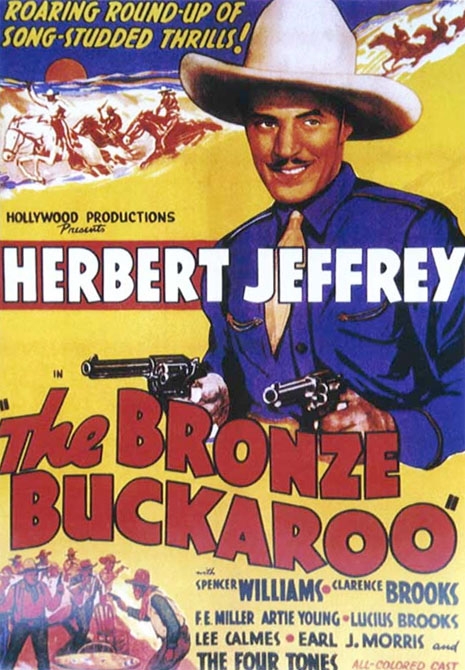
Black History Month Special - Herb Jeffries; The Bronze Buckaroo

In an earlier post I talked about the first all-black horror movie "Son Of Ingagi", but now you're saying; "OK, But did they have all-black B-Movie westerns"? Why yes, yes they did. First a little background recap;

From the 1920's to the 1950's era of Jim Crow era segregation there existed a network of movie theatres in black communities just as there was an older network of black vaudeville and music halls known as the Chitlin Circuit that featured black music, dance and comedy acts. These theatres meant that there was an audience for all-black movies as well so by the 1930's there were made a series of films with all-black casts, usually made by black directors to fill this niche. These films were rarely seen by white audiences, did not make it to TV and have been largely fogotten.

In the silent era director Oscar Michaud (who I already wrote about here) started things off with his response to DW Griffith's "Birth Of A Nation" and continued to make films into the sound era. His films were serious minded and intended to offer messages of moral and racial uplift, sometimes with a religious subtext. Others would make films of a decidedly less serious nature, especially actor/writer/producer Spencer Williams who made a number of low budget comedies as well as the "Son Of Ingagi" horror film. Equally low-budget musicals (including some starring Cab Calloway and Louis Jordan), musical revues and Film Noir crime films were also made but the most popular, and oddest films, were a series of westerns made in the late thirties and early forties starring singer Herb Jeffries.

herbjeffriesbronzebuckaroo-6regyh-465-670-int

By this point the western genre was largely dominated by a distinct brand of low-budget quickie musical "oaters", which featured silly cookie-cutter plots, rote direction, wooden acting, and decidedly non-threatening levels of mild cartoon violence. These films were hugely successful with kids in particular and made stars out of names like William Boyd, a silent screen veteran who saw his career revive when he became "Hopalong Cassidy", former football player Johnny Mack Brown, former bit player John Wayne and former rodeo star Ken Maynard. It was Maynard who accidentally kicked off a new western musical genre when he warbled a couple of songs in a 1930 film and followed it up with a few more in which he sang and played guitar or fiddle. Maynard was not a real musician and while he did make a few recordings had no real desire to be one. He did however inspire another cowboy singer named Gene Autry to move to Hollywood and start a film career that would easily eclipse Maynard's, making a series of singing cowboy movies that would run to 93 movies over the next thirty years. Almost all Autry's films were identical, with childishly simple plots and most of the same casts. Autry himself was, by his own admission, fairly limited as a singer, not much of an actor and even less of a cowboy who often fell off his horse and could not throw a believable punch. But he was affable, looked flashy in his tailored cowboy suits and white hat and he had a collection of catchy songs. The success of these low budget quickies is a little difficult to understand now as most are blandly interchangeable and forgettable (the notable exception being "Secret Empire" an odd sci-fi western serial which I will have to write about in the future) but in every film Autry will stop the action (such as it is) to croon a cowboy tune or two and many of these songs became genuine hits and even classics including "Back In The Saddle" and "Rudolph The Red Nose Reindeer". The obvious success of these cheaply made films, even among black audiences, (even some Blues singers admitted to being Autry fans) meant that at some point somebody was bound to find a black version.

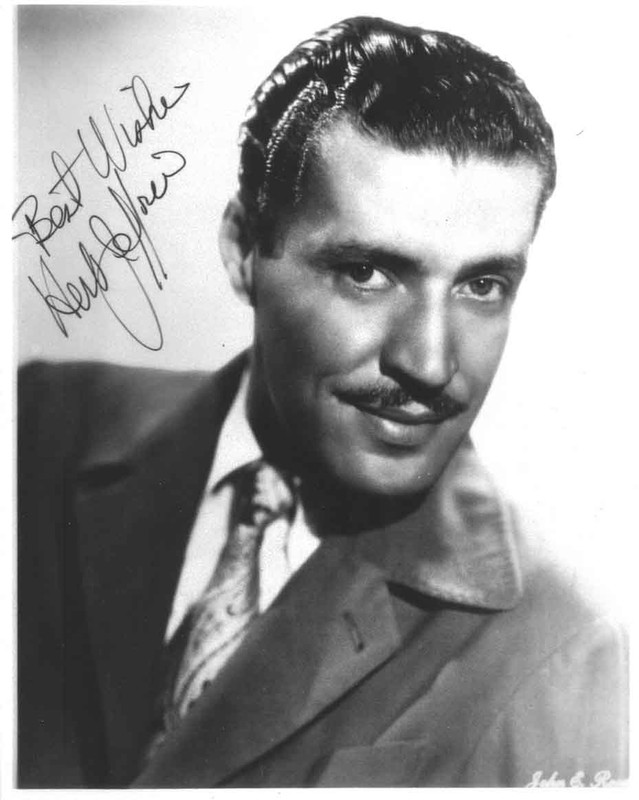
Herb-Jeffries-Billboard

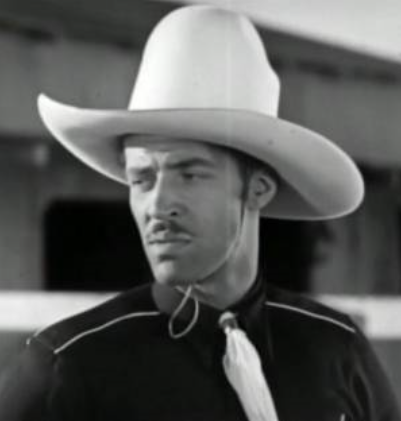
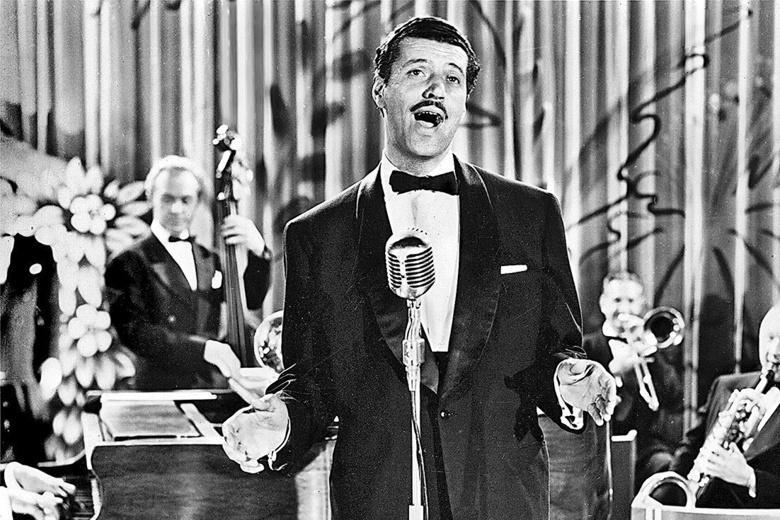
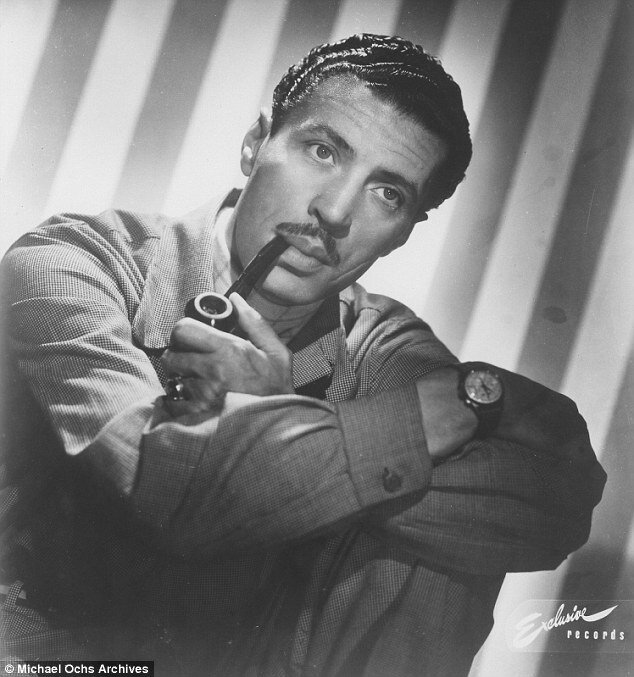
Herb Jeffries was always somewhat cagey about his background. Although at times he claimed to be a "Creole from New Orleans", census reports show he was in fact born in Detroit in 1913 under the name of Umberto Alexander Valentino. His mother was Irish and ran a rooming house and his father, who left before or shortly after his birth was described as being of variously mixed French, Scilian, Ethiopian and Moorish background and that he had died in WW1. How much of this is true is anybody's guess and it is entirely possible that Jeffries never really knew, it was common at the time for Black entertainers to claim "Ethiopian" or "Moorish" roots as these were among the only African nations to escape slavery and such roots were seen as noble although modern DNA tests show this was rarely, if ever, actually true. What is certain is that Jeffries had light enough skin that he could pass for a Creole and often did although he always insisted he never passed for white. He grew to be tall and handsome with a trim moustache, an elegant, dignified bearing, and a smooth voice. At some point he started billing himself as either Herb Jeffries or Herb Jeffrey, a practice he would continue in his film acrrer. After leaving school in 1929 he took pickup gigs in speakeasies singing Jazz and popular ballads and dancing where he caught the eye of Louis Armstrong who recommended him for a regular gig singing with bandleader Erskin Tate in Chicago where he was quickly hired away for more money by Earl Fatha Hines for a tour and still later would also get signed by Duke Ellington, with whom he would make several recordings.


"FLAMINGO" ~ DUKE ELLINGTON & HERB JEFFRIES (1941)

By the mid-thirties Jeffries was successful enough to try his hand at the movies. Although his entire background had been in Big Band Jazz and popular ballads and other Jazz artists had made film appearances where they essentially played themselves in a Jazz context including Ellington, Armstrong and Cab Calloway, Jeffries had something very different in mind. While he was a city boy born & bred, like so many others both black and white, he had grown up watching the silent Westerns of Tom Mix, Tom Holt, Jack Hoxie and Art Acord and he had seen the transition to the singing cowboy Gene Autry who was hugely successful. Jeffries noticed something that the studios had not, that these films were just as popular with black audiences as they were with white ones and he spotted an opportunity. These films were not especially difficult to make; they had small budgets, simple sets, repetitive stories, could easily recycle the same casts, costumes and sets and could be made cheaply and quickly. Still none of the existing studios, even the poverty row studios that churned out these B-movie westerns every couple of months showed any interest so Jeffries roped in Spencer Williams.

Spencer-williams-carmel-theater-1958
SPENCER WILLIAMS

Williams (1893-1969) was a veteran black actor, comic and filmmaker with a career going back as a comedian in vaudeville who had already been making all-black films since the start of the sound era with some success in the black community. He was a large, heavyset man who usually played heavies or buffoons and his films ranged from comedies to musicals and crime films in which he not only acted but also often wrote and directed. He had even worked on the 1928 film "Queen Kelly" starring Gloria Swanson and directed by Eric Von Stroheim where he was in charge of casting and rehearsing the black cast members. Note that this Spencer Williams is not to be confused with another contemporary Spencer Williams (1889-1965) who was a successful Jazz musician and composer but who did not appear in films. To avoid confusion Spencer the actor would bill himself as Spencer Williams Jr.    

To secure funding Jeffries approached Jed Beull, a white producer of independent B-Movies who had previously worked for Mack Sennett and who had already produced a B-Movie western. Jeffries offered himself as the star with Williams playing the comic relief sidekick, a role common to Autry movies. Added to the cast would be two more veteran performers from black vaudeville. Flournoy Miller (1885-1971) was another comic from vaudeville who had been successful enough to start his own production company and write a musical "Shuffle Along" with music from early Jazz and Ragtime composers Eubie Blake and Noble Sissle which became a long running Broadway hit in 1921. He would later work on other musicals with Jazz greats James P Johnson and Fats Waller. Miller would also be credited with co-writing the script for Jeffries first film. Mantan Moreland (1902-73) was yet another vaudeville comic and sometime partner of Miller who had made the transition to film with a string of comic relief sidekick roles including in mainstream white films where he was known for his moonfaced eye-rolling double-takes and squeaky voice. Also added were a band Dusty Brooks & the Four Tones. Although the cast would be entirely black the director would be Sam Newfield, a white director with a long career making low budget quickies for poverty row studios and independents, sometimes as many as twenty year meaning a shooting and editing schedule of less than three weeks. Obviously this meant shooting only a couple of takes for each scene and keeping the cameras fairly static to make the setups fast and editing simple with results we can see, but he could be counted on to deliver a finished product on time and on budget.

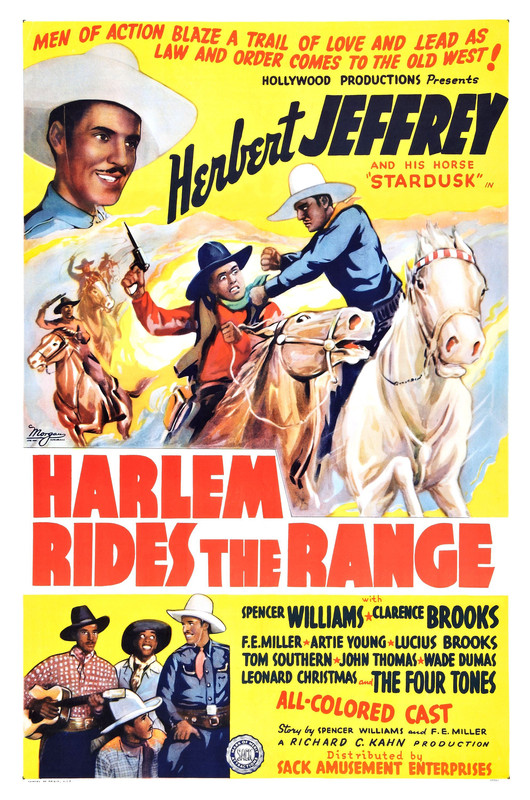
Harlem-Rides-the-Range-poster

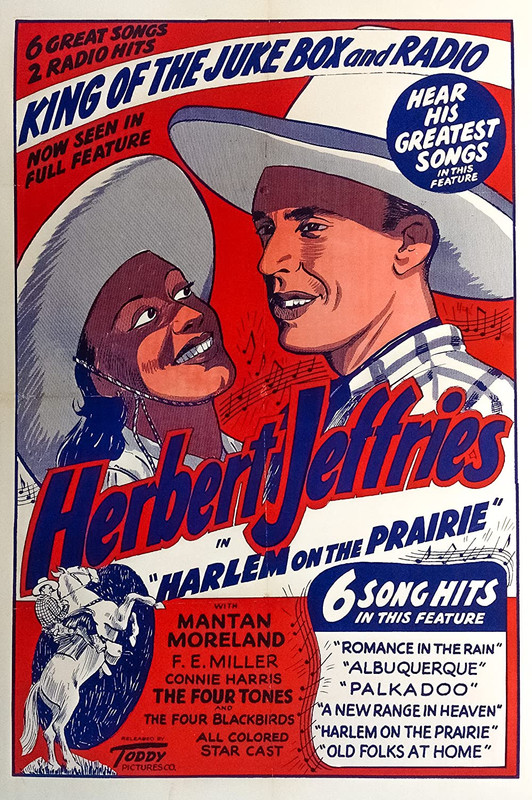
The resulting film "Harlem On The Range", was shot in less than a week in 1937 on a California dude ranch on a low budget. The plot for this film (which is not currently available) was boiler-plate B movie Western fare; A former outlaw (played by Williams) returns home to find the gold from a robbery he was involved with twenty years before that resulted in his entire gang being killed and the gold being hidden. But a rival gang is also searching for the gold and Williams is shot and again escapes albeit mortally wounded. He is found by a younger cowboy (Jeff Kincaid, played by Jeffries) who tries to save him and before he dies Williams tells him about the gold who promises to share the gold with Williams' daughter. Jeffries goes off to find the gold accompanied by the comic relief team of Miller and Moreland and the Four Tones who provide backup for a couple of musical numbers sung by Jeffries. In the end Jeffries finds the gold, vanquishes the bad guys and gets the girl.The movie was shown in black communities in the South as well as black neighbourhoods in Northern cities where it was a hit, it was further helped by a friendly review in "Time Magazine" and it easily made back it's investment of $50,000 and would lead to three sequels.

Like most B-Movie Westerns these movies are not objectively very good. These films all have simplistic plots, cliche dialogue, wooden acting, clumsy fight scenes, muffled sound and static direction in which actors spend most of the time standing around and stiffly reciting their lines. Any actual action is shot from far away and tends to look awkward while the comedy has not dated well being of the Amos & Andy school of dumb jokes and exagerated double-takes from Moreland. However it should be noted that while these movies may be cheap knockoffs of Gene Autry Westerns they are not really any worse either since all that could easily be said of the films of Autrey and Roy Rogers as well.


"I'M A HAPPY COWBOY"

In fact it could be said that the Jeffries films are slightly better for two reasons. One is Herb Jeffries himself; While he can hardly be considered a great actor he is objectively better than Gene Autry or Roy Rogers (or for that matter Tom Mix in his one talkie serial), tall, handsome and smooth, usually dressed in stylish black with a white hat (of course) he has genuine screen presence in a way that the affable but bland Autrey and Rogers did not and unlike them he looks like he could actually hold his own in a fight whereas Autry and Rogers essentially looked like your uncle playing cowboy. Neither could throw a convincing punch and Autry was so uncomfortable on horseback that he frequently fell off. Jeffries could convincingly take out the bad guys and get the girl.

The other advantage Jeffries had was being a better singer and having better music than Autry and Rogers. Both Jeffries and Autry had started out as singers but where Autry had begun singing reedy cowboy songs on the radio and Rogers tended to rely on his partner Dale Evans to sell the songs, Jeffries had been a successful Big Band singer with some of the biggest names in Jazz in prestigious clubs all night long in front of demanding audiences who expected higher standards and had little interest in cornpone jokes. The Four Tones, led by Dusty Brooks, who would appear in all his movies, were a similarly professional group in the genre of pre-Doo-Wop R&B groups like the Ink Spots and Mills Brothers. Autry's backup bands, usually led by Smiley Bates, also a songwriter as well as filling the comic relief sidekick role, were solid enough but did not have the same variety as Jeffries and the Four Tones and their music just hasn't dated as well.

herb-jeffries-1

These films, both black and white existed in a strange alternate universe in which the Old West of the Victorian Era (or at least a highly simplistic and sanitized version of it) lived side by side with the modern world of the early forties leading to scenes with cowboys riding horses and wearing six-shooters who will suddenly have access to modern telephones, radios, cars and planes. The women usually wear casual dresses of the forties while the heroes wear the finest in western wear; satin cowboy shirts, gleaming cowboy boots (worn outside their tight matching pants), ten gallon hats, bolo ties and holsters, all impeccably spotless. On the other hand the villains could be dressed as forties gangsters and bankers.

These films, like similar "Race" B-movies of the era including the all-black horror film "Son Of Ingagi" (which I also wrote about here) also exist in a universe where there are apparently no white people at all. Every character, hero or villain, cops, judges, doctors, preachers, singers or businessmen are all black. White characters are not even mentioned. Black audiences presumably would have been quite happy to see white characters as villains getting their comeuppance but such films would never have made it to the screens in the south where many black theatres were owned so the villains, whether they be greedy businessmen, corrupt cops, mobsters, bootleggers or caddish lounge lizards are also black.

A year later the second film in the series "Two Gun Man From Harlem", would be made by a different white producer and director in Robert Kahn, another B-Movie veteran who would also make the rest of Jeffries' westerns. Jeffries had wanted to keep the same name as in the previous film and make the character a regular but the change in studios meant he lost the rights to the name Jeff Kincaid and so would take the name of Bob Blake for the rest of the series. The character was otherwise the same as before; cool, confident good guy wearing an immaculate costume and white hat, however for the next film he would play two characters as he would double as the villainous outlaw; The Deacon.

"TWO GUN MAN FROM HARLEM" (1937);


Directed by Richard Kahn
CAST: Herbert Jeffrey ~ Bob Blake/The Deacon
Margaret Whitten ~ Sally Thompson
Mantan Moreland ~ Bill Blake
Spencer Williams Jr. ~ Butch Carter
Clarence Brooks ~ John Barker
Stymie Beard ~ Jimmy Thompson
Mae Turner ~ Mrs. Ruth Steel
Jesse Lee Brooks ~ Sheriff
Rose Lee Lincoln ~ Dolores

In the plot, which is more complicated than the usual B-Movie Oater fare, Jeffries plays Bob Blake, a typical Cowboy good guy who is soft spoken, honest, upright, popular with women and children but who is nevertheless framed by by Ruth Steele, the two-timing wife for the murder of her husband. Forced to dodge a corrupt sheriff (Williams), Blake flees and hitchhikes to  Harlem (that must have been quite a trip from the Western Plains!) where he drops in on a speakeasy where he flirts with the girlfriend of a feared gangster known as The Deacon, also played by Jeffries. Even though he's in Harlem the Deacon dresses as an Old West badman in all black with a frock coat, string tie and slim stetson. While Blake is out of town Sherrif Butch is paid off by a local businessman John Barber (Clarence Brooks) to kidnap Ruth Steele who knows about the banker's crooked deals including an attempt to foreclose on the homestead of Sally, who Blake is in love with, and her young son. After a short trip he returns to the West disguised as the Deacon who we learn has mysteriously disappeared and is believed dead. Mantan Moreland plays his brother Bill who is also the ranch's cook who sees through the disguise even though Moreland and Jeffries look absolutely nothing alike. Blake confronts Barker and the Sherrif, who try to stage an ambush, Mrs Steele is rescued and confesses, Sally is able to pay off her mortgage with money Blake robbed from Barker, Blake saves the girl, clears his name and saves the day.  

One difference between the films of Jeffries and those of Autry, Rogers or Hopalong Cassidy was in the audiences for these films. The white B-movie westerns were really for kids. Usually shown on Saturday matinees these films, and others like them with or without music, had built up a devoted, even fanatical young following who not only came out every week but bought a whole trove of related merch; cowboy hats, boots & bolo ties, cap guns & holsters, pocket knives, badges, buttons and patches, lunchboxes, decoder spy rings (because cowboys were known for their secret codes), rings with compases or magnifing glasses (to start campfires with of course). There were also comic books, comic strips, story books and radio shows, endorsements for breakfast cereals, cookies, oatmeal etc for an entire, hugely profitable empire that would make the likes of Gene Autry and William Boyd (AKA Hopalong Cassidy) multi-millionaires off of movies that cost very little to actually make. Note; Roy Rogers and Clayton Moore (AKA The Lone Ranger) did not make out nearly as well due to bad contracts that meant that they never owned their own names.

methode-times-prodmigration-web-bin-36aff23a-eddc-35d7-90b7-1f36f685a03a

Herb Jeffries was aware of this action but the smaller, geographically and demographically limited black audience was less desirable for advertisers and investors so he was never able to capitalize on marketing his character. Unlike the white singing cowboys his audience was less focused on kids with his stories having more romance (however chaste) as is seen in this film and the music being closer to the R&B and Jazz ballad roots that Jeffries and the Four Tunes came from. "Two Gun Man from Harlem" has a subplot involving adultery and murder which would not show up in a Gene Autry or Roy Rogers film nor can either of them they be seen as romantic leading men even though Rogers was actually married to his leading lady Dale Evans. The tall and handsome Jeffires on the other hand could be marketed as a leading man however laundered for the mixed audience of kids and adults these films aimed at. However clumsily.

One of the oddities of this "Two Gun Man From Harlem" is that even though Jeffries was known as a singer he only actually sings the opening song, "I'm A Happy Cowboy" which would become his theme song, and warble a short ballad which he sings in a formal tenor. As for the rest of the songs two are done by his backup group the Four Tones with another from Paul Blackman, a one-man-band. His remaining films would feature more music.

"HARLEM RIDES THE RANGE" (1939)


Directed by Richard Kahn
Herb Jeffries ~ Bob Blake
Lucius Brooks ~ Dusty
F.E. Miller ~ Slim Perkins the Cook
Spencer Williams ~ Mr Watson
Clarence Williams ~ Bradley
Artie Young ~ Miss Margaret Dennison

For this film Jeffries once again plays Bob Blake although Mantan Morleand as his brother is now absent. Also returning was Spencer Williams who also wrote the script but only plays a minor role and as the villian Clarence Brooks playing essentially the same role as in the previous film and apparently in the same costume. With Moreland out his role as comic relief is filled by Lucious Brooks as Blake's sidekick Dusty and FE Miller as Slim Perkins the ranch cook (any resemblance to actor Slim Pickens is coincidental, he was as yet unknown). As usual along for the ride are the Four Tones.

Plotwise this film also recycles a part of the last film with Blake once again being framed for murder. Blake and Dusty are roaming cawboys in search of work when they stumble on to the farm of local homesteader Jim Dennison who was apparently murdered while being shaken down by local banker/landowner Bradley (Clarence Brooks) to whom he owes money and who has designs on the secret radium mine Dennison is hiding. Dennison also has a daughter (Artie Young) whose picture Blake sees and falls in love with. This time Blake actually gets arrested (but not before crooning a couple of numbers in a light tenor voice) and sent to jail but of course he escapes to clear his name and rescue the daughter. The climax comes in a fairly confusing gunfight in which nobody appears to actually die. This film is simpler than "Two Gun Man" and without the implied adultery subplot. Infact while in the previous film Jeffries had a romantic involvement with two women (albeit in the most chaste way possible) this time the girl doesn't even show up until the end and instead he spends the film mooning (and singing to) a photograph making this film as squeaky clean as any Roy Rogers film. Unlike "Two Gun Man" this film doesn't have the jarring shifts in time from the old west to modern Harlem and back, although a radium mine is an odd choice, in fact it has nothing to do with Harlem at all other than existing in an all-black universe that Harlem represented from the 1920's to the 1940's.

MV5-BM2-Zj-OGNl-NDAt-M2-U0-Zi00-Nm-Zl-LWIw-NGYt-MGRh-MTIw-Nzg0-Yz-U2-Xk-Ey-Xk-Fqc-Gde-QXVy-Mzg1-ODEw-NQ-V1-FMjpg-UX1000

Besides having a couple more songs this film also spends more time with the comic relief characters of Dusty and Slim. This makes for some confounding questions for modern viewers. Like Mantan Morleand, Lucious Brooks and FE Miller came from the same comedy school of gentle slapstick, exaggerated facial expressions and voices and the stereotypes about lazy, perpetually hungry, loyal but not too bright and not too brave sidekicks we associate with black comic sidekicks of the era like Steppin Fetchit or for that matter Manton Moreland himself in later films made for white audiences. These types of roles are seen today as demeaning racial characters left over from the minstrel era, which is largely true but what is questionable about these films is that they were made for a strictly black audience, few if any whites would have seen them, and yet these characters are still being used. However it must be remembered that the white westerns of the same type almost always had similar oafish sidekicks, usually played by Smiley Bates or Gabby Hayes and audiences expected such antics. These were also audiences who were only a decade removed from the era of vaudeville and silent film slapstick. Also these characters are different from the hapless Fechit with Dusty and Slim riding to the rescue and taking part in a gun battle, which is something Steepin Fechit or Mantan Moreland would never have been shown doing in a film for white audiences. They may not be the heroes of the film but they are treated by Blake as trusted friends rather than strictly buffoonish clowns.

Jeffries would make one more film in the same year with the same director and almost the same cast suggesting they were probably filmed in rapid succession.

"THE BRONZE BUCKAROO" (1939);


Directed by Richard Kahn
Herb Jeffries ~ Bob Blake
Lucius Brooks ~ Dusty
F.E. Miller ~ Slim Perkins the Cook
Spencer Williams ~ Pete
Clarence Williams ~ Buck Thorne
Artie Young ~ Betty Jackson

All the major players from the last film have returned with Lucious Curtis, F.E. Miller, Spencer Williams, Clarence Brooks and Artie Young all played their usual roles. By this point the series was running out of gas and they seem to be going through the motions with the plot, when they get around to it, being meandering and dull. While the film ups the ante in having not one but two confusing gunfights little actually happens and the film spends too much time on a subplot involving the comic sidekicks being even more dense than in the last film. Williams plays the chief villain again with Williams as his minion and Young as the Damsel in Distress. Although Willams is on board to act he is not credited on the script this time. Maybe he was working on something else, he does seem to have been rather busy. At any rate his input into the script is missed here. Nobody has ever said that Spencer Williams' scripts were clever, witty or suspenseful, but he was a professional and knew how to establish the plot, stay on topic and wrap things up in an efficient manner. Here the movie takes too long to get to the plot, then rushes through it in a haphazard way. Meanwhile the film spends more time with the comic relief duo than it does with the hero.

However while the film may be the least of Jeffires westerns it does have two noteworthy moments. One comes during a scene in a saloon where the entire room full of gambling cowboys sings "Almost Time For Roundup" while a tracking shot moves through the bar. This is actually a fairly complex shot that would have taken time to stage and shoot and is unusual in a low budget quickie film of this sort, black or white. Then there is the song itself; superficially in a similar vein to the Western Ballads of the famous white vocal group the Sons Of The Pioneers (of whome Roy Rogers had been a member) at least subject wise, is sung as a call & response style having more in common with black traditions of Gospel and Blues than would be found in a white western film. The other track, "Payday Blues" is an upbeat vocal track similar to some of the more upbeat number of vocal groups like the Mills Brothers along with a tap dance solo which is distinctly not western but is reasonably contemporary for black audiences.


"IN MY HEART"

This would turn out to be the last of Jeffries western films either due to less audience demand, the movies not making enough money or his own boredom with the limits of the project. He would not lack for work however returning to his singing career for the throughout the forties and fifties as a Big Band singer for several record labels. In his early years he sang with the lilting tenor he used in his films but afterwards as musical tastes evolved into a deeper baritone voice as he worked with more blues influenced musicians like pianist Joe Liggins and His Honeydippers with whom he scored a chart hit in 1945 with "Left Good Deal In Mobile". After the war like many other black American artists he spent time touring Europe.

Herb-Jeffries-Mason-Report

The coming of the Rock & Roll meant that many R&B band singers like Wynonie Harris, Roy Brown, Louis Jordan, Slim Gaillard, Brook Benton and Big Joe Turner would join in but Jeffries was too smooth both as a singer and in his image to credibly be a Jump Blues shouter. Instead he cashed in on another craze as in the late fifties there was a brief fad for Latin Jazz and Calypso leading to a few forgotten movies including Jeffries' own "Calypso Joe" in 1957 starring Angie Dickenson. The Calypso craze didn't last long however and Jeffries would return to his career singing Jazz ballads and marrying burlesque star Tempest Storm.

His status as the first Black Western star would not be totally forgotten however and in 1969 he would make an appearance in the TV series "The Virginian" as a villainous gunslinger. He would make a few other non western TV roles as well. In 1979 he would be added to the Black Filmmakers Hall Of Fame and the Hollywood Walk Of Fame. In the 1993 Black western "Posse" (directed by Mario Van Peebles) a clip of Jeffries from one of his films can be seen during the closing credits although for some reason he is not in the film itself. Perhaps at age 83 he was too old or ill to work. He died in 2013 aged 100.


As for the other main players; Spencer Williams would continue with his varied career as actor and filmmaker making films from genres as different as religious films "The Blood Of Jesus" (1941), "Go Down Death" (1944) musicals "Juke Joint" (1947) and "Beale Street Mama" (47) along with the first all Black horror film "Son Of Ingagi" (1940) (which I also wrote about here) all done on very short budgets and shown entirely to black audiences. He became best known however from the hit TV series "Amos & Andy" from 1951 to 1955. He did not originate the role of Andy and in fact both roles had originally been played on the radio by white comedians Freeman Gosden and Charles Correll who owned the rights to the characters but obviously could not play themselves on TV and so recruited experienced black vaudeville and film actors largely unknown to white audiences to play them with Williams as Andy. The show was an immediate hit with, white audiences at least. However the characters were obviously stereotypes left over from Minstrelsy of Blacks as sneaky, lazy, illiterate, hustlers speaking in exaggerated accents that were already seen as retrograde and offensive to Black audiences who had already been offended by the long running radio series. Once the series wrapped up, Williams, by now thoroughly typecast in a role that Blacks found deeply demeaning and even many whites found problematic, found little employment. The chain of Black owned theatres that he had provided films for in the 1940's was largely gone and the Black Vaudeville comedy circuit was barely a memory. He made do with some stage and comedy work, writing his memoirs and living off his WW1 US Army pension. At the time of his death in 1969, aged 76 he was remembered only for his work in "Amos & Andy" with his many Black films being almost completely forgotten (they had never been seen at all by white audiences) and considered lost until some of them were found in a warehouse in the 1980's and restored.

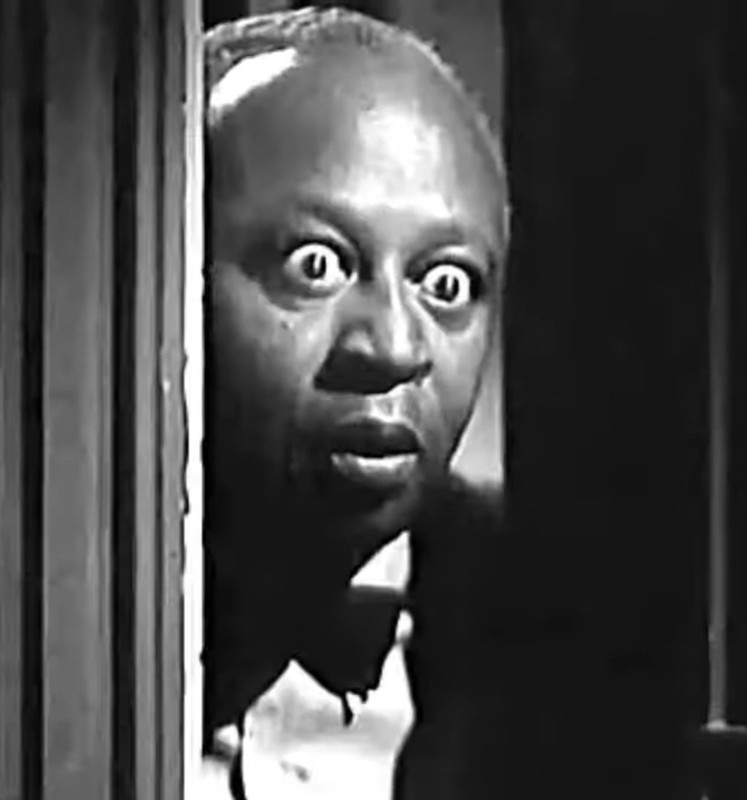
Mantan-Moreland-in-Eyes-in-the-Night-1942
MANTAN MORELAND

Similar fates followed the other comic actors from the series; Mantan Moreland would have a prolific career outside the closed world of Black Cinema in Hollywood itself invariably playing the same basic comic relief role in b-movies ranging from comedies to musicals to crime movies. Notable film roles included the recurring role in the Charlie Chan series and a couple of zombie films with John Carradine. By the end of the fifties his typical comic role of exaggerated pop-eyed reactions and reddy high-pitched voice had gone out of fashion but he was still respected for his comedic skills that Moe Howard seriously considered inviting him to join the Three Stooges to replace the ailing Shemp Howard as the Stooges were fans of his work however the studio insisted on adding the white Joe Besser. Moreland still had better luck than Spencer Williams finding work in smaller roles as well as touring Black night clubs with comics Nipsey Russell, Redd Foxx, Moms Mabley and Bill Cosby. Carl Reiner was also a fan and gave him some work. He died in 1973 aged 71.

Flournoy Miller made no other films after the Jeffries series but he continued to work on Broadway stage in further productions of "Further Along" and a production based on the life of Eubie Blake. He would also work with Spencer Williams on the "Amos & Andy" series as a writer. He died in 1979 aged 86 and was awarded a posthumous Tony Award in 1979.  

Clarence Brooks actually had a long career dating back to the very first Black movies in 1916 but he made only two more movies, both low budget quickies. Both were for the Black theatre circuit, one with Mantan Moreland. With the circuit drying up in the 1940's he found work in Hollywood in a few bit parts. Unlike Moreland and Miller he was not a stage or comedy performer and by the 1950's he quit show business, dying in 1969 aged 74.

The legacy of Black comic actors of the era like Williams, Moreland and Miller (along with contemporaries like Stepin Fetchit) is complex. For decades their routines of exaggerated eye-rolling and double-takes, playing characters pulled from from Minstrel Show stereotypes of shuffling servants or shuckin' & jiving hustlers, lazy, cowardly, gullible, childlike and perpetually hungry were seen as demeaning throwbacks to a shameful era and an embarrassment. However some modern black film historians have given them a more sympathetic take noting their ability to have long careers in an era of open segregation, the subtle ways they inserted humanity into their roles and the genuine respect in which they were held by their peers both Black and White for their talents. Moreland was praised as a mentor to a future generation of black comics like Redd Foxx and Nipsey Russell while Spencer Williams is noted for his work as a director and filmmaker for his success in getting a string of all-black films made and released with his religious films having deep meaning for Black American culture of the mid-twentieth century.

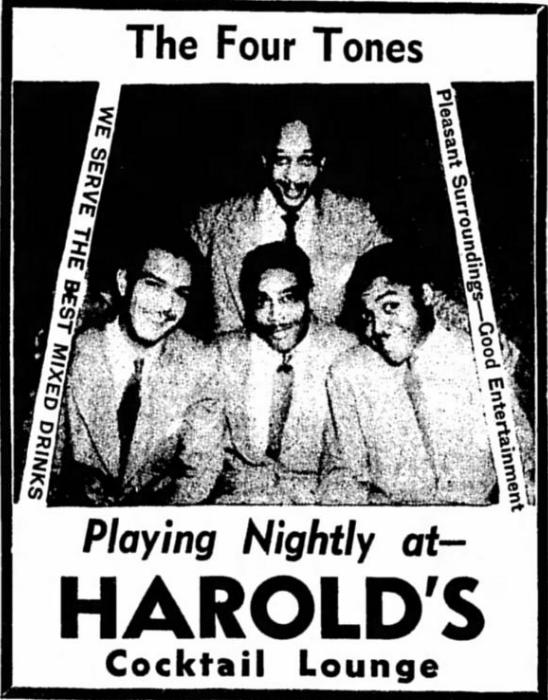
Four-Tones136

Although he also played the comic sidekick role, the career of Lucious "Dusty" Brooks would be more focused on music. Born in 1911 in Oklahoma and based out of Los Angeles, he made only a few more minor film appearances, usually in brief singing roles and sometimes with the Four Tones, including "You'll Never Get Rich", a Fred Astaire film. His film career ended in 1947 then he largely stayed in Los Angeles and continued his musical career recording several singles for various labels along with a group billed as the Four Tones, although whether it's any of the same Four Tones from the westerns is unknown. Musically these singles are in the sort of Urban Jazz/Blues style popular on the West Coast in the post war era with a vocalist and a small band. Among the last of these is a mysterious single released by the iconic Sun Records label in 1953. Based in Memphis and run by the flamboyant Sam Phillips, Sun Records was soon to be famous as the label for Elvis Presley, Johnny Cash, Jerry Lee Lewis, Carl Perkins and Roy Orbison among others. However some of it's first few records were actually licensed from smaller labels from out of town or demos sent in from elsewhere with this record, only the seventh put out by Sun, reportedly coming from Los Angeles where Brook's other recordings were done. Sam Phillips' record keeping was notoriously spotty and since the record was not a hit there was even less reason to take note of it but the singer is billed as Juanita Brown and the male on the duet as Joe Alexander. Brown was considered an up and coming Jazz singer while Alexander was a veteran Big band singer based in Los Angeles.


DUSTY BROOKS & HIS FOUR TONES w/JUANITA BROWN & JOE ALEXANDER ~ "HEAVEN ON FIRE" & "TEARS & WINE";

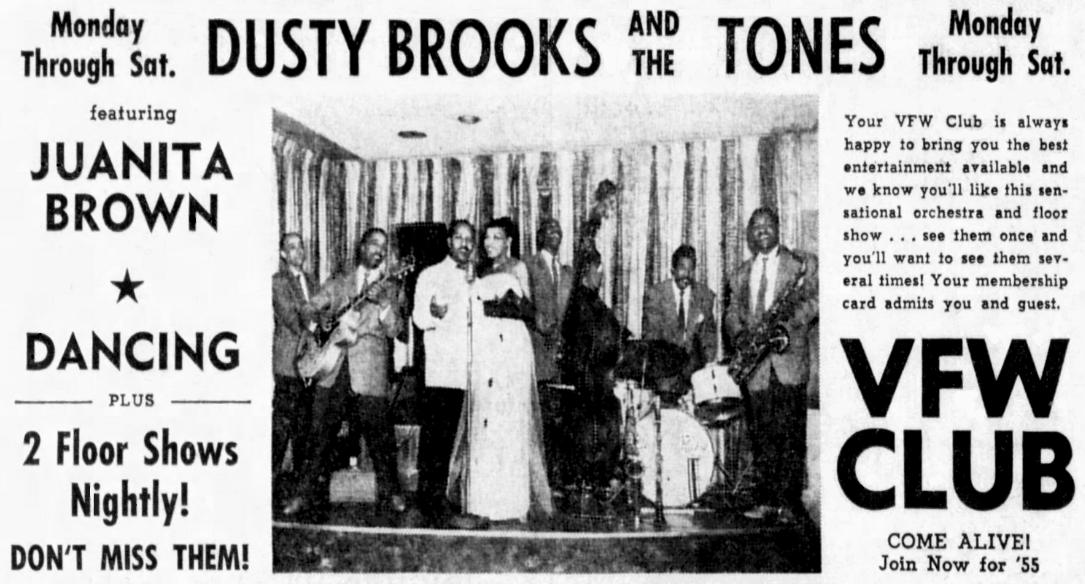
Previously Brooks had been the band leader and singer but at this point they were acting as Brown's backing band with Brooks keeping top billing as the bandleader, a not unusual practice at the time. Though we know from ads placed in various black newspapers that Brooks and his band spent the early fifties touring through the south, southwest and midwest, including with Brown in 1953 and 54. We also know there was also a 1953 recording session listed as happening in nearby Nashville which were never released. This record however was probably recorded back at Los Angeles though as that was Alexander's base and there's no indication that he ever toured with the band. It's possible that Brooks simply dropped it off at Sun while his band was touring through Memphis. That Brooks has the main billing on this record suggests he himself cut a deal with Phillips as the ads show Brown as having equal billing.

Four-Tones91

He may have even used a previous as yet unreleased recording to make a quick deal to cover expenses if the tour was having problems. In fact this was Brooks' last recording and by 1955 ads show Juanita Brown is now touring with a new band led by Art Maryland who had been the guitarist in the Four Tones so it's obvious that Brooks was now gone. Neither Brown or Maryland surfaced again and neither would Brooks for almost a decade until a brief mention in the 1963 minutes of the Los Angeles chapter American Federation Of Musicians notes that Rusty Brooks has been reinstated as a member. It would seem that after 1954 he quit the road, returned to L.A. and at some point retired, long enough to have let his membership lapse before changing his mind in 1963. Thereafter he drops out of sight again. By this point he was in his fifties which is hardly old but the musical world had changed in a decade with Rock & Roll and Soul replacing the R&B he knew. Probably he found work in a little Jazz club (thus the need to renew his AFM membership) but did not record or appear in movies again. At some point he retired again and dropped out of sight for good until dying in Missouri City, Texas in 1999 aged 88. The career of Dusty Brooks is not that different from dozens of other similar band leaders of the era just before Rock & Roll like Doc Wiley, Todd Rhodes or Art Hodges; a bunch of decent recordings for small local labels, backing up minor singers and a life on the back roads of America. Where Brooks gets his footnote is from the four films he made with Jeffries and the one obscure record he made for Sun Records, a label soon to be famous. Of that record, due to it's status on Sun Records and it's rarity, copies can sell for several thousand dollars, which is probably more than Brooks made for his entire film career.


DUSTY BROOKS ~ "PLAY JACKPOT"


A final word about Paul Blackman, the one-man-band from "Two Gun Man From Harlem". These type of one-man-bands were an odd niche genre of the era that included the likes of Dr Isaiah Ross who would also record for Sun Records in it's early days and Bongo Joe Coleman who recorded an album for Arhoolie Records in the sixties. Blackman was originally from New Orleans and seems to have travelled around making his way to Hollywood and later up to New York where he would later record an album for the Smithsonian/Folkways Records label in 1957. What happened to him after that is unknown but it's probably safe to assume he's not arround anymore but thanks to Folksways practice of always keeping their titles in print his album is still available.


PAUL BLACKMAN ~ "BASIN ST BLUES"


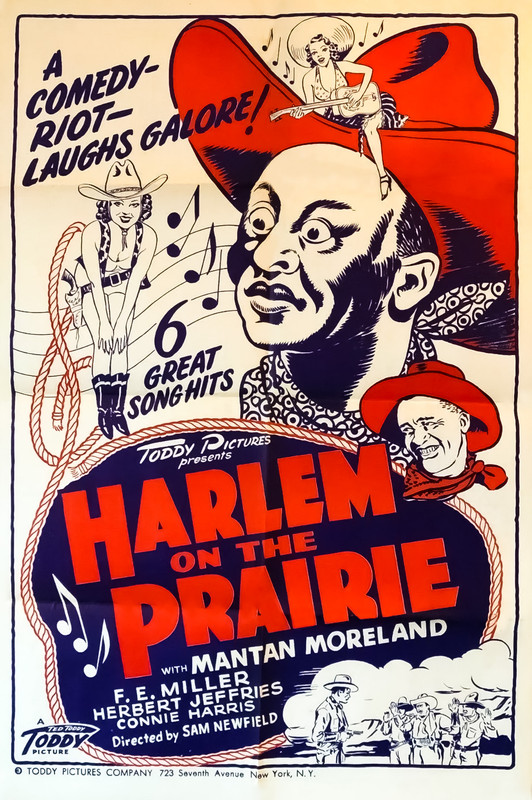
MV5-BODRi-Mj-M0-Y2-Yt-YWIy-OC00-MTMy-LWEw-ODgt-NDMx-OTc4-MDdk-ODdk-Xk-Ey-Xk-Fqc-Gde-QXVy-Mzg1-ODEw-NQ-V1
NOTE THAT MANTAN MORELAND GETS TOP BILLING ON THIS POSTER

Oblong-Fluffy-Bonobo-max-1mb