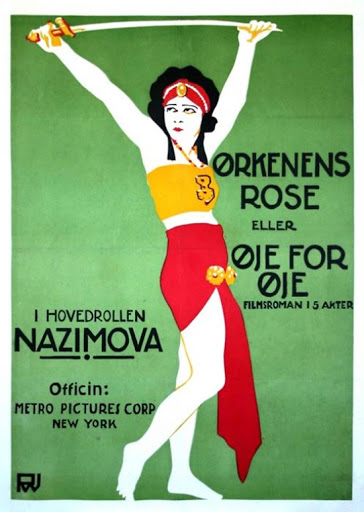
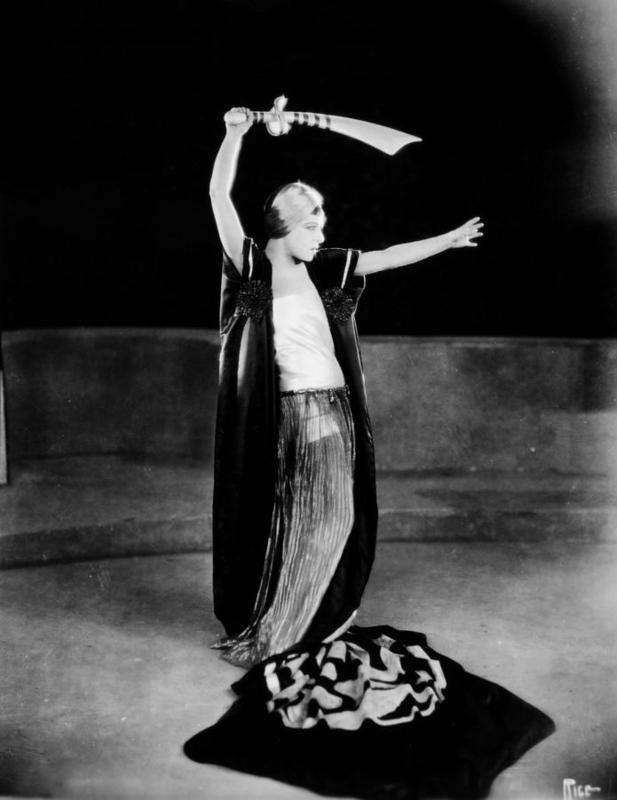
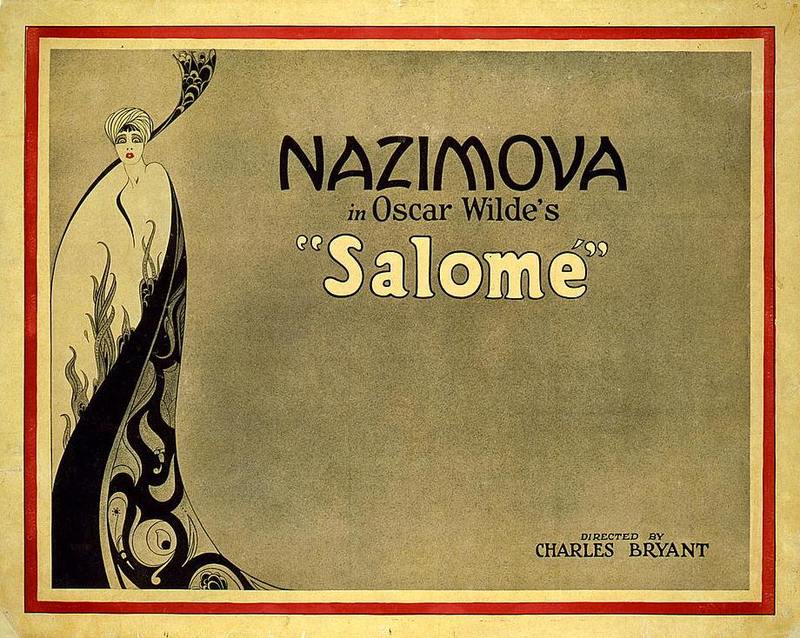
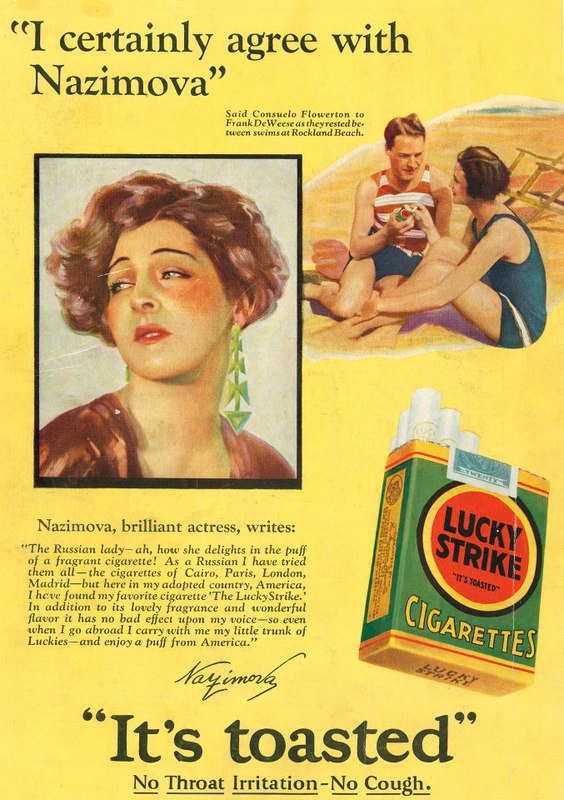
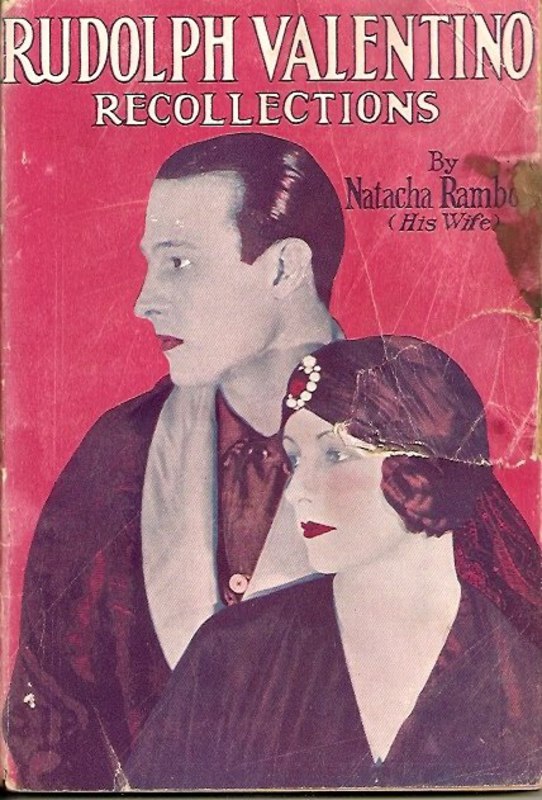
Showing posts with label Alla Nazimova. Show all posts

Monday, 12 July 2021

The Eternal Theda Bara


"Some singers indulging in curses, Though sinful, have spendidly sinned;
But my would-be maleficent verses, Are nothing but wind."
Algernon Charles Swinburne (1837-1909)
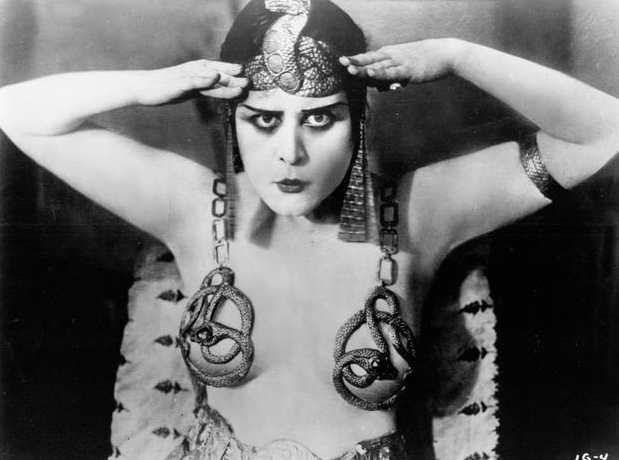
Screen-Shot-2017-10-13-at-11-16-53-AM

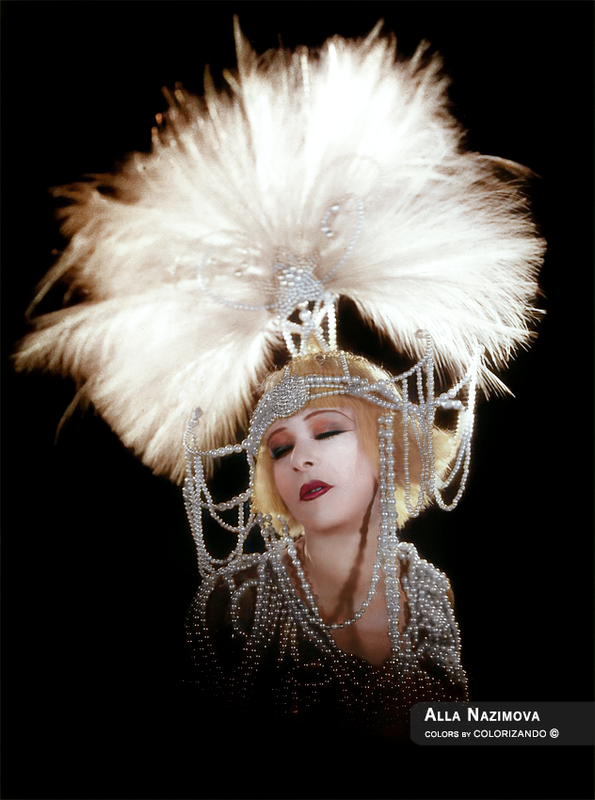
Theda Bara is known today as the first screen sex symbol. This is not really true as by the time she made her first starring role in 1915 there had already been several successful film sirens but while most of them have been forgotten by all except a few film historians, Theda remains. Staring out at us with her raccoon eyes, pale skin and pouting lips, clad in her chainmail bikini, teardrop earrings and festooned with skulls and snakes. She remains the patron saint of every bad girl from Elizabth Taylor's "Cleopatra" to Princess Leia and her gold bikini to any number of Goth Chicks, Suicide Girls and Vampires. Theda may not have even been the most beautiful of the starlets of the 1910's but that was not what she was selling. Audery Munson sold titillation, Clara Kimball Young and Evelyn Nesbitt sold scandal, Alla Namizova, Olga Petrova and Geraldine Farrar sold glamour and sophistication, Mary Miles Minter sold virginal innocence, Olive Thomas was the pretty, perky girl-next-door and Florence LaBadie, a truly timeless beauty, was a wholesome, stunning, girl across the street. But Theda didn't really sell beauty or glamour, she sold danger. And that was the sexiest of them all. At least until audiences decided she wasn't scary anymore.

The archetype of the female seductress luring men to their doom is as old as the sirens and harpies of Hellenic myths  to the Biblical Eve, Bathsheba, Jezebel and Salome to actual historical figures like Cleopatra, Messalina and Renaissance figure Lucrezia Borgia and has always been celebrated in art and literature, especially in the Romantic Era. However the Vamp was a specific product of Victorian Era Britain and America where the prim and proper Victorians existed alongside the Pre-Raphaelite painters of the 1850's, Gothic and Sensation writers of the 1870's & 80's and early Art Nouveau schools of the Gay Nineties. By that time Bram Stoker's 1897 novel and later play "Dracula" gave the name "Vamp" to describe a predatory person who sucks the life from it's victim and then discards them. Stoker's original Dracula was not initially seen in sexual terms, even by Stoker who described him as a repulsive, grey, dried-out, rat-like figure closer to Max Schreck's alien Nosferatu than Bela Lugosi or Christopher Lee's coldly suave Dracula. But others swiftly picked up on the sexual themes and possibilities of the vampires need to feed and hypnotic powers. And while Dracula himself was obviously male there was no reason there couldn't be female vampires and indeed the novel did have them in the form of Dracula's Brides. While they were minor characters who only showed up for one scene, Dracula's harem inspired artists and even poet Rudyard Kipling, the normally respectable voice of the Anglo Imperialist establishment to pen an ode "The Vampire" to them thus popularizing the term.
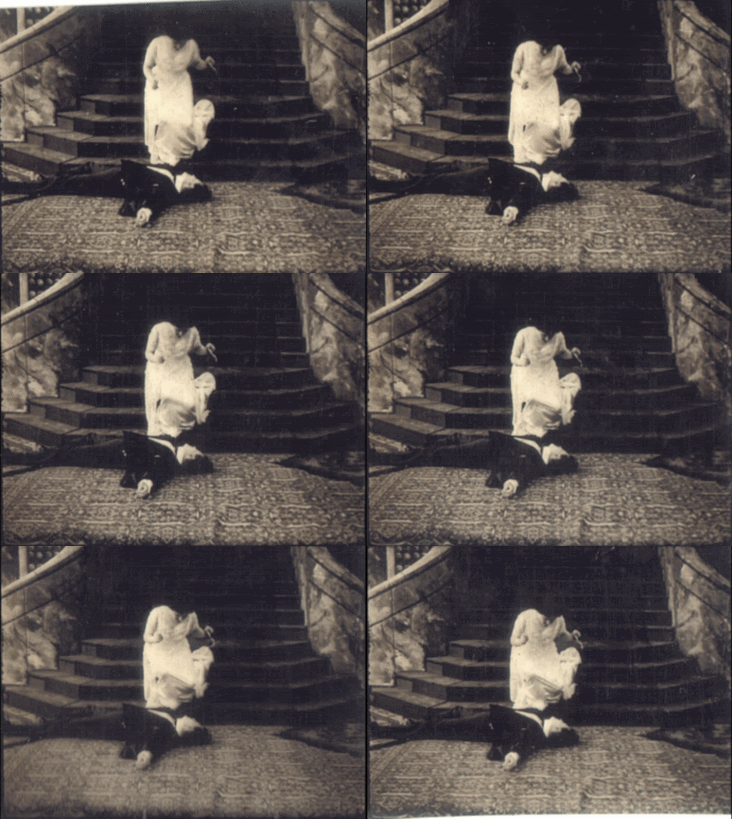
Imageproxy

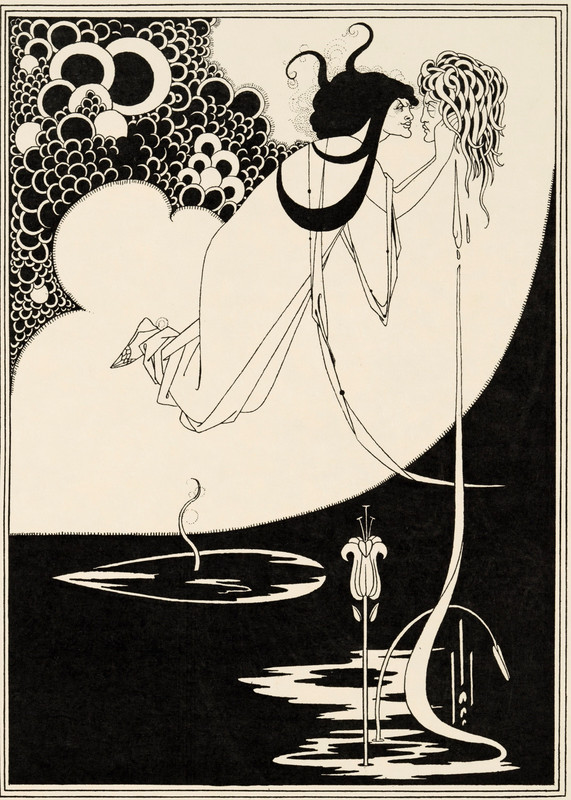
Coincidentally the Victorians also became fascinated with Classical and Biblical figures like Cleopatra and especially Salome who was championed by the likes of writer Oscar Wilde, who wrote a scandalous play based on her which was illustrated by the always provocative artist Aubrey Beardsley and made into an opera by the German Richard Strauss and then a ballet by the Russian Mikhail Fokine. The often banned play had all the elements for scandal; sex, murder and revealing costumes while at the same time winking at Victorian morality by having Salome get her comeupance at the end. Plus as it was actually a Biblical story it could be presented as upholding Victorian morality while at the same time flouting it. "Salome" also had another ingredient of the Vamp character; exoticism. The Vamp was always seen as a foreign presence, mysterious and thus both enticing and threatening; Salome, Cleopatra, Messalina, Jezebel, Bathsheba and Boudicca were all figures from the pre-Christian world and thus from it's morality and could also be presented in revealing costumes that no Victorian woman would ever wear. Besides these ancient figures even contemporary women could be Vamps if they were sufficiently foriegn enough to be exotic. Belly Dancing Muslims from Turkey, Persia, Egypt and Arabia (who could also conjure up images of the harem), Asians from China, Japan and Java, Gypsies (who were also considered to have magical powers), Native Americans, oddly white skinned African Princesses and hot-blooded Latin Women or Slavic Princesses could all be Vamps. Even Anglo white women could be Vamps as long as they dressed in a suitably "exotic" and sinful way.
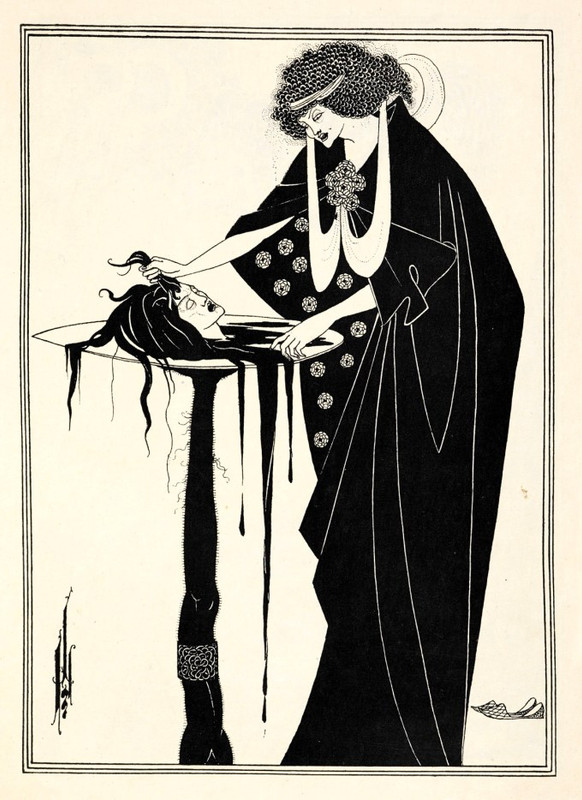
salome-beardsley13
SALOME BY AUBREY BEARDSLEY

Salome was the most popular of these Vamps and would be played on stage originally by French actress Lina Munte who was actually well into her forties and rather matronly but she retired from the stage for health reasons and died in 1909 missing the chance to make any films. Salome was soon taken up by more obviously sexualized and scandalous figures including Mata Hari (who incorporated Salome's "Dance Of The Seven Veils" into her act) and Maud Allen. Mata Hari's story is well known but Maud Allan was perhaps a more interesting and influential figure to our story. Born in staid Toronto, Canada in 1873 as Beulah Maud Durrant she moved while still a child with her family to San Francisco where she made a living as a music teacher and illustrator. However after her older brother Theo Durrant was executed for raping and murdering two women in 1898 she would change her name and move to Europe where she took up dance in spite of having no formal training. She picked up on the Salome character and developed an act based on the Dance Of The Seven Veils and the severed head of Jakkonen along with a skimpy costume that had a probably not coincidental appearance to that of Mata Hari. She performed throughout Europe including in Britain in spite of the fact that the Wilde play "Salome" had actually been banned (she got around the ban by only performing dance routines rather than the full play, with the blessings of the Wilde estate). Besides causing a stir with her suggestive dancing and costume, which like Mata Hari she promoted with a series of racy postcards, she caused much tut-tutting with rumours of her own sexuality and support of women's suffrage. While Mata Hari and Maud Allan were both Edwardian sex symbols with a similar appearance and played similar characters Allan was a more provactive figure and while she avoided Mata Hari's tragic fate, World War One would destroy her too. Allan's downfall was brought about by an MP named Noel Pemberton Billing, a type of figure well-known to us today; a demagogue politician using jingoism and wild conspiracy theories, who published article in his own magazine in 1918 claiming among other things that there was a secret cabal of Jews, Socialists, immigrants, lesbians and pedophiles plotting to destroy Britain and there was a "Black Book" listing their names which included the wife of Prime Minister Herbert Asquith, Oscar Wilde's publisher and Maud Allan whose dancing was meant to corrupt public morals. Allan sued Billing for libel and even though most legal observers thought him a raving fabulist she lost the case as her scandalous reputation, family history and flouting of the "Salome" ban crashed down on her and effectively ended her career. She would eventually return to America with her girlfriend where she wrote her memoirs, opened a dance school and after retiring from dance she returned to illustration to became draughtswoman in an wartime airplane factory dying in 1956 aged 83.
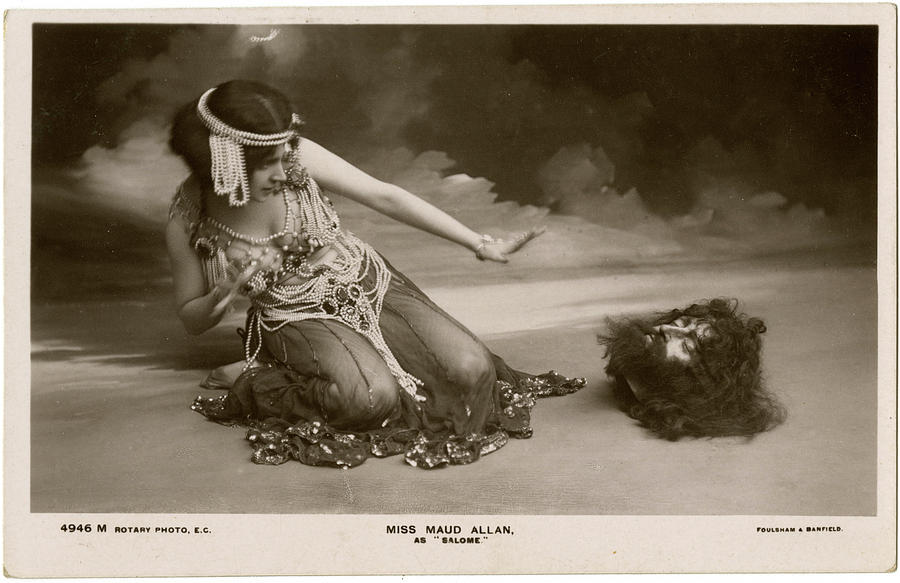
maud-allen-1873-1956-dancer-mary-evans-picture-library

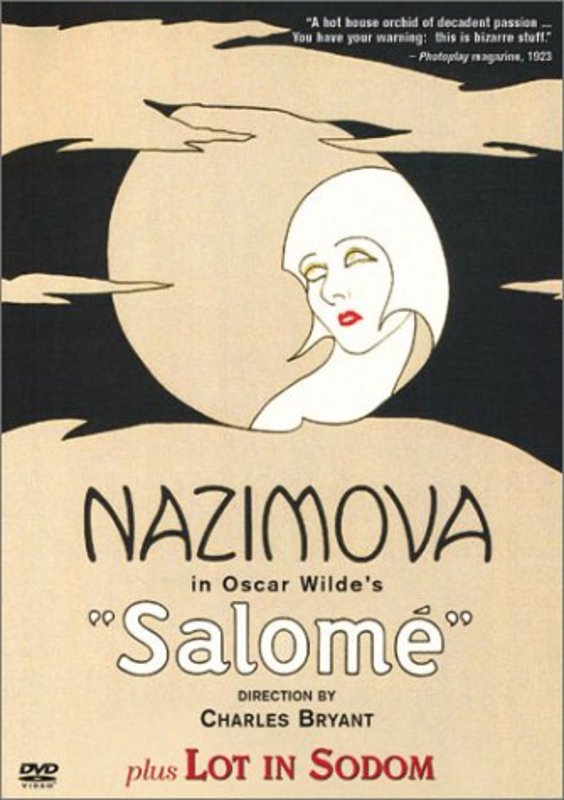
Unlike the older Lina Munte and Mata Hari, Maud Allan did manage to make at least one film in 1915 in "The Rug Maker's Daughter" a romantic adventure set in Ottoman Turkey in which she plays a dancing girl rescued from being married off to a harem and whisked off to America with Turkish assassins in hot pursuit. This film appears to be lost aside from a few stills and a plot synopsis which is a shame because it sounds like a real potboiler even aside from the significance of being Allan's only film aside from a few seconds in a pre-war newsreel in which she neither dances nor appears in costume. Salome would inevitably make her way to the screen as the greatest Vamp of all; Theda Bara.
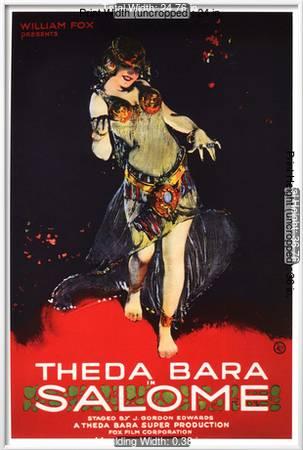
salome-theda-bara-poster-u-L-PXJBW627-CBWA

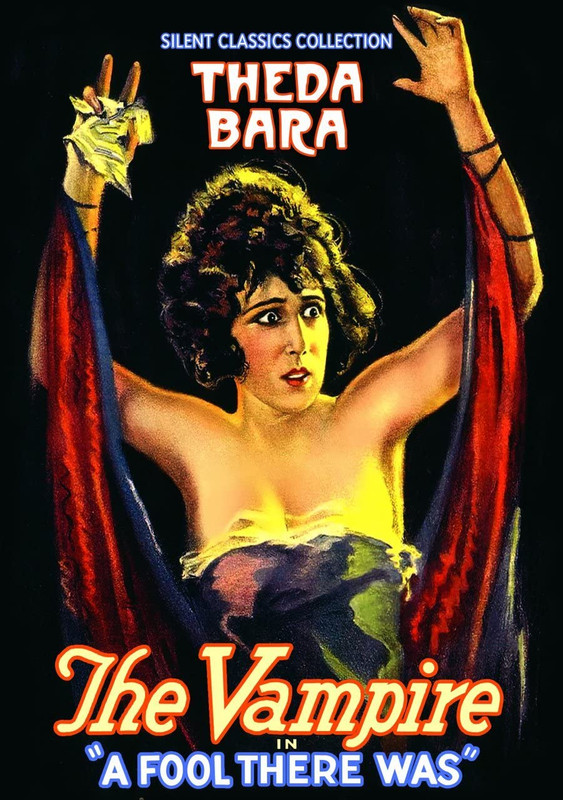
Mata Hari and Maud Allan were the real thing; independent women who had multiple affairs led scandalous lives and created their own personas. Theda Bara however was largely a creation of movie studio publicity. Theda (real name Theodosia Burr Goodman) was actually from a respectable middle-class Jewish family in Cincinnati, born in 1885, who had acted in a few small stage productions before getting a break on Broadway then was cast in a supporting role in a 1914 gangster movie "The Stain". This in turn got her cast the following year in "A Fool There Was" as The Vampire. This was not a Bram Stoker vampire however but a Vamp; a cynical, hedonistic gold-digger who seduces and destroys wealthy men for the sheer sadistic fun of it. This last factor, along with Theda's luxurious gowns and obvious stage presence made the film a success but what made it (and her) a sensation was how the studio marketed her.

To promote the film the studio produced an fantastical bio in which she was claimed as being "the daughter of an Arab sheik and a French woman, born in the Sahara." The studio also changed her name to Theda Bara which some clever sort at the studio discovered was an anagram for Arab Death but was most likely simply a shortening of her first name Theodosia and her middle name Burr, and claiming she was a mysterious figure from the Egypt who had studied the occult and had strange and possibly frightening power over men. Then they put on a press conference for which she was driven in a long white limo attended by muscle bound black "Nubian" guards. She arrived in full "Arab/Gypsy" costume and was ushered into a darkened room draped with heavy Persian rugs, beaded curtains, peacock feathers, hookah pipes and thick with burning incense where she reclined on luxurious cushions and answered questions from the skeptical press with cryptic jargon in a vaguely exotic accent.
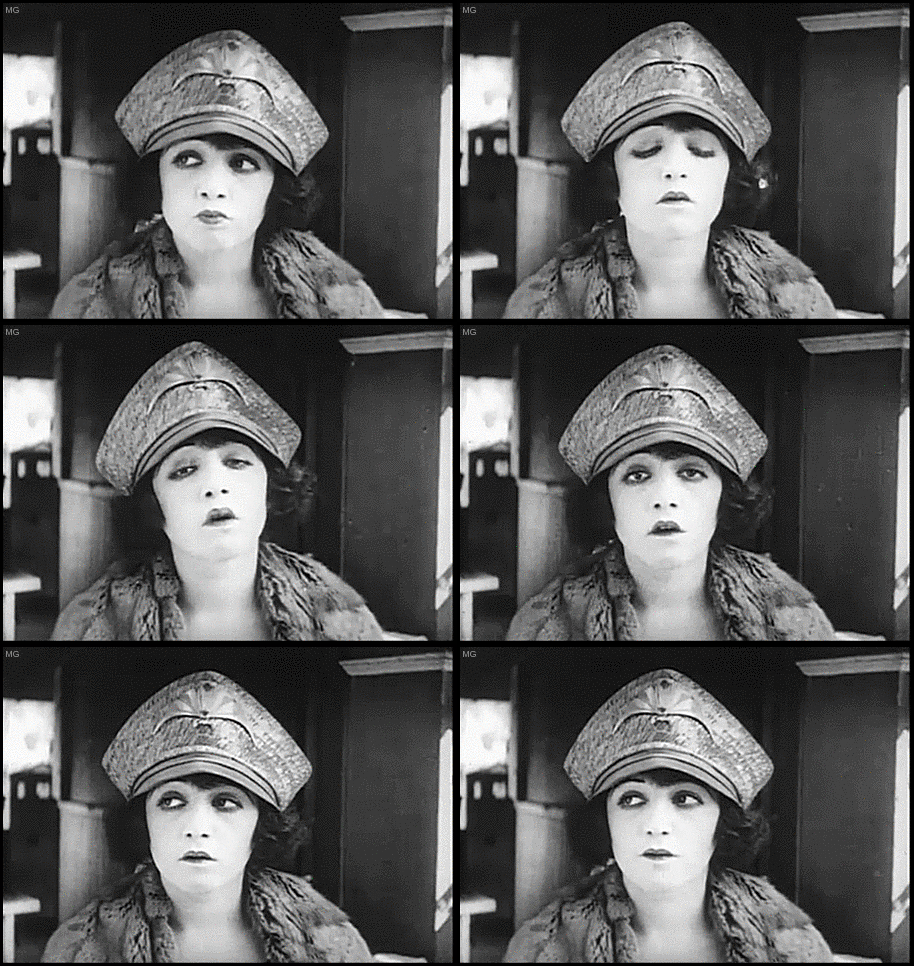
tumblr-mny9micn-Sa1qbcfcko1-500

Some reporters saw through the act and a few on the Broadway Beat had even known that Theda was a perfectly respectable middle-class American girl with some previous roles to her credit yet they all seem to have happily played along with the premise and the papers ran with the story of Evil Theda the Vamp. Other actresses had used similar stunts; imperious Olga Petrova portrayed herself as Russian sophisticate when she was actually a British actress named Muriel Harding while the All-American-Girl Louise Lovely was actually an Australian named Nellie Carbasse, but never had such a ruse been so over the top and carried this far. The fact that her few previous gigs on stage and in one film had been as minor supporting roles even worked in her favour as a more prominent actress would not have been able to pull off this elaborate persona. Ironically given this build-up and how her persona would progress in her first starring role she was actually not as wildly over-the-top as some of her later iconic roles. But that does not mean she didn't tear up the screen.
71eltg-So-YOL-AC-SL1278

"A FOOL THERE WAS" (1915);


Directed by Frank Powell

Theda Bara ~ The Vamp
Edward Jose ~ John Schuyler, The Husband
Mabel Frenyear ~ Kate Schuyler, The Wife
May Allison ~ The Wife's Sister
Clifford Bruce ~ Tom, The Friend & May's Fiancee
Victor Benoit ~ Reginald Parmalee, The Vamp's Lover
Frank Powell ~ The Doctor
Minna Gale ~ The Doctor's Wife
Runa Hodges ~ The Child

Plot Synopsis (Spoiler alert)
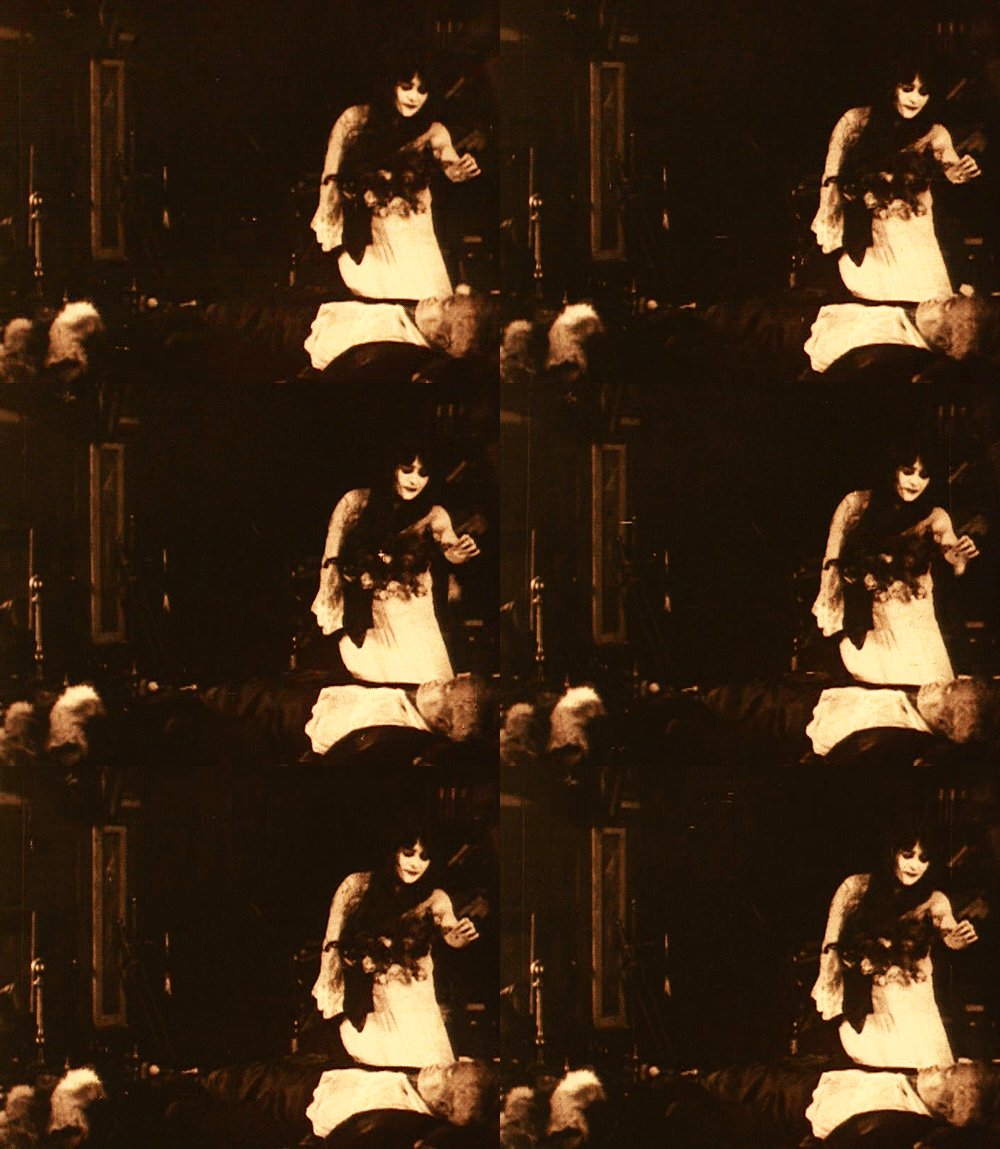
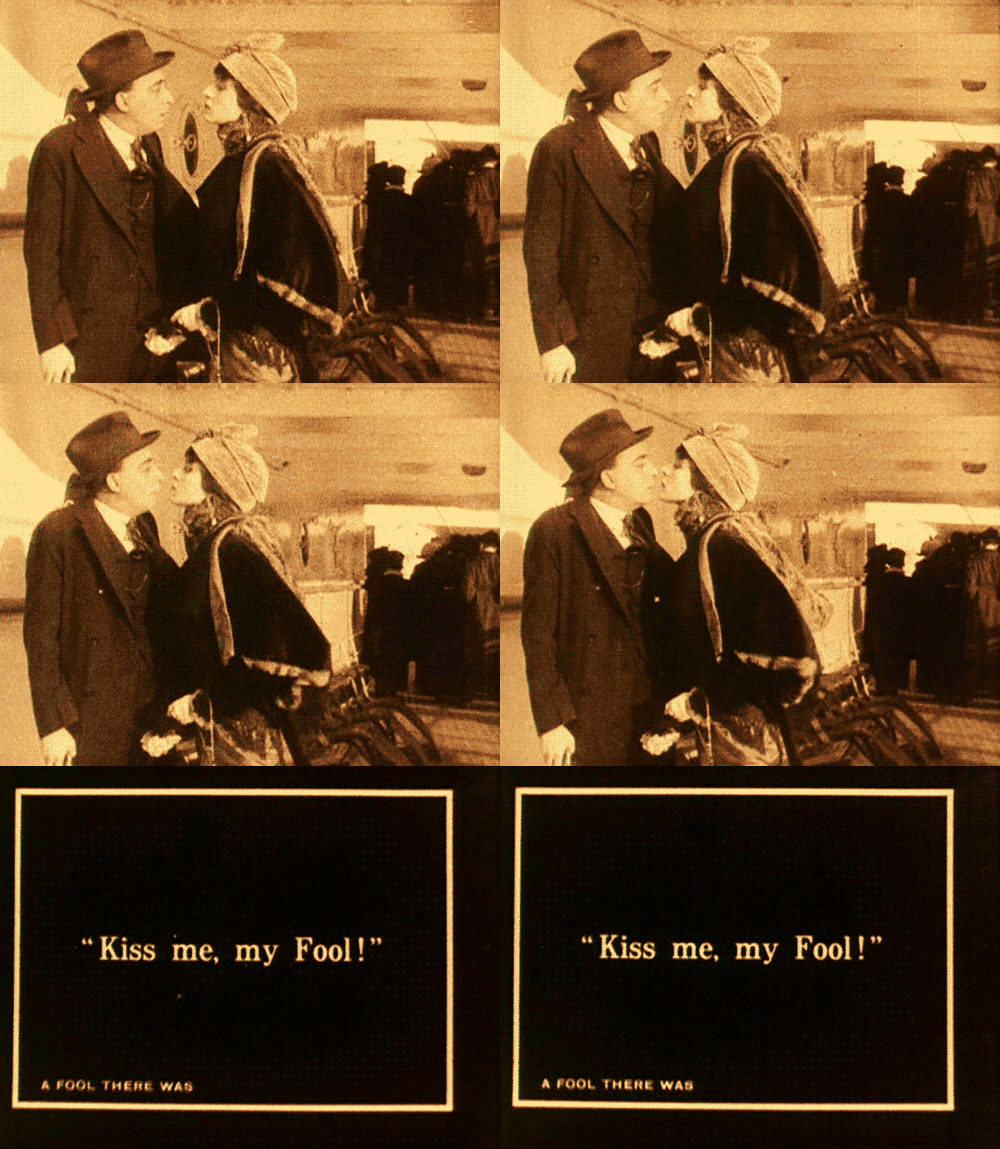
After a poem intro the cast are introduced (note since most of the characters are unnamed we will use the actors names for our purposes). John Schuyler is a wealthy lawyer, happy and married with a young daughter staying at a luxurious yachting club. Theda is also living with her rich lover Parmalee who is a drunk. She runs into Edward's wife who snubs her, Theda is insulted and vows revenge. Schuyler is appointed as Special Representative to Britain but before he can go his sister-in-law May is injured in a car accident and his wife Kate must stay behind to nurse her. Theda learns from the papers of Schuyler's appointment. She is tired of drunken Parmalee and decides to leave him and seduce Schuyler. Parmalee discovers her leaving and confronts her but she lies and then steals his wallet. The next day Schuyler leaves on a ship to Europe. Parmalee discovers Theda is gone after him and goes after her in a rage. At the docks Theda runs into a shabby man working there who reveals he is a former lover and blames her for destroying his fortune and ruining his life. She laughs and has the policeman run him off. Parmalee arrives at the docks and runs into the shabby man who tells him Theda is on the ship. Parmalee pulls a gun and confronts her but she easily brushes him off saying 'Kiss Me My Fool" and he backs down then shoots himself. Tom has arrived to see Schuyler off and comes upon the bloodstained scene of the shooting and is told that Theda goaded Parmalee into shooting himself then walked away laughing. Theda spots Schuyler and after his family leaves sets out to meet him flashing a bit of ankle. He gives her a flower his daughter gave him as a farewell gift and sits with her on deck. Two months later while Kate is still taking care of May who is still recovering Schuyler is now living with Theda in Italy where they lounge around in a luxury villa and he has taken to drink. Schuyler gets a letter from Kate which Theda tears up in front of him and he tries to strangle her but she embraces him and he backs down. A friend of Schuyler's, Frank, a Doctor and his Fiancee Minna spot Schuyler and Theda in Italy in an embrace, scandalized they leave. The next day the story is in the papers which an upset May reads and tells Tom. Schuyler and Theda are at a reception where they are snubbed by the other guests, he is depressed by this but she is defiant and they leave. May and Tom confront Schuyler's secretary for information on what Schuyler and Theda are up to blasting them for covering up the affair. Schuyler writes a telegram promising to leave Theda and return home but Theda finds the letter and tosses it in the fire in front of him and he backs down. May and Tom confront Kate and tell her about the affair. Shuyler gets a letter from the US government telling him due to the scandal he has been fired but he tosses the letter in the fire and returns to Theda. Daughter Ruda prays for his return. Schuyler and Theda return to America where they are confronted by Tom and he moves her into his townhouse with his servants while Kate stays at the summer home. The servants quit rather than work for Theda. Later while driving downtown Schuyler and Theda pass by Kate and Ruda in another car. Ruda calls to him but he turns away and they drive on. Tom proposes to May and she accepts. Schuyler is increasingly depressed and worn out but Theda keeps feeding him drinks and throws parties. She is however getting impatient with his dissipation. May and Tom hold a meeting with Kate and a lawyer to convince Kate to divoce Schuyler but she refuses and Tom supports her. Six months later Schuyler is a sad decrepit drunk living alone as Theda has left him. His Secretary confronts him and quits. He tells Tom that Theda has left Schuyler. Theda is now living at another luxury hotel where she throws lavish parties with a new and younger lover. Kate is told of Schuyler's state and decides to go to him. Theda is told and goes there as well. Kate arrives with Tom and begs Schuyler, who is now old, grey and frail, to return home and he agrees but Theda arrives and kisses him and he falls at her feet. Kate leaves in tears. A week later as Kate and Ruda again pray for his return a drunken Schuyler finds Theda at one of her parties with her new younger lover and angrily throws him and the guests out and threatens Theda. Kate decides to bring Ruda to confront Schuyler at the townhouse and brings Tom. Schuyler agrees to return home but Theda is still there and again lures him back. Kate takes ruda and leaves with Tom. Schuyler sinks further into dissipation and has visions of his happy family and the death of Parmalee. He collapses and dies while Theda kneels over him laughing and pelting him with flower petals. Finis.  
tumblr-f48733cf9ae1b6e7bfafdf313603d6b4-e5851d61-500

====================================================

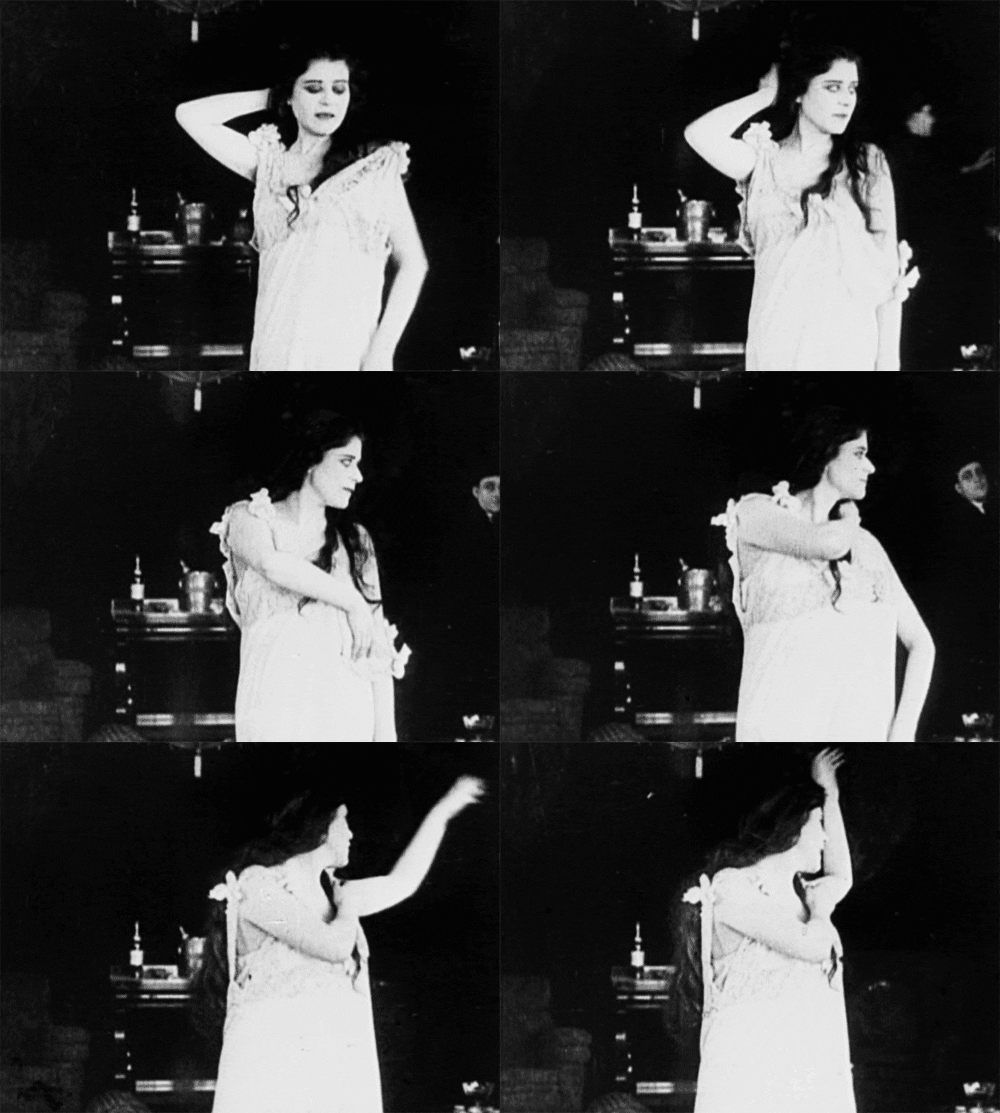
This film is actually quite conventional and if it were not for Theda would have been long forgotten. The direction is efficient but pedestrian as is most of the acting and the story is simplistic and unrealistic. There are no shots here that really stick out in the mind other than a few of Theda. Director Frank Powell was a Canadian born journeyman who had started in theatre and already had a long career from the start of the commercial film era as an actor, writer and director working with the likes of DW Griffith and Mary Pickford and had already made over sixty films for Biograph Studios (many of them shorts of course). Powell had actually discovered Theda and cast her in a supporting role in a gangster film "The Stain". It was Powell who then spotted her talent and presence and cast her as the lead role in his next major film, a version of the successful stage play "A Fool There Was". That role had already been played on stage by Minna Gale who Powell gave a cameo in the film as the Doctor's Wife (Powell himself played the Doctor) so he could have easily given the role to Gale but Powell undoubtably figured that the fact that Theda was largely unknown would make it possible to build and entire persona around her and so it was. Theda does indeed have the presence that Powell spotted in spite of having less film and stage experience than the rest of the cast. Minna Gale (1869-1944), then 45 and perhaps now too old for the role, had been a popular stage actress since the 1880's including appearing in Shakespere plays with Edwin Booth (brother of John Wilkes Booth) one of America's greatest stage actors of the Victorian Era. Mable Frenyear (1880-1931) was a leading lady on Broadway since 1899 although this was her first film. May Allison (1890-1991) had less experience as this was also her first film although she also had appeared on Broadway. Edward Jose (1865-1930) was a Belgian actor with a stage career in Europe before coming to America where he appeared in films including "The Perils Of Pauline" as well as Powell's earlier film with Theda "The Stain". Clifford Bruce (1885-1919) was, like Powell, a Canadian who had also appeared in "The Perils Of Pauline". Even child actor Ruda Hodges already had an extensive list of film credits. Yet Theda easily dominates every time she is on screen. Despite modern assumptions about her likely acting style she is actually not wildly over-the-top, avoiding the sort of stagy emoting that some of the male actors here rely on. Edward Jose and Victor Benoit engage in plenty of the sort of cliche eye-rolling, teeth gnashing, chest clutching and clothes rending that modern audiences find campy but Theda actually does not. She relies instead on an imperious presence, a confident self-possession and flashy wardrobe much of which she apparently designed herself in all of her films. Theda's status as the first modern film sex symbol was set with this film but her modern status is based instead on the film stills from her exotic epics as Cleopatra and Salome. To modern eyes Theda here is arguably not necessarily more attractive than Mabel Frenyear or May Allison and her appeal is mostly due to her strong presence and her wardrobe. Unlike her more notorious scantily clad pin-up costumes of a few years later (for which she seems to have lost a few pounds) she is mostly dressed in full length robes with feathered hats and jewels leading to the scene where she seduces Schuyler by (gasp) showing a flash of ankle. If there was a single scene to show that this film is firmly rooted in the pre-Jazz age Edwardian Era that would be it. The outfit she wears in her first scenes with it's flashy striped slacks is actually shockingly modern for 1915 but after that her clothes are more Edwardian Bohemian. Far more shocking would have been scenes where Theda is shown in a nightie (sometimes falling off one shoulder) with her hair down and uncombed. This last look would have been scandalous to proper Edwardians as no halfways respectable woman would ever be shown with her hair down, in fact even Theda herself is never actually shown in public that way. As none of Theda's other classic films have survived we can't really know just how she acted in them but here she is actually not that campy and is relatively restrained and natural in her style making an unbelievable character somewhat real. This film is however not meant to be taken as realistic, it is instead a Victorian fable. 
giphy

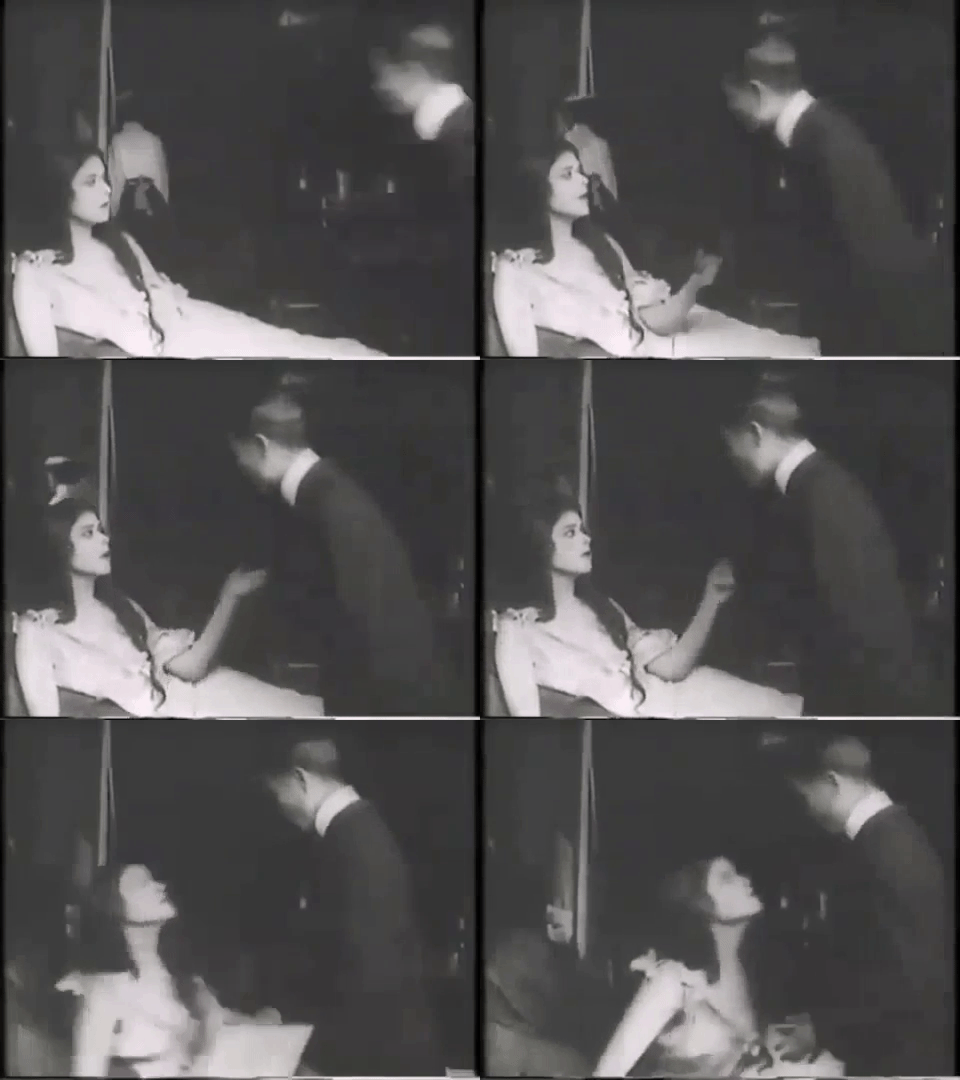
One of the things that made the film stand out was it's lack of a conventional moral, unlike Salome she doesn't even get her comeuppance at the end and is free to sin again. But that doesn't mean there was no moral though. The Vamp was not a realistic character that people were supposed to identify with, she was an outsider who tempted and corrupted men who strayed from their conventional bourgeois married lives. She seduced and ruined men just for the Hell of it and then sometimes (although certainly not always as here) got her comeuppance at the end or reformed. Whether she reformed or not was not really the point. A conservative audience might take some satisfaction from her being reformed to conform with their conventional attitudes but the real point of the character was to frighten the men to stay at home. This was a common fear of the Victorians as the Industrial Age took steam and the longer working hours, men working outside their immediate families and communities, sometimes with immigrants from strange lands were seen as destabilizing the traditional family. It's probably not a coincidence either that the era of the Vamp coincided with a change in women's roles as more entered the workforce and sought the right to vote and presenting the Vamp as an exotic fantasy figure who might seduce and ruin men who lacked the moral fibre to stay with their wives but would not challenge gender roles in any other way, provided an escapist catharsis along with its moral lesson. In this case it was actually better for the film's moral that the Vamp is still out there, on the prowl. Likewise it's also more useful to have the film set in the present rather than the distant past as with Cleopatra or Salome making her a present menace who could be stalking your man even now!
tumblr-pefnfsz-SJb1ugv7b3o1-500

Today Theda is remembered as a sex symbol, and she is here, but besides sex there is another equally important destructive force in the film; alchohol. It has to be remembered that at the time the play was staged and the film was made (in 1909 & 1915) the campaign for prohibition in America was reaching it's apex with the 18th amendment banning trade in alcohol passing in 1919. The prohibition campaign was not a fringe Christian conservative movement but completely mainstream and fear of alcohol runs throughout the film. The male characters ruined by Theda are always shown as staggering, broken down drunks and once Scuyler is seduced by Theda he is always shown that way and frequently either drinking or being fed drinks by Theda, who oddly never seems to drink herself. The other characters are never shown drinking aside from the guests at her drunken parties at which Theda seems to be the only person who is sober and in control. Theda does use sex to lure her prey in but then it is the alcohol that destroys them, reducing them to shambling ruins within a shockingly short time. Schuyler goes from a swaggering if middle-aged authority figure to a decrepit grey haired wreck in a state of complete mental and physical collapse within just a few months. Which begs the question as to what exactly is she feeding him? Absinthe presumably, but no amount of alcohol could realistically destroy a man so quickly and thoroughly. This film constantly draws a comparison between the broken down life of debauchery Schuyler lives with Theda and the happy wholesome family he left behind. There are repeated scenes of his adorable daughter (with the intertitle helpfully informs us is "Innocent") and his long suffering wife and if that was too subtle the cute moppet is also shown literally preying for his return in a scene shot in a moonstruck silhouette for maximum maudlin effect. If that's still too subtle after we establish the wholesome family unit there is a scene of the whole family staring into a sunset as the words "The Sunset Of Happiness" pop up on the intertitle card. Then the night before Schuyler meets Theda there is yet another weather based omen in the form of a thunder and lightning storm in a film that does not otherwise have any noticeable weather. This film should not however be seen as merely a melodrama but a temperance lecture so while it is obvious to compare this film to superficailly similar films with a wanton woman like "Camille", "Carmen'' (both of whom Theda also played), the Lousie Brooks film "Pandora's Box" or Marlene Dietrich's "The Blue Angel" this film actually has a lot more in common with "Reefer Madness", albeit with more intellectual pretensions and a much better cast.
Sarcastic-Passionate-Feline-size-restricted

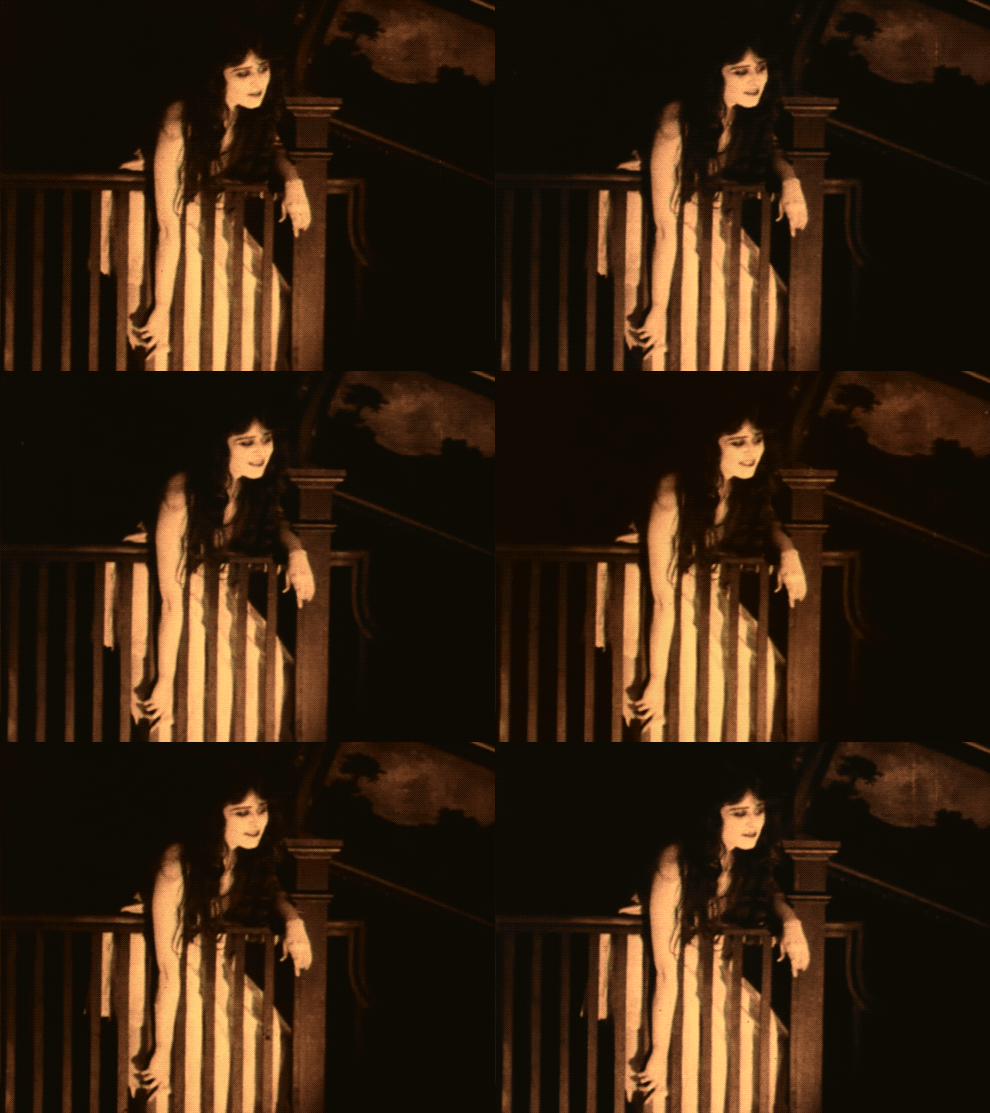
Another different theme in this film that defines it as not being based in reality is one of implied supernatural powers of Theda's Vampire who is explained as having some unexplained power to drain the life-force from men as a sort of Psychic Vampire (note the film doesn't actually say this but it's implied in the play and especially the promotional buzz around it) hence the term "Vampire". The fact that her character is never given a name also makes her more of a magical figure than a real woman, even a wanton one. She is introduced in a scene in which she admires a rose only to rip its head off and laugh. This is quickly contrasted with a scene in which the daughter pricks her finger on a rose and her mother kisses it better. Once on the ship Theda's vampire powers are shown when she deliberately places her deck chair over the bloodstain left by Parmalee's suicide. It is also implied that she may have some sort of ageless quality (Theda was actually 29 at the time) when she is confronted by her previous lover, now a broken down tramp, who mentions yet another previous destroyed ex lover. By the end of the film as Schuyler is firmly ensnared he is shown trapped behind a staircase banister as if behind bars. In a previous scene Theda is also shown behind those banister rails but she is shown confidently leaning over with her hair down as if ready to pounce. In the final scene as he lays dying she leans over him laughing with her long dark hair trailing down looking perfectly like a vampire or even better a succubus.
tumblr-8392c2313641f437c3442f50a6626a7c-e37705ef-500

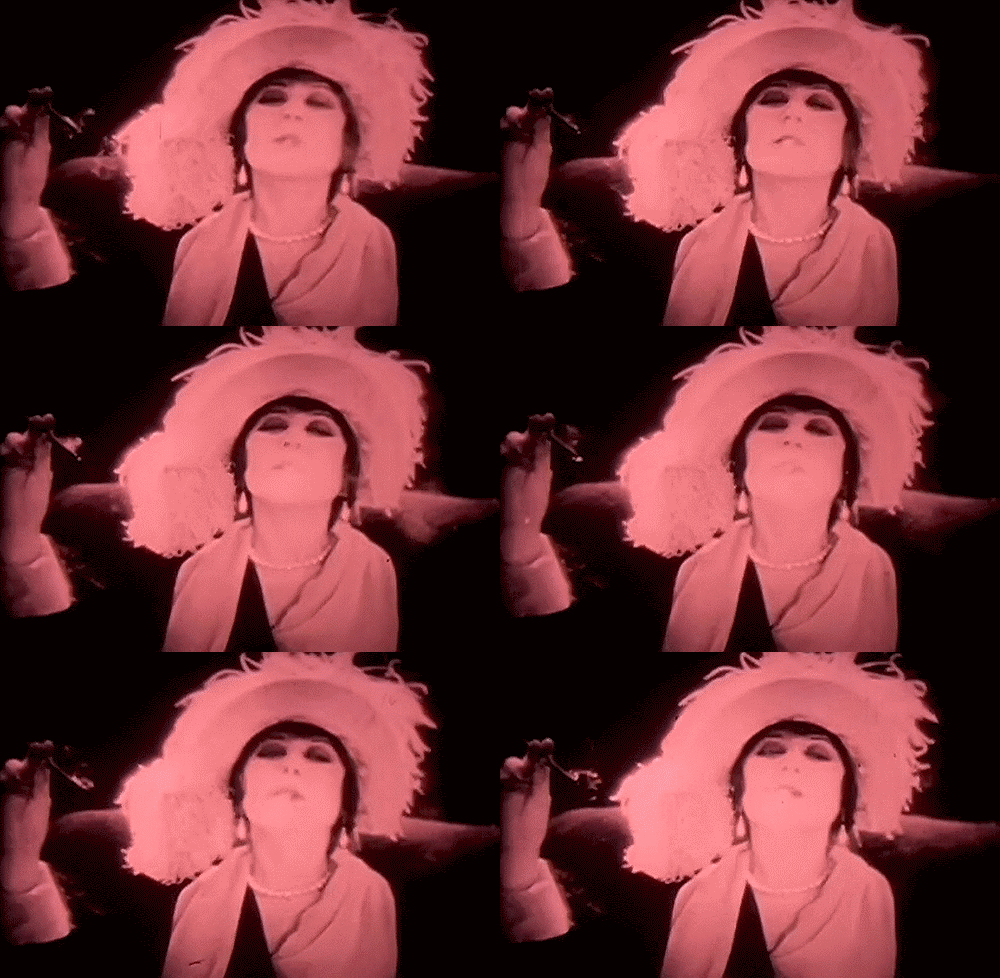
The film was an immediate smash and established Theda as a star in a persona which she proceeded to run with. If however the Vamp had been a cynical marketing ploy Theda took the character to heart. She was mocked at the time for taking herself too seriously and is largely seen that way today but showing some self awareness she understood how the character served as a cautionary tale, especially for men saying "I will continue doing vampires as long as people sin." She also noticed that her character was seen somewhat differently by women who could live vicariously through her. Noting that much of her fan mail came from such women she explained; "Women are my greatest fans because they see in my Vampire the avenging spirit of all their unavenged wrongs they have lacked the courage or willpower to redress all their grievances. And they give me the greatest compliment;"I know I should sympathize with the wife but I do not". I am în efect a feministe"
tumblr-n87e7b-Atcb1qiwrzoo2-500

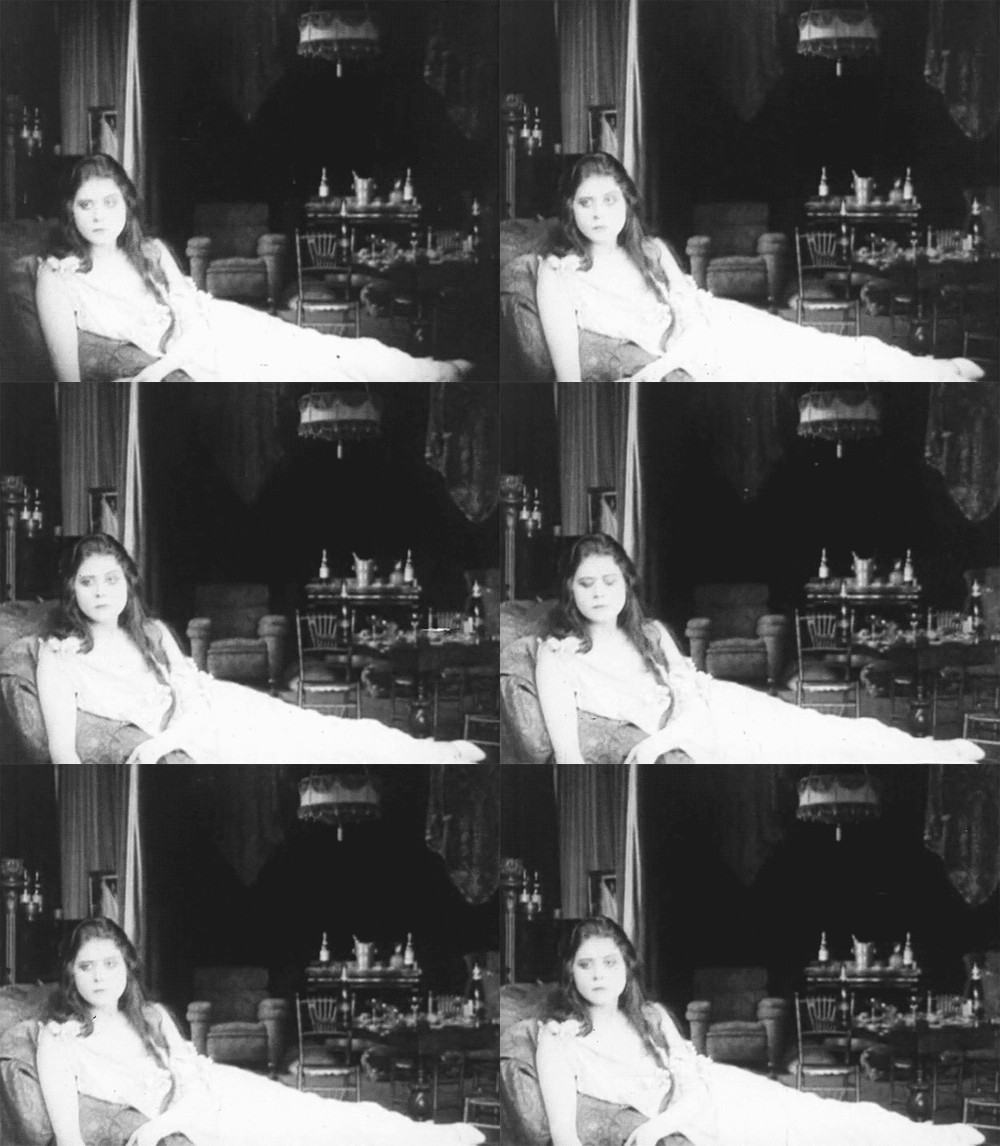
But while Theda herself was obviously fully aware of her artifice she also embraced it. Staying in character off screen, legally changing her name and taking an avid interest in tarot cards and fortune telling. She also designed many of her own elaborate costumes. Soon enough she was playing Vamp roles like Cleopatra, Salome and Carmen while starring in movies with titles like "Sin", "The Forbidden Path", "The Vixen", "The Eternal Sapho", "The She Devil" and "When A Woman Sins" and posing for photo shoots always in full regalia, usually accompanied by snakes or skulls or both. She became the archetypal Vamp, a role she plays to this day. There is a problem in accurately assessing her films and talents because even though she made over forty films only three of her starring roles have actually survived; "A Fool There Was" (1915), "East Lynne" (1916) and "An Unchastened Woman" (1925) along with her first film "The Stain" (in which she only plays a minor role) and a comedy short. All of the rest of her films were destroyed in a studio fire in 1937. This means to evaluate the rest of her film catalogue we are left with a number of titles, plot descriptions, posters and lobby cards, stills and critical reviews. Some of her films were also based on well known plays (including "A Fool There Was") and previous films or have subsequent films we can compare them to meaning we at least know their subject matter. These include the aforementioned "Salome" which had been both a play with Maude Adams (among others) and a fairly crude 1907 Italian film starring one Vittoria Lepanto and would be the subject of an oddly beautiful 1923 version by Alla Namizova. "Cleopatra" (1917) had already been played by Florence Lawrence (1908) and a successful 1912 film by Helen Gardner and would be remade as a sound version by Claudette Colbert and infamously by Elizabeth Taylor. "Carmen" (1915) was based on the opera and had been a successful film by singer Geraldine Farrar that same year. "Lady Audley's Secret" (1915) was an 1860's scandalous English novel. "The Eternal Sapho" (1916) was based on a 1881 French novel. "The Darling Of Paris" was based on the Esmerelda character from "The Hunchback Of Notre Dame" which had already been the subject of a 1911 French film and would be famously remade as the 1923 Lon Chaney classic and the 1939 Charles Laughton remake. "Camille" (1917) was based on an Alexandre Dumas novel and had been made as a play starring the finest actresses of the day; Sarah Bernhardt and Eleanora Duse and then a film several times in Europe and once in America starring Clara Kimball Young and would later be remade by Alla Namizova, Pola Negri, Erna Morena and eventually a sound version with Greta Garbo. "Madame du Barry (1917) was another Dumas novel later filmed with Pola Negri. Theda also did a version of "Romeo And Juliet" in 1916. She was hardly the only Vamp of the time with the competitors like Alla Namizova, Louise Glaum, Barbara La Marr, Virginia Pearson and Geraldine Farrar vamping up the screen while in Europe while in Europe the likes of Asta Neilsen, Pola Negri, Erna Morena, Lya De Putti and Fern Andra were doing likewise. But none of them played the role as often or with greater success than Theda. And while the likes of Alla Namizova, Pola Negri, Asta Neilsen and Erna Morena were able to branch out into different characters, Theda was never able to.
tumblr-m1w16jmj7b1qaphz7o1-500

The usual assessment of Theda is that she basically kept playing Vamp characters until people got tired of them and her. However taking another look at her catalogue shows a slightly more complex story. It is true that the likes of Cleopatra, Salome and Carmen could be considered Vamps and film titles like "Sin", "The Forbidden Path", "The Vixen", "The Eternal Sapho", "The She Devil", "When A Woman Sins", "The Wolf Woman", "The Siren's Song", "The Lure Of Ambition", "Destruction" and "The Serpent" are probably self-explanatory. However Camille, while a courtesan, is more of a complex and tragic figure and Esmeralda from "Hunchback Of Notre Dame" and Juliet from "Romeo And Juliet" are clearly not vamps. One of the ironies of the terrible state of her surviving film catalogue is that of her four surviving feature film starring roles only two, her first and last actually shows her playing the Vamp while her last was a comedy Vamp parody. The other shows her attempts to diversify somewhat playing another character; the more tragic and put-upon figure of the wronged woman.
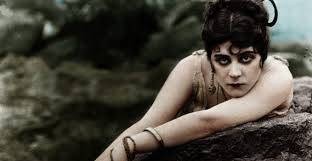
images-9

"EAST LYNNE" (1916);


Directed by

Cast;
Theda Bara ~ Lady Isabel Carlisle
Ben Deeley ~ Archibald Carlisle
Stuart Holmes ~ Captain Francis Levison
Claire Whitney ~ Barbara Hare
William H Tooker ~ Judge Hare, Barbara's Father
Stanhope Wheatcroft as Richard Hare
Emily Fitzroy as Cornelia

Plot Summary (spoiler alert);

Fredrick Severn (Frank Norcross) is an ill-tempered old rich crank in poor health, Archibald Carlyle (Ben Deely) is a young lawyer. Carlyle visits Severn who informs him he wishes to sell his estate of East Lynne to escape his creditors which Archibald wishes to buy. Francis Levinson (Stuart Holmes) is a drunken wastrel living off his uncle's allowance from which he is about to be cut-off. Isabel Severn is the single daughter of Fredrick who Archibald is attracted to. Barbara Hare is in love with Archibald. Fredrick's Brother (H Evans) has a wife (Velma Whitman) who is in turn attracted to Francis. Archibald tells Barbara about his visit to Frank Severn and she decides to go visit East Lynne herself to talk to Isabelle when Francis and Velma arrive. Isabelle entertains them on the piano. Archibald proposes marriage to Isabelle in the presence of Barbara who is jealous. Isabelle at first delays then accepts his proposal. Velma congratulates them but Francis notices Barbara's unhappiness. Several years later Isabelle and Archibald are married with two young children living happily at East Lynne. Judge Hare (William Tooker) is the father of Barbara and along with his wife (Eugenie Woodward) along with their son Richard (Stanhope Wheatcroft) who is a callow young man who has been associating with the Hallijohns, a poor family living in the woods whose daughter Afr (Ethel Fleming) he is attracted to much to the Judge's disapproval. The Judge visits Mr Hallijohn (James O'Connor) and confronts him to say that he will not allow Richard to marry Afy. Hallijohn is insulted, telling Afy she may not see Richard anymore. Later Richard goes out to deliver a hunting rifle to a friend and will cross through the woods where the Hallijohns live. Francis is also travelling through the woods and visits Afy who he has been carrying on an affair with. Richard calls upon Afy while Francis is there and she sends him away and he is so upset he leaves behind the gun. Hallijohn returns and finds both the gun and Francis with Afy. As Francis leaves Hallijohn follows with the gun and confronts him resulting in a fight in which Francis shoots Hallijohn dead and flees. This has been witnessed by Otway Bethel who then blackmails Francis for his silence. Richard and Afy both hear the gunshot and rush to the scene. Richard arrives first and picks up the gun but panics and runs away when Afy arrives seeing him. Otway shows up and blames Richard for the shooting. Later a Coroner's Inquest presided over by Judge Hare inquest finds Richard Hare guilty in absentia and a warrant for his arrest is issued. Meanwhile Richard has fled to the city. Judge Hare disowns his son and vows to have him captured in spite of his family's pleas. Francis reads about all this from the news, he is also inheriting the estate from his now dead uncle and returns to visit Archibald who is his lawyer to settle the estate. Living with the Carlyles is his sister Cornelia (Emily Fitzroy), a dour older spinster. Richard, still on the run, sneaks back home to visit his now sick mother. Barbara spots him and warns him away. Richard hides in a barn and Barbara goes to Archibald for help when Francis overhears. He goes to Isabelle and tells her that Archibald and Barbara are having an affair. She covertly sees the two of them as Archibald comforting Barbara and decides Francis is telling the truth. That evening Barbara sends a note to Archibald asking him to meet her and before going to find her Isabelle angrily confronts him and storms out. Isabelle then finds the note from Barbara. Francis tells her this confirms the affair and takes her to spy on Archibald. Meanwhile Barbara has brought her brother Richard to meet Archibald who tells him to hide in a guest house at East Lynne. Isabelle once again sees Archibald and Barbara together and assumes the affair is real. Distraught, she returns to East Lynne but does not confront Archibald. The Carlyles are invited to an important reception. Elderly Mrs Hare is now dying and asking to see her son Richard and so Barbara calls Archibald to ask him to talk to the Judge and set up a meeting. Archibald then has to cancel going to the reception and sends Isabelle instead with Francis to accompany her. While Archibald distracts the Judge, Barbara sneaks Richard upstairs to greet his mother. Meanwhile Francis convinces Isabelle to run off with him. She writes a note to Archibald denouncing him and leaves both him and their children running off with Francis. Archibald returns home and finds the note. Months later as Isabelle is living with Francis, Archibald sues for divorce which is granted in the absence of Isabelle who Francis has not told about the divorce case. She finds out by reading a letter to him from a lawyer. She has had second thoughts and decides to leave Francis by enlisting as a missionary nurse serving abroad. She leaves on a train which derails and wrecks causing loss of life. Isabelle survives but switches identities with a woman who died A letter she wrote asking for forgiveness is found and sent to Archibald who isn told she is dead. Archibald mourns Isabelle but remarries Barbara while Francis hasn't bothered to look for Isabelle and quickly finds new younger girls. Isabelle spots a help wanted ad put in the paper by the new Carlyle couple to hire a governess for the two children  and decides to apply in disguise and is hired. She discovers their son is quite ill and in bed. Otway the blackmailer has read about Francis' inheritance and returns to shakedown Francis for more money. He is spotted by a detective who tails him to Francis's estate where he has been drinking heavily and having visions of the ghost of Halliwell. As Otway confronts him the detective overhears them confessing their crimes and arrests them both. Archibald's sister recognizes Isabelle and allows her to comfort her dying son. As the child dies she reveals herself. Archibald also witnesses this and as he does she collapses. She begs his forgiveness and he embraces her as she dies. Finis. 

========================================================
"East Lynne" was somewhat loosely adopted from a popular novel written in 1861 by Ellen Wood as part of another Victorian genre known as "Sensation Novels". These novels which started with "The Woman In White" (1859 by Wilkie Collins) and notable works included "The Moonstone" (Wilkie Collins, 1868), Lady Audley's Secret" (1862 by Mary Elizabeth Bradon), "Great Expectations" (1860 by Charles Dickens) and the unfinished "The Mystery Of Edwin Drood" (1870 by Dickens) and had an influence on writers like Robert Louis Stevenson, Thomas Hardy, Elizabeth Gaskell, Henry James, Oscar Wilde and Joseph Conrad. Sensation Novels were known for their complex plots full of adultery, murder, bigamy, rape, suicide, disapearences, double identities, secret marriages, insanity, amnesia, forgeries, gambled away inheritances, women locked away in asylums and the use of opium and absinthe. Sometimes all in the same novel. The plots were best described as labyrinthine and relied on unlikely coincidences to keep the plot moving. The stories were often originally printed as multi part serials that could run on for months later being republished as novels if they were successful enough in their first run. These novels did not usually have happy endings and while the guilty might get punished the innocent often did as well. Unlike the earlier Gothic Romances, Sensation Novels took place in modern Britain rather than exotic foreign or historical locales, featured characters who were middle or upper middle class rather than aristocrats and usually avoided magic and the supernatural in favour of realism, albeit of a sort that we would now call a Soap Opera. Sensation Novels were not cheap exploitation however but they also outraged respectable conservative society in that by avoiding the obvious escapism and fantasy of Gothic Horror they challenged the safe, cherished Victorian ideal of the stable middle class home as well as often having complex female characters who could be both victims as well as protagonists who could initiate action. In fact two of the most successful Sensation authors, Mary Braddon and Ellen Wood, were in fact women and in turn respectable middle class women were among the most devoted fans of these novels in the way they were not for the sort of cheap, exploitative and badly written crime Penny Dreadfuls and Newgate Novels of the era which no respectable woman would be seen with. Because of all this Sensation Novels were seen as challenging the smug morality of Victorian domesticity in a way that the more fantastical Gothic Romances or trashy Newgate Novels ever did. Although written a full generation later "A Fool There Was" could be considered a Sensation Novel (or play) as well aside from it's somewhat muted supernatural subtext and the Vamp character who lacks any of the depth or complexity, or moral ambiguity of a Sensation heroine.
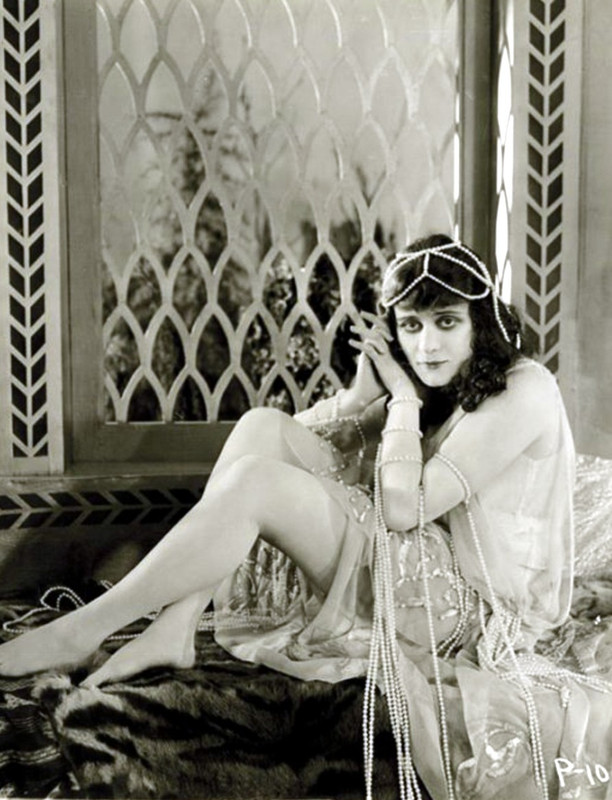
theda-bara-solomc3a9

The first and best known of these novels, "The Woman In White" had already been made into a movie in 1912 (now lost) and would be made again in 1917 with Florence La Badie, and in 1917 by Theda's own Fox Studios (but without Theda) in another lost film. Later there would be an Austrian version (1921) and a British version in 1929 starring the American Blanche Sweet. Film versions of "Lady Audley's Secret" would be made in 1912 and a 1915 version with Theda (now lost of course) and again in 1920. So clearly Sensation Novels were considered viable film projects although they do not seem to have been all that successful as films with the possible exception of La Badie's version of "The Woman In White" which was actually released again after her sudden death in 1917 and is the only other film that has survived. Neither of Theda's two attempts were considered successful which is probably why Fox decided to go instead with the far less well known but respected stage actress Genevieve Hamper for their version of "The Woman In White" in 1917. This was not especially successful either like other Sensation adpatations which were perhaps just too complicated and slow moving to be easily filmable at least at the time, today the obvious format for these stories would be a TV miniseries and a few modern BBC adaptations of Sensation Novels have been made.
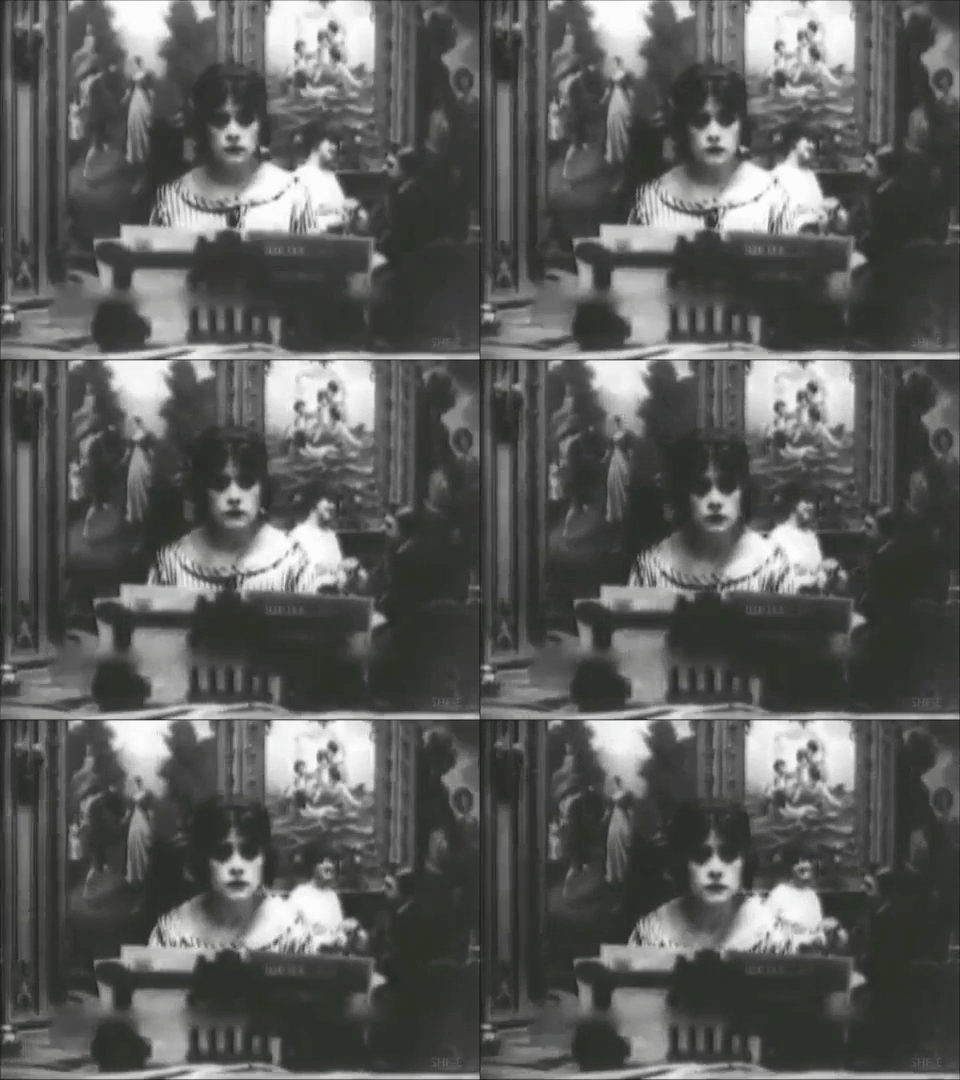
tumblr-mziboxiskl1rdfgw4o1-500

Sensation Novels were known for their overly complicated plots and the movie actually simplifies the story but it is still confusing and implausible often relying on conveniant coincidences and characters sometimes being unbelievably obtuse or gullible to forward the plot. There are also far too many characters to keep track off and some of them simply disappear. To be fair that was often true of the novels as well, in fact the movie actually simplifies the plot of the novel which included both Archibald and Francis running for Parliament and a trial and dramatic reprieve for Richard. Having Theda fake her death and return in disguise is not believable but was a standard plot twist for Sensation Novels. However, what a Victorian novel could get away with over the course of a couple hundred pages seems simplistic and manipulative in an hour plus movie in the 1910's. Theda here plays against her Vamp stereotype and is even somewhat dowdy compared to the younger Barbara Hare. This is appropriate to the character though and Theda deserves some credit for stepping outside her usual role. However, that doesn't mean the character is terribly interesting. In fact even though she is top billed Theda does not even get the most screen time and is often absent from the story which must have disappointed her fans. We are immediately informed that this Theda is no vamp in her opening scene when unlike in "A Fool There Was" she is shown ripping the head off of a flower and laughing she is shown here playing with a cute puppy and this is quickly contrasted with Francis kicking a dog out of the way and stroking a cat so he is clearly the villain. Just to further illustrate the point as his scheming increases he is shown juxtaposed with an actual snake in the grass. Theda on the other hand is often shown with her adorable children much like the Schuyler family in "A Fool There Was".The children again symbolize innocence compared to the behaviour of the adults and similarly it is notable that again the servants, although minor and nameless, see through the behaviour of their masters as Francis' butler clearly regards him with disdain. That it is the working class staff and detective (again nameless) who are the only morally aware adults in the film allows them to act as surrogates for the film's mostly working and lower middle class audience to feel superior to the wealthy protangonists which was another common theme in Sensation Novels.

Theda spends most of the movie passively wringing her hands and looking depressed which is not what her fans want or expect from her. The scenes of her in disguise are not inherently credible consisting of a wig and dark glasses but she does use her body language to show how through her depression she might be taken for a different person with her slumped shoulders and heavy movements. In fact in this film it is the oily Francis who plays the Vampish role, using and manipulating people sometimes for no obvious reason other than sheer malice while Theda plays the naive patsy. However Francis is notably lacking in the cynical self control of Theda's iconic Vamp who would not have been so easily caught, would not have allowed drink to cloud her judgement or have been haunted by the ghosts of her victims. Compared to her he's not a very impressive villain.
tumblr-pyqwtpo7-XE1ugv7b3o1-500

Stuart Holmes as Francis is appropriately oily but as with her other surviving films most of the other characters are fairly bland however. This is a notable difference with her contemporary Alla Namizova who also played Vamps but also usually had the foresight and confidence to have strong supporting players like Rudolph Valentino and Noah Beery and even younger and pretty co-stars like Patsy Ruth Miller. The direction from journeyman Bertam Bracken is again strictly rote aside from one shot where Francis and the blackmailer get caught and the camera pans back and forth. There are also two scenes where ghosts or visions return to haunt Francis and Barbara. How many creative choices were Theda's or the studio's is difficult to say at this point. Contemporaies Alla Namizova, Mary Pickford, Mabel Normand, Helen Gardener and Nell Shipman produced their own films and had creative control. Theda never did and seems never to have tried to do so. Instead she was content to usually play the same basic role for which she was very well compensated being one of the highest paid actresses of the 1910's during which time she made over forty films in just over four years. 

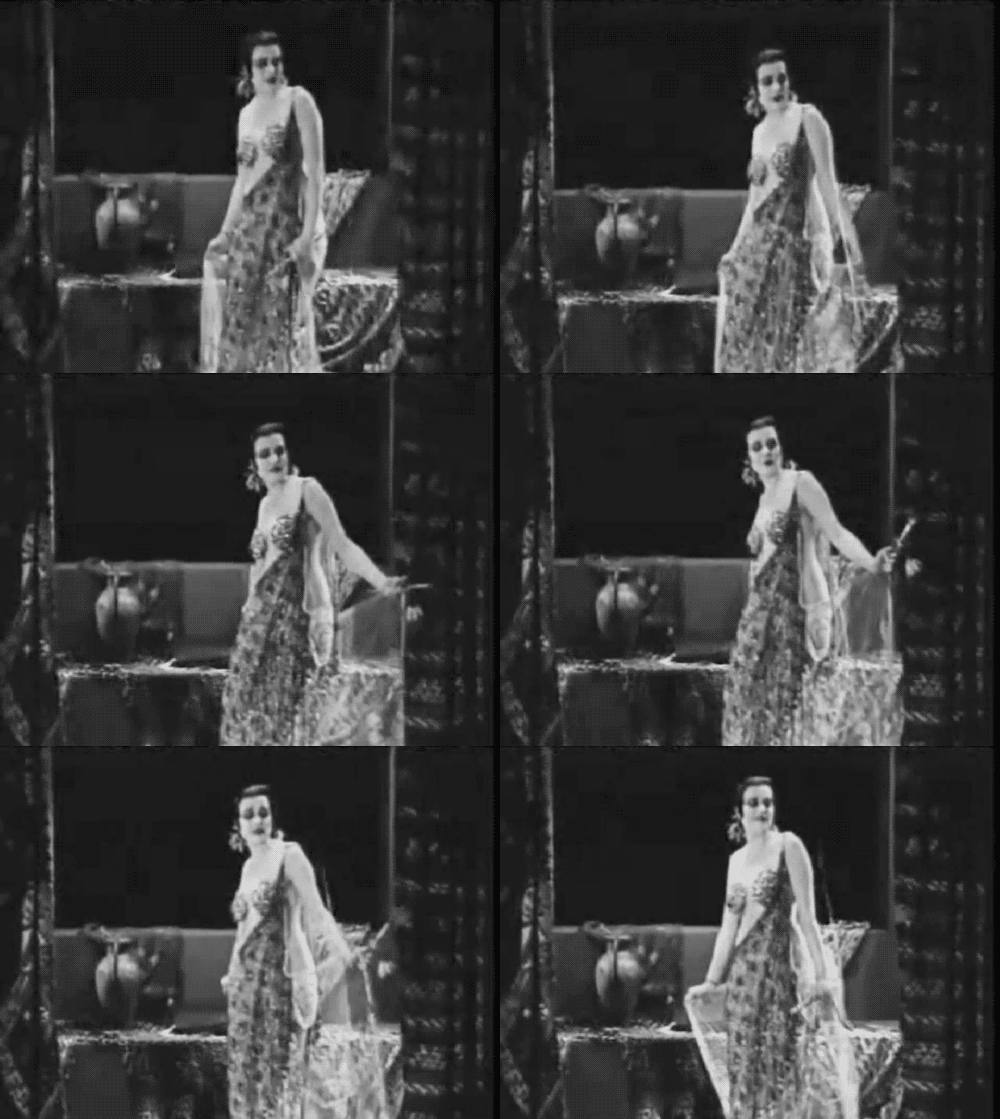
UPDATE; Mere months after I wrote this some footage surfaced in Spain of two minutes from the long lost 1918 Theda version of "Salome" (later redone by Alla Nazimova). It's only a few fragments edited together in no paticular order but it does show Theda in one of her iconic costume epics and confirms as in "A Fool There Was" she can dominate the screen as a Vamp in a way that she clearly did not as a victim in "East Lynne". It also shows that part of her appeal was not just her exotic, skimpy outfits but also her wonderfully expressive face and energetic physicality when given the right role. She also clearly enjoyed exotic costumes more than the conventional outfits of "East Lynne".

FRAGMENTS FROM "SALOME" (1918);


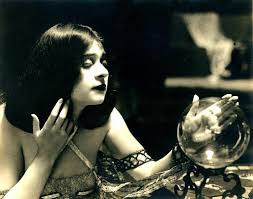
However by the end of World War One Theda had gone from Vamp to Camp and what had seemed risque now seemed cliche. Theda's career was effectively over by 1919, the same year that the War officially ended, the Spanish Flu receeded, women got the right to vote, prohibition passed and America moved on from exotic escapism with a simplistic moral, for the moment at least, to the Jazz Age and a new female archetype and sex symbol; the Flapper. Played by the likes of Olive Thomas, Colleen Moore, Clara Bow, Corrine Giffith, Joan Crawford and Louise Brooks, the Flapper was thoroughly modern, liberated, approachable and most importantly believable in ways the Vamp never was. Crucial to the appeal of the Vamp was the audience's willingness to believe that at the mere flash of ankle and bat of an eye any man would instantly drop everything, abandon his wife, family and job to kneel at the feet of the Vamp who would then coldly use and dispose of her hapless prey just for kicks even if the audience could see, if they chose, that the Vamp was not really drop dead gorgeous or at all likable. The Vamp was a remote and intimidating figure that nobody would ever actually meet in real life while Flappers could be seen down down at the local malt shop or heading off for a night on the town. Vamps were motivated by some mysterious need to bring men to their ruin while Flappers just wanted to have a good time. The Vamp had been a boogieman warning men of the dangers of straying from hearth and home but after a bloody war and pandemic people were tired of being scared into conformity and ready to enjoy the new joys of the Jazz Age. Once the economy picked up by 1920 thus saw the creation of a new sub-culture that we now recognize; Youth Culture.
images-17

Prior to the Jazz Age there had been young people of course but there was no youth culture as we understand it. People went from school to work and marriage with little time in between. Most had little time or disposable income to spend much time cutting loose. Few people went to university and those did were wealthy sons of privilege heading for jobs in the establishment and mostly stuffy conservatives. Only a tiny minority of late Victorian Bohemians and leftists had the time, disposable income or inclination to cultivate an alternative culture although by the Edwardian Era there were some basic ingredients with non conformist art movements like Art Nouveau, Futurism and Cubism, musical movements like Ragtime, Serialism and Impressionism, flashy and colourful new fashions and new philosophies and thinkers like Marxism, Anarchism and Freud. However after the carnage of World War One and the obvious failures of leadership it exposed there was a larger desire to rebel against these Victorian holdovers. The imposition of Prohibition in America (and briefly Canada) only spurred on a sense of rebellion. A more prosperous economy actually encouraged this trend as young people suddenly had more time and money to spend on some new (or newish) inventions that were tailor made to feed into this need for speed, affordable cars (which meant young people could go out and party away from their parents) and phonographs and radios to provide a soundtrack which Jazz arrived just on time to provide. The Flapper was an important product of all this allowing girls to take more control of their leisure lives and pleasure just as their older sisters had gotten the right to vote. In all this the Vamp became an artifact of an age gone by. Young people no longer had the need to view a sex symbol through the distancing lense of extoticism or camp and they no longer had the desire to be preached to (however veiled) by their implausible plotlines and predictable moralizing.
Theda-Bara

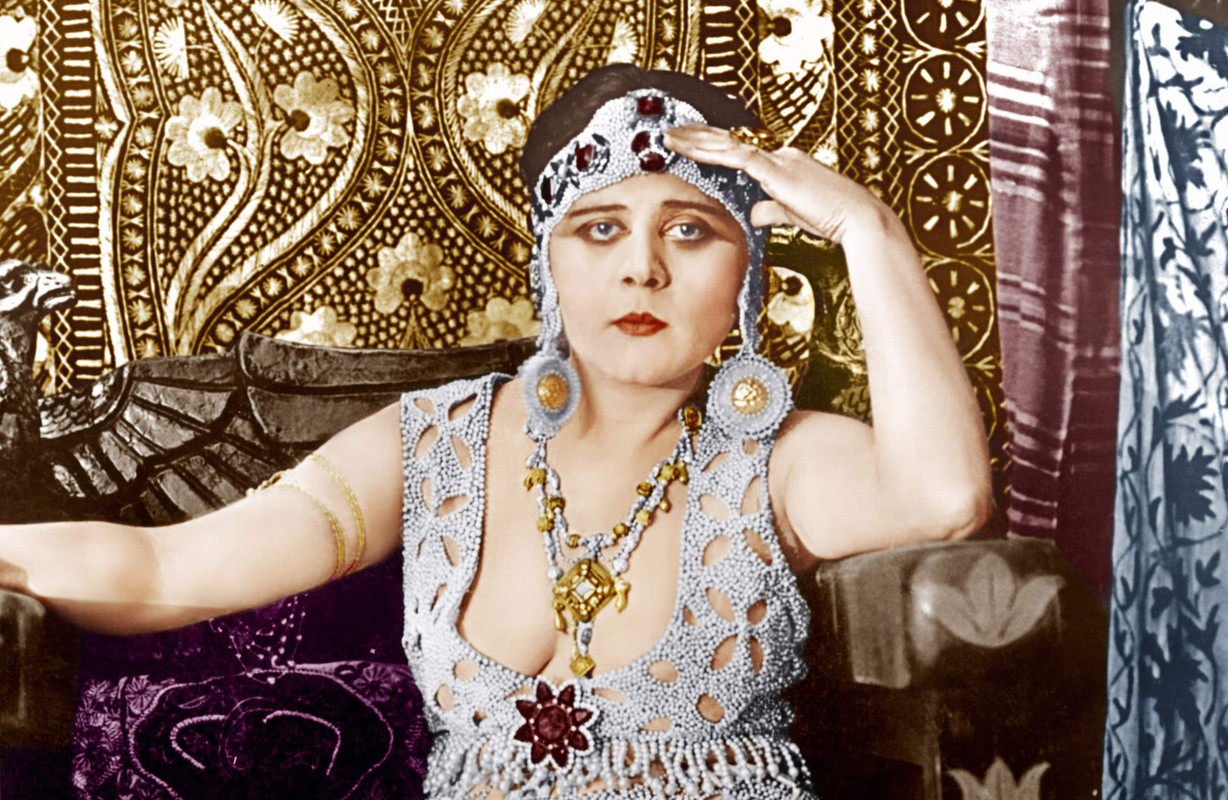
Theda had shown she was not without actual acting talent but her public persona made her uniquely ill-suited to buck changing trends or rise above them by changing her image. She was the Queen of the Vamps and could not be accepted otherwise. She also made some bad career decisions in 1919 when Fox Studios ran the numbers and decided her expensive contact wasn't worth it. Theda was not willing to take a pay cut and seems to have no longer been happy at Fox anyway with its heavy schedule of ten features a year and bored with their reluctance to allow her to take chances on different roles as Theda was the first actor to fall victim to stereotyping. In the earlier stage era actresses like Maude Adams, Lillian Russell, Mata Hari and Adah Isaacs Menken could play the same basic role, and sometimes literally the same role for years on end. But while they appeared to maybe hundreds of people a night and thousands a year a film actress could appear to millions creating an indelible impression as Theda certainly did. This made it impossible to break free from that impression as possessive fans demanded they remain the same while younger fans demanded something new. It must also be remembered that by 1919 Theda was now 34, which is not old exactly but not really young enough to play a convincing Vamp either. The apparently ageless Alla Namizova was actually five years older but with her trim dancer's body she appeared much younger and had already shown some willingness and ability to play some more diverse roles while Theda was starting to look a little frumpy to be a sex symbol. Theda seemed at times to recognize this as her attempts in a few films like "East Lynne" to branch out into the character of the tragic wronged woman show but these films had only middling success. If Theda was unable to figure out how escape her typecasting it must be said that the same would later be true of her contemporaries with sharply defined personas like Mary Pickford, Alla Namizova and Pola Negri all of whom were arguably more talented and creative actors with far more control over their careers than Theda had.
hqdefault

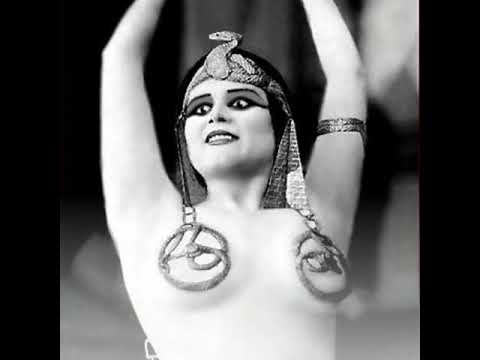
With no other studio interested in paying her price she decided to prove she was still a draw by heading to Broadway with a new play "The Blue Flame". The play was an attempt to play it safe by simply taking her Vamp character to the stage. This turned out to be a mistake as while the play drew decent crowds and made a profit it was savaged by critics and sophisticated Broadway denizens who sneered at the simplistic hokey play and derided her acting and costumes as relics of a bygone era even if only a decade past. By the end of the run ticket sales were slacking off and the run was not extended. Although Theda had started out on the stage a decade earlier much had changed and she had never looked more out-of-touch and now for the first time found herself treated as a joke, and worse a joke she was not in on. The one time Theda had taken control over her career she had become a laughing stock among the people whose approval she would need to continue her career.

With studios showing no interest Theda then retreated for a while to lick her wounds. She married film director Charles Brabin, and kept a low profile for a few years vacationing in Canada while she considered her options of which there were few. Although the fortune she had made and kept meant she had a comfortable life and did not really need to work, Theda was not ready to give up and in 1925 the forty year old Theda got the chance at a comeback when the independent Chadwick Studios offered her a new film.
Unchastened-Woman-lobby-card

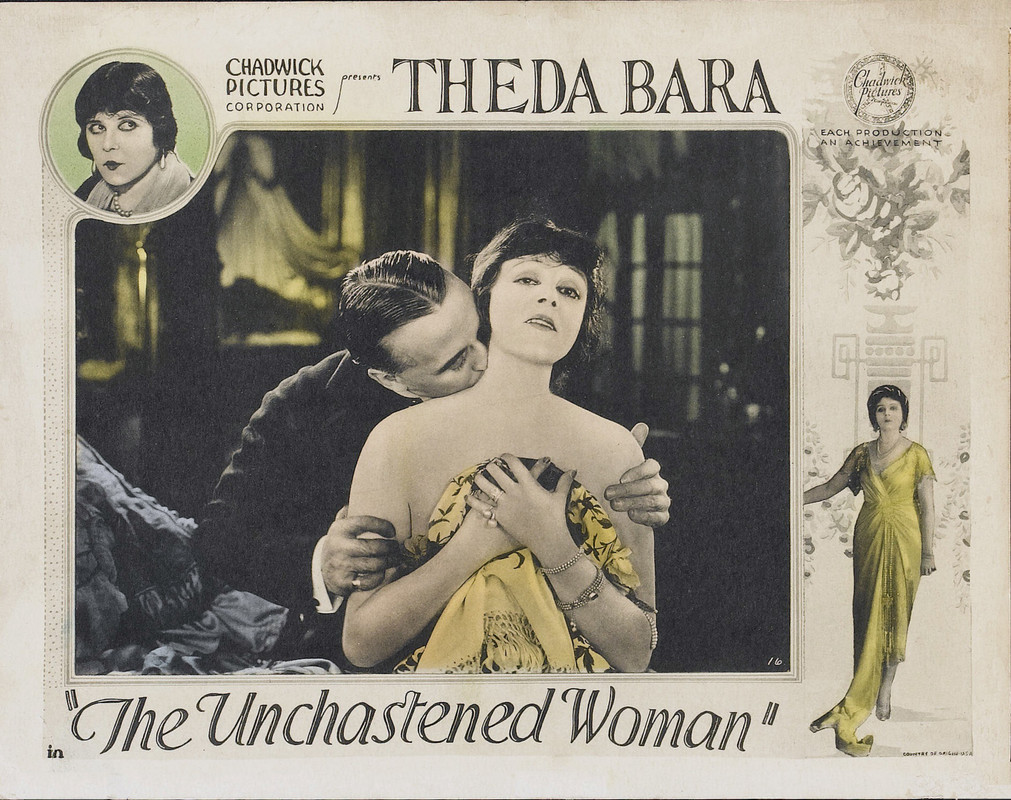
"THE UNCHASTENED WOMAN" (1925)


Directed by James Young

Theda Bara as Caroline Knollys

Wyndham Standing as Hubert Knollys

Eileen Percy as Emily Madden

Harry Northrup as Michael Krellin

John Miljan as Lawrence Sanbury

Dale Fuller as Hildegarde Sanbury

Mayme Kelso as Susan Ambie

Plot synopsis (spoiler alert);

Carolyne Knollys (Theda Bara) and her husband Hubert (Wyndham Standling ) are a wealthy couple. He is carrying on an affair with his pretty young secretary Emily Spedden (Eileen Percy) meanwhile Carolyne is pregnant but has not yet told Hubert. When she discovers the affair she leaves and sails to Europe with her Aunt Susan ( ) vowing to Susan she intends to punish him. Before she leaves Carolyne gives Emily one of her favorite dresses that Hubert also likes. Hubert and Emily continue their affair and while out for dinner she wears the dress Carolyne gave her and Hubert starts feeling guilty telling her to never wear it again. Now in Paris Carolyne gives birth to a son. Later she has become a fixture on the Venice party scene and has taken several lovers including young architecture student Lawrence Sanbury (John Miljian). After over a year Carolyne decides to return to America and Hubert dismisses Emily but does not break off the affair. Emily goes to her friend Michael Krellin (Harry Northrup) for a job and he hires her as a customs inspector. When Carolyne's ship lands in New York she sends Susan to her summer home with her son. Going through customs Carolyne has her bags inspected by Emily who hopes to find contraband. She finds an expensive gown that she assumes was bought in Paris but Carolyne tells her was actually from New York and that it was another intended gift for her leading to an angry response from Emily. Once reunited with Hubert, Carolyne reveals that she has smuggled jewels passed customs and when Hubert accuses her of cheating the government she reveals that she knows he has been cheating on her. He tells her he has ended the affair and asks why she didn't divorce him. She tells him keeping his name is useful. Hubert angrily accuses her of breaking her marriage vows and she laughs at him. Emily is carrying on an affair with Michael but is still in love with Hubert. Some of Carolyne's lovers from her European jaunt have returned to New York where she has resumed her life of parties and affairs while still living with Hubert who sulks at home.One of her lovers, young architect Lawrence Sanbury has also returned from Europe and she hires him to remodel their summer estate introducing him to the jealous Hubert. Carolyne's other suitors who are older and married are ordered to return home by their wives and sheepishly do so. Carolyne intercepts a call from Emily to Hubert and she assumes they are still having an affair and taunts him but Emily is calling  Hubert that she is marrying Micheal perhaps trying to make Hubert jealous. However he dismisses her and hangs up. Hubert begs Carolyne to take him back but she laughs at him. Emily and Micheal meet with  Hubert along with Lawrence's wife (who we were never informed was married) and they tell him they have proof that Carolyne is having an affair with Lawrence and they intend to confront her which could lead to legal actions and scandal. He agrees to go with them. Carolyne and Lawrence are together at the summer estate going over blueprints when she decides she is tired of him and tells him she is ending the affair leading to an angry confrontation. Hubert, Emily and the others arrive and Micheal flees. The women angrily confront Carolyne who mockingly dismisses them. They leave except for Hubert who assumes Micheal is hiding in another room and accuses Carolyne. She laghinly says that there is indeed a man in the room and when Hubert opens the door he sees his infant son for the first time. He begs her again to allow him to return. She at first says no but then relents and decides she should repair the marriage and they embrace with their son. Finis. 
tumblr-mkskyw-Wx831rm71l9o1-400
===================================================
The film was adaptation of a play which had a successful run in 1915-16 starring Emily Stevens, a beautiful, respected but neurotic actress who had also made several movies but who would die under suspicious circumstances in 1928 of a probable drug overdose or suicide. The reception to this film was lackluster with then film critic and later author and screenwriter Sally Benson saying; "When I realized that this was a Theda Bara comeback picture and not just one of her old releases I could hardly believe my eyes" and the public was disinterested. There would be no further feature film offers. To be fair this is not really a bad film, merely a mediocre one, and Theda is not bad in it. Plotwise is at least straightforward and avoids the by now tired pitfalls of Sensation stories with their overly complicated plots and confusing number of characters while still keeping some of the essentials of a Sensation story; adultery and secrets among the wealthy. It does however drop the darker elements such as murders and addiction. This is actually rather light hearted which puts it in a difficult grey area; it's not dark enough to be a tragedy, especially as it has a happy ending. At the same time it can hardly be called a comedy as it has no gags and considering it's potentially lurid subject matter it's not even sexy.

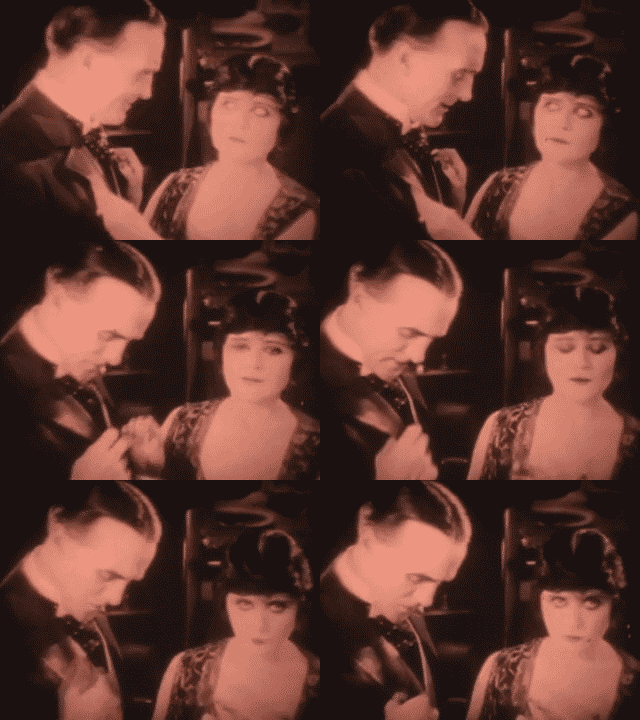
In this film Theda basically splits the difference in playing the only two character types she was comfortable with managing to be both a Vamp and a Wronged Woman. It's not that Theda is bad here, she is too professional and has too much screen presence to simply phone-it-in, but she is just no longer believable playing a simplistic character who was never very believable anyway. She is fine at the start as a Wronged Woman, giving her cheating husband the side-eye after finding blush powder on his collar is a nice scene.
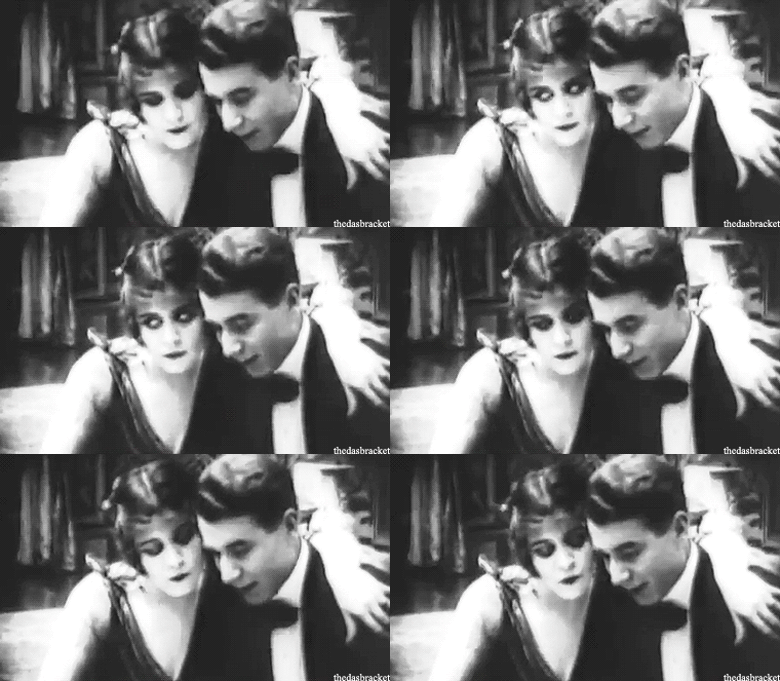
3af2788d97ca8650e6f60da58a18de9d
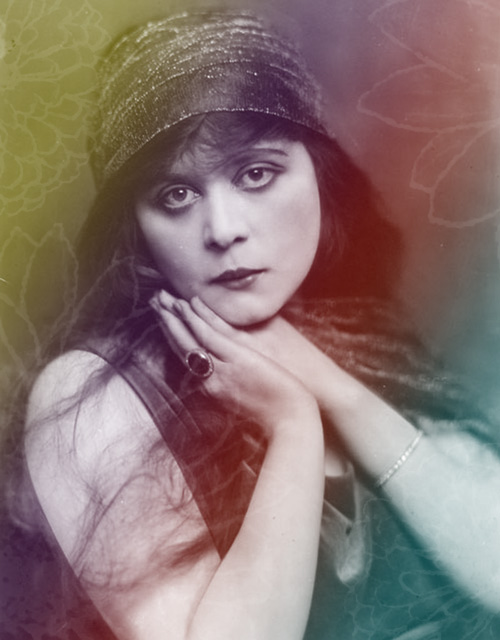
A scheming Theda is clearly preferable to the hapless victim of "East Lynne". However after she changes into a Vamp on the prowl in Europe we are expected to accept the central conceit of the Vamp character, that men will gather around her like "moths to her flame" (a phrase the film actually uses) in spite of the fact that even a sympathetic viewer can see that Theda is now a not unattractive but average looking forty year old and not the sultry chainmail bikini wearing temptress of a decade earlier. The film may recognize this in making most of her flock of lovers (except the young architect Lawrence) as being rich and foolish older men but it doesn't stop it from almost seeming like a parody of her earlier roles. This film could have possibly been used to send up Theda's earlier persona and transition to a new more comedic persona as Mae West would do, if only she had been more self-aware and willing to take the risk instead of too obviously trying to rekindle her youth and expecting the audience to go along with the fantasy. As it turned out they were no longer willing to do so. 
7645c-theda-bara-2

Like her other surviving films the direction is strictly by rote and most of the supporting players are of little note. Director James Young was another journeyman actor and director (married to another early screen sex symbol, Clara Kimbal Young) who had been around since 1914 with dozens of film credits including a version of "Oliver Twist" but had never done anything noteworthy. Chadwick Pictures was a small independent studio sometimes compared to the "Poverty Row" studios of the 1930's and 40's that specialized in low budget comedies, westerns and b-movies. This is not entirely fair as they would make movies starring the likes of Lionel Barrymore including "The Bells" a 1926 Gothic Crime film which also starred a young Boris Karlof, a version of "The Wizard Of Oz" (1926) and the first of the longrunning Boston Blackie detective series and there is nothing wrong with the film's production values with the scenes of the opulent dinner parties showing some promise with their sets and costumes for the dancing girls, at least as far as we can tell from the poor quality of the available print. Cute Eileen Percy as Emily is fine and has some light comedy charm (she would continue acting into the early sound era then took on a second career as a journalist when the parts dried up) although the male characters are all unlikable dullards. Hubert is childish but he is too feckless to be a villain. As in her other surviving films children exist to symbolize innocence as in an early scene where Hubert shows his heedless selfishness by inadvertently stepping on a baby picture. Later of course a child will bring the warring parents together and save their marriage in a plot ending that any Sensation Novelist would have sneered at. Overall this film is still objectively more enjoyable than the dreary "East Lynne" and at least gives us a Theda as a strong character as she should be, but this trip to the now misty past (of only a decade earlier) would not be enough to resurrect her career. 

After the failure of this film Charwick Pictures apparently showed no interest in trying again but Theda, who was nothing if not stubborn, accepted an offer from comedy producer Hal Roach to parody her Vamp character in a comedy short directed by Stan Laurel.

hqdefault

MADAME MYSTERIE (1926);


Directed by Stan Laurel
CAST;
Theda Bara as Madame Mysterieux

Tyler Brooke as Hungry artist

James Finlayson as Struggling author

Fred Malatesta as Man of a thousand eyes

Oliver Hardy as Captain Schmaltz

PLOT SYNOPSIS (spolier alert);

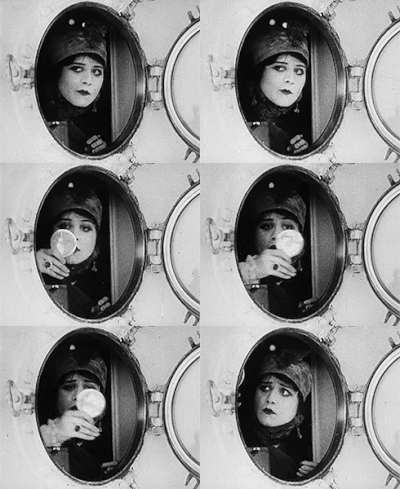
Tyler Brooke and James Finlayson are two hapless starving artists in London desperate for cash. Tyler is a painter and James is a writer who is also serving as Tyler's model while dressed in drag. They see Madame Myterieux (Theda Bara), InternationalSpy, in a car being chased by The Man Of 1000 Eyes (Fred Malatesta), another spy and his driver who are disguised as cops. Fred and his driver try to run Theda off the road but their car crashes in front of the artist loft where Tyler and James live and Theda escapes. James and Tyler carry the stunned spies inside where Malatesta, who is cross eyed, wakes up dazed and seeing James in drag thinks he is a woman and flirts with him/her before passing out again. While he is asleep Tyler searches Malatesta's coat and finds a telegram telling Malatesta that Madame Mysterieux is smuggling a valuable object to America and offering a large reward for it's capture. They decide to intercept her themselves and collect the reward. Madame Mysterieux calls the US Embassy and informs them that the object she is smuggling is actually a powerful explosive that resembles a lump of silly putty. Mysterieux drives to the harbour to catch a steamer to New York as Malatesta wakes up and goes after her. Mysterieux boards the ship, the captain of which is the bumbling Captain Schmaltz (Oliver Hardy). Tyler and James arrive as well and Tyler boards but James is refused as he does not like the passport photo that they stole from Malatesta. So James disguises himself by putting his clothes on backwards and wearing a mask. Malatesta arrives at the ship too late to board. On board Tyler and James search for Mysterieux's cabin while dodging Schmaltz but she spots them first. When she confronts them Tyler runs away and Mysterieux lures James to pratfall down a flight of stairs. Malatesta books a seaplane to catch up with the ship and climbs aboard at night to search for Mysterieux. As Mysterieux sleeps Tyler and James drill a hole through her cabin wall to spy on her. While they watch Malatesta also finds her cabin and breaks in to search for the smuggled explosive which he does not find so he starts a fire and hides to see if she reveals the hiding place when she retrieves the package. When she does he confronts her by Tyler grabs the package through the hole they drilled. Mysterieux runs outside and finds Schmaltz who she warns about the fire. As a crowd gathers outside Tyler and James try to hide the small package which James hides in his mouth. Malatesta pulls a gun and fires at Tyler and James who panics and swallows the package. Schmaltz, Mysterieux and a crowd burst in on Tyler and James and she reveals that the package contains an explosive which she calls Helium Nitrate which is powerful enough to destroy the ship. Tyler panics and starts to run away. James reveals that he has swallowed the bomb and is feeling sick and starts to hiccup and stagger around. Malatesta decides to explode the bomb and kicks James in the ass. The bomb activates and James' stomach starts to expand like a balloon. Everybody panics and runs about as James keeps expanding and then starts to levitate into the air like a blimp. Tyler tries to pull him down but both are carried away into the sky. Mysterieux is handed a telegram saying that the explosive has been switched with harmless helium and the actual explosive has been sent ahead to America. As Malatesta tries to read the telegram over her shoulder she hands it to him and walks away. When he reads it he angrily pounds on the ship railing knocking it open and he falls overboard. As James and Tylersoar away a large pelican lands on them and begins pecking at James's extended stomach causing them to explode as Madame Mysterieux waves goodbye. Finis.  
a0c12063e43138fd1b9ff27b1fbebcdf-w200

This is a mediocre comedy short typical of Hal Roach Studios and featured regulars like director Stan Laurel, his partner Oliver Hardy and James Finlayson, a balding, beak-nosed, Scottish comic actor with his trademark walrus mustache, popping eyes and air of perpetual outrage and/or confusion known as a comic foil in dozens of comedies by Laurel and Hardy, The Little Rascals, The Keystone Kops, Charley Chase and Ben Turpin. It's full of slapstick, silly disguises and exaggerated double takes from characters who are universally inept. Theda is fine in this as the straight persona and only character who is not an idiot and is able to mock her own persona without sacrificing her genuine charisma and imperious screen presence. This film and her performance raises the question of whether Theda could have reshaped her career as a comic actress. She had also already been used in cartoon form in a 1918 Mutt & Jeff cartoon short. Mae West was carving out a career mocking the character of the Brassy Blonde Dame and there was an opening for Theda to remake herself slightly as a comedy Vamp. Given her specific persona she was perfectly positioned to exploit her own character if she wanted to. She had the talent assuming she was given the right vehicle and director, but aside from a few seconds of a cameo in another 1926 Hal Roach comedy short (the footage for which was actually lifted from this film) this would be her last screen appearance making it an odd swan song. It's likely she simply did not want to do so. Personal accounts of the time present her as a nice lady, generous and professional but she was also rather aloof from Hollywood, not known for her humour and proud of her persona which she had become rather possessive of (an aside; Theda was reportedly extremely near-sighted, "Blind as a bat" according to actress Nita Naldi, but was too vain to wear glasses, at least in public) and if continuing on required mocking that persona, that was not attractive for a woman who took herself quite seriously. By this point however her persona had become a harmless nostalgic joke for most and she would not be getting any more offers for serious romantic or tragic roles. The other option would be to transition to more matronly roles (as Alla Namizova would eventually do) but that was even less appealing to the proud Theda.
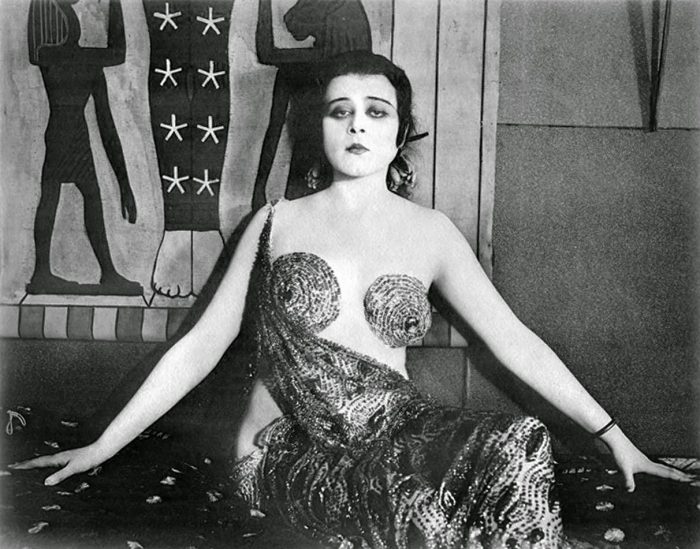
Theda-3-e1485498237140

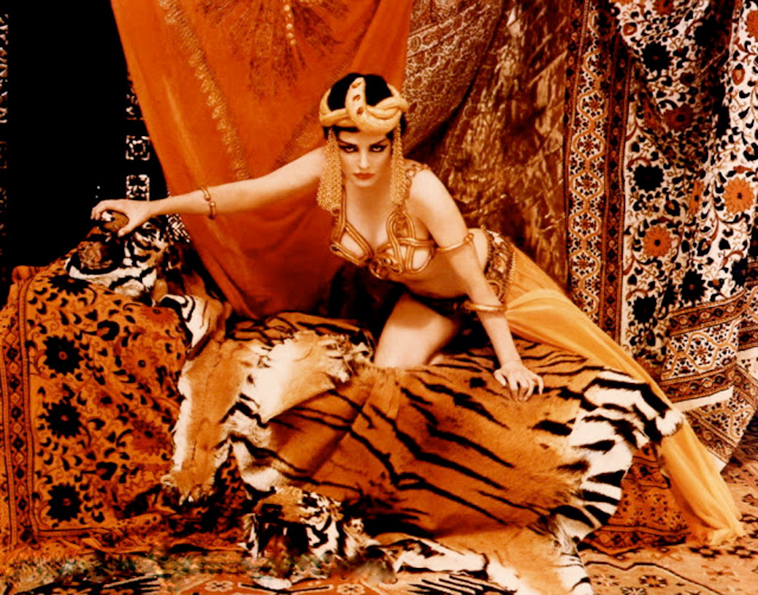
Fortunately Theda did not really have to work and while her retirement at age 41 may have been unwilling it was not uncomfortable unlike many of her silent sisters. Alla, Mae Murray and Louise Brooks would end up in relative poverty. Audrey Munson and Mary Fuller would be institutionalized and so for a time would Clara Bow, Florence Lawrence would end up as a suicide, while Clara Bow and eventually Mary Pickford would become recluses never leaving their homes. Theda not only made a lot of money she also kept it and her husband director Charles Brabington would keep working into the thirties. Unlike many of her sisters Theda had always shunned the Hollywood party scene and lived quietly, not at all like her public persona, and the wild Jazz Age had little effect on her. She would busy herself with charitable activities and support some amateur theatre and maintaining her interest in fortune telling and tarot cards while never giving up hope of returning to the screen. Up to her death she continued to list herself in the Hollywood casting directory as being "At Liberty", meaning not under contract but available for offers that would never come. She would give occasional interviews in which she teased out possible film projects which never panned out along with a proposed bio-pic starring Betty Hutton which also never happened. She died of cancer in 1955 aged only 69, Brabington died two years later. She had lived long enough to see almost her entire film catalogue destroyed in a film vault fire at Fox Studios in 1937 but she also knew that her status as film's first great sex queen was secure. In 1958 Life Magazine published a gorgeous set of photos featuring Marilyn Monroe as iconic sex symbols of the past. These also included Clara Bow, Lillian Russell, Jean Harlow and Marlene Dietrich but the Theda pics were the most stunning. Theda would have enjoyed that as did Clara. In the sixties after the mega expensive Elizabeth Taylor version of "Cleopatra", posters of Theda's classic Cleo became popular on the walls of college girls and in the eighties a new generation of Goth Chicks would adopt Theda as their Queen of the Night. And so the eternal Vamp has remained.

THEDA SCREEN TEST;


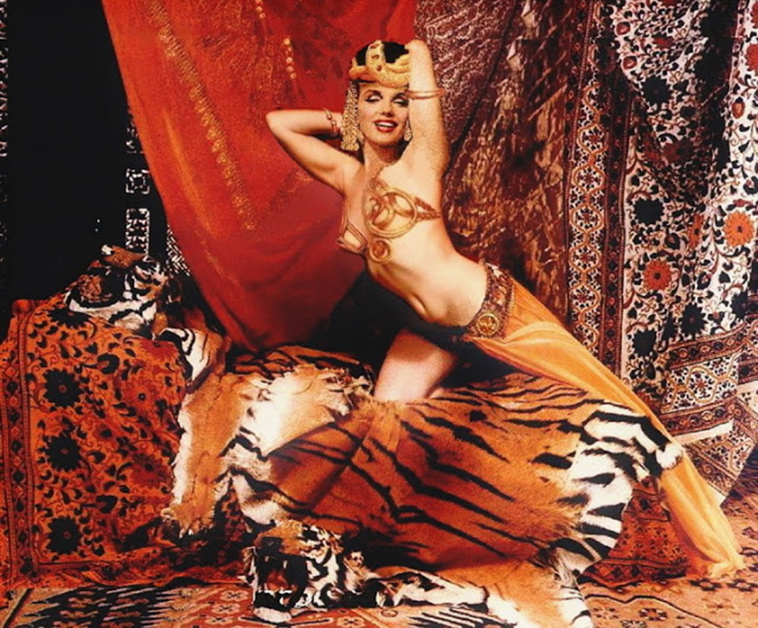
MARILYN MONROE AS THEDA;
marilyn-monroe-recreate-celebrated-actresses-1958-theda-bara-1

marilyn-monroe-recreate-celebrated-actresses-1958-theda-bara-2

Monday, 9 February 2015

The Art Nouveau Films Of Alla Nazimova & Natacha Rambova


7fd280f37b9bbc646749098cb4e91c18

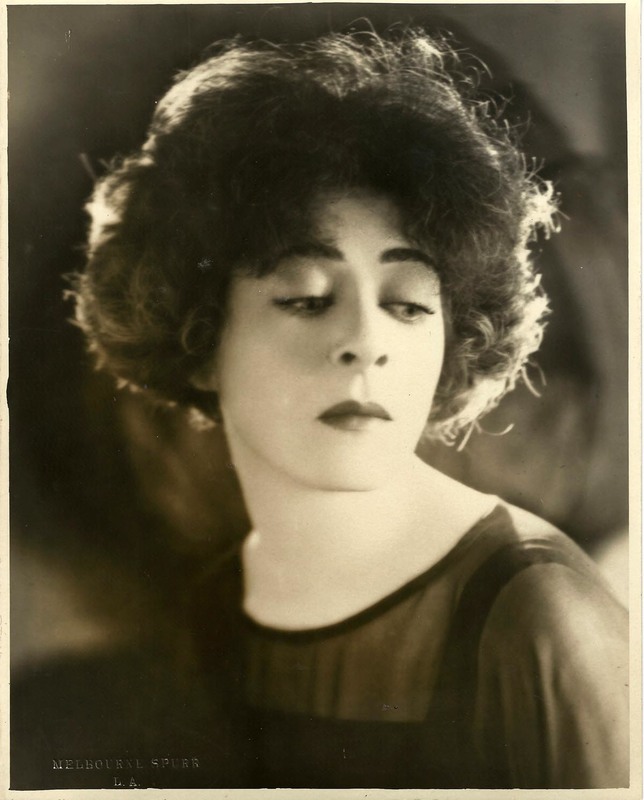
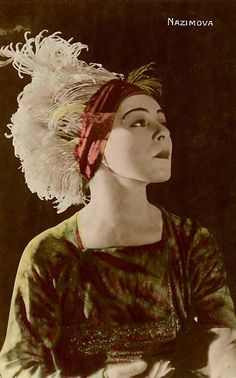
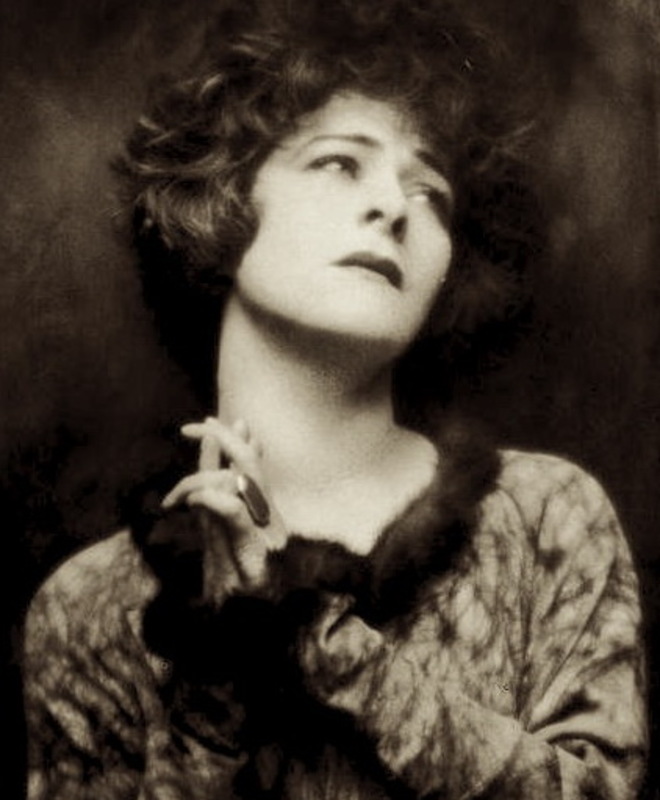
Alla Nazimova (1879 - 1945) was the first female film auteur. She was not the first female film-maker, the French director Alice Guay Blache, the American Lois Webber and the Canadian Nell Shipman had been making successful films for several years before Nazimova's debut. However Nazimova was different, she saw film not merely a vehicle for entertainment, an extension of the popular stage, but as a real work of art, equal to the legitimate theater or opera and ballet. From the start of her film career she pursued her vision with a dogged persistence in defiance of studio or audience resistance.

EARLY LIFE AND STAGE CAREER;
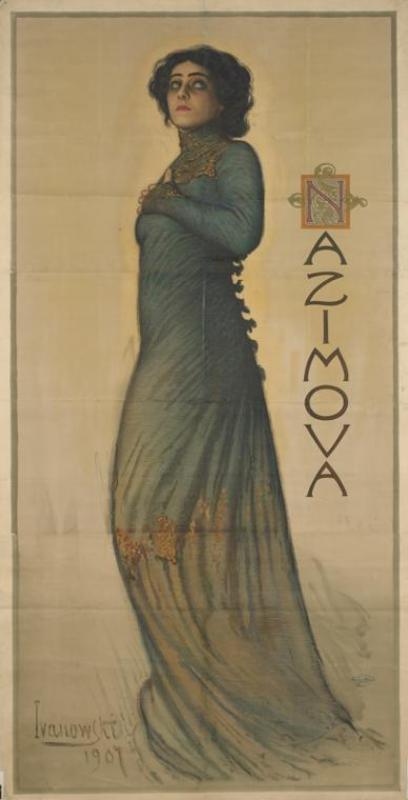
Nazimova_1907poster

Born in Yalta in the Crimea in 1879 of a Jewish family, her real name was Miriam Edez Adelaida Leventon and her childhood was unsettled with her parents divorcing and Miriam being shuttled between various relatives and boarding schools. She did however get a good education, learning violin and ballet before studying acting and theater at Stanislavski's Moscow Art Theater adopting a stage name of Alla Nazimova based on two of her middle names and the surname of a character from a Russian novel "Children Of The Streets".

After graduating she quickly became a star of the Russian theater scene in Moscow, St Petersburg and Kiev. She was noted for her exotic beauty; statuesque and athletic with sensuous, vaguely Slavic features, large bright blue eyes and untamed hair. She was also haughty and charismatic, playing the role of the diva to the hilt, dressed in the latest in Art Nouveau fashions. As she became well known she would drop her first name and be billed simply as "Nazimova". With her training in both theater and dance she was noted for her grace and physicality. From the start she sought out serious roles, particularly in the plays of Ibsen and Chekhov, to rave reviews. Nazimova quickly became too big to be contained to Russia and she began a successful tour of Europe along with her lover, actor Sergei Golovin, which ended up in New York in 1906. She quickly discovered she could make far more money in America than in Russia and she elected to stay in New York. She managed to learn English in five months and would become a fluent speaker although never losing her accent. Golovin could not make the adjustment and returned to Russia. Nazimova was offered roles on Broadway where a theatre was named after her as she became a major star. She spurned the sorts of light comedies and maudlin melodramas popular at the time and continued doing the Chekhov and Ibsen plays to admiring reviews. Even the acerbic Dorthy Parker described her as the finest Heda Gabler she had ever seen.

143890055-3493435390755630-7345747564129174437-n

Although Nazimova played the imperious diva she was also determined to take culture to the masses by appearing on the vaudeville stage, which few serious stage actors would deign to do. For Vaudeville she took the scenes out of Ibsen or Chekhov and boiled them down to one act plays. She also did short one act plays specially written for her, often with a progressive political slant such as "An Unknown Woman" about 1914 which advocated for simpler divorce laws (and which met with protests and bans) and the pacifist play "War Brides" in 1915. Surprisingly the demanding audiences of vaudeville gave her another enthusiastic reception. Working class immigrant audiences were entranced by her other-worldly larger than life personality and beauty. Between her Broadway and vaudeville careers she became one of the most highly paid actresses anywhere.

alla

PERSONAL LIFE;
As one might expect the larger than life Nazimova led a scandalous personal life. While still in Russia she had lived with fellow actor and producer Pavel Orlenev even after she married another actor Sergei Golovin in 1899. She was rumored to have had a child with one of them in 1905. When she went on tour she took Orlenev with her and moved with him to America although he soon returned to Russia. In 1912 she married yet another actor, British actor Charles Bryant, even though she had never bothered to divorce Golovin.

The British born actor Charles Bryant (1897 - 1948) was a mysterious and contradictory figure. On the one hand he was widely rumored to be gay and it was always assumed that their marriage was one of convenience, designed to allow both to hide their respective sexualities. However as we shall see he would later leave Nazivoma, remarry and have children. Nazimova seems to have been genuinely devoted to him and gave him roles in most of her movies. More seriously he would also direct a few which would turn out to be a mistake since he was clearly less talented than she. Even more disastrous was that he acted as her manager and while he may have helped get her the creative control she sought his management of her money turned out to be ruinous.

CHARLES BRYANT;
Charles_Bryant-482x633

Bryant would later abandon her in 1925 and she would move in with her longtime girlfriend Glesca Marshall while still taking other lovers. In spite of the male lovers she took she openly preferred women and attracted a harem of female lovers she did not bother to hide, airily referring to them as her "sewing circle". Among those women believed to be romantically linked to Nazimova included designer Natacha Rambova, actresses Jean Acker, Patsy Ruth Miller and Eva LaGallienne, Mildred Harris (wife of Charlie Chaplin), Edith Luckett (mother of Nancy Reagan, who Nazimova would be godmother to), director Dorthy Azner, writer Mercedes de Costa, painter Bridget Bate Tichenor and Oscar Wilde's niece Dolly Wilde (Alla was always a big Wilde fan). Nazimova generally remained on good terms with her lovers after the relationship ended and would help some with their careers.

a1139aea41db3cc0c5b3d9612ca8493b-vintage-bohemian-silent-film

While other stars would have their careers destroyed by scandals seemingly smaller than open bigamy, promiscuity and bi-sexuality, Nazimova's public image as an exotic European sophisticate, her aloof charisma and her haughty indifference to criticism seemed to insulate her from any such attacks, at least for a time. She also remained popular with many other actors, artists, dancers and writers who she befriended and supported, helping many get jobs. She was especially supportive of women artists who she saw herself as a role model for. With her extravagant nature she was generous to a fault to her friends in need and ran through money at a shocking rate.

In 1918, after her film career had taken off, she bought a large estate on Sunset Blvd (then a dusty dirt track) and built it into a luxurious Art Deco mansion dubbed The Garden Of Alla, The Garden became notorious for it's lavish parties which included the cultural elite as well as those from Hollywood's royalty she felt were cultured enough to invite, along with plenty of openly gay male and female artists, writers, musicians and actors. Naturally when prohibition became the law of the land in 1920 Nazimova openly flouted her disregard of the law at her parties.

alla2

FILM CAREER;
Always ambitious and adventurous, by the nineteen-tens Nazimova was beginning to look at the new medium of film. Originally, in the 1890's, film was considered a novelty, a cheap entertainment for nickelodeons playing five minute gag reels and burlesque dances. By the mid 1900's film-makers had graduated to telling proper stories, including attempts at classical themes like DW Griffith's version of Tennyson's "Enoch Arden" and three films inspired by Edgar Allen Poe, then there were several Italian films based on classical themes including an epic 70 minute version of Dante's "Inferno" in 1911. A few proper classical actors had even made an attempt at films including Sarah Bernhardt, Eleanora Duse, James O'Neill, Mrs. Leslie Carter, and opera singer Mary Garden, usually with great fanfare and notable lack of success. Nazimova however had carefully studied their failures and decided the problem was that these established stage stars had not given enough thought as to how acting for the silent screen would differ from the stage. They had simply taken their established stage roles and did them using the same exaggerated gestures in front of stage sets and a static camera. Nazimova realized, as would other former stage actors like Mary Pickford and the Barrymores, that film was in fact a different medium entirely and would require a more intimate acting style. She developed a style that incorporate her dancer's grace, physicality and sensuality along with her expressive face for a melodramatic, emotional yet aloof persona.

93290878-2986097108146463-5545716851255803904-n

Nazimova had another advantage over the earlier generation of stage actors. By the time they had ventured onto the stage they were frankly too old to be seen as sex symbols. On the stage where the audience was far away age could be concealed easily and did not matter as much. But film was merciless in showing up sagging chins and wrinkles. Even though Nazimova was older than the usual screen ingenues she was at least a full decade younger than Bernhardt, Duse, Garden or Carter had been. Besides the trim and fit Nazimova looked like she was in her twenties anyway. She was looking forward to her close up. Finally; thanks to her vaudeville tours she had established a repore with the working and middle class audiences and was not seen as an imperious high class "proper" theater actor condescending to slum with the great unwashed.

EARLY FILMS;
ALLA ON "WAR BRIDES" SET WITH DIRECTOR HERBERT BRENNON (1916);
war_brides_set

As World War One broke out in 1914 Nazimova began performing a short play called "War Brides" written by Marion Craig Wentworth. It was a thirty-five minute play which displayed her pacifist views. The short play was extended to to seventy minutes for a film version by writer and director Herbert Brennon, besides Nazimova the film would also star her husband Charles Bryant and a young actor named Richard Barthelmess who would later star in many films for DW Griffith. The story was based in a European country clearly meant to be Germany or Austria judging by the uniforms the soldiers wear. The plot involved a peasant woman whose husband and brothers are killed in war. She organizes an anti-war protest and is arrested by the king who decrees that all women should marry and produce sons for the army. She then kills herself in protest and following this the women of the kingdom take up her body and vow they will bear no more children until all war ends. The play created a sensation especially since the First World War had already broken out this was a topical and controversial theme and a daring choice for a first film. Film producer and fellow Jewish-Ukrainian immigrant Lewis Selznick decided to take a chance on the play and Nazimova and offered her a shocking $30,000 plus an additional $1,000 a day if the film went over schedule to lure her away from her busy stage schedule. she was also already well known enough, and presumptuous to insist on being billed simply as "Nazimova".

download

The resulting film, unfortunately now lost aside from a few stills, was a surprising hit especially since 1916 was an election year in which the war was the defining issue. However once America entered the war in 1917 it was quickly withdrawn from circulation as "unpatriotic", Selznick changed his mind and now stated that he "feared it might be misunderstood by unthinking people". More likely they feared it would be perfectly understood. Sadly no copies of this important film were saved.

PROMO POSTERS & ADS FOR "WAR BRIDES";


In spite of these controversies Metro Studios Louis B Mayer offered her an unheard of five year $13,000 a week contract which was $3,000 more than Mary Pickford, an already established star. Equally impressive for an actor with only one film to her credit Nazimova also got complete creative control, choice of scripts, directors and actors.

alla-nazimova-no-smoking-sign

Her next film was was "Revelation" in 1915 again co-starring with her husband Charles Bryant, which would again have a war theme. She plays a cabaret dancer who becomes the mistress to a painter played by Bryant. Later after some religious imagery involving Nazimova and the Virgin Madonna (!) she becomes a Red Cross nurse and he joins the French army and gets wounded. They are reunited and marry at the end. A print of this film reportedly exists but is not currently available to the public.

PROMO PICS OF "REVELATION";


"Toys Of Fate" (1918) was an exotic romantic melodrama with a complex plot. Nazimova plays two roles; Hagar the wife of a Gypsy chief who she leaves to be mistress of a wealthy playboy and is then murdered. Nazimova also plays her daughter Azah who is also married off to the same playboy who is then murdered in turn. She is arrested and tried but acquitted and then marries her lover, played by Bryant. This film is now lost.

"Eye For Eye" (1918) was another exotic romantic melodrama. This time she plays a Arab princess who falls for a French officer and is banished to wander the desert and later becomes a dancing girl (of course). Written by June Mathis, who would work with Alla again. Another lost film.

PROMO POSTERS FOR "EYE FOR EYE";


"The Brat" (1919) was an ill-advised attempt at a comedy. In this Pygmalion-like story she plays a lowly chorus girl who is remade into a society girl by Bryant. This film was not a success and is now lost.

nazimova-brat

"Out Of The Fog" (1919) was a return to melodrama where she once again plays a dual role as a doomed mother and her daughter. This time however the action was not played out in some exotic locale but in a windswept lighthouse. Bryant again played her lover. This film is also lost.

PROMO PICS FOR "OUT OF THE FOG";


For "The Heart Of A Child" (1920) she again plays a dancer but this time she is a virginal waif who wins the heart of an English Lord played by Bryant who she marries. Plotwise this one sounds pretty dull but no doubt had some lively and elaborate theatre scenes. Unfortunately like most of her films this one is now lost.

"Stronger Than Death" (1920) has all the classic Nazimova ingredients; a dancing girl in an exotic locale (India), tragedy, romance, murder and a lover played by Bryant. Based on a novel with a screenplay credited to Bryant but probably actually written by Nazimova herself. And like most Nazimova's films it is now lost.

PROMO PICS FOR "STRONGER THAN DEATH";


"Red Lantern" is the one of her most important films. An epic costume drama set in China during the Boxer Rebellion with an anti-war and anti-racist message. Nazimova plays two roles; Mahlee, a half Chinese missionary who is cast out because of her mixed race, and her half-sister Blanche who at first does not know of Mahlee's existence. The film co-stars film heavy Noah Beery, her husband Charles Bryant, as well as the film debut of young Chinese-American actress Anna May Wong. At least two prints are known to exist and a DVD version is occasionally available in Europe.

Nazimova-in-red-lantern-lobby-card

===============================================================

"THE RED LANTERN" (1919)


Directed by Albert Capellani
Written by June Mathis and Albert Capellani from a novel by Edith Wherry

Cast;
Alla Namizova ~ Mahlee & Blanche Sackville
Noah Berry ~ Dr Sam Wong
Frank Currier ~ Sir Phillip Sackville
Darrell Foss ~ Andrew Templeton
Winter Hall ~ Rev Alex Templeton
Margaret McWade ~ Madame Ling
Virginia Ross ~ Luang-Ma
Mary Van Ness ~ Mrs Templeton
Edward Connelly ~ General Jung Lu
Harry Mann ~ Chung
Charles Bryant ~ US Soldier
Reginald Denny ~ US Soldier
Anna May Wong ~ Girl
==========================================
Plot (spoiler alert);
Mahlee (Alla) is a half Chinese Eurasian woman of unspecified age whose mother has died in child birth and her father is unknown by her as he had bought her mother from her grandmother, Madame Ling (McWade) who she now lives with in 1890's Peking. Before leaving her father, the wealthy Sir Phillip Sackville (Currier) left money for her upkeep with the proviso that her feet not be bound according to custom. He has never returned. Mahlee is an outcast from Chinese Being of mixed blood as well as for not following the ancient Chinese custom of having her feet bound. A soothsayer predicts that she will become a great lady before suffering misfortune. Mahlee brushes him aside. Her Grandmother Ling, elderly and ailing, awaits death. She is shamed by Mahlee's mixed blood and unbound feet.
Madame Ling is dying and reveals to Mahlee her mixed blood heritage and she begs Mahlee to adhere to custom and deform her feet. Mahlee first refuses but then later relents and agrees however Ling dies before she can as an owl outside the window hoots. A nearby Christian mission school is run by Dr Templeton (Hall), his wife (Ness) and young adult son Andrew (Foss). Andrew hers Mahlee cry out and busts in to find her passed out and he carries back to the mission. Sam Wang (Berry), another half-Chinese man is employed at the mission in an unexplained but important capacity, he is preparing to go on an extended trip to America. When Andrew shows up with the unconscious Mahlee Wang is smitten with her but Mahlee falls for Andrew leaving Wang resentful.
Three years later it is 1900 and Mahlee has converted to Christianity and works at the mission as a teacher. The Boxers, a violently anti-western group have staged an uprising in the north and are advancing on Peking having massacred many westerners and Chinese Christians. Andrew is at a mission up north and has lost contact with the mission in Peking and Mahlee is worried. Meanwhile Sam Wang has returned from America. He is still smitten with Mahlee but she again rebuffs him.He claims to be opposed to the Boxers. Andrew returns wounded explaining has only just managed to flee the boxers who are closing in on the city. Mahlee nurses him back to health (also reading to him from a book of Kipling's poems which includes the lines; "East is East and West is West and never the twain shall meet") while being spied on by the jealous Wang who confronts her and tells her that she will never be accepted by Andrew and his white society. Wang tells her of being snubbed while in America. Andrew starts to fall for Mahlee. Sir Phillip Sackville arrives from America with his daughter (and thus Mahlee's half sister) Blanche (also played by Alla) and are spotted by Chung, a spy who recognizes him and knows that he is Mahlee's father although Mahlee does not know this nor do she and Blanche know of each other. Andrew introduces them to Mahlee and Sir Phillip recognizes her although he does not say so. Wang suspects the truth. Andrew becomes attracted to Blanche forgetting about Mahlee who becomes jealous. Wang recruits her to join the Boxers. Rejected by Andrew and the Templetons Mahlee leaves the mission and joins Wang and the Boxers at their temple. Wang has come up with a plan to have Mahlee impersonate the Queen Of The Red Lantern and rouse the people to rise against the foreigners. Mahlee agrees to play the role and appears at a ritual in elaborate costume presided over by Wang where she blesses the Boxer cause. General Jung Lu, commander of the Imperial Chinese Army (Connelly) arrives to observe the ritual where he appears to support the Boxers
Mahlee returns home alone and begins to gave second thoughts. Wang arrives and tries to seduce her with threats. Mahlee tries to flees but is overcome. However she is rescued by Chung who takes her back to the Palace, knocking out Wang in the process. When he recovers Wang is summoned to meet General Jung at the Palace.Upon waking up Mahlee finds herself at the Palace as a prisoner of General Jung who demands she and Wang impersonate the Godess again in front of the Empress to convince her to join the Boxers. Mahlee is reluctant but agrees. Mahlee again plays the Godess and commands the Empress to attack the western missions. Meanwhile Andrew discovers her missing and becomes concerned.
The next morning the Boxers attack the mission district in Peking where the westerners have barricaded themselves in. The Soothsayer woman finds Mahlee at the Palace and tells her the Sir Phillip and Blanche are her father and sister. Mahlee runs to the mission to beg Sir Phillip to recognize her but he refuses. An angry Mahlee returns to the Boxers although Andrew tries dissuade her she pushes him away. Days later the Mission has not fallen and a relief column of western troops arrives to lift the siege defeating the Boxer army while Wang tries to rally them. General Jung blames the Red Lantern Goddess for the failure and she flees to Wang's mansion as the American troops rescue the mission. Wang and Chung shelter her but is shot by a sniper and dies. Before doing so he gives her a vial of poison. Mahlee orders Chung to take refuge at the mission with a message to Sir Phillip leaving her alone. he decides to take the poison while sitting on her throne. Chung delivers the note and collapses. The note is a suicide not in which she declares she wishes to go "Where there is no color, birth, nor creed". Sir Phillip, Andrew and Blanche rush to Wang's mansion but are too late. Mahlee is dying on her throne reciting the line from Kipling's poem; "East Is East". She dies as the owl outside hoots again. Finis.

6dc9459a0b9ad6f899b92faf7a9b845c

===========================================================

This is an ambitious film, not only for it's elaborate sets, costumes and army of extras but also for it's theme condemning racism and the film is not subtle about this. It may be unique in films of the era (excluding those made by black filmmaker Oscar Michaux) in having none of the white characters be the heroes. Sir Phillip is selfish and cruel in abandoning Mahlee in the first place then rejecting her when she finds out the truth. He does repent at the end but by then it is too late. The Templetons take Mahlee in but also reject her when she falls for their son. Even her beloved Andrew also rejects her for her white half sister Blanche, although he also repents too late at the end. Blanche is the only white character who is blameless, she does not know they are sisters or that she is in effect stealing away Andrew although Blanche is given little screen time and is essentially a passive figure. Mahlee is repeatedly rejected by those in who she loves in white society. The same is true of Dr Wang who is a villain but is shown being snubbed while in America as the roots of his resentment. Even though Wang is malicious and sneaky he is in his own way loyal to Mahlee who he stands by at the end. Wang is also brave, trying to rally his troops and fighting to protect Mahlee unlike the devious General Jung who flees to the palace to blame the Boxer's failure on Mahlee and Wang. As for Mahlee, she is a tragic figure, rejected by both white and Chinese society as well as her family including her grandmother. Her jealousy, resentment and loneliness drives her to make a mistake in joining the boxers which leads to many deaths, including her own, but the audience can understand what drove her and for that matter even what drove Wang.

As so few of Alla's films survive we have to make many assumptions about her work based on film stills, lobby posters and film reviews but "Red Lantern" appears to contain all the themes associated with many of Alla's films; an exotic, tragic woman in an exotic locale wearing glamorous outfits tempting men but also being used or rejected by them and often meeting a bad end. This was a common fate for "Vamp" characters but Alla shows more depth and self-awareness than the likes of Theda Bara or Mae Murray and is thus a more sympathetic character. As we have seen besides being a better and more experienced actor than the other various Vamps, Alla was also smarter and having control of the movies she did and the characters she played. Since only three of her films are currently available and this is the earliest surviving one we can only make assumptions about what her acting style might have been like before this film but here she shows that while she does engage in some the typical stagey emoting of the era her skills went beyond that and was in fact quite naturalistic for it's time. Note her body language as Mahlee; at the beginning she is timid and hesitant, later as a teacher at the mission she is relaxed and happy, still later as the Boxer Goddess she attempts to be imperious but her unease is clear. In her dual role of Blanche she has little to do as she is in far fewer scenes and has little to do but her body language still has the virtuous confidence of the favoured white daughter and manages to look quite different from Mahlee.

One notable difference in Alla's film-work which we will see again is her generosity as an actor. She is willing to allow other actors room to dominate her in some scenes, notably Beery as Sam Wang and Margaret McWade as Madame Ling, if that strengthens the scene. Since one of Alla's trademarks was her love of elaborate costumes and in spite of the gorgeous stills and posters from this film is worth pointing out that for most of this film her costumes are actually fairly drab. As the outcast daughter she wears humble Chinese coolie pajamas. Later as the teacher she wears a chaste and formless dress with braided hair, neither is flattering. As Blanche she does get to wear a pretty but conventional Victorian dress and hats but only as the Boxer Priestess does she get to wear an ornate dress and headdress with pearls. This may have been by design to stress her humble origins and make her later transformation into the Boxer priestess more dramatic. Again her willingness to to allow herself to look fairly plain for much of the film is something a less secure and shrewd actress might not have approved of.

ALLA AS MAHLEE;
image-asset

Veteran screen heavy Noah Beery as Sam Wang is a predictably strong presence here but while he is villainous, like the characters often played by Lon Chaney he is also a troubled and somewhat sympathetic character. He is clearly shown as a victim of white racism as well as being, like Mahlee, a lonely outcast from the white society he clearly wants to join as being rejected by Mahlee. Even as a Boxer leader Wang is not even fully accepted by the Chinese court who are clearly using him, something he is aware of as well. While the (presumably mostly white) audience does not want him to succeed in his plan to wipe out the whites or get his hands on Mahlee they can at least understand what drives him and he dies honorably enough protecting Mahlee.

Darrell Foss as Andrew Templeton is a bland presence with too little personality to be much of a romantic lead. As the character is introduced he is supposed to be a dashing figure in his pith hat and safari clothes but after that he becomes wounded and is the dull and mostly oblivious object of Mahlee's attentions. Although this is probably not by design in the scene where he first sees Mahlee and carries her to safety it is notable how awkwardly he does so, lugging her like a small carpet in a way Douglas Fairbanks or Rudolph Valentino would have found laughable. In fact there is another scene later on where Alla again has to be carried to safety by the two spies and it is marginally less awkward in that that character is not supposed to be a dashing leading man. Alla was not a large woman, standing about 5.3 with a fit body and as a former dancer she should have been used to being carried but Foss just seems too callow for the task. Foss had already appeared with Alla in "The Brat" and maybe he was better suited for light comedy.

Note that the casts also lists her husband Charles Bryant and future stars Reginald Denny and Anna May Wong in her film debut but it is unclear what roles they play. Presumably Bryant and Denny are among the American soldiers and Wong, who would have been only fourteen years old is reportedly an extra.

We must take note of a fact modern audiences would certainly notice, namely that none of the Chinese of half-Chinese characters are actually played by Chinese actors (although most of the extras seem to be) but instead by white actors in sometimes not very convincing makeup. The comparison with blackface is tempting but unfair in this case. Firstly unlike blackface none of the Chinese characters are played as degrading stereotypes to be held up to ridicule, Mahlee and Wang are fully realized characters. The other Chinese characters are less so but that is because they are supporting roles. None are cartoon characters or racial stereotypes. The lack of Chinese lead actors is not even necessarily the fault of the filmmakers. The fact is that there were probably few Asian actors with film experience to chose from in 1920. By that date films were being made in China, Japan and even Thailand, although not yet of credible feature film quality, but very few would have have made their way to the West and none would have been seen outside those Chinatowns large enough to have a movie theater. These Chinese enclaves would have had their own established Chinese theaters and opera houses but again few whites would have gone there and few Chinese performers would have had any interest in performing for white audiences anyway. The casting of white actors in the two lead roles of Mahlee and Sam Wang was always inevitable as there were no Asian actors with the film experience or name recognition to play the leads in a big budget film. However they probably could have found a couple Asians to fill out some of the supporting roles, it's doubtful anyone gave the matter much thought. Asian characters and themes were not common either in film or on stage and the use of white actors was considered standard practice and not viewed as being equivalent to black face minstrelsy which had been done since before the Civil War and had always been rife with racist tropes. During the vaudeville era "ethnic humour" targeting various groups was quite common; Jews, Italians, Irish, Scots, Mexicans, Chinese and Native Americans were openly mocked but none of that sort of "humour" is on display here.

ALLA AS THE RED QUEEN IN "RED LANTERN";
Nazimova-in-_The-_Red-_Lantern_-1919

As a proper European sophisticate Alla was a devote of Art Nouveau design as can be seen in the promotional posters made even before this film and the Chinese subject matter was popular with the Art Nouveau movement who prized Asian art (along with Persian, Turkish and ancient Celtic) for it's languid lines, soft colours and sensual curves over the sober straight lines and symmetry of the Victorian west. Thus some artistic themes that would appear in her later explicitly Nouveau films can be seen here especially the giant round door of the palace bedroom and Alla's costume as the Boxer Goddess. It's worth admitting that while many of the elaborate costumes worn at the Imperial Court, including Alla's luxurious gown, are authentic enough to those actually worn at the Chinese court of that era (which was actually only twenty years before) Alla's later more skimpy costume is definitely not. The modesty of the Manchu court would never have allowed the Goddess to show off her bare legs and mid-drift and in fact at this point she looks nothing at all like a Manchu princess and instead has a striking similarity to the roles already made famous by Theda Bara as Cleopatra, Salome and Carmen and this is probably not a coincidence. This film is different from most of her films in that as a rule Alla seems to have preferred intimate stories rather than epics with large casts of extras and giant sets however the larger sets are quite detailed and well made although in the street scenes many of the extras seem to mill about aimlessly.

We should also note in passing that even though this film was made a mere twenty years after the Boxer Rebellion it is wildly inaccurate. Setting aside that there was no such thing as a "Boxer Goddess" the Boxers were a violently nationalistic paramilitary group and there is no way they would have accepted the leadership of two mixed blood Christians like Mahlee and Sam Wang. In fact they would probably killed them along with other westerners they got their hands on.

The director of this film; Albert Capellani was a Frenchman who had made his name making historical epics with versions of "The Hunchback Of Notre Dame" (1911, not the Lon Chaney version), "Marie Tudor" (1912) and "La Boheme" (1913). As well directing Alla in "Eye For An Eye" and "Out Of The Fog". Ironically he also did a version of "Camile", a film later made by Alla, in 1915 starring the scandalous Clara Kimbal Young. The screenwriter was June Mathis who would soon work with Alla again.

============================================================

abf6bd48d148974f9ec723c237c10efa

She was now known for big budget melodramas with Nazimova playing a tragic heroine or martyr and were noted for their lush sets and costumes and yet most still managed to make a profit. the 1919 popularity poll in "Photoplay" magazine she was ranked number four behind the likes of Chaplin, Fairbanks and Pickford. In fact when Fairbanks, Pickford and Chaplin, along with Griffith, set up their own United Artist Studios Nazimova went with them. UA would give her and other artists the creative control she craved. By 1920 however times were already changing. It was the start of the Jazz age and suddenly the character of the Euro-Vamp was suddenly seen as passe' and actresses like Theda Bara saw their careers go into decline to be replaced by the party girl flappers like Clara Bow, Corrine Griffith and Colleen Moore. However Nazimova's image was far more sophisticated than the average vamp and she was clearly smarter, and being on UA meant that she had more creative control for her next films which would be more ambitious and expensive while keeping to her image as an exotic tragic heroine. These would be the appropriately named "Madame Peacock" and "Billions".

PROMO POSTERS FOR "MADAME PEACOCK" & "TOYS OF FATE";


Both "Madame Peacock" and "Billions" would be written and produced by Nazimova herself and would feature her free-spending ways in the elaborate Art Deco sets and costumes. "Madame Peacock" was based on a short story and adapted by Nazimova herself in which she once again plays two roles as mother and daughter and she once again plays an actress. The mother character abandons her husband and daughter to pursue an acting career only to later have her then grownup daughter upstage her. Unlike many of her other melodramas this one had a Hollywood ending with the family being reunited and living happily ever after. By this point her films were becoming rather rote (except for the epic "Red Lantern") and this one was a failure. A single print of "Madame Peacock" is known to exist in Belgium but is not currently available aside from a short screen test clip which shows her usual sense of style.

ALLA SCREEN TEST FOR "MADAME PEACOCK";


"Billions" (1920) has another complicated plot with Nazimova playing a Russian princess who sponsors a struggling artist (played again by Bryant) until she loses her fortune in the Russian Revolution and they and up fleeing to America and living happily ever after. This film was another mediocre offering but it did start her collaboration Natacha Rambova who designed some impressionistic sets for a dream sequence. Unfortunately aside from a few stills this film has been lost.

PROMO PICS FOR "BILLIONS" & "HEART OF A CHILD";


Both these films were money losers, due partly to the lavish budgets. In the 1920 "Photoplay" poll she had dropped to number 20, still respectable but a clear slide. Nazimova had to take stock; changing her style and image was not really practical even if she had wanted to, her public image being too well defined. Besides she had witnessed attempts by the likes of Theda Bara and Mary Garden to modernize or soften their images only to be rejected by their audiences. Instead she would double down on her lush, exotic, melodramas. She planned an extravagant adaption of a version of a story based on the Greek goddess Aphrodite which was cancelled due to the studio censors concerns about it's sexual nature. Then she settled on Alexandre Dumas' novel "Camile" in 1921. This would involve a new star Rudolph Valentino and her greatest collaborator; Natacha Rambova.

NATACHA RAMBOVA;
natty_colour

If Nazimova was a genuine classically trained European sophisticate Natacha Rambova was a carefully constructed persona. Her real name was the decidedly non-exotic Winifred Shaughnessy and she was born in the even less exotic Salt Lake City, Utah in 1897. Salt Lake City may have been a provincial frontier town but it was prosperous, and her parents were among the wealthiest and socially prominent and progressive in town. Her mother, Winifred Kimbal, was an interior decorator in a time when most women did not have careers and the daughter of a Mormon elder who would marry four times. Winifred's father Micheal was a wealthy mine owner who developed into a drunk and was divorced while young Winifred was a girl. The next two husbands were a prominent designer with the fourth being Richard Hudnut, a millionaire perfume manufacturer who would adopt young Winifred. Winifred got a good education and took a keen interest in art, literature, theatre and dance. She responded to the dislocation of her home life and the conservative atmosphere of Salt Lake City by becoming a rebellious and headstrong teen. Sent off to a private school she she was expelled for "conduct unbecoming" and was sent away even further to a boading school in London. There she would study ballet, learn French and then move to France to formally study ballet at the Paris Opera. As she set out on a career as a ballet dancer she broke off ties with her now disapproving family and changed her name to the far more exotic sounding Natcha Rambova, a name more fitting to a prima ballerina. She would sometimes also be billed as Natasha.

By this time the seventeen year old Natacha was tall (5ft 8in), slim, poised and gorgeous with perfect skin, luxurious dark hair and a noble face, the very image of Edwardian beauty. Unlike many other sex symbols of the age who look rather plain to today's eyes, she still looks striking in her photos. She started a scandalous affair with Theadore Kosloff (1882 - 1956) a leading Russian dancer and designer who was 32 years old, married with two children, with whom she toured Europe before World War One. As war loomed they came to America where Kosloff was given a contract by film maker Cecil B DeMille which besides acting and acting as choreographer included proposed set designs which he worked on with Natacha. It turned out that she was the more talented designer of the two. Natacha had developed a style heavily influenced by the Art Nouveau works of Aubrey Beardsley, Gustav Klimt, Alphonse Muchca, Arthur Rackham and William Morris along with the more modern Art Deco and Expressionist designs and an interest in ancient Egypt which she carried over to her elaborate set and costume designs.

NATACHA;
natty_chair

Unfortunately Kosloff turned out to be somewhat less than a gentleman. That Natacha had to tolerate his serial womanizing and temper tantrums which sometimes led to beatings was bad enough but she was furious when he took sole credit for set and costume designs for DeMille films like "Why Change Your Wife" (1920) which starred Kosloff opposite Gloria Swanson, on which Natacha had done the bulk of the work. Not surprisingly for the times, DeMille took Kosloff's side leaving Natacha little recourse until Kosloff agreed to design sets for Nazimova's proposed "Aphrodite" film project. At the time Nazimova had no idea that Natacha was the creative brains of the team but when she found out she immediately hired her as production and costume designer and fired Kosloff. Naturally this brought an end to the relationship between Natacha and the controlling Kosloff who reacted by beating her and then shooting her in the leg as she fled. Her wounds were not serious and she did not call the police. This also ended her career as a dancer. She had always been considered too tall to be a prima ballerina anyway and without Kosloff's patronage leading parts were not going to be coming her way. From this point she would devote herself soley to designing for films and stage along with fashion and jewelry augmented with some occasional modeling.

THEODORE KOSLOF;
theodore-kosloff

As might be expected Nazimova and Natacha hit it off right away. They had similar interests, tastes and personalities; Nazimova could almost serve as a role model for Natacha and Nazimova no doubt saw a younger version of herself in the beautiful and intelligent American. It has always been assumed, if never proved, that they had an affair. It would certainly be in character for both, Nazimova openly carried on affairs with many women and Natacha while more private and usually linked to men would be rumoured as being romantically linked later in life with former ballet dancer and art curator Stella Kramrisch.

NATACHA;
natty

After the "Aphrodite" project was shelved the first film they collaborated on was "Billions" in 1920. This film is not currently available but productions stills show lush Art Nouveau designs typical of Natacha's work thus far. The next film would be an adaptaion of Alexandre Dumas' novel "Camille", a work that had been debuted as a play in 1852 in Paris and had been shown on Broadway the next year. The role had previously been played on film by none other than Sarah Bernhardt and Theda Bara. Nazimova would play the title role of a courtesan dying of consumption who is courted by a younger wealthy law student Armand. Set in a world of European wealth and decadence taking place in luxury hotels, casinos and apartments the sets would be their most extravagant yet showing the Art Nouveau and Art Deco influences Nazimova and Rambova shared in the elaborate and expensive sets and costumes. For the role of Armand Nazimova wanted someone more clearly European and sultry looking and younger than Charles Bryant and sent for a young actor who had recently come into much attention; Rudolph Valentino.

RUDOLPH VALENTINO;
rudy_colour

Valentino arrived in America in 1913 with no money, little education and speaking no English. He worked as a gardener and barber before making his way to Hollywood as part of a Latin dance troop that broke up leaving him stranded and sleeping on a park bench. By 1920 he had been scraping out a living appearing in small film roles and as a tango dancer for about four years. Popular leading man Milton Sills and respected stage and film actress Geraldine Farrar saw potential in him and encouraged someone to take a chance on him. Finally in 1921 screenwriter June Mathis cast him as the lead in a costume melodrama set in Argentina few had high hopes for called "The Four Horsemen", it was a shocking success and made him a star overnight as the archetypal latin lover. Mathis probably recomended him to Nazimova as Mathis was working on the screen adaptation for "Camile". Nazimova was at first resistant to cast him in the role of Armand the young student suitor and she was not in fact impressed with him, finding him crude, uncultured and ill-educated. She had to admit though that he had smoldering screen presence and was a great dancer. Rambova was similarly unimpressed with Valentino at first but began to take pity on him when she decided his unprofessionalism (lateness, not remembering his marks) and lack of polish was due not to rudeness but insecurity, loneliness and lack of experience. It helped that for all his screen presence as a dominant lover he was actually pliable and easliy led, especially for strong willed, intelligent and glamorous women like Rambova and Nazimova. He also came cheap in spite of his new found fame due to his terrible head for business and the bad contracts he had signed. Nazimova and Rambova would soon essentially took over his career and in fact his life in general, exploiting his Latin Lover image by dressing him in the latest European Art Deco fashions and tutoring him in poetry. Nazimova even played matchmaker deciding he needed an appropriately glamorous lover and thus setting him up with Jean Acker, one of her own "sewing circle" harem. Acker was a minor actress known as a beautiful if rather chilly flapper and Nazimova was no doubt looking to advance both their careers. Accordingly they were quickly married with Nazimova's encouragement. As it turned out she was a poor matchmaker. However much of the melodrama which would ensue would not become public until after the film was done.

Eyl-HSb-LXEAMcy-DR

CAMILLE (1921);


Cast;
Alla Nazimova ~ Marguerite Gautier (AKA Camille)
Rudolph Valentino ~ Armand Duval
Rex Cherryman ~ Gaston Rieux
Arthur Hoyt ~ Count De Varville
Zeffie Tilbury ~ Prudence
Patsy Ruth Miller ~ Nichette
Elinor Oliver ~ Nanine, Marguerite's Maid
William Orlamond ~ Monsieur Duval
Consuelo Flowerton ~ Olympe
Directed By Ray Smallwood, Script By June Mathis adapted from Alexandre Dumas

Plot Synopsis (spoiler alert);

Nazimova plays Margarite Gautier, a courtesan living in Paris. She is constantly surrounded by wealthy (and mostly older) suitors who she entertains at expensive restaurants and her lavish apartment all of which are decorated in lush Art Nouveau/Art Deco styles. She is also hiding a secret, that she is terminally ill with consumption (AKA tuberculosis).
Armand (played by Valentino) is a young law student who sees her at a dinner while out with his friend Gaston (Rex Cherryman) and is smitten. Gaston is already acquainted with Margarite and he introduces her to Armand. At first she mocks Armand as crude and naive but she invites both students back a party at her lavish apartment along with another friend, Prudence (Zeffie Tilbury), an older woman who hangs around Margarite. There Margarite flirts with both students along with other suiters. Nichette (Patsy Ruth Miller) arrives, she is a young intimate friend of Margarite's from before her courtesan days. Gaston sees Nichette and is immediately smitten. Margarite at first scolds him for being too forward but then encourages the relationship after he is more respectful. Later Margarite retreats from to her room with a coughing attack. While the other guests callously mock her or continue with their increasingly wild party Armand alone is concerned and looks in on her. She reveals her illness as well as the origin of her nickname Camile which comes from a delicate flower called the carmella which dies if damaged. He tells her she needs to stop the party life before it kills her. She tells him that he should forget her but he begs her to let him stay.
Euf3-ZNAXMAA5w-Hk
Later Margarite and Armand move to the country where he takes care of her and convinces her to leave her former life behind. They are shown having a picnic near a church where he reads to her from a book about an eighteenth century romance wherein a French nobleman gives up his title to elope with a disgraced courtesan. This is shown in a dream sequence in which Nazimova and Valentino play the couple. Margarite sees this as an omen that she will ruin his life. She does not tell him of this. Later she is visited by Armand's father who convinces her to break off the relationship so as to save the family name. She agrees and runs off to Paris in the dead of night through a rainstorm with a wealthy client, the older and arrogant Count de Varville, leaving Armand a perfunctory note. She does not reveal his father's role in her desertion or her illness.
Armand is stung by her rejection and sinks into the revels of the Paris nightlife, taking up with a slatternly young courtesan named Olympe (Consuelo Flowerton). When Armand sees Margarite at a casino he creates a scene and publicly insults and snubs her. He then storms out abandoning Olympe who immediately takes up with Count de Varville who abandons Margarite. Humiliated Margarite retreats from the nightlife scene and gives up her life as a courtesan. Her illness also becomes worse and she takes to her bed. Her fortune is depleted and she has her furniture and jewels repossessed all except for the romance book that had been a gift from Armand. Only her maid remains loyal. Realizing she is dying she sends a note to Armand willing him the book and proclaiming her love. Armand's father, feeling guilty gives him the note. Gaston and Nichette arrive at Margarite's apartment, they are now married. She is happy to see them but soon dies clutching Armand's book before Armand has a chance to return to her. Finis.
~~~~~~~~~~~~~~~~~~~~~~~~~~~~~~~~~~~~~~~~~~~~~~~~~~~~~~~

ALLA & RUDY;
rudy_alla

Plotwise this is a straightforward romantic melodrama with a story that is not too convoluted and a main cast that is not too big to keep track of. The acting by most of the cast is fairly natural with the notable exception of the scene at the casino where Armand confronts Margarite. Here Nazimova, Valentino and Consuelo Flowerton (as Olympe) engage in the kind of over-acting that seems phony to modern audiences. Otherwise Nazimova manages to stay just on the right side of emoting. She acts with her expressive face and fluttery arm movements to convey her vulnerability even in the early party scenes. Later as her character becomes weaker and more depressed her body becomes heavier, with slumped shoulders instead of the earlier over-eager gyrations. Valentino has obvious stage presence, although in his other films he would engage in some over-acting with flamboyant gestures, obvious posing and much eye rolling and leering, here he is more understated. He is actually far more believable as a sensitive and vulnerable youth than as a swaggering rake. The other actors are solid as well; the otherwise obscure Rex Cherryman (who had appeared in "Madame Peacock") is fine here as Gaston, smug and jaded in the beginning and ernest after meeting Nichette. Patsy Ruth Miller was a pretty young actress who was actually discovered by Nazimova herself. Patsy was a seventeen year old aspiring actress and writer from St Louis who attended one of Nazimova's Garden of Alla parties. Patsy is cute and perky as Nichette. Note that while Margarite and Nichette were supposed to be old friends Nazimova was actually almost twice Patsy's age. This is not obvious on film however. What is obvious was the lesbian subtext in their relationship, especially given Nazimova's known unconventional private life. Rumors about Nazimova and Miller surfaced but were not known by the public at large however and a possible scandal was averted. William Orlamond as Armand's father conveys the right mixture of stern disapproval and compassion in a role that could have been a stock villain. The exception is Consuelo Flowerton as Olympe who is slutty and overbearing in her one scene, but that may have been the intent. Still, she looks more like a Chicago gambler's moll than a Paris courtesan.

PATSY RUTH MILLER;
patsy

The director is listed as Ray Smallwood, who like all of Nazimova's directors, except Albert Capellani, was a journeyman of little note. The likelihood is that Nazimova largely acted as director herself, using the "directors" more as cameramen to get the shots and editing right rather than handling the actors. The camerawork here is merely competent rather consisting of either long shots to show off Natatcha's sets or close-ups to show off the attractive cast. The lone exception is the excellent sequence where Camile's car returns to Paris in the dead of night with the rain coming down in blowing sheets. There is no indication that Nazimova or Smallwood were paying any heed to the exiting ideas coming from the new wave of European directors with their kinetic moving cameras and odd angles. This is unfortunate since Nazimova would have been a natural for German Expressionism.

a08ddc61a33021ccd86d6828a94292d4

The art direction by Natasha Rambova is what really elevates the movie above the run-of-the-mill Hollywood melodrama. Noteworthy are the sets for three scenes; the luxury restaurant in the opening scene with it's spawling staircase, Margarite's apartment with it's large dome shaped glass bedroom doors and the elaborate casino. Natacha's style is usually described as Art Deco, mostly since Deco was the main decorative style of the nineteen twenties, and there are definite Deco influences to be seen here; the rooms are huge and airy and the walls are clean and unadorned by any Edwardian wall-paper or decorations. However the main influence for both Natacha and Nazimova was the Art Nouveau world of Aubrey Beardsley and Alphonse Muchca as can be seen in the overall designs with their languid flowing lines and atmosphere of sensuality and decadence as opposed to the more futuristic industrial feel of Deco. The luxurious staircase in the opening scene which seems to be made of equal parts enamel, bakelite, tinfoil and marzipan, is an obvious tribute to the works of architect Antonio Gaudi and sets the tone for the rest of the film. Next Margarite's apartment with it's huge dome shaped glass bedroom wall and doors and the circular window outside, where it is always either raining or snowing. Her entrance actually has a working indoor fountain. The only wall art in the apartment is the large cameo over the doors which looks distinctly like a Mucha piece. There is a similar clock in the bedroom. There are some posed shots of Nazimova and Valentino which are clearly meant to invoke Beardsley. The masterpiece of design however is the casino. The room itself is another sweeping Guadi design with three dome shaped entrances. The drapes over the two side doors have floral designs which show a William Morris influence while the center door has frosted glass doors covered with a spiderweb motif behind which dancing girls slowly frolic in silhouette again invoking Beardsley. The dancing girls wear dresses inspired by Josephine Baker as do the barmaids, these are definitely more Deco influenced than the rest of the room. It's worth noting that the vulgar Olympe character is also more clearly dressed in 1920's style instead of the oddly flowing robes favoured by Nazimova. Her own look is too idiosyncratic to be tied to a particular style unlike Olympe, the crass and modern gold-digger who pushes her aside. As for Nazimova herself; with her untamed hair, full lips, raccoon eyes and splayed footed ballerina walk she resembles more one of Egon Schiele's models than a sleekly lacquered 1920's flapper like Gloria Swanson.

300ec46469cbb3614b7abc513e7a5c75

It's also worth noticing the scenes when the film departs from it's atmosphere of Nouveau decadance. When Margarite moves with Armand to the country her clothes are distincly more modest (at least for her) and her house, while comfortable and airy is respectable. Note that while the Nichette character is Camile's closest friend she dresses in a much more low key girl-next-door style to contrast with Camile's courtesan. The outdoor picnic scene with it's church and simple country people in their Sunday best almost looks like it belongs in another movie. Probably one by DW Griffith. The contrast is no doubt intended. In it's treatment of sensuality and decadence the Nazimova's film shares a sensibility with other transplanted Europeans like Eric Von Stroheim ("Greed", "Foolish Wives'), Ernst Lubitsch ("Three Women" "Rosita") and Paul Leni ("The Man Who Laughs") than with Americans like Griffith and Cecil B DeMille. The Europeans did not feel the need to distance themselves with moralizing or satire. True Camile does die, but her death is due to consumption, not to any fault of her lifestyle. That she dies without her lover is due to the hypocritical moralizing and immaturity of others. Her Camile is actually loyal and caring in her way. The only real villains of the film are Count Varville and Olympe and the nameless creditors who leave Camile in poverty on her deathbed, and there is no comeuppance for them. Maragrite is not shown as a figure of ridicule. For good comparison it would be useful to examine an American film of the same era done by the most successful American director of "decadence"; Cecil B Demille's "Why Change Your Wife", especially since this is a film that Natacha Rambova also did art direction for.

"WHY CHANGE YOUR WIFE" (1920);


Cast;
Gloria Swanson ~ Beth Gordon
Thomas Meighan ~ Robert Gordon
Bebe Daniels ~ Sally Clark
Theodore Kosloff ~ Radinioff The Violinist
Sylvia Ashton ~ Aunt Kate
Directed by Cecil B DeMille (with art direction by Natacha Rambova and Theodore Kosloff)

Plot Synopsis (spoiler alert);
Beth and Thomas Gordon are a young and bored couple who have been married for some years. Thomas is a happy-go-lucky sort who likes to dance to jazz records, play with his dog and lounge about in his private bar/wine cellar. Beth is a nag who is constantly trying to get him to quit drinking, keep the dog outside, read books and listen to classical music. She is well-intentioned but humorless, she also dresses plainly. He tries to get her to loosen up by buying her an expensive cocktail dress and tickets to a show. She does not like the dress and refuses to go. They fight and he goes without her taking Sally, a sales clerk from the dress store who he knows slightly. Sally takes him back to her apartment and tries to seduce him. He is tempted but returns home late. Beth smells Sally's perfume and is suspicious. They fight again and she kicks him out, later filing for divorce. Thomas takes up with Sally who he later marries.
Beth's Aunt Kate tries to cheer Beth up by taking her on a shopping spree to but new less dowdy clothes. At the dress store Beth overhears the dress shop girls gossiping about her broken marriage and mocking her frumpy dress. Beth is furious and decides to "play the game" by buying a new flashy wardrobe. Beth holds a recital for Radinioff, a pretentious classical violinist. He is so boring that most of the guests start to nod off. Aunt Kate convinces Beth to take a vacation at a luxury spa. Meanwhile Thomas has discovered that Sally is an even bigger nag than Beth, he begins to regret his choices. Sally also convinces Thomas to take her to the spa.
Beth is at the spa, no longer dowdy she is dressed in the height of flapper poolside fashion. All the eligible bachelors crowd around her including wealthy playboys, military and naval officers and even a pilot, all in full uniform. Beth is flattered by the attention but waves them off. She is there with Radinioff. Thomas and Sally arrive, he sees Beth and is surprised by her new look. They talk amiably. Sally sees Beth and is suspicious. Thomas is jealous of Radinioff who flirts with Sally who is flattered. Thomas and Sally argue. There is a party that night but Sally refuses to go, she nags Thomas to stay in as well which he does. From his window he spots Beth and they wave. Beth dances with Radinioff but finds him boring. She decides to leave the spa and return home. Thomas is unhappy and decides to leave as well, telling Sally that he has to return to work. Thoams and Beth end up sitting together on the train. They reconcile.
Upon the train's returning to town and while walking with Beth, Thomas slips on a banana peel and is knocked unconscious. Beth takes him to her home and puts him to bed. A doctor advises that he not be moved for any reason. Beth phones Sally to inform her of the accident and of Thomas' whereabouts. A jealous Sally returns home with a private ambulance insisting on taking the unconscious Thomas home to keep him away from Beth. Beth tells Sally of the doctors' warning and refuses to allow Thomas to be moved. A fight breaks out between Beth and Sally. Sally throws a lamp which breaks a mirror. Beth grabs a perfume bottle and pretends it's acid, she threatens to throw it in Sally's face. Sally backs down and Beth allows her to stay. Thomas awakes and Beth and Sally fight again. Sally grabs the perfume bottle and throws it in Beth's face, it turns out not to be perfume. Beth laughs while Thomas is shocked at Sally's behavior. Sally announces she only married him for his money and storms out vowing she will get a divorce with an expensive alimony. Thomas and Sally divorce, Thomas and Beth remarry. Sally takes up with Radinioff even though she finds him dull. Thomas and Beth remarry, they will live happily ever after now that both have indulged their wild side. Finis.

~~~~~~~~~~~~~~~~~~~~~~~~~~~~~~~~~~~~~~~~~~~~~~~~~

gloria_poster

By the time of this movie Cecil B DeMille was already America's biggest film director having surpassed DW Griffith. DeMille's trademark themes were all in evidence here; an upper middle-class couple who flirt with decadence only to return home in the end, hints of sex without actually showing any, lots of lush sets focusing on bed and bathrooms, lots of shots of people in various states of undress and elaborate fashions for women. Gloria Swanson was DeMille's biggest star. She had actually been around for years starting as one of Mack Sennett's nameless bathing beauties where she was a tomboyish foil for the likes of Fatty Arbuckle. With DeMille she changed into working-class, Middle-America's idea of a sophisticate, taking lessons on poise and dressing in even more exaggerated versions of the most outre Art Deco fashions. Genuine Bohemians considered her a joke and Europeans found her cold and tacky but she became wildly popular with working class American women in a way that genuine Europeans like Nazimova, Pola Negri and Asta Neilson ever could because they identified with her. DeMille understood this and movies like this show this relationship explicitly. She starts the film as plain looking stick-in-the-mud with dowdy dresses, glasses and her hair up. Later she is transformed into the life of the party with the most expensive and elaborate clothes, her poolside outfit is especially over-the-top. By contrast Nazimova always stands out, she is never transformed, always an aesthete. At least in her surviving films and what we can gleam from accounts and stills from the rest. Nazimova was a figure to be admired from afar. In the early years of film audiences were happy with this, however by the twenties they had become used to personally identifying with screen figures and DeMille understood this better than anyone. Middle and Working class audiences wanted to live vicariously through the screen rather than admire it. Accordingly DeMille's protagonists are usually from the upper middle class rather than wealthy or pathetically poor. Typically in this film we never get a hint of what Thomas' job might be but he clearly has one, unlike Nazimova's idle rich loafers, and yet he has enough money to spend on decorating his home, buying fashionable clothes and taking nights out on the town. All aspirations shared by most working Americans in the Jazz Age without seeming completely out of reach. Similarly DeMille's married couples who flirt with the wild side before returning their mates was a recurring theme. DeMille understood the "seven year itch" of married life and encouraged audiences to live out their fantasies of one last fling in ways that would wrap up safely. Europeans like Nazimova and Von Stroheim by contrast offered pure decadent escapism with morally ambiguous endings. Similarly DeMille distances himself from any real decadence by using labored attempts at humour (mostly in the rather snide subtitles) and the transparent silliness of some the situations. Notice the scene where the newly glamorous Beth arrives at the pool side in her laughably impractical get-up. Immediately she is surrounded by a flock of admiring males who literally fall over each other for her favours. One is even a pilot still dressed in flight gear. Note also the ridiculous Grecian poolside dress of Radinioff. Even 1920 audiences probably found DeMille's plot contrivances also too silly to take seriously. To have both Beth and Thomas leave coincidentally on the same train is one thing but to have them seated next to each other without noticing is a stretch, even for Hollywood. As for having Thomas slip on a banana peel so Beth can take care of him? That's straight out of Mack Sennet rather than Ibson, Checkov or Dumas. No doubt Nazimova and Rambova rolled their eys at this transparent manipulation but DeMille would not have cared. Ultimately he knew his American audiences better than they. By comparison Nazimova has no apparent sense of humour at all, she takes her characters with complete seriousness. At least on screen, in life she was apparently a much nicer and more generous person than either the ego-maniacal DeMille or the brittle and temperamental Swanson. However on screen she is an unattainable tragic figure, her two attempts at comedies were failures. Swanson's acting style is much more realistic and restrained than Nazimova's posing and emoting and millions of American working class and lower middle-class woman identified totally with her, copying her sleek lacquered hairstyles and busy outfits. It is assumed that Natacha designed Swanson's outfits, especially the flapper swimwear, however it is noteworthy that her work with Nazimova is more restrained, less tacky and in-your-face as befits' the different personalities of Swanson and Nazimova. Swanson came from poor working class background in Chicago, she had to make a conscious effort to appear sophisticated, or at least the working class version of what that might look like. Nazimova however was an actual European Bohemian with full recognition as such, she did not have to try for such acceptance, she accepted it as her due. Swanson demanded to be taken seriously as a wanton aesthete, which she really was not. Her working class audiences identified with her however instead of the aloof European. As DeMille surely knew they would.

GLORIA SWANSON;
Gloria_Swanson-_James_Abbe_1921

The look of the two films is noteworthy for both their similarities and differences. Natacha's influnce can be seen in the trademark sweeping staircases in a couple of scenes. The ornate bathroom has obvious Art Nouveau pieces as does the bedroom. The spa and pool are have the typical arched doorways and clean design as in the casino in "Camile". The differences however are equally important; "Camile" is clean and even spartan with no extraneous clutter, the walls are usually unadorned except for one tasteful piece. By contrast DeMille's movie is full of clutter with all sorts of bric-a-brac, some of it quite tacky, in every shot. Ever since Victorian times middle class families in fact displayed their homes in this way, using every wall space and horizontal surface to show off their possessions regardless of the clutter. Art Nouveau and especially Deco designers found this clutter gauche but while "Camile" is clearly more beautiful and looks more like an art exhibit it does not look lived in, DeMille's sets do. Contemporary audiences responded to this in way they they did not to Nazimova and Rambova's coolly perfect beauty although modern audiences may feel the opposite. DeMille movies look dated, like an eccentric aunt's house, while Nazimova's world looks like an exotic art exhibit.

GLORIA IN THE HOTEL LOBBY:
gloria_lobby

Another DeMille trademark was all the bathroom scenes. DeMille was the first director to have so much action there and at first this created a sensation which he emphasized by making those bathrooms as ornate as possible. These became such a popular part of any DeMille film that sales of imitation gold and marble bathroom setting skyrocketed in the twenties as a direct result. Nazimova's fantasy world doesn't even seem to have bathrooms, or kitchens for that matter. People do have dinner in her films, as here, but apparently the food just magically appears. There are bedrooms of course, since sex clearly exists in this world, but, like much of Nouveau and Deco design, they are dream worlds clearly not actually lived in.

Contemporary audiences responded to this by making DeMille the most famous director of his age. Bypassing Griffith and his Victorian attitudes as well as the no doubt more sophisticated, intellectual, artistic but remote and somewhat threatening Europeans like Nazimova, Stroheim and Pola Negri who would all see their careers go into decline. By contrast European audiences found DeMille rather vulgar and Swanson crass and oddly unerotic. Moderns will probably prefer the stark ethereal beauty of Nazimova and "Camile", they also might find it ultimately less patronizing than DeMille's smug moralizing.

GLORIA AND BEBE DANIELS;
gloria_bebe

~~~~~~~~~~~~~~~~~~~~~~~~~~~~~~~~~~~~~~~~~~~~~~~~~~~

Er8gt-DSVk-AEu-CUr

While Nazimova's previous last few films had not been successful "Camile" was a huge hit which gave her a career boost. It did even more for Valentino who quickly became a massive star making movies like the iconic "The Shiek" and becoming THE male sex symbol of the Jazz Age, a status he still holds.

For a change Nazimova's life was comparatively less dramatic. She apparently approved of the marriage of Rambova and Valentino and stayed on good terms with her (probable) former lover Rambova as was her wont. She was rumored to have taken up with Patsy Ruth Miller for a spell who would go on to appear opposite Lon Chaney in the even more successful "Hunchback Of Notre Dame" as the gypsy girl Esmeralda, her most famous role. Career-wise; after several of her previous movies (basically those after "Red Lantern") had done poorly "Camile" was a huge success and seemed to show Nazimova's star had not dimmed. In retrospect a big part of the reason for the film's success was no doubt due to the presence of Valentino, however Nazimova can be forgiven for making the assumption that there was still an audience for her take on European decadent art, so she and Natacha decided to make their dream project based on the works of two of their favorite artists, Oscar Wilde and Aubrey Beardsley in a version of "Salome", a role that had once again been played successfully by Theda Bara. Studio backers were dubious of what they regarded to be an ill-advised vanity project so she temporarily shelved it and instead reached back to her triumphs of a decade earlier with a somewhat belated screen adaptation of Ibsen's "A Doll's House".

"A Dolls House" (1922); Like "Camile" Nazimova would finance the film herself using Bryant as director although Rambova was apparently unavailable to act as art director due to being busy managing Valentino. The plot involves a woman, Nora, (played by Nazimova of course), who gets money to save her selfish banker husband Thorvald (played by Alan Hale sr) by getting money for medical treatment from a criminal, Nils. Thorvald survives to become bank director and Nils prevails on Nora to get him a job at the bank which she does. When Thorvald wants to fire Nils, Nora tells him the truth. A furious Thorvald accusing her of betrayal and insults her. She then walks out and leaves him. This film was not a success with many considering it an attempt by Nazimova to regain her lost youth at age 42 by playing a role from a decade earlier and is considered lost.

140919464-1578693355649471-2838022294012450087-o

In spite of the relative financial if not critical failure of "A Dolls House", Nazimova and Natacha pressed ahead with their plans for "Salome". This ambitious film would be a complete break with any contemporary American films and would instead look to the new Expressionist films being made in Germany such as "The Cabinet Of Dr Caligari" and would be treated as a work of serious art akin to ballet or opera. Rambova would provide elaborate sets and costumes inspired by the work of Art Nouveau illustrator Aubrey Beardsley for an otherworldly atmosphere.

nazimovblog1

"Salome" (1923);


Cast;
Alla Nazimova ~ Salome
Mitchell Lewis ~ King Herod
Rose Dione ~ Queen Herodias
Nigel De Brulier ~ Jokaanan (John The Baptist)
Earl Schenck ~ Prince Naraboth
Arthur Jasmine ~ Herod's Page
Fredrick Peters ~ Executioner (?)
Directed by Charles Bryant, Produced by Alla Nazimova, Written by Natacha Rambova and Alla Nazimova (adapted from Oscar Wilde), Art Direction by Natacha Rambova

Plot Synopsis (spoiler alert);
Herod the King of Judea, is holding a banquet. Salome is his step daughter through his wife Queen Herodias. Herod lusts after the bored, spoiled and jaded Salome. Herodias is jealous of Salome and spends her time drinking, nagging him and flirting with a guest at the banquet. Prince Naraboth, Herod's chief bodyguard also pines over Salome but dares not act. His friend, a Page, begs him to forget her. At the banquet various wise men engage in animated but pointless debates which bore Salome. Herod drunkenly tries to appeal to Salome but is rebuffed as Herodias mocks him. Salome leaves the party and followed by Naraboth lingers at a courtyard where she hears a voice. She is told it is the prophet Jokaanan who has been imprisoned in a cell under a gilded cage in the courtyard. Salome demands to see him but the guards tell her that it is forbidden by Herod to speak to Jokaanan. When she orders a slave to bring Jokaanan to her the slave instead jumps to his death from the castle walls rather than defy Herod's orders. Salome notices that Naraboth has a key to the cage and asks for it. He refuses as the Page urges him to leave. Salome tells Naraboth he will earn her favour if he gives her the key, which he does. Jokaanan is freed and Salome tries to seduce him. He denounces her as a wanton sinner and returns to his cell as Naraboth kills stabs himself in front of Salome and dies.
alla1
Back at the banquet Herodias has been mocking the king for his weakness. Herod sends for Salome and commands her to dance for him. When she refuses he offers her half the kingdom as his queen. Herodias is outraged. Jokaanan can be heard from his cell denouncing Salome as a wanton woman. Herodias calls for Jokaanan's death as he has long been insulting her as well. Worried about a public outcry, Herod refuses. Salome agrees to dance for Herod if her wish is granted, he agrees. Salome dances for the excited Herod. She then demands as her wish the head of Jokaanan. Herod at first refuses but soon relents when his honour is questioned by Salome and Herodias. Herod orders his executioner, a huge black man, to behead Jokaanan but the executioner refuses, instead bowing to Jokaanan. Salome then tries to get the Page to kill Jokaanan but he too refuses and runs away. Herod orders his soldiers to kill Jokaanan which they do, delivering the head to Salome who kisses the lips and declares her love for Jokaanan. An angry Herod orders his soldiers to kill Salome. Herodias tries to object but is restrained by a large slave. Several soldiers surround the defiant Salome who does not resist. The rest of the court, including the wise-men, slaves and guests flee the scene except for Herodias who is forced to watch as Salome is stabbed to death. Finis.
~~~~~~~~~~~~~~~~~~~~~~~~~~~~~~~~~~~~~~~~~~~

poster


Today we are used to having "art films" and underground music as important parts of mass culture. Making an obscure artsy vanity project with no commercial appeal would not be considered unusual, in fact some filmmakers make it a matter of pride to do so from time to time. However in the 1920's there was no such scene to speak of aside from a very small circle of Dadaists and Surrealists like Hans Richter, Marcell Duchamp, Man Ray, Salvador Dali and Viking Eggeling who made a few experimental films. But those films were short and low-budget films not meant for the larger public including Alla herself who was probably unfamiliar with them. Nazimova treated her obscure vanity project as if it were a regular Hollywood melodrama that audiences would accept as such. This either took great courage, sheer willful stubbornness, a deluded ego or a complete disregard of common sense. Or a combination of all of the above.

This strange film met with universal derision with critics deriding it for it's glacially slow pace, outdated acting style and pretentious costumes. Audiences stayed away in droves. Even before the film was released the press was had been getting rumors of the odd goings on at Nazimova's studios. The film went wildly over budget even though there are only a couple of sets and a small cast of unknowns with fairly static camera work. Most of the money was spent on Natacha's costumes and sets which included real gold and silver and semi-precious gems. There were reportedly also wild cast parties which resembled orgies with the cast and crew rumored to be entirely gay. Some of these rumors were no doubt exaggerated by gossips and rival studios but it is generally accepted that much of the cast was indeed gay, certainly the characters of Naraboth and the Page are stereotypically gay and some of the female extras appear to be men in drag. At any rate the final price tag was about $350,000, an astounding sum for those days (worth at least several million in today's money) for such a small film. Setting aside all this controversy from today's standpoint the film, while still having many flaws, has actually dated better than many contemporary films by DeMille or Griffith. First the flaws;

unnamed

In the original Oscar Wilde version the character of Salome is supposed to be a teenager while Nazimova was by this point 43 years old. This point caused some ridicule at the time but since in the film Salome's age is not mentioned and Nazimova's trim dancer's body still looks youthful modern audiences are not likely to notice this very much. Besides there has always been a tradition of women playing much younger characters in fantasies, "Peter Pan" for example.

More seriously is the fact that the movie is indeed very slow moving with little action to speak of and the acting is oddly stilted, often amounting to little more than actors striking stylized poses. Sadly most of Nazimova's films have been lost but as "Camile" shows she could indeed act so her acting style here was obviously a conscious choice. It is often assumed that Nazimova was using her ballet training here and that is partly true but she was also probably thinking of an earlier tradition of staging "tableaus". Tableaus were a tradition on the Victorian stage in which a particular scene or soliloquy from a well known play or novel, typically Shakespeare, Dickens or Uncle Tom's Cabin would be performed. Often in a very "actorly" way with plenty of stagey posing and wide gestures towards the audience. In this way it was possible to present a proper play among a full vaudeville show for a working class audience that could be assumed already had some knowledge of the full play or novel. In the 1900's this tradition made it's way to the screen with stage actors doing short (five minutes or so) versions of scenes from Shakespeare and Dickens etc. These films, few of which survive, would have a single set and camera with actors acting as if they were still on stage, speaking their lines into the silent void and gesturing towards an audience they could not see. By the time Nazimova had made her first films this style had already been left behind (aside from some of the slapstick comics) but she would have been well aware of this tradition, indeed in her early stage days she no doubt performed in some of these plays. Nazimova and Rambova were probably also using this tradition to allow them to stage posed shots that pay homage to the works of the great Art Nouveau illustrator Aubrey Beardsley, an acknowledged inspiration listed in the credits. As noted earlier there are a few shots in "Camile" that have this quality but here most of the movie is given over to them.

alla-nazimova-1879-1945-granger

As for the other actors in the film; most are obscure, although Nigel De Brulier, who plays Jokaanan had previously appeared with Nazimova in "A Dolls House". Their acting styles are a confused mishmash. Some (such as the characters of Jokaanan, Naraboth, The Page, The Executioner) adopt the same style as Nazimova, with the same statuesque posing. While the King and Queen over-act shamelessly, grimacing, eye-rolling, rending their clothes and gesticulating like an epileptic seizure. Basically displaying the kind of over-the-top emoting that moderns consider ludicrous about silent films. In fact this sort of acting was only typical in the 1900's and 1910's. By the time of this film even contemporary audiences would have been turned off by this sort of thing. Nazimova should have known better, but it may be that those actors were allowed to go over the top to compensate for the static posturing of the rest of the film. In any case it doesn't work.

SALOME BY AUBREY BEARDSLEY;
378124

Finally the direction by Charles Bryant is pedestrian at best. This film is by necessity stage bound and tied to it's few sets. However most of the great German Expressionist films of the era were also shot entirely on stage sets indoors including the the films of Robert Wiene such as "The Cabinet Of Dr Caligari", "Genuine" and "Crime And Punishment" and Paul Wegener's "Der Golem". These films were also done on a limited budget, in fact that was one of the reason for shooting them that way. So it was clearly possible to work entirely on set and still have action sequences and mobile cameras. Nazimova and Bryant had to been aware of these German films, in fact they show a definite influence in their artsy staginess. And yet as a we have already seen in "Camile", Nazimova simply had no interest in the mechanics of film itself. She took great interest in sets and costumes as well as her own acting styles, but in terms of cinematography she had not moved since the early days of her first film in 1916. The camera once again is limited to wide shots to show off the gorgeous sets and closeups to show off the cast, especially Nazimova herself. It's possible that if a more talented director, like Robert Wiene, had been in charge the film would be more kinetic. However it's also possible that Nazimova always intended to film to look like an art exhibit. Unlike DeMille and Swanson she is not offering the vicarious thrill of high living. She, and the film are an art exhibit to be admired from afar. Taken on these terms, especially from the distance of ninety years, she succeeds.

poster_2

The sets openly invoke Beardsley (as noted in the credits); note the prison's gilded cage and floral backdrop in particular. Rambova's costumes are over-the-top in a different way than Swanson's tacky look-at-me social climber. Women of the twenties actually could and did aspire to dress and wear their hair like La Swanson, and that was the intent. She was a role model for the working class waitress, office girl, store clerk, and house maid who daydreamed of Hollywood. Nazimova however presents herself as a fantasy figure, remote and unattainable. There is no attempt to relate to the camera, she simply poses as a haughty model in a Beardsley or Klimt painting. Actually her outfits are quite simple (aside from the jewels in her hair) compared to the voluminous robes of "Camile" or the elaborate layers and baubles of Swanson. The guards, dancing girls and other extras are more scantily clad than even those of ancient and biblical epics made by Griffith and Demille but more erotic and oddly tasteful in their way. Naraboth and The Page are clearly based on costumes worn by ballet dancer Nijinsky who both Nazimova and Rambova would have been quite familiar with. One of the wildest costumes is in an peculiar shot near the beginning showing three dignitaries at the banquet (who we never see again) reacting to the behavior of the other guests as they turn and stare at each other. They are wearing some sort of helmet and robes that look to our eyes oddly futuristic, in fact we have seen similar costumes in numerous sci-fi films since then from "Things To Come" to "Star Trek", "Star Wars", "Tron", "The Fifth Element" and "The Hunger Games". Ironically futurism was not what they were going for. Since sci-fi barely existed in Nazimova and Rambova's day that's surely not an influence they would have been expecting and may not have entirely approved of but it's hard not to look at this film and not think of artsy sci-films that have come since.

cage

"Salome" was intended to look like a Beardsley painting come to life, although in a coolly remote way that Beardsley (who was famously ambivalent about the eroticism of his work, begging his friends to destroy it on his deathbed) would have approved of. Note that while the story emphasizes sex and death it doesn't actually show much of either, only oblique hints. Naraboth does kill himself, but bloodlessly, and the slave does leap to his death, but that is done in one of the only long shots in the film. There is no attempt to engage the viewer in any emotional way and it is too cold and remote to be erotic. The film is meant purely to be seen and admired like a Klimt in an art gallery. The cinematography has a lustrous sheen like Klimt painting, with Nazimova literally seeming to sparkle and glow. This is one time when Nazimova truly lives up to her oft described "ethereal" allure.

PROMO POSTERS FOR "SALOME";


This may have been the first feature film to attempt to try this idiosyncratic approach but it was not the last. In 1932 in the most obvious offspring American Avant Garde filmmakers James Sibley Waston and Melville Webber would make "Lot In Sodom", a silent film which would take much of the look of "Salome" but with hyper-kenetic camera work Nazimova never considered and Bryant would not have had the skill to pull off anyway. Other more recent "live action paintings" films would include 1962's "Last Year At Marienbad" (by Alain Resnais), and Stanley Kubrick's 1975 film "Barry Lyndon".

AFTERMATH;
1923_May_Nazimova_by_Hal_Phyfe

As has already been stated the film was a complete failure. No major studio would agree to even distribute it even though Nazimova had already paid to film it, cleaning out her savings to do so. It sat on the shelf for more than a year, which is not unusual today, but in the twenties films were shot and released in less than a year. Eventually an independent distributor agreed to release the film where it promptly sank after being roundly ridiculed by critics and ignored by audiences. Nazimova Productions went bankrupt and she would have to raise money by converting The Garden Of Alla to a luxury hotel. That turned out to be another mistake as the hotel lost money and she was forced to sell out, although she would continue to live there as a permanent guest. With the money gone she was abandoned by Bryant who shocked Hollywood (where everyone had always assumed he was gay) by running off and marrying a wealthy heiress half his age named Marjorie Gilhooley with whom he would have two children. Bringing insult to injury Bryant caused more damage to Nazimova when he revealed that their marriage had never been legal, that she had never divorced and confirming some of the gossip of her private life. The resulting scandal helped finish both their careers. There had always been gossip about Nazimova's unconventional private life but for many years her European exoticism and the easy going atmosphere of the twenties gave her a pass. However by the mid-twenties public attitudes towards Hollywood were changing after a series of scandals.

144320487-3493435217422314-3093482223287916399-n

1922 brought the start of the drawn-out Fatty Arbuckle trials. The same year also marked the still unsolved murder of film director William Desmond Taylor in a case which would reveal multiple affairs and rumours of drug use that would sink the career of virginal actress Mary Miles Minter. A year later popular matinee idol Wallace Reid would shock his fans and die of complications due to morphine addiction and alcoholism. Also in that year brought the also unsolved murder of Broadway showgirl Dot King. In 1924 popular screen comic Mabel Normand (already in trouble for her association with William Desmond Taylor) would be embroiled in a lover's triangle in which her chauffeur shot another man. With the always hostile church and women's groups fresh off of their triumph in getting prohibition passed and politicians demanding government censorship boards the frantic movie studios set about censoring themselves and using the excuse to shed troublesome or risky talents. DeMille was able to make the adjustment to the new order since his films had always had an element of essentially conservative moralizing, however winked at. However those actors and directors who were most associated with European decadence like Nazimova, Von Strohiem, Pola Negri, Theda Bara, Mae Murray, Asta Neilson and even Valentino himself saw their careers go into decline. Bryant would never work in films again, returning to Broadway while Nazimova would make a few more films it would be solely as an actor, she would never again be in charge.

143857468-3493435284088974-8352505701409021093-n

In 1925, after more than a year away from the screen (a long time in the twenties when even big names made several films a year), Nazimova attempted to restart her career with "Madonna Of The Streets" appearing for half her past fee. The film was another romantic melodrama of the old type co-starring Milton Stills, a well known leading man of the day but it still failed to find an audience. She tried again with "The Redeming Sin", a story of the French underworld in which she plays yet another dancer-courtesan opposite villainous character actor Lou Tellegen. Both these films were done quickly and on limited budgets but sound reasonably promising enough, however both were failures and are now considered lost.

PROMO PICS OF "MADONNA OF THE STREETS", "REDEEMING SIN" & "MY SON";


In desperation the now 46 year old Nazimova played a character her own age in "My Son" opposite Jack Pickford (brother of Mary), whose career was also on the down-slide due to his alcoholism, and new leading girl Constance Bennett. This film also failed and Nazimova retired from film.

Etu3hlq-Vg-AEf-Vu-D

She would return to the stage with some minor success for fifteen years until 1940 when the now mature Nazimova would return to the screen as a character actress in supporting roles in a few films including "The Bridge Of San Luis Rey" and a remake of Valentino's "Blood And Sand". Unlike many figures of the silent era her long stage career meant she had no problem adapting to sound film although she never lost her Russian accent.

ALLA READING THE STATUE OF LIBERTY POEM IN "SINCE YOU WENT AWAY";


The remake of "Blood & Sand" gave viewers the only chance to see Alla in colour, albeit she was by that point in her sixties and wearing a drab washer-woman's dress. Even then we can see she still looked younger than she actually was and her expressive face and eyes had exchanged her imperious look for a more soulful one.

ALLA IN A TECHNICOLOR SCREEN TEST FOR "BLOOD AND SAND";


She remained a respected Hollywood figure as well as in the art world until she died in 1945 aged 66 of heart disease.

ALLA
allapiano


Natacha Rambova and Rudolph Valentino would have an equally rough ride. His stage-managed marriage to Jean Acker was notably unsuccessful as she locked him out during the honeymoon and filed for divorce citing "cruelty" and claiming that he had struck her in an argument. She also created a bigger sensation when she claimed the marriage had not been consummated.

JEAN ACKER
hqdefault

Valentino was quickly swept up by none other than Natacha Rambova who became wife number two, before the divorce from Acker was even finalized creating still more headlines. Rambova essentially took over his life and career no doubt giving him much needed structure. The absurdly photogenic couple became an early tabloid favorite as they posed for endless photos and wrote a book of maudlin romantic poetry. However her artistic pretentious and domineering personality soon infuriated the film studios. The two collaborated on three films "Monsieur Beaucaire", "A Sainted Devil" and "Cobra" on which she was blamed for going even more wildly over-budget than she had on her films with Nazimova and clashing with the screenwriter June Mathis (whom she had worked with on "Camile" and who never spoke to her again) and the male directors and cast. After the couple lost a reported $500,000 (far more than on "Salome") on a never finished film called "The Hooded Falcon" she was banned from the film lots and he agreed to return sheepishly to United Artists with a deal that banned Natacha from any creative role on Valentino's films but did offer her a chance work on films on her own. She would make two films in which she would appear as well as providing art direction. "What Price Beauty" would star Nita Naldi and a young Myrna Loy and "Do Clothes Make The Woman" starring British actor (and later the first sound version of Sherlock Holmes) Clive Brook which would later be re-titled "When Love Grows Cold" over her objections. In a surprising turn of events both films went wildly over-budget and lost money. What really ended her film career was the insistence of the studio in going behind her back and billing her as "Mrs Rudolph Valentino", the outraged Natacha stomped out and vowed to never work in Hollywood again, and did not.

roerichs220

By that time her time in Hollywood was clearly over anyway since her marriage to Valentino was on the rocks, a publicly acrimonious divorce happened during the filming in 1925. She did not work in film or theater again, however her career in the arts was far from over. She would become a respected figure in fashion and design as well as an authority on Egyptian art and hieroglyphs working with famed archaeologist Howard Carter (discoverer of King tut) and writing and teaching on the subject. She would later marry a Spanish aristocrat and move to Europe where they would find themselves on opposite sides of the political divide in the 1930's as he became a prominent Fascist naval commander and she would run to France and later divorce him. Returning to America during the war she would busy herself in writing about Egyptian astrology and numerology and extending her interests to Tibet and Nepal as well, collecting artifacts which would be donated to the Philadelphia Museum Of Art. She died in 1966 aged 69.

NATACHA & RUDY rudy_and_natty

As for other figures in their story; Rudolph Ventino had seen his career go into decline under the controlling leadership of the controversial Natacha, however his next two films; "The Eagle" and "The Son Of The Sheik" were popular hits that restored much of his audience. He took up with sultry screen star Pola Negri, reconciled with screenwriter June Mathis was making plans to direct when he died suddenly in 1926 from complications from surgery for appendicitis and an ulcer aged only 31. His death brought about the largest funeral ever seen for an actor and cemented his figure as the timeless Latin lover, however it is doubtful he could have survived the end of the silent era in 1928 as his grasp of the English language was always somewhat tenuous. Charles Bryant never worked in film after "Salome" and his hostile divorce from Nazimova. His heiress wife Marjorie divorced him in 1936 and he returned to the theatre. He died in 1948 age 69 several months after Marjorie remarried. Theodore Kosloff, Natacha's first collaborator, went on to appear in several films for DeMille until the coming of sound and his lack of English ended his acting career. He continued to work as a choreographer until his death in 1956 at 74. Jean Acker, Nazimova's lover and Valentino's first wife, would never see her career take off although she would continue to work in minor supporting film roles for the next thirty years. She became much better known for her scandalous private life which included many affairs with wealthy men until she lost her fortune in the stockmarket crash and sued one in 1930, and lost. Thereafter she took up with a former Ziegfield showgirl named Clohe Carter with whom she would live until her death in 1978 aged 84. Another Nazimova flame, Patsy Ruth Miller (Nichette in "Camile") would have a more impressive career. After "Camile she would continue acting with her best known role as the gypsy girl Esmerelda in the iconic Lon Chaney 1923 version of "The Hunchback Of Notre Dame". She would make several other films into the sound era until retiring from film after 1931 to concentrate on writing for which she would win three O.Henry Awards. She had the longest life of all dying in 1995 at the age of 91.

JEAN ACKER
jeanacker

As for Cecil DeMille he would continue to make epic films well into the sound era including "The Ten Commandments". He died in 1959. Gloria Swanson saw her career go into decline with the advent of sound although she would make a spectacular comeback in "Sunset Strip" as the faded and delusional silent film star Nora Desmond, a role that had also been offered to Pola Negri who indignantly turned it down. The film would also co-star Erich Von Stroheim and a cameo by DeMille as himself. She died in 1983. Bebe Daniels (Sally in "Why Change Your Wife") would have a successful career as a romantic leading lady and glamorous model during the silent era, dying in 1971.

PATSY RUTH MILLER
aaaa-patsy-ruth-miller-4

Among actors mentioned; Noah Berry (Sam Wang in "Red Lantern") had a successful career mostly playing heavies well into the sound era dying in 1946. His brother Wallace had an even more successful film career although his two year marriage to Gloria Swanson was less successful (he considered her an insufferable, social-climbing snob). His son Noah jr would also become an actor best known for playing the father in the 1970's series "The Rockford Files". Darrell Foss saw his career peter out long before the silent era ended but would outlive most of his contemporaries dying in 1962. Anna May Wong, who got her first role in "Red Lantern", would go to a long and successful career in Hollywood becoming the first Asian-American film star and an icon for Asian actors, her fame eclipsing Nazimova's. Screenwriter June Mathis died suddenly in 1927 while watching a play aged only 38. Zeffie Tilbury (Prudence in "Camile") would have an even longer career into her old age including appearing as Ma Joad in "The Grapes Of Wrath". Alan Hale (Nazimova's caddish husband in "A Doll's House") would have a minor but respectable career as a film heavy as well as but is best known for his multiple appearances as Little John in various "Robin Hood" films as well as for his son Alan Hale Jr who would go on to an acting career of his own in the 1960's appearing in Clint Eastwood's "Hang 'Em High" and as the Skipper in the television sitcom "Gilligan's Island".

ANNA MAY WONG
anna_may_wong_by_jeefro

A couple of Nazimova's leading men met bad ends; Lou Tellegen ("The Redeeming Sin") would kill himself in a spectacular manner by committing a bloody sepuku on a pile of old press notices in 1935. Jack Pickford ("My Son") would see his career hit the skids and his alcoholism worsen until he died in 1933 aged 36. Rex Cherryman (Gaston in "Camile") seemed to have a promising career in both film and Broadway when he died suddenly of sepsis in 1928 aged 31, the same age as Valentino. Director Albert Capellani ("Red Lantern") made only a few more movies before returning to France where he died in 1931 of diabetes aged only 57.

nazimova-lucky-strikes

VERNON DALHART ~ "THE GARDEN OF ALLA" (circa 1918);


natty_book