Essays & reviews about the classic (mostly black and white) era of film and TV. Especially Silents, Horror, Sci-Fi, Film Noirs, Cartoons, Dada & Experimental Films. Member of the Classic Movie Blog Association (CMBA).
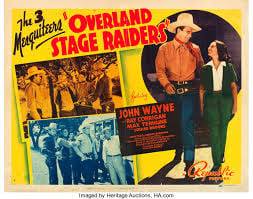
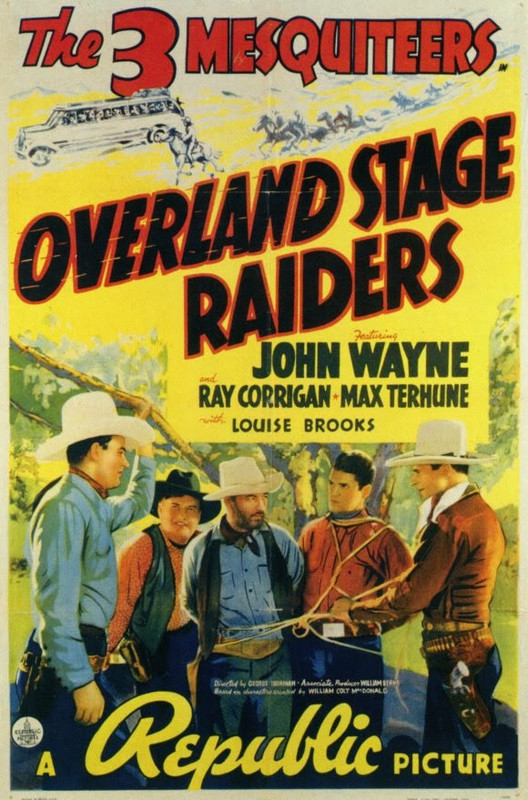
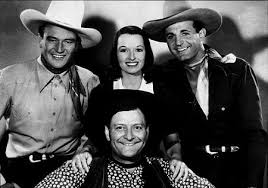
NEVER A DULL MOMENT WHEN THE THREE MESQUITEERS ADD THRILLS & CHILLS TO THE DRAMA OF THE WEST! (1938 print ad tagline)
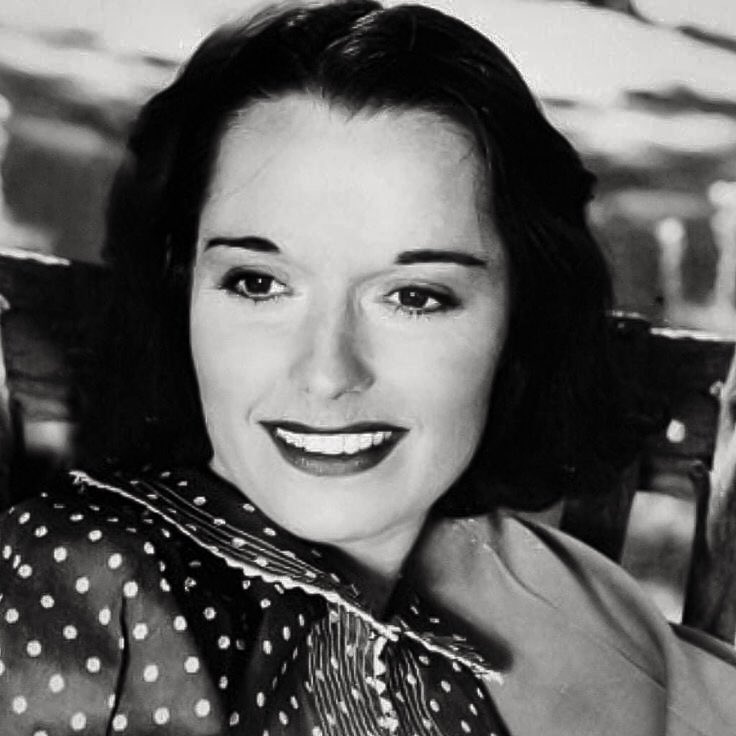
LOUISE BROOKS IN 1936
By 1936 Louise Brooks was at the end of her road. Less than a decade earlier she had been the glamorous, high-flying, hard-partying toast of Europe and now she was virtually unemployable. In 1929 she had stomped out of Hollywood in a huff during contract renewal negotiations and took an offer from German director GW Pabst to take the lead role in his planned version of "Pandora's Box", a notorious play by the equally notorious Frank Wedekind (which had already been the subject of four previous attempts (which I've written about here) which was followed by another Pabst film "Diary Of A Lost Girl" (another remake) followed by a French film "Beauty Prize". While not exactly huge commercial successes these films fascinated critics as did Louise who seemed to have Europe at her pretty feet. Pabst had plans for her and begged her to stay in Europe but she was homesick, missing her wealthy American boyfriend and given that talkies were now standard and Louise spoke only English she hopped on a ship and returned home. She was not exactly welcomed with open arms by the studio she had had so casually walked out on but she was offered some chances. When she had left Hollywood she had just wrapped up filming her parts on "The Canary Murder Case", one of those vaguely "based on a true story" crime film (which I've also written about here) starring William Powell as detective Philo Vance which had been filmed as a silent and then shelved when talkies came in. The imposition of talkies had presented studios with the question of what to do with the unreleased or unfinished silents they still had in the can. In the case of "The Canary Murder Case" it was decided that the film could be salvaged with a mixture of fairly extensive reshoots and overdubbing other scenes. Thus Louise was offered the chance to come back and do the overdubs, however the ever willful Louise was as yet not terribly interested in returning to Hollywood. She later claimed to be offended by the low-ball offer, insulted that she was expected to do a vocal audition ("I have a perfectly lovely voice") and miffed that they had allowed her to leave in the first place without the offer of a raise but friends later gave their opinion that she was simply more enamored with her rich boyfriend George Marshall in New York and not interested in returning anyway so she once again flounced off leaving the studio to hire Margaret Livingston to dub her voice parts. Louise would then have the nerve to be miffed about the quality of the dubbing claiming that she would have done a better job. Not that she was wrong mind you. Louise would eventually change her mind and return to Hollywood where she had to accept supporting roles in a few lesser comedies until she got another offer for a role in a major film in a Jimmy Cagney gangster film "The Public Enemy" but with her unerring talent for bad judgement she turned that down as well. This last snub effectively ended her career although she didn't know it yet. Aside from a couple of minor supporting roles she would never again be offered a serious role in a major production. Finally she belatedly realized she was in no position to be picky anymore and was now ready to accept roles she had turned her button nose up at just a few years earlier.
One such rejected role was in the Poverty Row western studio circuit. The silent era Western Epics of William S Hart and Thomas Ince Westerns had been major productions which were treated as respected artistic works, especially in Europe. However in the sound era they had become low budget assembly line Oaters produced by shoe-string studios like Republic, Mutual, Tiffany and Monogram referred to as Poverty Row with cookie cutter plots, cardboard characters and plywood sets fired off in a couple of weeks for an audience made up of the rural and working class and kids. This audience may not have been very demanding but they were loyal to their own stable of stars that included the more-or-less interchangeable likes of Ken Maynard, Art Accord, Jack Hoxie, Tom Tyler, Hoot Gibson and Johnny Mack Brown and the odd genre of Singing Cowboys Gene Autry, Roy Rogers, Tex Ritter, Spade Cooley and even the odder genre of Black Singing Cowboys Herb Jeffries (who I wrote about here) and once even Louis Jordan (who I wrote about here). One of these stars was Buck Jones, a veteran who had been making Oaters since 1920.
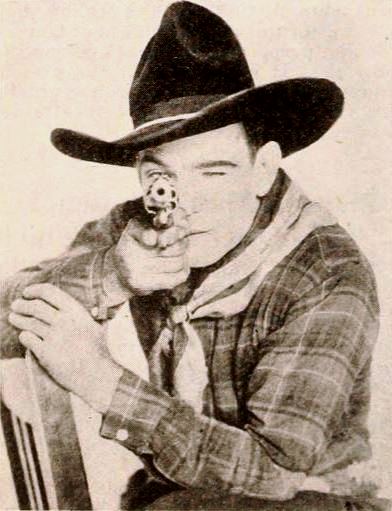
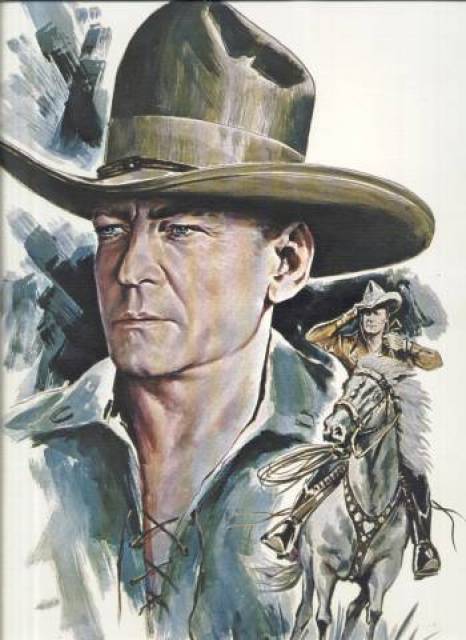
BUCK JONES
Like many other early Cowboy stars including William S Hart, Tom Mix and Art Accord, Jones had a genuine background as an adventurer. Born in 1891 he had worked as a cowboy, served in the Army during the Philippines War, trained as a pilot and raced cars all before heading to Hollywood to work as a stuntman by 1914 and getting his first starring role in 1920. He was one of the bigger Cowboy stars in the silent era and was able to continue into talkies. Like many Western stars he had genuine cowboy roots and could convincingly ride and do his own stunts and having a gruff baritone had adapted to talkies easily enough even if the pay and public and critical acclaim was considerably less than in the silent era heyday. Jones had also branched out into a radio series, comic books and various toys and merchandise.
Buck Jones had had his eye on Louise for a while (not a surprise really) and had previously offered her a role upon her return from Europe only to be brushed off. Louise had obviously made some self destructive career decisions and turned down some good chances but this was not one of them. Besides the low standard pay of about $300 a week she did not want to risk being typecast appearing in Poverty Row Westerns, a sure sign her high flying days were over. She was not then entirely sure she even wanted to continue in Hollywood but if so certainly not as a lowly contract player in low budget oaters. However by 1936 she was broke and finally realizing her career was in shambles and willing to take roles she would have sniffed at before so when the affable Jones gave her another offer she took it.
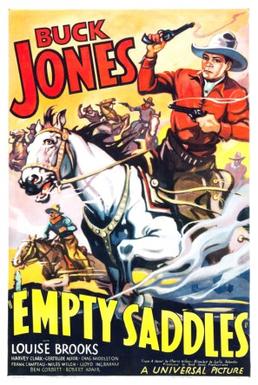
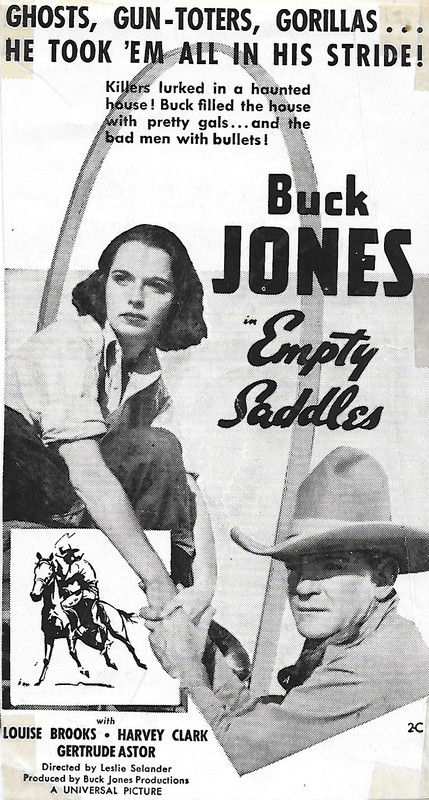
"EMPTY SADDLES" (1936)
Directed by Lesley Selander
Cast;
BUCK JONES ~ Buck Devlin
LOUISE BROOKS ~ Boots Boone
HARVEY CLARK ~ Swaps Boone
CHARLES MIDDLETON ~ Cimarron White
LLOYD INGRAHAM ~ Lem Jessup
GERTRUDE ASTOR ~ Eloise Hayes
Plot synopsis (spoiler alert); Buck Devlin (Buck Jones) is looking to buy an apparently abandoned ranch to turn it into a dude ranch. We know the ranch, named "The Ranch Of The Empty Saddles" is haunted as at the start we see a ghostly cowboy wander about. Devlin hires Swaps Boone and his daughter Boots (Louise) to help run the place along with some unemployed cowhands and a cowboy string band. When wealthy guests arrive from the East they find themselves in the middle of a turf war between the cowboys and sheep ranchers during which one of the cowboys is shot and wounded forcing Boots to take care of him. Boots is unhappy at the ranch and talks of leaving but Buck and her father talk her out of it. Boots overhears a plot by the outlaws to dynamite the ranch house and rides off to warn Devlin while the outlaws try to intercept her leading to a confusing gunfight and Boots being kidnapped. This leads to Devlin riding off to rescue her. Devlin catches up with the outlaw and rescues Boots after a fist fight. The next day Boots boards a train to leave town but Devil rides after her and she jumps off the train and they ride off together to live happily ever after.
========================================
Unlike the silent Westerns of William S Hart and Thomas Ince which were reasonably authentic and gritty, B-movie westerns of the 30's and 40's existed in a strange fantasy world where technology, fashions and music of the Victorian Era lived alongside those of the contemporary times and horse and buggies could share roads with automobiles and occasionally planes and cowboys wearing six shooters could use telephones and radios. The heros wore stagey cowboy costumes out of Wild Bill Hickok's "Wild West Show" with oversize hats and immaculate tight outfits and six-guns while the women might wear modest pioneer dresses or contemporary dresses and other male characters, especially villains, might wear the fedoras and pinstripes of a Film Noir gangster.
All this looks incongruous to modern eyes but seems to have been accepted by audiences at the time. Other expected tropes included buffoonish comic relief that was almost never funny and extended musical numbers that pop at the slightest pretext or no pretext at all. Heroes like Buck Jones, Gene Autry or Roy Rogers were blandly handsome with perfectly slicked back hair, spotless costumes of western shirts, tight pants, spotless boots and white stetsons. While some, like John Wayne or Tom Tyler, were tall and athletic others like Buck Jones had gone somewhat to seed with slightly paunchy dad bods and looked distinctly uncomfortable trading punches. The violence was usually as bloodless as a Three Stooges slap fight with less energy and the romance as chaste as a Lil Rascals short.
This film was shot in a week which was a short schedule even by poverty row standards but it appears to be stitched together from random parts of other B-westerns and is completely incoherent. B-Movie westerns of the 30's were usually predictable; usually some banker or wealthy rancher threatening to foreclose on a poor rancher or widow or rustlers menacing a poor independent rancher or widow, but this one at least does make an attempt at a different plot involving our hero buying a haunted ranch but this odd if promising plotline is then dumped and never mentioned again. The turf war makes little sense, the fight scenes are confusing, more so for being shot at night thus making sure we have no clue who is who. The direction is lazy and equally confused. Like many B-Westerns there is music with the Dude Ranch having a band which seems to be a fairly typical (if mediocre) Old Time Country String Band of the era but the leader speaks with a thick Italian accent and long passages actually have no music at all making them seem even slower moving. The easy-going Buck Jones is bemused throughout as if he doesn't understand the point of all this silliness either while the usually beguiling Louise spends much of the movie alternating between being bored and annoyed. Even her normally luminous smile seems forced, which it probably was. She also looks completely unrecognizable having ditched her trademark black helmet and bangs hairdo in favour of a more plain modern style but she also seems to have gained a few pounds and her face appears softer. Her outfits are not flattering and in a couple scenes she wears oversize jeans (unusual for the time) which make her look rather boyish. While this is objectively a pointless and inferior example of a genre with already low standards all is not lost with Louise however. It is clear that when Louise bragged that she had a fine voice she was not wrong. Her well modulated and clear diction did indeed record perfectly fine. Besides having little to do as a further annoyance she was not allowed to do any of her own horse riding although with her Kansas childhood she claimed she was capable of doing so and a stunt double was used instead which may explain her drab, boyish clothes. Perhaps the studio had insurance concerns but maybe Louise's riding skills just weren't as strong as she insisted.
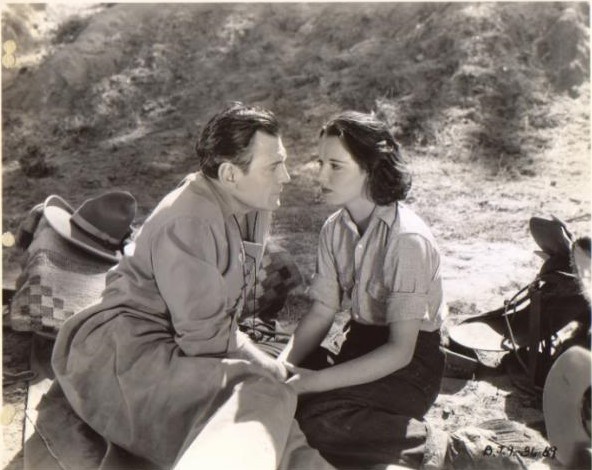
LOUISE & BUCK JONES
As a trivia note this film, like many of Buck Jones' films, was actually written by a woman, Frances Guihan, who had started out as a screenwriter as early as 1916 before ending up paying the bills in quickie westerns after talkies hit. She seems to have dashed this one off pretty perfunctory. The film got poor reviews and was ignored by the public although it did result in Universal Studios releasing a press statement attributed to Louise in which she says;
"I feel that my career is just beginning and practically all of the rest of the time was wasted. I am delighted with my role in "Empty Saddles". It gives me an opportunity to do something, not just stand around and look pretty. I wouldn't trade it for all the other roles I ever had because I am really acting now, not just being an ornament and I feel like at last I am on the road toward getting some place in pictures."
Louise got the standard supporting player fee of $300 per week which is how long the shoot lasted and this statement is so at odds with the shabby quality of the film and what we know about her actual attitude as to be laughable and it is almost certainly entirely made up.
Jones had reportedly been enamored of Louise for some time but if he made a play for her she never mentioned it later as she probably would have and in fact she later said little about the film at all. While this film was an obvious let down from her earlier work and can not have been a happy experience for her it does appear whatever her later denials Louise was still not yet willing to give up on Hollywood and whatever the forgettable quality of this film it did get her an offer to do another Western, this time for Poverty Row mainstay Republic Pictures and part of an existing franchise series starring stars of the genre, the Three Mesquiteers.
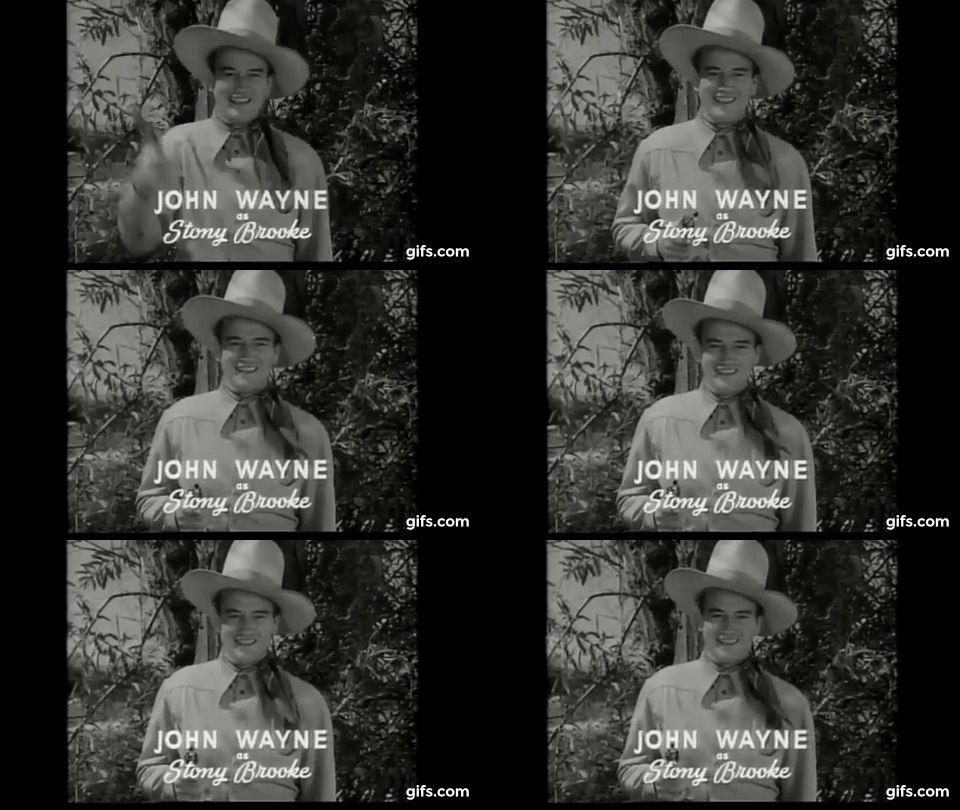
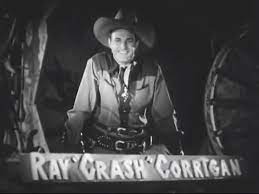
The Three Mesquiteers were actually a revolving set of actors starring in a series of low budget Westerns featuring the likes of John Wayne, Ray Crash Corrigan, Max Terhune, Duncan Renaldo, Bob Steele and Tom Tyler as the titular trio that ran to a remarkable fifty-one movies between 1936-1943. They were fairly typical B-Westerns of the era but they were noted as being better than the average due to having a higher level of energy and star power and they were among the most popular of the genre. Ray Crash Corrigan was one of the original Mesquiteers while John Wayne joined in 1938, both were already veterans of the genre and were of the tall, clean-cut, broad shoulders and athletic hero type giving the audience two for the price of one while while the third Mesquiteer, usually chubby Max Terhune, was the loyal Sancho Panza comic relief sidekick. By this point John Wayne had been in Hollywood since at least 1926 doing various bit parts and making ends meet as propboy and riding double. A six foot tall former football player he found work on Westerns where he caught the attention of stars Tom Mix and Buck Jones whose style he emulated as well as directors John Ford and Raoul Walsh who gave him his first big break as the lead in the first big budget sound Western "The Big Sky" in 1930. The twenties had seen the epic Westerns of William S Hart and Thomas Ince, known for their relatively realistic look and dark gritty style but these had fallen out of style by the end of the decade in favour of the more cartoonish action filled films of Tom Mix, Bob Steele, Ken Maynard and Art Accord which were not only more popular but also cheaper to make. "The Big Sky" was an attempt to make a sound version of the Western epic but it was only a middling success and Wayne would have to spend the next several years doing B-Mvies as there was little studio interest in a big budget Western in the early thirties. Instead the stetsons would be taken up by the low-budget Poverty Row studios like Republic and Monogram who churned out hundreds of standard quickies starring the likes of Maynard, William Boyd (Hopalong Cassidy), Ray Crash Corrigan and Tom Tyler along with the oddly popular sub genre of Western Musicals starring Gene Autry and Roy Rogers. These films were usually added as openers to a double feature or in weekend matinees where they were popular enough with working class and rural audiences but earned a devoted audience among children who bought from an array of merchandise from toys to hats and t-shirts to lunch boxes as well as some branching out into comic books and radio. Wayne spent the rest of the decade making highly successful B-Westerns which were popular thanks to Wayne's quirky screen presence and voice and his physicality which allowed him to do more realistic fights, stunts and horse riding scenes. The Wayne films, while usually following the same cliche formulas generally also maintained a higher level of action and a faster pace with plenty of chase scenes, fights and shootouts, however bloodless they might be.
The Three Mesquiteers took the basic formula and added another co-lead hero as well as a comic relief sidekick and were highly successful throughout the decade starting in 1936 starting with Bob Livingston, Corrigan and Terhune with Wayne replacing Livingston in 1938. Original Mesquiteer Ray Crash Corrigan had a unique career starting off as a stuntman he soon specialized in playing giant apes in Tarzan and Flash Gordon films (he even had his own gorilla suit) before getting his own lead role in a popular serial "Undersea Kingdom" which was basically Flash Gordon without the spaceships and taking the name Crash Corrigan. This soon got him cast as one of the Mesquiteers. As a former stuntman he was athletic and could convincingly ride and fight. Max Terhune was a chubby former vaudeville and medicine show performer who did a variety of comedy bits; card tricks, rope tricks, juggling, whistling as well as ventriloquism (poorly) including having his own doll named Elmer which he managed to insert into various films.
Contrary to today's popular assumptions the Bad Guys in these films were usually not hostile Indians or Mexicans (although that was possible) but instead were typically greedy capitalist bankers and wealthy ranchers (more relatable villains to an audience of white working class and rural folk during the Great Depression) or various outlaws. These films also typically needed a comely yet feisty damsel in some sort of distress and while that was hardly Louise's usual role, "Empty Saddles" had proven that she was game enough, not to mention desperate enough to do it.
"OVERLAND STAGE RAIDERS" (1938);
Directed by George Sherman
CAST;
JOHN WAYNE ~ Stoney Brooke
RAY CRASH CORRIGAN ~ Tuscon Smith
MAX TERHUNE ~ Lullabye Joslin (and Elmer)
LOUISE BROOKS ~ Beth Hoyt
ANTHONY MARSH ~ Ned Hoyt
JOHN ARCHER ~ Bob Whitney
ARCH HALL SR ~ Joe Waddell
Plot Synopsis (spoiler alert); Set in the same more-or-less modern West as "Empty Saddles" the film opens with a modern bus being held up by Wild West Outlaws riding horses and brandishing six shooters. The Outlaws are robbing the buses for the gold shipments being transported from a nearby mine. Next we see two of the Mesquiteers, Tuscon Smith and Lullabye Jospin (Corrigan and Terhune) riding to meet Stoney Brooke (John Wayne) when suddenly they spot a small plane overhead when a parachutist jumps out. Reaching the ground they discover the jumper is actually Stoney Brooke who tells them he has spotted another bus robbery about to happen and the trio race off to intercept which they do, driving off the Outlaws and saving the gold. The Mesquiteers pick up a reward and Stoney suggests to the mine owners that instead of shipping the gold using the buses they instead use the plane which is owned and flown by Ned Hoyt and run with his sister Beth (Louise). The Hoyts are broke and on the verge of shutting down and leaving so Stoney suggests that the Mesquiteers use their reward money to invest in the airline and they line up a few more investors from the locals. Joe Waddell is a local former pilot who had lost his wings after a plane crash and is now working as the ground radio operator and he asks Beth for a co-pilot's job and she promises to ask the others but when Whitney, another pilot who is an old friend drops by she hires him as copilot instead which leads to resentment from Waddell. Meanwhile Whitney, the owner of the bus line sees the new airline as a rival and decides to sabotage it. He has been working with the Outlaws all along. The Outlaws hijack a train and the Mesquiteers who lead a posse after them catching the train and foiling the robbery yet again. The Outlaws next hijack the plane, piloted by Hoyt which is carrying passengers and gold, shooting Whitney and forcing the passengers to bailout using the parachutes. Hoyt tries to radio for help by Waddell who is manning the ground radio on the hijacking and does not relay the message. However before they can fly away Ned Hoyt drains the gas tank forcing them to make an emergency landing.
Beth reveals that the Hoyts have been using a fake name, their real name is Vincent and Ned is a former outlaw who served time in prison. Stoney says he already knew but did not tell the others. Hoyt is accused of being in on the hijacking but Stoney defends him and promises to get to the bottom of things. Meanwhile the outlaws manage to call radio Waddell and tell him that they are grounded and in need of fuel which he passses on to Jessup who sends out more outlaws to deliver the gas by horseback. After interviewing the passengers Stoney figures out Waddell is in on the hijacking and sets a trap and catches him and gets the location of the plane. The Mesquteers tie up Waddell and ride off to intercept the gas delivery; this leads to a chase and gunfight as the Mesquiteers capture the bandits and ride off to find the plane. Back at the airstrip Beth finds Waddell and not knowing he is one of the outlaws unties him and he escapes locking her in the cabin and riding off to warn Whitney who gathers his bandits and rides off to find the airplane. They arrive to find the Mequiteers already there and a gunfight ensues in which the Mequiteers prevail, the Bad Guys are arrested and Hoyt is rescued. Back at the airstrip the gold is returned and Ned and Beth will be able to pay off their bills and stay in business. Finis.
=====================================
This film, while still silly, is at least more coherent and competent than "Empty Saddles" and has more energy although that is a low bar. John Wayne may not do very much but he has some of his distinctive screen presence and confidence. Crash Corrigan is blander by comparison while Max Terhune is marginally less annoying than the usual comic relief sidekick aside from one awkward scene in which he brings out his dummy Elmer for no apparent reason other than to show he is possibly the least convincing ventriloquist ever. While not showing any visual flare the film is more briskly directed and the action scenes make more sense although there are a number of scenes of cowboys riding furiously to and fro which seem to be added to pad things out. Speaking of which, the train robbery scene while competently shot has nothing to do with the rest of the plot and seems to have been tacked on to add more action and give John Wayne a chance to jump onto a moving train.
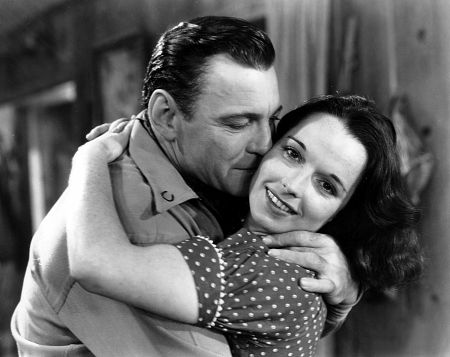
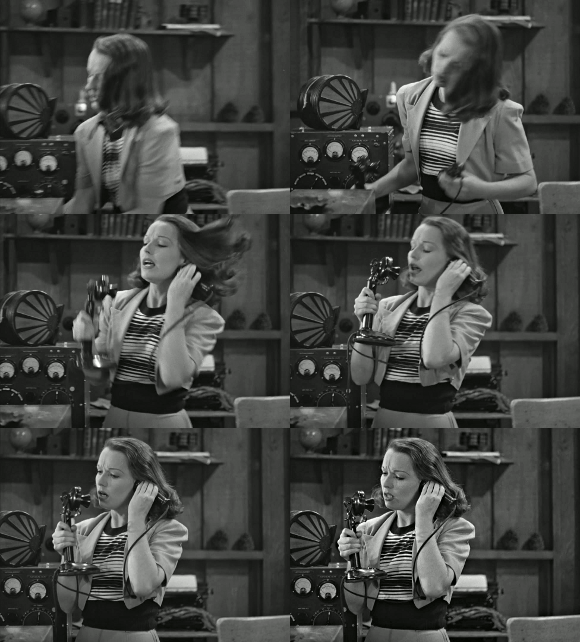
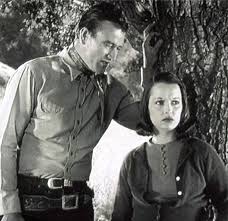
As for Louise she is given little to do other than be an occasional romantic foil for Wayne and her role is really superfluous but she seems less ill at ease and while no longer having her usual mesmerizing charisma is not without some trace of her genuine screen presence. She also looks better than last time. Although she is basically unrecognizable from the girl who dazzled Europe with her hair grown longer in a Lana Turner do while keeping some of the lusterous sheen of old and her seeming to have lost a few pounds. She is still beautiful, in fact she now looks remarkably like Veronica Lake which is a little ironic as Lake would star in "Sullivan's Travels" (1941) which was basically an update on one of Brook's earlier classics "Beggars Of Life". Her outfits are also better running to trim form-fitting 1940's dresses and a pair of fetching jodhpur riding breeches and boots.
Once again she earned the standard $300 per week fee for a shoot that lasted a week or two and she managed to be on her best behavior and seemed to have gotten along with the rest of the cast and even admitted to being smitten by John Wayne who she described as; "This is no actor but the hero of all mythology miraculously brought to life...Now for the first time I beheld a Duke born to reign. John was in fact what Henry James defined as the greatest work of art, a genuinely beautiful being".
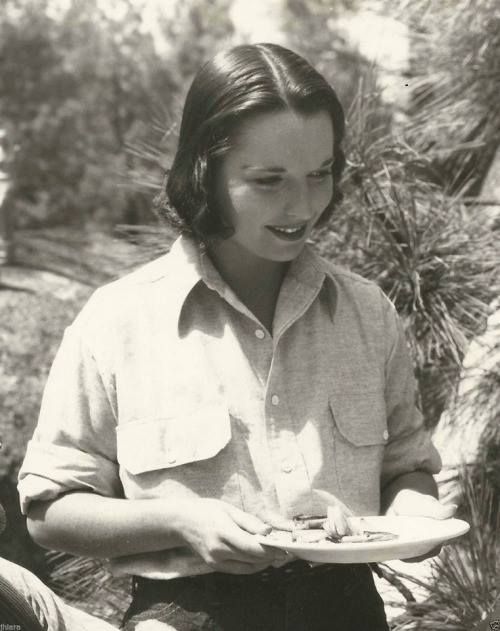
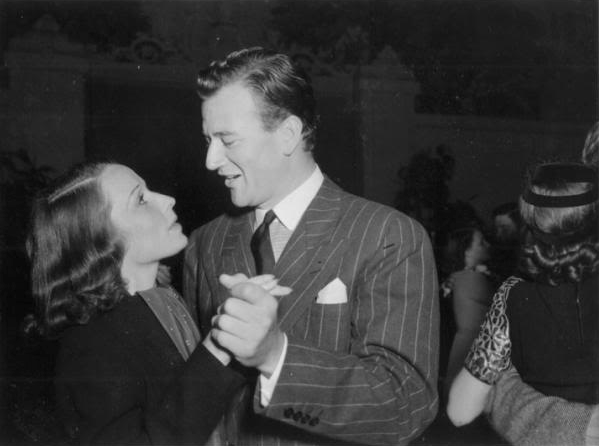
At this point Louise could have easily kept doing Westerns. She almost certainly would have been offered a contract with one of the Poverty Row studios and while it would not have been very prestigious work it would have at least paid the bills and would have provided steady work for a few years until, well something turned up. However she seems not to have considered it. While she was later photographed at a wrap party happily mingling she soon decided she had had enough of Hollywood. She had starred in some prestigious films and had a taste of the Hollywood and Weimar highlife and scraping the bottom of the Poverty Row barrell wasn't for her. She packed up and headed for New York with some vague idea of restarting her previous career as a serious dancer but after that failed and aside from a short and somewhat ironic stint as a radio voice actor her showbiz career was truly over at age thirty.
LOUISE & JOHN WAYNE AT THE WRAP PARTY
John Wayne on the other hand was headed for bigger things as within months John Ford cast him in "Stagecoach '' a film designed to bring back the epic Westerns of William S Hart. Ray Crash Corrigan had the oddest showbiz career arc of anyone as he would continue making B-Westerns for some time and when those dried up in the 1940's he reverted to his earlier career donning his old ape costume appearing in B-Monster films like "The White Gorilla", "White Pongo", "The Monster Maker", "The Killer Ape" and the self explanatory "Bela Lugosi Meets A Brooklyn Gorilla". His final film role was in the genuine cult classic "It! The Terror From Out Of Space" (1958) in which he played It. After retiring his Gorilla suit he bought his own cowboy film set and opened it as an amusement park and dude ranch called Corriganville Park where he teamed up with his old partner Max Terhune to regall greenhorn tourists with tall tales and perform gun and rope tricks. He died in 1974 aged 74. As for Terhune after the decline of these types of B-Westerns he worked as an extra and performed as a magician doing card tricks at the Magic Castle besides performing at Corriganville. He died in 1973 aged 82. Arch Hall Sr, who played Joe Waddell, would go on to a career as a director and producer of even lower budget Z-Movies in the 1950's drive-in theatre Teen Explotation era starring his son Arch Hall Jr including such notorious anti classics as "Eegah", "The Choppers" and "The Wild Guitar", he died in 1978.
LOUISE & THE THREE MESQUITEERS
There would be no long decline or retirement for Buck Jones in 1942 he was a guest at the famed Cocoanut Grove nightclub in Boston when a fire broke out with most of the guests trapped inside as management had locked some of the fire exits. In the resulting disaster 492 people died among them Buck Jones who died later in hospital. The circumstances of his death were unclear with some accounts saying that Jones (who had reportedly been serving as a guest MC) taking to the mic to urge calm and afterwards his widow claiming that Jones had made it out of the club but went back in to rescue survivors only to be overcome. John Wayne, who would always name Jones as one of his idols, would repeat this account for years but modern research shows this was unlikely. He was in fact found unconscious under his table overcome by smoke as were many guests, perhaps he did delay fleeing to direct others out but it's likely he was overcome by the choking, blinding smoke before he had a chance to try and find an exit. It's also possible in seeing the hellish chaos inside the blazing inferno as frantic terrified guests piled up against the locked doors he tried to grab shelter by keeping low, taking whatever shelter he could desperately find until the smoke found him. In the end he suffered serious burns and smoke inhalation and died two days later, he was 50.
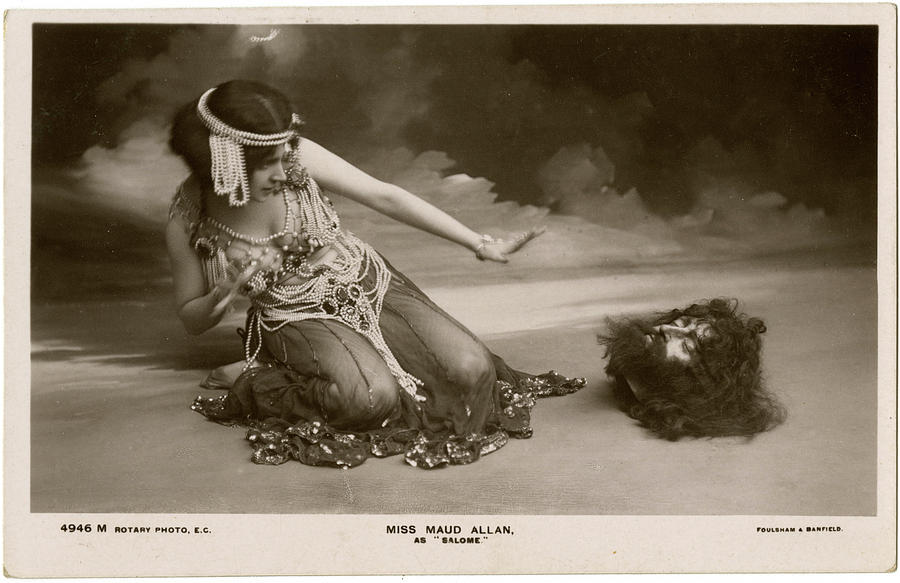
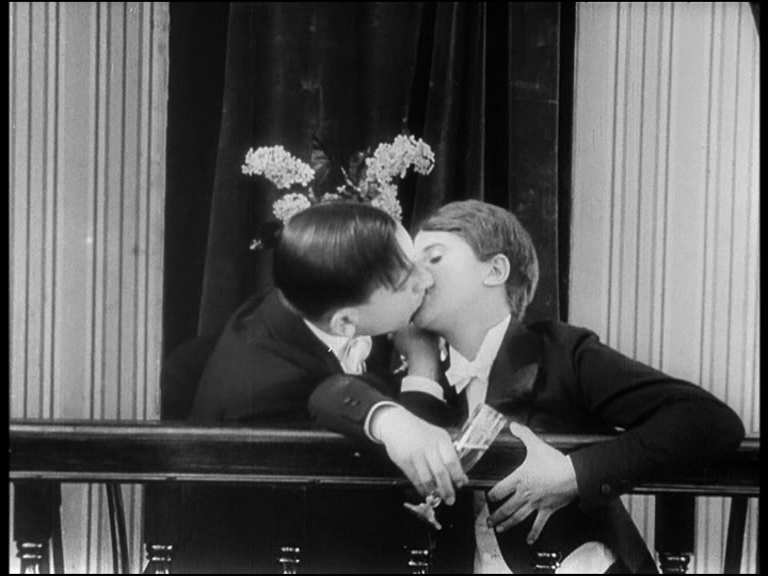
Given current controversies one could get the impression that gay themes and representation in film is a recent development, this is not even close to being true. In fact more-or-less openly gay performers could be highly successful in the pre-film vaudeville era with the likes of Julian Eltinge, Bothwell Browne, Karyl Norman and Bert Savoy while the early Jazz scene offered up the popular cross-dressing singers Frankie Half-Pint Jaxon and Gladys Bentley. However while these figures were known to those in the know they were careful to maintain a pose of plausible deniability. Eltinge while famous as a "female impersonator" made a point of being photographed doing manly pursuits as riding horses, doing carpentry and boxing while Half-Pint Jaxon could boast of being a WW1 army vet, relying on the common assumption that a gay man couldn't also do such activities. For an example of the price of allowing the mask to completely slip one may consider the legal travails of Oscar Wilde or compare the case of the two Mauds. Two of the most successful actresses of the Edwardian Era American stage Maud Adams and Maud Allan were both beautiful, respected and popular with both critics and audiences, both were also either gay or bisexual. However they could not have been more different. Maud Adams was modest, proper and while subject to rumours kept her private life quiet and avoided any scandals. Meanwhile the Canadian born Maud Allan was one of the most flamboyant figures of an age that included Sarah Bernhardt, Lillie Langtry and Mata Hari. Infamous for her scanty costumes, sexually charged performances, scandalous personal life which included being openly gay and for being largely responsible for the popularizing of the classic exotic Vamp character of "Salome" in the stage version of the Oscar Wilde play later defined on film by Theda Bara and Alla Namizova. Allan's high flying persona took her to Europe and more fame but like Oscar Wilde she would eventually be brought low by a court case involving a sleazy conspiracy theorist during WW1 Britain, she would only get the chance to make one movie, now lost, in which she played an Arab temptress.
On film there had been occasional portrayals of thinly veiled gay characters usually as comic figures winking at the audience while the other characters on screen were usually quite clueless. Another stock character who often turned up in comedies and westerns was the "Sissy"; an effeminate sidekick who provided comic relief. Existing alongside all this winking and giggling was the odd and largely forgotten film "A Florida Enchantment" (1914) in which the female character drinks a magic potion and is turned a man lusting after pretty girls, something the film clearly regards with both humour and revulsion as a curse to be lifted so that she can be "cured" and return to normal, ie straight. But for a far more serious and intellectual approach there was the captivating figure of Alla Nazimova, widely known as being bi-sexual whose mutiple affairs with other actresses even while she was actually married to actor/director Charles Bryant were well known in Hollywood but not in the viewing audience. At least until she made her uniquely artistic version of "Salome" with a cast in which some of whom acted openly effeminate in a way that even an unsophisticated audience could hardly miss and created a scandal. The financial failure of the film (in spite of some critics recognizing the film's artistry) and the fallout of her messy divorce to Bryant helped bring her career to a screeching halt. Despite all this however, even though Alla's personal life was much speculated on and there were plenty of characters in "Salome" who were fairly obviously gay in none of her films was there ever a suggestion that she herself was.
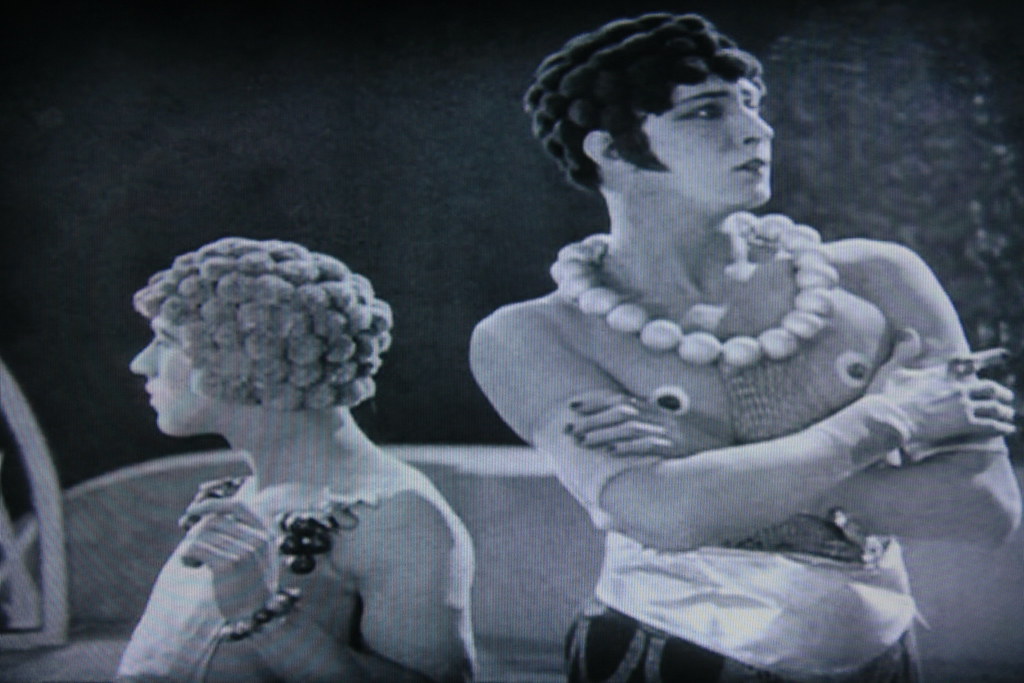
"SALOME"
Aside from the self-consciously artsy "Salome" any American films using implied gay characters treated them as thinly veiled and existing for comic relief with no attempt to treat them as serious or have them be the lead characters, for any such treatment would instead come from the unique hothouse atmosphere of early Weimar Germany.
OSSI OSWALDA IN "I DON'T WANT TO BE A MAN"
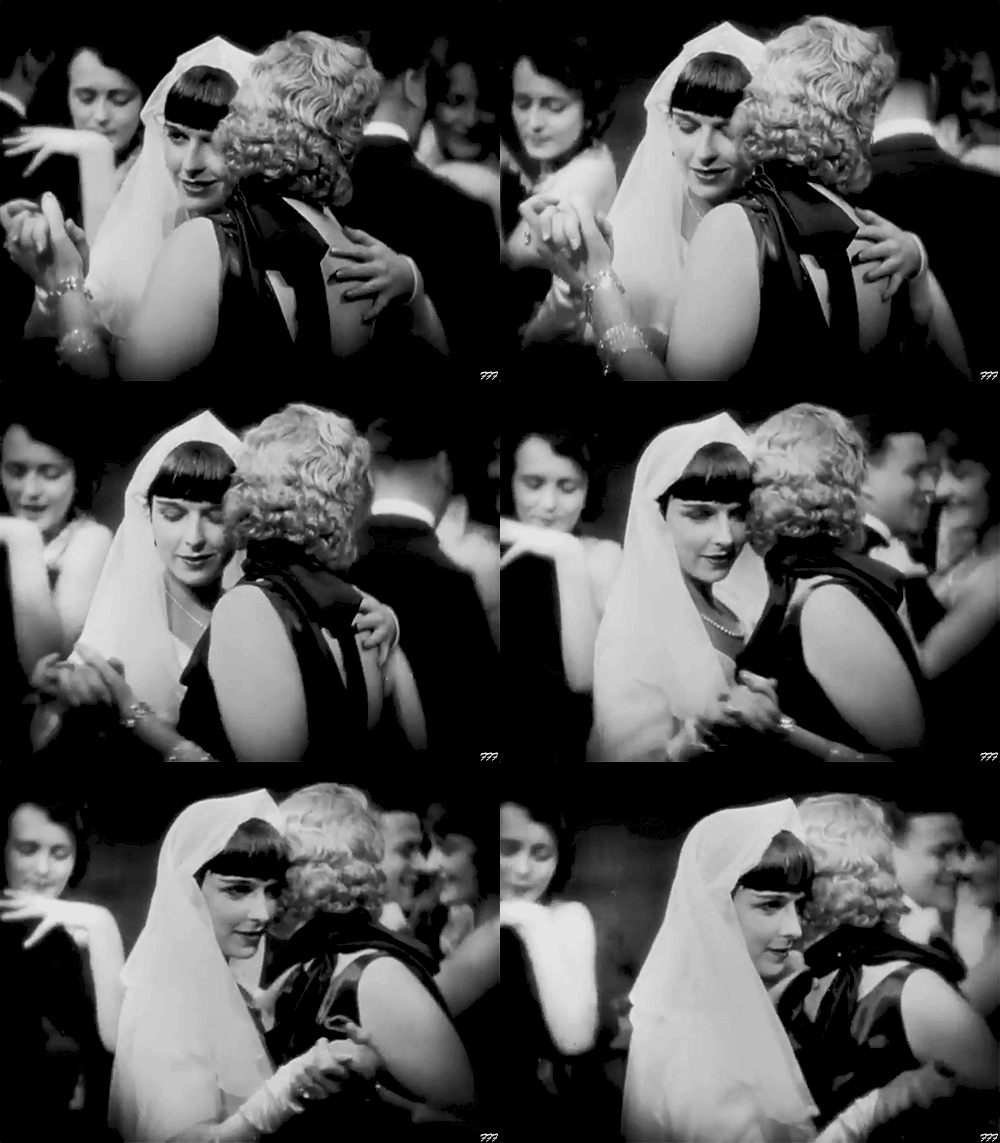
Prior to the Great War, Berlin, Vienna and a few other cities in Germany and Austria, while autocracies, already had an arts, theatre and literary scene that was surprisingly open and permissive and included Egon Schiele's paintings of scantily clad prostitutes and the plays of Frank Wedekind who wrote the original plays that would become the basis of the classic film "Pandora's Box" a decade later. However none of this made it's way to the screen where official censorship still reigned. In fact while Wedekind's "Pandora's Box" contained the obviously gay character of the Countess who has a crush on Lulu the first film versions, of which there were four starting as early as 1917, omitted that character and subplot entirely. (Note; Two of these pre-Brooks films are extant and I've already written about them here) and in the Pabst verion while the Countess character is veiled gay and obviously has a crush on Lousie's Lulu it is never clear whether Lulu herself is really aware of this much less acting on it.
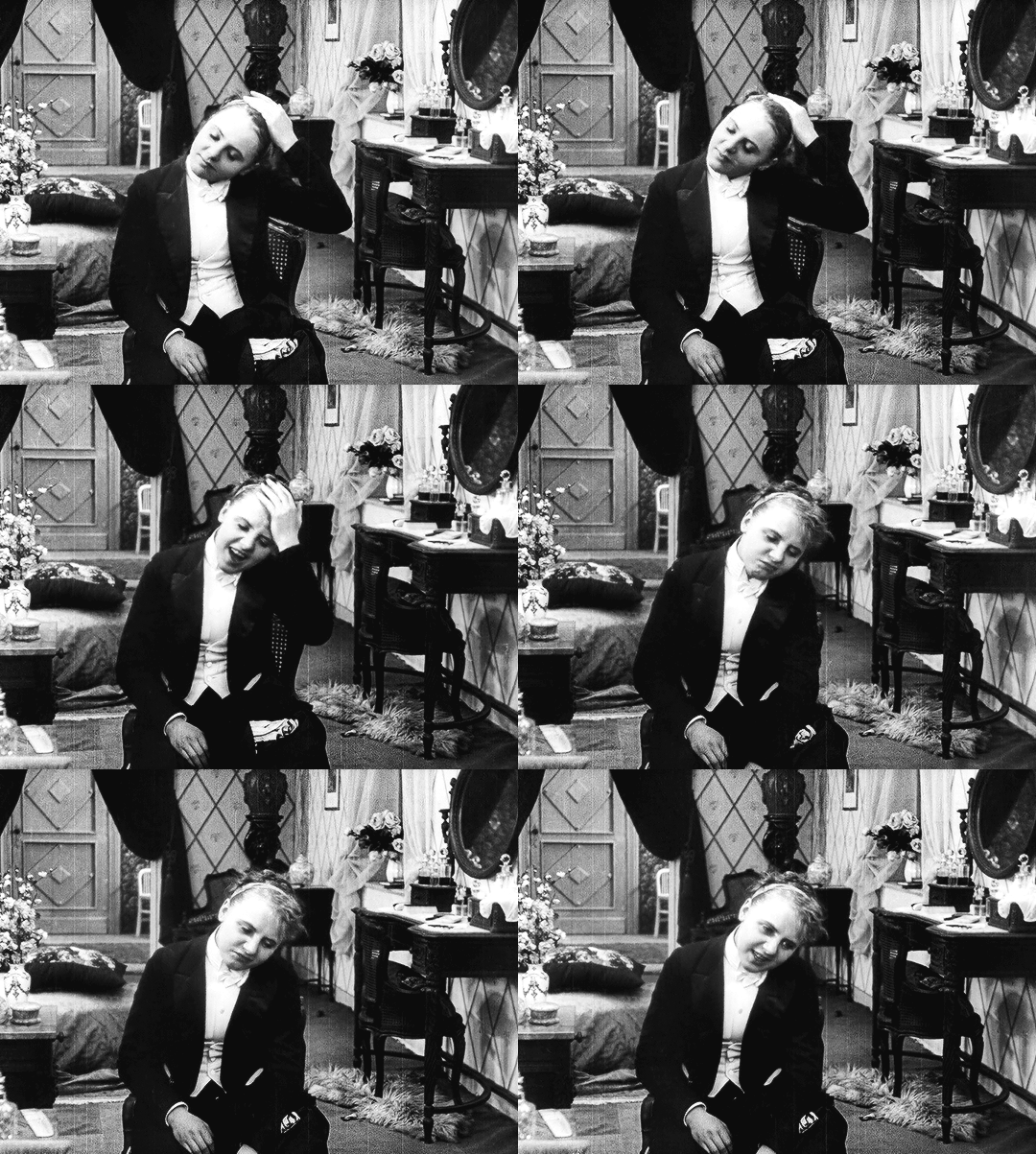
Sometimes considered as the first Gay themed German film and actually predating Weimar by a year was "I Don't Want to Be A Man" in 1918 directed by Ernst Lubitsch in one of his early films and starring Ossi Oswaldo, popular comedian and cabaret performer. The film is a comedy in which a free spirited young woman (Oswaldo) living with a stuffy male Chaperone escapes for a night on the town in drag dressed as a dapper young rake during which she runs into her stuffy Chaperone and they proceed to get drunk, party and make out. At the end the Chaperone realizes her deception and after first being insulted he then decides he is in love with Oswalda and the two embrace. Calling this film gay themed is a little misleading as while Oswalda is masquerading as a male at no point is there any suggestion that she is gay. On the contrary she has at least a dozen male suiters which she happily encourages. She shown as a rambunctious (if not downright manic) untamable free spirit who is happily able to out-drink, smoke, dance and play cards againt any man and who rebels against female role conventions. It is in this context she utters "I wish I'd been born a man" and decides to spend a night on the town in drag, but it is clear she is merely playing role for fun and enjoys fooling everybody. Which she does in spite of the fact that the audience can clearly see she is not all that convincing and could charitably be considered as looking like a barely legal teenage male. At the end she pointedly says she no longer wishes she was a man and embraces her new boyfriend. So while this film is certainly gender-bending it was not really considered a Gay themed film for years. In fact this interesting but previously obscure film only became added to the gay film canon when some latter day writers noticed the actions of the male Chaperone who starts drunkenly making out with Oswalda who he has no reason to know is actually female. When her deception is revealed he only briefly insulted and she is not bothered at all by the possibility that her new boyfriend is possibly bisexual (not mention also attracted to what appears to be at best a barely legal youth) and they both just shrug it off.
"I DON'T WANT TO BE A MAN" (1918)
Directed by Ernst Lubitsch and starring Ossi Oswalda and Curt Goetz
This film is a silly romantic comedy and while sympathetic to the constrained roles of women it is in no way intending to make any sort of statement or character study nor is it intended to be taken seriously, it is simply an escapist romp. The escapist nature of the film can also be seen in the fact that even though this film was made during World War One there is not the slightest hint of that to be seen here.
Lubitsch would go on become one of Germany's most popular directors known for his elaborate romantic comedies with this film not previously being considered one of his important works with neither Siegfried Kracaur or Lotte Eisner mentioning it at all in their definative books about Weimar film and it was largely forgotten until gay writers discovered it. Oswalda was briefly a major star in German film in the 1910's dubbed as the "German Mary Pickford" (although Mable Normand would be a better comparison) and majoring in comedies and light romances including some by Lubitsch although her film career petered out before the advent of talkies and she turned to the stage. At the height of her fame she carried on an affair with the notoriously obnoxious German Crown Prince Wilhelm (albeit by then dethroned) however she rejected the Nazis and when they seized power she fled the country with current lover, Austrian film producer Julius Aussenberg (who had worked with FW Murnau and Walter Ruttmann), to Czechoslovakia. After the Nazis seized that country they remained but their careers were over and she suffered from ill health dying in obscurity in 1947. Lubitsch would move to Hollywood where he would have a successful career as director and producer into the sound era including films with Garbo, Jimmy Stewart, Mary Pickford, Douglas Fairbanks, Charles Boyer, Billy Wilder and Otto Preminger. The portly Lubitsch died of a sudden heart attack in 1947 aged only 55.
OSSI OSWALDA
The defeat in the war and the fall of the regime would lead to a Socialist government who took as an early action to abolish all censorship. The intent of this act was to encourage the political debates and criticism of government, religion, the military and history that had been suppressed under the monarchy but this would have an unintended consequence outside politics as there was an explosion in the arts and sciences of pent up ideas including Dada and Expressionism which would affect film along with the scientific research of the likes of Sigmund Floyd, Wilhelm Reich and Magnus Hirschfield and their radical theories on dreams, the subconscious and sexuality which would also make it's way to film. As early as 1919 there started a series of films which claimed to offer "educational" value as explanations of sexuality combining stories of various sexual issues portrayed in soap opera type fashion to act as early Exploitation films while including just enough dry lectures and slide shows to be considered educational. The genre was referred to as "Aufklarungsfilm" or Enlightenment Films and titles included the likes of "Lost Daughters", "Hyenas Of Lust", "Vow Of Chastity" and the portentous sounding "Women Engulfed By The Abyss" (all in 1919). Most of these films would not survive as they would be banned by the Nazis once they seized power and they would be largely forgotten and for much of the century since this was not considered much of an artistic loss. They were made quickly and cheaply for an audience that would be unlikely to be terribly demanding being essentially the equivalent of the American Exploitation films of the fifties. Critics at the time dismissed these films as tacky and of poor quality along with conversely often being quite dull. Film historian Sigfried Kracauer in his definitive book on Weimar film, "From Caligari To Hitler" (1947) briefly mentions this genre (which he calls "Sex Films") in a couple of pages in which he recognizes the worth of few of these films but dismisses the bulk as "just vulgar films selling sex to the public" which was probably true of most while in the other classic Weimar work, Lotte Eisner's "The Haunted Screen" (1952) doesn't deign to mention them at all. However occasionally one such film would be made by a decent, experienced director with a good cast who took the film seriously.
One such director was Richard Oswald (1880-1963) a Jewish Austrian who already had a prolific career that included a popular version of the Sherlock Holmes classic "Hound Of The Baskervilles" in 1914 (he would remake it in 1929, both versions are extant and I've written about them here), a version of Jules Verne's "Around The World In 80 Days" (1919 with Conrad Veidt again, now lost), a couple of early horror films in "A Night Of Horror" (1916, the first confirmed vampire movie, again with Werner Krauss and Emil Jannings, now lost) and a version of "The Picture Of Dorian Grey" (1917, also lost) and the original versions of films later remade with Louise Brooks in "Diary Of A Lost Girl" (1918, again with Conrad Veidt and Erna Morena, also lost) and "Earth Spirit" (1923 with Asta Nielsen, later remade as "Pandora's Box" still extant and which I've also written about here). Taking advantage of the lifting of censorship laws and the popularity of the new "Enlightenment Films" to make some entries of his own including "Prostitution" (1919 once again with Conrad Veidt and Werner Krauss, now lost) and a film now considered the first series gay themed film anywhere for which he also brought one of his stars in Conrad Veidt.
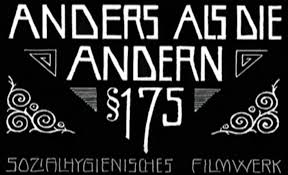
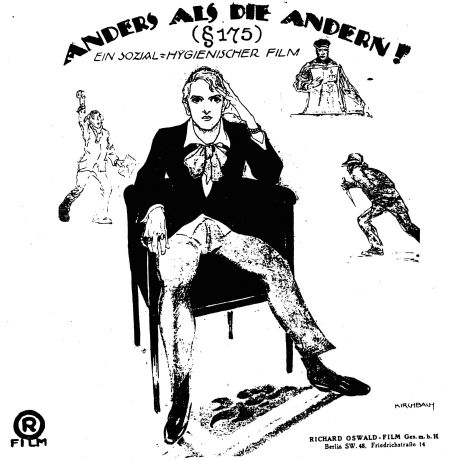
"DIFFERENT FROM THE OTHERS" (AKA "ANDERS ALS DIE ANDERN", 1919);
Directed by Richard Oswald
Script by Richard Oswald and Dr Magnus Hirschfield
Cast;
Conrad Veidt ~ Paul Korner
Fritz Schultz ~ Kurt Sivers
Anita Berber ~ Else Sivers
Reinhold Schunzel ~ Franz Bollek
Leo Connard ~ Herr Korner
Karl Giese ~ Young Paul Korner
Dr Magnus Hirschfield ~ Himself
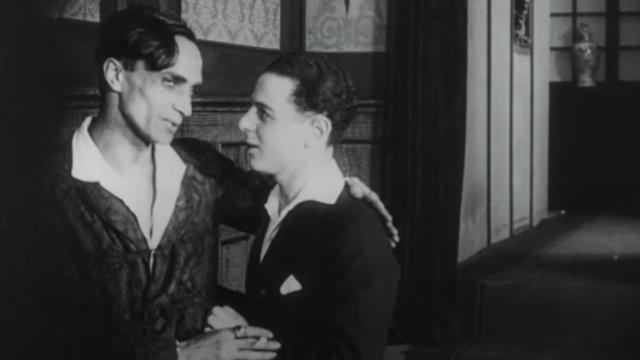
Plot Synopsis (Spoiler Alert); Paul Korner (Conrad Veidt) is a famous concert violinist and music teacher who is secretly gay, hiding this even from his parents. He reads newspaper stories about prominent men who have committed suicide and he suspects they were hiding the same secret. He lives in fear of being discovered as being gay is against the legal statute 175 and he can be a target of blackmailers. Paul finds himself attracted to a handsome young violinist, Kurt Sivers (Fritz Schultz), who he takes on as a student. Max's sister Else, (Anita Berber) is also attracted to Paul but he ignores her. Paul's parents try to set him up with a wealthy young widow but he ignores her as well and reveals the truth to his parents who he sends to see the famous sexologist Magnus Hirschfeld (playing himself) who explains Paul is gay and urges tolerance. Paul and Max have been spending more time together and Max's parents have become concerned but Paul convinces them to let him continues as a student. One day while Paul and Max are taking a stroll in the park they are spotted by Franz who figures out the truth about their relationship and visits Korner at his house and blackmails him. Korner agrees to pay and Franz leaves but later continues to demand more money which Paul refuses to pay. Kurt has his first public performance which Franz hears about and while afterwards Franz breaks into Paul's house looking for incriminating letters where he is discovered by Kurt and a fight breaks out. Paul arrives and forces Franz to leave but Franz first taunts Kurt threatens to reveal his secret. Distraught Kurt flees town leaving a letter for his sister Else who tells Paul who collapses. Else comforts him and tells him she is attracted to him but he again rebuffs her and she leaves upset. Kurt earns a living playing in a sleazy nightclub where the daughter of the owner flirts with him only to be rejected. Insulted she tells her father he attempted to seduce her and Kurt is fired and thrown into the streets. A depressed Paul daydreams about his days as a student (played by) at a boarding school when he had a illicit relationship with another youth and was expelled. Later at university Paul keeps to himself and his studies but is dragged to a sleazy bar by his classmates where prostitutes who proposition him only to be rejected and the Madame suspects his secret. Paul attempts to "cure" himself through hypnosis but is unsuccessful. He then seeks advice from Dr Hirschfield who comforts him assuring that his feels are not shameful. Later Paul is shown attending a dress ball where he meets Franz for the first time who flirts with him and Paul invites him home. Once there Franz instead reveals he is a blackmailer and demands money. Paul agrees to pay but Franz taunts him suggesting he will return for more. Paul is awoken from his dream by the arrival of a ticket to attend a lecture by Dr Hirschfield and he sends the ticket to Else suggesting she attend so that she can llearn about his and Kurt's relationship. Extended footage is shown of Hirschfield giving his lecture including a slide show. Else attends and speaks to Hirschfield and she then tells Paul she now understands the situation and promises to be a supportive friend. Later Franz is arrested for blackmail while Paul is arrested for being gay. Both are found guilty with Franz being sentenced to three years in prison while Paul is sentenced to a week in jail even though the Judge declares his belief that Section 175 is unfair. Regardless of the Court's recommendation for leniency Paul's reputation is destroyed; his friends desert him he is fired from his positions, and his father says he has dishonored the family and implies he should commit suicide, only his Butler remains loyal. Paul takes poison and dies. When Kurt hears of Paul's death he rushes to the funeral as does Else and Dr Hirschfield. When Paul's family objects to their presence Else angrily turns on them blaming them for abandoning him. Kurt considers also killing himself but is restrained by Dr Hirschfield who urges him to go on and to fight for equal rights. Finis.
CONRAD VEIDT & FRITZ SCHULTZ
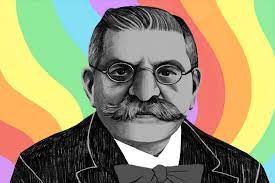
Besides being a skilled and experienced director Oswald took the subject matter seriously and consulted with Dr Magnus Hirschfield (1868-1935) on both "Prostitution" and "Different From The Others" and he gets a screenwriting credit and appears in both films as himself. Hirschfield was Germany's best known expert in the field of gender studies which he termed Sexology. Hirschfield, who was himself openly gay, had started his own Institute Of Sexual Studies where he advocated for tolerance and equal rights for homosexuals as a legitimate "third gender" rather than a deviancy or mental illness and lobbied for the removal of homosexuality from the criminal code where it was referred to as Section 175 since 1875. He insisted that besides being cruel, unfair and ignorant such laws not only inflicted unnecessary suffering but they encouraged blackmailers. Thus the plot of this film mirrors the arguments of Hirschfield who also helped finance the film as well as appearing in it as himself. The film is briskly directed and doesn't have the flair of of some of of Oswald's other work. In the Sherlock Holmes films he showed a fondness for panning shots, a fairly mobile camera and plenty of atmospheric shadows and fog while in "Earth Spirit" he would adopt the full array of Expressionist techniques. This time the tenor is realistic presumably to stress the real life message of the film and it's intent to deliver a serious social message. The "message scenes" with Dr Hirschfield giving a lecture with slides slow down the story but were necessary to maintain the pretense that this was an education film other than the earnest melodrama it actually is as well as probably being insisted on by Hirschfield as a condition for financing the film.
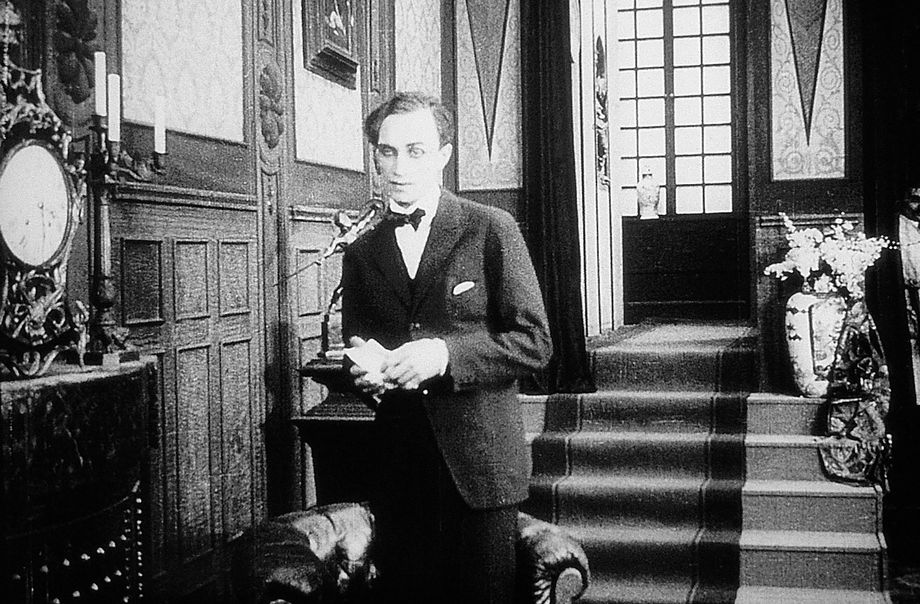
The sets and costumes are pointedly not Expressionist and look realistic and livable as opposed to the nightmarish and claustrophobic sets of "Dr Caligari", "Der Golem", "Die Strasse" or the "Student Of Prague" with one exception being the court scene where Paul and the blackmailer sit alone engulfed in darkness. It's also unlikely they would be in the dock together when they would not be codefendants but we'll set that aside. As for costumes one minor touch from Expressionist theatre can be seen in the gloves worn by the conniving blackmailer Franz which are white with black lines on the knuckles as would turn up again with the evil Dr Caligari the next year.
CONRAD VEIDT
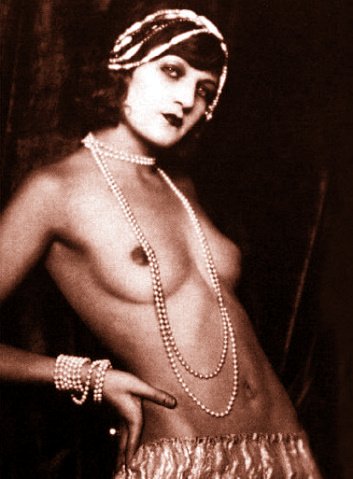
While much of the camerawork is straightforward enough there are plenty of closeups of Conrad Veidt who gives his usual heartfelt emotionalism particularly with his expressive face and dancer's grace. As the film goes on and Paul's torment worsens he wears his stress and exhaustion on his stooped shoulders. Veidt would become famous as the tortured star of some of the greatest horror films of the German silent era with "The Cabinet Of Dr Caligari", "The Student Of Prague", "Waxworks", "The Janus Head", "The Hands Of Orlock" and the American film "The Last Laugh" but his emotional physicality were obviously perfect for romantic melodrama and tragedy as well. Veidt himself, while not gay (he would later happily marry and become a father) was known to be bi-sexual and thus was able to identify with the character. The rest of the cast contains some solid performances as well. Franz Schultz as young Kurt had been a child actor and delivers the right dreamy naivety. Reinhold Schunzel as the blackmailer is appropriately smug and slimy. Karl Giese as young Paul doesn't really look like Veidt and it would probably have been better to simply have Veidt play his younger self but Giese was coincidentally Hirschfield's much younger lover and assistant with an interest in theatre which is likely how he got the role. One of the most interesting/infamous cast members was Anita Berber as Kurt's smitten sister. Berber was a high profile denizen of the Berlin Dadaist and cabaret scene as an exotic dancer and model for painter Otto Dix. Notorious for her burn-the-candle-at-both-ends carousing, numerous affairs with members of both sexes as well as her equally open drug use and heavy drinking so it's a little ironic if not an inside joke that here she plays the chaste and devoted sister as she was by far the most scandalous member of the cast. It's also a shame that all her scenes have been lost from the film and exist only in stills in the restored version seen today.
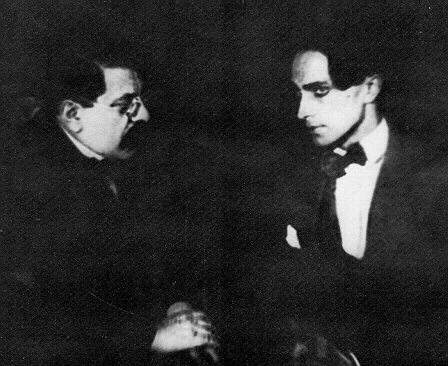
MAGNUS HIRSCHFEILD & CONRAD VEIDT
The entire genre of Aufklarungsfilm swiftly created a backlash and not just from conservatives. The Socialist government which had abolished the censorship had themselves been subject to official censorship under the Kaiser with some landing themselves in jail for criticizing the government, military or church and they were sincere in wanting to encourage political debate. However the open sexual content that suddenly resulted while in retrospect entirely predictable was clearly not the rigorous and earnest political debates they had in mind. In fact most were just as bourgeois in their tastes as the mainstream conservative and centrist parties and were uncomfortable with the prurient nature of some of the films, books and art that the openness inspired and not inclined to mount the barricades to defend them when challenged by the outraged right. In fact some theaters showing such films found themselves beset by organized by proto-fascist demonstrators who hooted and heckled the screen, engaged in brawls and set off stink bombs. By 1920 the government had reinstated some censorship laws which while more permissive than the previous put an end to films of an obvious prurient nature while still allowing for the showing of more educational ones under restricted conditions. Most of these films were pulled from general distribution and destroyed. This film probably survived in the library of the Hirschfield Institute safely enough along with the other Oswald/Hirschfield film "Prostitution" until the Nazis siezed power whereupon their Brownshirts sacked the institute and burned the contents. The version that exists today is a convoluted result of that loophole allowing for educational films. In 1927 Dr Hirschfield commissioned a full length documentary called "The Laws Of Love" which basically delivers a much longer version of the lecture he gives in this film and for the final forty minutes of the film takes a shortened version of the previous film and adds it to the end to dramatize his arguments. Somehow while the earlier film copies were destroyed a copy of the much more explicit documentary survived and made it's way to the USSR where it was later discovered and released. The restored version of "Different From The Others" was taken from this amended version. However at least a third of the film is missing including the entire subplots involving Else and Paul's disapproving family meaning there no actual footage of Anita Berber as Else. The restored version deals with this issue by fleshing out the missing scenes using explanatory intertitles and a few stills which does an adequate job of keeping the story intact. "Different From The Others" is objectively not a great film, Oswald's direction is competent but lacks any distinctive flair and the scenes with Hirschfield are dry and overly earnest and slow things down. However it is at least a good film with a typically sincere performance from Veidt and some solid supporting work. While the film was not considered particularly important at the time it is now considered the first classic of gay cinema.
MAGNUS HIRSCHFEILD
The Hirschfield documentary "The Laws Of Love" also survives intact. Note this film is age restricted on Youtube so you will have to watch it directly from there.
"THE LAWS OF LOVE";
In the late twenties there was in Germany genre of full-length documentaries that were intended to be shown in public theatres including the likes of "A Trip To The Planets" (which I wrote about here) and this film actually did get a limited public release where it was reportedly poorly received not only from conservatives but even from the gay community which found it boring and patronizing and afterwards it had only a limited academic audience which ironically is likely why a copy managed to survive and made it's way to Russia. As a film it's pretty dull though and is basically just a Hirschfield lecture with a slide show. Most of the film is made up of nature footage of various lower order animals who reproduce asexually and mating rituals of birds and mammals and the like spliced in with a few shots of Hirschfield speaking. After almost an our of this we get a few grainy photos and films of Hirschfield's human subjects. Some of the nature shots are attractive enough while the footage of Hirschfield speaking is recycled from the previous film. This is all presented in as dry and academic a fashion as a lecture on physics. For a film later banned by the Nazis as "degenerate" it's more chaste than a Mary Pickford film albeit with none of her charms. At an hour it's also rather a grind to sit through as well. As stated the original copy was even longer as it simply added an amended version of "Different From The Others" to the end in an attempt to both humanize this dry treatise and put context to the previous film while also getting it out which was now largely banned to the general public but which Hirshfield obviously took great pride in.
For this project while I found a the copy of "The Laws Of Love" with "Different From The Others" attached I have reedited it back into two separate films to allow for a more relevant and less grueling viewing experience and to allow "Different From The Others" to be seen as a stand-alone film as was originally intended.
Richard Oswald would continue on with his career throughout the Weimar years until the Nazis seized power when being Jewish he prudently fled to France only to have to flee again after the Nazis occupied that country, this time to America where he made some more films until 1949 eventually returning to Germany where he died in 1963 aged 82. Conrad Veidt also ended up fleeing Germany. He had actually left Germany in 1928 for Hollywood where he would make a few films including "The Beloved Rogue" with John Barrymore and the classic Gothic horror film "The Man Who Laughs" with the German director Paul Leni but Veidt would miss out on an even more iconic horror classic. In 1929 Leni was offered the job of directing "Dracula" he wanted Veidt to play the title role. But when Leni suddenly died and Veidt decided to return to Germany instead. Veidt have several reasons for turning down the role; at that his English was shaky and heavily accented and he worried about being typecast as a foreign heavy, and he was also wary that instead of working for Leni, a fellow German he respected, he would instead be working with the new director in American Tod Browning, an erratic alcoholic who had already decided he would rather work with the actor he had already done several films with and who felt was perfect for the role, none other than Lon Chaney. As it happened Chaney soon died as well and after much back and forth (which I've written about here) the role went to Hungarian actor Bela Lugosi leaving film historians to ponder what Dracula would have been like with Veidt (or for that matter Chaney) in the role. At any rate Veidt returned to Germany until the Nazis seized power. Besides being a firm anti-Nazi he had also married a Jewish woman so they wasted little time fleeing back to America where Veidt, who had taken the time to work on his English, returned to films including the ever iconic "Casablanca". He never gave up his hatred of the Nazis insisting that if he were going to play a Nazi they would have to be portrayed as evil and they must always lose and he also donated much of his salary to the war effort. His Hollywood career seemed set when the chain-smoking Veidt suddenly died of a heart attack while playing golf in 1943 aged only 50.
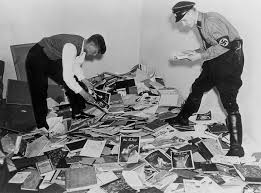
NAZIS TRASHING HIRCSHFEILD'S ARCHIVES
Magnus Hirschfield, both Jewish and openly gay luckily happened to be out of Germany on a book tour during the Nazi takeover and after his institute was sacked he prudently decided to stay away instead moving through Europe writing and giving lectures dying in France in 1935 aged 67. His lover, assistant and occasional actor Karl Giese stayed with him though various dramas and after Hirschfield's death worked to salvage as much of his documents as possible working from Czechoslovakia shortly before the final Nazi annexation of that country in 1938 he committed suicide aged 39. By the time the Nazis descended Anita Berber was already dead. The thrice married hard partying and hard living Berber died broke and alone aged only 29 in a hospital reportedly of tuberculosis although there were rumours she had overdosed. She was buried in a pauper's grave.
ANITA BERBER
===========================================
The return of some film censorship may have brought an end to the sexploitation genre films of 1919-1920 but that does not mean that no such themed films were made at all as there would be a few more notable films but they would be more veiled in their message, however thinly. They would also be less earnestly preachy and more artistic which could attract a respected director like Karl Theodore Dreyer.
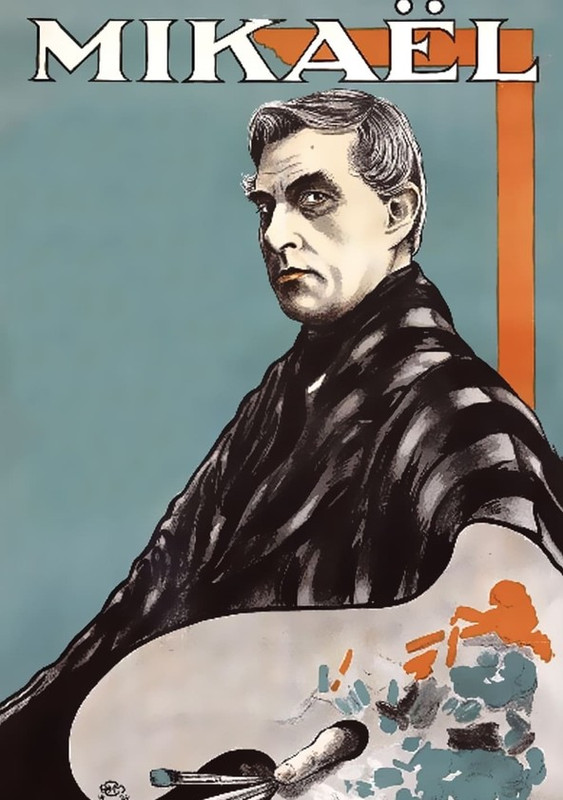
"MICHAEL" (1924);
Directed by Karl Theador Dreyer
Script by Karl Dreyer and Thea Von Harbou
Cast;
Walter Slezak ~ Eugene Michael, A Model
Benjamin Christensen ~ Claude Zoret, A Painter
Nora Gregor ~ Countess Lucia Zamikow
Robert Garrison ~ Charles Swift, A Reporter
Didier Aslan ~ Duke De Monthieu
Grete Mosheim ~ Mrs Alice Adelsskjold
Alexander Murski ~ Mr Adelsskjold
Karl Freund ~ Le Blanc, An Art Dealer De Monthieu
Max Auzinger ~ Jules, The Head Stewart at Zoret's House
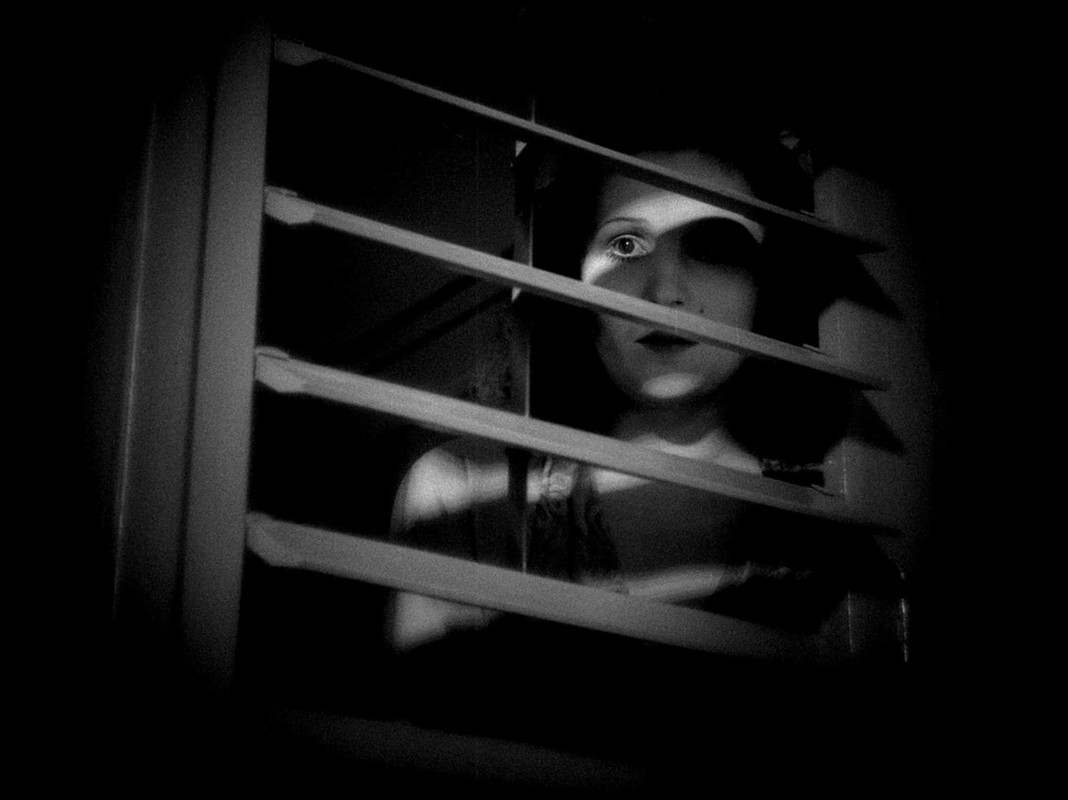
Plot Synopsis (spoiler alert); Set in 1890's France Claude Zoret (Benjamin Christensen) is a successful painter and Michael (Walter Slezak) is his much younger model who lives with him. They are at Zoret's mansion entertaining Charles Swift, an American reporter who is working on a biography about Zoret while living at the mansion and the Duke De Monthieu. Swift mocks Michael for his closeness to Zoret and Michael is led away by the Duke to whom he tells the story of how he became his model after staring as a young art student. Zoret was dismissive of Michael's talent but obviously attracted to him. Countess Lucia Zamikow (Nora Gregor) arrives to speak with Zoret about having her portrait done but is denied entrance while he is busy. More guests arrive including Mr Adelsskjold and his younger and unhappy wife Alice. Alice and the Duke are immediately attracted to each other. As the party have dinner during which they discuss death. Zoret says he is inspired to do a painting about the assassination of Julius Ceasar. There is an argument about whether Michael will model as Brutus, Ceasar's betrayer. After the dinner guests leave Countess Zamikow returns to discuss her portrait, Zoret is at first uninterested but changes his mind and agrees to do the portrait. She is short of money and hopes the portrait will enhance her status. Michael and the Countess appear to be attracted to each other. After the Countess leaves Zoret discusses giving Michael one of his valuable paintings saying that eventually he will inheret all of them. Days later Zoret is struggling to finish her painting as he is unsatisfied with it. Michael has not been present and Swift spitefully tells Zoret that Michael has been attending the ballet where he has been showing attentions to a dancer but Zoret ignores him. Zamikow visits Zoret and the two have dinner.Michael returns and is jealous to find the two having dinner. Zoret still struggles with the paining and asks Michael to finish her eyes which he does and Zoret declares the painting complete. Michael and the Countess begin an affair. Some days later Swift tells Zoret about the affair and Zoret becomes depressed. Michael attends the ballet with the Countess where he is seem by Swift. Also attending is the Duke and the Adelsskjolds where Alice and the Duke carry on their attraction without the husband's knowledge. Michael had been living with Zoret but has since moved into his own apartment where he entertains the Countess and returning to visit Zoret only occasionally. Zoret is informed by Baron De Koltz that Michael has borrowed a large sum of money and Zoret agrees to pay his debts. Swift finds a critic's negative review of the Countess' painting which he reads to Zoret blaming it on Michael and Zoret angrily accuses Swift of interfering in their relationship. Swift tells Zoret to break off the relationship but he refuses and dismisses him. The Countess tells Michael that she is deeply in debt and he offers to sell the painting Zoret gave him to the art dealer LeBlanc. Zoret is also looking to his Caesar and Brutus painting and contacts LeBlanc who informs him that Michael has just sold the painting Zoret gave him. Zoret is furious but tells LeBlanc he will pay for it anonymously and have it returned to Michael. A depressed Zoret locks himself away to work on his next painting. Michael returns and tells Zoret that he has also taken some of Zoret's expensive crystal ware, there is an argument and Michael storms out. Mr Adelsskjold discovers his wife, Alice and the Duke together and confronts her with the affair. Adelsskjold challenges the Duke to a duel during which the Duke refuses to fire and is shot dead. Zoret shows his latest painting to a wealthy patron at a gallery function. Michael is absent from the gallery showing and Zoret is depressed. Michael later visits him at home where he treis to reassure him of his loyalty. Swift arrives and another confrontation is avoided when Michael leaves. Zoret discovers that Michael has removed several valuable sketches to sell. Zoret slips deeper into depression and falls ill. With Zoret on his death bed he makes out his will leaving his estate to Michael who has npt visited him. Swift sends a not informing him of Zoret's illness and asking him to come. However the note is intercepted by the Countess who throws it away. Zoret dies. Swift visits Michael's home where the Countess refuses him entry but he calls from the courtyard to his window to tell him Zoret is dead. Swift exits and the distraught Michael is left to be comforted by the Countess. Finis.
~~~~~~~~~~~~~~~~~~~~~~~~~~~~~~~~~~~~~~~~~~~~
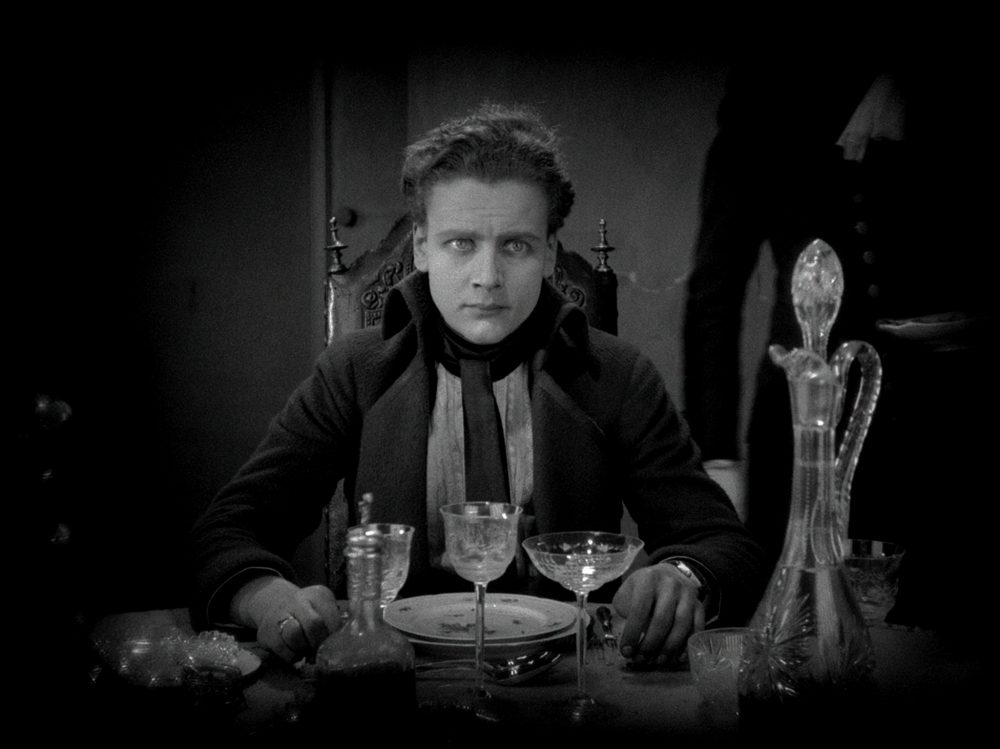
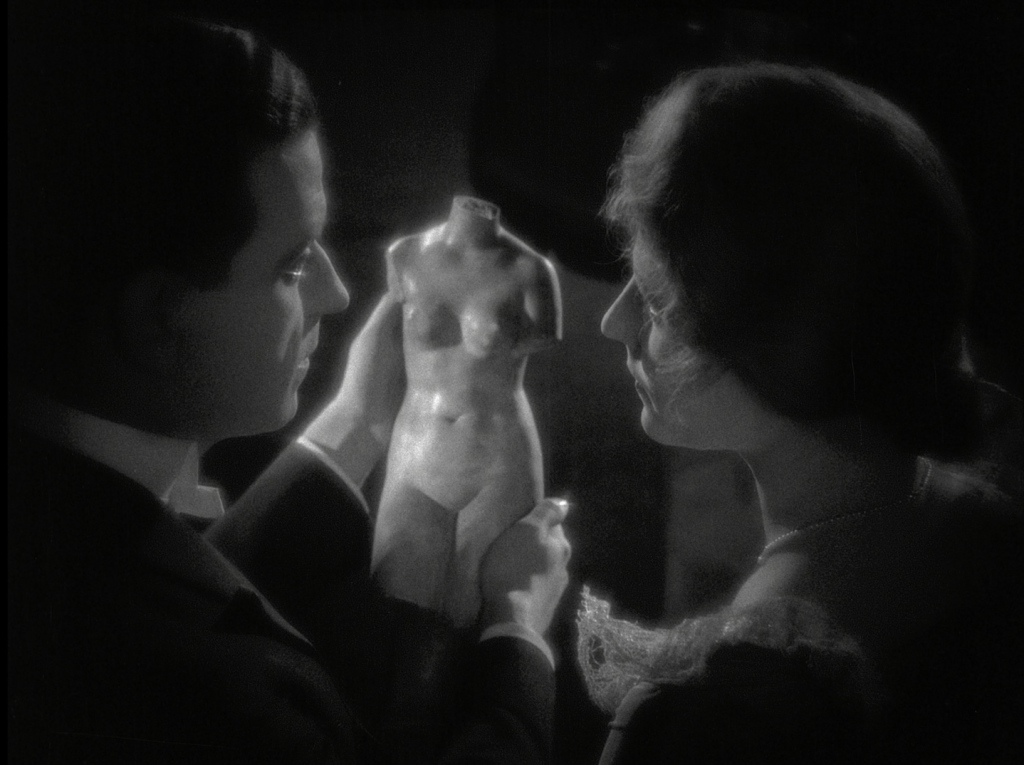
Like "Different From The Others" this film sports some respected names in Carl Dreyer, a Danish director while the character of Zoret was played by Ben Christensen, another Danish director known for the infamous witchcraft film "Haxan". Yet another filmmaker appearing in a supporting role was the great cameraman Karl Freund. The rest of the cast was not well known although Walter Slezak would later become a star in Hollywood. In addition the script was co-written by Thea Von Harbou, the wife and writing partner of Fritz Lang. Dreyer's moody films about alienation and isolation such as "Leaves From Satan's Book" had influenced German filmmakers including Murnau and this film has some of his trademark lingering closeups showing the conflicting emotional turmoil of characters, understated acting and the use of settings with huge rooms that dwarf those characters further illustrating their isolation. There are are only two brief outdoors scenes with the rest of the film taking place in large, luxurious but forbidding rooms. While Dreyer and other Scandinavian filmmakers would be an influence on German Expressionism by sharing some of the same themes of alienation and isolation the visual style is more realistic aside from a few touches provided by the various vaguely threatening sculptures in Zoret's house and studio and there is little of the Shadows and Fog motifs to be found here. The film is attractively shot with Dreyer having a more lush visual sense than Oswald if somewhat limited by shooting most of the film in only a few indoor sets.
One typical Expressionist theme identified by Sigfried Kracauer and Lotte Eisner was the conflict between parent and adult child, especially sons and that adds to the relationship between Michael and Zoret which is never explicitly spelled out. While it is obvious to the viewer that they are lovers they are referred to as being like "father and son" even by characters who must know better including the nosy and interfering Swift whose own jealous behavior suggests his own relationship with Zoret goes beyond mere friendship although he never actually says so. None of the characters is honest or consistent about their feelings here. Zoret begins the film as an arrogant and controlling martinet who belittles Michael but later it is shown that he is devoted to him despite Michael's repeated cheating and stealing from him, even on his deathbed which Michael is absent from. For his part Michael is an enigma, at times he seems to resent Zoret's patronizing attitude but he is also jealous of the Countess' attempts to attract Zoret's attentions. He is said to be cheating with a ballet dancer (at least according to the gossip of Swift, we don't actually see her) and later for real with the Countess and yet he still shows some devotion to Zoret. Unless he is merely trying to keep in his good graces as by that time he is also stealing from him. Michael does seem to be truly distraught by the news of his death however. Michael does seem to be loyal to the Countess whose debts he pays off (which are in turn paid off by Zoret) but other than that he is too opaque and wan to really read. The Countess herself has also possible ulterior motives as she begins with clearly mercenary intent both in getting Zoret to paint her portrait and then trying fruitlessly to attract his attentions (she at least is in the dark about Zoret's sexuality) before settling on Michael. As he is supporting her she has obvious incentive to prevent Michael from finding out about Zoret's deathbed summons but she seems genuinely supportive of him when he hears the truth. Is she just playing him? The viewer can not know.
Unlike "Different From The Others" the sexual themes and subtexts in this film are muted enough to avoid the wrath of the censors and not even essential to the story. If the character of Michael had been made into a female model the rest of the film could have carried on with little change. The sexual politics here have little to do with any of the social stigma of a gay relationship and nothing at all about the legal danger but are more about the discrepancy in the ages and relative wealth and power of the two main characters with Zoret starting out as using his wealth and fame to dominate Michael who relies on his dewy eyed looks but later Michael is taking advantage of tired lonely old Zoret as well as the relationship between the obviously jealous Swift who clearly wants more out of Zoret than to write his biography. The film is also somewhat complicated adding the subplot about the Duke and his affair with Alice Adelsskjold which has nothing to do with the rest of the story and probably should have just been dropped entirely as a distraction. There is nothing explicit here between Michael and Zoret (or Swift) other than a lot of lingering looks and the occasional caress. All else is implied but it's pretty clear even if the censors allowed it to pass and the film managed to avoid to kind of attacks "Different From The Others" received. The film got poor reviews with the French taking umbrage at a film made by Germans and Danes containing a subtext about a gay romance between and older artist and a young acolyte being set in France as that sort of thing could of course never happen in the land of Arthur Rimbaud and Paul Verlaine.
WALTER SLEZACK
The film lacks an actor with the status of Conrad Viedt but Christensen got praise for his portrayal of Zoret where he shows that his early arrogant martinet persona hides a sad and lonely man. Walter Slezak as Michael however was seen as being wan and callow with his puppy dog eyes. Slezak would later go on to Hollywood stardom often playing sleazy villains but this was only his second film and he seems unsure of himself here. Nora Gregor as the Countess bears a resemblance to the young Greta Garbo and is a decent female lead but Grete Mosheim as Alice Adelsskjold is mopey and seems to spend the entire film suffering from clinical depression which may well be the case.
Some of those involved with this film would go on to impressive careers. Dreyer had already made five films in Scandinavia including the acclaimed "Leaves From Satan's Book" but would become better known from the much admired 1928 film "The Passion Of Joan Of Arc" and the odd 1932 cult classic "Vampyr" however both films were financial failures and with the coming of WW2 his output slowed down and became only occasional post war. He died in 1968 aged 79 with his films "Michael" and "The Passion Of Joan Of Arc" still then considered lost films.
CARL DREYER
Christensen was actually more experienced and famous both as an actor and a director having made the successful spy film "The Mysterious X" (1914) and the notorious "Haxan" in 1922. He made the move to Hollywood in 1924 where he had a checkered career with a hit with "The Devil's Circus" with Norma Shearer (1925) and a series of haunted house films in "The Haunted House" (1928), "Seven Footprints To Satan" (1929) and "House Of Horror" (1929) but had failures with a Lon Chaney vehicle "Mockery" (1927) and a version of Jules Verne's "Mysterious Island" (1929) which went wildly over budget and dragged on for three years, an exeptionally time for the era. With the coming of sound he returned to Denmark where he worked in both film and stage with mixed success until he retired from films in 1942 after another over budgeted failure and the limitations of WW2 occupation whereupon he managed a movie theatre until his death in 1959 aged 79. "Haxan", his most famous or infamous film would be rediscovered and rereleased in 1967 with a new Jazz score and narration from William S Burroughs and is now considered a cult classic. Walter Slezak would also make his way to Hollywood where he had a successful career usually playing villains including as the U-Boat Commander in Hitchcock's "Lifeboat" (1944) later moving into television, radio and stage where he won a Tony Award. Even though he had a long and successful career later in life he was plagued by health issues and he suffering from cancer he shot himself in 1983 aged 83.
NORA GREGOR
Nora Gregor was a well known leading lady and singer in Austria who would also have her career interrupted by the politics of the 1930's. She became the mistress and later wife of Prince Ernst Rudiger von Staremberg an Austrian Fascist politician who in spite of being a Fascist was also anti-Nazi opposed to the 1938 German annexation of Austria forcing them to flee the country to Switzerland and France where she appeared in another film before the war broke out. While her husband would enlist in the Free French Army with the fall of France she had to flee again to Latin America living in Argentina and Chile and appearing in one last movie in 1945. Stranded in Latin America short of funds with her career stalled and depressed at her prospects she died in 1949 of unexplained causes aged only 47. Karl Freund who plays the Art Dealer would become known as one of Germany's finest cinematographers working with Fritz Lang ("Metroplis"), Walter Ruttmann ("Berlin; Symphony Of A Great City") and Paul Wegener ("Der Golem"). In 1929 he moved to Hollywood where he would do work on classic horro films "Dracua", "The Mummy" and "Murders IN The Rue Morgue" and the Film Noir "Key Largo" later moving into television. He died in 1969 aged 69. Meanwhile screen writer Thea Von Harbau would go on credits on "Metropolis" and "The First Woman In The Moon" with her partner Fritz Lang. Unlike Lang who fled the Nazi regime she became a supporter and stayed in Germany where she continued to work. With the fall of the regime she would downplay the extent of her collaboration, which was in any rate less than that of some other film figures like Werner Krause and after a trial she avoided legal sanctions but her career was effectively over and she died in 1954.
BENJAMIN CHRISTENSEN
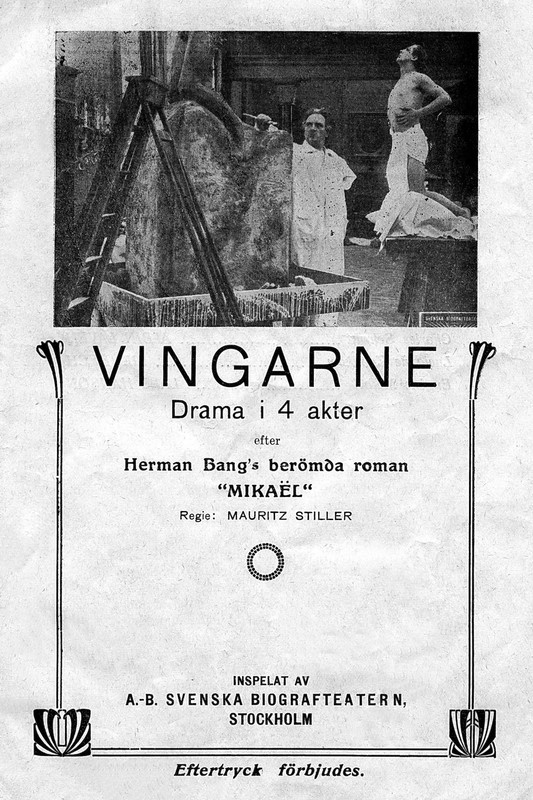
The film was based on a 1902 novel "Mikael" from Danish writer Herman Bang (1857-1912) who was himself gay and the novel which was fairly well known in Western Europe in the 1910's was more explicit in it's gay themes than the film. There was also a previous 1916 Swedish film version directed by Mauritz Stiller titled "Vingarne" (AKA "The Wings").
"VINGARNE" (AKA "THE WINGS", 1916);
Directed by Mauritz Stiller
Cast;
Lars Hanson ~ Eugene Michael
Egil Eide ~ Claude Zoret
Lili Beck ~ Countess Lucia de Zamikov
Albin Laven ~ Charles Swift
The plot of this version essentially mirrors the 1924 version albeit in a more muted and trimmed down fashion. The relationship between and Michael and Zoret is left more vague (Michael introduced being clearly attracted to his young female model) while the character of Swift is reduced to a mere loyal friend to Zoret. The Countess character is more obvious in being manipulative while the subplot involving the Duke and the Adelskjold's is dropped entirely. The ending has some notable differences as having Zoret's masterwork being a large statue of winged Icarus in the image of Michael (hence the title) allows for a more melodramatic death scene as Zoret staggers out of bed to collapse at it's feet but the biggest difference with the ending has Michael abandoning the Countess.
ZORET & THE ICARUS STATUE
The cast is notably inferior to that of "Michael" with none having the glowering intensity of Christensen or even the petulant puppy dog Slezak or the self-righteously jealous Garrison as Swift. By contrast Egil Eide is merely crotchety and Las Hanson as Michael has little personality at all. Lili Beck as the Countess is drab and lacks entirely the glamour of Nora Gregor. Being a decade older the direction lacks the moody visual flair of Dreyer's 1924 version but by the standards of 1916 is well done having rather more closeups and varied camera work that was standard at the time. It does however have one distinct visual trick as when Michael is having dinner with the flirting Countess he has a ghostly vision of Zoret who points accusingly before vanishing. As with "Different From The Others" this film is somewhat hampered by being incomplete with at least ten minutes missing although most of this appears to be in the form of a framing device at the beginning and end of the film so we are probably not missing very much essential footage.
This films cast and crew would not have the success of those of some of those involved with "Michael". Stiller is considered one of Sweden's important early filmmakers and he would make the obligatory attempt to try his luck in Hollywood including with Garbo but he did not like the studio system and he returned to Sweden where he died suddenly in 1928 aged only 45. Lars Hanson had better luck in Hollywood starting in 1926 working with fellow Swedish expats Greta Garbo and director Victor Sjostrom however the coming of sound sent him back to Europe where he continued to work in film and stage into the 1950's dying in 1965 aged 65. Lili Bech would make only a few more films before marrying Sjostrom and retiring in 1917, she also died young in 1939 aged 55.
MAURITZ STILLER
~~~~~~~~~~~~~~~~~~~~~~~~~~~~~~~~~~~~~~~~~~~~
"Michael" had kept it's sexual undertones just veiled enough to avoid the wrath of the censors but by 1928 it was apparently seen as possible to be somewhat more open with it's subject matter.
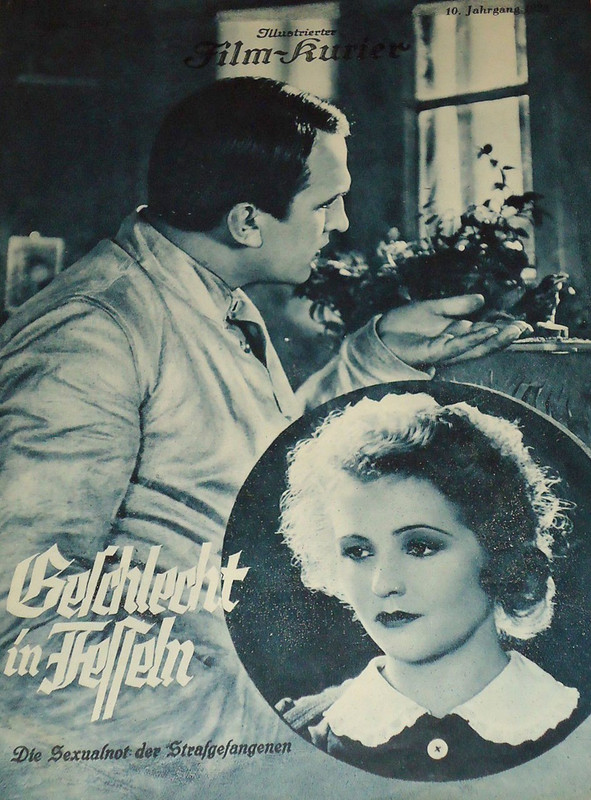
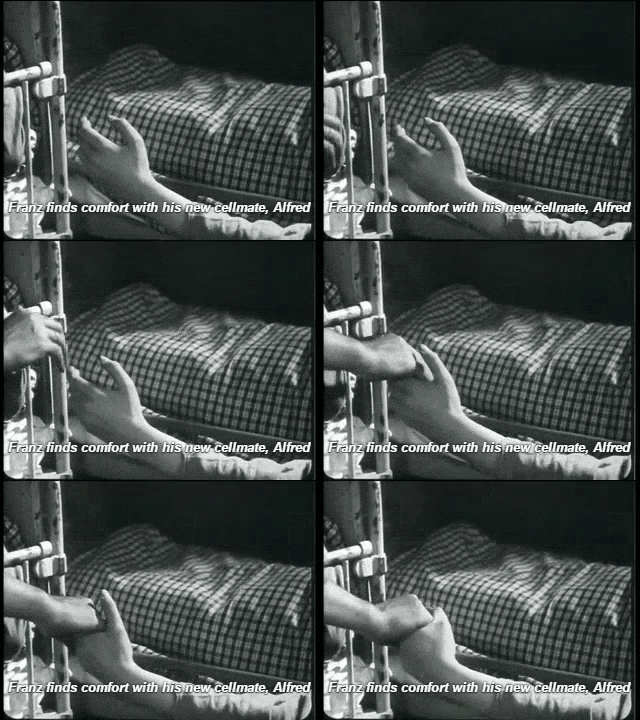
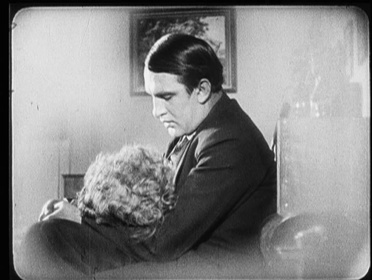
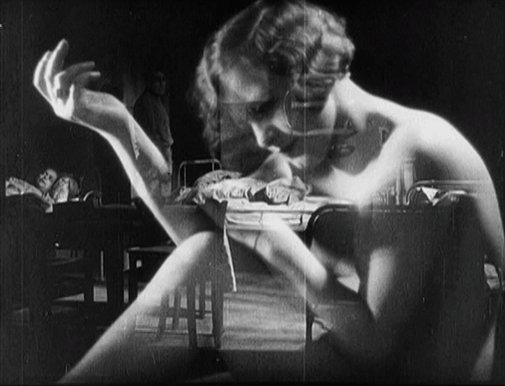
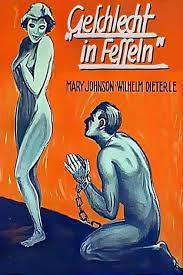
"SEX IN CHAINS" (AKA; "GESCHLECT IN FESSELN", 1928);
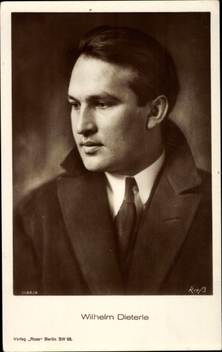
Directed by William Dieterle
Cast;
WILLIAM DIETERLE ~ FRANZ SOMMER
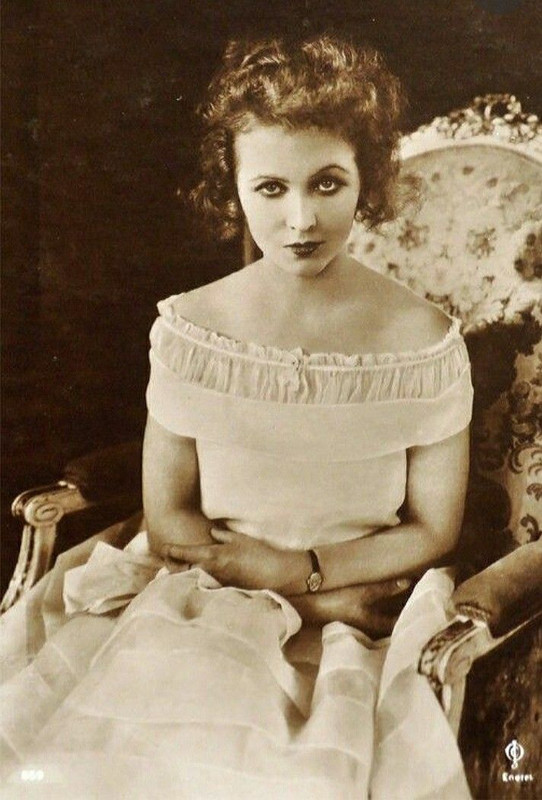
MARY JOHNSON ~ HELENE SOMMER
GUNNAR TOLNAES ~ STEINAU
HANS HEINRICH VON TWARDOWSKI ~ ALFRED MARQUIS
PLOT SYNOPSIS (Spoiler Alert); Franz Sommer (William Dieterle) and his wife Helene (Mary Johnson) are an honest, devoted young couple going through hard times, a fact they are hiding from her Father. He is unemployed and picking up work handing out flyers on the street and selling vacuums door-to-door on commission while she is making ends meet working in a club selling cigars and cigarettes. One night at the club she is harassed by a wealthy patron and Franz intervenes striking the patron who falls and strikes his head killing him. Franz is arrested and sent to prison where he is housed with as his cellmates a tough older man, Steinau (Gunnar Tolnaes). Helene's father tells her she should divorce Franz but she refuses, blaming herself for his plight and vowing to stand by him and her Father storms out. Steinau befriends Franz and when acquitted and released he promises to intercede on his behalf to get his release and help out Helene which he does by giving her a job at his business. Meanwhile Franz is still in prison where the men's sexual frustration from being separated from women is shown with scenes where they are shown fantasizing, making sculptures from breadcrumbs, doing drawings and fighting for a woman's handkerchief smuggled in during visitation. One prisoner grabs a guard's gun and kills himself. Helene visits Franz in prison but these visits only accent their loneliness. A new prisoner is added in the handsome young Alfred Marquis (Hans Von Twardowski). Steinau begins showing affection to Helene but she shies away and has visions of Franz. Back at home Helene tries to gain admittance to visit Sommer at the prison but being refused visits Steinau and being lonely and depressed sleeps with him. The next day she is guilt ridden and distraught. Back in the prison the new prisoner Marquis is subject to attention form other prisoners and Franz intercedes on his behalf and they become friends. The prisoners attend a church sermon and while the Preacher tells the men to avoid temptation Marquis tries to pass a note to Franz who ignores him. That night as the men sleep Marquis asks Franz if he is angry with him and Franz assures him he is not. Marquis takes his hand and Sommer joins him in bed as the screen fades to dark.
Helene is allowed by the Warden to visit Sommer in his office but the meeting is awkward and distant as both are keeping a secret. When she confides in Steinau he begs her to leave Franz and marry him but she refuses. Steinau professes his love but promises to make a plea for Franz's release. Marquis is released from prison. Steinau keeps his word and makes a plea with the authorities for leniency and gets an early release. Marquis meets with an unsavory associate who suggests blackmailing Sommer over their illegal relationship but Marquis indignantly refuses and stomps off. Franz returns home with Helene and while at first they are happy they are awkward and distant. He is depressed and he confesses that he no longer loves her. She fears he has found out about her affair with Steinau but when she confesses he has not suspected her of any affair and both are now plunged further into depression. There is then a knock at the door and Helene opens it to find Marquis with a bouquet of flowers come to see Franz. Helene then figures it all out. Franz, now even more upset, sends him away. Marquis chastened apologizes to Helene leaves the flowers on the stairwell and leaves. Going back inside, she sees Franz eyeing the gas valve on the heater. He tells her he cannot go on living and urges her to leave. She tries to talk him out of suicide but she will not leave him. He turns on the gas and together they both die. Finis.
~~~~~~~~~~~~~~~~~~~~~~~~~~~~~~~~~~
While this is not really an Expressionist film it does deal with some similar themes of loneliness and alienation and it uses some visual motifs. This can be seen most obviously in the numerous dream and hallucination scenes using camera tricks as well as the highly emotional acting (especially from Mary Johnson) along with extreme and lingering closeups. While most of the film is shot in a realist style Expressionist techniques used in earlier films can be seen in the sexually charged dream sequences that are influenced by similar scenes in Pabst's "Secrets Of A Soul" (1924), the street scenes of a prostitute and her client surrounded by darkness echo similar scenes in the 1923 Street Film "Die Strasse" (I previously wrote a whole article about the genre of "Street Films" here), while the more realistic scenes of busy daytime streets and the nightclub with it's Hot Jazz band reference those of Walter Ruttmann's 192nn classic "Berlin; Symphony Of A Great City" (which I wrote about here) and the castle-like prison exteriors remind one of Nosferatu. However unlike most Expressionist films (including the Street Films) which were shot entirely on self-contained indoor sets this film clearly makes frequent use of outdoor scenes including during the day which makes the film far less claustrophobic which is ironic considering the prison setting for much of the story. The cells of the prison itself are actually comparatively comfortable and worlds away from the stark Expressionist dungeons of "The Cabinet Of Dr Caligari" or "Nosferatu" with a shot of the courtyard using a spinning camera suggesting the classic "The Last Laugh". One common Expressionist visual motif was the use of window or fence bars to suggest characters being isolated or trapped and that obviously is seen here but that is unavoidable given the subject matter. One interesting piece of symbolism is in the cab meter which takes Franz home from prison and to freedom which is shown in a closeup which is later echoed in the lingering shot of the similar looking gas valve they will use to kill themselves. This is almost certainly not a coincidence but what is less clear is what it symbolizes. Does it mean that by their deaths they are now free? Unlikely given the downbeat ending, or is the film saying that release from prison was simply leading to another one caused by Franz's shame, guilt and fear of blackmail?
The ending itself is not really satisfactory since unlike in "Different From The Others" where Paul Korner's suicide is built up to and understandable in context here Franz's decision to die and Helene's to join him seem too rushed and pat of an ending. For that matter the relationships between various characters are also too rushed with Franz and Steinau becoming close friends and Franz and Marquis becoming lovers after barely knowing each other although in fairness this acceleration of character arcs is not uncommon in silent films and the film itself is already rather long by the standards of the time although unlike the previous films listed it's not missing any footage. The film was reportedly marketed as being more salacious (which the title certainly suggests) instead of the moody tragedy it actually was and was modestly successful only later being reconsidered as important for it's subject matter. On balance it lacks the artistry of Dreyer's "Michael" or a striking performance of Conrad Veidt but it is a solid and sincere work aside from it's rather rushed ending.
The film was directed and starred William Dieterle who does a skillful job as director being clearly fully aware of both the Expressionist and gritty Realist films being made in Germany but who is perhaps too stocky and dour for the lead role. He had started out in theatre getting the attention of iconic director Max Reinhardt before moving to films where he mostly played supporting roles in films like "Waxworks" (1924) and Murnau's "Faust" (1926) as well as producing an early film with Marlene Dietrich. Around 1930, even before the Nazi takeover he left Germany citing the worsening political and economic situation and moved to Hollywood where he had a successful career as an actor and later a director in a number of films including "The Hunchback Of Notre Dame" (with Charles Laughton), "Satan Met A Lady" (with Bette Davis), "The Prince & The Pauper", "Blockade" (with Henry Fonda), "A Midsummer Night Dream" (with Jimmy Cagney, Olivia De Havilland & Mickey Rooney), "Salome" (with Rita Hayworth), "The Life Of Louis Pasture" (with Paul Muni) and "The Life Of Emile Zola" (which was nominated for an Oscar). A fervent anti-fervent anti-fascist he supported other German expats fleeing Germany and supported the anti-fascist left during the Spanish Civil War which earned him government harassment during the McCarthy Era fifties and he returned to Germany where he directed a few more movies and returned to the theatre until his death in 1972 aged 79.
Mary Johnson was another one of those Scandinavian actresses (in her case Swedish) who moved to Germany after the Great War where she appeared as a leading lady in a number of films until her marriage to German actor Rudolph Klein-Rogge whereupon she retired from the screen. They stayed in Austria after the Nazi takeover and after his death in 1955 she returned to Sweden where she died in obscurity in 1975 aged 79. Hans Heinrich von Twardowski is best known for appearing in the Expressionist classics "The Cabinet Of Dr Caligari" and director Robert Wiene's follow-ups "Genuine" (both 1920) and as "I.N.R.I" (1923) well as FW Murnau's "Phantom" (1922) and Fritz Lang's serial "Spies" (1928). The only openly gay member of this cast he quickly fled the Nazis for Hollywood and continued a career usually in supporting roles, often ironically playing Nazis including a small role in "Casablanca" as well as in the theatre. Unlike Dieterle he never returned to Germany and lived modestly in New York where he died in 1958 aged 60.
MARY JOHNSON
The previous films were only modest successes and not taken very seriously either at the time or by film historians until revived more recently but there would be one gay themed film that was universally recognized as one of the great films of the all-too-brief era of Weimar sound films with the 1931 classic "Madchen In Uniform" which achieved world wide critical acclaim and would become a cult classic. Somewhat ironically the cycle of Gay themed films in Germany started (however veiled) in the dying days of the reactionary autocratic Imperial Regime with the light hearted romp "I Don't Want To Be A Man" but while the under more open Weimar democracy more open subjects could be portrayed, in all of these films they were treated as tragedies with main characters ending up dead, in two films by suicide, while "Madchen In Uniform" would have an attempted suicide. As the Weimar stumbled towards it's last dark night the final Gay Themed film would end off with another light hearted romp with the 1933 musical comedy "Victor Und Victoria" which was a hit at the time in Germany and would be the subject of an even more successful Hollywood remake in 1982 as "Victor/Victoria" directed by Blake Edwards with Julie Andrews, James Garner, Lesley Anne Warren, Robert Preston and John Rhys Davies which became a smash hit and was nominated for a slew of Oscars and Golden Globes. However as these are sound films we shall leave those to cover in another article.