Saturday, 6 February 2021

Scrooge On The Silent Screen


images-0

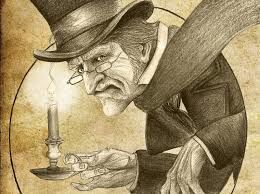
Charles Dickens is the most popular novelist in the English language and "A Christmas Carol" easily his most iconic story so it's not surprising that it would be a subject for early film. In fact there was a British adaptation as early as 1901, making it one of the earliest examples of a narrative story being told in film. Film as a medium had been around for about a decade but these early films were usually short (only a couple minutes) showing a slap-stick gag or some footage of an actual or staged scene (ie. lots of train rides) with no context. This earliest known Dickens' adaptation does however tell a proper story with a real plot and characters however truncated.

"SCROOGE, OR, MARLEY'S GHOST" (1901);


Directed by Walter Booth
Cast;
Daniel Smith  ~  Scrooge
(rest of cast unknown)

The film is listed as being about five or six minutes long, which was standard for films of the era, however the only surviving print is only three and a half that and is clearly missing the last minute or so, however that doesn't ruin the story especially since we already know it off by heart anyway. This was common with the earliest films, directors chose story audiences were already familiar with (plenty of Dickens, Shakespere, Fairy Tales and Bible stories) knowing they could tell them with only a few scenes and a small cast in a couple minutes without dialogue. Taken as such this film was quite ambitious for it's time using some innovative special effects including double exposures to portray the ghost and visions of the past in a way that no doubt impressed audiences of the day. That said the sets are minimal stage backdrops which include bookcases and dish hutches which appear painted on. Also typical of the era the camera is completely stationary. The acting is typically stagebound but does not engage in the same amount of obvious mugging for the crowd of other films from the era. The story is obviously bare-bones but does run through the basics; Scrooge is a miser, he gets visited by Marley's ghost who shows him visions of his past, present and future and Scrooge then repents, the end. The story would obviously not have the impact for an audience who were not already intimately familiar with the story but the film-makers knew they would not have that problem. Note that this story dispenses with the three ghosts of the story and saves time by just having Marley's Ghost do the job. Apparently this was an approach taken in some stage versions of the time which this film borrowed from.

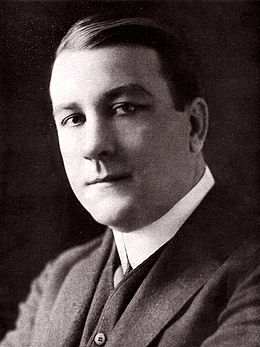
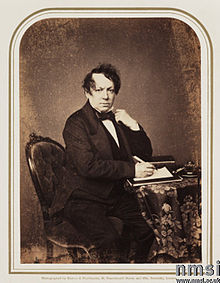
JC BUCKSTONE
220px-Buckstone

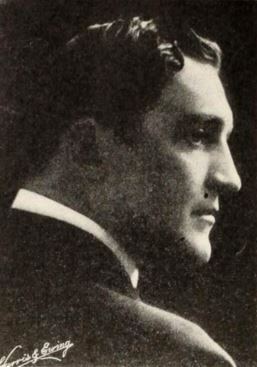
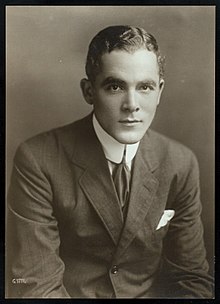
The script indeed is credited to JC Buckstone, an English actor who had played the role on stage Scrooge but here Scrooge is played by one Daniel Smith who was presumably also a lesser known stage actor who has no other known film credits. This does not mean he did not make other films in that era, only that there is no record of them, in fact we know nothing about him at all including when he died. He seems perfectly at ease so he must have had some experience but there is no record of it. A check of the Adelphi Theatre, a major London theatre of the Victorian/Edwardian eras does not list him even once, although he could have easily appeared elsewhere. At this date film was seen as a cheap novelty and beneath the dignity of a successful actor like Buckstone although he would later change his mind as we shall she. As for Smith he is adequate for the role, holding the screen without resorting to the histrionics and mugging of others of the era. The rest of the cast is unknown but director Walter Booth (1869 - 1938) was an important, if largely forgotten English film-maker of the era known for his early use of special effects. Like his contemporary he was also previously a stage magician (and artist) and it's possible he also appears in the film. Booth made several films including some early sci-fi films which still survive. He closed out his film career with another Christmas film with "Santa Claus" in 1912 (one of the earliest film Santas) and retired from film moving into advertising.

After this film there would be an American adaptation in 1908 which is now lost followed by another better known effort made by Edison Studios in 1910 using some of the same cast and crew from the version of "Frankenstein" which had come out earlier that year.

"A CHRISTMAS CAROL" (1910);


Directed by J Searle Dawley
Cast;
Marc McDermott  ~ Ebenezer Scrooge
Charles Ogle  ~  Bob Cratchit
William Betchel  ~ Christmas Ghost (?)
Viola Dana ~ Cratchit's Daughter (13 yr old)
Shirley Mason  ~ Cratchit's Daughter (10 year old)

The second American version of the tale was literally four times longer than the 1901 British version which gave them more time to tell a more complete, if still rushed, version. They also have better sets featuring proper looking rooms with actual furniture instead of painted backdrops. That said the shooting schedule for films of this era was very short (especially at Edison) and only a few sets are used with even the outdoor scenes clearly being shot indoors which is again typical of Edison. In fact most of the action takes place in Scrooge's bedroom as the ghosts show him various scenes as he reacts. Some of this drags a bit and it would have been better if the ghosts had taken Scrooge outside for this. The ghosts are shot using the same double exposure f/x as the 1901 film with a couple ghosts seeming to be looking off-center as the actors can not actually interact with the other players. Playing Scrooge is Marc McDermott who is an improvement over the 1901 version. He is tall with scowling, craggy features and stooped shoulders suggesting a tired, crotchety old coot, but still imposing enough to be intimidating. McDermott (1871- 1929) was an Australian actor with an established stage career when he was recruited by Edison Studios where he would appear in a version of "Les Miserables" (1909) and Jules Verne's "Micheal Strogoff" before "Christmas Carol". He would continue acting throughout the silent era appearing, usually as the heavy, in some of the first film serials along with crime dramas "Eugene Aram" (1915), "While New York Sleeps" (1920), the Lon Chaney classic "He Who Gets Slapped" (1924) and the WW1 drama "Under The Black Eagle" (1928). Evidently a hard drinker he died of liver cirrhosis aged only 57 just before the sound era.
Better known to modern audiences is Charles Ogle (1865 - 1940) who gained immortality as the first screen Frankenstein's Monster earlier that year. Given he had played the hulking monster one might have thought he would play Scrooge but instead he plays the mousey Bob Cratchit with much servile eye-rolling. Given how Ogle lurked over everybody in the earlier film (even assuming he was wearing elevated shoes he is listed as being 6.2) McDermott must have been quite tall as he towers over even Ogle. Like McDermott he was also a stage actor who had appeared on Broadway with "Frankenstein" being his fifth film. He had also appeared with McDermott in "Micheal Strogoff", and the two would later appear in the same crime serials. Among his very long list of credits was as Long John Silver in "Treasure Island" (opposite Lon Chaney) and an appearance in Cecil B DeMille's "The Ten Commandments". He retired from the screen aged only 50 before sound came in 1926 and died aged 75.
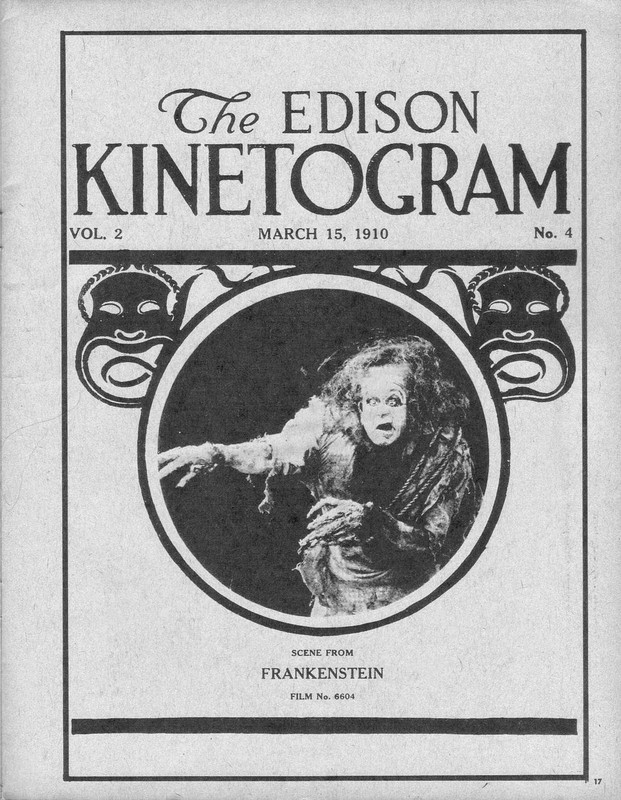
Frankenstein-1910-poster

Also listed in the credits is William Betchel (1867-1930) who presumably plays one of the Christmas Ghosts or one of the Charity Fundraisers who visits Scrooge as it appears one of the actors may be playing a dual role. Betchel was a German actor who by 1910 was both too old and too heavyset to be the actor playing Scrooge's Nephew. This was Betchel's first film although it's probably safe to assume that like McDermott and Ogle he had a previous stage career. He would end up having an even longer, if lower profile career than either which included "The Jazz Age" (1929) with Douglas Fairbanks acting up to his death in 1930 aged 63.
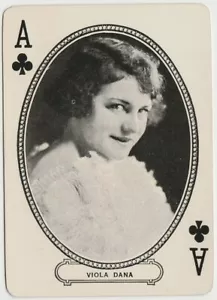
s-l300-17

Also notable are two girls playing Cratchit's Daughters, Viola Dana (1897-1987) and Shirley Mason (1900-1979) were actually sisters (real name; Flugrath) with this being their film debut although they had already appeared on stage along with a third sister, Edna Flugarth. They would go on to successful careers in the silent era with Mason appearing in "Treasure Island" (with Charles Ogle and Lon Chaney) and "Flame Of Youth" (1920, written by Barbara LaMarr) while Dana would appear in director Frank Capra's first film "That Certain Thing" (1928). The sisters would appear as sisters a few times although oddly one of Viola's last films was "Two Sisters'' (1929) with Boris Karloff, an early sound film where Viola plays the dual role of two sisters. This film is now lost. As an added irony both Viola and Shirley would marry film directors who would die young with Viola's husband , director John Collins, dying in the 1918 Pandemic while Shirley's husband actor/director Bernard Dunning (who married when she was 16 and he was 24) dying of typhoid in 1923. With the coming of sound the sisters (who remarried) retired from film and lived long and apparently happy lives.

=================================================================

"SCROOGE" (1913)


Directed by Leedham Bantock
Cast;
Seymour Hicks  ~  Ebanezer Scrooge
William Lugg  ~  Jacob Marley
JC Buckstone  ~ Bob Cratchit (?)
Leedham Bantock  ~  Charity Man
Adela Measor  ~  Mrs Cratchit
Ellaline Terriss  ~  Helen  
Dorothy Buckstone  ~  Fann (?)
Leonard Calvert  ~  Fred Scrooge (?)
Osborne Adair  ~  Charles Dickens (?)
Betty Hicks  ~  Cratchit's Daughter (?)

The film opens with a scene of Charles Dickens writing the novella which dissolves into an image of Hicks as Scrooge. Finally here we have a Scrooge with appropriate menace. Hair askew, eyebrows like caterpillars, ragged clothes and flushed complexion which the intertitles helpfully blame on his cold, cold heart. Although Hicks was in his forties he looks much older and like McDermott he walks with a crooked stagger. He looks more like a homeless wino than a millionaire which may be taking being a miser a bit far. Instantly the audience knows he is a miserable old bastard who in the opening smacks around one of a group of urchins taunting him (to be fair they do seem pretty annoying). Since this version is literally twice as long as the Edison version from only three years previous it can spend more time on it's story. Whether it spends that time well is another matter. Half the film is spent on setting up the story, introducing Scrooge and establishing that he is a miserly bastard. There is nothing wrong with this, Hicks does a fine job and he is the first proper Scrooge on film helped by the fact that he had already established the role on stage for years. However this means that there is not enough time to tell the story of Trump's visitations and redemption, in fact the film compresses four ghosts into one by making Jacob Marley be the only ghost and dispensing with the Ghosts of Christmas Past, Present and Future. This is a glaring omission that even the much shorter 1910 Edison version did not do. Like the Edison film this version does not leave Scrooge's bedroom for the visitations with Marley simply showing Scrooge visions that he passively observes and reacts to. This is odd as the opening scenes do in fact change sets five times and made good use of outdoor sets which, unlike the Edison films, were actually shot outdoors. The sets, especially the outdoor sets, are actually a strong point here, they looked lived-in and appropriately cold, grimy and..well..Dickensian. As do the rather threadbare costumes. This London does indeed seem harsh and miserable. The cast here is clearly superior to the previous films, Hicks was a well respected actor with years of experience in the role and most of the cast here were also well known London stage actors and while they had little film experience they had had time to observe the medium and look comfortable in it. Besides Hicks, Marley's Ghost stands out as being particularly cadaverous. So it's clearly a better film than the 1910 Edison version, however it could have easily been made better. Forty minutes was considered a standard length for a feature film but longer films were not unheard of and another twenty minute reel could have easily been added, especially for a film with a recognized story and stars that could be expected to find an audience and be exported to North America and Australia as this one would be. This would have allowed the film to spend the kind of attention on the rest of the film that it spent on the set-up. Additional time could have been had by simply dispensing with the opening framing device of showing Dickens at work which looks fine but adds nothing to the story and was already pretty creaky as a narrative device even in 1913.
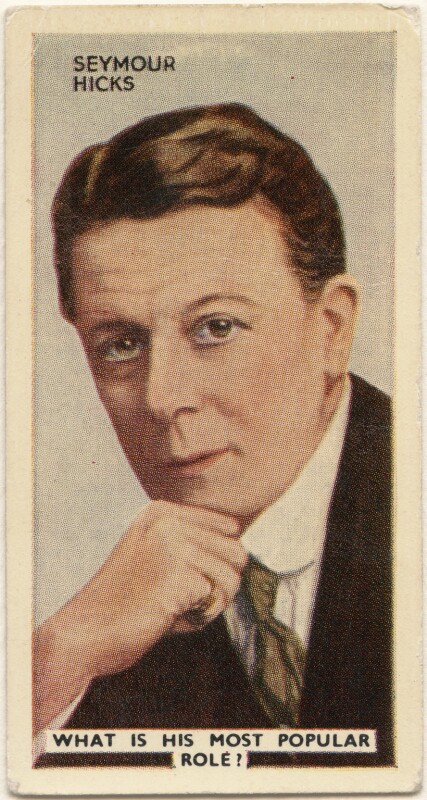
hicks

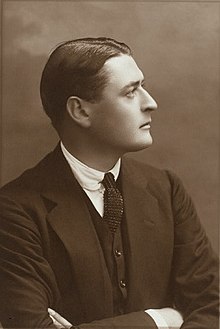
Seymour Hicks (1871 - 1949) had been a major star of the London stage for years including working with Sir Henry Irving and Charles Frohman, when he began playing the role of Scrooge with a script he wrote, starting in 1901 playing the role thousands of times with great success allowing him to set up his own company and build his own theatres, the Aldwych and Hicks Theatres. His company included family members including his wife, Ellaline Terriss and brother-in-law Tom whose father William Terriss was a well known actor in his own right who Hicks had worked with until he was murdered in 1901. Hicks was the best known Scrooge of the Edwardian stage so his moving the role to film was a natural. Like most stage actors of the 1900's Hicks showed little interest in the crude film vignettes of the early era, however by 1913 film media had advanced in its ability to tell a proper story lasting longer than a single reel. Seymour Hicks would continue to play Scrooge and other characters on stage along with making some movies into the sound era which would lead to the first sound remake in 1932 which we shall visit later. He was knighted in 1935. As for the rest of the cast; unlike the previous films we do have a cast list, albeit without listing who played what roles. However since much of the cast were prominent players at least some of whom played in the stage version so we can make some educated guesses. Hick's wife Ellaline Terriss appears to play Scrooge's girlfriend from Christmas Past. Besides resembling photos of Terriss, it's effectively the only female role with any decent lines so it's likely Hicks would give the role to Ellaline. William Lugg was an actor and singer who had appeared with Hicks and Terriss and given that he was a singer known for his booming bass voice it seems likely he would have played Marley's Ghost on stage and here although his deathly white makeup makes it hard to tell. Oddly JC Buckstone was an actor who had also played Scrooge in yet another stage version years earlier and he appears to be Bob Cratchit, the only other substantial role here and it's hard to see him taking a lesser role. The existing photo of Buckstone seems to confirm this. The wonderfully named Leedham Bantock, who actually sounds like a Dickens character, is listed here as both an actor and director of this film, and he had a Christmas film history of his own having played the first known film Santa Claus in a 1912 film directed by the same Walter Booth who directed the 1901 "Scrooge". The heavyset Bantock obviously plays the Charity Man who visits Scrooge seeking a donation. Leonard Calvert and the also wonderfully named Osborne Adiar round out the male cast and we know almost nothing about them. They each have only one more film credit (oddly in the same film) and there are no photos to be found. We do have their birth dates however so we know they were in their early fifties at the time of filming so they can only be playing either Scrooge's nephew Fred and Charles Dickens as the only other male roles are Tiny Tim and the lad who Scrooges sends out to buy the turkey on Christmas Day. They are completely unknown but it was not unusual for child actors to go unbilled in that era. As for the rest of the female cast; Adela Measor was the wife of JC Buckstone and she appears to be playing Bob Cratchit's wife. Dorothy Buckstone was apparently JC Buckstone's daughter (he did have an actress sister but she was named Lucy). She would appear to be playing Scrooge's sister Fann who appears in a Christmas Past vision as it's the only other female role aside from Cratchit's daughters, but they have no lines or scenes of their own. Dorothy had no other film credits but may have been a stage performer. As an additional note Hicks and Terriss had a daughter named Betty who would later become an actress as well so it's possible she played one of the Cratchit daughters. She was aged about ten at the time. The cast all do a solid job without too much of the histrionics and mugging of the era. This version of the story became the standard version for many years, probably due to the fame of it's cast, especially Hicks, and would be exported internationally (at least to North America, Australia, New Zealand etc) and shown through out the silent era even though it's static staging became distinctly old fashioned within just a few years and Hicks himself would reprise the role in the first sound version in 1932. But that's another story.   

              ===============================

"A CHRISTMAS CAROL" (1914);


Directed by Harold Shaw Cast;
Charles Rock ~ Scrooge
George Bellamy ~ Bob Cratchit
Edna Flugarth ~ Belle
Franklyn Bellamy ~ Fred
Mary Brough ~ Mrs Cratchit
Edward O'Neill ~ Jacob Marley
Arthur Cullin ~ Ghost Of Christmas Past
Wyndham Guise ~ Ghost Of Christmas Present
H Ashton Tonge ~ Ghost Of Christmas Future

The 1913 Seymour Hicks film may have gotten the most attention but that didn't stop another British studio from firing off their own version a year later with a mostly obscure cast. This version is in many ways a superior film, there are four ghosts instead of one, the ghosts take Scrooge from his room instead of having the entire story take place in Scrooge's bedroom, the sets look lived in, the camera is a bit less static, scenes are shorter and thought has been given as to how to tell a story with editing scenes rather than simply relying in the intertitles to do the job.The double exposure special effects are much better done than previous films. In short while the Hicks film was made by theatre people who had not given much thought to film as a separate medium, this one was made by actual film makers, second string journeymen mind you, but professionals.
The one short-coming is Charles Rock as Scrooge. He does not have Hick's seedy, snarling presence and the film is not as gritty and grimy. Rock seems like merely a crotchety old coot and lacks Hick's hostility. On the other hand the Ghosts are more animated than previous with finally a proper Marley dragging his chains and lock boxes. The three spirits have their proper look with Christmas Past as a white bearded Druidic old man, Christmas Present as a younger version (albeit scrawnier than later versions would be with an oddly large fake nose) while Christmas Future is a stark figure in a dark robe, however unlike later versions he does have a face rather than a shadowy void and appears to speak to Scrooge, in fact he looks like Dante from "L'Inferno" (1910). George Bellamy as Bob Cratchit doesn't look as down-at-heel as Buckstone's version, indeed the entire cast is better dressed than previous versions. Franklyn Bellamy is a more dashing figure as Scrooge's nephew. His wife is played by perky and wide-eyed Edna Flugarth who was actually the elder sister of Viola Dana and Shirley Mason from the 1910 Edison version. She isn't given much to do but she does have a personality. Similarly Cratchit's wife is a cheery, roly-poly figure who looks rather more well fed than she should be but she has a jovial personality.    

EDNA FLUGARTH
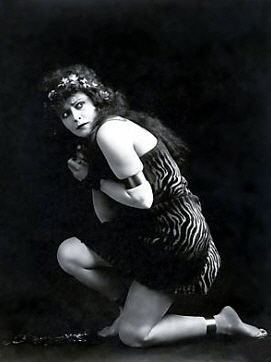
unnamed

The cast as not as well known as the Hicks 1913 version but Charles Rock (1866-1919) had been making films since 1910 making him an early figure to move from the stage (where he had appeared in both London and New York and had also served as a playwright) into film. Among many other films his other credits included a version of "Trilby" (AKA "Svengali", 1914) with the famous British stage actor Sir Herbert Beerbolm-Tree. His career would not last long however as he died in 1919 aged only 53, perhaps in the Spanish Flu pandemic. George Bellamy (1966-1944) also had film experience going back to 1910 including working with Rock in a short 1912 biopic of "David Garrick" (they both played supporting roles), the two would also appear in a version of "The Prisoner Of Zenda" (1915) again as supporting players. Later he would also appear in one of Eille Norwood's Sherlock Holmes films in 1922 and would continue acting into the sound era retiring in 1933 and dying a decade later. Franklyn Bellamy (1886-1961) might be George's son, there does appear to be a resemblance, however he is listed as having been born in Malaysia and George was not. Don't know if George ever lived there so their names might be a coincidence. If so another coincidence is that he would also appear in a Sherlock Holmes film, albeit in a 1931 sound version with Raymond Massey. He would continue his career well into the sound era even appearing in one of the very first TV dramas, "Telecrime" in 1939. Sadly like all early BBC programming no copies were saved. After which he seems to have married and retired (from film at least) and moved to Cornwall where he would die decades later. Edna Flugarth (1892-1966) was the one cast member who had some public fame as one of the three acting sisters, although she would be lesser known than her sister Viola Dana. They were Americans but she spent some time in Britain where she would marry and where this film was made (she also had a role in "Trilby") before returning and after making a movie, "The Social Code", in 1923 with her sister Viola, she would retire long before the advent of sound. She would open a beauty salon in California and live a long life away from the public eye. Mary Brough (1863-1934), as Cratchit's wife was another stage veteran from a theatre family with a long career in supporting roles, mostly in comedies, working right up to her death. ===========================================================

"A Christmas Carol" (1923)


Directed by George Wynn
Cast;
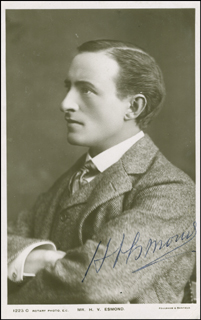
Henry V Esmond ~ Scrooge
(Rest of cast unknown);

With a decade passing between the next adaptation we see a significant advancement in filmmaking techniques. Now we have proper close-ups, shorter scenes and quicker editing, still no tracking shots but it finally looks like a proper film. This version is supposedly missing several minutes but while it's short it's not cut off in the way damaged films often are, with the beginning or end obviously missing. Instead it looks like at some point somebody may have fixed this surviving print by re-editing to cover missing parts. For example the film goes from the Ghosts of Christmas Past to Present without introducing the latter while Christmas Past did get an intro and the Ghost of Christmas Present does hand Scrooge off to the Ghost Of Christmas Future, so that may be a missing scene. Then there is the ending, the film simply fades out after Scrooge tells Cratchit he will be turning over a new leaf and giving him a raise, then the film fades out. This means that we never actually see Cratchit's family nor do we even meet Tiny Tim. Even so this version does tell the basic story, albeit in the same rushed manner of the earlier versions. This film is also short by 1923 standards, when feature length films of over an hour long were standard, however comedy shorts were still commonly used as part of double bills and it's likely this film was meant to be used the same way during the festive season.
esmond

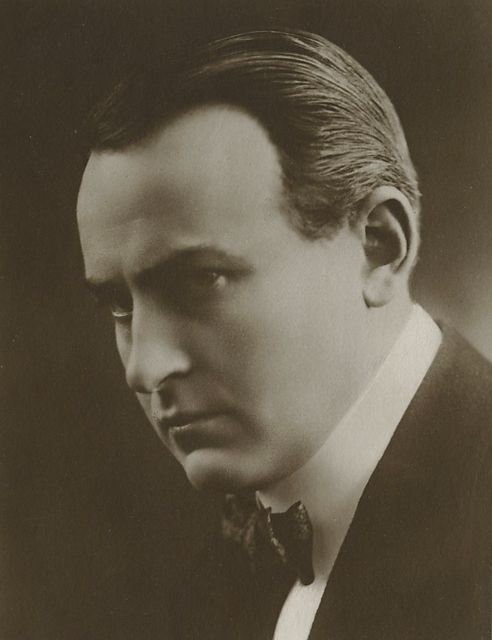
Scrooge is played here by Henry Esmond who does a good job, looking like previous Scrooge Charles Rock. He was in fact a prominent Broadway stage actor known for musical comedies who was expected to have an equally successful film career which was however, also like Charles Rock, cut short by his sudden death of pneumonia in 1922 aged only 52. The rest of the cast is unknown which is a shame because this Bob Cratchit is one of the better ones with the gangly actor bearing an odd resemblance to David Warner who would play the role sixty years later opposite George C Scott in the 1985 version. Marley's Ghost starts of with a promising closeup of his ghostly feet trudging across the floor dragging his chains and lock boxes. But once we see his face he looks more like a nagging clerk than a frightening spirit and once again the actor his a silly fake nose for some reason along with a stiffened hair pig-tail which would have been anachronistic in the 1840's. The other ghosts look fine and some good use is made of double exposures. This time Scrooge does leave his bedroom unlike most previous versions but this one is too short to do much with the story. The film is competently done and would have benefitted from having another reel to tell its story.

===================================================

"SCROOGE" (1923)


Directed by Edwin Greenwood
Russell Thorndike ~ Ebenezer Scrooge
Forbes Dawson ~ Fred
Nina Vanna ~ Fred's Wife
Jack Denton ~ Jacob Marley

Yet another British effort, this one is longer, at almost a half hour, but once again it doesn't make the best use of this time. The poor quality of this surviving print is obviously a problem but this version would be fairly mediocre anyway. Scrooge here is played by Russell Thorndyke who looks like some of the previous Scrooges, but although this film gives more time to establish the character he doesn't leave much of an impression. He is mostly just a cranky old coot except for one scene in which he charges outside to literally assault a caroling street urchin with a heavy bound ledger which is a tad extreme even for Scrooge. The rest of the cast is only partially listed leaving out, for some inexplicable reason, the actor playing Bob Cratchit, who is the most emaciated and servile clerk yet. The rest of the cast are serviceable enough but leave little impression except for the odd choice to have the Ghost Of Christmas Past be shown as a midget. Or is he supposed to be a child? This Marley doesn't get a dramatic entrance but at least he doesn't have the fake nose, although he does still have the stiffened pigtail. The other various spirits rush by quickly with The Ghost Of Christmas Present (a suitably giant Father Christmas) merely telling Scrooge that Cratchit and Nephew Fred will be having a merry christmas with their families and he won't before then exiting. The Ghost Of Christmas Future is the only one to actually take Scrooge outside, to his grave. Once again, as with the previous version we don't even see Cratchit's version and there is no Tiny Tim. In fact we spend more time with Nephew Fred & his wife than we do with Cratchit which seems off. 
nina-1

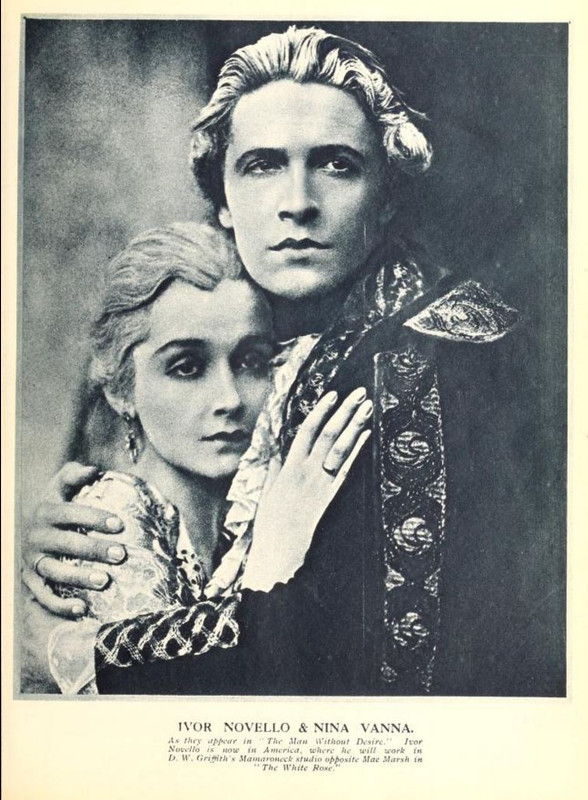
One change from previous versions is the heavy use of  inter-titles and dialogue cards, in fact by the standards of silent film this one is downright chatty. Although the dialogue between Scrooge and Marley is somewhat out of sequence adding to the rushed feel of this film. The direction is pedestrian even compared to the earlier version (there are no closeups) and the sets minimal as well.  Russell Thorndyke (1885-1972) was a British actor from a theatrical family along with his sister Dame Sybil, with a long stage career including playing Shakesperian roles as well as being a successful novelist. On film he had already played "MacBeth" opposite Sybil, and would later go on to act opposite Laurence Olivier in sound film versions of "Hamlet" and "Richard III". He spent much of his career on the stage however. Nina Vanna (1899-1953) as Fred's Wife is apparently the only other cast member of any note (she is billed up front and thus twice along with Thorndyke) and did in fact have several films to her credit including playing the lies of Lucreazia Borgia and Lady Jane Grey, although she is given little to do here. Vanna was actually a Russian stage actress named Nina Yasikova who fled the 1917 Revolution and ended up in Britain who was discovered by actor Ivor Novello who convinced her to try films and to change her name. She would make more than twenty films in Britain, France and Germany but retired with the coming of sound so perhaps her command of English may have been a little shaky. She died in Britain aged only 54. 

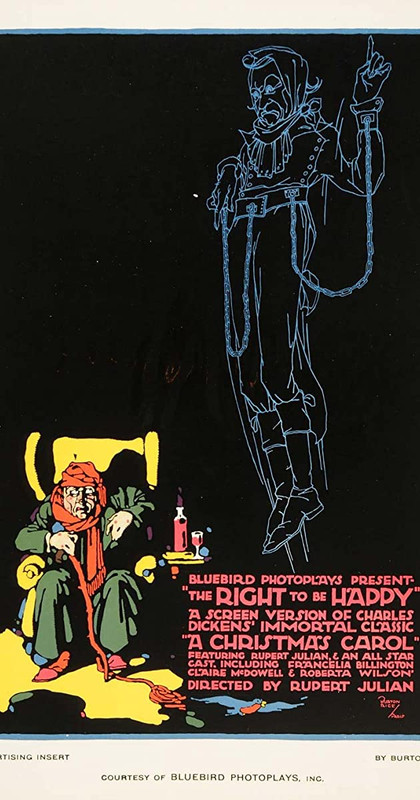
Besides these surviving silent Scrooges there are lost versions including a 1908 version made by Essanay Studios starring Charles Ricketts and a big budget full length American version entitled "The Right To Be Happy" made by Universal Studios starring future film director Rupert Julian as Scrooge.
right

Sunday, 20 September 2020

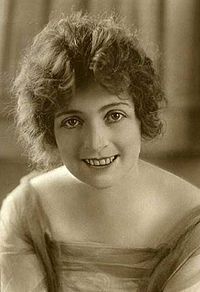
Silent Screen Actors Who Died In The 1918-19 Pandemic

The Corona pandemic has thus far killed dozens of musicians including Toots Hibbert, John Prine, Ellis Marsalis, Lee Kontiz, Bucky Pizzarelli, Trini Lopez, Dave Greenfield of the Stranglers, Allan Merril of the Arrows, Adam Schlesinger of Fountains Of Wayne, and actor Alan Garfield. Along with a million other deaths worldwide (so far).

The 1918-19 Spanish Flu pandemic killed somewhere between 17-50 million people, most of whom would remain forever unknown but there were a few noteworthy actors & filmmakers.

ACTORS & FILM MAKERS;

Gaby-Deslys-poster

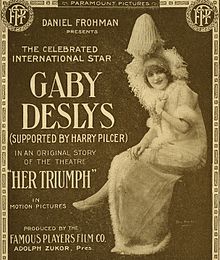
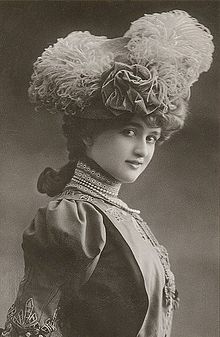
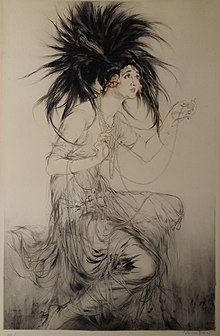
Gaby Deslys - A French stage & film actress, dancer & singer who was famous as a scandalous stage star in Paris, London & New York in the 1910's. She was considered a sex symbol who caused her male fans to brawl for her favours, carried on an affair with the King of Portugal and carried on fueds with critics than included a lawsuit against one and threats to have another horsewhipped. She made a few recordings and five films (all now lost) before dying of the flu. Her fame suggests she certainly would have made more films if she had lived but at the time of her death she was 38 and probably would not have been a film sex symbol in the Jazz Age, although her stage career would have been secure.

220px-Gaby1910s
GABY DESLYS


GABY DANCING (1916)

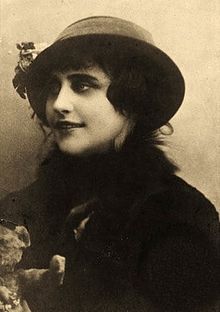
Vera Kholodana - A major star of Russian films who made dozens of films (unclear how many) of which only eight survive, speciallizing in romantic and historic melodramas. After the Russian Revolution she remained in Russia and was still working when she died aged only 25 with a future in Soviet films assured.

220px-Vera-Kholodnaya-photo
VERA KHOLODANA

"THE LAST TANGO" (1918) ~ Starring Vera Kholanda;


VERA'S FUNERAL;


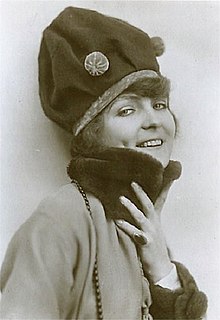
Gilda Langer - A young German film actress who in her short career managed to work with actor Conrad Veidt, and directors Fritz Lang, Paul Leni and Robert Wiene who had just cast her as the lead role as the damsel in distress in his next film "The Cabinet Of Dr Caligari" a soon-to-be horror classic when she died suddenly aged only 23.

220px-Gilda-Langer-SL
GILDA LANGER

Myrtle Gonzalez - An American actress of Mexican-American background, Gonzalez made over 70 films in only 4 years (most of which were likely shorts) including several with actor/director William Desmond Taylor and a six part serial. Her trademark was a spunky girl-next-door type in westerns and outdoor adventure films. Ironically in spite of her tomboy image her health was poor and after marrying in 1917 she retired at least temporarily which turned out to be permanant when she died aged only 27.

200px-Myrtle-Gonzalez
MYRTLE GONZALEZ


"THE KISS" (1914) Starring Myrtle Gonzalez

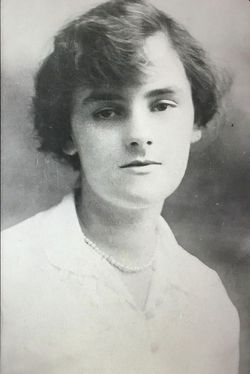
Tessie Harron - The younger sister of actor Robert Harron, both members of DW Giffith's stable, Tessie had also appeared in a small role in a Griffith film "Hearts Of The World" (1918) but may have appeared as an extra in others. Griffith was pleased enough with her performance to sign her up for future roles but before she had the chance to make any more films she died aged only 22.

TESSIE HARRON
68844194-9bb2e36c-d8bc-4b12-aa65-eddbc1777c00

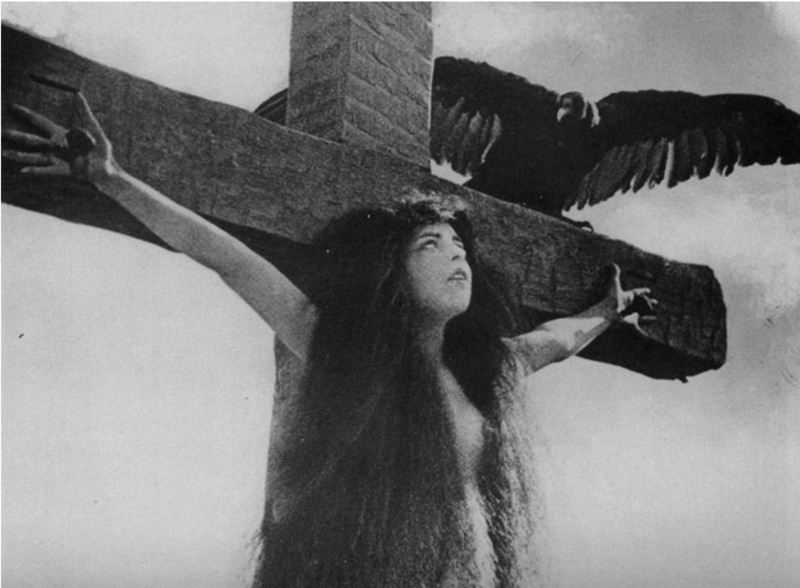
Corinne Gray - An American model who appeared in the notoriously graphic 1919 film about the Armenian Genocide "Ravished Armenia" (AKA "Auction Of Souls"). She reportedly caught the virus during filming of the final scene and died soon afterwards, this was her only film credit and nothing else is known about her although she may have appeared as an extra in others.

"RAVISHED ARMENIA"
Ravished-Armenia-crucifixion-2

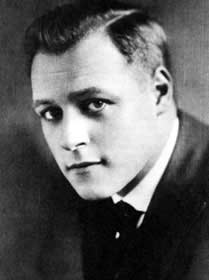
Harold Lockwood - A major American leading man of the 1910's, he started out in Vaudeville before appearing in a number of films of various types including major films like DW Griffith's "Intolerance", "Tess Of The Storm Country" (with Mary Pickford) and "The Avenging Trail" when he died aged 31.

Harold-Lockwood
HAROLD LOCKWOOD


"A BRAVE LITTLE LADY" (1912) starring Harold Lockwood

Clifford Bruce ~ A Canadian actor known for being a strapping leading man or heavy in four dozen films including the classic serial "The Perils Of Pauline" (1914) and the Theda Bara films "A Fool There Was" (1915) and "Lady Audley's Secret" (1915, now lost), died aged 34.

CLIFFORD BRUCE
Clifford-Bruce-May-1919-EH

Shelley Hull - An American actor who had a successful stage career with several popular Broadway plays to his name over a dozen years. He had only recently moved into film making two films before dying aged 34.

220px-Shelley-Hull
SHELLY HULL

Einar Zangenberg - A Danish leading man known for action hero roles as well as playing Sherlock Holmes (which still survives), like some other Scandinavian actors as he built a name he moved to a bigger country to boost his career in 1914, in his case Germany where he was once again successful although. Apparently a burn-the-candle-at-both-ends type he also worked and partied himself into a sanitarium where he caught the influenza and died aged 35

Einar-Zangenberg-Schauspieler

EINAR ZANGENBERG

Julian L'Estrange - A British born actor who also had a successfull stage career for over a decade both in London and on Broadway before moving into films including one with Pauline Fredrick and Betty Blythe when he died aged 38.

JULIAN L'ESTRANGE
220px-Julian-L-Estrange

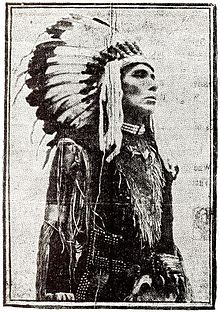
Dark Cloud - American-Indian film actor who appeared in several popular western films including directed by Francis Ford, DW Griffith and actors Mary Pickford & Mack Sennett including "Birth Of A Nation" and "Intolerance" as well as a model for painter Fredrick Remmington. He was one of the older actors of the 1910's dying aged 62

220px-Dark-Cloud-Elijah-Tahamont
DARK CLOUD

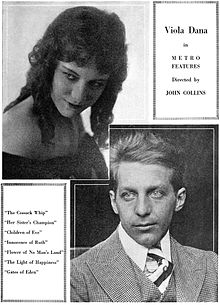
John Collins - An American film director and screenwriter who made over forty films, many starring his wife popular actress Viola Dana when he died aged only 28.

john-collins

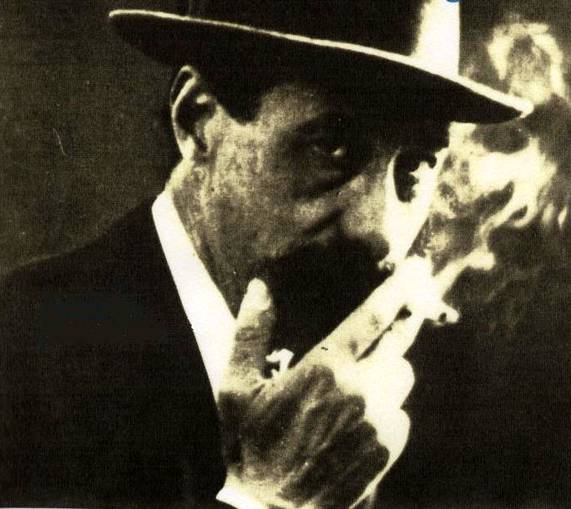
Walter Stradling - Anglo-American cinematographer who worked with Cecile B DeMille, Mary Pickford, Blanche Sweet and Sessue Hayakawa.

220px-Gaby-Deslys-Drian-Etching-1910
GZABY DESLYS


GABY DESLYS SINGING
=====================================================

Sunday, 17 May 2020

Lou Reed vs Andy Warhol's "Empire"


Several months back I did a project where I added a soundtrack to Andy Warhol's 1964 silent film "Empire" which I described at the time as thus;

"Empire" was a black & white art film made by Andy Warhol in 1964 for which he simply pointed a camera at the Empire State building overnight and let it run. The film is silent and runs for eight hours and nothing actually happens other than some atmospheric and lighting conditions. The film starts in the early evening as the sun sets. As darkness falls flood lights in the tower come on and lights from other buildings flash on and off. Clouds roll in, birds fly past, planes fly by. Occasionally the lights go off and the tower is lost in darkness. Since the film is in black & white and silent it has a timeless quality, although shot in 1964 it could easily be from any time since the tower was finished in 1931. This quality is added to by the degradation of the already grainy super 8 film stock.

Of those critics who deigned to take note of the film most dismissed it as a crude gimmick. However there were a few who saw it as a new way of using a film camera to make a landscape just as his later "Screen Tests" would become a new way of portraiture. Due to it's extreme length the film has rarely been shown in it's entirety. Warhol himself refused to show it after 1972. After his death it was shown at MOMA which eventually created an edited down two hour version.

There have been a few tributes filmed using modern video cameras including one that is almost as long as the original but the modern video lacks entirely the grainy authenticity and moodiness of the Warhol version.

=============================================================

As the original film was silent and had no soundtrack I decided to add one using various tracks from the British band Cabaret Voltaire, one of the pioneers of Industrial Music starting in the late 1970's and into the 80's. The Cabs were not only pioneers in creating the new genre of music but also in making videos using grainy found footage synched up to their electronic drones. As such I figured they were the perfect soundtrack for a Warhol film, I also added a bunch of their tracks to a number of Warhol's infamous "Screen Test" portraits. Basically I thought they turned out like something that Warhol would have found interesting but than I remembered there was a possibly even better candidate for a posthumous collaboration. Like someone who actually had collaborated with Warhol.

Lou Reed's classic 1967's band the Velvet Underground were discovered by Warhol who built a multi-media show around them called "The Exploding Plastic Inevitable" in 1966 and then "produced" their 1967 debut album. I put produced in quotes because the band themselves always said Warhol, who had little knowledge or interest in music had little presence in the studio other than to occasionally say "Can it be louder"? (The answer by the way was; "Yes. Yes it can"). What he was able to do is use his clout to get them a deal in the first place and convince the label to give them leeway in the studio to do what they wanted. He did introduce them to the German singer Nico and have her sing a couple songs on the album over their protests. He also designed the album's classic banana album cover. The result was an album that every survey of most influential albums lists as one of the top ten most important. At the time the album was however a flop and Warhol and the Velvets drifted apart. The band would put out three more classic albums before breaking up in 1972. Warhol would occasionally dabble in music from time to time; doing a screen-test of Bob Dylan, designing album covers for the Rolling Stones "Sticky Fingers" and Billy Squires's "Emotions In Motion" and a video for the Cars "Hello Again" which he also appears in as the worlds worst lip-syncher. He died in 1987. As for Reed he went on to a long and influential career as one of the cranky Godfathers of Punk. In he reunited with former Velvets member John Cale to record a tribute to Warhol in 1989's "Songs For Drella" which got mostly negative reviews. In 2011 he collaborated with Metallica in recording "Lulu", a tribute to the classic Louise Brooks film "Diary Of A Lost Girl" which got even worse reviews. He died in 2013.

Before that however he recorded one of the more controversial albums of the era with 1975's "Metal Machine Music", a double album of nothing but layers of screeching feedback, distortion, static and white noise that was by any objective standard completely unlistenable. Reed and the Velvets had been pioneers in experimenting with feedback on their first two albums but this time there were no actual songs, just the feedback. Suffice it to say the reaction was not friendly with the album getting universally hostile reviews and no chart action or airplay and it swiftly went out of print. Reed himself once said; "Nobody I know has actually listened to all of it. Including me". The 1991 book "The Worst Records Of All Time" ranked it as number two, behind only an album of a non singing Elvis Presley giving rambling stage banter and ahead of the likes of The Shaggs, Pat Boone, John Travolta, Bruce Willis, Joey Bishop, Joel Grey, America, Milli Vanilli and the much despised Starland Vocal Band. However the album would take on a second, if limited life as an inspiration for the next generation of extreme Industrial and Noise band like Throbbing Gristle, Cabaret Voltaire, the Severed Heads, Residents, SPK and Sonic Youth and eventually got re-released on CD which I kinda forgot I had.

Anyway when I remembered it I realized it was perhaps a better candidate for a mashup with Warhol's "Empire" with it's soundtrack of urban cacophony, and one that Warhol and Reed themselves would have agreed to if one of them had thought of it. I'm still going to leave the Cabaret Voltaire set I already did as it's frankly more varied and interesting, not to mention listenable, but here's the Warhol/Reed mashup in all it's screeching post-modern glory.

Since "Metal Machine Music" was a double album I divided it into four parts, one for each side.

LOU REED vs ANDY WARHOL ~ "METAL EMPIRE MUSIC" pt.1;


LOU REED vs ANDY WARHOL ~ "METAL EMPIRE MUSIC" pt.2;


LOU REED vs ANDY WARHOL ~ "METAL EMPIRE MUSIC" pt.3;


LOU REED vs ANDY WARHOL ~ "METAL EMPIRE MUSIC" pt.4;


2022 UPDATE; As I mentioned above the full eight hour Warhol film is locked away in the bowells of MOMA and not currently available but somebody did shoot an eight hour tribute of the Empire State Building. Since it was shot using video rather than the super 8 Warhol used it doesn't have the grainy charm of the original but it's the only eight hour version available so I got the idea of taking it and adding a version of Lou Reed's "Metal Machine Music" which I slowed down 100% thus stretching it out to a full eight hours (as well as making it way more ambient and dreamy) to get the closest approximation of the full project in one film. Note I also had to serioulsy compress the sound file to make it fit and uploadable.

"EMPIRE"(REDUX) vs "METAL MACHINE MUSIC" (Slowed down 100%);


==============================================================

By way of context here's some actual footage from the Warhol's "Exploding Plastic Inevitable" with the Velvet Underground circa 1966. The first few minutes have actual live sound while the rest obviously are Velvets tracks that were added later.


And while we're at it here's the video Warhol made in 1984 for the Cars "Hello Again" including Warhol himself as the world's worst lip-syncher. The video has references to his "Screen Tests" and the "Exploding Plastic Inevitable". It was his last major project.

THE CARS ~ "HELLO AGAIN";

Monday, 2 September 2019

Andy Warhol's "Empire"; A Symphony In 12 Parts


"Empire" was a black & white art film made by Andy Warhol in 1964 for which he simply pointed a camera at the Empire State building overnight and let it run. The film is silent and runs for eight hours and nothing actually happens other than some atmospheric and lighting conditions. The film starts in the early evening as the sun sets. As darkness falls flood lights in the tower come on and lights from other buildings flash on and off. Clouds roll in, birds fly past, planes fly by. Occasionally the lights go off and the tower is lost in darkness. Since the film is in black & white and silent it has a timeless quality, although shot in 1964 it could easily be from any time since the tower was finished in 1931. This quality is added to by the degradation of the already grainy super 8 film stock.

Of those critics who deigned to take note of the film most dismissed it as a crude gimmick. However there were a few who saw it as a new way of using a film camera to make a landscape just as his later "Screen Tests" would become a new way of portraiture. Due to it's extreme length the film has rarely been shown in it's entirety. Warhol himself refused to show it after 1972. After his death it was shown at MOMA which eventually created an edited down two hour version.

There have been a few tributes filmed using modern video cameras including one that is almost as long as the original but the modern video lacks entirely the grainy authenticity and moodiness of the Warhol version.

Clearly what this film needs is a soundtrack. Accordingly I used some Cabaret Voltaire as being the closest thing to early Velvet Underground and added that to some clips from the film. Since the original was eight hours long I decided to string together several sections in separate parts which almost makes it one of those old time multi-part film serials most of which lasted 12 chapters. Using 12 chapters is also a tribute to Arnold Schoenberg, the Father of Avant Garde music who developed the 12 Tone method of composition.

Chapter 1. "WAIT & SHUFFLE";


This version is actually sped up to cover the entire 8 hours in 7 minutes, it also has cleaned up visual quality. Since it starts in the evening it's a good chapter to start this series with. The track is from a box set of early tracks.

Chapter 2. "GET OUT OF MY FACE";


This track is from the "2x45" album from 1982.

Chapter 3. "TAXI MUSIC" (HAI! Live);


This track is from the "Hai!" live album of 1982.

Chapter 4. "TAXI MUSIC" (live);

This is another live version from "Live At The Lyceum" (1981)

Chapter 5. "TAXI DUB";


This track is from the soundtrack to "Johnny Yesno" from 1983.

Chapter 6. "WESTERN MANTRA";


This track is from "The Three Mantras" from 1980.

Chapter 7. "IF THE SHADOWS COULD MARCH";


This track is from the "Voice Of America" album from 1980.

Chapter 8. "UNTITLED LIVE TRACK";


This is another live track

Chapter 9. "GUT LEVEL";


This track is from "Eight Crepuscule Tracks" (1988)

Chapter 10. "EDDIE'S OUT";


This track is another early track from a compilation.

Chapter 11. "MOSCOW";


This track came from "The Crackdown" (1983)

Chapter 12. "The Premonition Remix";


We close off with this track off a remix album.

Thursday, 14 July 2016

The Early Days Of Film Horror; 1890's to 1914

Horror has been one of the most durable film genres since the days of silent films. However the first generation of film-makers were actually slow to latch on horror as a subject matter. The first decade of film, from 1895 to about 1904 focused on simple documentaries (or "actualities"), slapstick comedies, dancers and prize fighters, historical recreations and tableaus taken from classic literature, such as Shakepeare, Dickens and the Bible. Early film techniques were however too limited to effectively convey horror.

"LE MONSTRE" ~ "DIRECTED BY GEORGE MELIES;


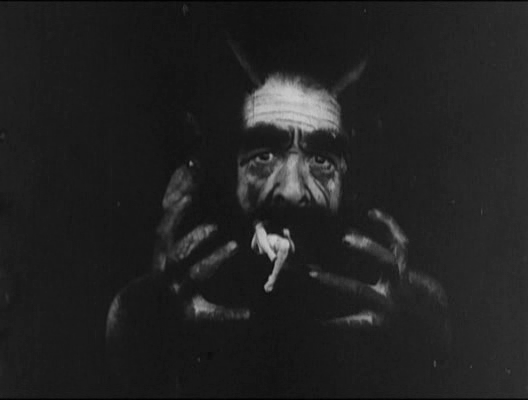
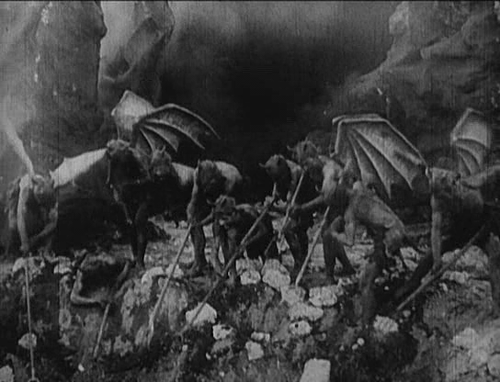
That changed when French film-maker George Melies began his revolutionary developments. Melies had been experimenting as early as 1896 and by 1903 he had developed a whole arsenal of film tricks which could be used to suggest the supernatural including stop-action photography and double exposures. He had also built a studio with elaborate sets which could portray a world of myth and magic. However Melies, while imaginative and experimental in many ways, was oddly conservative in his staging methods, preferring to simply set a stationary camera in front of his actors and sets and leave it there as if films were just another form of theatre. More importantly Melies was primarily interested in a whimsical world of child-like wonder and fantasy, not horror. The gentle Melies, who made mechanical toys as a sideline, would have been shocked at the idea of scaring an audience.

"THE HAUNTED CASTLE" ~ DIRECTED BY GEORGE MELIES;


"LE DIABLE AU CONVENT" ~ DIRECTED BY GEORGE MELIES;


His Spanish contemporary Chomon De Segundo (1871 - 1929) made use of all of Melies' bag of tricks but he had a somewhat different thematic sense. While the Frenchmen Melies was influenced by the works of Jules Verne and Hans Christian Anderson and fantasy paintings of Gustave Moreau, the Spaniard Segundo, was more influenced by the darker sense of Edgar Allan Poe and Francisco Goya. Some of his films have a more Gothic feel.

"RED SPECTRE" ~ DIRECTED BY SEGUNDO CHOMON;


While Melies had been a performer (as a magician) and set decorator, Segundo had actually little theatrical experience but had instead been a publicist and agent married to an actress when he decided to move into films in 1901. He started out with simple "actualities" but learning fast he soon picked up on the camera tricks of Melies and set out to top them by adding in some early animation tricks and a slightly more flexible camera. As Melies' career declined Chomon's career picked up and he continued to work into the 1920's albeit mostly as a photographer and set designer on other people's films including the Italian epic "Cabiria" (1914) and Abel Gance's classic "Napoleon" (1927). He was working to develop colour film when he died suddenly aged only 57.

"THE HAUNTED HOUSE" ~ DIRECTED BY CHOMON DE SEGUNDO;


SEGUNDO DE CHOMON;
chomon

In spite of his talents as a filmmaker Chomon was however not a playwrite and his films have little in the way of plotline, even less than Melies famous fantasy films, for that early film-makers would have to turn to to a rich tradition of Victorian Gothic literature which they now had the techniques to portray. A 1901 British version of Charles Dickens' "A Christmas Carol", while obviously not a horror story, did feature a ghost (using double exposures and a white sheet typical of stage ghosts of the time) that probably impressed audiences of the day. With a running time, usual of it's day, of only five minutes of which three and half minutes remain, it's not much of a film but it does have a proper story and characters. The film saves time by having only one ghost rather than four. For decades it was assumed to have been lost until an incomplete version was found. It also features early use of some crude special effects including a double exposures to create the ghostly image of Marley's face on Scrooge's door and using a black drape to show images of the past. The film was obviously shot indoors and the sets are clearly painted backdrops of the sort used on stage. The actors are similarly stagebound, sometimes openly gesturing, and even speaking to an audience that obviously can not hear them. This looks odd and even campy to modern eyes but was common in films of that era. The film was directed by Robert Paul, a former stage magician who directed other films using photographic tricks. He may have also appeared in the film as well but the cast is unknown.

"SCROOGE" (1901);


In 1910 Edison studios did their own version with a by then standard ten minute running time and correspondingly somewhat more more detailed story directed by Edison contract regular J Searle Dawley. He had already been directing films for Edison from the earliest days of proper narrative films including "Rescued From An Eagle's Nest" (starring DW Griffith) in 1908. His films were only one reel (ten minutes) in length but they did tell a proper story and sometimes used more than one set although his camera was still stationary.

"A CHRISTMAS CAROL" (1910)


Directed by J Searle Dawley
Cast;
Marc McDermott ~ Ebenezer Scrooge
Charles Ogle ~ Bob Crachit
William Bechtel ~ Unknown (The Ghost?)
Carey Lee ~ Unknown (Mrs Cratchit?)
Viola Dana ~ 13 yr Old Child
Shirley Mason ~ 10 yr Old Child

++++++++++++++++++++++++++++++++++++++++
LEGEND OF THE MISTLETOE BOUGH (1904);

Another sort-of Christmas film was this British film tells a story which seems right out of Edgar Allan Poe but in fact in predates Poe coming from a Gothic poem from English poet Samuel Rogers in 1822. In the story a bride and groom on their wedding night party have a game of hide & seek during which she locks herself into a large chest and can not be found. She dies of thirst or suffocation and is only discovered years later when her ghost appears and reveals her corpse, still locked in the chest in her wedding gown. Rogers claimed he this was a true ghost story attached to a certain noble house but was vague about where eventually leading to several old mansions claiming to be the site of the original ghastly honeymoon. This poem was turned into a popular song in the 1830's and a play by Charles Sommerset. In fact it's entirely possible, even likely that Poe himself was aware of it. In the 1860's Henry James would turn it into a short story and later Thomas Hardy would use it in one of his novels. Somewhere along the way the date of the fatful wedding was moved to Christmas which led the morbid Victorians to add the story as a now forgotten part of their Christmas customs.

"THE MISTLETOE BOUGH" (1904);


The film version was directed by Percy Stow, a British prolific director who made over two hundred films in the 1900's and 1910's (mostly shorts of course) including a version of Shakespear's "The Tempest", "The Pied Piper Of Hamelin" and a popular series of spy films just before WW1. His career was cut short when he died suddenly in 1919 aged only 43 during the Influenza Pamdemic although his cause of death is unlisted.

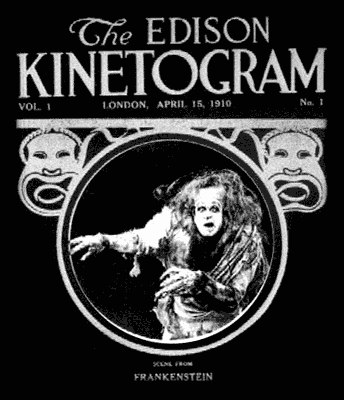
The same year as the second "Scrooge" film was made Edison studios also made what is generally considered to be the first proper horror film with a version of Mary Shelly's "Frankenstein". Although often credited to Edison himself by that date Edison had long since handed the actual film-making to directors like Edwin S Porter and J Searle Dawley having moved on to his myriad other business dealings. Edison had never taken film seriously as a narrative form or shown any artistic leanings anyway.

kinetogram

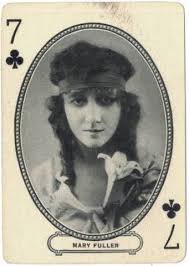
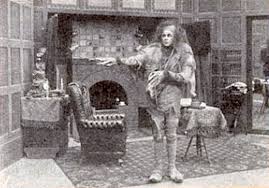
This film was directed again by J Searle Dawley and starred Augustus Phillips (as Dr Frankenstein), Charles Ogle (who had previously appeared Bob Crachit) as The Monster and Mary Fuller as the Dr's girl, the rest of the cast are unknown although since the film was shot in the same year as "A Christmas Carol" using the same director at the same studios it is quite possible that the two films shared the rest of their cast as well which would have common at the time. The story keeps as true to the spirit of the original Shelly novel as could be expected considering the short length and lack of dialogue. The actual scientific process involved is kept extremely vague and seems more akin to a witch's cauldron than the elaborate laboratory of the later James Whale/Boris Karloff film. The ending is even more mystical with the monster simply disappearing when the Doctor's personality reasserts itself after his having being earlier weakened and distraught rather than having the monster being killed. The film seems to imply then that the monster is connected to Dr Frankenstein in a way that is more similar to "Dr Jekyll & Mr Hyde" than the actual Shelly novel or any later film version. As is common to Edison Studio films the film is shot entirely indoors.

FRANKENSTEIN ~ (1910);


Directed by J Searle Dawley
AUGUSTUS PHILLIPS ~ DR VICTOR FRANKENSTIEN
CHARLES OGLE ~ THE MONSTER
MARY FULLER ~ ELIZABETH

"Frankenstein" gained a mythical status party because it was considered a lost film for decades with no known copies and the only surviving evidence being a still photo of Ogle in his monster costume and makeup used in the promotional posters. That iconic shot of the hulking monster became an enigmatic image of film history but there was only guesswork about the actual film. In 1963 a full plot description and further stills were found in an old Edison Studios catalog. That filled in some holes but still no actual film. As it happened there had been a copy of the film sitting in the library of a private collector who had bought it in the 1950's but did not realize what he had since his copy was in poor shape and not easily screened. That actually happens more often than you would think. It wasn't until the late seventies that the film was cleaned up and released to the public. Fortunately by then it was in public domain.

Director J Searle Dawley (1877 - 1949) would make around one hundred and fifty films, all silents, between 1907 and 1924 including the original versions of "Snow White", "Uncle Tom's Cabin", "The Charge Of The Light Brigade" and "The Four Feathers". Unfortunately most of his films have been lost.

Mary Fuller (1888 - 1973) was a well known leading lady who had worked both on stage and in film from it's earliest days who made a number of successful films (most since lost) and she also branched out into screen writing and marrying an opera singer. However by the end of World War One facing middle age and changing public tastes, her career and marriage were essentially over and she retired after suffering a series of nervous breakdowns. By the time she died at age 85 in a nursing home she was a forgotten figure. Although she lived long enough to have seen the re-release of the original "Frankenstein" it's unlikely she was made aware of it.

download

As for Charles Ogle (1865 - 1940), the first horror film star, he made at least three hundred films (most long lost of course) as well as appearing on Broadway. His broad features, untamed hair and bulging eyes made him an ideal villain and he would appear as Long John Silver in the 1920 version of "Treasure Island" (with Lon Chaney in a supporting role) as well as a version of "The Ten Commandments". He retired in 1926 just before the end of the silent era and died remembered by a few horror film buffs but having no idea that any of his films would ever be seen again.

images

+++++++++++++++++++++++++++++++++++++++++
DR JEKYLL AND MR HYDE;
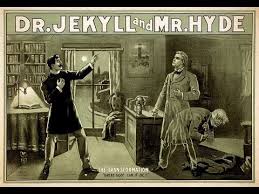
Robert Louis Stevenson's classic novel had already been adapted as a successful play in London in 1889 during the year of Jack The Ripper's rampage by writer Thomas Russell Sullivan and German/American actor Richard Mansfield. Mansfield was so realistically terrifying that some people actually thought he might be Jack and he was even questioned by the police. His transformation into Mr Hyde was accomplished without excessive makeup using body language, facial expressions and lighting. Mansfield would have been the obvious choice to play the film role however he had died in 1907 aged only 50. The first film version was made in 1908 only months after Mansfield's death by William Selig starring one Hobart Bosworth in the title role, but has not survived, this version was reportedly quite stage-bound and filmed entirely on a stage set. Another version was made in Denmark in 1910 which has also been lost. Two surviving film versions were made in 1912 and 1913.

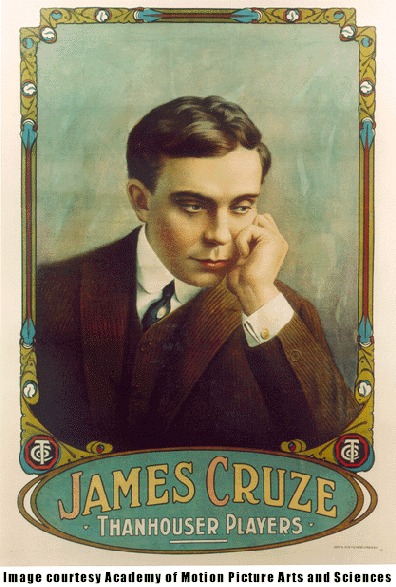
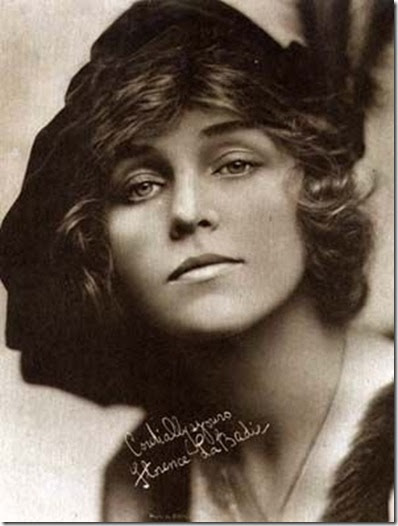
The 1912 version was directed by Lucius Henderson and starred James Cruze, who had previously appeared in "Last Of The Mohicans" in 1911, and Florence LaBadie, one of the leading actresses of the era.

DR JEKYLL AND MR HYDE (1912);


Directed by Lucius Henderson;
Cast;
JAMES CRUZE ~ DR JEKYLL
FLORENCE LA BADIE ~ ALICE (JEKYLL'S GIRL)
HARRY BENHAM ~ MR HYDE
MARIE ELINE ~ LITTLE GIRL

The story follows the original story and play reasonably closely albeit simplified to allow for the one reel twelve minute time-length which forces the exclusion of several characters. Unlike films of the 1900's there is use of multiple realistic sets including outdoors although the camera angles used are all essentially the same. The transformation scenes are simple dissolves from the Jekyll to Hyde characters with no in-between scenes. Typical of most one reel films of the day this was probably shot quickly and has a small cast. Even including extras the entire cast only numbers about a half dozen. The film's running time seems to be missing several seconds at the beginning and end including the credits, however it's doubtful this would change much from the story.

1b1dfacd53423b981aabba11a357a918

James Cruze (1884 - 1942) was not an especially charismatic figure and it was long rumoured that the Mr Hyde character was actually played by another actor not listed. In 1963 Harry Benham revealed (or claimed) to be that actor. At this point this is impossible to verify (Cruze had died in 1942) but it is generally considered to be true. The actor playing Mr Hyde does indeed appear to be a completely different person from Cruze with dramatically different facial features even taking into account the obvious stage make-up. Hyde is also notably shorter than Cruze although some of this is due to his hunched posture. Cruz was a contract player for Thanhauser Studios and is typical of leading men of the age; tall, distinguished and blandly handsome. Although he would make around a hundred silent films Cruze would become more successful as a director of westerns well into the sound era.

cruze

Harry Benham (1884 - 1964) had already had a stage and film career including a lost film called "The Mummy" (about which little is known) and "Cinderella" (as Prince Charming) along with various Dickens adaptations. He would make films into the 1920's before retiring.

Florence LaBadie (1888 - 1917) was actually the bigger star. Her origins were a mystery even then although it is known that she was raised in Montreal. As a New York based model LaBadie had moved on to a stage career when she was befriended by fellow Canadian Mary Pickford who encouraged her to move into film where she worked with Biograph Studios DW Griffith on a half dozen films including 1911's Victorian romance "Enoch Arden". That same year she was offered a contract with Tanhauser Studios where she would become a rival to Mary Pickford making an astonishing 185 films in six years, many obviously shorts, few of which survive. LaBadie was a classic romantic leading woman; beautiful, blonde, statuesque but with girl-next-door appeal. She was sexier than the virginal Mary Pickford as well as being athletic, she would do her own stunts in a later action serial. She is not really given much to do in this film and and a better example of her acting ability can be seen in "The Woman In White" a Gothic mystery (from a novel written by Wilkie Collins and also starring Cruze) filmed in 1917 which still survives. LaBadie was an intelligent woman who, unusual for actors of the day, involved herself in politics as a pacifist during World War I. Less plausible were vague rumours started by Republicans of an affair with Woodrow Wilson. She was killed in a traffic accident in 1917 aged only 29. She was the first major Hollywood figure to die, indeed she had been largely responsible for keeping Thanhauser Studios in the black, and while her contract had recently expired, her future seemed secure. Although she has largely been forgotten with few of her movies surviving, LaBadie was arguably the first real film sex symbol although how she would have competed with the next era of Vamps and Flappers is an open question, she was a strong and smart enough actress to have moved to character roles if given the chance.

FLORENCE LA BADIE:
Florence-La-Badie-thumb1

1913 VERSION;
The following year saw a longer version produced by Carl Leammle at IMP studios. At 26 minutes this version was more than twice the length of the previous version and boasted a bigger star than Cruze in King Baggot, a major leading man of the day. In fact it is entirely possible that Tanhauser Studios fired off their quickie version to preempt the bigger budget IMP version.

DR JEKYLL & MR HYDE (1913);


Directed by Herbert Brenon
Cast;
KING BAGGOT ~ DR JEKYLL/MR HYDE
JANE GAIL ~ ALICE
MATT SNYDER ~ ALICE'S FATHER
HOWARD CRAMPTON ~ DR LANYON
WLLIAM SORELLE ~ UTTERSON

Since this version is more than twice the length of the Tanhauser version they have more time to develop the story and characters although it's actually not substantially different from the earlier version. King Baggot has a more commanding presence than Cruze and is more dramatic especially in the transformation scenes. For these scenes Baggot seems to have based his performance on Mansfield's stage role albeit with the luxury of being able to stop the camera and change makeup. Baggot was no Lon Chaney and other than some relatively minor facial and hand make-up he relies mostly on messing up his hair and changes in posture to become Hyde. It would be fair to say that as Mr Hyde, Baggot could be accused of over-doing it, especially in his painfully hunched over scuttling crap-like gait which looks distinctly uncomfortable, if not painful. Jane Gail as Alice entirely lacks the beauty and grace of Florence LaBadie and is quite plain by comparison, although to be fair neither actress is given much to do with such a passive role. Oddly Gail had actually appeared in the previous IMP film version the year before as an extra.

The Tanhauser film has somewhat better sets notably in the dingy pub Hyde frequents and the use of some lattice-work windows as framing devices in a few shots. These shots, which symbolically portray Hyde as if in a cage, would almost belong in the German Expressionist films of a decade later although there's nothing else here to suggest such cutting-edge thinking.

download-2

King Baggot (1879 - 1948) was already a well known leading actor having appeared in films since 1909. Previously he had been a semi-pro soccer player in St Louis before becoming a successful stage actor in a variety of roles including Shakespere and had even appeared on Broadway before being lured to the easy money of film by IMP studios. With his stage experience and athletic skill Baggot became one of the bigger male stars of the day working many times with Mary Pickford and Margueritte Snow and director Thomas Ince in movies such as "Ivanhoe" and "The Scarlet Letter". Later as he became too old to continue as a leading man he, like Cruze, moved into directing including working with William S Hart on the classic western "Tumbleweeds" in 1925. Unfortunately he took to drink and his career went into decline in the sound era and he was reduced to playing bit parts. He died of a stroke in a sanitarium aged 68. By then he was largely forgotten although he would later be given a star on Hollywood Boulevard.

KING BAGGOT;
260px-Kingbaggot1916

Jane Gail (1890 - 1963) had appeared both in films and on Broadway but abruptly retired in 1920 when she reached age 30 and did not act again. Matt Snyder (1835 - 1917), who appeared as Gail's father actually had the most interesting life and longest career of all. He had served in the Civil War in the Union Navy before going on to a long career on stage before moving into films albeit in supporting roles due to his age. He was generally considered to be the oldest actor in the early film era although few of his films survive. He died, still working, at age 81. The rest of the cast were not particularly notable even at the time and they stayed that way.

+++++++++++++++++++++++++++++++
Oscar Wilde's 1890 novel "The Picture Of Dorian Grey" had obvious dramatic potential and was the subject of a play and at least a half dozen silent films between 1910 and 1917 including versions from America, Britain, Germany, Denmark, Hungary and Russia. One 1913 American version starred matinee idol and tragic drug casualty Wallace Reid and future pioneering female director Lois Weber while a 1918 Hungarian version starred Bela Lugosi but these films all appear to be lost with one exception.

"THE PICTURE OF DORIAN GREY" (1915);


This American film produced by Thanhouser Studios is missing a few minutes from the beginning but is essentially complete. This version spends almost half it's time on the relationship between Grey and Sibyl Vane, the singer he seduces and cruelly abandons leading to her suicide. We don't get much of a build up but that may be due to the missing minutes. Thanhouser was not an especially innovative studio and while the film is competently directed with the shots of the degenerating portrait well done enough but there's an obvious lost opportunity in not showing Grey's degraded face after he dies in what is supposed to be the story's grim climax. Grey is played by one Harris Gordon who is not really young and pretty enough but a more interesting figure is Helen Fulton who plays Sibyl Vane. Although only twenty-one at this time she already had been a busy stage actor since her mid-teens. Born in Virginia in 1894 but reportedly educated in Paris, by 1912 she was living in New York she had been acting in touring shows in the midwest being the subject of good reviews and at least one 1912 newspaper interview. She made it to film by 1915 and Thanhouser apparently saw her as potential lead actress material giving her plenty of screen time here. However in less than a year she was gone from Thanhouser and at Edison where she appeared in a supporting role in "Vanity Fair", a fairly big film. A year later she was at another studio for a lead role in "The Unpardonable Sin" but a year later she was gone from film and back on stage again in a few popular travelling productions and had branched out into writing with a couple of plays of her own and was reportedly working on a history of film (although that could not have been a weighty tome at that point) and dabbling in designing Cubist art dolls so she sounds like a creatively ambitious girl. However while she is still listed in the "Motion Picture News Studio Directory" in 1918 (which describes her as 5.5 and 120 pounds) after that she disappears completely and doesn't turn up in the Broadway database either. Did she marry, change her name and retire or move away? She doesn't seem a likely candidate for domesticity. Did she die in the 1919 Flu Pandemic? A search through the census or grave records might turn her up but otherwise her fate and whereabouts are a mystery and likely to remain so.

HELEN FULTON;
ug-Zwq-PGLX6-O96od5ugac1-Zl-IF1b

Besides the novels of Mary Shelley, Robert Lewis Stevenson and Oscar Wilde the works of Edgar Allan Poe would be used in early film including a few attempts by DW Griffith, although most of these films would have to wait a few more years. I've already written about these films here.

++++++++++++++++++++++++++++++++
EUROPE;
The film system in America in the 1910's was dominated by studios like Edison and Biograph who actively discouraged either a star system for actors or auteur directors since they would inevitably demand more money. Instead they promoted their corporate brand and churned out movies quickly and cheaply like any other product of the industrial era. It wasn't until Carl Laemmle and his IMP Studios (IMP stood for "Independent Movie Productions") wooed away Canadian film star Florence Lawrence (known as the Biograph Girl) from Biograph studios by offering her not only more money but also star billing, that the other studios had no choice but to offer the same. However while actors became household names the directors, except for DW Griffith and Mack Sennett, remained largely unknown. France and Italy were different. While in 1910's America the industrialist was a heroic figure, in France the artist was still the romantic hero and the idea of the auteur director who treated film as an art form was accepted while Americans still saw film as little better than vaudeville. Thus Europe quickly produced "artistic" film-makers like the Frenchmen Abel Gance and Maurice Tourneur, the latter of whom would make an early horror film, as well as Italian epics and and the later Italian Futurists and German Expressionists but the first European "art films" were ponderous epics, usually made in Italy and France, which took works of literature or Greco-Roman history and recreated them in literal minded versions with lavish sets, large casts of extras and actors strutting about in very stagey ways in front of static cameras. These films have not dated well but would be an influence on the more deftly made epics of DW Griffith, Cecile B DeMille and Abel Gance. One such film was the 1911 version of "The Hunchback Of Notre Dame"'

The "Hunchback Of Notre Dame" is a Gothic Romance rather than a proper horror novel but is often added in with the classic film monsters of the silent and early sound era mostly because of the grotesque title character and his portrayal by Lon Chaney in the classic 1923 film and again by Charles Loughton in 1939 although the Hunchback is of course more a victim rather than a monster, the same could also be said of Frankenstein's monster and Cesare in "The Cabinet Of Dr Caligari". The earliest film version was in 1905's ten minute short "La Esmerelda" (unfortunately now lost) directed by influencial French director Alice Guay Blache in one of her early films and starred one Henry Vorins as the Hunchback in what was apparently his only known acting role as he later became a director, and Denise Becker as Esmerelda who only has two other films to her her credit including a version of Poe's "The Pit & The Pendulum".

"LA ESMERELDA" (1905);


The oldest surviving version of Hunchback in the 1911 "Hunchback Of Notre Dame" by French director Albert Capellani (1874-1931). A former stage actor with two actor brothers, Paul and Roger, by 1911 Albert was already an experienced veteran having worked in film since 1905 and his direction here is thoughly conventional to it's times albeit having a larger canvas on which to work with a large cast and sets.

"THE HUNCHBACK OF NOTRE DAME" (1911);


Directed by Albert Capellani
CAST;
Henry Krauss ~ Quasimodo
Stacia Napierkowska ~ Esméralda
René Alexandre ~ Phoebus de Châteaupers
Claude Garry ~ Claude Frollo
Paul Capellani ~ Unknown

PLOT SUMMARY (spolier alert);
Esmerelda is a Gypsy dancing girl living in 14th century Paris, Claude Frollo is an Archdeacon and alchemist who lives at Notre Dame Cathedral along with his assistant Quasimodo, a mishapen but strong Hunchback. Frollo lusts after Esmerelda but she is in love with Phoebus, the tall, handsome, popular Captain of the guards. Frollo sends Quasimodo to kidnap Esmerelda but he is thwarted by Phoebus arrested and sentenced to be lashed in the town square. Esmerelda takes pity on Quasimodo and stops the whipping and gives him water. After he is rejected by Esmerelda Frollo murders Phoebus and frames Esmerelda who is arrested who is tortured and sentenced to hang after she once again rejects Frollo. Quasimodo rescues Esmerelda from the gallows and hides her in the Cathedral where he claims sanctuary. However Frollo discovers betrays her and she is hanged while Frollo watches from the belfry. Quasimodo kills Frollo by throwing him from the belfry. Finis

With about a half hour run time Cappelani is able to cover the basics of the story and the sets are well done for the time with several different locations both indoors and out although the outdoor sets were probably actually shot indoors. However his direction strictly conventional with no close-up and all strictly full length shots. Quaismodo is played by Henry Krauss who bears a strong resemblance to Charles Ogle's Frankenstein from the year before with similar wild hair and costume, although it's unknown whether Cappelani or Krauss had seen this film. Similarly Krauss's stooped, bandy legged walk resembles the various potrayals of Mr Hyde since Richard Mansfield's stage play which they probaby were aware of. Without close-ups it's hard to compare his facial make-up with the later mishapen Lon Chaney and Charles Laughton faces but it appears to be fairly minimal. Krauss had a long career on stage and screen including playing Jean Veljean in "Les Miserables" (1912), a role in Abel Gance's classic epic "Napoleon" (1927) and small role in the sound version of "Les Miserables" (1934). He died in 1935. Albert Capellani made several films in France including with Krauss and his younger brother Paul Capellani (who is listed in the cast for this film, presumaby as one of the guardsmen). World War One interupted his career as he enlisted in the army and was wounded. Afterwards he moved to Hollywood where he made some succesful films with Alla Namizova including one of her nest films in "Red Lantern" (which I wrote about here)" which showed that by that time he had updated his filmmaking skills before returing to France where he was unable to find work and in ill health he retired from film dying in 1931.

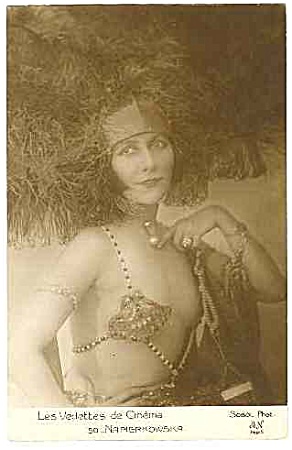
Stacia Napierkowska (Esméralda) led a more scandalous life. A Polish actress (real name Rene Claire Napierkowska) and dancer who made her name at the Folies Bergeres and model who was painted by Francis Picabia, she broke into film in 1908 including opposite the massively popular French comedian Max Linder. She also appeared in the 1915 cult classic crime serial "Les Vampires" (in spite of the title the vampires here are catburglers not actual vampires so this is not a horror film) which still survives and playing such notorious characters as Messalina, Salome and Madame Du Barry. In 1913 she tried her luck in America with a stage performance that included nudity and quickly got her arrested and sent back to France where she had some choice words for the prudity of Americans. After the War her love of fine foods, drinking and lounging around caught up with her and she gained weight and found roles harder to land. Staying quietly in Paris under Nazi rule she survived the war dying in May 1945.

Stacia-Napierkowska
STACIA

Maurice Turneur's 1914 film "Figures De Cire" ("The Wax Figures") was the first in a genre of Wax Museum films that would include Paul Leni's legendary 1924 German Expressionist film "Waxworks" (starring notable actors of German silent horror Conrad Veidt, Emil Janning and Werer Krause), 1932's "Mystery Of The Wax Museum" (directed by Michael Curtiz and starring Lionel Atwill and Fay Wray), 1953's "House Of Wax" (in 3D with Vincent Price) and the 2005 "House Of Wax" with Paris Hilton, not to mention any number of "Twilight Zone" episodes.

"FIGURES DE CIRE" (THE WAX FIGURES);


Directed by Maurice Tourneur
CAST;
Henry Roussel ~ Pierre de Lionne
Emile Tramont ~ Jacques
Henri Gouget ~ Caretaker

PLOT SUMMARY (spoiler alert);
A group of wealthy and frivolous dandies including Pierre de Lionne and Jacques and their wives are at a fancy dress dinner and drinking heavily. One of the Jacques challenges Pierre to stay the night in a wax museum's Chamber of Horrors.The challenge accepted they head off and Pierre is locked in. At first he is bored and dozes off but later decides to tour the exhibits which consists of displays of various murderers as well as a guillotine and severed heads. Pierre begins to feel uneasy and claustrophobic and finally believes the figures have come to life, especially when his jacket becomes snagged on a knife brandished by one of the wax killers. He begins to panic and thrash about wildly, seizing the knife from the wax statue. Meanwhile his former diner companions have become bored and the Jacques goes to the museum to check on his Pierre. Finding him a nervous wreck Jacques, while unseen by Pierre, decides to throw a bigger scare into him by hiding behind a screen and making noises of some sort. The now terrified Pierre slashes at the screen with the knife and kills Jacques. The final scene shows the police and museum authorities surrounding the body of Jacques and Pierre, now a raving maniac, as he lashes out in every direction. Fade out.

There is no supernatural in the film, the wax figures do not actually come to life, yet there is definite horror in Pierre's complete mental melt-down and murder of Jacques. This sequence, shot with Jacques completely in silhouette, is very well done. The wax figures are suitably creepy, especially a row of severed heads, as is the museum's shifty looking handyman. Henry Roussel as Pierre is very good as he moves from casual arrogance, note the cockiness of his slumped posture and bored puffing on a cigarette early on, to paranoid fear and mental collapse. He is able to suggest in the earlier scenes that his arrogant swagger covers for a basic unease even before his meltdown.

The film shows a far more advanced filming technique with a greater variety of shots, shorter edits and better use of lighting, although there are still no proper close-ups. The wax museum sets are spartan but creepy, especially a collection of decapitated heads starring at Pierre or another scene of Pierre cringing before robed figures (shown only from behind) who seem to be judging him. Unlike the Jekyll & Hyde films this film belongs more to the director than the actor. Henry Roussel (1875-1946) would have a long career as an actor, director and writer in France into the sound era retiring just before the Second World War.

MAURICE TOURNEUR;
maurice-tourneur

Maurice Tourneur would go on to a long career both in France, and after 1914, in Hollywood. Among his films was a 1915 version of "Trilby" with it's character of Svengali, an evil hypnotist who manipulates the title character, a beautiful singer. The film is somewhat of a horror film but will have to be considered in a seperate essay.

The films of Post-Revolutionary Russia film-makers like Eisenstein are well known but in fact Tsarist Russia jumped on to film quite early making films that were easily as sophisticated as those made in the better known centers like the USA, France, Italy, Germany and Scandinavia. Even the otherwise dully reactionary Tsar himself encouraged the development of a domestic film industry. Russian films were not known for horror (there is a rumour of a vampire film made around 1918 but there is no proof it ever actually existed) but there is one interesting curio. "The Portrait" (1915) was a film adaptation of a short story by Nikolai Gogol directed by Ladislas Starevich who was actually Polish but living in then Russian controlled Polish territory.

"THE PORTRAIT" (1915);


Directed by Ladislas Starevich
CAST;
ANDREJ GROMOV ~ YOUNG ARTIST
IVAN LAZAREV ~ GHOST

PLOT SUMMARY (spoiler alert);

A young artist buys a painting of a creepy old man from a junk shop and takes it home to his studio where he hangs it on the wall and dusts it off, then he decides to take a nap. While he tries to sleep he has visions of the painting coming to life. Eventually the figure comes out of the painting and while the Artist cowers in terror the Ghost stalks about the room, takes out what appear to be gold and counts it before suddenly vanishes. The Artist then wakes and looks around relived before falling back in his bed. Finis.

There is obviously little plot here but the film has plenty of atmosphere and in many ways looks so positively Expressionist that one seriously wonders if any of the post WW1 German filmmakers saw it. The image of the Ghost climbing out of the painting has obvious echos in the German horror classic "The Student Of Prague" first made in 1913 starring Paul Wegener and remade in 1926 with Conrad Veidt. The 1913 version clearly predates "The Portrait" but the version here is far more creepy and atmospheric. The painting itself looks more Expressionist in the style of Edvard Munch, Egon Schiele, Emil Nolde or Ernst Kirchner rather than anything traditionally Russian. Of course as stated Starevich was not Russian at all but Polish and Catholic with a closer relationship to Western Europe. The anguished acting style of the Artist is also very Expressionist, with the Ghost scuttling about the room looking rather like similar characters in German films played by Werner Krause, Max Schreck and John Gottowt albeit with a Russian looking beard. The sets are rather more cluttered and realistic than most expressionist sets however and there is little use of light and shadows even though much of the film presumably takes place at night.
Thematically the film's uses of a nightmare dream world clearly presages later Expressionist classic like "The Cabinet Of Dr Caligari", "Genuine" and "Warning Shadows" with the film never really making clear whether the Artist is in fact dreaming or not although that is implied at the end. The "it was just a dream, or was it" theme would explicitly turn up in "The Cabinet Of Dr Caligari" and "Genuine" both directed by Robert Wiene who would follow up by travelling to the USSR to direct a version of "Crime & Punishment".
Ironically while Starevich would go on to an important film career it would be not as a director but as a pioneering animator in the field of stop motion animation mostly in France and occasionally in Poland. He died in 1965 aged 82.

LADISLAS STAREVICH;
download

+++++++++++++++++++++++++++++++++
"DANTE'S INFERNO";

These early films were all short films done quickly on a low budget, as were most films of the 1910's, even the IMP version of "Dr Jekyll & Mr Hyde" could hardly be called a major production. The first attempt at a major big-budget epic horror film would come from Italy.
Although it's often forgotten about by Americans the first epic films, with large casts, big-budgets and long running times came not from American filmmakers, who preferred to churn out crowd-pleasing quickies but from the Italians who were the first to see film as a medium for serious art. To Italian filmmakers their idea of a serious "Art Film" would be ponderous full-length versions of classic literature with Roman motifs such as "Quo Vadis", "Cabiria", "Dante's Inferno" and "The Last Days Of Pompei" done with large casts, and big elaborate sets. These films, largely forgotten today by American critics, were a sensation in their day and are the obvious inspiration for the later epics of DW Griffiths and Cecil B DeMille.

"L'Inferno" (or "Dante's Inferno") was the first of these classical epics. Taking an unheard of three years to film with an even more eye-popping cast and crew of 150 people and a massive budget to match, "L'Inferno" was a major international hit even though it played mostly at large legitimate theatres in major cities with expensive ticket prices and tuxedo wearing patrons as at an opera. Audiences were spellbound by the film's air of Gothic fantasy, classical allusions and it's astounding special effects. Even the film's length of 71 minutes, more than twice the length of any previous film, contributed to the film's epic feel.

L-Inferno-1911-film

None of which makes it a great film by today's standards. In fact all these Italian films, while sharing similarly epic lengths, casts, budgets and classical motifs also share a similar glacial pacing, unimaginative static camera work and bland acting that amounts to little more than striking heroic poses and pulling elaborate facial expressions. While the Italian filmmakers put much work into their elaborate sets they gave little thought to actual film-making and were essentially still approaching film as if it were no different than a play or opera. Woodrow Wilson was reportedly a big fan of these Italian epics and arranged a screening at the White House of the Roman epic "Cabria". These films, while obviously influencing those later films of Griffiths and De Mille, lack entirely their flair however.

That said; "L'Inferno" is easily the best of the lot largely due to it's spectacular special effects which truly horrified audiences of it's day. The film has demons, headless ghosts, giants and monsters that far surpassed the playful stage tricks of Melies and were meant to terrify.

"L'Inferno" (1911);


Directed by Giuseppe De Liguoro
Cast;
SALVADORE PAPA ~ DANTE ALIGHIERI
ARTURO PIROVANO ~ VIRGIL
AUGUSTO MILLA ~ LUCIFER

The plot, to the extent there is one, is beyond simple. The poet Dante (wearing a notably fake nose and chin) is escorted on a tour of the various circles of Hell by the poet Virgil wherein he meets various historical figures (many so obscure that only an obsessive classical scholar could know who they were) some of whom tell the stories of how they got there. Then he gets back to the surface world. And that's literally it. But the film doesn't owe it's success to it's story, such as it is, but to it's Gothic atmosphere, sets and special effects, which are still pretty creepy.

Melies and to a lesser extent Chomon had used some quite elaborate sets for their fantasy films, but their artfully elaborate designs resembled illustrations from some Art Nouveau children's book, perhaps by Arthur Rackham, beautiful and dream-like. By contrast for his film Giuseppe De Liguoro took the illustrations from Gustave Dore's 1860's edition of "Dante's Inferno" as a template and set out to copy them with notable success. Dore showed Hell as a grim, grey, barren wasteland of jagged rocks, steaming fissures, dark clouds and gritty rain, gaping caverns and lakes of solid ice. The film captures this perfectly, even obsessively. It is impressive but far too stark and grimy to be have any beauty. Instead of using obvious stage sets Liguoro shot in what appears to be a desolate quarry. The opening shot shows obviously real mountain peaks while the closing shot has Dante exiting through an equally real craggy cavern. None of this appears to be made of the the sort of paper mache and plywood of normal stage sets. Note how the various barefoot extras hobble around painfully as if on jagged rocks. For comparison check out the Dore illustration of the Lake of Ice with trapped souls with the film's recreation. This also explains Dante's fake pointed nose and chin. He has them here because Dore drew him that way.

DORE'S ORIGINAL;
81754ef68adaf6d867dcc28000630176 FILM VERSION;
L-Inferno-1911-Count-Ugolino-Skull-eating While the sets are authentic enough it was the special effects that really caught people's attention. Dore's Hell is populated by a collection of demons, ghosts, giants and various monsters which the film faithfully recreates. The horned devils aren't quite as creepy as those who would later show up in "Haxan" (1922) but they aren't the playful imps of Melies either. Either scrawny and leering or fat and grotesque they are ugly and hateful brutes.

A brief scene with a cursed soul waving his wailing severed head uses double exposures effects similar to those already used by Melies. But while Melies played for laughs "L'Inferno" goes for the macabre quite effectively in one of the film's great stills.

tumblr-nida8cc-RSt1s5syojo1-1280 Not all the special effects work so effectively however. The double exposures used to create the giants are a little wobbly and the one attempt to have Dante and Virgil interact with the giants clearly involves two fake looking dolls. There is a scene with a flock of flying ghosts swirling overhead done with double exposures which is rather clumsy (if albeit attractive). Other flying ghosts are awkwardly on cables. The monsters Cerebus and Geryon are look like the clumsy stuffed animals on strings they obviously are. The Hounds of Hell are just normal dogs who aren't all that big and don't even look particularly fierce.

These faults are forgotten with the big reveal monster who of course is Lucifer himself which is still plenty eye-catching. Satan is shown here as a giant winged sphinx gnawing on a squirming male body in a still iconic image that Griffith himself would borrow for his one attempt at a full-length horror film "The Avenging Conscience" (which I wrote about here).

One imagines rural, religious audiences of 1910 would have been properly horrified by the whole spectacle of a nightmarish Hell both Catholics and Protestants could identify with. However it's unlikely any such audiences ever saw the film and that was not it's intended audience. By 1910 movie theatres had moved beyond the big cities somewhat but were still largely an urban entertainment and a big budget films like this and other Italian (non-horror) epics would not have played in any small town theatres. Instead for it's run the film played in large theatres with ticket prices that were several times the usual fare. The targeted audience was not the working classes or even the vaudeville going middle class but instead the kind of wealthy and cultured urban elites and Bohemians who could be expected to catch the literary and artistic allusions and classical themes. They would also be impressed by the epic scale, opera-like settings and pacing and excessive running time which would signal that these films were "High Art" and not the slapstick and melodrama of the mass cinema. While the later epics of Griffith and DeMille as well as some of the bigger German films owe much to these Italian epics, they are essentially very conservative in their actual film-making approach. While the Italians put much work into their sets and costumes and made decent use of their army of extras the camera-work is static (there are still no close ups) and flat, the pacing slow, the editing pedestrian (every scene must start with inter-titles) and the acting wooden posturing taken from the opera stage. They are also utterly humourles and stuffy. "L'Inferno" largely gets away with this because of it's simplicity. Since there is no real plot and only two simple characters (who don't actually do anything but observe) the film doesn't have to spend time on developing it's story or characters, it simply sends them to Hell and watches passively as it unfolds. In spite of it's pretensions the film is little more than an excuse to string together some cool and creepy sets and special effects which it does very well.

L-Inferno-1911-Devil-eats-Brutus

This would set the pattern for the later string of Italian epics into the early 1920's. These films were hugely successful throughout Europe, North America, Australia and parts of Latin America until the end of World War One. After the war the conservatism of the Italian film-makers (aside from a few Futurist film-makers) became dangerously out-of-step with the bold new innovations coming from America, France, Scandinavia and Germany and the once powerful Italian film industry fell into a decline they never recovered from. Economic recession and political chaos ending in Mussolini coming to power in 1922 further isolated Italy, although as it turned out that Il Duce was a huge film buff and happy to encourage the making of, and export of epic films that promoted the glory of ancient Rome. Accordingly in 1926 Italian studios, with the enthusiastic boosting of Mussolini, tried to blast their way into the world market by staging remakes of two of their hits from the previous decade; "Quo Vadis" and "The Last Days Of Pompeii". These were epics done in the usual lavish style with the biggest budgets yet however American and European audiences of the mid-twenties were already used to the big budget epics of DW Griffith, Cecil B DeMile, Carl Laemmle ("Phantom Of The Opera" and "The Hunchback Of Notre Dame", both with Lon Chaney sr) and the German Expressionists and these Italian epics were massive failures that bankrupted the major studios. In 1937 one final bigger budget classical epic, the infamous flop "Scipio Africanus" financed by Il Duce's government, was the coup de grace. The next time anyone paid any attention to Italian films would be after World War two with the smaller realistic "The Bicycle Thief" and the films of Felini.

Taken as a whole of the the films shown here "L'Inferno" has the best atmosphere and effects and has the most truly horrifying scenes although "Wax Figures" is a better as a film and has the best acting from Rousel. However the best pre-World War One horror films came from Germany starring actor Paul Wegener in 1913 with the first versions of "Der Golem" in (of which only a few minutes survive) and "The Student Of Prague" which I've already written about here. For another article about a more obscure silent film can be found here. Here's another article about the first all-black horror film. While we're on the subject here's another about "Dracula".

tumblr-l80xj8j7u11qzzxybo1-500