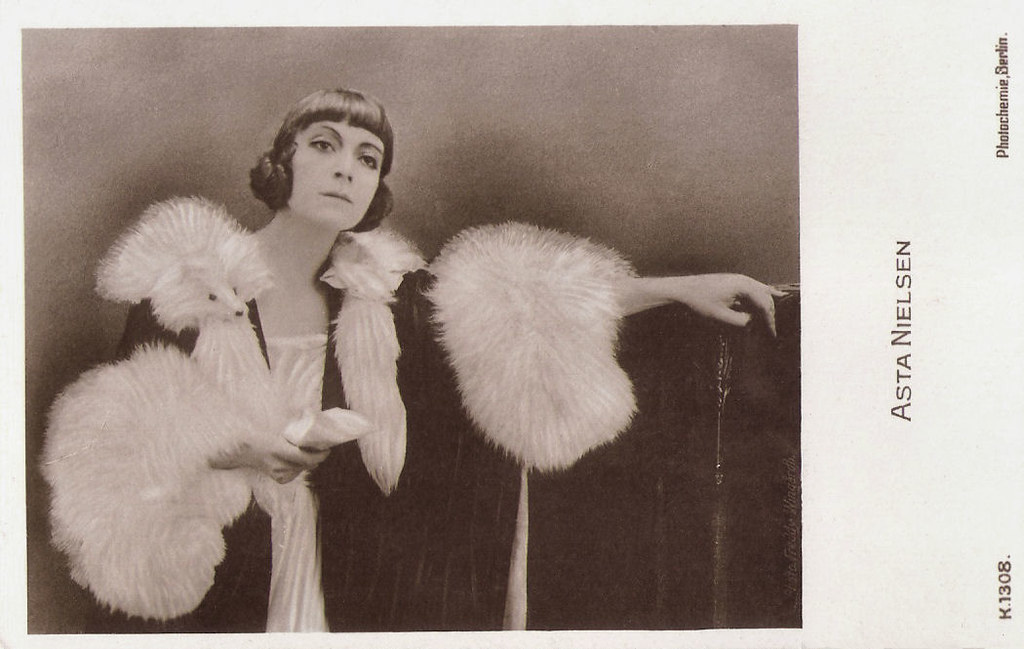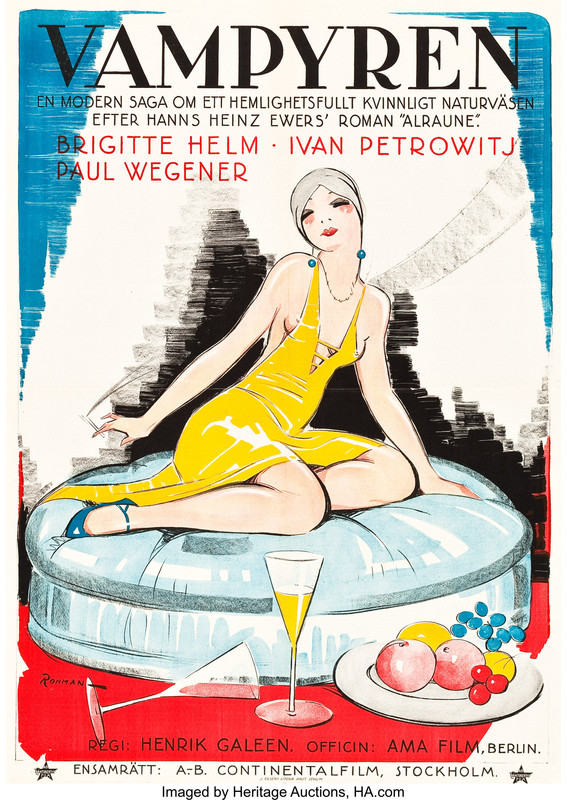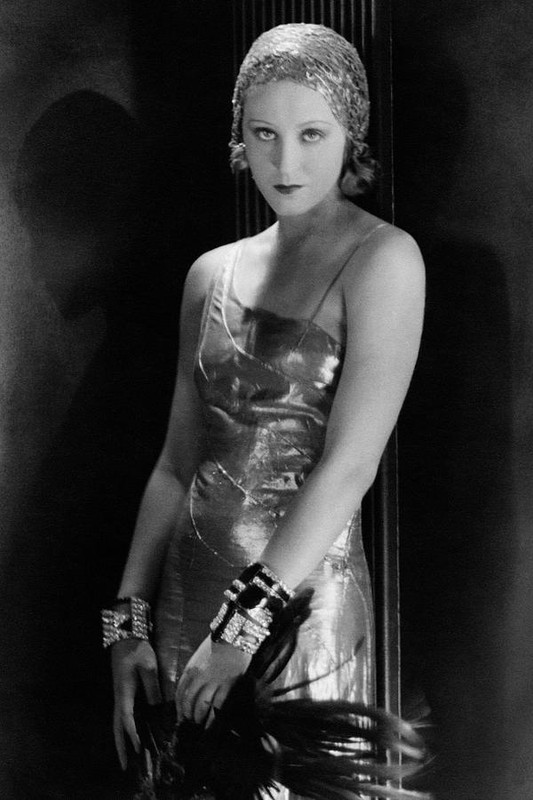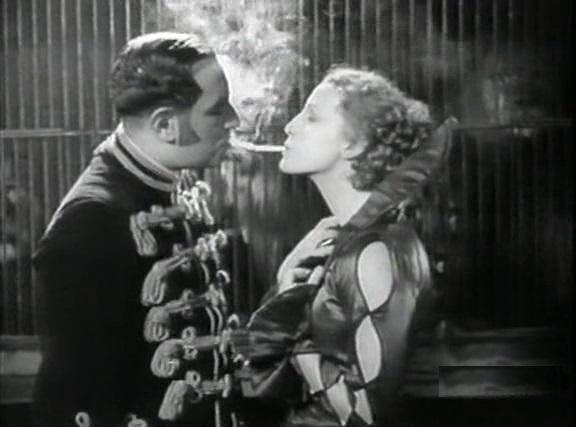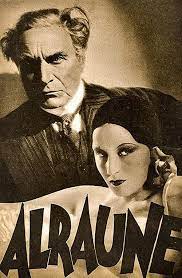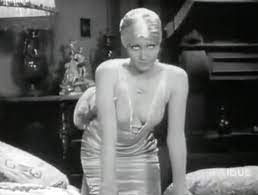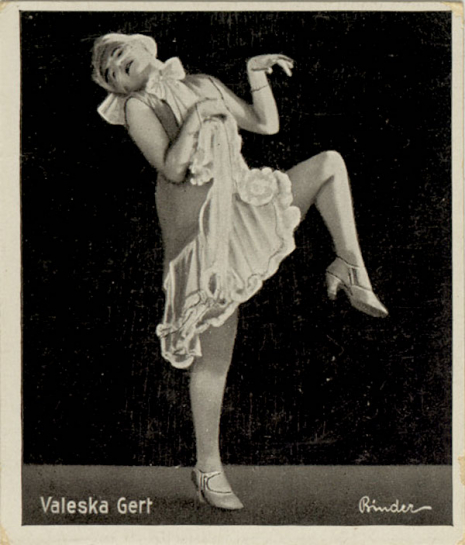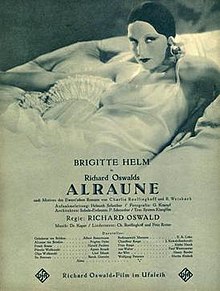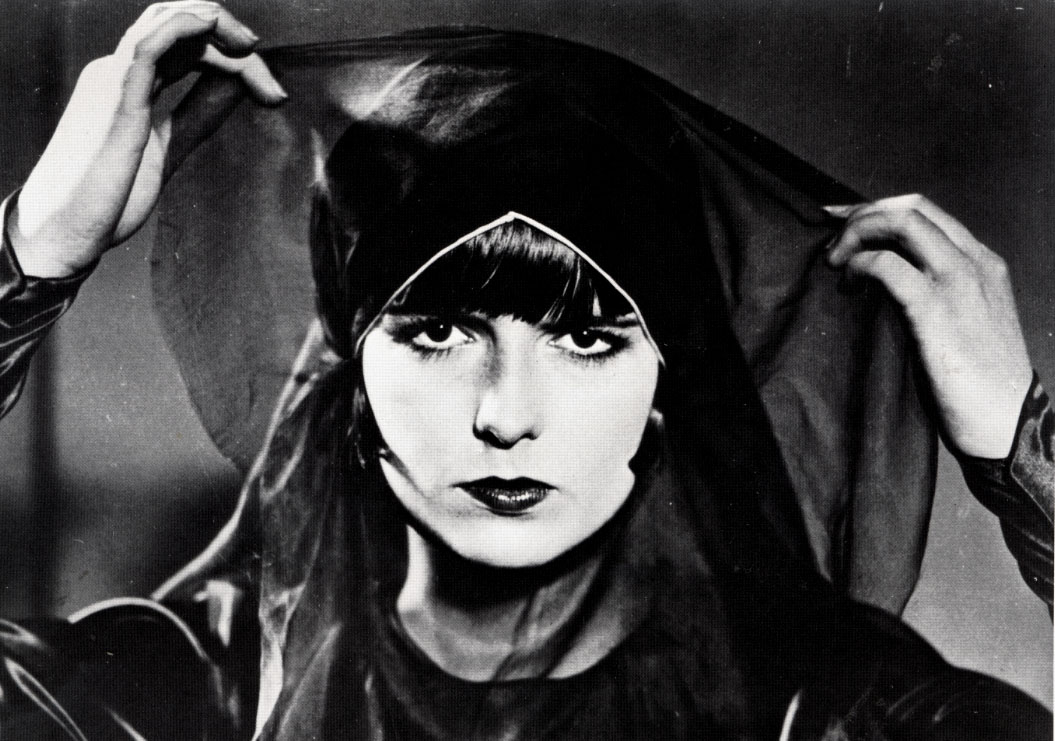
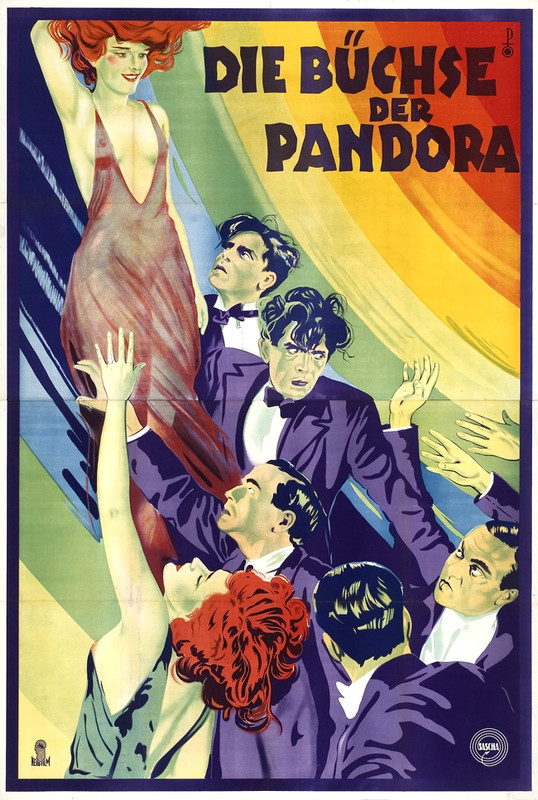
"Pandora's Box", the iconic 1929 German film about a free spirited woman whose hedonism brings ruin to the powerful men around her and ultimately herself is so associated with the even more iconic Louise Brooks that it's been completely forgotten that she was actually not the first or even the second woman to play the role of Lulu on film. In fact there were four previous Lulu films, "Lulu" (1917, from Austro-Hungary), "Lulu" (1918, Hungarian, directed by Michael Curtiz and starring Bela Lugosi), "Pandora's Box" (1921, German) and "Erdgiest" (AKA "Earth Spirit" starring Asta Neilsen) in 1923. Sadly the 1918 Curtiz version with Lugosi and the obscure 1921 version are apparently lost aside from their posters and all of them have so completely fallen down the memory hole that the two classic works on German film of the era barely even mention their existence, if at all. "From Caligari To Hitler" (by Fredrich Kracauer, 1947) doesn't mention any of these films while "The Haunted Screen" (by Lotte Eisner, 1955) does include "Erdgiest" in it's lists of films of the era but doesn't say another word about it and neglects the other films entirely. These oversights are even more puzzling considering three of these films would be worthy of at least some note on their own with involvement of important figures as playwright Frank Wedekind, director Curtiz, actress Asta Neilson (in "Erdgiest") and actors Bela Lugosi and Emil Jannings and both the aforementioned works have a fair amount to say about both Neilsen and Jannings. In her memoirs Louise Brooks does mention the 1923 film (although she gets the title wrong calling it "Lulou" suggesting she may have confused it with the 1917 or 1918 films which she does not mention) and accurately describing Nielsen's acting and look implying that she must have seen the 1923 film at least. Luckily while both surviving films have been largely forgotten they have not actually been lost and in fact both films have at some point quietly resurfaced and can now be reevaluated and compared to their far more famous younger sister.
The story of Lulu starts with Frank Wedekind who created the character in two plays later condensed into one. Wedekind was an actor and playwright in the Expressionist theatre and cabaret scene in the 1890's Munich. The Germanic world of Imperial Germany, Habsburg Austria and even Switzerland were highly conservative and stuffy societies with deeply repressed attitudes towards sexuality and gender roles as well as being obsessed with social class and rank. Following the laws of unintended consequences in retrospect it should not be a surprise that they would also become breeding grounds of an intellectual and artistic reaction against staid bourgeois rules with such figures as psychoanalysts Sigmund Freud, Karl Jung and Victor Adler, composer Arnold Schoernberg, artists Gustav Klimt and Egon Sciele and artistic movements Art Nouveau, Expressionism and eventually Dada along with a vibrant theatre and cabaret scene in Berlin, Munich, Vienna and Zurich. Wedekind was a product of this scene first as an actor and cabaret singer in the 1900's where he made a name for himself before taking up writing as a poet (once getting himself arrested for a poem mocking the Kaiser) and finally a playwright. The character of Lulu was introduced in two plays "Erdgeist" (1895) and "Pandora's Box" (1904). Lulu was presented as a sensual free spirit whose hedonistic ways disrupt the lives of everyone around her as she tears a promiscuous path through the art and high society scenes eventually leading to her own death.
That the play was controversial in stuffy Imperial Germany was no surprise, dealing with female promiscuity, lesbianism and bisexuality, it would have created a stir pretty much everywhere in the Victorian Era. Even Belle Epoch France, where riots broke out at the playing of Stravinsky's "Rite Of Spring", it would have created a fuss while it probably would have been banned in stuffy Victorian Britain, America and Canada. Even today the plays and character of Lulu are debated; was she a liberated woman or simply another version of the Siren archetype seen in contemporary characters played by the likes of Theda Bara and Mata Hari, leading men to their doom before getting their comeuppance at the end. Is Lulu a neacent feminist, an innocent force of nature who exposes the cruel hypocracy of bourgeios society or a male fantasy figure created by a male writer? Or is Lulu actually Wedekind himself?
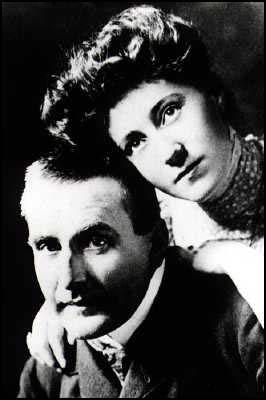
FRANK WEDEKIND & TILLY NEWES
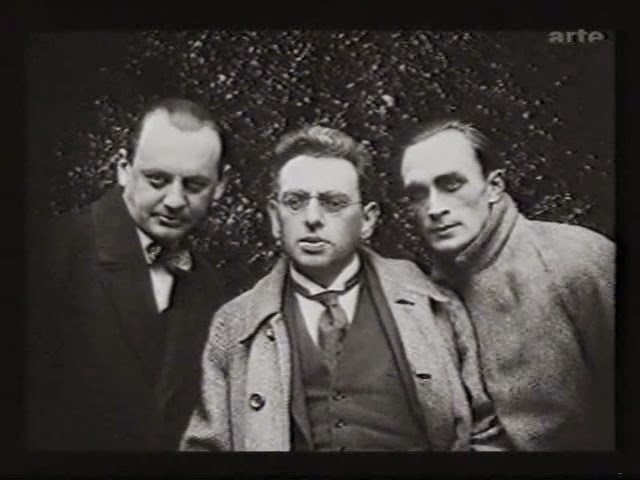
Complicating any analysis is the dissolute character of Wedekind. He was both highly promiscuous, being a regular client of prostitues (eventually fathering at least one child and contacting syphillis) and openly bisexual. At the very least he was no misogynist with many of his friends being female or gay. Eventually he would marry an actress, Tilly Newes (22 years younger), who had played Lulu in one of his stage productions, with fairly predictable results. The resulting marriage was stormy with frequent fights, seperations and threats of suicide on both sides. However the couple managed to stay together and have two daughters before his sudden death in 1918 of complications from surgery for appendix and a hernia, aged 53. He just managed to miss the end of the German and Austrian Empires and the founding of the democratic Weimar Republic. Although Wedekind had been briefly impressioned for mocking the Kaiser he had no involvement in active politics, being too disorganized for that, and although clearly on the left, even the German Socialists, who were only slightly less prim and stuffy than the conservatives, would have been wary of his decadent ways. It is however entirely possible that if he had lived another year he would have been caught up in the excitement and chaos of the short lived 1919 Munich Soviet Republic along with other writers like Ernst Toller where he would have been lucky to escape the violent collapse of the Republic with his life.
After Wedekind's death his works would become a major influence on Expressionist Theatre and film, Dada as well as the Cabaret scene of Brecht and Kurt Weil (Brecht said he had seen Wedekind as a performer early on) and inevitably his live-fast-die-young life would be lionized and his widow Tilly would remain loyal and promote his work. Lulu would be seen as a liberating figure in the arts and intellectual scene of Weimar. Besides the three films his plays would continue to be shown until banned by the Nazis and there would eventually be operatic adaptations starting with "Die Gezeichneten" (1915) by Franz Schreker and the 1937 "Lulu" by Alban Berg, considered one of the most important works of 20th century classical music. However while Lulu has been given an artistic and intellectual heft compared to the contemporary Vamps like Mata Hari and Theda Bara who are largely dismissed as camp it is fair to ask if she is really that different from her Anglo-American sisters.
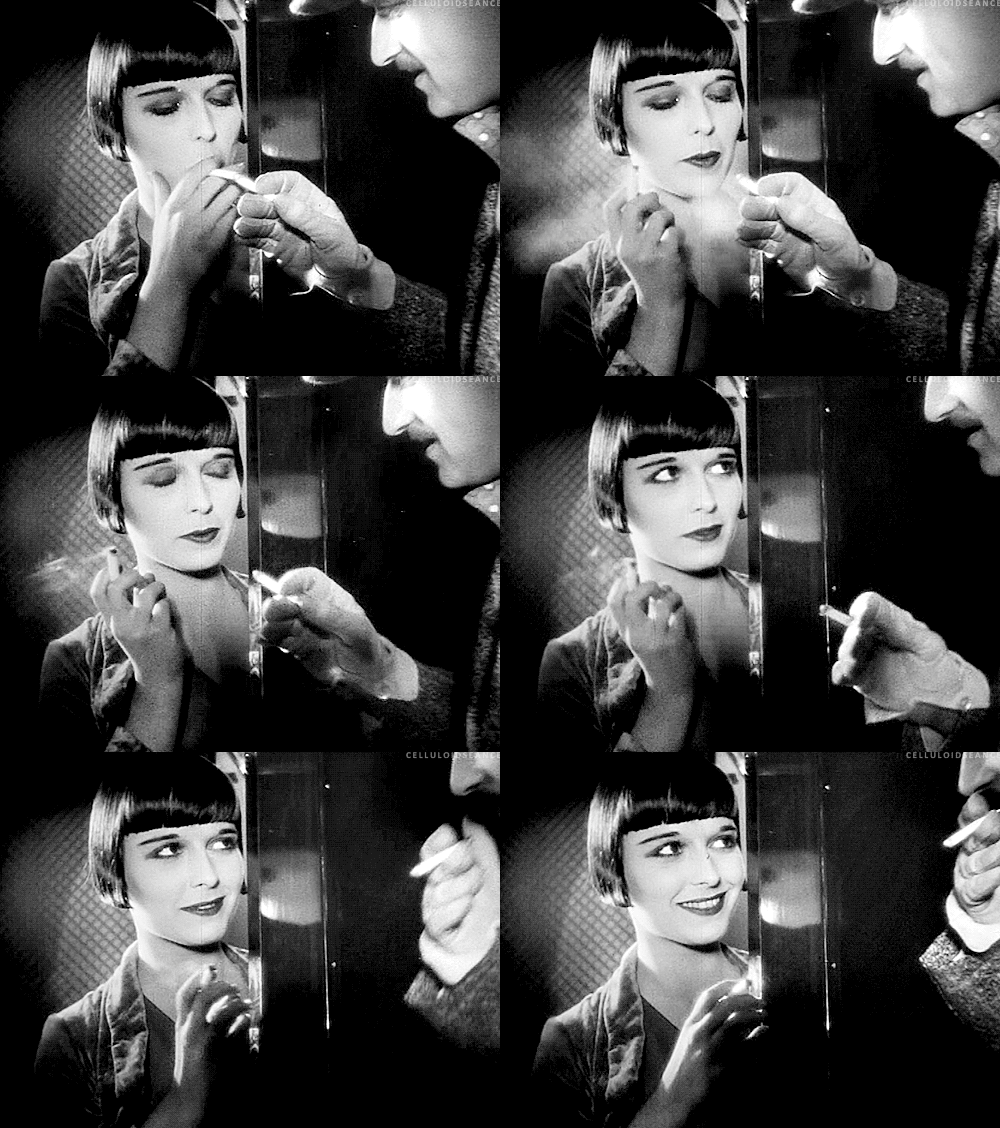
The Vamp had always been a limited character with unrealistic motivations and a predictable character arc. She seduced and ruined men just for the Hell of it and then sometimes (although certainly not always) got her comupance at the end or reformed. This had been acceptable to an audience largely made up of unsophisticated and socially conservative Victorian working class, rustics and immigrants. So it's probably not a coincidence that the era of the Vamp coincided with a change in women's roles as more entered the workforce and sought the right to vote and presenting the Vamp as an exotic fantasy figure who might seduce and ruin a few men who lacked the moral fibre to stay with their wives but would not challenge gender roles in any other way, provided an escapist catharsis. Not just for men either as Theda, who was always fully aware of her image, always insisted that much of her fan mail came from women who lived vicariously through her. Theda's career was effectively over by 1919, the same year that the War officially ended, the Spanish Flu receeded, women got the right to vote, prohibition passed and America moved on from the exotic escapism, for the moment at least, to the Jazz Age and a new female archetype and sex symbol; the Flapper. The Vamp was cynical and manipulative, the Flapper was open and fun loving. The Vamp was Exotic where the Flapper was All-American. The Vamp was clever and cultured where the Flapper was guileless. The Vamp was older and experienced, probably close to her thirties where the Flapper was in her early twenties or younger. The Vamp was unrealistic where the Flapper was the Party Girl who could possibly live next door. The Vamp would demand all your time and attention (and money) where the Flapper just wanted to have fun. Above all the Vamp was intimidating where the Flapper was inviting, if you could keep up with her energy and popularity. Both were feminine forces of nature who men seek to tame at their peril with the diffrence being that the Vamp was an obvious predator while the flapper was at worst a heedless adolescent.
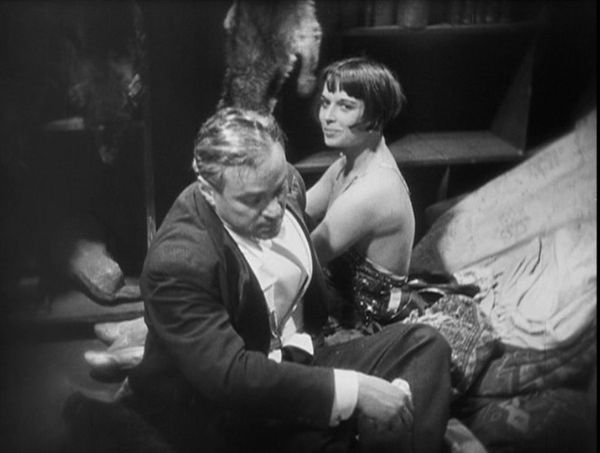
More sophisticated intellectuals, writers and critics had already soured on the Vamp to embrace more challenging schools like Expressionism, Futurism and Dada and more gritty, emotional and realistic stories and characters. This was especially true in Germany where actresses like Asta Neilsen, Pola Negri (who had played Vamps) and later Marlene Dietrich and Greta Garbo played characters with far more depth and complexity than the flashy but essentially two dimensional Vamp. However while Wedekind's Lulu has more depth than the Vamps she is not at heart all that different, once again it is she who leads men astray, not with the cold calculation of the Vamp but because her untamed hedonism and beauty are to much for men to resist. The title "Erdgiest" or "Earth Spirit" is supposed to identify her as a force of nature who by her very presence disrups the lives of everyone around her who can not be expected to control themselves as their heretofore repressed inner id is unleased. The Earth Spirit is meant to invoke mythological figures such as nymphs or dryads or to use a more modern term, a muse, albeit without the artistic inspiration a muse is to inspire. All of this may be more complex than the two dimensional predator of the Vamp who invokes an older mythological figure of the succubus or the siren but it still leaves all the responsibility for any disruption on the women where the men apparenly have no ability to control themselves as they desert their wives, squander their fortunes and destroy themselves for the attentions of the wanton woman. Meanwhile as the Vamp was burning up the stage and screens in the English speaking world a different version took shape in France in "Camille", based on an Alexander Dumas novel that was made into plays starring the likes of Sarah Bernhardt, Eleanora Duse and Clara Morris followed by a number of films in several countries as early as 1907 starring the likes of Bernhardt (again), Clara Kimball Yooung and eventually Theda Bara and Alla Namizova. "Camille" was also a sexually liberated sensualist but she was no Vampish predator or gold-digger. She in fact gives up her young lover to save his reputation and dies alone. The Vamp is not a tragic figure even if she dies in the end, as Salome does, then that is justice of a sort. Camille on the other hand is a tragic figure made to suffer not only for her own hedonistic lifestyle (as a Vamp might) but the hypocracy and cruelty of a male dominated society. Frank Wedekind's Lulu split the difference between a Vamp and Camille. She was more wilfull and disruptive than Camille but more a victim of society than a Vamp. While Lulu is often seen as more modern and feminist than the two dimensional male fantasy of the Vamp it's probably not a coincidence that this second archetype took over in the public space as World War One ended and women got the right to vote, entered the work force and academia in greater numbers and became more assertive in her right to party, go out alone, drink in speakeasys, smoke, drive a car or have sex. The Vamp could be seen as a warning to men to stay way from wanton women lest they run into a Vamp, while Camille and Lulu were warnings to women not to stray too far from conventional morality lest they end up a fallen woman, abandoned and alone.
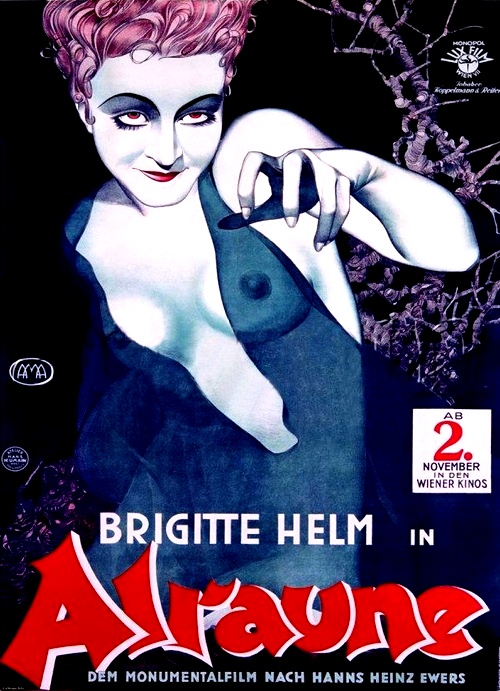
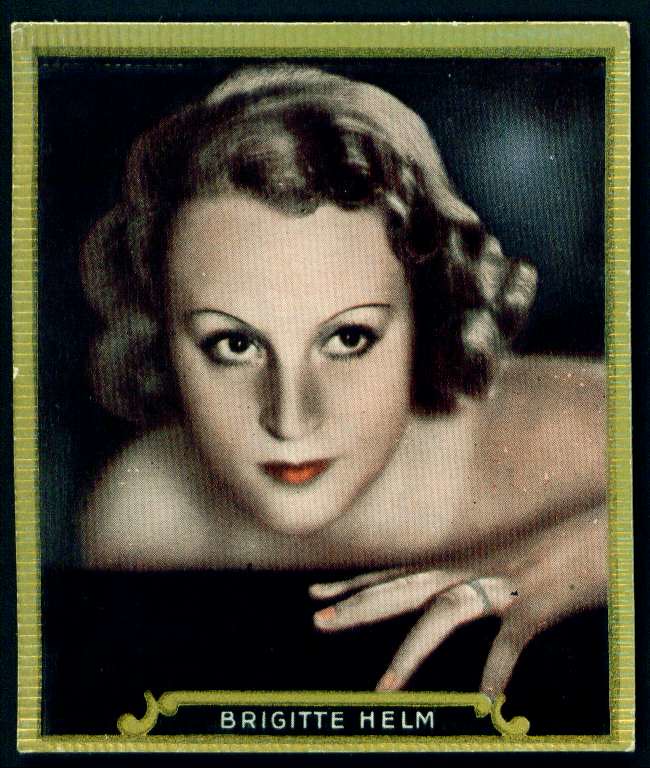
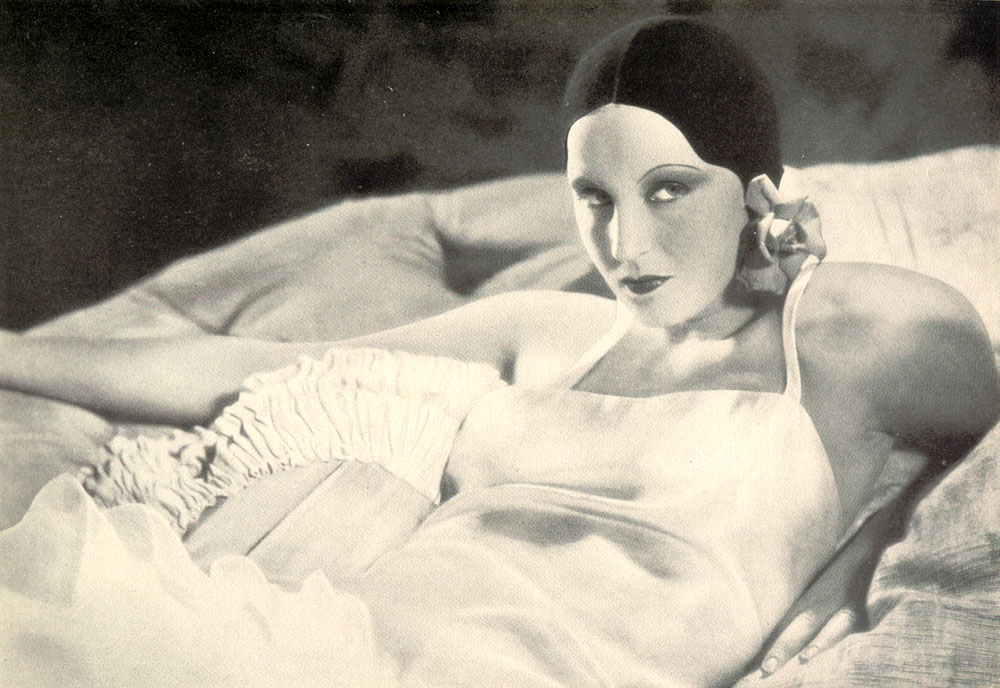
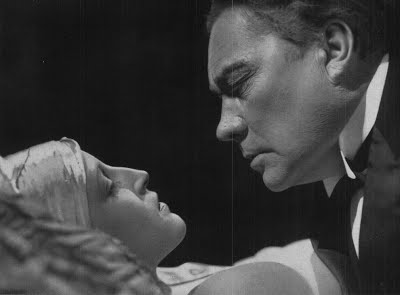
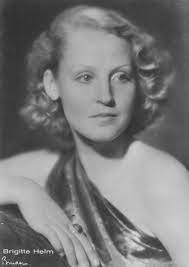
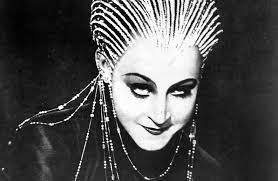
It was with all this in mind that when GW Pabst was casting for his 1929 version of "Pandora's Box" he considered then dismissed the worldly Dietrich and instead cast the very different and very American Louise Brooks as Lulu, the icon of German cabaret. Brooks had certainly played the temptress before, notably in "Love 'Em & Leave 'Em" (1923), "Evening Clothes" (1927), "A Girl In Every Port" (1928) and "The Canary Murder Case" (1929) (although the last film would not be released for another year) but she was no Vamp. A Vamp was completely cynical, openly using men for their money and status before coldly discarding them. Brook's Lulu was a Jazz Age Flapper, she wasn't interested in using men for their money and status, she was hedonistic and sensual but not decadent and jaded. The implied horror or tragedy of Lulu is that even though, unlike the Vamps, she does not mean to leave a trail of ruined lives in her wake she does so anyway. However this is more due to the behavior of the male dominated society around her which is judgemental, hypocritical and status obsessed while Lulu herself is none of these things and seems not to fully understand them or certainly not care. Brooks, both as Lulu and in most of her roles, is essentially a free-spirited adolescent Flapper and it is exactly that quality rather than her beauty that Pabst was looking for when he reached outside Germany to cast her. If Pabst had been merely looking for a seductive beauty he could have easily just cast Dietrich or Brigitte Helm, who he had already directed in "The Love Of Jeanne Ney" and had played a slinky vixen in "Araune" but Dietrich and Helm projected cool poise and self assurance which was not the quality he was looking for. Putting either of them in Wedekind's decadent and exploitative world would not have provided the same atmosphere. They would not have seemed as out of place as Brooks nor as vulnerable, they would not have been convincing victims, they would not have had the charms of the lithe, coltish Brooks or aroused the protective instincts she does. Nobody ever worried or felt sorry for the imperious Marlene Dietrich, she could take care of herself and cool Brigitte Helm only slightly less so.
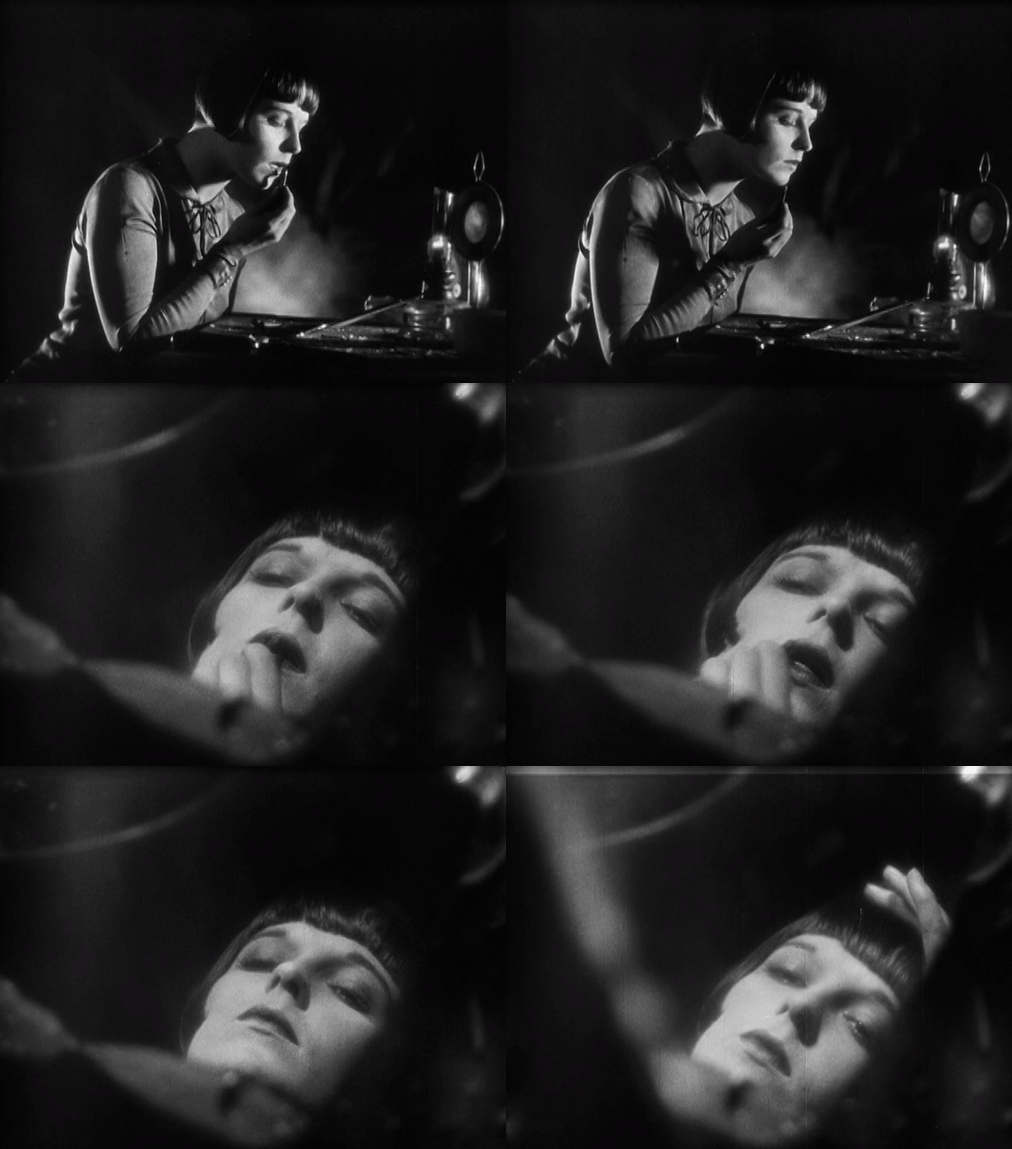
While modern writers tend to view the Flapper and Brook's Lulu in paticular as being a more modern Feminist role than the campy vamps it is worth questioning how true that is. Her Lulu does indeed show some free will and autonomy as when she breaks up Dr Kortner's engagement then defies him to return to the stage and she also coaxes the Countess Geschwitz (who she must know has a crush on her, although that's not completely clear) to throw herself at the loathesome Rodridgo to distract him. However she ends up prostituting herself to support the worthless Alwa (who has gambled away their money) and the even more worthless Schigolch, her former pimp who she once refers to as her "father" (it's not clear if he actually is). One could argue that she does so willingly and neither man actually orders her to, much less threaten, but she is not exactly indepedent either. This is not true of Dietrich in "The Blue Angel" or Brigitte Helm in "Alraune" (the silent version, not the sound version which has a very different ending) or even Theda Bara's Vamp from "A Fool There Was" who are always in control their own fate, dominate those around them, especially the men, and suffer no ill consequences for doing so. Lulu does. In fact this is true in many of Brooks' Flapper-Vixen roles. In "Pandora's Box" her Lulu ends up a murdered poverty row prostitute. In "Love Em & Leave Em" she is revealed and an adulterous gambler and liar and rejected. In "A Girl In Every Port" she is revealed as a gold-digger. In "Miss Europe" she is murdered by a jealous lover and in "The Canary Murder Case" she murdered yet again as a blackmailing showgirl. Of her major roles only in "Beggars Of Life" and "Diary Of A Lost Girl" does she end up eventually escaping a grim fate albeit after many trials at the hands of men.
The play itself would today almost be considered a soap opera and would at the time fall into the tradition of British "Sensation Novels" such as "The Woman In White" (1859) writen by Wilkie Collins (1824-1889) which was turned into a successful play and later four silent films, (the most notable starring Florance La Badie in 1917, the same year as the first Lulu film) and "Lady Audley's Secret" (1864) by Mary Elizabeth Braddon (1835-1915) which was also made into a play and three silents. These novels and plays were known for Byzantine plots involving sex, bigamy, infidelity, murder, blackmail and insanity in which women could be both victims and victimizers and men both victimizers and saps.
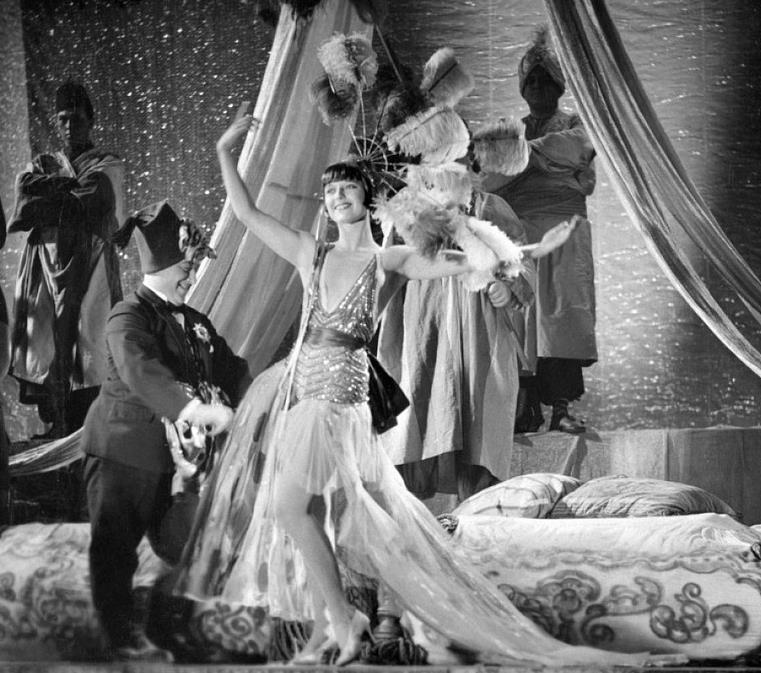
Brooks as Lulu still seems totally modern and believable to us today in ways no other contemporary does, no matter how talented or beautiful. Thus does Lulu herself and that was clearly what Pabst had in mind and the Lulu of "Pandora's Box" is really his vision more than Brooks. Something the always perceptive (at least in later years) Brooks herself recognizes in her memoirs in which she describes how he coaxed, cajoled and manipulated the right performance out of a sometimes difficult and petulant Brooks. The film performance is a tribute to his brilliance as a director and perceptiveness in casting Brooks at all which in fact was not popular at the time in Germany where there was some resentment at casting an American as Lulu. Besides kneejerk nationalism however it is worth considering if Pabst's view of Lulu would have lined up with Frank Wedekind's.
But first we must also note how the structure of Wedekind's original play changed in film form. As mentioned Wedekind originally wrote two plays "Erdgeist" and "Pandora's Box" ten years apart (in 1895 and 1904) with the intention of compressing them into one. The resulting play broke down into seperate acts as;
The play starts with an intro where the main characters are introduced as if they were animals in a zoo or circus sideshow.
Act 1. Lulu is the mistress of rich newspaper publisher Dr Schön from a life on the streets with her alleged father, the petty criminal Schigolch. Schon has seen that Lulu has been educated her and given a luxury apartment with classy artwork and wardrobe. However in order to make a more socially advantageous marriage for himself, he has married her off to the medic Dr Goll who is unaware of her background. Goll brings Lulu to have her portrait painted by the artist Schwarz. In the painting she is dressed as a pierrot, an innocent sad clown figure who pines for love. Left alone with him, Lulu seduces the painter. When Dr Goll returns to confront them, he collapses with a heart attack and dies.
Act 2. Lulu has marries the painter Schwarz, who, with Schön’s assistance, has now achieved fame and wealth. She remains Schön’s mistress, however. Wishing to be rid of her ahead of his forthcoming marriage to a society belle, Charlotte von Zarnikow, Schön informs Schwarz about her dissolute past. The shocked Schön kills himself by slashing his throat.
Act 3. Encouraged by Schigolch, her old pimp, Lulu appears as a dancer in a revue, her new career promoted by Schön’s son Alwa, who is now also infatuated with her. Dr Schön still plans on marrting the wealthy and beautiful Charlotte but also wants to keep Lulu for himself. Lulu forces him to break off his engagement to Charlotte by arranging to have Charlotte stumble on to their affair.
Act 4. Lulu is now married to Dr Schön but is unfaithful to him with several other people (Schigolch, Alwa, the circus artist Rodrigo Quast and the lesbian Countess Geschwitz). When he discovers this, Schön presses a revolver into her hand, urging her to kill herself. Instead, she uses it to shoot Schön, all the while declaring him the only man she has ever loved. She is tried imprisoned for her crime.
At this point the first play ends.
The second play opens with Lulu having been imprisoned for the murder of her third husband, Dr Schön. She is broken out of prison in a plot hatched by Schigolch, Alwa, Rodrigo and Countess Geschwitz, who remains in love with Lulu, in which Geschwitz has swapped identities with her and takes Lulu's place in prison, hoping that Lulu will love her in return. Rodrigo Quast, the acrobat, plans to take Lulu away with him as a circus performer but when she arrives, emaciated from the prison regime, he rejects her. Alwa Schön, the however is still in love with her despite her having murdered his father and hey leave together.
Act 2. Lulu and Alwa, now married, are entertaining in their lavish home in Paris where she is still on the run from German police. Alwa is a successful bussinessman profiting from investments. Rodrigo reappears and attempts to blackmail her by informing the police of her whereabouts. Lulu can not pay as Alwa's investments have been lost in a bankruptcy and Casti-Piani, a white slave-trader, offers to buy off Rodrigo and set her up in a brothel in Cairo. Schigolch also reappears, and by using Gescwhitz to lure Rodrigo to his lodgings, promises to "take care of" the threatening Rodrigo. The police arrive and they all esacape again except for Rodrigo.
Act 3. Having escaped to London Lulu is now living in a garret with Alwa and Schigolch and working as a prostitute. Geschwitz arrives with the rolled-up portrait of Lulu painted long ago by Schwarz which has accompanied Lulu throughout her adventures. Lulu's first client is the pious mute Mr Hopkins. Alwa is killed by her next visitor, the African prince Kungu Poti. Another client, the bashful Dr Hilti, flees in horror and Geschwitz tries unsuccessfully to hang herself. Geschwitz vows to return to Germany and fight for women's rights. Her final client is 'Jack' (meant to be Jack The Ripper) who murders Lulu and Geschwitz; the latter dies declaring eternal love for Lulu. Alwa and Shigolch flee.
~~~~~~~~~~~~~~~~~~~~~~~~~~~~~~~~~~~~~~~~~~~~~~~~~~~~~~~~~~~~~~
In some ways Pabst's edits are understandable in order to make the sprawling play fit into an acceptable film length and they also give him more time to dwell on the decadent sets and costumes (especially at the cabaret) as well as adding in a few minor characters to add colour and even some light humour. Wedekind probably would have understood this. Leaving out so much of the plays illicit sex and death was probably neccesary to get the film past even the tolerant censors of Weimar Germany let alone the more prudish export markets in Britain and America. However by omitting much of the plays sex, multiple marriages and affair and deaths it also made Lulu less of a vamp tearing her way through society and more of a heedless adolescent in over her head. It also takes the lesbianism of Gescwhitz, which is explicit in the play, and makes it merely implied. In the film Gescwhitz's crush on Lulu is fairly obvious but it is never clear if Lulu is fully aware of this and it is left apparently unrequited. The same is true of the play's incestuous releationship with Schgolch. This is in spite of the fact that Weimar films had actually dealt with the themes of homosexuality in films like "Different From The Others" (1919 with Conrad Veidt) and "Sex In Chains" (1929) and implied incest in "Alraune" (1928 with Brigitte Helm). Thus making the film not only tamer than the original play but somewhat taming Lulu as well.
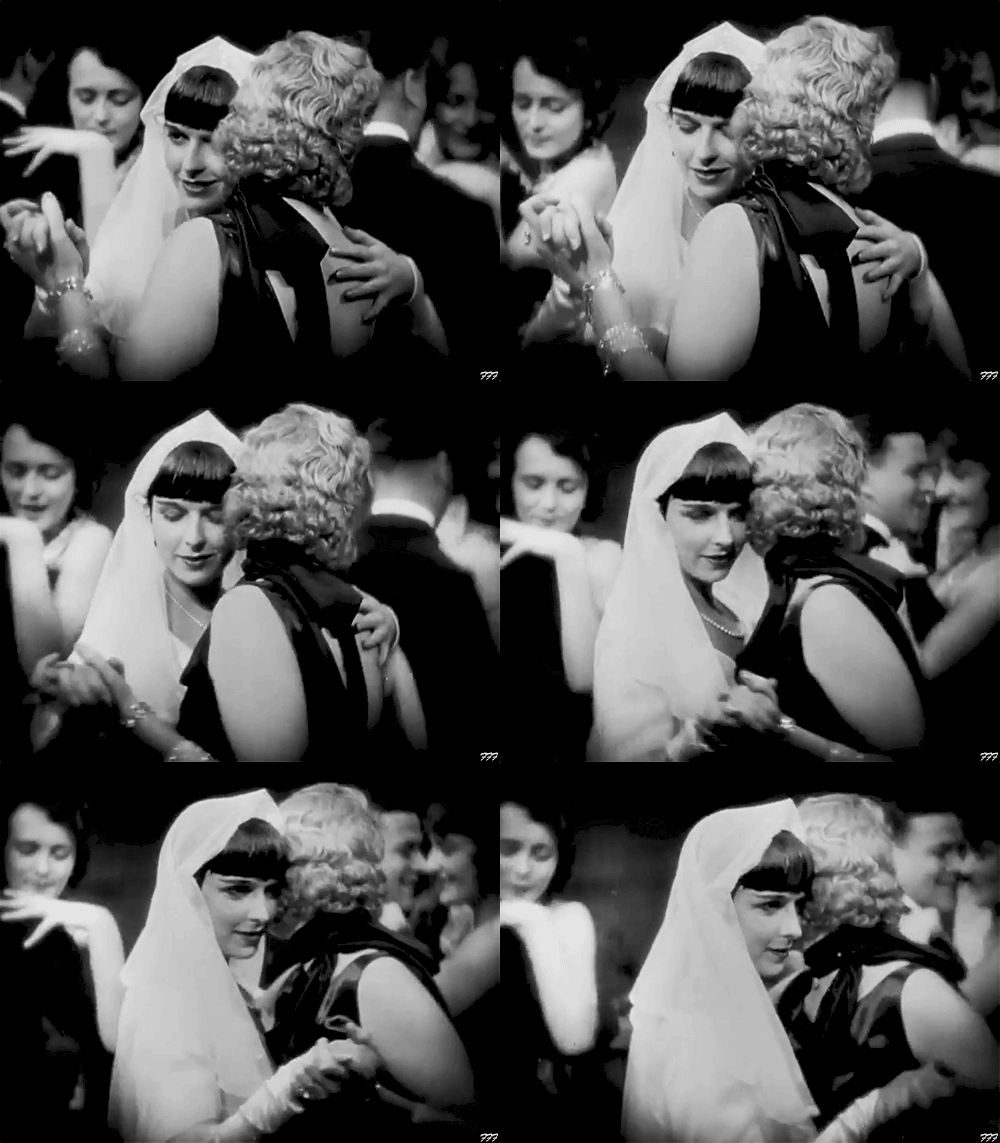
For the 1929 film Pabst edited the story down omitted act two and Lulu's first two marriages and deaths entirely in favour of spending more time in the world of the cabaret revue which allows him to spend more time setting the seedy glamour of the backstage world then speeding through act four (thus omitting several infidelities between Lulu and basically every other character and leaving them as implied or unrequited) to the death of Schon. Lulu's trial is shown but where in the play she goes to prison for a time here her escape is immediate. In the play her marrying Alwa and hiding out in Paris is one of wealth and relative luxury soon lost whereas in the film Alwa is not a respectable businessman but a reckless gambler who loses their fortune. The escape to london is basically the same in both the play and film however in the play Lulu becomes a prostitute to support herself, Alwa, Schigolch and Gescwhitz, in the film Gescwhitz is gone entirely and it appears that Jack is her first client and being lonely she does not even charge him.
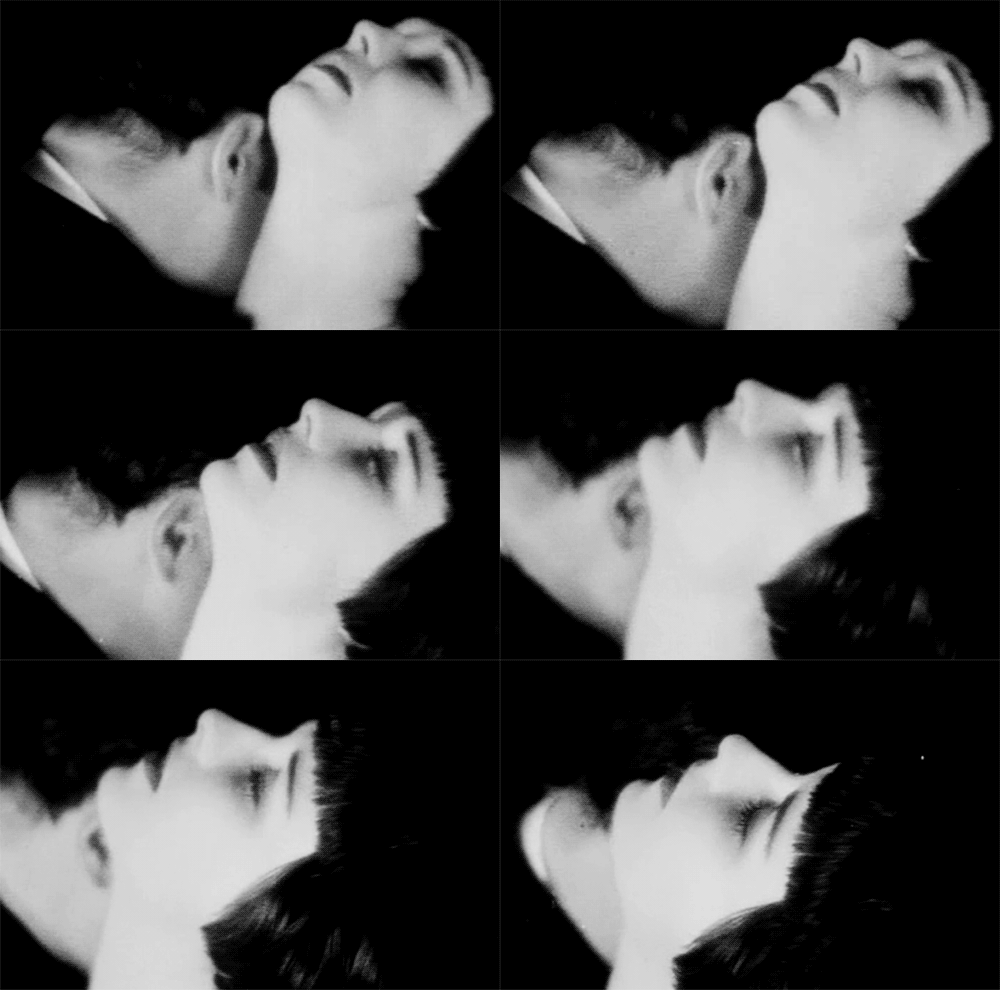
Before we turn to the first 1917 film adaptation a few things to consider. Little is known about this now obscure film but given that Frank Wedekind himself was still alive and actively working at the very least he would have had have to given his permission although we have seen how other authors have signed over their works and had no further involvement. This film was reportedly made in the Austro-Hungarian Empire with a Hungarian director albeit with a largely German cast. Being made in 1917 meant that the film was being shot during the depths of World War One when Germany was facing shortages of money and so the film must have had a limited budget although it does have some fine sets. Germany was also under a blockade which meant that it would have been impossible to even think about an export market for this film aside from Austria and neighbouring countries with existing commercial and cultural ties to Germany such as Switzerland, Scandinavia and Holland which is where this surviving print was located judging by the Dutch intertitles. Finally it would appear that this movie may have been intended as part of a series to tell the story over the course of two films since the story besides being severely edited also ends abruptly leaving the entire second play untouched.
"LULU" (1917);
Directed by Alexander Antalffy
Cast;
Erna Morena ~ Lulu Kolowski (AKA The White Amazon)
Emil Jannings ~ Alfredo, the Clown
Adolph Klein ~ Robert von Waldheim
Harry Liedtke ~ Rudolf von Waldheim
Rolf Brunner ~ Henri
Plot Summary (spoiler alert);
The film opens at a cabaret where Lulu and Emil are performers, Lulu as a dancer and Alfredo as a clown. They live together even though Lulu has a lover in wealthy young Henri Lieddtke. Henri takes Lulu to a society ball where the men fuss over her and she drinks too much. The following evening he is snubbed at his club. Lulu writes him a letter inviting him to join her at the cabaret which will be more fun than his stuffy club and has Alfredo to deliver it. Henri joins them for dinner at the cabaret where he drinks and gambles. Henri is having money troubles and goes to a friend, Rudolf, for a loan of 10,000 kroner which Rudolf agrees to on the condition that he break up with Lulu and stop gambling. Henri agrees and gets the loan. Lulu and Alfredo visit Henri at his home and they take him back to the cabaret for more drinking and gambling. Soon Henri is soon broke again and Alfredo is sent back to Henri's house to get more. Rudolph drops by and is told that Henri has broken his word and is out with Lulu. He finds Henri at the cabaret just as Henri has gambled away the last of his money to Alfredo and confronts him. Henri goes outside and shoots himself. Lulu blames Alfredo for Henri's death but Rudolf blames Lulu saying she has destroyed him. Rudolf tells his father Robert, a wealthy and powerful man. Back at the cabaret Lulu is depressed and refuses to perform until Alfredo talks her into it saying that she owes him for rescuing her from the streets. Lulu takes a train trip where she is held up when she can not pay the customs on her baggage. Robert (who has never met her) passes by and offers to pay for her leaving her card. She writes a letter inviting him to her hotel and he does. Alfredo visits Rudolph looking for Lulu saying she has been missing for days. Later Rudolph gets a letter from his father saying he has fallen in love with a pretty young girl who he does not name. Robert proposes marriage and she accepts. Robert writes another letter to Rudolf inviting him to visit him and his new wife. Robert throws a society ball and he recognizes Lulu. He confronts her in her room and accuses her of being a gold-digger. Robert arrives and she accuses Rudolf of making a pass at her. Robert orders him from the room. The next morning the two men meet and Robert disowns his son. When Rudolf tries to explain, Lulu arrives and interrupts and Rudolf leaves telling Robert he will regret his actions. Lulu suggests to Robert the two men should make up and Robert agrees and leaves. Lulu receives a letter from Alfredo saying he has arrived in town and wants to meet at his room. She is reluctant but goes. She gives him money which he angrily refuses. Robert returns and finds the letter from Alfredo. Lulu begs Alfredo to take the money and let her leave and he backs down. As she leaves his room Robert arrives and spots her and tails her home. When he asks where she has been she lies and says she was shopping. Robert resolves to find out her secret and invites Alfredo to their next ball which will be a costume ball. Lulu meets Alfredo and gives him more money and he tells her about his invite. Alfredo arrives at the ball in his clown suit from the cabaret, Lulu tells him Robert suspects them of something. Robert confronts them and Alfredo angrily tells him Lulu is a former prostitute who married him for his money. Robert stumbles off clutching his heart as the party goes on. Finis.
~~~~~~~~~~~~~~~~~~~~~~~~~~~~~~~~~~~~~~~~~~~~~~~~~~~~~~~~~~~~~~~~~~~~~~~
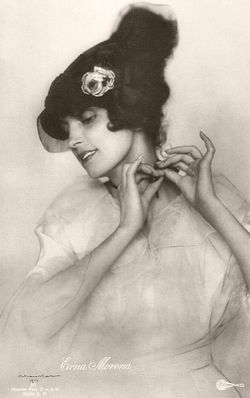
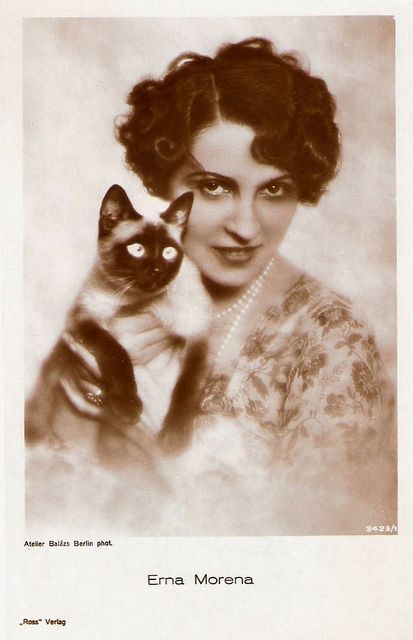
ERNA MORENA
The plot of this film has little to do with the play with almost none of the same action or settings aside from the cabaret. All of the characters have different names aside from Lulu although the Alfredo character is obviously inspired by the film character of Rodrigo combined with the pimp Schigolch. The film is more like a story based on the character of Lulu than a version of the play. In fact it could also almost be a prequel to the play if Lulu were to go from where she is at the end of the film to starting over with a new sugar daddy for the play. In the film Lulu meant to be seen as a muse that inspires men to men to their ruin, namely Henri and Robert while other men fawn over her and even the conniving Alfredo at times seeming genuinely smitten with her. Mostly however she is actually a rather passive figure, when occasionally she takes an action of her own (like leaving the cabaret, paying off Alfredo or lying to Robert) it is only in reaction to a situation caused by others, she does not really initiate any of the action. She is blamed for Henri gambling away his fortune but she does not appear to actually urge him to do so and she is clearly bored during the gaming and is upset at his death. By contrast Alfredo is shown as dominating and using her at least until she leaves him and actually initiates more of the action. It is hard to see how she is responsible for Henri's reckless behavior whatever Rudolph thinks. She does lie repeatedly to Robert about her past but that is out of self preservation not malice or calculation, and he approaches her in the first place so to consider her a gold-digger or even a prostitute (by that point at least) is not really fair either. In the Vamp vs Flapper debate she is clearly no Vamp and she is a sympathetic character. As played by Erna Morena she is tall and statuesque with dark hair and her face finely sculpted but with an open smile, she in fact towers over the hapless Henri, although not Alfredo. In the opening dance with Alfredo she is seductive and looks like a suitably exotic Gypsy girl. In fact it is worth noting that unlike every other portrayal of Lulu she is given a last name, Kowalski and the fact that is a foriegn (Polish) name makes her slightly exotic and she is also refered to as "The White Amazon" which is a little odd since the original Amazons were Greek and therefore already white and they were also feared warriors which Lulu is not. She is more fey and girlish in the ballerina costume she wears for her other act and her everyday wear is tasteful and respectable. She is a likeable and vulnerable Lulu, more guarded and restrained than Brooks, but with enough charm to pull off the role. Emil Jannings, then starting what would be a long and impressive career as one of Germany's biggest silent film stars, dominates every scene with his heavyset glowering swagger, even while dressed as a clown. He is able to suggest some conflicting feelings about Lulu, on the one hand obviously bullying and using her but he still seems infatuated with her. The film's direction by Alexander Antalffy in his first feature, is straightforward with no real closeups and only a few mid-level shots. There is one noticeable tracking shot as the camera pulls away from Lulu as she waits in her room for Robert which is a nice effect although it doesn't really serve any particular point. The sets are well done especially given the film's likely limited war time budget. The homes of Robert and Rudolf are luxurious as is Lulu's hotel room (the question of how she can afford this as she has no job by that point is unanswered), the cabaret is seedy and realistic but without the hectic glamour of Pabst's 1929 version. Like most German films of the era the film is shot almost entirely indoors and it's possible the luxurious homes were location shots as is the long shot of the cabaret stage, where a few of the audience members clearly look at the camera. The ending of the film is somewhat ambiguous; does Robert have a heart attack and die as he staggers off? Does he recover and divorce her? If he does die Lulu would presumably inherit his fortune and will be set for life which is clearly not the nasty end she gets in the original play or the Pabst film. Was it intended to make a sequel film to continue the story as in the original two part play? The film allows for that possibility but we just don't know what the director had in mind so this film leaves more questions than it answers.
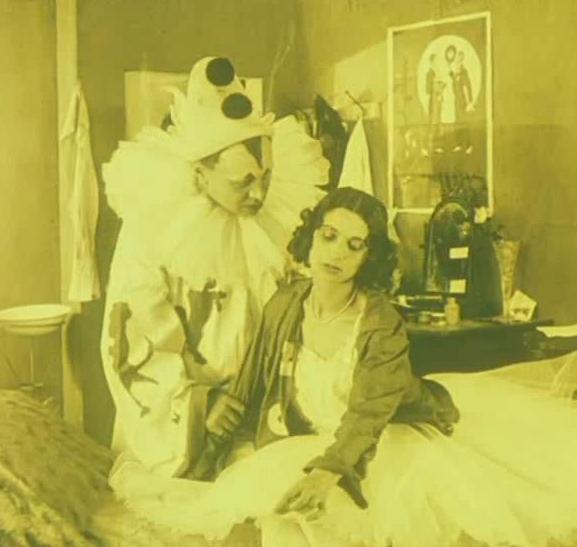
LULU & ALFREDO
~~~~~~~~~~~~~~~~~~~~~~~~~~~~~~~~~~~~~~~~~~~~~~~~~~~~~~~~~~~~
The opening scene of the 1917 "lulu" shows her in a seductive dance that bears a probably not coincidental resemblance to a similar dance scene in the 1910 Danish film "Afgrunden"(AKA "The Abyss") starring the iconic Danish actress Asta Neilsen in which she established her role as a leading Vamp. This film created a sensation in Germany where she became a star and a critical darling for her emotional and sensual performances and it was inevitable that she would one day play Lulu herself as she finally did in 1923.
"ERDGEIST" (1923);
Directed by Leopold Jessner
Lulu ~ Asta Nielsen
Albert Bassermann ~ Dr. Ludwig Schoen
Carl Ebert ~ Schwarz
Gustav Rickelt ~ Dr. Goll
Rudolf Forster ~ Alwa Schoen
Alexander Granach ~ Schigolch
Heinrich George ~ Rodrigo
Erwin Biswanger ~ Eulenber
Plot Synopsis (spoiler alert);
The film opens with rich old Dr Goll taking Lulu (Asta Neilsen) to have her portrait painted by the artist Schwartz. There they meet Goll's friend, the even richer and slightly younger Dr Schon (who has been carrying on an affair with Lulu) and his son Alwa, a playwright. Lulu is to be painted as a pierrot sad clown and changes into a costume. After Schon and Goll leave together Schwartz throws himself at Lulu's feet and professes his love and they begin to kiss. Dr Goll unexpectedly returns and finds them in embrace. As Lulu cowers in fear Goll grabs a bar to attack Schwartz and Lulu but suffers a fatal heart attack. Lulu cooly gets dressed in her previous luxurious clothes and leaves Schwartz to deal with the police as he pledges his eternal love for her. Later Lulu and Schwartz are married and living together, he is addicted to opium and drink and she is repelled by his dissipation. Schigolch visits them, he is described as her "adoptive father" but Schwartz refuses him entry however Lulu welcomes him in and a sulking Schwartz leaves. She is happy to see him and they spend time drinking and she talks about missing her old party girl life. Dr Schon arrives and Schigolch scurries away. Lulu and Schon have been carrying on an affair and he has come to break things off and demands she return love letters he wrote so he can remarry. She refuses telling him she was happier when she was a poor flower girl and that he has used and discarded her and made her miserable by marrying her off to old Goll. Schon threatens to tell her husband of her past as a kept woman. After she dares him to tell Schwartz he grabs her and she crumples up her letters and throws them at him. Schwartz reappears and greets Schon who ignores him. Lulu then leaves and Schon tells Schwartz of her secret life. A distraught Schwartz locks himself in the bathroom and slashes his wrists killing himself. Schon blames Lulu for the deaths and walks out. Alwa arrives and Lulu runs to his arms just as Schon returns to see Lulu and his son together. Afterwards Lulu has resumed her career as a cabaret dancer in a play written by Alwa. During an intermission the Earl Of Escherney, an African explorer arrives in her dressing room and attempts to lure her to come with him to North Africa which she declines. Before returning to the stage she notices Schon is in the audience with his young fiancee Adele and she faints. She is returned to her dressing room where Schon arrives and orders her to return to finish the play. She begs him to leave his fiancee, return to her and profess her love. After he refuses she threatens to leave and go to Africa with Escherney and he relents and writes a letter to Adele breaking their engagement. Later Ludwig and Lulu are married and he has become jealous, possessive and paranoid, seeing thieves and rivals everywhere and carrying a gun. After Ludwig goes out Lulu is visited by Schigolch who brings tow friends from the cabaret, Rodrigo, a strongman and Eulenber a young poet who has a crush on Lulu. As they are drinking and having a little party Alwa arrives and she hustles them out of the room. As Lulu and Alwa have tea he professes his love for her. She tells him she no longer loves his father and he falls at her feet while her three cabaret friends listen from behind a curtain. Just then Ludwig arrives unexpectedly and also witnesses all this. He angrily confronts Luu and Alwa, throwing Alwa out of the house calling Lulu a devil. He pulls out his gun and orders her to shoot herself but she refuses and dresses to go out. Ludwig grabs her and they wrestle for the gun. As they do Eulenber runs in to intervene and Ludwig knocks him out, as he turns to attack Lulu she shoots him. Alwa runs in and holds the fallen Ludwig and a distraught Lulu runs to him as well. As Ludwig lies dying he swears Alwa to expose her to the police and see her behind bars. Lulu tries to kiss Ludwig but he pushes her away and dies. The police arrive, Eulenber slips away and Lulu throws herself at Alwa begging for mercy. He pushes her away and she faints at his feet. Finis.
~~~~~~~~~~~~~~~~~~~~~~~~~~~~~~~~~~~~~~~~~~~~~~~~~~~~~~~~~~~~~~
Unlike the 1917 film which basically took Lulu and some of the settings and characters and built a fairly different story this film stays quite close to the original Wedekind play, at least the first play "Earth Spirit", unlike the Pabst film it stops where the second play "Pandora's Box" should start and one wonders again if a sequel was planned but never made. Asta Neilsen was a Danish actress who became a star in Germany after she appeared in a 1910 Danish film "Afgrunden" ("The Abyss") in which she played a dancer who is tempted into a life of sin. Her emotional and unrestrained sensuality created a sensation in Germany where she quickly moved along with her director and husband Urban Gad and started their own studio. She would spend the next twenty six years there as one of Germany's biggest stars and sex symbols. Critics and intellectuals swooned over her with quotes like; "She is everything! She is the drunkard's vision and the lonely man's dream." (French poet Guillaume Apollinaire) and "Dip the flags before her, for she is unique" (Hungarian writer Bela Balazs). GW Pabst himself said of her "One has long spoken of Greta Garbo as "The Divine"; for me Asta Nielsen has always been and will always remain 'the human being' par excellence." Pabst had directed Asta in the 1925 film "The Joyless Street" in which she played a jaded, worn out prostitute (a young Greta Garbo co-starred) so there is no question he was fully aware of her Lulu portrayal and must have made Louise Brooks aware of her as well thus as mentioned Brooks did make brief mention of her as Lulu in her memoirs. One will quickly notice the obvious similar pageboy bob hairdo which Asta sported in some of her other films as well (although by no means all of them) and it may be that which Pabst first noticed about Brooks. Otherwise the two women are very different; Louise is impulsive and adolescent, Asta is sophisticated and world weary. Both give emotional performances but Louise is quicksilver and careless, Asta is deep and inscrutable. Louise does not think before she acts, and doesn't dwell on the aftermath. Asta broods and calculates. Louise, for all her willfulness, spends much of her time reacting to the lead of others, rarely does she actually take control. Asta is almost always in control, although not always to her benefit. Both however have similarly poor taste in men. Both as Lulu are unaccountably loyal to the sleazy Schigolch who is an obvious parasite, Louise probably does not actually love Dr Scohn and is toying with him as a sugar daddy but she is devoted to Alwa even after he becomes a weak, feckless wastrel. Asta by comparison seems oddly loyal to Schon in spite of the fact that he is an ill-tempered, vindictive, arrogant bastard who never shows her any kindness. Although she does lash out at him in their final confrontation, after she shoots him she seems genuinely grief stricken. Her attitude towards Schon is the most confounding part of Asta's Lulu, it's the only time she is not in control and it is for a man who the audience never once has reason to like or sympathize with. For the rest of her performance Lulu as played by Asta is a classic Vamp (something Brooks noted in her memoirs in comparing Asta's performance), coolly toying with Goll, Schwartz, Alwa and Eulenber as literally every man she meets falls for her charms. The one exception to this rule is Schon's nameless butler who regards her with obvious distaste. This actor is also now nameless which is kind of a shame.
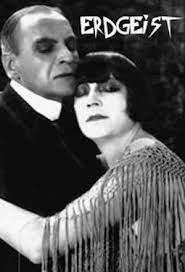
LULU & SCHON
Asta Nielsen's status as one of Germany's greatest sex symbols of the silent era is a little hard for modern audiences to grasp. Louise Brooks has a timeless beauty and charm which has sustained a cult fanbase that exists to this day where she is actually more popular than she was during her actual career. It is easy to understand the appeal of obviously beautiful contemporaries Greta Garbo, Brigitte Helm and Marlene Dietrich, even the now forgotten Erna Morena, Lulu from 1917, is easy to understand as a conventional slim, statuesque dancer. Asta however, with her somewhat square face, heavy features and broad shoulders looks distinctly boyish and in fact one of her iconic roles was in "Hamlet" (1921) where she played the male lead. This impression is not helped by her costume in the opening scene as she is dressed as a pierrot, wearing knee pants, a baggy top and heavy pancake makeup. She looks fairly grotesque, at least to modern eyes. The costume and heavy white makeup are actually appropriate to a pierrot, a sad clown character who is supposed to represent innocent unrequited love and in the play Lulu does indeed wear such a costume and the resulting painting gets carried around all the way to London where it it is supposed to represent Lulu's inner yearning for true love, or something like that. However what may have have worked on the stage looks campy and weird on screen, not to mention androgynous as the clown was normally played on stage by a man. The English artist Aubrey Beardsley did several pierrot drawings showing the character as fey and winsome but Asta is too strong and worldly a character to pull off the childlike innocence and vulnerability the pierrot represents and she just looks freakish. This is makes it a little hard to accept the painter Scwhartz falling all over this oddly asexual looking creature in drag and as this is how the audience first sees it is an additional distraction. It's worth noting that for his 1929 film Pabst disposed of the pierrot entirely which was a wise move. For the rest of the film Asta wears some conventional dress gowns which she looks comfortable in but for her cabaret routines she again wears more weird costumes. One stage costume resembles a harlequin while another sports flimsy wings, neither is flattering. Like her contemporary star and sex symbol of German screen Pola Negri, Asta as sex symbol was never based on physical beauty but a combination of unrestrained sensuality, attitude, emotional depth, expensive and elaborate clothes and a whiff of the exotic encouraged by the fact that neither was actually German with Asta being Danish while Pola was actually Polish. This made them just foreign enough to be mysterious but still Western European enough to be acceptable. This is very different from the pretty but essentially conventional Erna Morena let alone Louise Brooks the very American Flapper.
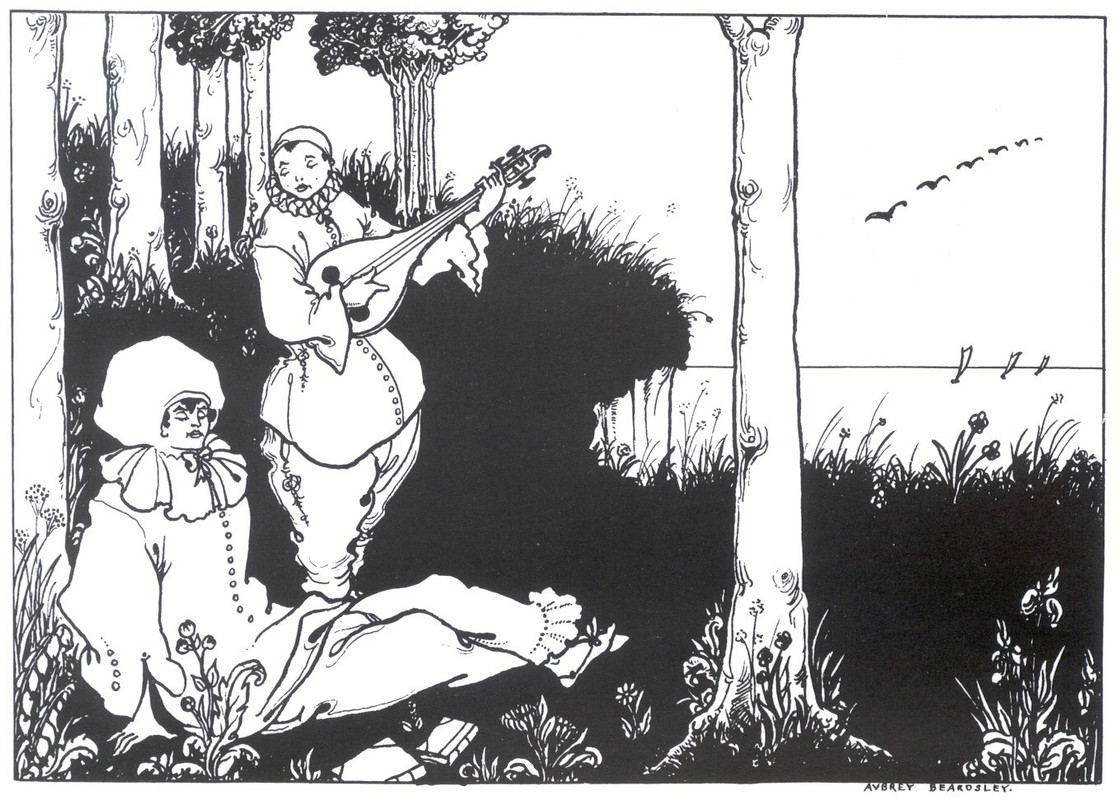
PIERROT BY AUBREY BEARDSLEY
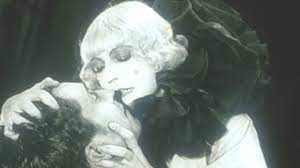
ASTA AS PIERROT
Asta's Lulu is also very different from Erna Morena's from 1917. Erna spends much of the film as an essentially passive figure, dominated by Alfredo, only occasionally does she take charge of her life. By contrast Asta dominates or manipulates the men around her, with the partial exception of Dr Schon. Erna is not a particularly deep character nor is she very driven. She marries a rich older man but they meet by accident and she does not lure or even seduce him, he approaches her. Asta clearly uses the men in her life although her attitude towards the unlikable Schon is more conflicted and hard to nail down. Louise Brooks' Lulu most likely does not love her Dr Schon but she does love the ultimately worthless Alwa. One odd omission with the 1923 Asta film is that while Lulu is supposed to be a popular cabaret star we never actually see her perform. We see her taking her bows on stage, we see her in the wings and we see her backstage but we never actually see her perform unlike Erna Morena in the 1917 film who we see dance and in the 1929 Brooks film we get a glimpse of the elaborate stage show. This omission is strange as Asta had made her name with her infamous Gaucho Dance in 1910's "The Abyss". Comparing that sequence with the very similar dance which opens the 1917 film with Erna and Emil dancing actually shows the difference between the two women and their Lulus. In the 1910 film Asta is the predator stalking and dominating her hapless partner while Erna's 1917 Lulu is the victim stalked and murdered by Jannings, her male partner.
ASTA DANCING;
ERNA DANCING
Ironically while Erna's Lulu is not as strong a character as either Asta or Louise she ends up in a better position than either. Louise ends up dead, Asta is going to jail but Erna's fate is ambiguous. As Robert stumbles off holding his chest and having an apparent heart attack after discovering her secret past we do not know what happens next. If he survives and divorces her, (unlikely) she will be back at the cabaret but if he dies she will be a rich widow, snubbed by society no doubt but either way she is certainly not going to jail and she is definitely not dead. While she may not dominate like Asta she does adapt better than Asta or Louise and she is certainly luckier than Louise. In this way the 1917 film corrects a mistake, however accidentally, made by Wedekind himself in naming the play "Pandora's Box'. In the original ancient myth Pandora opens a mysterious box and lets out all the demons of sin to tempt mankind, that is no doubt the annalogy he meant Lulu to represent. But he forgot the other point of the story; that at the bottom of the box was a tiny fragile spirit called "Hope" who also escaped. In his play and the 1929 film Lulu dies along with numorous other characters while others have their lives destroyed while in the 1923 film she is going to prison, there is no hope left for her. However in the 1917 film she is fine and should be able to walk away with a new start. She can still have hope as can the audience.
One notable difference between this film and the play is the complete disapearance of Countess Geschwitz and with it the lesbian subplot which does remerge in the 1929 Pabst film, albeit slightly more veiled at least in comparison to the play. This may have been done for time or it may have been done to remove some of the more scandalous subplots from the film. If the latter is true this is a strange omission considering the record of the film's producer Richard Oswald. He also had a long career starting in the 1910's as a journeyman professional who could make any genre of film quickly, competently, on time and on budget. By the time this movie had been made he had literally dozens of feature films to his credit, most long forgotten. Oddly he had made a name for himself during World War One when the German health department commissioned him to make three films about prostitution and venerial disease and instead of the expected dry instructional films he delivered three potboiler mellodramas which were financially successful but provoked outrage from conservative authorities and calls for his arrest. One of the films he made after the war was another sex themed film "Different From The Others" (starring Conrad Veidt from "The Cabinet Of Dr Caligari") which openly dealt with homosexuality in a sensitive way and is considered a classic of the genre (later banned by the Nazis of course). It would be wrong however to imply that he was merely, or even mostly, a maker of sexploitation films. Among other notable films were "Eerie Tales" (also with Veidt) a respected horror anthology, he produced a 1923 version of "Pandora's Box" starring Asta Neilsen and Oswald would also make a popular version of the Sherlock Holmes novel "The Hound Of The Baskervilles" (1914) which he also remade with a different cast in 1928. Given that Oswald had made his name with films with even more explicit sexual themes than those shown or implied in the play his reluctance to do so here may have been at the orders of the studio or perhaps it really was a question of not having enough time for the character within the time constraints of the film.
The biggest difference between the 1923 film and the 1929 Pabst film, to say nothing of the 1917 film, is stylistic. The Pabst film was not an Expressionist film. Pabst considered himself an Realist and while there are a some expressionist visual themes in the film, particularly in the final act set in London which has plenty of typical expressionist visuals with shadows & fog, staircases that lead into darkness and stylistic emoting, the bulk of the film is shot in a realistic style. The 1917 film is similarly realistic if more restrained. By contrast the 1923 film is pure Expressionism with unrealistically claustrophobic sets, windows casting jagged shafts of harsh light, impracticable furniture, weird costumes and stylized acting. In fact the film "Erdgeist" most resembles is not the 1929 "Pandora's Box" or the 1917 "Lulu" but the 1919 iconic Expressionist classic "The Cabinet Of Dr Caligari". From the start we are in an explicitly unreal dream world. Schwartz's studio has impossibly high walls and small lattice windows making it look like a prison. Schon's mansion is also oppressively cavernous with a massive staircase leading nowhere and a garishly painted floor. Both rooms have almost no furniture or decoration and do not look at all lived in. What furniture there looks either flimsy or uncomfortable.
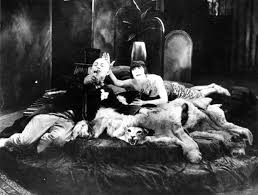
LULU AT HOME
Like the rooms in "Caligari" they instead look like artificial stage sets or a nightmare world. Compare Lulu's dressing room, which is also huge and utterly empty and does not look like any backstage dressing room or green room compared to the hectic dressing room in "Pandora's Box" which is a beehive of colourful activity or even the more laidback and seedy backstage in "Lulu". These rooms look lived in and full of other people busy going about their lives while "Erdgeist" is desolate and devoid of anyone not directly involved in the plot. Similarly it's notable that in the "Erdgeist" cabaret we also see no audience at all whereas we do in the other two movies. The dreamlike fantasy world of "Erdgiest" can be noticed in one incidental prop. In the corner of Schwartz's studio apartment one can spot a full length mirror on a stand and a closer look reveals that the face of the mirror has actually been covered with whitewash and so it can not cast any reflection, it's not a mirror at all but the symbol of a mirror much in the way the stilt-like furniture, clawlike trees and jagged doors and windows of "Caligari" are the funhouse version of furniture and doors. The costumes worn by Rodrigo the strongman and Earl Of Escherney the African explorer similarly look like the cartoon versions of what a strongman and African explorer would look like. In fact the entire character of Escherney is a child's Peter Pan-like escapist fantasy figure who shows up out of nowhere with his absurd pith helmet, cartoonishly giant map and vague talk of starting over in far away Africa then disappears from the story just as soon as he is no longer needed as a plot device. The somewhat equivilant character in "Pandora's Box" is an evil brothel owner who tries to buy Lulu and take her back to his brothel in North Africa against her will which is definitely not a Peter Pan fantasy.
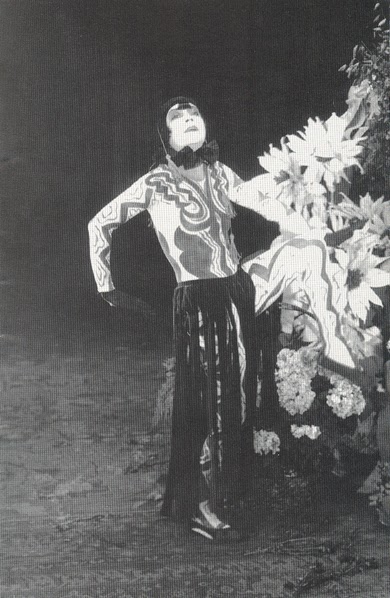
ASTA
This air of unrealism is also shown in the performances. Louise Brooks is totally believable in all of her roles, she is completely alive and relatable and that's her eternal appeal. All of the rest of the cast of "Pandora's Box" is similarly believable. In the 1917 Erna is too restrained and the film itself is too remote to leave much of an impression but again it is a realistic film with realistic performances. The performances in Erdgeist are exaggerated and stylized. In Schwartz's studio Lulu gestures towards the distant light through the windows to not subtly present herself as a prisoner (she refers to herself as a caged bird) in a classic expressionist theme. Another classic Expressionism visual theme can be seen in the multiple times various male characters fall at her feet and grasp her for support or bow their heads on her lap or shoulder as she stands or sits impassively and inscrutable. Several times male characters freeze in a distraught pose, eyes wide and hands outstretched or clutching at the light in motifs that can be seen in early Expressionist films like Caligari. The director Leopold Jessner was previously a stage director who was one of the founders of Expressionist theatre where many of these visual themes were developed and had only a few films to his credit, all known for the heavy use of such visuals so this film is solidly in that tradition. In the end the biggest difference between the 1923 film and the 1929 Pabst film is not just the difference between Asta and Louise and their different acting styles, substantial though they are, but that ultimately "Pandora's Box" and "Lulu" exist in a recognizably real world, "Erdgeist" does not and does not mean to.
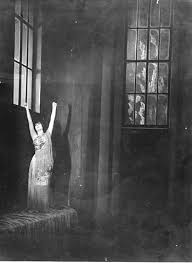
"A CAGED BIRD"
~~~~~~~~~~~~~~~~~~~~~~~~~~~~~~~~~~~~~~~~~~~~~~~~~~~~~~~~~~~~~~~~
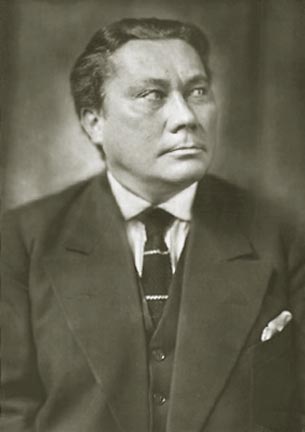
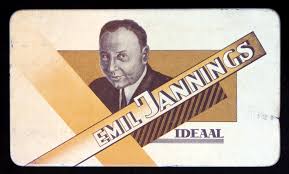
Of the various figures involved with these two films Emil Jannings would have the brightest future. He would become one of Germany's biggest male stars in such classic films as "Madame DuBary" (1919, directed Ernst Lubitsch & with Pola Negri), "The Last Laugh" (1924, dr/FW Murnau), "Faust" (1926, dr/Murnau) and "Waxworks" (192 dr/Paul Leni) before moving to Hollywood where he won the first best actor Oscar in 1927/28 for "The Way of All Flesh (dr/Victor Fleming (now lost) and Josef von Sternberg's "The Last Command". However the coming of sound films and his lack of English led him back to Germany where he resumed his career. He continued to work to work under the Nazi regime including in propaganda films which won him awards from the regime as well as the never ending hatred of those like Marlene Dietrich who had fled or lost friends and family. With the end of the Nazi regime his career ended as well. He died in 1950. Heinrich George, who played the strongman Rodrigo, would also go on to be a popular star with a long list of films including "Metroplis" (where he plays the hulking foreman who runs the giant machines) and the 1925 British film version of Rider Haggard's adventure classic "She". he was also a notorious figure of the cabaret scene known for his dunken carousing and a member of the Communist Party, but once the Nazis took power he blithely switched sides and became an enthusistic Nazi making several high profile propaganda films including the notoriously anti-Semetic "Jud Suss" (1940) and "Kolberg" (1944), Josef Goebbels sprawlling attempt to make a Nazi version of "Gone With The Wind", considered to be one of the most expensive movies ever made. His high profile Nazi boosterism got him arrested by the Soviets once the regime collapsed and he ended up in a prisoner camp where he died, reportedly from complications following an appendix opperation in 1945.
Others would have to flee Germany. Albert Basserman (Dr Schon) was a respected stage actor who would appear in the 1930 sound remake of "Alraune" starring Brigitte Helm directed by Richard Oswald. He was married to a Jewish actress and thus moved to America where he appeared in the Alfred Hitchcock film "Foreign Correspondent" for which he was nominated for an Oscar. He died in 1952 aged 84. Richard Oswald would also flee to Hollywood where he would work, albeit in a lower profile. After the war he returned to Germany and died in 1963 aged 82. Director Leopold Jessner who was both Jewish and a socialist would also flee to America where he did some low key work in films dying in 1945. "Lulu" director Alexander Antalffy made a few more films (also as an actor), mostly of little note, and died in 1933 aged only 45.
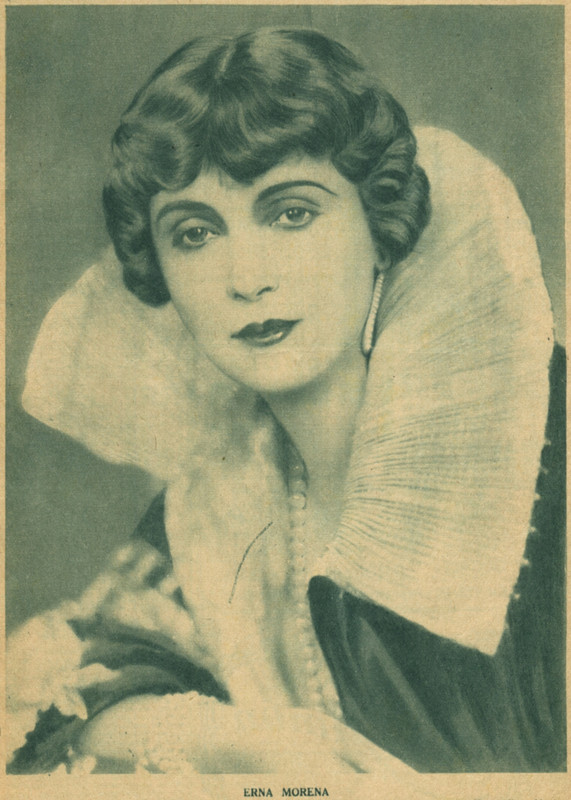
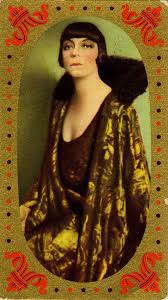
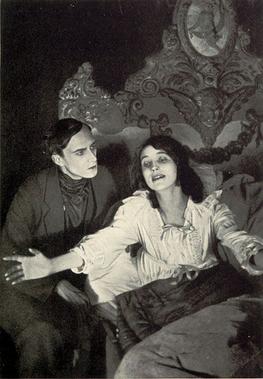
The two Lulus would have very different fates under the Nazis. Erna Morena (real name Ernestine Fuchs, born 1885) would make many films in the Weimar years including playing yet another future Louise Brooks role in a now lost 1918 version of "Diary Of A Lost Girl" directed by Richard Oswald and starring the great Conrad Veidt. Later she starred in an early Sci-Fi film "Algol" (1920), worked with notable directors like Murnau, branched into writing and producing her own films and eventually make her mark in lush historical epics such as; "Fredrick The Great" (1922), "William Tell" (1923), "Bismarck" (1925) and with the coming of sound even a German version of "Pygmalion" (1935). Although by that time she was in her fifties and playing support roles. Like Janning she would stay in Germany and work under Nazi control leading to the last important film in her credits in the anti-Semetic propaganda film "Jud Suss" (1940). Whether she was a committed Nazi or simply an older actress looking for work this hateful propaganda film is a black mark in her resume and like Janning it essentially ended her career. She made only one post war film and died in 1962 aged 77.
ERNA & CONRAD VEIDT IN "DIARY OF A LOST GIRL" (1918);
~~~~~~~~~~~~~~~~~~~~~~~~~~~~~~~~~~~~~~~~~~~~~~~~~~~~~~~~~~~~~
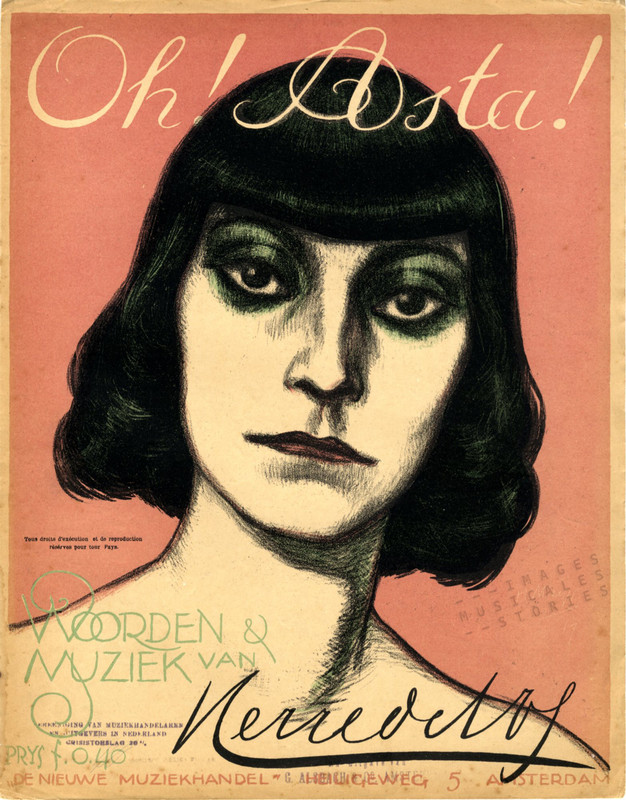
Asta Neilsen (born 1881) would make a different choice. By 1923 she was already one of the biggest stars in Germany and she would continue to be so for the rest of the silent era. In 1925 she would star as Hedda Gabler and GW Pabst would cast her in the classic "The Joyless Street" (along with Greta Garbo) as a world-weary prostitute. Pabst had lavish praise for her but by the time he came to make his version of "Pandora's Box" in 1929 she was almost fifty and too old for the role of the youthful Lulu (in fact she was probably too old for the role in 1923 as well) and her career was already winding down. Unlike some of her contemporaries like Garbo, Dietrich and Pola Negri she never made an attempt to cross the Atlantic and try her luck in Hollywood and most of her films were never released in the English speaking world. Her status as a major star of the silent era remained limited to parts of Europe. She had little interest in the sort of middle-aged support roles Erna had to take and she made only one film after 1927 restricting herself to occasional stage performances. Still a respected figure, once the Nazis took power they attempted to coax her out of retirement with Hitler and Goebbels personally wined and dined her, however she refused and returned to Denmark. In the 1910's Denmark had been an influential filmmaking country but by the twenties it had gone into decline like those of many small countries overwhelmed by the big budget imports from Hollywood, Germany and France and she found no work either. She had saved her money and spent a comfortable retirement writing a two volume auto biography and various articles about film and art. Like many Danes during the War she opposed the Nazis and donated generously to charities that sent care packages to concentration camp internees. This sort of activity put her on the Gestapo's radar but she was too famous to be arrested and had the support of the Danish King and lived out the war unmolested. She died in 1990 aged 90 still revered in Europe if not in the English speaking world.
These films may have been forgotten but they should be due for a rediscovery in an era where Louise Brooks has become an icon there should be some historical interest in the evolution of Lulu. With films like "The Cabinet Of Dr Caligari" and "Nosferatu" also becoming cult favorites there is now also greater appreciation for Expressionism and the very qualities of otherworldly weirdness that baffled contemporary American and British critics about the 1923 film would now be appreciated as might a reapprasial of the work of Asta Neilsen. A proper restoration of these faded prints packaged into a single DVD that would find an audience among fans of Brooks, Expressionism and film historians and is long overdue. It would be an interesting curio to the Louise Brooks saga, at least until those other two lost Lulu films (one with Bela Lugosi!) and the Erna Morena version of "Diary Of A Lost Girl" turn up.