Essays & reviews about the classic (mostly black and white) era of film and TV. Especially Silents, Horror, Sci-Fi, Film Noirs, Cartoons, Dada & Experimental Films. Member of the Classic Movie Blog Association (CMBA).
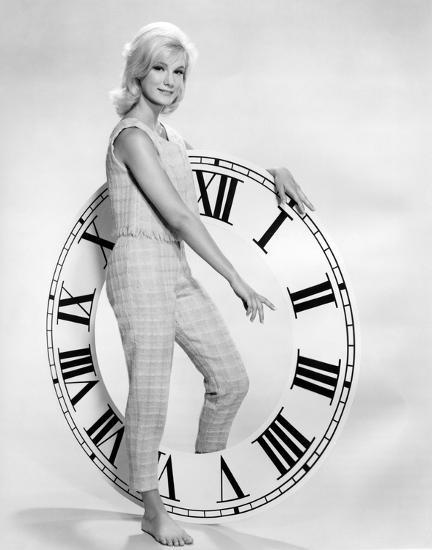
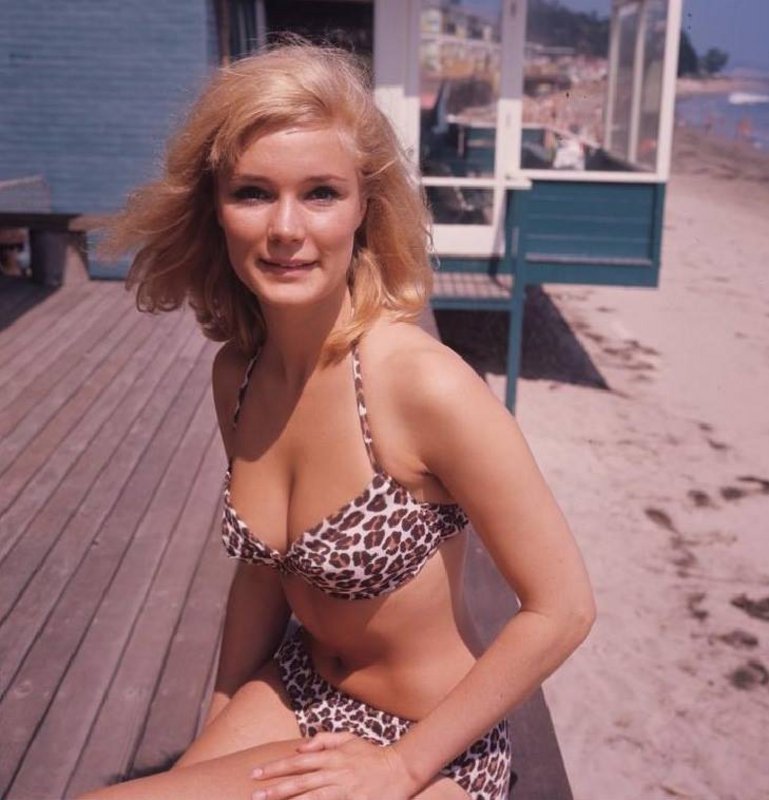
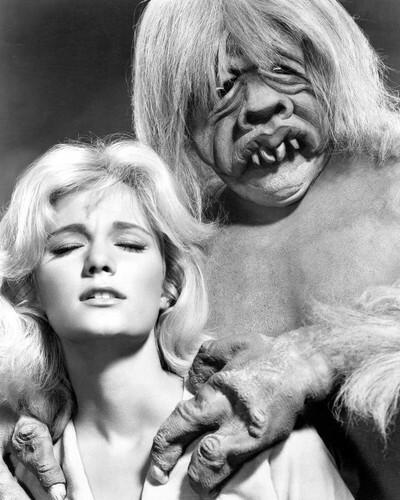
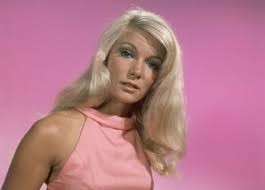
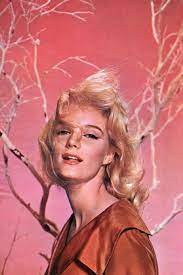
Yvette Mimieux died this past January, a mere ten days after her eightieth birthday. Among other no doubt far more important accomplishments she was also probably my first film crush from her work in the sci-fi classic "The Time Machine" (1960) in which she played Weena, the innocent, trusting girl from the distant future. This was in fact her first major role and it established her persona for the next decade. Yvette was not just beautiful, she was ethereal; slim, delicate features, silken blonde hair and soulful eyes. It was her eyes that really defined her. She had a look that was not piercing but searching, as if always trying to read the men around her. She also had a light, slightly distant voice to match her willowy frame and airy step, both of which were courtesy of her ballet dancing training. Her fey quality was quite different from the reigning blonde sex symbols of the day or earlier like Marylin Monroe, Jayne Mansfield, Brigitte Bardot, Betty Grable or Jean Harlow; playful, buxom sex kittens. Yvette presaged a change to a more adolescent but also less cartoonish fantasy girl of the sixties like Jane Fonda, Jean Seaberg and Mia Farrow.
In fact the actress she most resembled was the slightly older (born 1934) Swedish born American Inger Stevens. She was also a slim, statuesque blonde with doll-like features and pensive eyes who started as a dancer but unlike Yvette, Inger had trouble finding a defining role. She was in a successful but now forgotten sitcom named "A Farmer's Daughter" (1963-66) and even starred on Broadway (she had originally run away from home to be a dancer) but the roles she is remembered for were not the comedies or musicals she most enjoyed but as tragic or doomed women. In two classic episodes of "The Twilight Zone"; one in which she plays a lone driver going across the country who keeps meeting Mr Death again and again and another in which she plays a girl who fears she might be a robot. She also appeared in a couple episodes of "Alfred Hitchcock Presents" and the Clint Eastwood western "Hang Em High" (1968). It was ironically fitting that the roles that would define her as a tragic figure as she would die by suicide in 1972 aged 35. Yvette Mimieux, in spite of the naive, fragile dememor she would have at the start of her career would turn out to be made of sterner stuff, not only than poor cursed Inger but most of her sister early sixties sex symbols save Jane Fonda.
Yvette got her first small speaking role in a now forgotten 1959 TV western "Yancy Derringer" as one of two thieving sisters but her first significant role was in another, and better TV series.
"ONE STEP BEYOND"(1960);
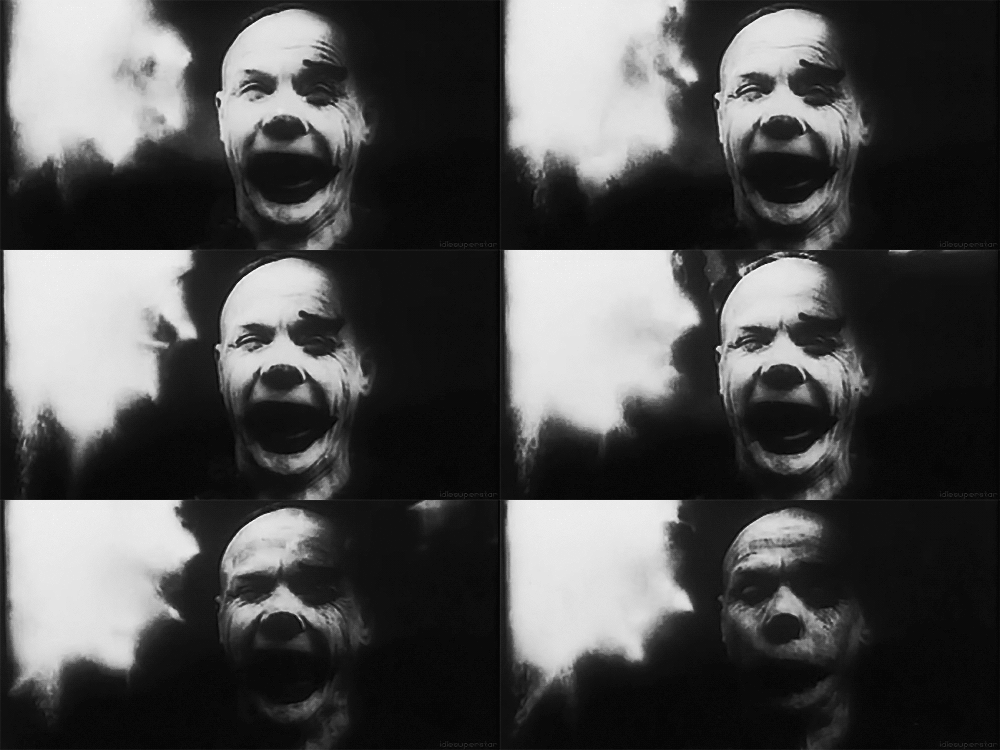
"One Step Beyond" was one of the mystery/supernatural anthology series of the same era as "The Twilight Zone", "Alfred Hitchcock Presents" and "The Outer Limits" running from 1959 to 1961 with the gimmick being that all the stories shown were supposedly taken from the "true, documented human record". Like "Twilight Zone" and "Hitchcock Pres", "One Step Beyond" had a host who introduced and closed out each show, in this case actor John Newland who had a bland, wide-eyed, vaguely apprehensive manner. Unlike the other mentioned shows "One Step Beyond" was uneven in quality with notably smaller budget and scripts that varied in quality with some being rather slow moving and talkey. Yvette's episode however has some genuinely spooky moments in which she plays the girlfriend of an older, possessive man who kills her in a jealous rage and is then stalked by a creepy clown who had befriended her. This time Yvette gets some real screen time in which she showed her basic beautifully fey ingenue persona which would be her image for the next decade.
Aside from these TV roles she got her start in a big way with the end of the fifties in 1960 with "Platinum High School". In spite of it's name and starring Mickey Rooney and Conway Twitty this was not a frothy bobby sox rock & roll teen film but was actually a darker edged crime story.
"Platimum High School" (1960);
Directed by
CAST:
Mickey Rooney ~ Steven Conway
Dan Dureya ~ Maj Redfern Kelly
Terry Moore ~ Jennifer Evans
Yvette Mimieux ~ Lorinda Nibley
Elisha Cook Jr ~ Harry Nesbit
Conway Twitty ~ Billy Jack Barnes
Richard Jeackel ~ Hack Harlow
Jimmy Boyd ~ Bud Starkweather
Harold Lloyd Jr ~ Charlie Boy Cable
The plot (spoiler alert) is a slow boil in which a man (Mickey Rooney) comes to a small island which houses a military school in order to investigate the death of his estranged son. At every step he is met by evasion, cover-ups and veiled threats from the school's staff and students including the Commander (Dan Duryea) and his secretary/mistress (Terry Moore). Eventually it is learned that his son died in a hazing and that Duryea has been concealing this while continuing to cash tuition cheques. After a couple attempts on Rooney's life there is a fight in a cafe after which Rooney attempts to escape the island in a small boat through shark infested water with Moore who betrays Rooney as Duryea tries to kill him by running him down in the camp's much larger boat. In the end Moore is eaten by sharks while Rooney is able to blow up Duryea's boat.
The plot unfolds quite slowly and while the viewer always is suspecting things are amiss on the island and the school staff are concealing something, we don't learn what until quite late. This might almost be a film noir if it were filmed as such but most of the film is shot not in shadows and seedy locales but in the blazing sun on a pleasant island. No doubt the filmmakers intended to contrast the island's sunny vacation feel with the darker secrets it conceals but it would have been better if it were shot with a greater sense of dark atmosphere. Mickey Rooney is an odd choice to play an amateur detective, it's not that he is a bad actor but it's hard to overlook that we are clearly watching Mickey Rooney in a bar fight with three larger, younger soldiers. Again the intent was likely to show the contrast of Rooney's "aww shucks" persona in a crime film much as Fred McMurray had done in "Double Indemnity" but this is clearly an inferior but not bad film. The plot, when it finally gets to its destination, makes little sense. Hazing deaths are not uncommon but the way the Commander chooses to cover it up is both unnecessary and counter-productive, with trying to pocket the tuition checks actually making an investigation and getting caught a huge risk for little real benefit. The climactic boat chase is frankly silly and poorly shot in a way that shows the film's low budget.
An additional trivia note about this film; besides it's misleading title, which implies a teen exploitation film which it certainly is not, the cast actually does have not one but three teen idol singers as various juvenile delinquents (in spite of their clearly being past their teens). Conway Twitty (1933-1993) was at this time an up and coming Rockabilly singer with a couple hits to his name although he would later become one of the biggest selling Country crooners of the late sixties and seventies. Jimmy Boyd (1939-2009) was a former child actor and singer who had scored a huge Christmas hit with a novelty song "All I Want For Christmas Is My Two Front Teeth" which would be a seasonal radio staple for the next twenty years. He never did score another hit although he did manage to marry TV's Batgirl, Yvonne Craig. Harold Lloyd Jr, (1931-1971) son of the iconic silent film comic, had pursued a career singing pop ballads with limited success becoming more known for his scandalous personal life. Although the film has a surplus of pop singers none of them actually sing although one of Twitty's songs can be heard playing on a radio. Terry Moore, playing the scheming secretary, had been around since the 1940's including appearing in the 1948 King Kong rip-off "Mighty Joe Young" and is at the time of this writing still alive being the last surviving cast member.
Yvette plays a secondary role as the pretty young daughter of the owner of a local hotel and one of the few people not part of the cover up who gives Rooney some assistance. As such she is given little to do but be beautiful and innocent and look stunning in a bathing suit which she does very well. Well enough in fact that she was nominated for a Golden Globe for "Best New Actress" and this no doubt soon got her cast in the film that would become her most iconic; George Pal's big budget technicolor adaptation of HG Wells "The Time Machine".
"Time Machine" (1960) was one of a number of full colour of Sci-Fi and adventure films based on the Victorian masters including Jules Verne's "2000 Leagues Under The Sea" (1954 Walt Disney w/James Mason, Kirk Douglas and Peter Lorre), Around The World In 80 Days" (1956 w/David Niven and Shirley McLain), "Micheal Strogoff" (1956 w/Curt Jurgens), "A Trip To The Moon" (1958 w/Joseph Cotton, George Sanders & Debra Paget), "Journey To The Center Of The Earth" (1959 w/James Mason again), "Mysterious Island" (1961 with F/X by Ray Harryhousen), "Master Of The World" (1961 w/Vincent Price & Charles Bronson), "In Search Of The Castaways" (1962 w/Haley Mills), "Five Weeks In A Balloon" (1962 w/Red Buttons & Peter Lorre again), and Rider Haggard's "King Solomon's Mines" (1950 w/Stewart Granger & Deborah Kerr) and "She" (1965 w/Ursula Andress). These films had big budgets with glorious colours, fine sets, the best in current special effects, breezy storylines and plenty of action suitable for adults and kids. Two previous successful HG Wells adaptations, "Things To Come" (1936 w/Raymond Massey) and "The Invisible Man" (1933 w/Claude Rains & Gloria Stuart) had already been made as black & white films.
"THE TIME MACHINE" (1960, trailer);
"The Time Machine", directed by George Pal and starring Rod Taylor, was one of the best of these films justly remembered for it's classic time travelling sequence using sped up footage, the iconic steampunk time machine chair and the ghastly Morlocks. Also remembered was the fragile, other-worldly beauty of Yvette as the childlike tragic Weena. She was beautiful in black and white but in technicolor she was luminous and timeless in a way few other actresses are. Unlike the blonde bombshells of the fifties Yvette has a natural look with her perfect skin seeming to need none of bold makeup, lipstick and eyeliner of the cheesecake era which would come to a close in the more natural sixties. The drawback for her is that the childlike Weena is a completely passive character and while that is not her fault that the character was written that way her dreamy ingenue persona would later feel like a trap. It would however establish her for the rest of the decade including her other two iconic roles of the sixties "Where The Boys Are" (1960) and "Toys In The Attic" (1963).
"WHERE THE BOYS ARE" (1960 Trailer);
"Where The Boys Are" is, at least on the surface, a typical teen comedy/musical about a group of four girlfriends (Paula Prentiss, Dolores Hart, Connie Francis and Yvette) who head down to Ft Lauderdale for Spring Break where they party and meet up with various boys (George Hamilton, Jim Hutton, Rory Harrity & Frank Gorshin). Thus far the plot seems pretty conventional; rebellious, pretty but basically wholesome boy-happy co-eds, girl-crazy but basically wholesome guys, pool parties, beach parties, light intoxication, flirting, some Cool Jazz, a Connie Francis ballad. However while the film's marketing implies "Beach Blanket Bingo" frolics the audience is not teeny boppers but the college set. Aside from the syrupy Connie Francis ballad the music is mostly the sort of West Coast Cool Jazz popular on university campuses rather than Rock & Roll. The girls are not just shallow beach bunnies. They have serious discussions about sex and relationships, think about their futures and support each other. Things take a much darker turn when Yvette's Melanie is first used and dumped by her sleazy boyfriend who then sets her up to to be raped and left wandering glassy eyed down the highway to be run down in a harrowing scene that definately would not have been seen in "Gidget". In the downbeat but satisfying ending Melanie is rescued by her friends, Paula Prentis dumps her flakey boyfriend, Dolores Hart and her new beau agree to stay together but take things slowly and the girls return to university to continue their studies. The film's theme of relatively frank (but not explicit) and mature talk about sex and female empowerment and a solid cast along with a hit single in the title song made it a success and has maintained an audience with Danny Peary including it in volume three of his "Cult Movies" series of books (1988). Note Dolores Hart, the leader of the girls would within a few years shock Hollywood and walk away from her career and enter a convent where she resides to this day. In more tragic shock mirroring an episode in the film Connie Francis, who would focus on her singing career, was herself the victim of a violent rape in the 1970's.
"TOYS IN THE ATTIC" (1963);
Directed by George Roy Hill
CAST;
Dean Martin ~ Julian Berniers
Yvette Mimiuex ~ Lily Prine-Berniers
Geraldine Page ~ Carrie Berniers
Wendy Hiller ~ Anna Berniers
Gene Tierney ~ Alberta Prine
Nan Martin ~ Charlotte Watkins
Larry Gates ~ Cyrus Watkins
Henry Simpson ~ Frank Silvera
PLOT (spoiler alert);
Dean Martin stars as Julian Berniers, a Southern wastrel returning to New Orleans with his naive teen bride, Lily (Yvette) and his two possessive spinster sisters; the romantic Carrie (Geraldine Page) and the older, plainer and more responsible Anna (Wendy Hiller). Julian is a flashy, fast talking charmer who has been engaged in various unsuccessful get-rich-quick schemes who returns home with yet another deal to soak money out of a local businessman, Cyrus, with ties to illegal activities who wants property Julian has title to. He has returned with his new bride, the young girlish Lily who loves him but is bored and jealous, suspecting that Julian is having an affair with an unknown woman who she has seen him with. The woman in question, Charlotte (Nan Martin) is indeed a former lover of Julian's now married Cyrus who Julian is attempting to make a deal with but they are not currently having an affair, instead she is trying to escape her violently possessive husband. Julian has promised to help her by giving her money using some of the money he is trying to get out of Cyrus.
These machinations are further complicated by the relationship between Julian and his sisters. They are several years older and are spinsters living alone in an old mansion where they have built their lives around taking care of their handsome, charming but irresponsible brother. Carrie in particular has become quite possessive of him while Anna is becoming concerned about Julian's sudden unexplained wealth and his wasteful spending and by Carrie's increasingly irrational behavior. For her part Carrie does not mind the idea of Julian's business scheme crashing and even welcomes it as that would force him to move back home with them. Julian's new bride Lily came from a wealthy family and it is assumed by most of the characters they he married her in part for her money. This suspicion is held at least partly by Lily and her mother Alberta Prine (Gene Tierney. The sisters, especially Carrie, further resent Alberta for her wealth, social connections and liberal ideas including about race, it is also implied that she is having an affair with her mixed race chauffeur Henry. Julian, who has been lavishing the sisters with gifts including paying off the mortgage on the mansion, gets them fired from their jobs and pays to send them off on an extended European vacation. Eventually Carrie, who has learned about the details of Julian's plan to help Charlotte escape, attempts to sabotage his plans as well as his marriage by manipulating the trusting Lily into calling Cyrus and revealing the plans of Julian and Charlotte. Cyrus has some hired goons attack them badly injuring Charlotte and stealing their money. A distraught Lily reveals the truth to Julian who strikes her and throws her out. Anna discovers Carrie's machinations and angrilly confronts her telling her that she knows that Carrie has always held incestuous designs on Julian. Anna announces she is leaving, taking the vacation to Europe and never returning. Julian begins to realize what Carrie has done and is encouraged by Anna to return to Lily and beg her forgiveness which he will do also leaving Carrie. In the end the delusional Carrie is left alone in the now empty mansion fanaticism that Julian and Anna will return to her.
The play by Lillian Helman is obviously heavily influenced by the Southern Gothic plays of Tennessee Williams and novels of Erskine Caldwell with it's themes of respectable old familes hiding dark secrets, sexual infidelitiy and implied devient behavior (in this case incest), race and corruption. The original play starred Jason Robards, Maureen Stapleton and Irene Worth and had a successful Broadway run getting nominated for several Tony Awards in 1960. The film version, directed by the young George Roy Hill, who had previously directed "A Night To Remember", and was originally supposed to star Vivien Leigh (as Carrie), Katherine Hepburn (Anna) and Olivia De Havilland (Charlotte). The inclusion of Leigh underscores the Tennesse Williams comparison as she had already starred in "A Streetcar Named Desire" in 1951. By the time they got around to making the movie the cast had changed to Page and Hiller, respected stage actresses but not marquee names with Dean Martin and Gene Tierney added for drawing power. This decision caused considerable backlash as Dean Martin in particular was singled out for ridicule as being completely miscast. He is indeed miscast but to be fair he does easily portray the role of an easy-going, lazy, not terribly bright man who has coasted through life relying on his good looks and charm and wants to be liked, but he is really too old for the role (while he is supposed to be the younger brother he was in fact 46, seven years older than Page although he is five years younger than Hiller) and he lacks the necessary depth to what should be a morally complex character of a grifter who is actually trying to do the right thing. The obvious perfect casting would have been Paul Newman, who had already appeared in the Tennessee Williams film "Cat On A Hot Tin Roof" (1958) and on Broadway in another Williams play "Sweet Bird Of Youth" (1960) and it's film version in 1962 along with "The Hustler" (1961) with "Hud" being released in the same year. Other possibilities would be Rock Hudson, another actor who understood the curse of being handsome and charming to breeze through life while still wanting to be taken seriously, or Montgomery Clift, who would have given a white knuckle desperation to the role.
The film is really owned by Page and Hiller as the spinster sisters. Page got some criticism from some for her mannered performance but her over-the-top and over-aged Southern Belle is appropriate for the role of a woman who is basically adopting such a theatrical persona to conceal her unhealthy inner needs and obsessions even from herself, as becomes clear by the film's end. In fact Page had previously played similarly conflicted characters in the Williams play and film "Sweet Bird Of Youth" opposite Paul Newman for which she received a Tony nomination and she is well cast here. Wendy Hiller is also very good as the worried older sister given the thankless role of being the plain, responsible one who is the only one who knows and keeps the family secrets. She does not have the flashy scene stealing of Page but at the end when she takes charge and confronts Page she reveals her inner strength. Gene Tierney is fine in a supporting role that is underwritten and gives her little to do. Yvette has the opposite problem, her character has more importance to the film and yet she is under-written with unclear motivations. She has zero chemistry with Dean Martin, who to be fair is twenty five years her senior and old enough to be her father, and it's not obvious why she would be so slavishly devoted to him as while he is not knowingly cruel to her he is distant and aloof and her character is frankly too naive to be believable. In fact I would be tempted to call her a male fantasy of a beautiful and submissive child-bride if it weren't for the fact that the writer Lillian Helman was a woman, and a famously left-wing one at that.
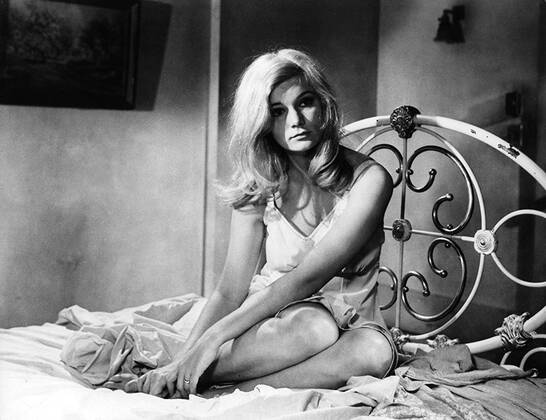
In fact for a film and play that was considered scandalous it has a curious pulling of it's thematic punches the blame for which must be shared by both writer Hellman and screenwriter James Poe (who adapted the play) and director George Roy Hill. The film has the odd distinction of both having a complicated plot with plenty of conflicted characters with hidden secrets and motives and yet still being underwritten and rushed. The motivations of Julian, Lily and Charlotte are not fleshed out which in the case of Gene Tiereny's Charlotte (who is potentially full of scandals) is a waste of a charismatic actress. It's also possible that director George Roy Hill was not comfortable with the salacious subject matter as is certainly unlike his other well made but breezy films. He does an excellent job with the opening which is an extended tracking shot showing a pensive Yvette walking the streets of New Orleans, an inherently interesting city. She is gorgeous in the bedroom scene pouting in bed with the metal bed posts making her seem caged in while she watches cartoons making her seem childlike and implying scandals to come. Likewise the Berniers mansion is suitably musty and down-at-heel. But the movie never really delivers on this promise, becoming more of a competent showcase for the sisters who are the only fleshed out characters. The film was not a success getting only middling reviews with critic Bosley Crowther snidely dismissing it as "Bats In The Belfry" and it lost over a million dollars.The critical beatdown focussed on Dean Martin and deeply hurt him as had yearned to be taken seriously as a dramatic actor as his Rat Pack crony Frank Sinatra had been and he essentially gave up trying and retreated to the safe ground of playing lazy comic lotharios in trash like the Matt Helm series for the rest of his life. Yet viewing the film today I think the critics were too harsh, with its flaws it is a well made and intelligent film with fine performances from Page and Hiller and gorgeous lush black and white cinematography. The performances from Dean Martin, Tierney and Yvette may lack focus (again with the latter two not really thier fault) but they still possess enough screen presence to be watchable.
The lack of focus of Yvette's character are not her fault but this film does show the limitations of Yvette's reserved acting ability and her lack of comfort with her sex symbol status as would become more apparent as time went on. While Yvette obviously had great natural beauty she is essentially too distant and passive at this point to be relatable. In retrospect in her previous roles she was essentially charming eye candy, delectable to watch but leaving no after taste. Although in this film she is instantly presented as the kind of salacious jailbait as contemporary teen sex kitten Sue Lyon in "Lolita" as she lounges in bed wearing a flimsy nightie while watching cartoons. However she is much more restrained and uncomfortable than Lyon's gleefully winking jailbait. Yvette was an oddly sexless sex object. Her seeming reluctance to embrace her sexuality (at least in this way at this point) may reflect her own growing discomfort and even disdain for her ingenue persona with quotes like;
"I suppose I have a soulful quality. I was often cast as a wounded person, the sensitive one".
And; "The women they (male screenwriters) write are one-dimensional. They have no complexity in their lives. It's all surface. There's nothing to play. They're either sex objects or vanilla pudding."
Yvette was in fact a quite different person that most of the her sister sex symbols being a thoughtful, quiet, aloof woman who had ambitions to be writer, producer and artist, which she would later pursue, and she led a normal, long and happy scandal-free life away from the tabloids unlike the cursed likes of Marilyn, Sue Lyon or Inger Stevens.
There were a few more ingenue roles in big budget romance including a remake of the Rudolph Valentino classic "Four Horsemen Of The Apocalypse" (1961, directed by Vincente Minnelli), "Light In The Piazza" (1962 w/George Hamilton & Olivia De Havilland), "Diamondhead (1962) a melodrama with Charlton Heston and "Joy In The Morning" (1965 w/Richard Chamberlain). All were expensive flops and while Yvette didn't get bad reviews for her performances her contract with MGM wasn't renewed. In a way this may not have been an entirely bad thing for her. MGM clearly had set on presenting her purely as a dreamy ingenue, a role she had come to dislike and one which audiences seemed to tire of as well. Over the next few years she drifted through various genre pictures; a Western, War Films, a crime film, a Disney film. In these films she was required to be nothing more than eye candy in supporting roles that could have been played by any number of other actresses and were mostly forgettable, however there were a few oddities.
"Three In An Attic" (1968) was a change from her previous innocent ingenues. Instead this was a clumsy attempt of a swinging sixties sex romp. Starring Christopher Jones as a phillandering college student who cheats on his girlfriend (Yvette) with two other women and gets caught so the women team up to punish him by locking him in the attic of their dorm and exhaust him by sujecting him to constant sex until he learns his lesson. It is of course an absurd male fantasy with an attempt to make it hip with much pretentious hippie philosophizing, some would be psychedelic camera shorts and an admittedly cool sixties soundtrack. Yvette is likable and tries her best to be by turns girlishly innocent and coolly cynical but the movie is too silly for her. She is also a little too old to be taken for a college sophomore who is instantly smitten with the smarmy Jones the second he recites Kirkegarde. Especially since Jones is meanwhile an arrogant, unlikeable, jerk. The other two women are walking talking sixties cliches with a Black girl speaking in exaggerated Black Panther slogans with a "Get Christy Love" accent while the other is a dippy middle-class Jewish hippie. Neither are likable or believable for even a minute. Coincidentally also along for the ride is Nan Martin who played the other woman in "Toys In The Attic" and who does a fine Anne Bancroft impression. I actually thought she was Anne Bancroft until I double checked the credits.The movie (made for low-budget AIP Studios) was actually quite successful at the time but it's combination of cliched sixties catch-phrases and it's obvious sexism means it has not dated well except as a relic of the era. The film may have been trash but being in a sex comedy, even a bad one, meant that Yvette was truly looking to shake off her image as the whispy innocent dream girl. She followed that up with another swinging sixties flick, albeit a more intellectual art film "Picasso Summer" (1969) with Albert Finney.
A quite different late sixties relic was "The Delta Factor" a Mickey Spillane would-be thriller starring Christopher George, Diane McBain ("Spinout" w/Elvis Presley) and Yvonne De Carlo (AKA Morticia Adams) in which she played a secret agent involved in a scheme to bust a scientist out of a Caribbean prison. Because it's a low budget quickie it's not very good with lackluster action and an intrusive boom mic which gets almost as much screen time as she does. And because it's Spillane, her character is really just arm candy for the male agent who does all the action while she lounges about in a bikini and complains. Spillane later said he would have prefered that her role had been played by Daine McBain who would have been a more traditional world weary gun moll and he may be right although either way this would still be a forgettable film. Yvette was however still trying to move away from her innocent girl persona.
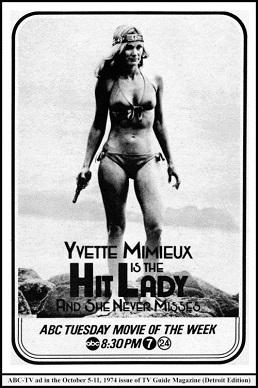
At this point Yvette was in her thirties, her trim dancer's body and finely sculpted face beautiful still but now too old to be playing ingenue roles. She had busied herself studying African and Haitian art and archeology and recoded an album reading the poetry of Charles Beaudelaire to a musical backing. Having grown out of her willowy adolescent phase she instead projected a cool sharp eyed intelligence probably closer to her actual personality by that point. Around this time she sued her agent for not getting her any decent roles and she had taken up writing both non fiction articles as well as short stories and scripts in search of a stronger role for herself. Taking after Spillane one of the stories she wrote was for a top flight female assassin in a made for TV film which she also produced called "Hit Lady" which had a conflicted character and a Hitchcockian twist ending. At only a hour long this film could have been perhaps been fleshed out for for feature length is she had gotten the financing to do so but however much Yvette enjoyed playing a role traditionally played by a man she herself is not intense or intimidating enough to be playing a murderer. She clearly relished the role however and soon took another spy role for a TV series "Deadly Game" (1971) in a role that was actually originally supposed to go to Inger Stevens before her suicide. If this show had been done in the swinging sixties era of "The Man From UNCLE", "The Avengers", "The Saint" and "I Spy" in a slightly campy style it might have had greater success but it only lasted one season and has been forgotten. In 1975 came "The Legend Of Valentino", a fact-free made-for TV bio pic in which she played a coldy hateable version of Valentino's wife Natacha Rambova (a person I wrote about here). The real Natacha was a beautiful, intelligent, talented, ambitious, strong-willed career woman who battled with male studio heads and reporters who spread malicious gossip potraying her as a ball-busting lesbian. This film takes that image and shows her as a cold, manipulative, gold-digger who uses Valentino for his money and connections then dumps him. Yvette did not write the script or produce this film (produced by Aaron Spelling) but as an intelligant career who had fought to get her own projects made she should have known better and turned this script down.
Besides these attempts to create a new tough girl persona she worked in more genre films in the seventies. Including a final ingenue role in a version of "Death Takes A Holiday" with Myrna Loy and Melvyn Douglas which got some decent reviews but is pretty dull to watch today. This being the seventies there were plenty of genre pictures; there was "Dark Of the Sun" an action film about mercenaries in Africa, "Journey Into Fear", another low budget spy thriller with Sam Waterson, Zero Mostell and Ian McShane in which she played a love interest with an awkward French accent. "Devildog The Hound From Hell", was a silly horror film and "Skyjacked" with Charlton Heston (again) and James Brolin was one of the many airplane in distress films of the era while "Disaster On Coastliner" (1979) was basically the same thing except this time on a train with Lloyd Bridges, William Shatner, EG Marshall, Raymond Burr, Lane Smith and Pat Hingle. These films varied in quality but at best they were competent but forgettable as were Yvette's stock characters which gave her little to do and which could have been played by any number of other actresses. Among these undistinguished genre films would be a better remembered Roger Corman grindhouse film "Jackson County Jail" in 1976.
"JACKSON COUNTY JAIL" (1976);
CAST;
YVETTE MIMIEUX ~ Dinah Hunter
TOMMY LEE JONES ~ Coley Blake
SEVEREN DARDEN ~ Sheriff Dempsey
HOWARD HESSEMAN ~ David
ROBERT CARRADINE ~ Bobby Ray
NAN MARTIN ~ Alison
MARY WORONOW ~ Pearl
Plot; Yvette stars as a prim career woman working as an ad executive in Hollywood who quits her job and dumps her no-good cheating boyfriend and decides to drive to New York and a new life. Along the way she stops off in a small Texas town where she meets every cruel Southern White Trash stereotype, a gum smacking waitress who rips her off, a pair of hitch-hikers who carjack her, a sleazy diner owner who tries to rape her, a dumb cop who arrest her on trumped up charges, a petty outlaw and another sleazy dumb cop who succeeds in raping her. This results in her killing the deputy and going on the run with petty hood played by a young Tommy Lee Jones. Sharp eyed viewers will enjoy that besides Jones the film also stars an even younger Robert Carradine as one of the carjackers, Howard Hessemen (soon to be famous as Johnny Fever on the classic TV sitcom "WKRP In Cincinnati" and who also died ten days after Yvette aged 81), Mary Woronow (from various Andy Warhol movies and the Ramones cult classic "Rock & Roll Highschool") as another outlaw and Betty Thomas (Hill Street Blues") as the waitress. Also along yet again is Nan Martin who must have been an old friend at this point.
Although this is in most ways typical trashy grindhouse fare it is more challenging with a brutal rape scene (including partial nudity) that is harsher than anything Yvette had done before (or subsequently) followed with scenes requiring her to be believably stressed and hysterical including beating her tormenter to death. If she was looking to completely banish her old ingenue image once and for all this certainly did it. The film also has some fairly thoughtful dialogue with Tommy Lee Jones who does a good job here. No less of a Grindhouse aficionado than Quentin Tarrentino has proclaimed himself a fan of this film.
Of the movies she made in the seventies the ones that got the most attention and are the best remembered were ironically two sci-fi epics that essentially returned her to her early days.
"THE NEPTUNE FACTOR" (1974)
CAST;
BEN GAZZARA ~ Commander Adrian Blake
YVETTE MIMIUEX ~ Dr. Leah Jansen
ERNEST BORGNINE ~ Chief Diver Don MacKay
WALTER PIGEON ~ Dr. Samuel Andrews
DONNELLY RHODES ~ Diver Bob Cousins
CHRIS WIGGANS ~ Captain Williams
At first glance this would appear to be another seventies disaster film as a deep sea lab is caught in an undersea earthquake and dropped into a chasm. Thereafter a small deep-sea sub is sent to find them with Yvette playing a scientist and crew member. This film is in many ways a throwback to the kind of big-budget non-space sci-fi movies of the late fifties, early sixties technicolour films including "The Time Machine" along with "20,000 Leagues Under The Sea" and "Journey To The Center Of The Earth" with gorgeous underwater sets and photography and special effects using miniatures and actual colourful tropical fish blown up to giant size. It's highly unlikely such fish would live at such depths, especially in giant size but what the Hell, they look pretty. The actual humans are fairly two dimensional stock characters as noted by critics at the time who noted the photography and effects and praised the film's look but considered the rest of the film predictable and dull with the human actors being essentially faceless. Her character however at least was a head scientist and an equal to the male characters and certainly not a fragile damsel in distress or eye candy. The film was modestly successful at box office making a modest profit plus overseas, television and later home video (then a new thing) also factored in.
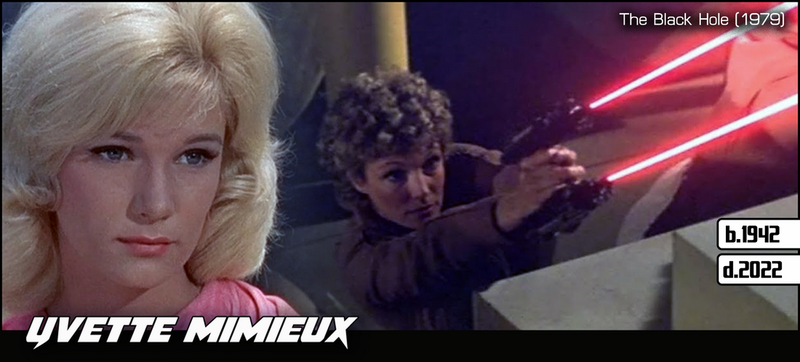
The other sci-fi epic was "The Black Hole", a big budget production from Disney Studios as they attempted to make an entry into the epic space opera genre in the aftermath of "Star Wars". The plot featured a spacecraft in the process of exploring remote space discovering a giant lost craft helmed by a mad scientist (Maximillian Schell) who has been studying a black hole and now intends to sail his craft through it. He is served by an army of robots including the hulking and menacing Maximillian. The massive ship, which looks like a combination flying shopping mall, planetarium, greenhouse, geodesic dome and an erector set still looks impressive. The robots are less so looking either stiff and crude or cutesy, this is a Disney film after all, but the film does have a stately quality with a psychedelic ending influenced by "2001 A Space Odyssey" that still works today in the CGI era. As with "The Neptune Factor" there is a solid cast including Schell, Ernest Borgnine (again), Anthony Perkins, Robert Forster, Joseph Bottoms and the voices of Roddy McDowell and Slim Pickens as robots. Yvette once again plays a briskly professional scientist (with an uncharacteristically unflattering hairdo) and once again is basically an equal member of the team and not a cringing female stereotype even if she doesn't really have much to do. This film is not as well remembered as the "Star Wars" and "Star Trek" franchises of the era (or "Tron", Disney's other sci-fi flim) but it is clearly superior to the big budget bubble-gum space fare of the time like "Battlestar Galactica" and "Buck Rogers" and maintains a loyal following. These films are not remembered for their human casts however and did not lead to any greater roles for Yvette.
"THE BLACK HOLE" (1979 Trailer);
Continuing on with one more attempts to adopt an adult sexual image Yvette made "Obsessive Love" in 1984, another made for TV she wrote and produced herself. This time she plays against type as a mousy, neurotic office worker who is stalking a soap opera star (Simon McCorkindale) who she tries to trap into an affair and marriage. This is ground later covered, albeit in a more violent way, by Stephen King in "Misery" with the crucial difference that Kathy Bates, was a pathetic but grotesque figure being older, plain and over-weight while Yvette was a pretty thirty something blonde. Not normally the type of person normally portrayed as a stalker, a fact Yvette herself noted;
"There are few enough films going these days," she said, "and there are three or four women who are offered all the good parts. Of course I could play a lot of awful parts that are too depressing to contemplate.... [Television is] not the love affair I have with film, but television can be a playground for interesting ideas. I love wild, baroque, slightly excessive theatrical ideas, and because television needs so much material, there's a chance to get some of those odd ideas done."
She does a fine job here and she was quite proud of this film as she had been of "Hit Lady" but if she was expecting these films to lead to offers of more parts for a take-charge leading lady she would be disappointed and it's worth noting that both these films were made-for-TV films done with small budgets. No Hollywood studio was interested in her as lead any more.
She spent the bulk of her remaining career switching to TV playing more icily confident but bland professional women in "Berrengers", a prime time soap of the "Dallas" type and a supporting role in "Lady Boss", a Jackie Collins mini-series in 1992. After that Yvette, then aged fifty (but still looking several years younger) and facing the prospect of a future playing matronly roles decided it wasn't worth the trouble and simply walked away. She devoted herself to a new business designing and selling art based on Haitian themes and real estate into her comfortable retirement.
Yvette Mimieux started out as other-worldly beautiful eye candy but unlike other ingenues she never seemed comfortable with that persona after a few years and spent the rest of her career trying to forge a more intelligent adult persona sometimes as a sex symbol and sometimes as a professional career woman with occasional success. Her best known movies would turn out to be the her first few ingenue roles and her last couple sci-fi epics with a grindhouse entry tossed in. She may never have been quite able to do everything she wanted to do but she was able to have thirty year career mostly on her own terms and quit on her own terms. She lived a long, stable and by all appearances happy life without any scandals or tragedies and if she had any serious regrets about lost opportunities she never shared them.
In an earlier post I talked about the first all-black horror movie "Son Of Ingagi", but now you're saying; "OK, But did they have all-black B-Movie westerns"? Why yes, yes they did. First a little background recap;
From the 1920's to the 1950's era of Jim Crow era segregation there existed a network of movie theatres in black communities just as there was an older network of black vaudeville and music halls known as the Chitlin Circuit that featured black music, dance and comedy acts. These theatres meant that there was an audience for all-black movies as well so by the 1930's there were made a series of films with all-black casts, usually made by black directors to fill this niche. These films were rarely seen by white audiences, did not make it to TV and have been largely fogotten.
In the silent era director Oscar Michaud (who I already wrote about here) started things off with his response to DW Griffith's "Birth Of A Nation" and continued to make films into the sound era. His films were serious minded and intended to offer messages of moral and racial uplift, sometimes with a religious subtext. Others would make films of a decidedly less serious nature, especially actor/writer/producer Spencer Williams who made a number of low budget comedies as well as the "Son Of Ingagi" horror film. Equally low-budget musicals (including some starring Cab Calloway and Louis Jordan), musical revues and Film Noir crime films were also made but the most popular, and oddest films, were a series of westerns made in the late thirties and early forties starring singer Herb Jeffries.
By this point the western genre was largely dominated by a distinct brand of low-budget quickie musical "oaters", which featured silly cookie-cutter plots, rote direction, wooden acting, and decidedly non-threatening levels of mild cartoon violence. These films were hugely successful with kids in particular and made stars out of names like William Boyd, a silent screen veteran who saw his career revive when he became "Hopalong Cassidy", former football player Johnny Mack Brown, former bit player John Wayne and former rodeo star Ken Maynard. It was Maynard who accidentally kicked off a new western musical genre when he warbled a couple of songs in a 1930 film and followed it up with a few more in which he sang and played guitar or fiddle. Maynard was not a real musician and while he did make a few recordings had no real desire to be one. He did however inspire another cowboy singer named Gene Autry to move to Hollywood and start a film career that would easily eclipse Maynard's, making a series of singing cowboy movies that would run to 93 movies over the next thirty years. Almost all Autry's films were identical, with childishly simple plots and most of the same casts. Autry himself was, by his own admission, fairly limited as a singer, not much of an actor and even less of a cowboy who often fell off his horse and could not throw a believable punch. But he was affable, looked flashy in his tailored cowboy suits and white hat and he had a collection of catchy songs. The success of these low budget quickies is a little difficult to understand now as most are blandly interchangeable and forgettable (the notable exception being "Secret Empire" an odd sci-fi western serial which I will have to write about in the future) but in every film Autry will stop the action (such as it is) to croon a cowboy tune or two and many of these songs became genuine hits and even classics including "Back In The Saddle" and "Rudolph The Red Nose Reindeer". The obvious success of these cheaply made films, even among black audiences, (even some Blues singers admitted to being Autry fans) meant that at some point somebody was bound to find a black version.
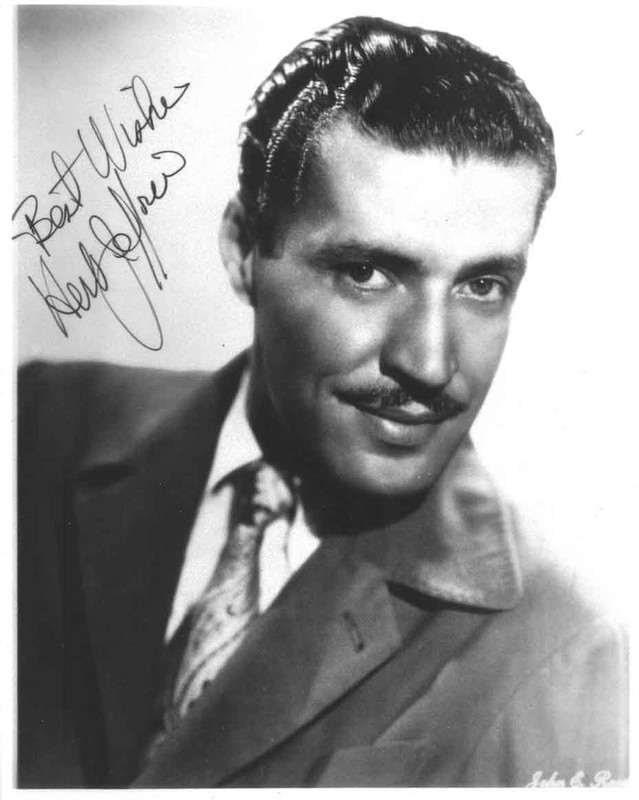
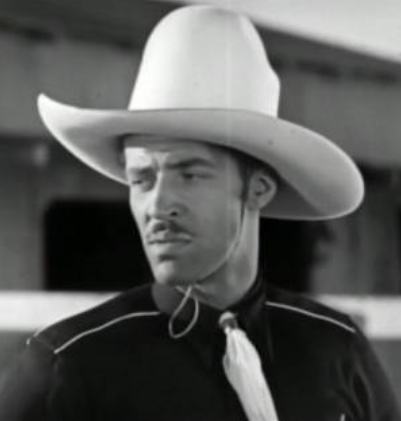
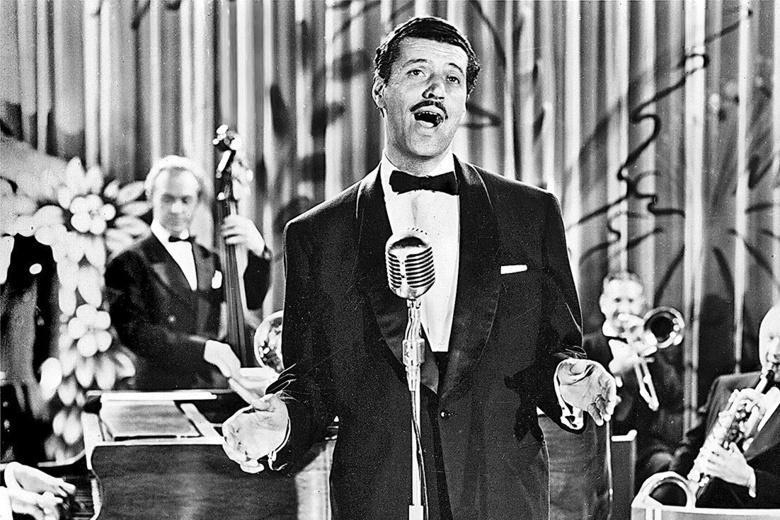
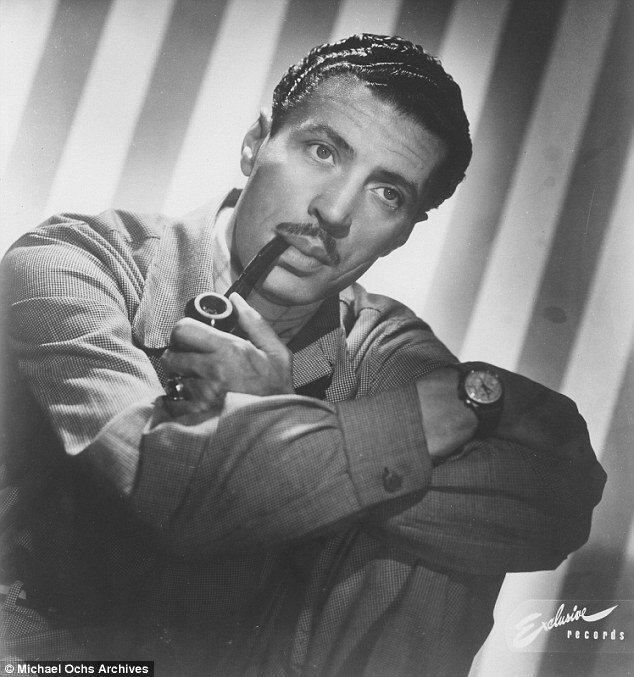
Herb Jeffries was always somewhat cagey about his background. Although at times he claimed to be a "Creole from New Orleans", census reports show he was in fact born in Detroit in 1913 under the name of Umberto Alexander Valentino. His mother was Irish and ran a rooming house and his father, who left before or shortly after his birth was described as being of variously mixed French, Scilian, Ethiopian and Moorish background and that he had died in WW1. How much of this is true is anybody's guess and it is entirely possible that Jeffries never really knew, it was common at the time for Black entertainers to claim "Ethiopian" or "Moorish" roots as these were among the only African nations to escape slavery and such roots were seen as noble although modern DNA tests show this was rarely, if ever, actually true. What is certain is that Jeffries had light enough skin that he could pass for a Creole and often did although he always insisted he never passed for white. He grew to be tall and handsome with a trim moustache, an elegant, dignified bearing, and a smooth voice. At some point he started billing himself as either Herb Jeffries or Herb Jeffrey, a practice he would continue in his film acrrer. After leaving school in 1929 he took pickup gigs in speakeasies singing Jazz and popular ballads and dancing where he caught the eye of Louis Armstrong who recommended him for a regular gig singing with bandleader Erskin Tate in Chicago where he was quickly hired away for more money by Earl Fatha Hines for a tour and still later would also get signed by Duke Ellington, with whom he would make several recordings.
"FLAMINGO" ~ DUKE ELLINGTON & HERB JEFFRIES (1941)
By the mid-thirties Jeffries was successful enough to try his hand at the movies. Although his entire background had been in Big Band Jazz and popular ballads and other Jazz artists had made film appearances where they essentially played themselves in a Jazz context including Ellington, Armstrong and Cab Calloway, Jeffries had something very different in mind. While he was a city boy born & bred, like so many others both black and white, he had grown up watching the silent Westerns of Tom Mix, Tom Holt, Jack Hoxie and Art Acord and he had seen the transition to the singing cowboy Gene Autry who was hugely successful. Jeffries noticed something that the studios had not, that these films were just as popular with black audiences as they were with white ones and he spotted an opportunity. These films were not especially difficult to make; they had small budgets, simple sets, repetitive stories, could easily recycle the same casts, costumes and sets and could be made cheaply and quickly. Still none of the existing studios, even the poverty row studios that churned out these B-movie westerns every couple of months showed any interest so Jeffries roped in Spencer Williams.
SPENCER WILLIAMS
Williams (1893-1969) was a veteran black actor, comic and filmmaker with a career going back as a comedian in vaudeville who had already been making all-black films since the start of the sound era with some success in the black community. He was a large, heavyset man who usually played heavies or buffoons and his films ranged from comedies to musicals and crime films in which he not only acted but also often wrote and directed. He had even worked on the 1928 film "Queen Kelly" starring Gloria Swanson and directed by Eric Von Stroheim where he was in charge of casting and rehearsing the black cast members. Note that this Spencer Williams is not to be confused with another contemporary Spencer Williams (1889-1965) who was a successful Jazz musician and composer but who did not appear in films. To avoid confusion Spencer the actor would bill himself as Spencer Williams Jr.
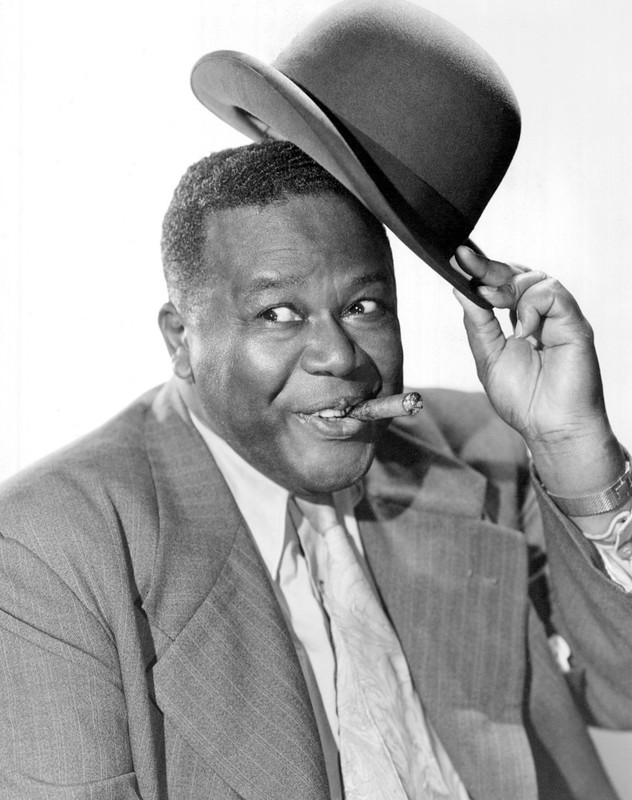
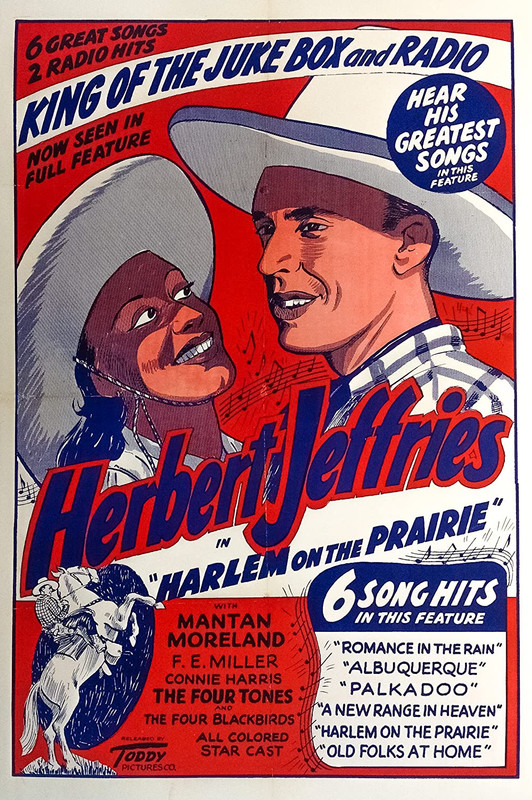
To secure funding Jeffries approached Jed Beull, a white producer of independent B-Movies who had previously worked for Mack Sennett and who had already produced a B-Movie western. Jeffries offered himself as the star with Williams playing the comic relief sidekick, a role common to Autry movies. Added to the cast would be two more veteran performers from black vaudeville. Flournoy Miller (1885-1971) was another comic from vaudeville who had been successful enough to start his own production company and write a musical "Shuffle Along" with music from early Jazz and Ragtime composers Eubie Blake and Noble Sissle which became a long running Broadway hit in 1921. He would later work on other musicals with Jazz greats James P Johnson and Fats Waller. Miller would also be credited with co-writing the script for Jeffries first film. Mantan Moreland (1902-73) was yet another vaudeville comic and sometime partner of Miller who had made the transition to film with a string of comic relief sidekick roles including in mainstream white films where he was known for his moonfaced eye-rolling double-takes and squeaky voice. Also added were a band Dusty Brooks & the Four Tones. Although the cast would be entirely black the director would be Sam Newfield, a white director with a long career making low budget quickies for poverty row studios and independents, sometimes as many as twenty year meaning a shooting and editing schedule of less than three weeks. Obviously this meant shooting only a couple of takes for each scene and keeping the cameras fairly static to make the setups fast and editing simple with results we can see, but he could be counted on to deliver a finished product on time and on budget.
The resulting film "Harlem On The Range", was shot in less than a week in 1937 on a California dude ranch on a low budget. The plot for this film (which is not currently available) was boiler-plate B movie Western fare; A former outlaw (played by Williams) returns home to find the gold from a robbery he was involved with twenty years before that resulted in his entire gang being killed and the gold being hidden. But a rival gang is also searching for the gold and Williams is shot and again escapes albeit mortally wounded. He is found by a younger cowboy (Jeff Kincaid, played by Jeffries) who tries to save him and before he dies Williams tells him about the gold who promises to share the gold with Williams' daughter. Jeffries goes off to find the gold accompanied by the comic relief team of Miller and Moreland and the Four Tones who provide backup for a couple of musical numbers sung by Jeffries. In the end Jeffries finds the gold, vanquishes the bad guys and gets the girl.The movie was shown in black communities in the South as well as black neighbourhoods in Northern cities where it was a hit, it was further helped by a friendly review in "Time Magazine" and it easily made back it's investment of $50,000 and would lead to three sequels.
Like most B-Movie Westerns these movies are not objectively very good. These films all have simplistic plots, cliche dialogue, wooden acting, clumsy fight scenes, muffled sound and static direction in which actors spend most of the time standing around and stiffly reciting their lines. Any actual action is shot from far away and tends to look awkward while the comedy has not dated well being of the Amos & Andy school of dumb jokes and exagerated double-takes from Moreland. However it should be noted that while these movies may be cheap knockoffs of Gene Autry Westerns they are not really any worse either since all that could easily be said of the films of Autrey and Roy Rogers as well.
"I'M A HAPPY COWBOY"
In fact it could be said that the Jeffries films are slightly better for two reasons. One is Herb Jeffries himself; While he can hardly be considered a great actor he is objectively better than Gene Autry or Roy Rogers (or for that matter Tom Mix in his one talkie serial), tall, handsome and smooth, usually dressed in stylish black with a white hat (of course) he has genuine screen presence in a way that the affable but bland Autrey and Rogers did not and unlike them he looks like he could actually hold his own in a fight whereas Autry and Rogers essentially looked like your uncle playing cowboy. Neither could throw a convincing punch and Autry was so uncomfortable on horseback that he frequently fell off. Jeffries could convincingly take out the bad guys and get the girl.
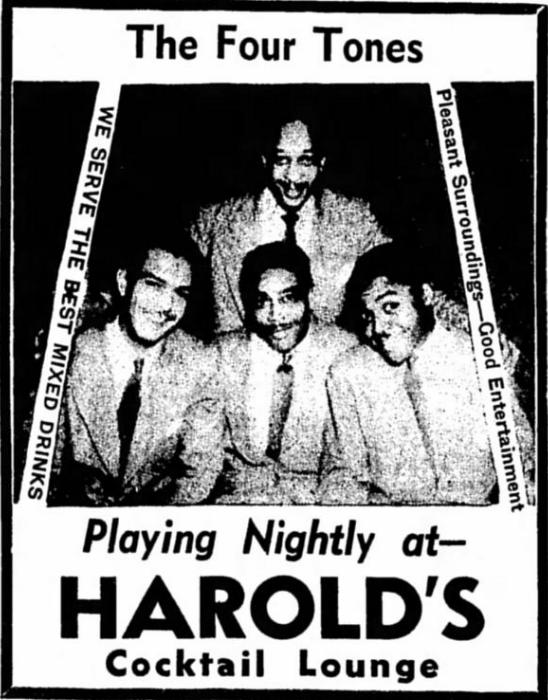
The other advantage Jeffries had was being a better singer and having better music than Autry and Rogers. Both Jeffries and Autry had started out as singers but where Autry had begun singing reedy cowboy songs on the radio and Rogers tended to rely on his partner Dale Evans to sell the songs, Jeffries had been a successful Big Band singer with some of the biggest names in Jazz in prestigious clubs all night long in front of demanding audiences who expected higher standards and had little interest in cornpone jokes. The Four Tones, led by Dusty Brooks, who would appear in all his movies, were a similarly professional group in the genre of pre-Doo-Wop R&B groups like the Ink Spots and Mills Brothers. Autry's backup bands, usually led by Smiley Bates, also a songwriter as well as filling the comic relief sidekick role, were solid enough but did not have the same variety as Jeffries and the Four Tones and their music just hasn't dated as well.
These films, both black and white existed in a strange alternate universe in which the Old West of the Victorian Era (or at least a highly simplistic and sanitized version of it) lived side by side with the modern world of the early forties leading to scenes with cowboys riding horses and wearing six-shooters who will suddenly have access to modern telephones, radios, cars and planes. The women usually wear casual dresses of the forties while the heroes wear the finest in western wear; satin cowboy shirts, gleaming cowboy boots (worn outside their tight matching pants), ten gallon hats, bolo ties and holsters, all impeccably spotless. On the other hand the villains could be dressed as forties gangsters and bankers.
These films, like similar "Race" B-movies of the era including the all-black horror film "Son Of Ingagi" (which I also wrote about here) also exist in a universe where there are apparently no white people at all. Every character, hero or villain, cops, judges, doctors, preachers, singers or businessmen are all black. White characters are not even mentioned. Black audiences presumably would have been quite happy to see white characters as villains getting their comeuppance but such films would never have made it to the screens in the south where many black theatres were owned so the villains, whether they be greedy businessmen, corrupt cops, mobsters, bootleggers or caddish lounge lizards are also black.
A year later the second film in the series "Two Gun Man From Harlem", would be made by a different white producer and director in Robert Kahn, another B-Movie veteran who would also make the rest of Jeffries' westerns. Jeffries had wanted to keep the same name as in the previous film and make the character a regular but the change in studios meant he lost the rights to the name Jeff Kincaid and so would take the name of Bob Blake for the rest of the series. The character was otherwise the same as before; cool, confident good guy wearing an immaculate costume and white hat, however for the next film he would play two characters as he would double as the villainous outlaw; The Deacon.
"TWO GUN MAN FROM HARLEM" (1937);
Directed by Richard Kahn
CAST:
Herbert Jeffrey ~ Bob Blake/The Deacon
Margaret Whitten ~ Sally Thompson
Mantan Moreland ~ Bill Blake
Spencer Williams Jr. ~ Butch Carter
Clarence Brooks ~ John Barker
Stymie Beard ~ Jimmy Thompson
Mae Turner ~ Mrs. Ruth Steel
Jesse Lee Brooks ~ Sheriff
Rose Lee Lincoln ~ Dolores
In the plot, which is more complicated than the usual B-Movie Oater fare, Jeffries plays Bob Blake, a typical Cowboy good guy who is soft spoken, honest, upright, popular with women and children but who is nevertheless framed by by Ruth Steele, the two-timing wife for the murder of her husband. Forced to dodge a corrupt sheriff (Williams), Blake flees and hitchhikes to Harlem (that must have been quite a trip from the Western Plains!) where he drops in on a speakeasy where he flirts with the girlfriend of a feared gangster known as The Deacon, also played by Jeffries. Even though he's in Harlem the Deacon dresses as an Old West badman in all black with a frock coat, string tie and slim stetson. While Blake is out of town Sherrif Butch is paid off by a local businessman John Barber (Clarence Brooks) to kidnap Ruth Steele who knows about the banker's crooked deals including an attempt to foreclose on the homestead of Sally, who Blake is in love with, and her young son. After a short trip he returns to the West disguised as the Deacon who we learn has mysteriously disappeared and is believed dead. Mantan Moreland plays his brother Bill who is also the ranch's cook who sees through the disguise even though Moreland and Jeffries look absolutely nothing alike. Blake confronts Barker and the Sherrif, who try to stage an ambush, Mrs Steele is rescued and confesses, Sally is able to pay off her mortgage with money Blake robbed from Barker, Blake saves the girl, clears his name and saves the day.
One difference between the films of Jeffries and those of Autry, Rogers or Hopalong Cassidy was in the audiences for these films. The white B-movie westerns were really for kids. Usually shown on Saturday matinees these films, and others like them with or without music, had built up a devoted, even fanatical young following who not only came out every week but bought a whole trove of related merch; cowboy hats, boots & bolo ties, cap guns & holsters, pocket knives, badges, buttons and patches, lunchboxes, decoder spy rings (because cowboys were known for their secret codes), rings with compases or magnifing glasses (to start campfires with of course). There were also comic books, comic strips, story books and radio shows, endorsements for breakfast cereals, cookies, oatmeal etc for an entire, hugely profitable empire that would make the likes of Gene Autry and William Boyd (AKA Hopalong Cassidy) multi-millionaires off of movies that cost very little to actually make. Note; Roy Rogers and Clayton Moore (AKA The Lone Ranger) did not make out nearly as well due to bad contracts that meant that they never owned their own names.
Herb Jeffries was aware of this action but the smaller, geographically and demographically limited black audience was less desirable for advertisers and investors so he was never able to capitalize on marketing his character. Unlike the white singing cowboys his audience was less focused on kids with his stories having more romance (however chaste) as is seen in this film and the music being closer to the R&B and Jazz ballad roots that Jeffries and the Four Tunes came from. "Two Gun Man from Harlem" has a subplot involving adultery and murder which would not show up in a Gene Autry or Roy Rogers film nor can either of them they be seen as romantic leading men even though Rogers was actually married to his leading lady Dale Evans. The tall and handsome Jeffires on the other hand could be marketed as a leading man however laundered for the mixed audience of kids and adults these films aimed at. However clumsily.
One of the oddities of this "Two Gun Man From Harlem" is that even though Jeffries was known as a singer he only actually sings the opening song, "I'm A Happy Cowboy" which would become his theme song, and warble a short ballad which he sings in a formal tenor. As for the rest of the songs two are done by his backup group the Four Tones with another from Paul Blackman, a one-man-band. His remaining films would feature more music.
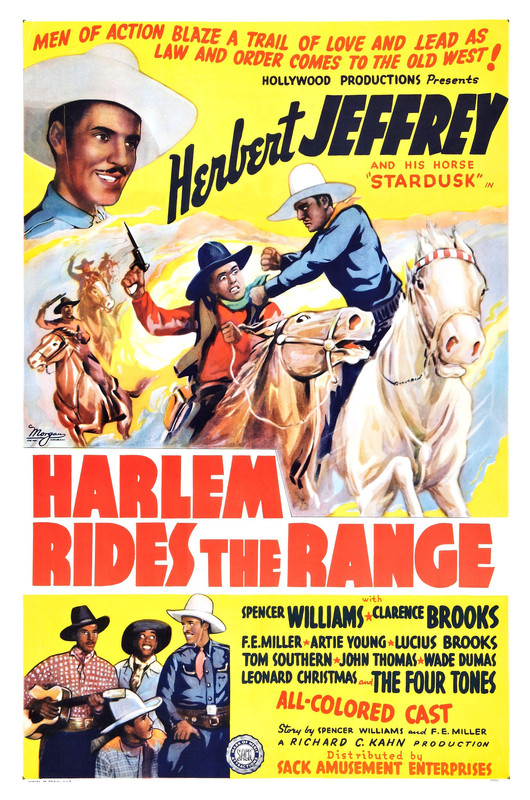
"HARLEM RIDES THE RANGE" (1939)
Directed by Richard Kahn
Herb Jeffries ~ Bob Blake
Lucius Brooks ~ Dusty
F.E. Miller ~ Slim Perkins the Cook
Spencer Williams ~ Mr Watson
Clarence Williams ~ Bradley
Artie Young ~ Miss Margaret Dennison
For this film Jeffries once again plays Bob Blake although Mantan Morleand as his brother is now absent. Also returning was Spencer Williams who also wrote the script but only plays a minor role and as the villian Clarence Brooks playing essentially the same role as in the previous film and apparently in the same costume. With Moreland out his role as comic relief is filled by Lucious Brooks as Blake's sidekick Dusty and FE Miller as Slim Perkins the ranch cook (any resemblance to actor Slim Pickens is coincidental, he was as yet unknown). As usual along for the ride are the Four Tones.
Plotwise this film also recycles a part of the last film with Blake once again being framed for murder. Blake and Dusty are roaming cawboys in search of work when they stumble on to the farm of local homesteader Jim Dennison who was apparently murdered while being shaken down by local banker/landowner Bradley (Clarence Brooks) to whom he owes money and who has designs on the secret radium mine Dennison is hiding. Dennison also has a daughter (Artie Young) whose picture Blake sees and falls in love with. This time Blake actually gets arrested (but not before crooning a couple of numbers in a light tenor voice) and sent to jail but of course he escapes to clear his name and rescue the daughter. The climax comes in a fairly confusing gunfight in which nobody appears to actually die. This film is simpler than "Two Gun Man" and without the implied adultery subplot. Infact while in the previous film Jeffries had a romantic involvement with two women (albeit in the most chaste way possible) this time the girl doesn't even show up until the end and instead he spends the film mooning (and singing to) a photograph making this film as squeaky clean as any Roy Rogers film. Unlike "Two Gun Man" this film doesn't have the jarring shifts in time from the old west to modern Harlem and back, although a radium mine is an odd choice, in fact it has nothing to do with Harlem at all other than existing in an all-black universe that Harlem represented from the 1920's to the 1940's.
Besides having a couple more songs this film also spends more time with the comic relief characters of Dusty and Slim. This makes for some confounding questions for modern viewers. Like Mantan Morleand, Lucious Brooks and FE Miller came from the same comedy school of gentle slapstick, exaggerated facial expressions and voices and the stereotypes about lazy, perpetually hungry, loyal but not too bright and not too brave sidekicks we associate with black comic sidekicks of the era like Steppin Fetchit or for that matter Manton Moreland himself in later films made for white audiences. These types of roles are seen today as demeaning racial characters left over from the minstrel era, which is largely true but what is questionable about these films is that they were made for a strictly black audience, few if any whites would have seen them, and yet these characters are still being used. However it must be remembered that the white westerns of the same type almost always had similar oafish sidekicks, usually played by Smiley Bates or Gabby Hayes and audiences expected such antics. These were also audiences who were only a decade removed from the era of vaudeville and silent film slapstick. Also these characters are different from the hapless Fechit with Dusty and Slim riding to the rescue and taking part in a gun battle, which is something Steepin Fechit or Mantan Moreland would never have been shown doing in a film for white audiences. They may not be the heroes of the film but they are treated by Blake as trusted friends rather than strictly buffoonish clowns.
Jeffries would make one more film in the same year with the same director and almost the same cast suggesting they were probably filmed in rapid succession.
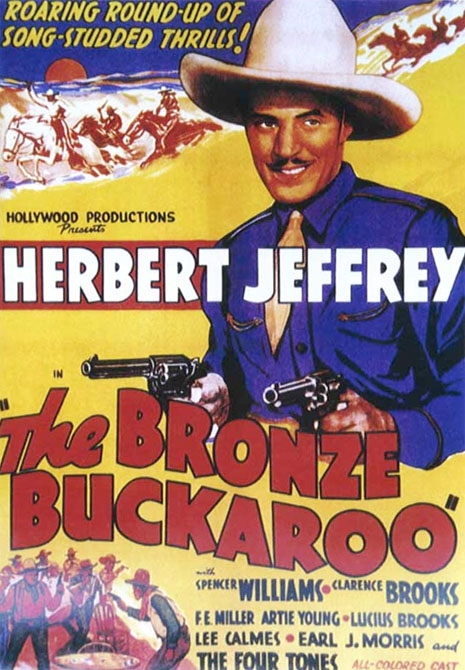
"THE BRONZE BUCKAROO" (1939);
Directed by Richard Kahn
Herb Jeffries ~ Bob Blake
Lucius Brooks ~ Dusty
F.E. Miller ~ Slim Perkins the Cook
Spencer Williams ~ Pete
Clarence Williams ~ Buck Thorne
Artie Young ~ Betty Jackson
All the major players from the last film have returned with Lucious Curtis, F.E. Miller, Spencer Williams, Clarence Brooks and Artie Young all played their usual roles. By this point the series was running out of gas and they seem to be going through the motions with the plot, when they get around to it, being meandering and dull. While the film ups the ante in having not one but two confusing gunfights little actually happens and the film spends too much time on a subplot involving the comic sidekicks being even more dense than in the last film. Williams plays the chief villain again with Williams as his minion and Young as the Damsel in Distress. Although Willams is on board to act he is not credited on the script this time. Maybe he was working on something else, he does seem to have been rather busy. At any rate his input into the script is missed here. Nobody has ever said that Spencer Williams' scripts were clever, witty or suspenseful, but he was a professional and knew how to establish the plot, stay on topic and wrap things up in an efficient manner. Here the movie takes too long to get to the plot, then rushes through it in a haphazard way. Meanwhile the film spends more time with the comic relief duo than it does with the hero.
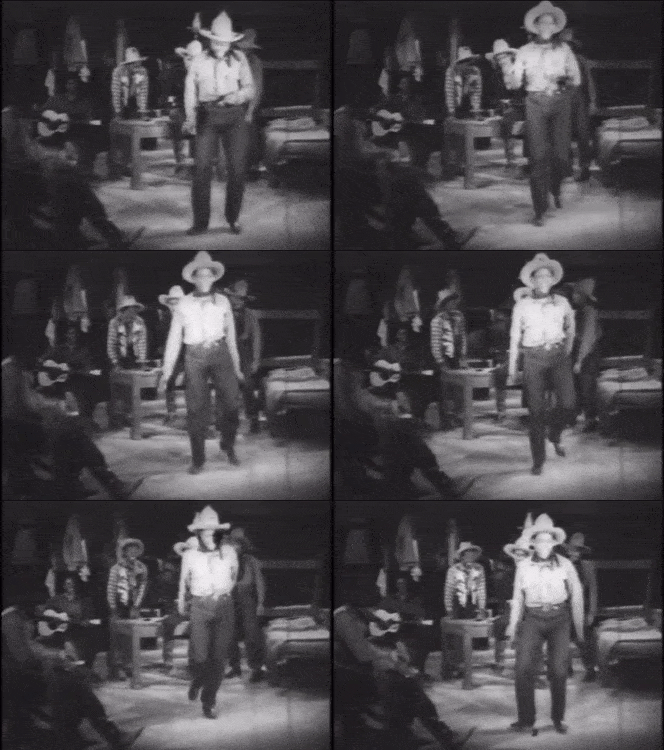
However while the film may be the least of Jeffires westerns it does have two noteworthy moments. One comes during a scene in a saloon where the entire room full of gambling cowboys sings "Almost Time For Roundup" while a tracking shot moves through the bar. This is actually a fairly complex shot that would have taken time to stage and shoot and is unusual in a low budget quickie film of this sort, black or white. Then there is the song itself; superficially in a similar vein to the Western Ballads of the famous white vocal group the Sons Of The Pioneers (of whome Roy Rogers had been a member) at least subject wise, is sung as a call & response style having more in common with black traditions of Gospel and Blues than would be found in a white western film. The other track, "Payday Blues" is an upbeat vocal track similar to some of the more upbeat number of vocal groups like the Mills Brothers along with a tap dance solo which is distinctly not western but is reasonably contemporary for black audiences.
"IN MY HEART"
This would turn out to be the last of Jeffries western films either due to less audience demand, the movies not making enough money or his own boredom with the limits of the project. He would not lack for work however returning to his singing career for the throughout the forties and fifties as a Big Band singer for several record labels. In his early years he sang with the lilting tenor he used in his films but afterwards as musical tastes evolved into a deeper baritone voice as he worked with more blues influenced musicians like pianist Joe Liggins and His Honeydippers with whom he scored a chart hit in 1945 with "Left Good Deal In Mobile". After the war like many other black American artists he spent time touring Europe.
The coming of the Rock & Roll meant that many R&B band singers like Wynonie Harris, Roy Brown, Louis Jordan, Slim Gaillard, Brook Benton and Big Joe Turner would join in but Jeffries was too smooth both as a singer and in his image to credibly be a Jump Blues shouter. Instead he cashed in on another craze as in the late fifties there was a brief fad for Latin Jazz and Calypso leading to a few forgotten movies including Jeffries' own "Calypso Joe" in 1957 starring Angie Dickenson. The Calypso craze didn't last long however and Jeffries would return to his career singing Jazz ballads and marrying burlesque star Tempest Storm.
His status as the first Black Western star would not be totally forgotten however and in 1969 he would make an appearance in the TV series "The Virginian" as a villainous gunslinger. He would make a few other non western TV roles as well. In 1979 he would be added to the Black Filmmakers Hall Of Fame and the Hollywood Walk Of Fame. In the 1993 Black western "Posse" (directed by Mario Van Peebles) a clip of Jeffries from one of his films can be seen during the closing credits although for some reason he is not in the film itself. Perhaps at age 83 he was too old or ill to work. He died in 2013 aged 100.
As for the other main players; Spencer Williams would continue with his varied career as actor and filmmaker making films from genres as different as religious films "The Blood Of Jesus" (1941), "Go Down Death" (1944) musicals "Juke Joint" (1947) and "Beale Street Mama" (47) along with the first all Black horror film "Son Of Ingagi" (1940) (which I also wrote about here) all done on very short budgets and shown entirely to black audiences. He became best known however from the hit TV series "Amos & Andy" from 1951 to 1955. He did not originate the role of Andy and in fact both roles had originally been played on the radio by white comedians Freeman Gosden and Charles Correll who owned the rights to the characters but obviously could not play themselves on TV and so recruited experienced black vaudeville and film actors largely unknown to white audiences to play them with Williams as Andy. The show was an immediate hit with, white audiences at least. However the characters were obviously stereotypes left over from Minstrelsy of Blacks as sneaky, lazy, illiterate, hustlers speaking in exaggerated accents that were already seen as retrograde and offensive to Black audiences who had already been offended by the long running radio series. Once the series wrapped up, Williams, by now thoroughly typecast in a role that Blacks found deeply demeaning and even many whites found problematic, found little employment. The chain of Black owned theatres that he had provided films for in the 1940's was largely gone and the Black Vaudeville comedy circuit was barely a memory. He made do with some stage and comedy work, writing his memoirs and living off his WW1 US Army pension. At the time of his death in 1969, aged 76 he was remembered only for his work in "Amos & Andy" with his many Black films being almost completely forgotten (they had never been seen at all by white audiences) and considered lost until some of them were found in a warehouse in the 1980's and restored.
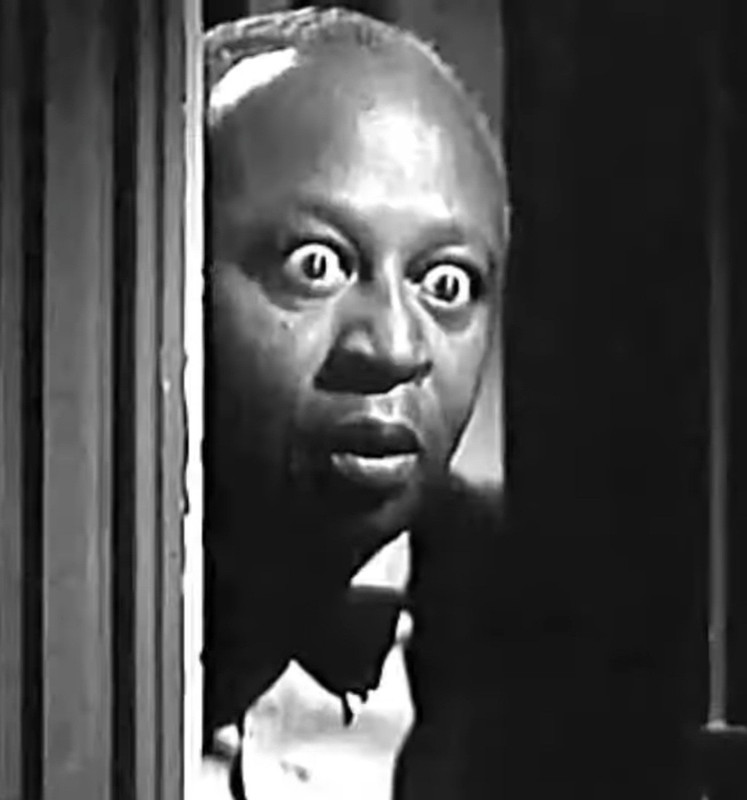
MANTAN MORELAND
Similar fates followed the other comic actors from the series; Mantan Moreland would have a prolific career outside the closed world of Black Cinema in Hollywood itself invariably playing the same basic comic relief role in b-movies ranging from comedies to musicals to crime movies. Notable film roles included the recurring role in the Charlie Chan series and a couple of zombie films with John Carradine. By the end of the fifties his typical comic role of exaggerated pop-eyed reactions and reddy high-pitched voice had gone out of fashion but he was still respected for his comedic skills that Moe Howard seriously considered inviting him to join the Three Stooges to replace the ailing Shemp Howard as the Stooges were fans of his work however the studio insisted on adding the white Joe Besser. Moreland still had better luck than Spencer Williams finding work in smaller roles as well as touring Black night clubs with comics Nipsey Russell, Redd Foxx, Moms Mabley and Bill Cosby. Carl Reiner was also a fan and gave him some work. He died in 1973 aged 71.
Flournoy Miller made no other films after the Jeffries series but he continued to work on Broadway stage in further productions of "Further Along" and a production based on the life of Eubie Blake. He would also work with Spencer Williams on the "Amos & Andy" series as a writer. He died in 1979 aged 86 and was awarded a posthumous Tony Award in 1979.
Clarence Brooks actually had a long career dating back to the very first Black movies in 1916 but he made only two more movies, both low budget quickies. Both were for the Black theatre circuit, one with Mantan Moreland. With the circuit drying up in the 1940's he found work in Hollywood in a few bit parts. Unlike Moreland and Miller he was not a stage or comedy performer and by the 1950's he quit show business, dying in 1969 aged 74.
The legacy of Black comic actors of the era like Williams, Moreland and Miller (along with contemporaries like Stepin Fetchit) is complex. For decades their routines of exaggerated eye-rolling and double-takes, playing characters pulled from from Minstrel Show stereotypes of shuffling servants or shuckin' & jiving hustlers, lazy, cowardly, gullible, childlike and perpetually hungry were seen as demeaning throwbacks to a shameful era and an embarrassment. However some modern black film historians have given them a more sympathetic take noting their ability to have long careers in an era of open segregation, the subtle ways they inserted humanity into their roles and the genuine respect in which they were held by their peers both Black and White for their talents. Moreland was praised as a mentor to a future generation of black comics like Redd Foxx and Nipsey Russell while Spencer Williams is noted for his work as a director and filmmaker for his success in getting a string of all-black films made and released with his religious films having deep meaning for Black American culture of the mid-twentieth century.
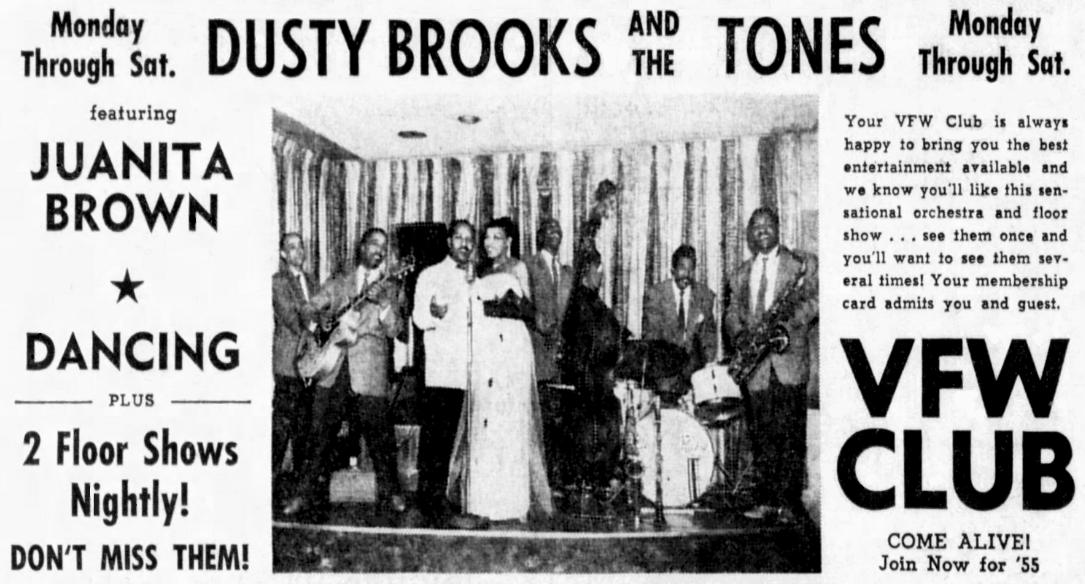
Although he also played the comic sidekick role, the career of Lucious "Dusty" Brooks would be more focused on music. Born in 1911 in Oklahoma and based out of Los Angeles, he made only a few more minor film appearances, usually in brief singing roles and sometimes with the Four Tones, including "You'll Never Get Rich", a Fred Astaire film. His film career ended in 1947 then he largely stayed in Los Angeles and continued his musical career recording several singles for various labels along with a group billed as the Four Tones, although whether it's any of the same Four Tones from the westerns is unknown. Musically these singles are in the sort of Urban Jazz/Blues style popular on the West Coast in the post war era with a vocalist and a small band. Among the last of these is a mysterious single released by the iconic Sun Records label in 1953. Based in Memphis and run by the flamboyant Sam Phillips, Sun Records was soon to be famous as the label for Elvis Presley, Johnny Cash, Jerry Lee Lewis, Carl Perkins and Roy Orbison among others. However some of it's first few records were actually licensed from smaller labels from out of town or demos sent in from elsewhere with this record, only the seventh put out by Sun, reportedly coming from Los Angeles where Brook's other recordings were done. Sam Phillips' record keeping was notoriously spotty and since the record was not a hit there was even less reason to take note of it but the singer is billed as Juanita Brown and the male on the duet as Joe Alexander. Brown was considered an up and coming Jazz singer while Alexander was a veteran Big band singer based in Los Angeles.
DUSTY BROOKS & HIS FOUR TONES w/JUANITA BROWN & JOE ALEXANDER ~ "HEAVEN ON FIRE" & "TEARS & WINE";
Previously Brooks had been the band leader and singer but at this point they were acting as Brown's backing band with Brooks keeping top billing as the bandleader, a not unusual practice at the time. Though we know from ads placed in various black newspapers that Brooks and his band spent the early fifties touring through the south, southwest and midwest, including with Brown in 1953 and 54. We also know there was also a 1953 recording session listed as happening in nearby Nashville which were never released. This record however was probably recorded back at Los Angeles though as that was Alexander's base and there's no indication that he ever toured with the band. It's possible that Brooks simply dropped it off at Sun while his band was touring through Memphis. That Brooks has the main billing on this record suggests he himself cut a deal with Phillips as the ads show Brown as having equal billing.
He may have even used a previous as yet unreleased recording to make a quick deal to cover expenses if the tour was having problems. In fact this was Brooks' last recording and by 1955 ads show Juanita Brown is now touring with a new band led by Art Maryland who had been the guitarist in the Four Tones so it's obvious that Brooks was now gone. Neither Brown or Maryland surfaced again and neither would Brooks for almost a decade until a brief mention in the 1963 minutes of the Los Angeles chapter American Federation Of Musicians notes that Rusty Brooks has been reinstated as a member. It would seem that after 1954 he quit the road, returned to L.A. and at some point retired, long enough to have let his membership lapse before changing his mind in 1963. Thereafter he drops out of sight again. By this point he was in his fifties which is hardly old but the musical world had changed in a decade with Rock & Roll and Soul replacing the R&B he knew. Probably he found work in a little Jazz club (thus the need to renew his AFM membership) but did not record or appear in movies again. At some point he retired again and dropped out of sight for good until dying in Missouri City, Texas in 1999 aged 88. The career of Dusty Brooks is not that different from dozens of other similar band leaders of the era just before Rock & Roll like Doc Wiley, Todd Rhodes or Art Hodges; a bunch of decent recordings for small local labels, backing up minor singers and a life on the back roads of America. Where Brooks gets his footnote is from the four films he made with Jeffries and the one obscure record he made for Sun Records, a label soon to be famous. Of that record, due to it's status on Sun Records and it's rarity, copies can sell for several thousand dollars, which is probably more than Brooks made for his entire film career.
DUSTY BROOKS ~ "PLAY JACKPOT"
A final word about Paul Blackman, the one-man-band from "Two Gun Man From Harlem". These type of one-man-bands were an odd niche genre of the era that included the likes of Dr Isaiah Ross who would also record for Sun Records in it's early days and Bongo Joe Coleman who recorded an album for Arhoolie Records in the sixties. Blackman was originally from New Orleans and seems to have travelled around making his way to Hollywood and later up to New York where he would later record an album for the Smithsonian/Folkways Records label in 1957. What happened to him after that is unknown but it's probably safe to assume he's not arround anymore but thanks to Folksways practice of always keeping their titles in print his album is still available.
PAUL BLACKMAN ~ "BASIN ST BLUES"
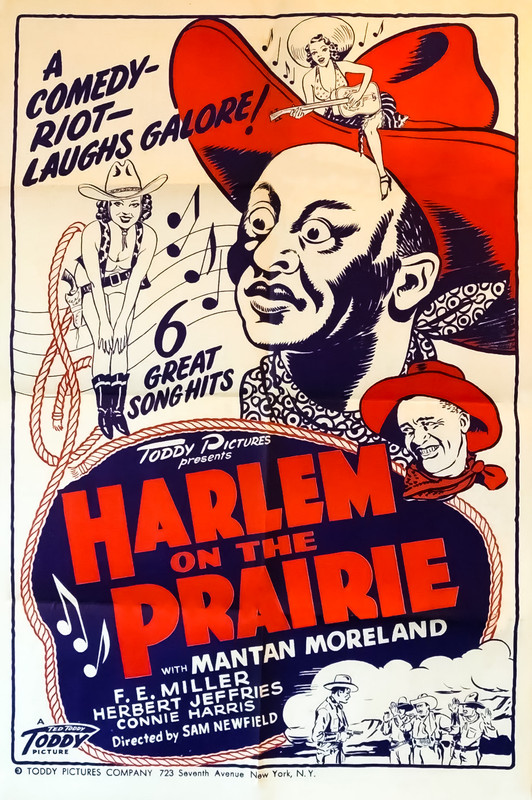
NOTE THAT MANTAN MORELAND GETS TOP BILLING ON THIS POSTER
"Down On The Street Where The Faces Shine" - Iggy Pop (1970)
====================================================
In a previous article I wrote about the the genre of "City Symphonies" (found here), silent films such as "Berlin Symphony Of A Great City" (1927) "Regen" (1929) and "Man With A Movie Camera" (1929), documentaries using candid cameras to tell the story of a day in the life of a city. Another more dramatic genre of silent films centered in Germany would tell a different side of the city. In a series of unrelated films, usually including the word "street" in the title, such as "Die Strasse" (AKA "The Street", 1923), "The Joyless Street" (1925), "Tragedy Of The Streets" (1927), "Uberfall" (1928), "Ashphalt" (1929) and "Beyond The Street" (1929) the city would be portrayed as a dark and corrupting presence that would tempt respectable middle-class people into self destruction, where sex is a commodity, selfish capitalists prey on the people and the police are the only stable force preserving some sort of order. These films created a sensation in Europe but were little seen in the English speaking world being either banned outright or heavily edited due to their themes of frank sexuality and decadance.
The underbelly of the city had been explored in film before including in notable films by DW Griffith including "The Musketeers Of Pig Alley" (1912) and the "Modern" segments of "Intollerance" along with the violent Raoul Walsh film "Regeneration" (1915). These films showed the slums of New York and it's denizens, especially gangsters, in a realistic way as dark, gritty, grimey and violent with plenty of villians and victims but few heroes. These films seemed to be shot at least in part on the actual slum locations instead of the usual articial studio backlots and with the characters looking suitably grubby and authentic. The Street Films were different from the Gangster films in using characters from outside the slums as their focus. The characters in the earlier gangster films were working class inhabitants of the same city as the gangsters whereas in the Street Films the protagonist characters were usually repsectable middle-class men who found themselves tempted by the flashing lights and fleshpots of the bad side of town into leaving their family and boring jobs. These characters were in the city but not of it and their attempts to dive into the deep pool of sin invariably ended up badly. Women in these films usually were presented as fallen women and either served as tragic figures beyond redemption or temptresses who lead men astray.
This fascination with the seedy underbelly of ths city and it's corrupting influences was not of course unique to Germany. The character of the Vamp which became popular in the 1910's in America as personified by Theda Bara could also be seen as a temptress who lured men to their doom. But the Vamps were essentially fanatasy figures, so over the top as to distance themselves from the ugliness they only implied and thus becoming harmless escapism. The Street films by contrast were too realistic and harsh to be seen as mere diversons and were more like warnings. The demographic shift as modern societies became increasingly more urbanized and multi-cultural was also not unique to Germany either nor was it new as these same trends were happening elsewhere. In the 1920's the reaction of rural and small town America to the coming of the Modernism woud lead to a wave of reactionary politics with the KKK, the first Red Scare, Prohibition, and laws restricting or even banning immigration, birth control and evolution. However American films and music would embrace modernism with the Jazz Age, Flappers and the decadent films of Cecil D DeMille and Erich Von Stroheim in place of the Victorian sentimentalizing of DW Griffith, although Victorian rural escapism would still remain popular in the specific American genre of the Western films and rural music forms with Country, Blues and Gospel records being big sellers. In Scandinavia the film industry, so influencial in Germany, would continue to make quiet, moody films set in rural and small town life. While the in Italy films were still focused on escapist epics set in ancient Rome or the Rennaissance.
The major difference is probably that while the shift towards urbanization and modernism (signifigantly including more rights for women) would lead to stress on all societies as rural and small towns saw their political, economic and cultural power permanantly shift away, only in Germany (and Austria) was this trend also connected with utter defeat in war and a failed social revolution. Imperial German Berlin was not really all that different from Weimar Berlin but Imperial Germany and Austria were run by an elite of landed aristocrats, landowners and generals. By 1919 this same elite had been overthrown after leading the nation into a disasterous war and this revolution in turn led to counter revolutions, assassinations, a general strike and ecomonic chaos that had only just somewhat stablizied by 1923. However unlike in the Soviet Union while the old order had been overthrown it had not been destroyed and had been able to shift blame for their defeats on the "Stab In The Back" led by the enemies within; Jews, Marxists, Socialists, Anarchists, pacifists, intellectuals and artists, all of whom lived in the city which, at least for conservatives, took on a darker and more sinister aura than even in America. It's worth remembering that even during the rise of the Nazis cities like Berlin and Vienna remained hostile or indifferent to them and continued to vote overwhemingly for the Socialist, Communist and Democratic Parties, and Hitler and the Nazis in turn loathed Berlin and Vienna, cities where he had also not coincidentally failed as an artist and Joseph Goebbles had failed as a writer. In fact Hitler's plans for after the war included abandoning Berlin and building an entirely new capital city from scrap called "Germania" and filling it with bombastic buildings and statues done in the approved brutalist-classical style so beloved by fascists to this day.
Even liberal minded German artists had been portraying the city as den of iniquity even before the war as shown in the Cabaret scene and personified by the character of Lulu created by playwright Frank Wedekind and later in films like the iconic "Pandora's Box". In these cases the while stolidly middleclass characters might indeed be tempted and destroyed by the sin of the city the subtext of such plays and films was on the hypocracy of the stuffy, moralistic, and conformist middleclass society which saw itself as above such decadance while still flirting with it. The characters of the wealthy business men who slummed with the prostitutes and gamblers and flirted with danger in films like "Pandora's Box", "Diary Of A Lost Girl", "Dr Mabuse The Gambler", "Alraune", "The Love Of Jeane Ney" and "Abwege" were not naive innocents, they were clearly exploiting the women they had affairs with and if some of them came to a bad end they were hardly blameless. The message of the Street Films was different however; the bourgiouse here may have been dull as dishwater but they were still inherently conventional and their fall was to be seen as tragic or at least a moral lesson. Friedrich Kracauer in his classic study of Weimar films "From Caligari To Hitler" makes the case that films like this shared or presaged certain emotions in the middle-classes that led them to later support the Nazis and while this analysis is perhaps a shade too simplified, these are in no way Nazi or Fascist films and they are neither racist or anti-Semitic nor do they glorify violence or militarism, one can see his point. These films portray the fears that many essentially provincicial middle-class Germans had about the cities; that they were dens of sin, crime, poverty, dirt and corruption. The city is full of unsavoury if alluring characters; criminals, gamblers, alcoholics, beggars, artists, musicians, dancers, sexual deviants and above all wanton women, where the ruling class are corrupt exploiters and where the police were seen as the only effective force to provide security and even morality. These films did not advocate for any solutions to the urban malaise but merely presented a vision that was both alluring and frightening and then in addition presented the figure of the police as saviours. Fascism took that those fears, amplified them, gave them scapegoats and then proposed an authoritarian solution.
The first of these films was "Die Strasse" made in 1923, just as the German economy was starting to stablize from the chaos of the post World War One economic collapse and the hyper-inflation crisis. Although the film was being shot while this crisis was unfolding the film makes no reference to it. Instead the main character appears to be living a stable but boring life with his stable but boring wife but when tempted by the lights and action of the city he deserts his wife and throws himself into the sex and gambling dens of the city with disasterous results.
"DIE STRASSE" (1923);
Directed by Karl Grune
Eugen Klöpfer as a Middle-aged Man
Lucie Höflich as His Wife
Aud Egede-Nissen as a Harlot
Max Schreck as the Blind Man
Anton Edthofer as a pimp
Hans Trautner as a Gambler
Leonhard Haskel as a Businessman from the Provinces
Sascha as the Child
PLOT SYNOPSIS (spoiler alert);
Eugen Klöpfer is a married, middle-aged, middle-class man living comfortably with his wife in a flat in the city. He is bored with his loyal but plain wife and tempted by the exitement he sees in the streets out side where prostitues solicit clients. He dreams of a life of fun and excitement but his wife sees only noise and chaos. That night as his wife serves dinner he runs out to explore the city while his wife stays behind. A prostitute tries to tempt him but he has a vision of death and flees the scene. Meanwhile in a more spartan flat an old Blind Man (Max Schreck) is left to care for a young child while the Father (Anton Edthofer) goes out on the town. The Blind Man takes the Sacha out for a walk while the Father meets with a woman (Aud Egede-Nissen) and another man (Hans Trautner) at a cafe. The Husband goes window-shopping and passes a travel agency where he pauses and takes a check out his wallet and considers it. Aud and Anton have spotted Eugen and she goes to lure him away claiming she has been robbed of her money. He takes pity on her and they leave together while Anton and Hans follow. After dodging a policeman Aud takes Eugen to a park where they sit. Meanwhile Max and Sacha are also window shopping when Sacha breaks away and runs off into traffic and Max loses him. Sacha is rescued by a policeman who stops traffic and brings him back to the police station where the police dote on him while Max searches futiley for the child before getting knocked down in the street and helped up by passers by. Back in the park Eugen and Aud are interupted by an older couple and she leaves. Leonhard Haskel is an older, wealthy man from out of town who arrives at a busy cabaret where he flirts with one of the hostess women. Aud heads back to the cabaret with Eugen in tow. As they sit at a table in a private booth they are joined by Anton and Hans who pretend they do not know Aud who had previously signaled them. They are then joined by Leonhard who has been ditched by the hostess girl he had been with, he has been lured over by Aud and Eugen becomes jealous furtively taking off his wedding ring. Back at the tenement a police officer has returned Sacha home and left him with an older woman who lives across the hall who puts him to bed, eventually Max is also helped home. At the cabaret as the guests get drunker Eugen tries to leave but is lured back and where he confronts Leonhard over the affections of Aud. Anton and Hans drag Leonhard away to another booth where a high stakes card game ensues which is soon joined by Aud and Eugen. As the game drags on Eugen loses his money including a large check he has been holding which is not actually his. When, upset, he explains this to Aud she abandons him and he offers up his wedding ring in an attempt to win back the check which he eventually does and leaves the game. Anton and Hans have ended ended up losing at the card table to both Eugen and Leonhard and as Eugen leaves the cabaret they follow him while Leonhard stays with Aud. She takes him back to her appartment. Once inside she leaves him alone in a sitting room and summons up Eugen who is passing out side and invites him up to her bedroom. Anton and Hans who have been following him see this and barge into the appartment where they are confronted by Leonhard who is still waiting for Aud and a fight ensues in which he pulls a gun and is stabbed to death by Anton. Sacha wakes up and hears the fight. Aud come out and all three flee the scene leaving the tippsy Eugen behind in her bedroom. Sacha wakes up and follows them into the street where he again gets lost. Max who has also awakened and discovers the body just as Eugen enters and sees Max standing over the body and a confrontation ensues. Down in the street a passing policeman finds Sacha standing in the street and again brings him upstairs where he finds Eugen and Max grappling over the body of Leonhard and arrests Eugen as more police arrive and he atempts to flee. Once he is arrested Eugen meakly complies and is brought down to the police station along with Max and Sacha. Meanwhile Aud runs to the police station where she reports the murder but blames it on Eugen. After her accusation he collapses and does not offer a defense and he is marched off to a jail cell. Aud has claimed Anton and Hans as witnesses but Anton claims he was not home during the murder. Hearing this Sacha, who is also at the police station runs up to him calling him as his father and asking him why he ran out and the police captain realizes the couple are lying and orders them arrested. Back in his cell Eugen has decided to hang himself when the police enter and tell him he has been exonerated and is free to go. He returns home through the now deserted streets to his wife who has fallen asleep at the table waiting for him. She reheats the dinner from the night before as he collapses on her shoulder. Fade out.
This is a movie with no real heroes; virually every character is either weak and stupid or venal and stupid with the partial exception of Max the blind man who is at least loyal and dutiful (if woefully ineffective) in caring for the child. None of the characters has a name which while not uncommon in the early silent era, DW Griffith often did not name his characters, makes them harder to identify with. The Husband (Eugen) is weak, disloyal, foolish and irresponsible, yet even while making a fool of himself he still manages to present himself with the nervous unearned swagger of a man in middle-managment. We never learn what his job is but he obviously has some sort of responsible position as he gambles using a company check which is not his. In the opening scene he is shown lounging on a couch bored and distracted. He is fascinated by the shadows outside his window of a man and woman, presumably a prostitute and client in the street below as he looks out at the street he sees images of fun and excitement; a carnival and cabaret, as well as a flirtatious woman. By contrast he regards his wife with barely concealed distaste as she putters around making dinner. She is shown as plain and drab, matronly rather than in any way sexual especially compared to the young, slim and lively women he imagines outside his window. Notably when she looks outside the window she does not see any fantasy of excitement, she sees only a loud and hectic street which she dismisses with annoyance. When he rushes out she does not even seem paticularly surprised (has he done this before?) she simply resginedly puts his dinner aside and waits up for his return. They are middle aged but there is no hint of children. While he is obviously lured and tempted by the young women the first time a street walker gives him the eye he recoils in horror as he imagines her face turning into the face of death. This would have been a common image used during the War in propaganda warning about venereal disease familiar to both the character and audience. Even his window shopping is undermined when as he gazes at the window of the travel agency and considers the company check he is carrying, presumably dreaming of a getaway one can see the shipping poster is for the White Star Line, the company of the Titanic, a reference the contemporary audience would have spotted. When Aud is able to lure him away she does so at first not by appealing to his lust but by playing to his need to seem heroic by claiming to have been robbed to which he responds in a superior but not really helpful way. When Aud lures him into following her to the cabaret he once again hesitates as when he finds himself spotlit under the flashing sign of an optromitrist's sign. He freezes as the glowing eyes seem to judge him. Again he freezes when he takes off his wedding ring ring and he sees in it his wife's face although ultimately he decides to gamble it. When he is successful in using his ring to win back his money he has a chance to save himself and he does eventually decide to head home but he is again lured up to Aud's appartment. As a character Eugen is weak and easily manipulated due not to being a truly bad person but an essentially childish one. The childish nature of Eugen is accented by his relationship with his wife who is distictly matronly both in her appearance as well as the way she mothers him paticuarly when he returns home at the end and lays his head on her shoulder for comfort. His reactions to Aud and the other clearly more sexualized women he meets is also that of a nervous adolescent. He is clearly attracted to them but (his jealous reaction to Leonhard is that of an insecure teenager) also but also constantly hesitates driven by shame, guilt and fear. As a symbol of the German middle-class he is a pathetic figure; weak, irresponsible, childish, easily manipulated, escapist and desperate for approval. He is also completely deferencial to authority as once he is arrested for a murder he did not commit he barely tries to defend himself. Instead utterly defeated he meekly goes along to jail then tries to kill himself.
While Aud and her two accomplices, her pimp and lover Anton and his gambler sidekick, are clearly predators they are actually a singularly hapless bunch of criminals. After luring Eugen and Leonhard (both fairly tipsy) into a card game they then manage to actually lose the game to both of them! This results in their clumsy attempt to rob (or blackmail) Leonhard which only becomes fatal after he pulls a gun. Their panic at the murder suggests they did not intend to kill him. As for Leonhard he is an unattractive figure as well. Although he is billed as being "from the provinces", suggesting a rube, and he is putty in the hands of Aud he is still more aware and in control than the hapless Eugen is. While he is buffoonish as he awkwardly paws the girls, he dominates the poker game, smugly counts his money and he has brought a gun with him. As the other symbol of German boursouigie he is no better than Eugen, stronger perhaps but even less responsible and just as gullible and easily led by Aud.
There actually are a few somewhat decent characters; Max the Blind Man attempts to take care of the child Sacha (as he is living with Aud and Anton he is presumably a reletive) but while he is devoted he is hoplessly inefective. There is also a neighbour woman who helps out with Sacha when the police bring him home and she is obviously used to doing so (which suggests the parents Aud and Anton must leave him unattended often) but the only characters in the film who are both responsible and effective are the police. In this film the police are the police are the stablizing force in the community. It is the police who twice rescue Sacha, dote on him and return him home. They are shown as compassionate, honest and professional. In the scene where a policeman rescues the lost Sacha he stops the bustling traffic merely with an imperious wave of his hand. A wealthy man being driven in a chauffered limo is shown complaining but even he has no choice but submit to the police and quickly backs down. True they do arrest the innocent Eugen for Leonhard's murder but given the evidence at the time they are not acting out of malice, corruption or imcompetance and they quickly figure out the truth. They do not treat the hapless Eugen unfairly under the circumstances and unlike the police in the "modern" segement of DW Griffith's "Intollerance" Eugen's arrest is not a miscarriage of justice. The message of the film is clear; the city is full of sin and vice that can corrupt the solid conservative family men and should be avoided but the forces of Law & Order can still be counted on to uphold traditional values.
MAX SCHRECK AS THE BLIND MAN
Visually director Karl Grune makes good use of some Expressionist imagry starting with the shadowplay outside Eugen's window which pulls him away from his otherwise conventional home. The montage effect as he day dreams about the fun and excitment he is missing out on is not exclusively an Expressionist trope but then there is Eugen's walk through the streets as he first flees in terror from the first streetwalker's Death's Head then his pathway is literally lit up with an arrow that points him to the travel agency window where he will meet Aud. As he trails after her he is caught in the judgemental stare of the flashing eyeglass sign which he recoils in terror from in he film's most iconic scene. We have now left the kind of simple daydreaming of the street montage and entered into fantastic symbolism. The sets are for the most part conventional enough with Eugen's home and the inside of the cabaret and the busy streets are shown realistically enough but as the we get to the cabaret, and Eugen's nightmare begins, the sets look more dreamlike with the cabaret itself and the outside of Aud's appartment looking more cramped and artificial somewhat like the sets in "Dr Galigari" and "Der Golem" albeit less fantastical as this film is set in the real world unike those films. Staircases, a common Expressionist symbol, are shown a few times notably in the begining as Eugen dashes out he runs down a staircase and into the darkness. Later on as Aud leads Leon upstairs to her appartment they are shown walking up into a pool of light which undercuts the earlier symbolism as she clearly plans to either rob him or set him up for blackmail however perhaps the light is what Leonhard sees as he lusts after her. Unless Grune was just careless with the imagery he was using. Note that like some other Expressionist films notably "The Last Laugh" and "Warning Shadows" there are few intertitles used, reportedly director Grune wanted to use none at all but was overruled.
Karl Grune (born 1890) was a director from Austria who had served in the past war where he had been invalided out and started directing films. He was known as a journeyman craftsman who made convetional films rather than not as an Expressionist, Dadaist or experimental filmmaker and this is his only film in the genre although he did make a film with Conrad Veidt and Lil Dagover from "The Cabinet Of Dr Caligari" in 1926. Being Jewish he fled Germany once the Nazis came to power and moved to Britain where he directed more films including a version of the opera "Pagliacci" later moving into production and dying in 1960. Eugen Klopfer (who played the husband) would have a more successful albeit less honorable career. Born in 1886, he already had a successful career on both the stage and screen and would continue to do so becoming an enthusiastic Nazi and crony of Joseph Goebbles who appointed him to various important film and arts organizations including the board of UFA films as well as exempting him from military service. He also appeared in the notorious Anti-Semetic propaganda film "Jud Suss". After the war his activities (which included supporting banning Jewish actors or those married to Jews from working) saw him arrested and serving a few months in prison although he was ultimately aquitted of more serious charges. Released from prison his film career was over but he was able to return to the stage eventually dying in 1950. Lucie Hoflich (who played the wife) had an even longer career, born in 1883 she gained notice first as a stage actress in Shakesperian plays before moving into film before WW1. She would also appear in FW Murnau's 1926 costume drama "Tartuffe" with Emil Jannings, Lil Dagover and Werner Krauss. She would also stay in Nazi Germany and later became a respected acting coach dying in 1956. Aud Egede-Nissen (as the Harlot) was another one of those Scandinavians who moved to Germany in search of stardom before WW1 after a career in Norwegian by way of Denmark, in Germany she would meet much success appearing in a now lost version of "Phantom Of The Opera" (1916), an early horror film "Hommonculus" (1916) and classic films "Dr Mabuse The Gambler" (Fritz Lang, 1922) and "Phantom" (F W Murnau, 1922). Twice married to actors her German film career petered out with the coming of sound, perhaps hampered by poor German language or a heavy accent and after a 1931 divorce she returned to Norway where she remarried yet again and madea few films before retiring and dying in 1974. Leonad Haskel (who played the Businessman) was born in 1872 and had been a stage and screen actor as well as an acting teacher who had appeared in one of FW Murnau's early films "The Boy In Blue" (1919, now lost) however he would die the following year. The most famous figure from this movie, at least to modern viewers, is Max Schreck who plays the Blind Man, who was of course the iconic Count Orlock from "Nosferatu" although at the time this film was made he would been less well known than his co-stars. Born in 1872 he had a long and respected career on stage and screen starting before WW1 and stretching into the sound era. In spite of this reletively little is known about this reclusive chameleon actor and only a handful of his films survive stretching from horror to comedy to dramas and in each one he is unrecognizable. He stayed in Germany under the Nazis but stayed out of politics and died of a heart attack after a stage appearence in 1936.
"Die Strasse" is essentially a film with a fairly limited scope, it has about a half dozen important characters and about as many sets, the plot is straightforward and the film is a little over an hour long. But two years later director GW Pabst would expand the Street Film genre with an almost epic film "The Joyless Street" using the some of the same milieu and themes and delving deeper into the dark side of the early Weimar years in the ashphalt jungle. Besides being only the third film for Pabst it would also be the first major role for Greta Garbo and would establish both of them.
While most silent films had fairly simple plots, a manageable number of characters, little dialogue and a run time that rarely ran over ninety minutes "The Joyless Street" would have over a dozen notable characters and at least four distinct (but related) story lines, plenty of dialogue and a run time of two and a half hours. As such it can be a challenging viewing experience for modern audiences who might also be shocked at the sordid undercurrents in the film which would also shock viewers at the time. More than one viewing will be needed to take in all the themes of this film.
"THE JOYLESS STREET" (1924);
Directed by GW Pabst
Cast;
Asta Neilsen ~ Marie Lechner
Greta Garbo ~ Greta Rumfort
Agnes Esterhazy ~ Regina Rosenow
Tamara Geva ~ Lia Leid
Henry Stuart ~ Egon Stiner
Einar Hanson ~ Lt Davis
Jaro Furth ~ Coucilor Rumfort
Werner Krauss ~ Josef Geiringer
Valeska Gert ~ Frau Greifer
Hertha Von Walther ~ Else
Robert Garrison ~ Don Alonso Canez
Karl Etlinger ~ Max Rosenow
Alexander Murski ~ Dr Lied
Loni Nest ~ Mariandl Rumfort
Max Kohlhase ~ Maria's father
Sylvia Torf ~ Maria's mother
Lya Mara ~ Young Office Girl
Plot Synopsis (spoiler alert);
Act 1. Set in Vienna in 1921, the aftermath of WW1 during a time of serious food shortages and hyper inflation, in the seedy neighbourhood of Melchiorstresse, Marie (Asta Neilsen) lives with her mother and father, the latter has lost a leg in the war and who is a bully who demands she find meat and margarine for the family. Greta Lechner (Greta Garbo) is a young office clerk who also lives with her father, a government official and her younger sister in another basement apartment in the same building. They are also short of food having to subside on cabbage stew. Marie writes a letter to her lover Egon asking him to take her away with him. Frau Greifer (Valeska Gert) owns a local dress shop which also serves as the front for a private cabaret club where wealthy patrons drink and solicit prostitutes. Else (Hertha Von Walther) is one of these girls, she is young and beautiful but lives with her invalid husband and baby in a stable of the club. All three women have to join a long lineup for food at the local butcher's. Josef Geiringer (Werner Krauss), the butcher, who is a strutting tyrant who uses the power he has over the food distribution to dominate the neighbourhood. When the line-up of mostly women get impatient he summons the police. Meanwhile at the exclusive Carlton Hotel Alonso Canez, a consul from Chile who is in town looking to make money during the depression with a scheme to drive the stock price of a coal company down by causing a strike and shortages, buy up stock then end the strike causing the price to go back up. Max Rosenow is a local banker who is involved in the scheme. His daughter is Regina (Agnes Esterhazy) who Marie's lover Egon (Henry Stuart) has also been dating without her knowledge. Egon, who is also the personal secretary for Max, joins the group at the club as the men talk about the coal scheme. Egon proposes marriage to Regina who brushes him off as he does not make enough money. Another guest is Lia Leid (Tamara Geva), the beautiful wife of Dr Lied, an older man who is Max's lawyer who is also part of the stock scheme. Lia, apparently knowing of Regina's rejection of Egon, after dancing with Canez, propositions Egon inviting him to rendezvous at Frau Greifer's club/brothel where they are to go in disguise. Regina appears to know of this arrangement and hints that she does not care. Dr Lied is jealous of his young wife's indiscretions but accuses her of flirting with the older wealthy Canez rather than Egon. Lia merely smirks and walks away. Max suggests taking Canez to Frau Greifer's Cabaret.
Act 2. The women are still waiting in the line in front of the butchers which has become more crowded and impatient. Max and Canez arrive at Frau Greifer's cabaret which is next door and part of the same building. The club is crowded, smokey and raucous with music, dancing and beautiful girls. Canez proceeds to get drunk. In the lineup Greta faints from hunger and exhaustion and has to be helped home, losing her place in line so her father replaces her for the first time. He is appalled by the conditions. After another six hours Geiringer announces there is no meat and dismisses the crowd who are dispersed by the police. As they do so a couple of girls from Greifer's club come out and Geiringer lets them in where he is obviously trading food for sex. Marie and Else who have lagged behind, witness this. Marie is afraid to return home without food. Else suggests paying an after hours visit to Geiringer who lets them in where he invites Else into the meat locker where she trades sex for some fresh meat. He also offers meat to Marie but she runs off while he laughs. Else takes Marie back to where she has been living with her husband and baby which she reveals as the stables attached to Greifer's club. Else offers to share her food with Marie but she declines and gives Else her shawl announcing she will not be returning home.
Act 3. Mr Rumfort goes to work and discovers they are offering a retirement buyout plan which will pay him two years wages. Marie visits Egon at his home where she begs him to take her in. He is dismissive saying he does not earn enough money. She says she will get him some money to invest. Mr Rumfort has accepted the retirement buyout, Greta returns to her job as an office clerk where the other girls laugh at her threadbare coat. Trebitsch, her boss, is another older petty tyrant who calls Greta up to his office and leers suggestively at her. When she rises to leave he offers her an advance on her wages which she accepts. He stuffs the cash in her pocket which the other office girls see and assume she traded sex for the money. Mr Rumford takes his retirement and invests most of it in the same stocks which Canez and his cronies are then colluding to drive down. Rumford returns home with a load of food and wine he has bought with the rest of his retirement funds and prepares a large dinner to celebrate telling Greta they will be rich and she should go and buy a new coat at Greifer's store. Meanwhile Lt Davis, a handsome young member of an American Red Cross delegation who are in Vienna to assess how to aid in stabilizing the economy and ending the shortages, has arrived at the Carlton Club where yet another party is underway. The other Americans want to stay at the hotel and enjoy the nightlife but Davis feels it would be better to spend time with the working people and thinks he should rent a room. Regina Rosenow arrives at the party with another man and runs into Dr Lied who is there without his wife Lia who he informs Regina is attending the opera. Regina merely smirks knowingly and walks away. Back at Greifer's Cabaret Egon arrives in disguise with a fake beard for his assignation with Lia.
Act.4 Marie goes with Mariandl to Greifer's store where she is offered an expensive fur coat, when Greta balks at the price Greifer assures her she can pay it back later. Marie also arrives asking if Greifer can lend her money to get married. When she peeks into the club she is spotted by Canez who offers her money to join him at the party which she reluctantly does. Afterwards they go to a private apartment at the club. After Canez leaves she sees in a courtyard below Egon in his fake beard in an embrace with Lia. Back at the Carlton Club Dr Lied has become impatient wondering where his wife Lia is. Regina sees Egon arrive alone and assumes Lia will soon be arriving as well but a man runs in to tell Dr Leid has been found strangled and her pearls stolen. Regina sees Egon buying into the Canez's stock manipulation scheme and assumes is the killer. A police detective investigates the murder and is told the victim was with a man wearing a beard and goatee and are directed to Greifer's club where he spots Canez who has a beard and goatee. He is now drunk and still in the private apartment with Marie. When questioned Canez cockily shows his passport and wallet full of cash and is let go. The detective wishes to question Marie but Canez says she is his secretary at the consulate and the detective leaves. Dr Lied has been brought to the scene of the murder which is at another appartment across from Greifer's club. As he is staring out the window at the courtyard below he sees Canez and Marie leaving and tells the police to arrest him but the detective informs him that they just had to let him go.
Act 5. Regina confronts Egon and says she knows he is about to be arrested for Lia's murder, she offers to run away with him. He says he has no idea what she's talking about and did not know Lia was dead. Regina calls him a liar and walks away. Greta returns to work wearing her new fur coat which all the office girls admire. Her boss accuses her of being a kept woman and attempts to force himself on her. She breaks free and announces she will quit. Instead he fires her in front of the rest of the office claiming she is a tramp. As she leaves Greta's office friend seems to be outraged on her behalf but when the boss invites her into his office she gladly goes. Back at the Carlton Club Canez is attending a fashion show with Marie who sits impassively showing no interest in him or the fashions. He takes her to a jewelry shop (they appear to be being followed by detectives) where he has her try on expensive items which she does once again impassively and without interest. He says he finds her coldness attractive. She tells him she wants to return to Greifer's club. Mr Rumfort discovers his stocks have become worthless. He tells Greta when she returns home as well as that he has retired and thus has no income. She does not tell him she has lost her job as well. She suggests returning her fur coat and renting out a spare room. She goes to Greifer's shop to return the coat but she refuses instead suggesting she can pay her back and make money by attending a party she is throwing for a "rich uncle" and Greta agrees. As she leaves a man walks in to apply for a job in Griefer's as a Head Waiter and she hires him. Greta posts a notice about a room to rent. At Greifer's Cabaret another drunken party is in full swing as Canez sits with a bored Marie who is wearing a glamorous gown and headdress. She tells Canez she wants to go upstairs to his private apartment and they leave as the male guests admire his date. Upstairs As he attempts to kiss her she brushes him off and appears to be distracted. She tells him she witnessed Egon killing Lia in the courtyard below. As if in a trance she grabs Canez and attempts to strangle him but stops. She takes off the jewels he bought her and leaves.
Act.6 The American Lt Davis has found the room for rent notice and agrees to take the room and pays her in advance from a generous housing allowance he is granted. He also flirts with Greta who is attracted to him as well. A man arrives to collect the money Mr Rumort owes to cover his stock losses and Greta hands over all the money she just got from Davis. At the private apartment at Greifer's Cabaret she has arranged a private dinner between Greta and the "Rich Uncle '' who turns out to be Geiringer the butcher who struts in wearing an expensive suit which he fusses over. Greta recognizes him and is repulsed and he loses his nerve and starts drinking. Greta leaves and Geiringer stays to eat dinner inviting Greifer to join him. Canez meets with an official who he informs that he will be leaving Vienna with his business being done and he also tells him about Marie's claim about having seen Egon kill Lia. Back at the Rumfort house Lt Davis has moved in and has brought generous amounts of canned goods which he happily shares with the family Greta and her sister are happy however Mr Rumfort is too proud to accept calling it charity. Mariandl is upset at their drab diet and refuses to eat. Greta returns to Greifer and begs her for a loan. Greifer agrees to set up another date with another "Uncle". The man who earlier applied for at Greifer's Cabaret runs into Greta and introduces having recognizing her from their previous brief meeting. He is Piotr Orlov, a former officer in the Russian Tsar's cavalry who is now the new Maitre D. He announces he is attracted to her but she shyly demurs.
Act 7. At the Rosenow house Regina is informed by her parents that Ego has been arrested for the murder of Lia and she is is to leave town until the scandal blows over. Egon is being interrogated, he admits to meeting with Lia and wearing a false beard but denies killing or robbing her claiming that she gave him her jewels to pawn in order to invest in Canez's stock scheme. At the private party for another one of Greifer's "Rich Uncles" Greta once again declines to have sex with him and he complaims to Greifer who tells Greta she will give her another chance by having her dance in one of the Cabaret shows. As Greta leaves Orlov runs after her once again professing his love. At home the next day as she is being entertained by one of the American officers Greta accidentally breaks a window. and is forced to once again use the rent money to have it repaired. While she is gone one of the US officers tells Davis that he saw Marriandl take a couple cans for food from his store. Davis is not concerned but Mr Rumfort overhears and is insulted by the accusation of theft and orders the Americans to leave the house immediately. Greta returns as they are leaving and begs her father to reconsider but he refuses. Davis is depressed at having to leave Greta but his friends invite him to meet some new girls at the club that night. Searching through a cabinet Greta finds the cans Mariandl has been hoarding, proving that the Americans were right and her father was wrong to blame them. She confronts him and tells him he must apologize but it is too late. Mr Rumfort collapses and a doctor is sent for him, advising a better diet. The last of the rent money goes to pay for the doctor and window repair.
Act 8. Marie and Else are walking the street at night. Else informs her that her situation has improved and Greifer has allowed her and her husband and child to move into an attic above the cabaret, but she tells Marie that she looks unwell and should return to her parents and Marie agrees. Returning home Marie collapses and is helped to bed. She asks for a newspaper and reads about Egon's arrest. Upset she runs out into the night leaving a note confessing she has committed a crime. Regina visits Egon in his cell and tells him she now believes him innocent and loves him. Egon is summoned before the police inspector where Marie is already present. She confesses that she actually strangled Lia in a fit of jealousy and framed Egon for which she is now remorseful. She begs for his forgiveness and he does. The police let him go.
Act.9 At the Griefer Cabaret yet another raucous party is underway. Lt Davis and the Americans are present. Mr Rumfort is at home rummaging through papers when he discovers that Greta has used the rent money to pay off his debts. He gies to find Greta but discovers she has gone to Griefer's cabaret and he runs after her. At the Cabaret women dancers scurry about as Griefer escorts a nervous Greta into her dressing room. She peaks into the audience, spots Davis and is horrified. Greta is brought a slinky dress by a backstage dresser to put on and she refuses, she is forced into it by the dresser. Outside the women of the neighbourhood are gathering, angry about the lack of food and scandalous behavior at the Cabaret. Inside Griefer is the MC for the show which includes dancing girls in revealing costumes. Greta is backstage now dressed, nervous and unhappy. Orlov enters and again professes his love this time more forcefully begging her not to perform but she is horrified and backs away stumbling into the dining area where she is seen by Davis who runs after her. Confronting her in the dressing room he angrily denounces her for performing in a sleazy cabaret. She pleads poverty but he demands to know what happened to all the rent he had been paying she does not answer and he storms out leaving her in tears. Feeling guilty about his behaviour Orlov runs after Davis and tries to convince him she is innocent. Davis says he came to Vienna to help alleviate poverty but has found only decadence. As they argue Davis stumbles onto Else in her tiny garret with husband and baby and Orlov explains the city is full of poor desperate women. Just then Mr Rutford arrives and tells Davis he was wrong to accuse him and explains how he lost their money and how Greta has used the money they got from Davis to pay off his creditors. He apologizes to Davis. Rumfort and Davis return to Greta's dressing room where they apologize and take her away. Onstage the cabaret show is to go on but the now large and angry mob start tossing rocks through the window forcing the audience and cast to flee. Else and her husband are unaware of this and Else desperate for food she goes to the butchers to beg but he arrogantly brushes her aside in front of the lineup of women saying he no longer wants her. Else strikes him with his cleaver killing him and the women in line rush inside and loot the shop. Inside the cabaret a cigarette or candle knocked over during chaos has caught fire which is spreading through the building. Else has fled upstairs where she is trapped with her family. She begs her husband to save the baby and he safely drops her to the crowd below as flames consume the building. Finis.
~~~~~~~~~~~~~~~~~~~~~~~~~~~~~~~~~~~~~~~~~~~~~~~~~~~~~~~~
This film is clearly different from "Die Strasse" both in it's scale and complexity as well as the depth of it's characters which are much more two dimensional and believable. Pabst's direction here is so confident that it's surprising that it was only his third film. His first two films were "The Treasure" (1923) a crime/adventure potboiler and "Countess Donelli" (1924) a now lost melodrama. Both were considered solid, professional jobs but neither particularly impressed the critics. Born in 1885 Pabst was already almost forty before making his first film, having spent his formative years in theatre both as an actor and director travelling through Germany, Austria-Hungary and Switzerland and even spending a few years in America before the Great War. The driving artistic movement in art and theatre during his this time was Expressionism which would dominate German theatre and film in the early twenties with it's themes of mixing a sense of unreality, dreams and nightmares with heightened emotionalism and symbolism to explore themes of alienation, isolation and fear of unknown mystical forces. However Pabst always rejected Expressionism calling himself a "Realist" and it's worth noting that he was not actually a German but an Austrian from Bohemia and Vienna under the rule of the Hapsburgs where the art scene of the 1900's was dominated by the Secession movement and Art Nouveau of Gustuv Klimt and Egon Schiele which emphasized sensuality and decadence with sleek colours and textures adorning beautiful women. Like another expatriate Austrian filmmaker Erich Von Stroheim, in this and subsequent films he combined some of the themes of German Expressionism of lonely, isolated people abused by forces they can barely understand let alone control, with the aesthetics of Austrian Secession of an icy sensuality, attention to visual detail and a flashy epic scale.
Comparing "Joyless Street" with "Die Strasse" is illustrative. The sets in the first film, like most Expressionist films, are striking art creations but unrealistic. They look like stage sets or a dream world. The sets in this film are realistic and look lived in. Expressionist sets were eye-catching but with little practical furniture and plenty of dark shadows and corners. Comparing the apartment of the businessman in "Die Strasse" which is spartan and devoid of any of the human touches a home should have while the Rumforts, who are on an equal social and economic class, live in an apartment which has plenty of practical furniture, several rooms, wallpaper, rugs, and decorations making it look like the proper respectable (if somewaht down at heel) white collar family they are. Likewise the lower class apartment in "Die Strasse" where Aud lives with her pimp lover, child and the old blind man is roughly equal to the dingy cellar where Marie lives with her parents but again the stark cavernous apartment in the first film does not look real while the grime and mildew of the second shines through as does the dungeon-like butcher shop and Griefer's seedy dress shop. The Carlton Hotel lobby and ballroom have the typically Edwardian mix of tastefully ornate yet impersonal luxury, the suite where Canez stays has the proper Edwardian overstuffed sofa and imposing desk, and the cabaret more believably cramped and sleazy. This film has attention to minute details which Expressionism disdained in favour of setting mood and atmosphere. Note the cabaret scene which takes time to spotlight the pile of empty wine bottles or the empty plates carried by the Maitre D. There are a few Expressionist camera tricks and tropes to be seen with staircases leading into pools of light or dark and a short dream sequence where Greta hallucinates the glazier asking for payment but these had become universal film tricks by this point and most of the camera and lighting work is harshly realistic. The acting as well has few of the exaggerated Expressionist posing aside from a few unblinking closeups of the desperate faces of Greta, Marie and Else but these make sense in context and are not hallucinogenic. This is in spite of the fact that two of the actors here, Asta Neilsen and Werner Krauss made their names in Expressionist films. This is a real world which makes the plight of the characters in them more believable as well providing they are well written and fleshed out which they are.
Characters in Expressionist films (to be fair this is also true of most early silent films) tended to be simple and easy to understand, they are not complex or full of contradictions, they do not agonize endlessly over decisions, they are emotional and direct, they react immediately and forcefully. Like the plywood sets they inhabit they are representations of actual people not fleshed out characters with inner lives and back stories. The characters in the hyper real worlds of Pabst and Stroheim are deep and complicated whether victim or villain. GW Pabst in this film and his later classic silent films "Secrets Of A Soul" (1926 w/Lili Damita), "The Loves Of Jeanne Ney" (1927 w/Brigitte Helm & Edith Jehanne), "White Hell Of Pitz Palu" (1929 w/Leni Riefenstahl) and his two 1929 Louise Brooks classics "Pandora's Box" and "Diary Of A Lost Girl" showed that he was primarily interested in his female characters. They are always the most vividly drawn, they have the most screen time, get the best scenes and are filmed in the most loving (or harsh) detail. As he later would with Louise Brooks Pabst gave a lot of thought to casting and chose actors who could effortlessly embody their role without seeming to have to act, Louise Brooks being the obvious example.
GARBO
This was the first major role for Garbo and she was reportedly quite nervous. The Swedish actress being a foreigner in Germany also added to her sense of discomfort which Pabst made use of. Garbo is not especially demonstrative but she shows her inner turmoil while also also masking it as she reacts (she rarely initiates any action herself) from her desperation over the family's situation (which the audience is aware of even while she hides it from her father), her shy girlish joy at the attentions of the handsome Lt Davis, her revulsion at the advances from Geringer and her boss, all play across her face naturally, without histrionics. Her Greta may be largely passive but she does have inner conviction and a strong sense of duty to her family which the audience empathizes with. She shares roughly the same amount of screen time as Asta Neilsen but it is Greta who provides the audience with the emotional and moral center of the film they can identify with. She is also luminously beautiful, being both vulnerable and distant.
ASTA & HERTHA VON WALTER
Asta Neilsen on the other hand was by this time a screen veteran and was actually the big name star at the time. Like Greta she was Scandinavian (Danish) who had become a sensation with her first film "The Abyss" (1910) made her a sex symbol and she swiftly moved to Germany where she spent the rest of her career. Her appeal as a Vamp is a little hard for modern audiences to grasp. With her square face, heavy features, impassive face and boyish figure she does not have the obvious beauty of Garbo or Tamara Geva (who plays Lia Lied) and in fact one of her iconic roles was in "Hamlet" (1921) where she played the male lead. But her willingness to play fallen women with passion and also treat them seriously and sympathetically made her a star in Edwardian Europe. Her emotional and unrestrained sensuality created a sensation in Germany where she quickly moved along with her director and husband Urban Gad and started their own studio. She would spend the next twenty-six years there as one of Germany's biggest stars and sex symbols. Critics and intellectuals swooned over her with quotes like; "She is everything! She is the drunkard's vision and the lonely man's dream." (French poet Guillaume Apollinaire) and "Dip the flags before her, for she is unique" (Hungarian writer Bela Balazs). GW Pabst himself said of her "One has long spoken of Greta Garbo as "The Divine"; for me Asta Nielsen has always been and will always remain 'the human being' par excellence." However by 1925 she was 44 and too old to be playing an ingenue role and her status here is vague. Like Greta she is still single and living with her parents even though she is twenty years older. Is she a war widow or a spinster? We don't know but her life is more dreary than Greta's who at least has a proper family and a job while Marie lives in squalor in her drab apartment with her bitter, resentful parents. Her one source of hope is her affair with Egon which she clings to pathetically. In her scene with the much younger and handsome Egon she begs him to take her away and the normally impassive Asta flutters about fussing over him, fixing his collar, brushing lint from his jacket and hanging on his every word and she even says she is willing to prostitute herself to raise money for him while he clearly does not take her seriously. We learn that he has been cheating on her with Regina long enough to have proposed marriage and will soon be cheating again with Lia. Through most of the film Asta is coldly impassive and inscrutable and while we learn why at the end for much of the film she is denied the chance to be as likable as Greta although she is sympathetic.
ASTA NEILSEN
The other female characters are given less screen time and the motives of Regina are especially opaque. She has been carrying on an affair with Egon for some time but casually discards him when he proposes marriage and she is clearly aware of and seems to encourage his affair with Lia as if to be rid of him. Only later when she thinks he has murdered Lia she decides she loves him after all. She is the wealthy one so she's clearly not motivated by money so it is some combination of guilt for the way she discarded him (and for that matter the death of Lia), boredom with her dull but corrupt and selfish parents and a desire to flirt with scandal that must drive her. The latter two drives are clearly motivating Lia who is cheating on her older, wealthy but dull (if loyal) husband which she all but flaunts. She is played by Russian dancer Tamara Geva and she is sensual in a way that the more tense and reserved Greta can not be however beautiful she is. In her two scenes she gets to be slinky and seductive with her perfect dancer's posture, swan-like neck and big piercing eyes. The pathetic Else is also pretty but more vulnerable with her slender frame, haunted, fawn-like eyes and nervous defeated movements.
HERTHA VON WALTER AS ELSE
Even the despicable Griefer has added depth. She is coldly manipulative in how she pretends to befriend desperate young women only to lure them into prostitution and she is hardly likable but in the scene with Werner Krauss's repulsive butcher after Greta runs out she shows some vulnerabilty as she is also lonely enough to welcome the attentions of the loathsome Geiringer and in that moment we see that even she is trapped and desperate. Note that in this scene Pabst has made her even more repellent yet also pittiable by giving her an apparent slight, but visible moustache, a jarring touch of realism that an Expressionist director would not have done but the sort of thing Von Stroheim was already known for in his films. Even a minor character like Greta's nameless office friend is given a good and revealing scene. After she has been previously supportive of Greta as soon as Greta is fired and she is summoned by the boss up to his office to take her place she gleefully flounces up the stairs with swaying hips and flashing an ankle. Since it is doubtful she is actually attracted to her loathsome older boss it is obvious she sees an opportunity for financial gain and job security in a society where sex is a commodity and poverty looms above all. None of these women are stock characters and all are believable portraits of lonely, bored, foolish or desperate women caught in a deeply corrupt and careless society where women are either products to be exploited and discarded or, even if wealthy and attractive, as Regina and Lia are, to be treated as possessions by their boring, shallow and greedy husbands and parents. Sex is the one commodity they can use and for some even that is not enough to save them. These themes Pabst would explore with the women in his later silent films.
The men in Pabst's world are far less interesting with one exception. Egon is a careless, self-seeking social climber who frankly does not deserve Marie's slavish love. Davis is a stock Prince Charming who is also something of a prude who is quick to angrily denounce Greta for performing at a cabaret where he himself was in the audience although he is at least earnest and will not mistreat Greta. Canez is a cartoonish greedy capitalist, and Greta's boss is another stock villian. Her father as a stand in for the bourgeois middle class is an honorable man but he has all the flaws of his class being by turns proud and stubborn, clueless about social conditions (he is genuinely surprised by the hungry women at the butcher shop as if he had never been there) and gullible enough to lose his life savings. It is his bumbling that places his family in peril repeatedly which he only recognizes in the end. His character has at least more than one dimension but the more interesting one is Geiringer the Butcher played by veteran Werner Krauss best known as the title character in the iconic horror film "The Cabinet Of Dr Caligari". At first he too seems like a cartoon villain as a swaggering bully who struts about with his slicked back brilliantined hair, ostentatious cavalry officer's wax moustache and his dead white hound as he lords it up over the desperate women. He is a classic bully as he also fawns obsequiously over Griefer and some friends when their limo drives up. Later he becomes truly repulsive as he trades sex for food to Else in a the film's most uncomfortable scene. And yet when we next see him is as Greta's "date" at Griefer's Cabaret, here he is an absurd figure, gouache and uncomfortable stuffed into a new suit. Unlike his earlier swagger his steps are mincing and hesitant. No longer in his element when Greta rejects him he meekly backs down. He was happy to exploit the poor and desperate Else in his dingy shop but faced with the regal Greta in the ornate apartment he loses his nerve and instead settles for the unattractive and unhappy Griefer. It is the one time he shows a trace of vulnerability and one could almost empathize if we didn't already know what a bastard he is.
WERNER KRAUSE
The film's themes of corruption and with women both using sex as a commodity and them being used themselves and it's openly seedy atmosphere were shocking and disturbing in ways the more oblique representations and symbolism did not and the film was originally banned in Britain and America. However a few years later after Garbo had moved to America and become a star a drastically recut version was released to capitalize on her fame. This bastardized version (sometimes under the title "The Street Of Sorrow") was less than half the length of the original German version and eliminated entire characters and storylines to concentrate entirely on Greta.
"THE JOYLESS STREET" (American edited version circa 1928);
The result was an average melodrama that would have been forgetable if it were not for the presence of Garbo. The film actually takes the time to introduce Asta as in the original but then she is quickly dropped entirely and never mentioned again. Similarly we also get introduced to Egon (now renamed) but with Asta and her storyline having been dropped there is no need for him either so he is also dropped taking with him Regina and Lia (we do see both of them dancing in crowd shots at the Carlton Club) and the entire murder sub-plot. Else is reduced to an extra in the lineup at the butchers and never seen again. Greta's office girl friend is there but does not get her best scene of suggestively flouncing up the stairs to her sleazy boss's office. We do get the early scene of Geirninger lording it up over the women customers but then he too is dropped along with his eventual murder. The character of Frau Griefer and her cabaret/dress shop are there (although she is renamed as "Madame Gibbs") and is essentially the same as in the earlier version but with Marie, Else and Geringer gone so too are the obvious inferences to her sleazy sideline of running prostitutes. The ending of the murder of Geringer, the burning of the cabaret and the death of Else are all gone to be replaced with the traditional Hollywood ending of Greta being rescued by her American Prince Charming. There is still an undercurrent of seediness but it is muted and far less disturbing. Greta's storyline, albeit somewhat sanitized, is enough to sustain, barely, a one hour movie and she has enough screen presence to be watchable but this drastically cut version, which for decades was the only one available in America, is a pale and tame shadow of the original.
Soon after making this movie Greta's career is well known. She was lured to Hollywood in spite of her misgivings and lack of English where she quickly became the last major star of the silent era, a stardom that would continue into the sound era. She retired in 1941 and spent the rest of her life famously avoiding the spotlight, dying in 1990 aged 84.
GW PABST
Pabst would continue to make several classic films including his two iconic Louise Brooks films and would continue working into the sound era. The rise of the Nazis created a dilemma for him; he did move to Hollywood where he made several successful films but he delayed getting American citizenship and was caught in France when the war broke out and was trapped there and a German citizen and Goebbles, who had learned his lesson after Fritz Lang and several others fled the country, held up his passport and kept him in Germany where he continued to work on some undistinguished projects including on a couple of minor propaganda films. After the war he made films in Italy and Germany including one about Hitler's last days and another about the attempt to assassinate him. He died in 1967 aged 81.
Asta did not hesitate to flee Germany and return to her native Denmark. However by then her career was already winding down. Unlike some of her contemporaries like Garbo, Dietrich and Pola Negri she never made an attempt to cross the Atlantic and try her luck in Hollywood and most of her films were never released in the English speaking world. Her status as a major star of the silent era remained limited to parts of Europe. She had little interest in the sort of middle-aged support roles others had to take and she made only one film after 1927 restricting herself to occasional stage performances. Still a respected figure, once the Nazis took power they attempted to coax her out of retirement with Hitler and Goebbels personally wined and dined her, however she refused and returned to Denmark. In the 1910's Denmark had been an influential filmmaking country but by the twenties it had gone into decline like those of many small countries overwhelmed by the big budget imports from Hollywood, Germany and France and she found no work either. She had saved her money and spent a comfortable retirement writing a two volume autobiography and various articles about film and art. Like many Danes during the War she opposed the Nazis and donated generously to charities that sent care packages to concentration camp internees. This sort of activity put her on the Gestapo's radar but she was too famous to be arrested and had the support of the Danish King and so lived out the war unmolested. She died in 1990 aged 90 still revered in Europe if not in the English speaking world.
GARBO & VALESKA GERT
Werner Krauss would become an iconic figure down to today due to his role as the classic horror villian Dr Caligari but he was also one of the most prominent actors of his day appearing as well in another horror classic "Waxworks" (1924 ) and worked with directors FW Murnau, Fritz Lang, Henrik Galeen, Lupu Pick and Veit Harlen. An anti-Semite and extream nationalist he would become an enthusiastic Nazi and after they took power he would happily act in propaganda plays and films including the hatefull "Jud Suss". He was appointed Vice President of the Reichskulturkammer theatre department, honoured by Geobbels as an "actor Of National Importance and a Cultural Ambassador and exempt from military service. After the war his activities got him deported from Austria where he was living (having been annexed in 1938) and banned from acting in Germany. By the 1950's he was considered rehabilitated enough to make a few minor film and stage appearances and win a few lifetime achievement awards. He wrote his memoirs as well but found little work and died in relative obscurity in 1959 aged 75.
Agnes Esterhazy (Regina) was Hungarian but spent her career in Germany and Austria also appearing in the 1926 Conrad Veidt horror film "The Student Of Prague". The comming of sound essentially slowed her career as a starring player presumaby due her having a strong accent and she and her Jewish husband stayed in Austria once the Nazis took power where he was arrested once the Nazis seized Austria in 1938. She was able to use her fame and connections to get him released and they fled to Switzerland. She died in 1956 aged 65. Henry Stuart (Egon) was another foreigner being born in Cairo of Anglo-Swiss parents but he spent his life in Germany even after the Nazis seized power although with the coming of sound by that point roles had mostly dried up and he worked mostly on stage. He would however would appear in the epic "Münchhausen" which would appear the year after his death in 1942. Einar Hanson (Lt Davis) was another Swede and like Garbo he would move to Hollywood where he seemed to have a promising career as a leading man quickly lining up roles in major productions with stars Clara Bow, Collen Moore, Corine Giffith and Laura Le Plante, some more than once when he died in a car accident in 1927.
Valeska Gert (Griefer) was a prominent figure from the Cabaret and Dada art scenes who would also be cast by Pabst in "Diary Of A Lost Girl" as well as the Brigitte Helm horror film "Alraune". Being Jewish she fled to Britain once the Nazis took power and then America where she continued her eccentric career opening a cabaret that somehow employed both Jackson Pollock and Tennessee Williams. She moved back to post-war Germany where she opened up another cabaret and she would be cast by Werner Herzog to appear in his 1978 remake of "Nosferatu" but died before filming began aged 77.
Hertha Von Walther had some impressive film credits including other films with Pabst ("Secrets of a Soul" (1926), "The Love of Jeanne Ney" (1927), and "The Devious Path" (1928), FW Murnau ("Faust") and Fritz Lang ("Spione" and "M") continuing into the sound era. During WW2 she participated in USO type tours to entertain the troops but balked when the Gestapo started showing an interest in recruiting her and she fled to Portugal then to Brazil where she married a Russian geologist but continued to act on stage for the sizable German/Swiss expat community. She would return to Germany in the sixties and would continue to act on stage and TV almost until her death in 1987 aged 83.
HERTHA VON WALTER
Tamara Geva who played Lia would end up having a highly successful career, just not on film. Born in Russia in 1906 (real name Tamara Zheverzheeva) of a prominent artistic family and she trained as a ballet dancer with the greatest ballet troop of the time; Diaghilev's Ballet Russes. Acting was only ever a sideline as she continued as a dancer eventually moving to America in the thirties becoming a dazzling success not only in the legitimate ballet both as a dancer and choreographer but also on Broadway for the next thirty years along with the occasional film appearance. She died in 1997 at the age of 91, the last cast member to do so.
TAMARA GEVA
=========================================================
Three years later Asta Neilsen would return in another street film playing a playing another tragic fallen woman in "A Tragedy Of The Streets", (in German "Dirnentragödie") a film also known by the oddly inaccurate alternate title "Women Without Men" and in Italy, the more accurate "Tragedia Di Una Prostituta".
"TRAGEDY OF THE STREETS" (1927);
Directed by Bruno Rahn
Asta Neilsen - Auguste
Hilde Jennings - Clarissa
Oskar Homulka - Anton
Werner Pittschau - Felix
Hedwig Pauly-Winterstein - Felix's Mother
Otto Kronburger - Felix's Father
Herman Picha - Kauzke the Pianist
Plot Synopsis (spoiler alert);
Auguste (Asta Neilsen) and Clarissa (Hilde Jennings) are prostitutes in a low rent area who share an apartment along with their pimp Anton (Oskar Homulka). Auguste is older, being in her forties and had previously had a husband or lover who died (she keeps a photo of him as a bodybuilder framed with a black border) while Clarissa appears to be in her twenties. Felix is a handsome young university student who lives with his wealthy parents who disapprove of his lifestyle of drunken carousing and slacking off and after an argument with them he storms out and goes to the Red Light district. His father is strict while his mother waits up for his return. As Auguste wearily walks the streets in search of clients she finds Felix sleeping in the street cold and hungry and takes him home and feeds him inviting him to stay even though he has spent his money and he shyly agrees before passing out from exhaustion. Meanwhile Clarissa has been invited to a party with wealthy patrons. While Auguste invites Felix to stay the night Anton hangs out at a bar downstairs when he returns Auguste pays him off and tells him to move out. However she continues to see clients. When Clarissa returns home she finds Anton waiting in the street and he tells her he has been kicked out and she takes pity on him. By this time the neighbours are aware that Auguste has invited Felix to stay and are gossiping about it as she takes down the picture of her dead lover as sge fusses about cleaning up and making breakfast. The next morning Clarissa has returned home and woken up and tells Auguste about the wealthy patrons at her party while Auguste tells her about Felix who she is in love with asking her to stay away from Felix which she promises to do. Felix is worried about his future prospects after leaving home and school and Auguste tells Felix that she has been saving her money and plans to buy a pastry shop. Felix is encouraging. Auguste goes out to put a downpayment on the shop and runs into Anton who dismisses her plans. While she is out Anton goes upstairs and meets Felix who he tries to convince to leave Auguste. He uses Clarissa (who is in the next bedroom but who Felix has not yet met) to lure him away. Clarissa is at first reluctant but then goes along and soon Felix falls for her; she and Felix are having a party and making out despite her reservations. Meanwhile Auguste has put her down payment on the pastry shop and dreams of running it with Felix. As Auguste returns home she runs into a client who she rejects and into Anton in the bar who she rebuffs as well. At home she runs into Kauzke, an elderly downstairs neighbour who is a pianist and visits with him for a bit and tells him her good news about Felix and the bakery they will run and asking him to play some happy music which he does as she goes upstairs to her apartment. Once home she discovers the remains of the party and hears Felix and Clarissa in her room having sex. Auguste bangs on the door but they ignore her and she collapses on the floor having a breakdown with hallucinations. The next morning Felix leaves Clarissa's room and Auguste is still waiting and she confronts him but he rebufs her while Clarissa overhears. Clarissa then leaves, avoiding them though a back door and running into Anton downstairs. Felix discovers Clarissa has left and runs after her while Anton goes upstairs and tells the upset Auguste she needs him. She blames him for using Clarissa to lure away Felix. Clarissa returns to get some things and is confronted by Auguste who begs her to leave Felix and she laughs and insults her as being too old for him. Auguste confronts Anton, plys him with drink and tells him if he wants to return he must kill Clarissa. He at first refuses but agrees when she offers him half of the bakery she has just bought and he leaves. Felix is still looking for Clarissa and has returned to the apartment where Auguste is still waiting and he confronts her telling her not to harm Clarissa saying he loves her. As Anton stalks Clarissa Auguste has second thoughts and runs out to stop him but she is too late as he finds Clarissa. After some futile running around Auguste finds Anton at the bar where he admits to killing Clarissa then tells her that he does not want to see her again. She begs him to stay but he leaves her and is immediately arrested and he goes away meekly. Felix returns home penitent to be welcomed back by his mother. Auguste returns home alone. The next day the various neighbours are reading a newspaper account saying that Auguste committed suicide. Two prostitute friends say that one day they will be next. As the crowd disperses the landlady puts up a sign announcing a room to let. Finis.
This film is sort of midway between "Die Strasse" and "The Joyless Street" in it's look and style. It has the simplicity of "Die Strasse" with a limited number of characters and sets and those sets are fairly simple. However the overall approach of this film is essentially realistic rather than Expressionist. The main characters are two dimensional with believable motives and backstories rather than being symbols of larger themes with the partial exception of Felix who as is usual with Street Films can be seen as a stand in for the careless bourgeoisie. This is especially true of Asta's fully realized Auguste who is given more of a backstory than her character in "The Joyless Street" and is portrayed with subtlety and depth by Asta Neilsen. Unlike in "Joyless Street" and "Erdgiest" where she played characters who were much younger here Asta (by now aged 46) plays her real age as an older prostitute. Her name, normally a man's name, shows she is in the Autumn of life and in her first scene we see her colouring her hair and looking critically at her reflection distorted in a broken mirror. Unlike in previous films where she played a sex symbol here she is not given any extragant costumes to wear and is plain throughout. But while he may be tired, she is not jaded. We see that she once had a former husband or lover who died as she keeps a picture of him (he appears to have been some sort of body builder or prize fighter) in a place of honour framed in black so she clearly had a previous life before falling on hard times. Do to the constrained nature of her role in "The Joyless Street" Asta was denied the chance to be very expressive but here she shows the depths of her character as she is brusque in in control in the beginning, acting as a older sister to the much younger Clarissa, fussing over her hair and giving her a flower to wear with no apparent jealousy while puffing on a cigarette. This is no dainty woman's cigarette with an elegant holder but a man's cigarillo that she clenches between her lips while puffing thick clouds of smoke. Her mothering instincts take over as she takes pity on the hapless Felix and fusses over him. Her subsequent falling for him seems a little rash for such a practical character who should really know better than to idealize any man, but she is obviously lonely as we see from her still carrying a torch for her dead lover compared to the disrepulative Anton and her down-at-heel clients and her attraction to him is obviously more about wanting to share her fantasy of a respectable life she dreams about with her goal of owning a pastry shop even though it is clear to the audience that he has no real interest in her. Later when she discovers she has been betrayed by Felix and Clarissa she gives over to a hysterical breakdown but she is not actually wildly over-the-top even in the midst of the hallucinogenic nightmare sequence. In his classic 1947 study of Weimar film "From Caligari To Hitler", Sigfried Kracauer romanticizes Auguste by claiming that her motivation for inciting Anton to kill Clarissa was not jealousy but a belief that Clarissa will ruin Felix's life. This is an odd conclusion to make as it is not indicated by the movie and in fact she only relents when convinced that Felix does indeed love Clarissa and not her and that she has no future with him. She may indeed still care for him as well as seeing how foolish and self-destructive she has become and thus reconsiders but there is no doubt she was originally blinded by jealousy, resentment and wounded pride. This realization later destroys her as well.
This scene is one of the few Expressionist scenes in the film as double exposures of pounding piano keys clash with flashbacks to show her emotional breakdown. After this the following scene where she sits stock still and expressionless waiting for Felix and Clarissa to finish have sex to confront them is actually actually more effective as she stares ahead dead-eyed and grim as if a widow in mourning. There are a few other sequences towards the end as a jagged camera follows the frantic Auguste through the streets and into the bar where the grossly laughing Anton sits. There is also the opening scene with Asta looking at here distorted reflexion. However most of the rest of the film is realistic and restrained. The sets are similarly realistic albeit with a few typical Expressionist touches, notably in the usual scenes of the rickety staircases and cluttered but oddly empty streets. The appartment does not have the exhaustive details of "The Joyless Street" but looks realistic and lived in as does the authentically seedy dive bar.
One motif used constantly is the use of multiple shots focussing on the feet of various characters as they trudge along the cobblestones. However where in "Die Strasse" the shots of the Husband's feet following an actual lit up arrow pointing him to sin are meant to symbolize his being led astray here the shots of the women's weary trudge and their client's furtive stalking merely show the hard life these women lead and why Auguste and Clarissa might grab at the useless Felix as a way out. These shots in turn lead to the climax where Auguste desperately runs through the streets in a futile attempt to stop Anton from killing Clarissa.
Auguste is the main character and the only one given that much of a backstory and we learn nothing about Clarissa's previous life. However she is not entirely a one-dimensional character either. She is flighty but not an immoral temptress as she repeatedly hesitates to start an affair with Felix and even tries to remind him of Auguste's feelings for him before succumbing to his dubious charms. As is usual in these films Felix is not a particularly engaging character. He is callow, selfish, irresponsible and immature and frankly both Auguste and even Clarissa deserve better than him. It is not entirely his fault that Auguste falls for him and makes him a part of her fantasy of a respectable retirement from the streets but he is certainly callous about her feelings in taking up with Clarissa under her very nose. What is pathetic about her fixation is that she does not even need him and he has little to offer as she has already set aside the money to buy her stake in the pastry shop and he has nothing to contribute. He really has nothing to offer Clarissa either other than good looks and affability as his parents will almost certainly disown him if he were to actually marry her and as a university drop out with no apparent skills he would end up mooching off of her as well. Again as we have seen in "Die Strasse" he ends up returning home to be mothered in a scene identical to the scene of the husband in the earlier film collapsing weeping on his matronly wife's shoulders. Characters like Felix it seems will never grow up.
The character of Anton is the obvious villain but his motives are easily understood and in the end like those in "Die Strasse" once cornered by the police he meekly surrenders without a fight and even seems to feel some regret. He is played by Oska Homulka who bears a strong and probably not coincidental resemblance to actors like Werner Krause, Emil Jannings and Paul Wegener although he is less menacing than they were and he is really as trapped in this life almost as much as the women are. The figures of the police are less of a presence than in "Die Strasse" or even "The Joyless Street" as they are seen as the only incorrupt figures as they quickly disperse a crowd of street denizens at the start of the film and quickly arrest Anton at the end. The film's ending ending is fatalistic with Felix welcomed home to his respectable middle-class life having presumably learned his lesson while the denizens of the street shrug and return to their drab lives with barely a day to mourn before the apartment of Auguste and Clarissa is put up for rent again without a second thought. Their lives leaving nary a ripple in a muddy puddle.
The film's director Bruno Rahn had a short career making only ten films as well as few acting roles before dying the same year as this film came out in 1927 of a chronic lung disease aged only 40. We have already dealt with the subsequent career of Asta Neilsen, Hilde Jennings (Clarissa) would marry a minor Soviet director and once the Nazis seized power they fled to the Soviet Union where she acted in a few films however once the War broke out, she met the same fate expatriate Germans in Russia. There had in fact been many such German expats living in Russia since the days of the the Tsars Peter and Catherine The Great had invited them to fill a shortage of various skilled craftsman jobs and their descendents had reached the highest levels of society in Tsarist Russia including generals and statesmen with names like Witte, Rennenkampf and Stossel. However they had always been seen with suspicion by some and once war with Germany Germany broke out the paranoid Stalin ahd entire German/Russian communities rounded up and shipped off to far off Siberia including the hapless Hilde Jennings. Her whereabouts after that are murky but she apparently survived both the war and Stalin to be released and settle in Kazakhstan, still far away from the world of film where she either died some time in the fifties by some reports or she lived into the 1970's according to others.
Werner Pittschau (Felix) was even more unlucky than Hilde. He seemed to be set on a career as a romantic lead with several films to his credit when he died in a car crash in 1929 aged only 26. Oskar Homulka (Anton) would have a long and distinguished career. Like Asta and Hilde he would flee Germany once the Nazis took power, in his case moving first to Britain then to Hollywood where he would have a long life mostly playing villains including appearing in the Alfred Hitchcock film "Sabotage" (1936), with Marilyn Monroe in "Seven Year Itch" (1955) and in films with Ingrid Bergman, Katherine Hepburn, Ronald Reagan and Michael Caine and on TV in episodes of "Alfred Hitchcock Presents". He died in 1978 aged 79.
The previous films, whatever their artistic motives, were feature length films from major studios intended for a general audience. By the mid twenties there was a small but reasonably profitable network of arthouse cinemas that showed non-commercial art films from the likes of Dada filmmakers Hans Richter, Walter Ruttman, Man Ray, documentaries, City Symphonies and various other low budget, usually short form, films. There were small theatres showing such fare in a number of large cities with a Bohemian art scene in Europe and America. A surprising number of these films have survived in spite of never having a general release, notice from the mainstream media or backing of a major studio. In fact that last point may be why they did survive, major studios actively melted down or lost films through careless storage thinking them of no lasting value but many art films were squirreled away and made their way to libraries. One such film was a short, low budget entry into the Street Film genre.
"UBERFALL" (1928);
Cast;
Alfred Loretto ~ Middle Aged Man
Eva Schmid-Kayser ~ Prostitute
Sybille Schmitz ~ Prostitute
Heinrich Gotho ~ Thug
Plot Synopsis (spoiler alert)
A man finds a coin in the street and while bending over to pick it up he is struck by a cab. He is picked up by the police and passers by and rushed off to the hospital and he drops the coin in the gutter where it is flater found by a middle-aged man. The Man heads off to spend the coin at a cigar shop but the clerk refuses the coin as counterfeit so the Man then goes to a bar where he tries to pass the coin by betting in a dice game but he ends up winning and thus keeps the coin with his winnings. While gambling he has been watched by a Thug who follows the man as he leaves the bar with the intent of robbing him. After a brief foot chase through the streets the Thug catches up with the man but he is interrupted by a prostitute who brings him into her apartment. Unbeknownst to him her Pimp is waiting in her apartment and when he hears them coming upstairs he hides behind a curtain. The man begins to suspect something is amiss and attempts to flee but she insists he pay her for her time so he gives her the coin. As he tries to leave he discovers the Thug is still waiting for him outside so he goes back upstairs with the woman who suddenly seems friendly however she has been delaying him so she and her pimp can rob him which they do afterwards throwing him outside where the Thug is still waiting. The Thug then assaults the Man with a cosh. As the man blacks out he has hallucinations of the day's events. He wakes up in the hospital with the police informing him they have made arrests and asking him to identify the culprits. The man passes out again while dreaming of the cursed coin. Finis.
This gritty film essentially boils down the themes of a Street Film to its bare essence. An apparently respectable man, seemingly of the lower middle-class judging by his clothes, is tempted into a minor crime only to be sucked in by the greater corruption of the genuine street. He is also tempted by illicit sex which only gets him into worse trouble. Literally every person in this film (except the police and the cigar shop owner) is breaking the law. The thugs, pimps and prostitutes are obviously outlaws but even the hapless man is knowingly breaking the law and trying to rip-off people by trying to pass off the counterfeit coin. He may not deserve his beating but he is certainly risking one if caught. In the other Street films the prostitutes are complex characters with conflicted motives, most are sympathetic to some degree. Even Aud's manipulative character in "Die Strasse" shows maternal instincts and regret in the end but there is no sign of that here. These prostitutes are hardboiled criminals who happily prey on the rube including using violence and once suspects they had done this before. There is also a second one who interrupts the mugging in the apartment briefly only to smirk knowingly and back out. As usual the police are seen as competent and honest, quickly making arrests although they obviously have little impact on the larger criminal element that seems to operate quite openly only cleaning up afterwards. Indeed the film's harsh atmosphere, unsympathetic characters and unresolved ending got it banned in some places and denounced as "brutal and demoralizing".
The film's grit and grime represent a hyper-realistic esthetic removed from the dreamlike quality of expressionism as are the ashcan sets and costumes and the realistic acting. Where once leftist filmmakers had embraced Expressionism for it's challenge to conventional forms and narratives they were by now rejecting the dreamlike world of Expressionism as inadquate to presenting real world problems and were instead embracing the grittiness of Soviet Realism. Thus this film was obviously not shot on the carefully controlled sound-stages of UFA studios but clearly shot in the desolate streets on the outskirts of some nameless city. It doesn't even have the seedy glamour of Pabst's films with their extravagant sets and costumes. However the film's hallucination scenes obviously make use of Expressionist motifs and there is a veiled hint that the coin may actually be cursed. There are also some obvious symbolism in the use of shining coin found in the gutter, the "Death" tarot card and the boiled egg with the face drawn on it being cracked foreshadowing the mugging and the film is considered a minor but efficiently made entry as one of the last films in the Expressionist canon.
It is implied in the film that the coin may be cursed and if so the curse certainly seemed to follow those who made the film. Director Erno Metzner was Hungarian from the old Hapsburg Empire and film veteran having worked as an art and set designer and assistant director on several films for GW Pabst (including "Diary Of A Lost Girl") as well as with Ernst Lubitsch and Robert Wiene before branching into directing making political films for the Social Democrat Party. As a Jew and Socialist he quickly fled Germany once the Nazis seized power and moved to Hollywood but found little work there dying in 1953 aged 61. The cast were largely unknowns and bit players with a couple exceptions. Heinrich Gotho, who played the Thug had a long career as a supporting player including in films by Fritz Lang ("Metropolis", "Dr Mabuse" and "M"). Like Metzner he was Jewish and was forced into retirement by Germany's anti-Jewish laws but did not flee perhaps being too ill as he died in a nursing home in 1938 aged 66. Alfred Loretto had also appeared as a supporting player in a number of films including Fritz Lang's "Woman In The Moon" and "M" as well as "Ship Of Lost Men" with Marlane Dietrich but little is known about him and he disappeared completely after 1931. Eva Schmid-Kayser had supporting roles in a couple dozen films in the thirties including "Mazurka" (with Pola Negri) and "Invisible Opponent (with Oskar Homolka from "Tragedy Of The Street") but she also disappears from the record during the war years. Sybille Schmitz (the second prostitute) was even more cursed. She would have a fairly successful career in the thirties and forties including appearing in the notorious Nazi version of "Titanic" but she suffered from depression, alchoholism and addiction to pills and morphine. After the war with work drying up and her husband leaving her she took up with a female doctor who supplied her with pills while draining her bank account. She died of an overdose in 1955 either as a suicide or a victim of malpractice or murder by her doctor/lover who would face charges for her misconduct. She was only 45 and like many beautiful but doomed artists who die young she has attracted a cult following and has been the subject of films and books in Germany.
By 1929 sound films were reaching Europe which would bring an end to silent epics but there would still be time for a couple more major productions including one last big budget Street Film, this time from veteran director Joe May.
"ASPHALT" (1929);
Directed by Joe May
CAST;
Betty Amman ~ Else Kramer
Gustav Fröhlich ~ Officer Albert Holk
Albert Steinrück ~ Hauptwachtmeister Holk
Else Heller ~ Frau Holk
Hans Adalbert Schlettow ~ Konsul Langen
Hans Albers ~ Theif
Plot synopsis (spolier alert);
Albert Holk (Gustav Frohlich) is a young Berlin police officer who lives in an apartment with his father (Albert Streinruck), who is also a police officer, and his mother (Esle Heller). His current duty is directing traffic on a busy thoroughfare during evening rush hour. Else Kramer (Betty Amann), a well dressed pretty young woman driving an expensive car gets stuck in the intersection and has to be helped out by Holk who she mildly flirts with. Else goes to a jeweler's shop where she attempts to shoplift a diamond concealed in her umbrella but the loss is discovered after she has left the store and a store owner stops her in the street. As they are arguing Holk, whose traffic shift has ended, arrives and escorts her back to the store where after a search the diamond is discovered. Else pleads for leniency claiming poverty and a store owner is willing to drop charges but Holk insists on arresting her. While driving to the police station Else asks to be returned home first where she has her identification papers and Holk agrees. Once home she is able to seduce him into bed and he leaves afterward without arresting her. Holk comes home feeling guilty and hides in his room throwing off his uniform he feels he has disgraced. Else has however become smitten with Holk and discovers that he has left his official identification card in her room. Else already has a lover in Langen who is a government Counselor in Paris where he is also the head of a gang of thieves who are in the midst of committing a bank robbery by tunnelling into a bank vault at night which they successfully do. Langen heads for home in Berlin sending Else a letter telling her of his return. Else reads his letter but is not eager to see him and sends Holk his identification card back to him with a box of expensive cigars but he is offended taking this as a bribe and goes back to her apartment to angrily return the cigars. She protests that she meant no insult and that she is sincerely attracted to him once again talking him into bed. Afterwards he proposes marriage telling her that she must become respectable. She tries to brush him off telling him he has misread her and she is in fact a full time thief and can not change her ways. As he turns to go she runs after embracing him and begging him to stay. As they embrace, Langer arrives and finds them together. He strikes Esle and and a vicious fight breaks out between Holk and Langer in which Langer is killed. Holk flees the apartment and returns home where he confesses to his parents. His mother is protective but his father insists he must turn himself in and they go to the police station. Else rushes to Holk's apartment where his distraught mother is still at home and explains what happened and they both head to the police station. As Holk is giving his confession his mother arrives with Else who explains that Holk acted in self defence and she also confesses to her thefts. She is arrested and Holk is released. As she is led away Holk runs after saying he will wait for her. Finis.
This film shares many of the themes of the previous street films; sin and temptation, sex as a commodity, a corrupt ruling class and the police as preservers of order and morality. But in taking these themes as a setting for an otherwise straight forward romantic melodrama rather than seeing them as the point of the film the film ends up subverting some of these themes.
The police are as usual presented as figures of order which we see from the start as Holk is shown directing chaotic rush hour traffic while standing on an island in the center of the intersection, literally an island in a sea of chaos. However unlike similar scenes in films like "Die Strasse" and "Berlin Symphony Of A City" where the traffic cop's word is law and he can stop traffic with a wave of his hand he seems to have little control here and motorists have no hesitation yelling at him. Repeatedly Holk's strong morals and sense of duty are easily overcome by Else's batting eyes. In previous Street films the police were secondary characters, here they are central characters but have even less real world impact.
The police do not even do an effective job of upholding the law. The bankrobbers are not caught and neither are the pickpockets at the start of the film. In fact the only criminal to be facing any time will be Else and that's only because she turns herself in. Like the Businessman in "Die Strasse" and Felix in "Tragedy Of The Street" Holk returns home chastened after his walk on the wild side but unlike them he will not be returning to his old life, he is almost certainly going to be fired from the force and will wait for Else to return and marry her. Holk's relationship with his parents is different than in than the selfish or resentful parents in "Joyless Street" and they are truly loving and supportive and Holk and his father are shown as morally upright and dutiful (note how spartan their humble apartment is and how Holk's own room lacks any personal touches at all) but they have no effect on the larger society which is noisy and hectic. This dynamic is shown in the opening scene which starts with the dramatic blasting and pounding of the literal asphalt and bustling traffic of both cars and pedestrians then zooms to a gentle shot of a bird in a cage leading to the Holk family having a quiet breakfast before another composite shot of traffic leading back to the street. We get the by now usual shots of the rushing feet of pedestrians but while in "Die Strasse" these shots were used for symbolic reasons and in "Tragedy Of The Street" they are used to show the dreary lives of the streetwalkers here they simply show how busy the streets are day and night. These are not the relatively cold and lonely streets of "Die Strasse", "Joyless Street" or "Tragedy Of The Street" instead these streets are full of life and activity, however pointless it may be.
This is all masterfully done by veteran director Joe May who clearly had seen and made use of every trick and motif from previous films. The opening scenes of pounding pavement and machinery are borrowed from the genre of City Symphony documentaries as well as Fritz Lang's "Metropolis". The busy traffic and crowded sidewalks look like those from Walter Ruttmann's "Berlin; Symphony Of A Great City" as does the fine aerial shot of Berlin. The tracking shots leading to the jeweler's shop and the hotel in Paris echo those in FW Murnau's "The Last Laugh" while the scene of Else in her bath could have been lifted straight from any number of Cecil B DeMille movies. One film genre left untouched by May however is Expressionism and there are no expressionist touches here in either the direction, the sets nor the acting. The sets are entirely realistic from the Holk's simple apartment to Else's lush bedroom. This film is solidly Realist in its approach and it's worth noting that May was, like fellow Realist Pabst, not actually German at all but Austrian and even less given to the kind of theorizing and symbolism integral to Expressionism. In his previous long list of films he had made a name as a director of a series of adventure films and crime stories which he shows here in the elaborate, if largely irrelevant to the film, bank robbery scene. There is some symbolism in the use of bird in the cage at the begining both serving to contrast Holk's quiet home life with the hectic streets as well as his essentially sheltered and cage existance. There is also the use of the uniforms which give the police their aura of authority while repressing their desires and emotions. We open with a shot of Holk's police kepi which will later end up on the floor in Else's appartment when they end up in bed. When he gets home he tears off his uniform in disgust with himself for violating his oath. Still later before his father the police sergent takes him to the police station he first laboriously puts on uniform and the authority that comes with it. Holk does not wear his own uniforn any more however as he has given up that authority.
The bank robbery sequence is well done but has nothing to do with the rest of the film and this subplot is never even resolved so one wonders if May, who made his name making a series of crime movies, included it simply because it was a great sequence and he wanted to use it. To be fair modern prints of this film have apparently been edited and a few scenes may be missing so it's just possible, if unlikely, that there is more to the criminal subplots we can never see. The character of Langer is a stock villian bully given added weight by making him a gang leader, which is appropriate to the character and his relationship with Else as a mistress and accomplice. However, also making him a high ranking government official who is masterminding a gang of bank robbers strains credibility. The corrupt officials and bankers in "Die Strasse" and "Joyless Street" were crooks but they were crooks in ways that are basically legal under capitalism and their victims were the larger society who lived in desperate poverty which was a central theme in the previous films. Characters like them are believable because they exist in the real world while here Langer is just a cartoon master criminal who would be unlikely to exist in the real world. He is simply a movie villain who exists to serve a plot point rather than to illustrate a larger societal one which this film doesn't really have. The protagonists in "The Joyless Street", "Tragedy Of The Street" and "Uberfall" were poor or struggling but that's not true here where the Holks have resposible jobs as policemen which while clearly not providing a big paycheck are at least steady and provide some social status while Else lives in a pricey appartment with a maid. It is true she has gotten this through being a thief and courtesan but when Holk makes a half-hearted attempt to excuse her criminality she makes a point of saying that she does not actually need this much luxury and could give it up as she eventually does for love. Unlike the women in the previous films she is not desperate however she may have started out.
As in a conventional romance the story is wrapped up in a reasonably Hollywood fashion. Else is going to jail at least for awhile while Holk is going to lose his job but he will wait for her, his parents are still supportive and they will live happily ever after. The audience may be satisfied with this but they are not required to give the film any deeper thought.
Besides May's expert direction the film makes good use of an excellent cast especially Betty Amann. She puts on a luminous performance and with her big expressive eyes, bee-stung lips and curled page boy hair she bares a strong and likely not accidental resemblance to Clara Bow, having the frisky flirtatiousness and lack of inhibitions of Clara with the calculating sensuality of a Euro Vamp like Pola Negri or the young Asta Nielsen. Betty had a foot in both Weimar and Hollywood having been born in Germany but getting her start in Hollywood as a Mack Sennett Bathing Beauty and her acting is natural and free. Gustav Frolich was also an experienced leading man best known for playing the hero in "Metropolis" in 1927 and he seems to have bulked up a bit since then and is believable as a conflicted borderline naive boy scout. As the father Albert Steinruck has the right combination of brusque devotion to duty and compassion for his son. As Langer Hans Schlettow isn't required to do much more than look menacing which he does a fine job of.
The film was a commercial success and Joe May would easily transition to sound films until the Nazis seized power when he would flee to Hollywood and continue his career mostly on crime and horror potboilers like "The House Of Seven Gables" and "The Invisible Man Returns". He died in 1954 aged 73. Betty Amann also moved to Hollywood where she would have some success as a seductress in both dramas and comedies including in the minor Alfred Hitchcock film "Rich & Strange" before marrying and retiring from films in the forties. She died in 1990 aged 85 after years of Alzheimers. Unlike many others Gustav Frohlich did not leave Germany and would continue as a popular leading man in German films through the thirties and forties. He had a complicated relationship with the Nazis as he apparently fought with Josef Goebbels after competing over the same woman and he avoided making Nazi propaganda films. However he remained friends with Hitler's chief architect and munitions minister Albert Speer and he served in a reserve regiment in some capacity. After the war he was able to continue his career on and off into the early eighties, dying in 1987 aged 85. Albert Steinruck had a long career including as the Chief Rabbi in the early horror classic "Der Golem" in 1920 but he died in 1929 before "Asphalt" was actually released. While he had played older authority figures for much of his career he was actually only 56 when he died.
"Asphalt" is usually considered the last of the major Street Films but later that year there would be one more lesser known Street Film. Rather than coming from a major studio this would be a more bare-bones coproduction with the Soviet company Mezhrabpom-Film which had been formed in 1922 and operated in Germany under the name Prometheus Films with the express intent of having German and Soviet filmmakers working together to make films that would offers criticisms of capitalist society and show the workers fighting to overcome exploitation. "Beyond The Street" would certainly accomplish the first goal and provide a harsh view of capitalist society but it would not offer any sign of worker solidarity overcoming hardship or hope for the future. While some the films made by Prometheus would be co-productions this film would be made by a German/Austrian cast and crew.
"BEYOND THE STREET" ("JENSEITS DER STRASSE" 1929);
Directed by Leo Mittler
Lissy Arna ~ The Prostitute
Paul Rehkopf ~ The Beggar
Fritz Genschow ~ The Young Unemployed Man
Sig Arno ~ The Fence
Friedrich Gnaß ~ The Sailor
Margarete Kupfer ~ The Landlady
Jean Toulout ~ The Fat Businessman
Plot Synopsis (spoiler alert);
A fat, rich, old, businessman sits in a sidewalk cafe reading the paper and ogling a faceless girl sitting at the next table wearing high laced leather boots. Meanwhile a crippled old man (Paul Rehkopf) begs in the street with a music box as a young woman paces nearby and an unemployed dock worker (Fritz Genschow) sits on the dock and watches the ships come in. The old Beggar lives with Fritz on a small houseboat barge and he also shares the food he has gotten. That night while the Beggar is at his spot in the street a car drives up and a wealthy woman gets out to go into a club and she drops her pearl necklace which the Beggar sees. He tries to return the pearls but the woman rudely brushes him off so he sticks the pearls in his pocket and scurries away. All this has been witnessed by another woman (Lissy Arna) who has been standing in the street checking her makeup in the store window and she follows him home. The next morning while the Beggar admires the pearls the Fritz flirts with a young girl who lives on another houseboat nearby which the Beggar encourages. The Beggar hides the pearls from Fritz and conceals them while he goes back to work on his corner and Fritz goes in search of work. Lissy returns and watches the Beggar for a while then runs off to his houseboat and tries to get in but is scared off by a passing boat. A wealthy drunken man gives the Beggar a high denomination coin and the Beggar packs up and heads home. Lissy has gone to a bar where she drinks and plays cards with a local Fence/Gangster Jak (Sig Arno), a Sailor (Friedrich Gnas) and an Afro-German Gambler. The Beggar returns home and tells Fritz, who has again found no work, about the coin and invites him out to the bar to enjoy the windfall. When they arrive Lissy recognizes the Beggar and tells Jak about the necklace. Lissy begins flirting with Fritz who joins her and asks her to dance. However the Sailor is jealous and attacks Fritz leading to a brawl until Jak has the Sailor thrown out. The Beggar realizes he remembers Lissy from earlier that day when she had been watching him becoming suspicious of her and Jak, who appears to be planning something, leaves the bar and goes home. Fritz and Lissy leave the bar and go to her apartment where they spend the night. The Beggar wakes up and discovers Fritz has not returned home and he checks his hiding place to make sure the necklace is still there. He is becoming paranoid that Lissy is planning to steal the necklace and he removes it from it's stache and puts in a change purse around his neck. When Lissy wakes up she begins fussing around making breakfast for Fritz, cleaning her apartment, putting on a fresh white dress and sewing a button on his jacket. He says how much he likes her apartment and she invites him to stay. The Landlady arrives and demands the rent but Lissy is short and can only pay part of it. She promises to get the rest that night. Realizing she must go back out into the street she dejectedly starts to put on her high laced leather boots, changes out of her white dress and puts on heavy red lipstick. Fritz tries to stop her begging her not to return to the streets but she says she needs the money and he has none. She tells him about the pearl necklace the Beggar has which could solve their problems and he runs home to find it. As he searches through the Beggar's things he returns and confronts Fritz, throwing him off the boat. Meanwhile Jak turns up at Lissy's place demanding to know where the necklace is and she tells him Fritz has gone to find it. However when Fritz returns to the courtyard below without the necklace Jak viciously attacks her, trashing her apartment and killing her pet bird. As he leaves Fritz runs upstairs and finds a distraught Lissy who tells she must have more money begging him to find the necklace then she runs out. As he leaves Fritz is accosted by Jak who promises him money for the necklace. When Fritz leaves and walks the streets he passes the bar where he spots Lissy sitting unhappily at a table with a new client so he trudges home. At the boat Fritz confronts the Beggar and a fight ensues, breaking loe the Beggar flees but trips and falls into the canal and drowns still clutching the pearls while the helpless Fritz watches. The next day the Fat Businessman is again sitting in the sidewalk cafe reading the paper which has a report about the Beggar's body being fished out of the canal and the police searching for Fritz who is on the run. He again spots the pretty girl and invites her to a Jazz club. The girl is Lissy and she accepts although she is clearly not attracted to him. They leave together. Finis.
~~~~~~~~~~~~~~~~~~~~~~~~~~~~~~~~~~~~~~~~~~~~~
The Street Film genre ends with the bleakest film yet. The genre started in the economic chaos and hyperinflation of the post WW1 era and ended in the same month as the Stock Market crash that sets off the Great Depression. Politically the Weimar Republic began with violence and instability but with some hope in the new democracy but by the end people were just worn out (except for the triumphant Nazis) and had lost hope in a democratic future. This film was made by leftist filmmakers who would have rejected the reasonably neat and hopeful endings in "Asphalt" and the Garbo storyline in "The Joyless Street". What is unusual in Socialist films however is the lack of the usual theme of working class solidarity overcoming adversity and working for a new future. Instead everybody is either predator or prey (or both), everybody betrays somebody, everybody is poor, lonely and frightened and their lives aren't going to improve either. The Beggar is dead, Fritz is on the run and Lissy is back to working the streets with her gross clients. The Beggar is probably a wounded WW1 soldier (wounded vets begging in the streets were a common sight in Germany) who has been abandoned by his country. He is a beggar but not inherently a criminal and he first tries to return the necklace and only keeps it when he is rudely rebuffed, later he becomes seduced by the necklace hoarding it and becomes suspicious, albeit with good reason. Fritz is not inherently criminal either, he originally does not want to rob the old man only convince him to sell the necklace and share the proceeds, he certainly does not intend to kill him and is genuinely horrified at his death. Fritz is young and fit but can not find work, it is unclear how hard he is actually looking as he mostly stares out at the ships looking depressed and beaten. The relationship between the older and younger man is unexplained. Are they related perhaps? Did they serve in the army or navy? There is no hint of a gay relationship and it's hard to see how or why they would have set up together but the Beggar seems genuinely fond of the younger man who he seems to be supporting at the moment, he cheers him up, encourages him in his search for work and in his flirtations at least until he becomes suspicious of Lissy. The prostitute is the most nuanced character seeming hardbitten and scheming in the beginning but we soon see she is frightened and desperate. We see flashes that she is not attracted and is even repulsed by her clients, especially the loathsome capitalist at the end. By contrast she is truly attracted by Fritz who she does not charge for her time and in the morning she happily buzzes about her dingy apartment tidying up and making him breakfast only to have her face fall when her landlady demands money or when Jak arrives. In the end as she goes off with the repulsive Capitalist she is clearly miserable and barely able to force a smile.
These characters are complex and real and not the more simple representations of "Die Strasse" neither are they the symbols of the salt-of-the-earth working classes typical of Soviet agit-prop or the films of DW Griffith being messy and weak in their futile efforts to escape the streets. The villains of the film are another matter with the nameless businessman who starts the film and in the end gets the girl by literally buying her is as repulsive as any cartoon capitalist; fat, ugly, clueless, arrogant, decadent and so full of himself that he is utterly unaware (or indifferent) to the fact that she is obviously disgusted by him. In their final shot as he leads her meekly away she is completely crowded out of the frame by his massive stomach which is festooned with a large gold watch. He is the very symbol of dehumanizing capitalism and she is merely a faceless possession. Jak is the symbol of the predatory insurgent facsist class (as is Lissy's landlady); superficially coming from the same class as the others but openly preying on them to enrich himself through his ruthlessness, cruelty, and willingness to use violence. He has no worries about the future. The police are not even looking for him. In fact unlike the other films where the police are a stabilizing presence here they have no presence at all and are never shown only being mentioned a couple times in passing. One notable difference with the previous street films is the lack of a respectable middle-class character being led astray, the main characters are the bottom of the pile; poor beggars, criminals, gamblers and prostitutes, there is no representative of the bourgeoisie here, only the predatory capitalist and gangster who the audience is clearly not expected to identify with. In fact by this time the leftist filmmakers who made this film had already discovered something about the type of middle-classes of the earlier films; that they had mostly become Nazis. The working class of Germany may become beaten as down as the street denezins of this film but there was no longer any hope that the kind of lumpen-bourgeoisie who had slummed their way through the earlier films would develop a social conscience. This film was not for them any more than it was for the police who had kept order in the previous films. Everwhere was in collapse except for the predatory exploiter class. This may be a Marxist critique but it's a nihilist conclusion.
Stylistically the films made by Prometheus Studios were very different than the Expressionism of the early twenties or the lush decadence of Pabst instead going for a gritty ashcan realism associated with Soviet films and in this case the documentary "City Symphonies" of Walter Ruttmann, Dziga Vertov and Joris Ivens in films like "Berlin Symphony Of A Great City", "Man With A Movie Camera" and "Regen".
The opening scenes show an obvious influence of these latter films with it's long candid shots of the busy streets and bustling traffic and pedestrians along with the trains, boats and busy docks albeit without the loving detail of Ruttmann or Ivens' films. As with "Uberfall" we are not in the contained, artificial world of the studio but in the real mean streets which look particularly cold, dark and unfriendly. Unlike most German silent films which were made soundstages this film is obviously shot outdoors which allows for the dramatic shots of the lashing storm winds at the end at the climax showing an influence from Soviet films as opposed to German.
As in Ruttmann's films there are the shots of glittering nightlife contrasting with the beggar and a Dickensian shoeless street urchin. However unlike with Ruttman and Vertov the pedestrians are almost entirely faceless except for our main characters. The typical street film motif of feet rushing rushing back and forth is used here not to symbolize anything but to introduce Lissy who we first see as the shapely leather-clad legs at the cafe (indeed we do not actually learn that was her until the end when she is in the same cafe) and later as she paces back and forth spying on the Beggar. Although realist filmmakers rejected the symbolism of Expressionism that does not mean that they did not make use of any symbols as we see in Lissy's apartment as she has fallen for Fritz her apartment now seems less dingy than before and she changes into a frilly white dress as she makes him breakfast and invites him to move in only to change out of it when she realizes she must return to the street. As in "Asphalt" a caged songbird bird appears, however in the earlier film the bird is used to portray the Holk family as an island of quiet and family bliss in a sea of hectic noise here the bird symbolizes Lissy's dream of domestic bliss which is destroyed by Jak whose evil is also shown by his being repulsed by the bird's singing. The pearls over which the characters fight are in the end shown as worthless when the Beggar clutches them as he drowns and they become the bubbles of his last breath. As with "Uberfall" there is the obligatory hallucination although it is not as surreal.
One note about the character of the nameless black Gambler in the bar scene. While it is unusual to have have black characters in a German film it was not unknown, there were a few black people in Walter Ruttmann's "Berlin; Symphony Of A City" and Robert Weine's "Genuine" and it's worth remembering that Germany had held African colonies until the end of WW1 so there was an urban Afro-German population, albeit a small one. Unlike in early American these characters were not played by white actors in blackface nor are they expected to conform to demeaning stereotypes of the Uncle Tom/Amos & Andy type. This character is not played as being different than any other character or seen as such by the other characters, he is not subservient or exotic, he simply another bar denizen playing cards with the others, and apparently winning. Few, if any American (or British) films of the era with a similar urban contemporary theme would have had such a character. Although the audience is not going to find him likable he is no more unlikable than most of the other characters.
This is the darkest and most hopeless of the Street Films. In "Die Strasse" the main character returns to his home chastened but safe and the prostitute, while likely going to jail, remembers her maternal instincts. In "The Joyless Street" the lives of several characters are destroyed but Greta, the character we have spent the most time with, gets a happy ending. In "Tragedy Of The Street" more lives are destroyed but again Felix, the middle-class character the audience is supposed to identify with, also returns home without too much trouble while the guilty Anton is captured by the police. The characters in "Asphalt" are due some punishment but they are clearly destined to be reunited and live happily ever after. The ending of "Uberfall" is more ambiguous with it's possibly cursed coin still circulating but the guilty have been caught and the hapless man who found the coin while earning himself a stay in the hospital (which he at least somewhat deserves) should be fine having learned a lesson. However the "Beyond The Street" ending is fatalistically grim as in the end the truly evil people (Jak the Fence, the Capitalist & the Landlady, all symbols of greed) get no comeuppance and will continue on with their cruel greedy lives while the protagonists are ground down. Ironically while the film is titled "Beyond The Street" the main characters do not in fact move beyond the streets at all. Note that the film also had an alternate title of "Harbour Drift" presumably invoking the imagery of the tides washing away the dreams of the characters. While the film does serve as a sort of critique of capitalist society, unlike most socialist films, including those produced by Prometheus, it provides no payoff of a hope for the future through any sort of even potential action either individually or as part of a larger social group. While Prometheus Films were co-productions between Soviet and German filmmakers this film is thus very different from Soviet films in it's bleakness and lack of any uplifting message which would never have been allowed in a Soviet film but capture the exhausted despair of the late Weimar era and a society on the verge of total collapse into the nightmare of Nazism.
The acting is excellent all around. Lissy Arna stands out showing subtlety and depth at first seeming cold and calculating then as we learn more about her we see her girlish joy in fussing over the handsome Fritz, her desperate fear of Jak and the return to the streets and her revulsion and defeated forced smiles for her sleazy client. Sig Arno was a veteran actor who makes a nicely slimy villain even though he is not physically imposing with his constant sneer, clipped cigarette and walking stick making him look like Moriarty.
This film received mixed reviews and was not especially successful and in later years has been largely forgotten and unavailable being naturally banned by the Nazis. In their classic books on German film of the era; Sigfried Kracauer's "From Caligari To Hitler" (1947) and Lotte Eisner's "The Haunted Screen"(1952) both do mention the film, but only in passing and in ways that suggest they haven't seen it, at least not recently, with Kracauer relying an older account. The surviving print likely came from a Russian copy which had not surfaced when they wrote their books.
Director Leo Mittler was an Austrian Jew with a low key career as a journeyman director and writer for film and stage with this being his most notable silent film. Being both Jewish and a Marxist he naturally fled once the Nazis took over drifting through France and Britain before finally ending up in Hollywood where he found occasional work as a director and writer oddly including on musicals including "Song Of Russia" a war time pro-Soviet film which landed him on the McCarthy blacklist after the war and he returned to Germany where he died in 1958 aged 64. Lissy Arna had a fairly successful career in German films into the sound era often in German language knockoffs of American films done under arrangements with US studios but her career came to an end with the war and her getting married to a doctor and moving to Venezuela. After the war she returned to Germany and came out of retirement for a few more appearances before dying in 1964 aged 63. Paul Rehkopf had an even longer career having appeared in the now lost original version of "Diary Of A Lost Girl (1918) with Conrad Veidt and Erna Morena, the bizarre 1919 psychological horror film "Die Teufelskirchel" ("The Devil's Church") and the Fritz Lang films "Destiny" (1921) and "Spies" (1928), in the sound era he would appear in the Langs "Testimony Of Dr Mabuse" (1933) and the 1937 German version of "Hound Of The Baskervilles". He died in 1949 aged 77. Sig Arno was originally a well known stage and cabaret comedian who made his way into films including the Pabst films "The Love Of Jeanne Ney" and "Pandora's Box". Being Jewish he quickly fled Germany once the Nazis seized power and established himself in Hollywood playing often playing villains Europeans in films like "The Mummy's Hand" and "The Hunchback Of Notre Dame" as well as playing quirky Europeans in comedies and musicals including "Pardon My Sarong" and "The Palm Beach Story". He also starred on Broadway winning a Tony Award as well as having a career as a painter. He died in 1975 aged 79.
=========================================
The German Street Film genre basically came to an end with the end of silent films. Partly because the coming of sound brought a vogue for musicals and comedies but the rise of the Nazis and their takeover of the film industry meant that the kind of harsh critical social dramas and frank sexuality of the Street Films would no longer be permitted along with the fact that as we've seen most of the makers of such films would be forced to flee the country anyway. Prometheus Films itself would be kicked out of Germany but the Soviet wing under it's name of Mezhrabpom-Film would continue to make films in Moscow for a few more years (including making the first Soviet sound films) until Stalin shut it down as being too influenced by foreign ideas renaming it and changing its focus to making children's films.
The influence of these films can be seen in films like Pabst's "Pandora's Box" which has similar themes if not exactly the settings and American gangster films of the 1930's like "Public Enemy", "Little Ceasar" and "Scarface" which have similar settings but not the themes. American director DW Griffith would attempt his own Street Film with "Isn't Life Wonderful" (1924) but while this film used the setting of a German city during the hyper-inflation era and is given some praise by Siegfried Kracauer for it's realistic settings it does not share the themes of sin, corruption and sexual commodification. A couple of minor 1926 French films "Paris; Nothing But Time" and "Menilmontant" would take a view and approach similar to "Uberfall" and "Beyond The Street", only even darker and more violent, but these films must be considered separately.